“Ther e is somet hing wit hin us t hat gives
meaning t o lif e, somet hing t hat pr ovides t he
basis f or r anking our var ious needs, want s
and goals.”
What are values?


Qualities, characteristic or ideas about which we
feel very strong.








Our values affect our decisions, goals and behavior.
They are standards to guide your actions, judgments
and attitudes.
They define what is of worth, what is beneficial and
what is harmful.
Base everyday choices on your values and goals.
Where do you get
values?
Characteristics of Values








Values are personal
Our actions point to what we really value
Our values give us our perception of the
world
Inconsistent behavior may indicate an
absence of values
Values change as experiences change
Where do you get values?


Different people and things influence you
at different ages:





Ages 1-7: Parents
Ages 8-13: Teachers, Heroes
Ages 14-20: Peers
Ages 21+: Your values are established, but
you may test your values from time to time.
Types of Values


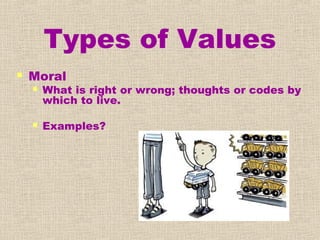
Moral




What is right or wrong; thoughts or codes by
which to live.
Examples?
Types of Values


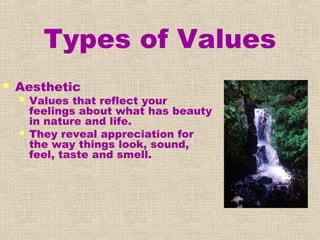
Aesthetic




Values that reflect your
feelings about what has beauty
in nature and life.
They reveal appreciation for
the way things look, sound,
feel, taste and smell.
Types of Values


Material


Values that reflect the
possessions we own; the
things on which we spend our
money.
Types of Values


Intrinsic


Values for things or ideas that have value
to us in their own right (antique car, a best
friend, your grandpa)
Types of Values


Extrinsic – Values that are important
because they help us gain other values
or desired results.



antique car is worth a lot of money
You are friends with someone because
they are good at a sport and they can help
you get better.
Types of Values


Universal



Values to which most people agree.
equality, respect of others, life, world
peace
Types of Values


Group Specific
 Values that differ from state to state
or region to region.
 US: value time – in hurry
 Europeans: value people – take time
to talk.
Activity


Complete “Insights Into Your Values”
Living My Values Activity
1.

Fold piece of paper in half (hamburger style), leave
folded.

2.

List 10 things you spend your time doing (activities).

3.

Turn page over. List your 5 most important values.

4.

5.

6.

Open paper. Draw lines to match the value to the
activity.
How do they match up?
Do you need to re-evaluate your values or how you
spend your time?
Values






If you remain in touch with your
values, you will achieve your
goals.
Base everyday choices on your
values and goals.
Don’t climb a ladder that’s leaning
against the wrong wall.
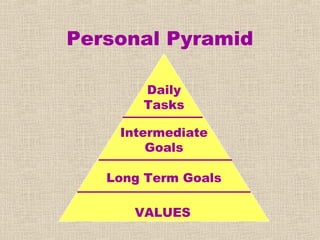
Personal Pyramid
Daily
Tasks
Intermediate
Goals
Long Term Goals
VALUES

Values

  • 1.
    “Ther e issomet hing wit hin us t hat gives meaning t o lif e, somet hing t hat pr ovides t he basis f or r anking our var ious needs, want s and goals.”
  • 2.
    What are values?  Qualities,characteristic or ideas about which we feel very strong.     Our values affect our decisions, goals and behavior. They are standards to guide your actions, judgments and attitudes. They define what is of worth, what is beneficial and what is harmful. Base everyday choices on your values and goals.
  • 3.
    Where do youget values?
  • 4.
    Characteristics of Values      Valuesare personal Our actions point to what we really value Our values give us our perception of the world Inconsistent behavior may indicate an absence of values Values change as experiences change
  • 5.
    Where do youget values?  Different people and things influence you at different ages:     Ages 1-7: Parents Ages 8-13: Teachers, Heroes Ages 14-20: Peers Ages 21+: Your values are established, but you may test your values from time to time.
  • 6.
    Types of Values  Moral   Whatis right or wrong; thoughts or codes by which to live. Examples?
  • 7.
    Types of Values  Aesthetic   Valuesthat reflect your feelings about what has beauty in nature and life. They reveal appreciation for the way things look, sound, feel, taste and smell.
  • 8.
    Types of Values  Material  Valuesthat reflect the possessions we own; the things on which we spend our money.
  • 9.
    Types of Values  Intrinsic  Valuesfor things or ideas that have value to us in their own right (antique car, a best friend, your grandpa)
  • 10.
    Types of Values  Extrinsic– Values that are important because they help us gain other values or desired results.   antique car is worth a lot of money You are friends with someone because they are good at a sport and they can help you get better.
  • 11.
    Types of Values  Universal   Valuesto which most people agree. equality, respect of others, life, world peace
  • 12.
    Types of Values  GroupSpecific  Values that differ from state to state or region to region.  US: value time – in hurry  Europeans: value people – take time to talk.
  • 13.
  • 14.
    Living My ValuesActivity 1. Fold piece of paper in half (hamburger style), leave folded. 2. List 10 things you spend your time doing (activities). 3. Turn page over. List your 5 most important values. 4. 5. 6. Open paper. Draw lines to match the value to the activity. How do they match up? Do you need to re-evaluate your values or how you spend your time?
  • 15.
    Values    If you remainin touch with your values, you will achieve your goals. Base everyday choices on your values and goals. Don’t climb a ladder that’s leaning against the wrong wall.
  • 16.