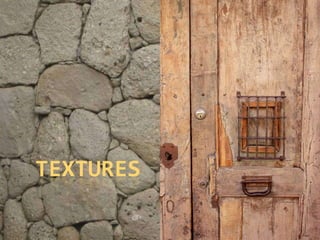
TEXTURES
We are going to

 Learn about textures
 Know different types of textures
 See textures in Art Creation
 Learn different techniques to work with
  textures
 Practise using ICT resources
 Represent an Artwork using textures
TEXTURE

 Everything has a texture or a surface.
 Texture can be:
      Rough
      Bumpy
      Slick
      Scratchy                Bee ceiling
      Smooth
      Silky
      Soft
                               Wool fabric
      Prickly
 ... The list is endless!!
Types of textures

 Tactile
 Visual
 Natural
 Artificial
Tactile texture

 We perceive it by touching an object.
 Every material has a different touch, so it is a
  different texture.
Visual texture

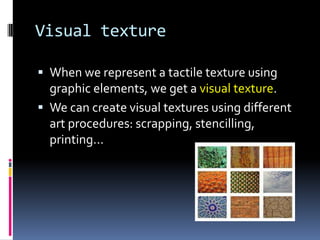
 When we represent a tactile texture using
  graphic elements, we get a visual texture.
 We can create visual textures using different
  art procedures: scrapping, stencilling,
  printing...
Natural textures

 They belong to natural elements, like the skin
  of an elephant, the cortex of a tree or the
  surface of a rose petal.
Artificial textures

 The surface of any object made by us: steel,
  paper, different kinds of fabrics...
Textures in Art Creation
 Artists use textures in their artworks
Textures in Art Creation

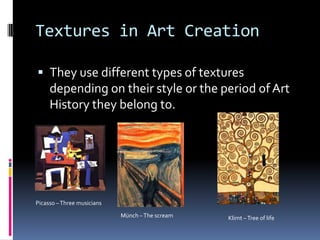
 They use different types of textures
     depending on their style or the period of Art
     History they belong to.


Picasso – Three musicians

                            Münch – The scream   Klimt – Tree of life
Textures in Art Creation

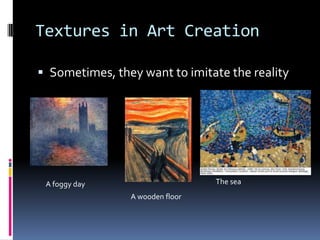
 Sometimes, they want to imitate the reality


 A foggy day                     The sea
                A wooden floor
Textures in Art Creation

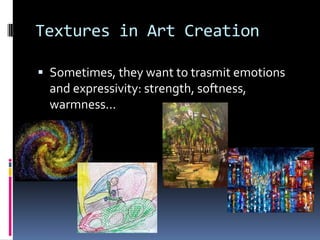
 Sometimes, they want to trasmit emotions
  and expressivity: strength, softness,
  warmness...
Textures in Art Creation

 And sometimes they want to create things
  that don’t exist, or symbolic images


    Pollock – Number 8
How can we get textures?

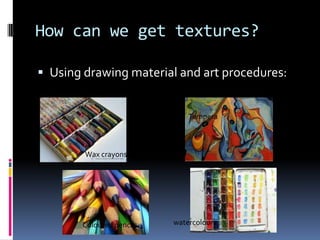
 Using drawing material and art procedures:


                              Tempera


        Wax crayons


       Coloured pencils   watercolours
How can we get textures?

 But also using any type of material

                                         Different kinds
                                         of paper


Beans and legumes


           Coloured sand
                                fabric
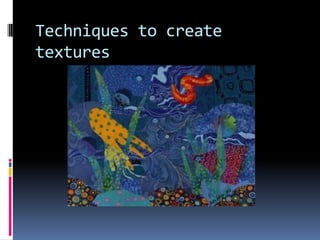
Techniques to create
textures
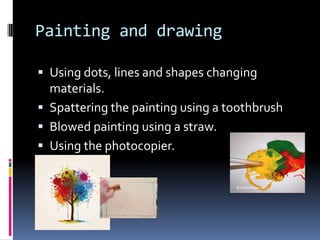
Painting and drawing

 Using dots, lines and shapes changing
  materials.
 Spattering the painting using a toothbrush
 Blowed painting using a straw.
 Using the photocopier.
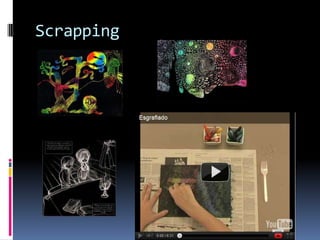
Scrapping
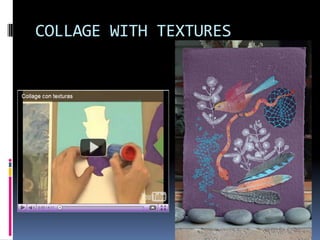
COLLAGE WITH TEXTURES
Stencilling
Activities: Practising with
textures
1. Web pages
 http://www.jacksonpollock.org/
 Collage Machine 1.0
 Remix, interactive collage
 Collage maker
Activities: Practising with
textures
2. Transforming Artworks
 Choose an artwork and search for
   information about its autor and art style.
 Transform it using art procedures to create
   texture effects: scrapping, collage, painting
   with different materials (tempera, wax
   crayons...)
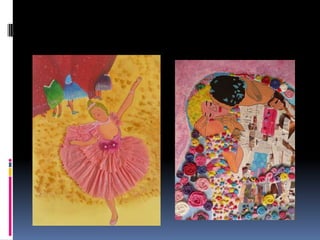
 The result must be something like this:
Textures
Textures

Textures

  • 1.
  • 2.
    We are goingto  Learn about textures  Know different types of textures  See textures in Art Creation  Learn different techniques to work with textures  Practise using ICT resources  Represent an Artwork using textures
  • 3.
    TEXTURE  Everything hasa texture or a surface.  Texture can be:  Rough  Bumpy  Slick  Scratchy Bee ceiling  Smooth  Silky  Soft Wool fabric  Prickly  ... The list is endless!!
  • 4.
    Types of textures Tactile  Visual  Natural  Artificial
  • 5.
    Tactile texture  Weperceive it by touching an object.  Every material has a different touch, so it is a different texture.
  • 6.
    Visual texture  Whenwe represent a tactile texture using graphic elements, we get a visual texture.  We can create visual textures using different art procedures: scrapping, stencilling, printing...
  • 7.
    Natural textures  Theybelong to natural elements, like the skin of an elephant, the cortex of a tree or the surface of a rose petal.
  • 8.
    Artificial textures  Thesurface of any object made by us: steel, paper, different kinds of fabrics...
  • 9.
    Textures in ArtCreation  Artists use textures in their artworks
  • 10.
    Textures in ArtCreation  They use different types of textures depending on their style or the period of Art History they belong to. Picasso – Three musicians Münch – The scream Klimt – Tree of life
  • 11.
    Textures in ArtCreation  Sometimes, they want to imitate the reality A foggy day The sea A wooden floor
  • 12.
    Textures in ArtCreation  Sometimes, they want to trasmit emotions and expressivity: strength, softness, warmness...
  • 13.
    Textures in ArtCreation  And sometimes they want to create things that don’t exist, or symbolic images Pollock – Number 8
  • 14.
    How can weget textures?  Using drawing material and art procedures: Tempera Wax crayons Coloured pencils watercolours
  • 15.
    How can weget textures?  But also using any type of material Different kinds of paper Beans and legumes Coloured sand fabric
  • 16.
  • 17.
    Painting and drawing Using dots, lines and shapes changing materials.  Spattering the painting using a toothbrush  Blowed painting using a straw.  Using the photocopier.
  • 18.
  • 19.
  • 20.
  • 21.
    Activities: Practising with textures 1.Web pages  http://www.jacksonpollock.org/  Collage Machine 1.0  Remix, interactive collage  Collage maker
  • 22.
    Activities: Practising with textures 2.Transforming Artworks  Choose an artwork and search for information about its autor and art style.  Transform it using art procedures to create texture effects: scrapping, collage, painting with different materials (tempera, wax crayons...)  The result must be something like this: