HOT CRACKS
&
COLD CRACKS
By,
Melwin Dmello
M.E WELDING ENGINEERING
ANNAMALAI UNIVERSITY
WELDING DEFECTS
• Porosity
• Spatter
• Slag Inclusions
• Incomplete Fusion
• Incomplete Penetration
• Under Cutting
• Under Filling
• Inclusion
• Lamellar Tears
• Cracks
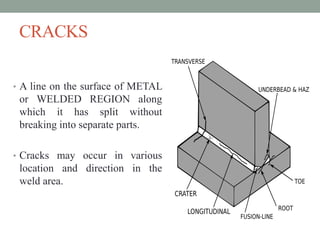
CRACKS
• A line on the surface of METAL
or WELDED REGION along
which it has split without
breaking into separate parts.
• Cracks may occur in various
location and direction in the
weld area.
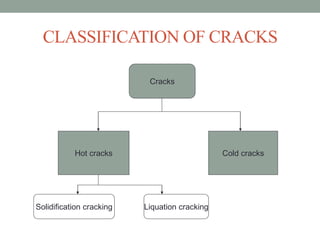
CLASSIFICATION OF CRACKS
Cracks
Hot cracks Cold cracks
Solidification cracking Liquation cracking
SOLIDIFICATION CRACKING
• Solidification cracking occur in weld metal, when the metal is
hot, just below the solidus temperature of the metal.
• It shows the temper color in the inner surfaces of cracks.
• This is due to formation of oxide films after the initiation of hot
cracks.
Factors Promote The Solidification Cracking
• Solidification structure :
Coarse grain structure obtain in high speed welds, tend
to be weaker under stress than the finer grain structure of the
slow speed welds.
• Segregation :
Partitioning of elements during the initial stages of
solidification. mostly segregated elements in steel is S, O, B, P,
C, Ti, N, H.
Cont....
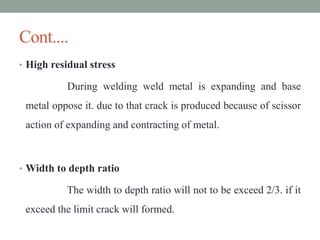
• Restraint
If high tensile stress are induced in the weld due to
restraint from jigging or clamping, such that the hot strength of
the weld metal is exceeded then it lead to crack.
Cont....
• High residual stress
During welding weld metal is expanding and base
metal oppose it. due to that crack is produced because of scissor
action of expanding and contracting of metal.
• Width to depth ratio
The width to depth ratio will not to be exceed 2/3. if it
exceed the limit crack will formed.
Explain how width to depth ratio of weld bead
affect the hot cracking susceptibility
• The width to depth ratio will not to be exceed 2/3. if it exceed
the limit crack will formed.
• In case the depth of the weld bead is much greater than the weld
width, the surface of the weld may freeze before welding finish.
• When this happens, the shrinkage force act on the weld zone
and it leads to cracking.
Cont....
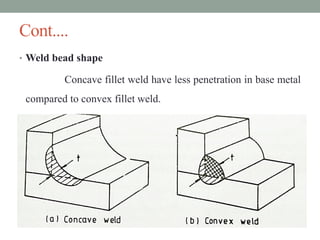
• Weld bead shape
Concave fillet weld have less penetration in base metal
compared to convex fillet weld.
Cont....
• Material composition
High carbon and nickel steel contents in steel may lead to
weld crack due to high hardenability of such steels.
• Welding procedure
High welding speed and long arc length lead to cracking.
• Material thickness
If the material thickness increases the cracking tendency is
also increases.
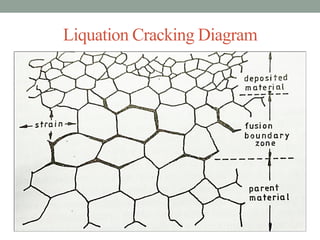
Liquation cracks
• Liquation cracks occur in Heat Affected Zone.
• Mainly when a process give high heat input such as electro slag,
submerged arc welding.
• It is occur in steel have high ratio of sulfur and phosphorous settled in
grain boundaries during hot rolling.
• During welding it will melted and forms as the brittle films around
the grains in HAZ. It will leads to cracks.
Liquation Cracking Diagram
Cold Cracking
• It is also called as hydrogen induced cracking (HIC) or delayed
cracking.
• Particularly occur in high strength steels.
• Reason for cold cracking
i. hydrogen in the weld metal.
ii. high stresses,
iii. susceptible microstructure(martensite)
iv. low temperature ( 200 to -100 °C )
Cont....
Hydrogen in weld metal
• The main source of the hydrogen in welding is the water vapor. Hydrogen
also come from corrosion reactions, cellulose electrodes.
• Hydrogen in the atomic form and it will easily diffuse through the steel
lattice and recombine to form molecular hydrogen in voids.
• Solubility of hydrogen in molten steel is high, but in solidified steel it is very
less.
• Due to that porosity, voids are produced. so, it is leads to cracks.
Cont....
High stress and martensite microstructure
• High stresses can be induced by the high heat input and constraints
during welding.
• Martensite, especially hard and brittle which is also leads to cracks.
Prevention
• Bake out the hydrogen before welding and reduce hardness and
residual stress with preheat and PWHT from weld metal.
References
• Text Book : “Welding Technology” by O.P Khanna, 2013
edition.
• Text Book : “Welding Engineering and Technology” by Dr.
R.S Parmar, 2015 edition
THANK YOU

HOT CRACKS AND COLD CRACKS (Welding)

  • 1.
    HOT CRACKS & COLD CRACKS By, MelwinDmello M.E WELDING ENGINEERING ANNAMALAI UNIVERSITY
  • 2.
    WELDING DEFECTS • Porosity •Spatter • Slag Inclusions • Incomplete Fusion • Incomplete Penetration • Under Cutting • Under Filling • Inclusion • Lamellar Tears • Cracks
  • 3.
    CRACKS • A lineon the surface of METAL or WELDED REGION along which it has split without breaking into separate parts. • Cracks may occur in various location and direction in the weld area.
  • 4.
    CLASSIFICATION OF CRACKS Cracks Hotcracks Cold cracks Solidification cracking Liquation cracking
  • 5.
    SOLIDIFICATION CRACKING • Solidificationcracking occur in weld metal, when the metal is hot, just below the solidus temperature of the metal. • It shows the temper color in the inner surfaces of cracks. • This is due to formation of oxide films after the initiation of hot cracks.
  • 6.
    Factors Promote TheSolidification Cracking • Solidification structure : Coarse grain structure obtain in high speed welds, tend to be weaker under stress than the finer grain structure of the slow speed welds. • Segregation : Partitioning of elements during the initial stages of solidification. mostly segregated elements in steel is S, O, B, P, C, Ti, N, H.
  • 7.
    Cont.... • Restraint If hightensile stress are induced in the weld due to restraint from jigging or clamping, such that the hot strength of the weld metal is exceeded then it lead to crack.
  • 8.
    Cont.... • High residualstress During welding weld metal is expanding and base metal oppose it. due to that crack is produced because of scissor action of expanding and contracting of metal. • Width to depth ratio The width to depth ratio will not to be exceed 2/3. if it exceed the limit crack will formed.
  • 9.
    Explain how widthto depth ratio of weld bead affect the hot cracking susceptibility • The width to depth ratio will not to be exceed 2/3. if it exceed the limit crack will formed. • In case the depth of the weld bead is much greater than the weld width, the surface of the weld may freeze before welding finish. • When this happens, the shrinkage force act on the weld zone and it leads to cracking.
  • 10.
    Cont.... • Weld beadshape Concave fillet weld have less penetration in base metal compared to convex fillet weld.
  • 11.
    Cont.... • Material composition Highcarbon and nickel steel contents in steel may lead to weld crack due to high hardenability of such steels. • Welding procedure High welding speed and long arc length lead to cracking. • Material thickness If the material thickness increases the cracking tendency is also increases.
  • 12.
    Liquation cracks • Liquationcracks occur in Heat Affected Zone. • Mainly when a process give high heat input such as electro slag, submerged arc welding. • It is occur in steel have high ratio of sulfur and phosphorous settled in grain boundaries during hot rolling. • During welding it will melted and forms as the brittle films around the grains in HAZ. It will leads to cracks.
  • 13.
  • 14.
    Cold Cracking • Itis also called as hydrogen induced cracking (HIC) or delayed cracking. • Particularly occur in high strength steels. • Reason for cold cracking i. hydrogen in the weld metal. ii. high stresses, iii. susceptible microstructure(martensite) iv. low temperature ( 200 to -100 °C )
  • 15.
    Cont.... Hydrogen in weldmetal • The main source of the hydrogen in welding is the water vapor. Hydrogen also come from corrosion reactions, cellulose electrodes. • Hydrogen in the atomic form and it will easily diffuse through the steel lattice and recombine to form molecular hydrogen in voids. • Solubility of hydrogen in molten steel is high, but in solidified steel it is very less. • Due to that porosity, voids are produced. so, it is leads to cracks.
  • 16.
    Cont.... High stress andmartensite microstructure • High stresses can be induced by the high heat input and constraints during welding. • Martensite, especially hard and brittle which is also leads to cracks. Prevention • Bake out the hydrogen before welding and reduce hardness and residual stress with preheat and PWHT from weld metal.
  • 17.
    References • Text Book: “Welding Technology” by O.P Khanna, 2013 edition. • Text Book : “Welding Engineering and Technology” by Dr. R.S Parmar, 2015 edition
  • 18.