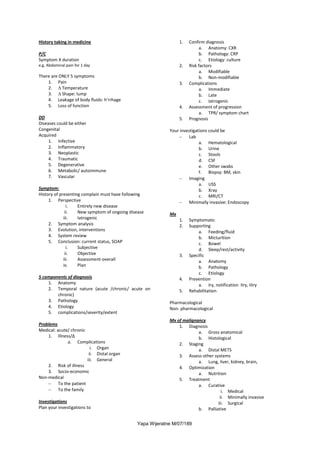
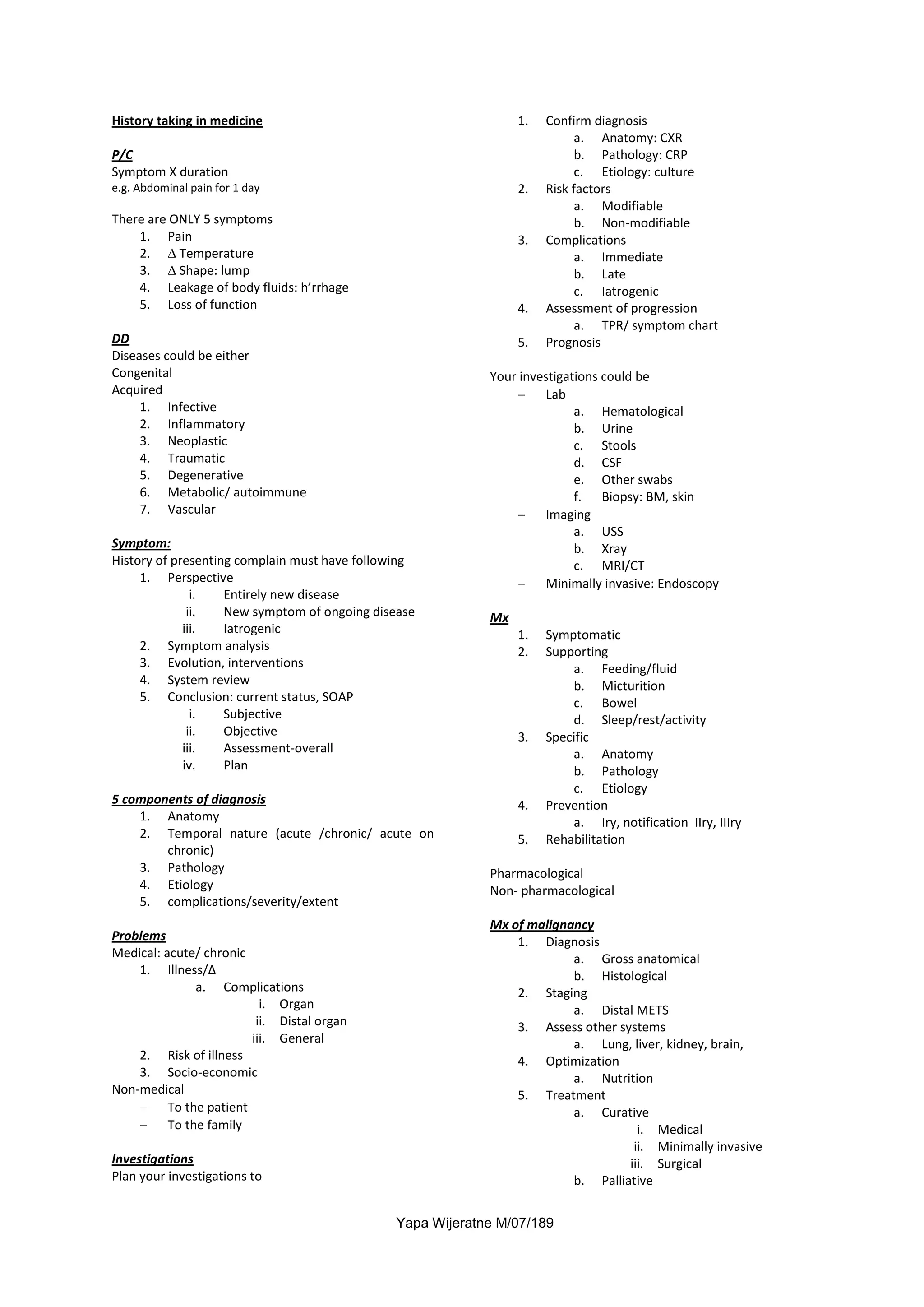
History taking in medicine

1.

P/C
Symptom X duration
e.g. Abdominal pain for 1 day

2.

There are ONLY 5 symptoms
1. Pain
2. ∆ Temperature
3. ∆ Shape: lump
4. Leakage of body fluids: h’rrhage
5. Loss of function

3.

4.

DD
Diseases could be either
Congenital
Acquired
1. Infective
2. Inflammatory
3. Neoplastic
4. Traumatic
5. Degenerative
6. Metabolic/ autoimmune
7. Vascular

5.

Symptom:
History of presenting complain must have following
1. Perspective
i.
Entirely new disease
ii.
New symptom of ongoing disease
iii.
Iatrogenic
2. Symptom analysis
3. Evolution, interventions
4. System review
5. Conclusion: current status, SOAP
i.
Subjective
ii.
Objective
iii.
Assessment-overall
iv.
Plan
5 components of diagnosis
1. Anatomy
2. Temporal nature (acute /chronic/ acute on
chronic)
3. Pathology
4. Etiology
5. complications/severity/extent
Problems
Medical: acute/ chronic
1. Illness/∆
a. Complications
i. Organ
ii. Distal organ
iii. General
2. Risk of illness
3. Socio-economic
Non-medical
To the patient
To the family
Investigations
Plan your investigations to

Confirm diagnosis
a. Anatomy: CXR
b. Pathology: CRP
c. Etiology: culture
Risk factors
a. Modifiable
b. Non-modifiable
Complications
a. Immediate
b. Late
c. Iatrogenic
Assessment of progression
a. TPR/ symptom chart
Prognosis

Your investigations could be
Lab
a. Hematological
b. Urine
c. Stools
d. CSF
e. Other swabs
f. Biopsy: BM, skin
Imaging
a. USS
b. Xray
c. MRI/CT
Minimally invasive: Endoscopy
Mx
1.
2.

3.

4.
5.

Symptomatic
Supporting
a. Feeding/fluid
b. Micturition
c. Bowel
d. Sleep/rest/activity
Specific
a. Anatomy
b. Pathology
c. Etiology
Prevention
a. Iry, notification IIry, IIIry
Rehabilitation

Pharmacological
Non- pharmacological
Mx of malignancy
1. Diagnosis
a. Gross anatomical
b. Histological
2. Staging
a. Distal METS
3. Assess other systems
a. Lung, liver, kidney, brain,
4. Optimization
a. Nutrition
5. Treatment
a. Curative
i. Medical
ii. Minimally invasive
iii. Surgical
b. Palliative

Yapa Wijeratne M/07/189

Basics of history taking in medicine

  • 1.
    History taking inmedicine 1. P/C Symptom X duration e.g. Abdominal pain for 1 day 2. There are ONLY 5 symptoms 1. Pain 2. ∆ Temperature 3. ∆ Shape: lump 4. Leakage of body fluids: h’rrhage 5. Loss of function 3. 4. DD Diseases could be either Congenital Acquired 1. Infective 2. Inflammatory 3. Neoplastic 4. Traumatic 5. Degenerative 6. Metabolic/ autoimmune 7. Vascular 5. Symptom: History of presenting complain must have following 1. Perspective i. Entirely new disease ii. New symptom of ongoing disease iii. Iatrogenic 2. Symptom analysis 3. Evolution, interventions 4. System review 5. Conclusion: current status, SOAP i. Subjective ii. Objective iii. Assessment-overall iv. Plan 5 components of diagnosis 1. Anatomy 2. Temporal nature (acute /chronic/ acute on chronic) 3. Pathology 4. Etiology 5. complications/severity/extent Problems Medical: acute/ chronic 1. Illness/∆ a. Complications i. Organ ii. Distal organ iii. General 2. Risk of illness 3. Socio-economic Non-medical To the patient To the family Investigations Plan your investigations to Confirm diagnosis a. Anatomy: CXR b. Pathology: CRP c. Etiology: culture Risk factors a. Modifiable b. Non-modifiable Complications a. Immediate b. Late c. Iatrogenic Assessment of progression a. TPR/ symptom chart Prognosis Your investigations could be Lab a. Hematological b. Urine c. Stools d. CSF e. Other swabs f. Biopsy: BM, skin Imaging a. USS b. Xray c. MRI/CT Minimally invasive: Endoscopy Mx 1. 2. 3. 4. 5. Symptomatic Supporting a. Feeding/fluid b. Micturition c. Bowel d. Sleep/rest/activity Specific a. Anatomy b. Pathology c. Etiology Prevention a. Iry, notification IIry, IIIry Rehabilitation Pharmacological Non- pharmacological Mx of malignancy 1. Diagnosis a. Gross anatomical b. Histological 2. Staging a. Distal METS 3. Assess other systems a. Lung, liver, kidney, brain, 4. Optimization a. Nutrition 5. Treatment a. Curative i. Medical ii. Minimally invasive iii. Surgical b. Palliative Yapa Wijeratne M/07/189