Asthma exacerbation in a 13
year old child
LYNDON WOYTUCK
MBBS4 PROGRAMME AT ST GEORGE’S UNIVERSITY OF LONDON DELIVERED BY THE UNIVERSITY OF NICOSIA
SHEBA MEDICAL CENTER AT TEL HASHOMER
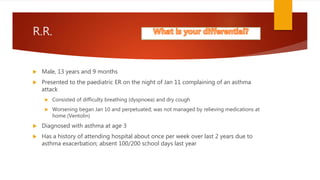
R.R.
 Male, 13 years and 9 months
 Presented to the paediatric ER on the night of Jan 11 complaining of an asthma
attack
 Consisted of difficulty breathing (dyspnoea) and dry cough
 Worsening began Jan 10 and perpetuated; was not managed by relieving medications at
home (Ventolin)
 Diagnosed with asthma at age 3
 Has a history of attending hospital about once per week over last 2 years due to
asthma exacerbation; absent 100/200 school days last year
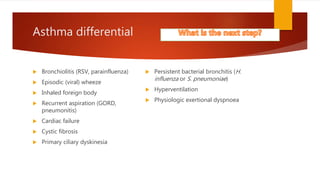
Asthma differential
 Bronchiolitis (RSV, parainfluenza)
 Episodic (viral) wheeze
 Inhaled foreign body
 Recurrent aspiration (GORD,
pneumonitis)
 Cardiac failure
 Cystic fibrosis
 Primary ciliary dyskinesia
 Persistent bacterial bronchitis (H.
influenza or S. pneumoniae)
 Hyperventilation
 Physiologic exertional dyspnoea
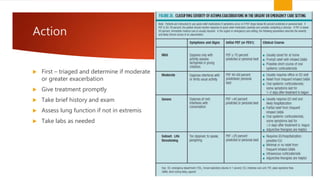
Action
 First – triaged and determine if moderate
or greater exacerbation
 Give treatment promptly
 Take brief history and exam
 Assess lung function if not in extremis
 Take labs as needed
Immediate Management
 Management in older children is generally similar to adults, whereas infants with exacerbation are
much higher risk
 Oxygen administration by mask (may use nasal cannula) with oxygen saturation monitor until a
clear response to bronchodilator therapy occurred
 Inhaled β2-agonist treatment (Albuterol given) the most effective means of reversing airflow
obstruction. In the ED, three doses administered every 20 to 30 minutes is a safe strategy for
initial therapy. After, frequency according to patient improvement in airflow obstruction and
associated symptoms.
 About 60% to 70% of patients will respond sufficiently to the initial three doses to be discharged,
and most of these will demonstrate a significant response after the first dose – and can be
administered continuously in severe exacerbation (<40% PV)
 Consider nebulizer therapy in children due to necessity versus MDI with valve chamber
 Oral corticosteroids speed the resolution of airflow obstruction and reduce the rate of post-ED
relapse
Defining Asthma Exacerbation
 “Asthma exacerbations consist of acute
or subacute episodes of progressively
worsening shortness of breath,
coughing, wheezing, and chest
tightness or any combination thereof.”
- American Thoracic Society
 This is different from poor asthma
control: diurnal variability in airflow
may not change in exacerbation
 Spirometry cut off points for acute
asthma (exacerbations) versus chronic
asthma
 At assessment: agitation, increased
respiratory rate, increased pulse, and
decreased lung function as measured
by FEV1, peak expiratory flow (PEF),
PaO2, PaCO2, and arterial oxygen
saturation (SaO2).
 May have accessory muscle usage or
inability to speak in full sentences or
even phrases
Present Illness
 Presented with
 Normal temp, pulse 90bpm, BP 125/77mmHg, SpO2 99% ambient air.
 Venous blood gases - pH 7.34 (7.31-7.41), pCO2 51mmHg (40-52), HCO3 27mEq/L (22-27), lactate
12
 Transferred to ICU
 Relaxed respirations, speech not inhibited by dyspnoea
 pH 7.32 (7.35-7.45), PaO2 52.5 mmHg (90-99), PaCO2 38.2 mmHg (35-45), HCO3 19.5 mmol/L (22-
26), lac 44
 Kept on room air, at 100% saturation; on auscultation - reduced air entry into the lungs, with some
wheezing
 Lung function: FVC 74%, FEV1 68%, FEV1/FVC 97%
 Transferred to paediatric department
History
 Poorly controlled asthma over last 2 years, but has been diagnosed since 3 years old after moving
from Atlanta, USA
 More shortness of breath in morning and night, with some waking at night; no known triggers
 Allergies to cat dander, dust and grass pollen found by previous skin prick testing – has some
pruritus on exposure to cats, but fine with his pet dog and rabbit
 Hypersensitivity reaction to IvIg – had aseptic meningitis after 6 month regimen, then stopped 1
month ago
 Spends a lot of time in hospital; 1 day/week is a good week, and a few days per week on a bad
week
 Despite missing 100/200 days last year, does well in school (90’s% ave.)
 Enjoys playing tennis and guitar (and XBOX) as out of school activities
 Family: unaffected 2 older sisters and younger brother, mother has asthma, father has
moderate/severe seasonal allergies
Reassess and continue management
 Repeat assessment after first bronchodilator dose in severe patients and after three (60-90
minutes) in others. Response to treatment in the ED is a better predictor of the need for
hospitalization than the severity of an exacerbation at the time of presentation
 The signs of impending respiratory failure are inability to speak, altered mental status, intercostal
retraction, worsening fatigue, and PaCO2 ≥42 mmHg.
 Intubation should not be delayed once it is deemed necessary. Patients presenting with apnea or
coma should be intubated immediately. Persistent or increasing hypercapnia, exhaustion, and
depressed mental status strongly suggest the need for ventilatory support.
 Because intubation in the severely ill asthmatic patient is difficult and can result in complications,
other treatments, such as intravenous magnesium and heliox are sometimes attempted.
 Administered IV magnesium sulfate: has no apparent value in patients with exacerbations of
lower severity, but may be considered in extreme exacerbations and those whose exacerbations
remain severe after 1 hour of intensive conventional treatment
Investigations
 Lung function!!! PEF and/or FEV1, FEV1/FVC
 Blood gases: respiratory failure, theophylline toxicity, or complicating conditions like cardiovascular
disease, pneumonia, or diabetes
 For example. PaCO2 in patients with suspected hypoventilation, those in severe distress, or those with
FEV1 or PEF results of 25% or less of predicted value after initial treatment
 Chest X Ray should be taken if suspecting congestive heart failure, pneumothorax, pneumomediastinum,
pneumonia, or lobar atelectasis
Examination tailored to asthmatic patient
– inpatient assessment
 General
 Well looking adolescent
 Pulse regular 68/min, respiration rate 24, BP 124/58, T
 No conjunctival pallor, no cyanosis, capillary refill 2s
 ENT: mouth, nose and throat clear, no lymphadenopathy
 Respiratory:
 Chest expansion good at 2-3cm, no signs of laboured breathing
 Equal lung sounds bilaterally, wheeze present throughout
 Cardiovascular
 Regular S1/S2, no added heart sounds
Discharge
 FEV1 or PEF 70% or more of predicted value or personal best
 Symptoms are minimal or absent
 Extended treatment or observation in a holding or overnight unit might be
appropriate for some patients
 If given systemic corticosteroids then give prescription to continue therapy for 3 to 10
days after discharge. For high risk of nonadherence, intramuscular depot injections
might be as effective as oral corticosteroids in preventing relapse.
 If currently using inhaled corticosteroid therapy, then should continue while taking
systemic corticosteroids
 Consider initiating inhaled corticosteroids at discharge for those without
Preventing exacerbation
 ED visits are often the result of inadequate long-term management of asthma
 To help patients recognize and respond to symptoms of asthma, the provider should prepare a
simple asthma discharge plan for asthma symptoms and explain it and be sure to include daily
treatment plans, as well as plans for how to manage an exacerbation
 it is important to review inhaler technique with the patient and correct technique errors
 Refer to follow-up asthma care appointment with a primary care physician or an asthma specialist
within 1 week and schedule the appointment before discharge. Encourage the patient's
participation in a more formal asthma education program
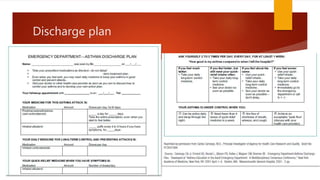
 A discharge plan is useful to ensure that patients are provided with the necessary medications
and taught how to use them, instructed in how to monitor symptoms, given a follow-up
appointment, and instructed in a written plan for managing recurrence of airflow obstruction
Discharge plan
References
 Carlos A. Camargo, Jr., Gary Rachelefsky, and Michael Schatz "Managing Asthma
Exacerbations in the Emergency Department", Proceedings of the American
Thoracic Society, Vol. 6, No. 4(2009), pp. 357-366.
http://www.atsjournals.org/doi/full/10.1513/pats.P09ST2#.VpocUCp96Cg
 Guidelines for the Diagnosis and Management of Asthma National Asthma
Education and Prevention Program Expert Panel Report 3.
http://www.nhlbi.nih.gov/files/docs/guidelines/asthsumm.pdf
 BMJ BestPractice. Asthma in Children. http://bestpractice.bmj.com/best-
practice/monograph/782/diagnosis/differential.html

Asthma exacerbation case study in pediatrics

  • 1.
    Asthma exacerbation ina 13 year old child LYNDON WOYTUCK MBBS4 PROGRAMME AT ST GEORGE’S UNIVERSITY OF LONDON DELIVERED BY THE UNIVERSITY OF NICOSIA SHEBA MEDICAL CENTER AT TEL HASHOMER
  • 2.
    R.R.  Male, 13years and 9 months  Presented to the paediatric ER on the night of Jan 11 complaining of an asthma attack  Consisted of difficulty breathing (dyspnoea) and dry cough  Worsening began Jan 10 and perpetuated; was not managed by relieving medications at home (Ventolin)  Diagnosed with asthma at age 3  Has a history of attending hospital about once per week over last 2 years due to asthma exacerbation; absent 100/200 school days last year
  • 3.
    Asthma differential  Bronchiolitis(RSV, parainfluenza)  Episodic (viral) wheeze  Inhaled foreign body  Recurrent aspiration (GORD, pneumonitis)  Cardiac failure  Cystic fibrosis  Primary ciliary dyskinesia  Persistent bacterial bronchitis (H. influenza or S. pneumoniae)  Hyperventilation  Physiologic exertional dyspnoea
  • 4.
    Action  First –triaged and determine if moderate or greater exacerbation  Give treatment promptly  Take brief history and exam  Assess lung function if not in extremis  Take labs as needed
  • 5.
    Immediate Management  Managementin older children is generally similar to adults, whereas infants with exacerbation are much higher risk  Oxygen administration by mask (may use nasal cannula) with oxygen saturation monitor until a clear response to bronchodilator therapy occurred  Inhaled β2-agonist treatment (Albuterol given) the most effective means of reversing airflow obstruction. In the ED, three doses administered every 20 to 30 minutes is a safe strategy for initial therapy. After, frequency according to patient improvement in airflow obstruction and associated symptoms.  About 60% to 70% of patients will respond sufficiently to the initial three doses to be discharged, and most of these will demonstrate a significant response after the first dose – and can be administered continuously in severe exacerbation (<40% PV)  Consider nebulizer therapy in children due to necessity versus MDI with valve chamber  Oral corticosteroids speed the resolution of airflow obstruction and reduce the rate of post-ED relapse
  • 6.
    Defining Asthma Exacerbation “Asthma exacerbations consist of acute or subacute episodes of progressively worsening shortness of breath, coughing, wheezing, and chest tightness or any combination thereof.” - American Thoracic Society  This is different from poor asthma control: diurnal variability in airflow may not change in exacerbation  Spirometry cut off points for acute asthma (exacerbations) versus chronic asthma  At assessment: agitation, increased respiratory rate, increased pulse, and decreased lung function as measured by FEV1, peak expiratory flow (PEF), PaO2, PaCO2, and arterial oxygen saturation (SaO2).  May have accessory muscle usage or inability to speak in full sentences or even phrases
  • 7.
    Present Illness  Presentedwith  Normal temp, pulse 90bpm, BP 125/77mmHg, SpO2 99% ambient air.  Venous blood gases - pH 7.34 (7.31-7.41), pCO2 51mmHg (40-52), HCO3 27mEq/L (22-27), lactate 12  Transferred to ICU  Relaxed respirations, speech not inhibited by dyspnoea  pH 7.32 (7.35-7.45), PaO2 52.5 mmHg (90-99), PaCO2 38.2 mmHg (35-45), HCO3 19.5 mmol/L (22- 26), lac 44  Kept on room air, at 100% saturation; on auscultation - reduced air entry into the lungs, with some wheezing  Lung function: FVC 74%, FEV1 68%, FEV1/FVC 97%  Transferred to paediatric department
  • 8.
    History  Poorly controlledasthma over last 2 years, but has been diagnosed since 3 years old after moving from Atlanta, USA  More shortness of breath in morning and night, with some waking at night; no known triggers  Allergies to cat dander, dust and grass pollen found by previous skin prick testing – has some pruritus on exposure to cats, but fine with his pet dog and rabbit  Hypersensitivity reaction to IvIg – had aseptic meningitis after 6 month regimen, then stopped 1 month ago  Spends a lot of time in hospital; 1 day/week is a good week, and a few days per week on a bad week  Despite missing 100/200 days last year, does well in school (90’s% ave.)  Enjoys playing tennis and guitar (and XBOX) as out of school activities  Family: unaffected 2 older sisters and younger brother, mother has asthma, father has moderate/severe seasonal allergies
  • 9.
    Reassess and continuemanagement  Repeat assessment after first bronchodilator dose in severe patients and after three (60-90 minutes) in others. Response to treatment in the ED is a better predictor of the need for hospitalization than the severity of an exacerbation at the time of presentation  The signs of impending respiratory failure are inability to speak, altered mental status, intercostal retraction, worsening fatigue, and PaCO2 ≥42 mmHg.  Intubation should not be delayed once it is deemed necessary. Patients presenting with apnea or coma should be intubated immediately. Persistent or increasing hypercapnia, exhaustion, and depressed mental status strongly suggest the need for ventilatory support.  Because intubation in the severely ill asthmatic patient is difficult and can result in complications, other treatments, such as intravenous magnesium and heliox are sometimes attempted.  Administered IV magnesium sulfate: has no apparent value in patients with exacerbations of lower severity, but may be considered in extreme exacerbations and those whose exacerbations remain severe after 1 hour of intensive conventional treatment
  • 10.
    Investigations  Lung function!!!PEF and/or FEV1, FEV1/FVC  Blood gases: respiratory failure, theophylline toxicity, or complicating conditions like cardiovascular disease, pneumonia, or diabetes  For example. PaCO2 in patients with suspected hypoventilation, those in severe distress, or those with FEV1 or PEF results of 25% or less of predicted value after initial treatment  Chest X Ray should be taken if suspecting congestive heart failure, pneumothorax, pneumomediastinum, pneumonia, or lobar atelectasis
  • 11.
    Examination tailored toasthmatic patient – inpatient assessment  General  Well looking adolescent  Pulse regular 68/min, respiration rate 24, BP 124/58, T  No conjunctival pallor, no cyanosis, capillary refill 2s  ENT: mouth, nose and throat clear, no lymphadenopathy  Respiratory:  Chest expansion good at 2-3cm, no signs of laboured breathing  Equal lung sounds bilaterally, wheeze present throughout  Cardiovascular  Regular S1/S2, no added heart sounds
  • 12.
    Discharge  FEV1 orPEF 70% or more of predicted value or personal best  Symptoms are minimal or absent  Extended treatment or observation in a holding or overnight unit might be appropriate for some patients  If given systemic corticosteroids then give prescription to continue therapy for 3 to 10 days after discharge. For high risk of nonadherence, intramuscular depot injections might be as effective as oral corticosteroids in preventing relapse.  If currently using inhaled corticosteroid therapy, then should continue while taking systemic corticosteroids  Consider initiating inhaled corticosteroids at discharge for those without
  • 13.
    Preventing exacerbation  EDvisits are often the result of inadequate long-term management of asthma  To help patients recognize and respond to symptoms of asthma, the provider should prepare a simple asthma discharge plan for asthma symptoms and explain it and be sure to include daily treatment plans, as well as plans for how to manage an exacerbation  it is important to review inhaler technique with the patient and correct technique errors  Refer to follow-up asthma care appointment with a primary care physician or an asthma specialist within 1 week and schedule the appointment before discharge. Encourage the patient's participation in a more formal asthma education program  A discharge plan is useful to ensure that patients are provided with the necessary medications and taught how to use them, instructed in how to monitor symptoms, given a follow-up appointment, and instructed in a written plan for managing recurrence of airflow obstruction
  • 14.
  • 15.
    References  Carlos A.Camargo, Jr., Gary Rachelefsky, and Michael Schatz "Managing Asthma Exacerbations in the Emergency Department", Proceedings of the American Thoracic Society, Vol. 6, No. 4(2009), pp. 357-366. http://www.atsjournals.org/doi/full/10.1513/pats.P09ST2#.VpocUCp96Cg  Guidelines for the Diagnosis and Management of Asthma National Asthma Education and Prevention Program Expert Panel Report 3. http://www.nhlbi.nih.gov/files/docs/guidelines/asthsumm.pdf  BMJ BestPractice. Asthma in Children. http://bestpractice.bmj.com/best- practice/monograph/782/diagnosis/differential.html