BY
09408103
3-04-2014
CASE STUDY ON
ASTHMA
A 48 yrs old female patient was admitted in the hospital
with
C/O
breathlesness severe for the past one day
Chest tightness
Cough with expectoration
HISTORY OF PRESENT ILLNESS
Breathlessness since 7days
Cough with expectoration since 7days
PAST MEDICAL HISTORY
Nil
PHYSICAL EXAMINATION
Patient is conscious,oriented,dyspenic
O/E
Temp-98.6F
Pulse-120 beats/min
BP-90/70mmHg
RR-25 breaths/min
SYSTEMIC EXAMINATION
CVS-S1S2+
RS-Wheeze+
CNS-NFND+
P/A-Soft
LAB INVESTIGATIONS
Hb 16.0(↑) 12-15.5g/dl
RBC 5.6*×10ᶺ 6(↑)/UL 4.2-5.4×10ᶺ6/UL
ESR 25(↑) 5-15mm/hr
TOTAL WBC 15.00×10ᶺ9/L(↑) 4.0-11.0×10ᶺ9/L
DC N-71
L-23
E-10(↑) 1-6%
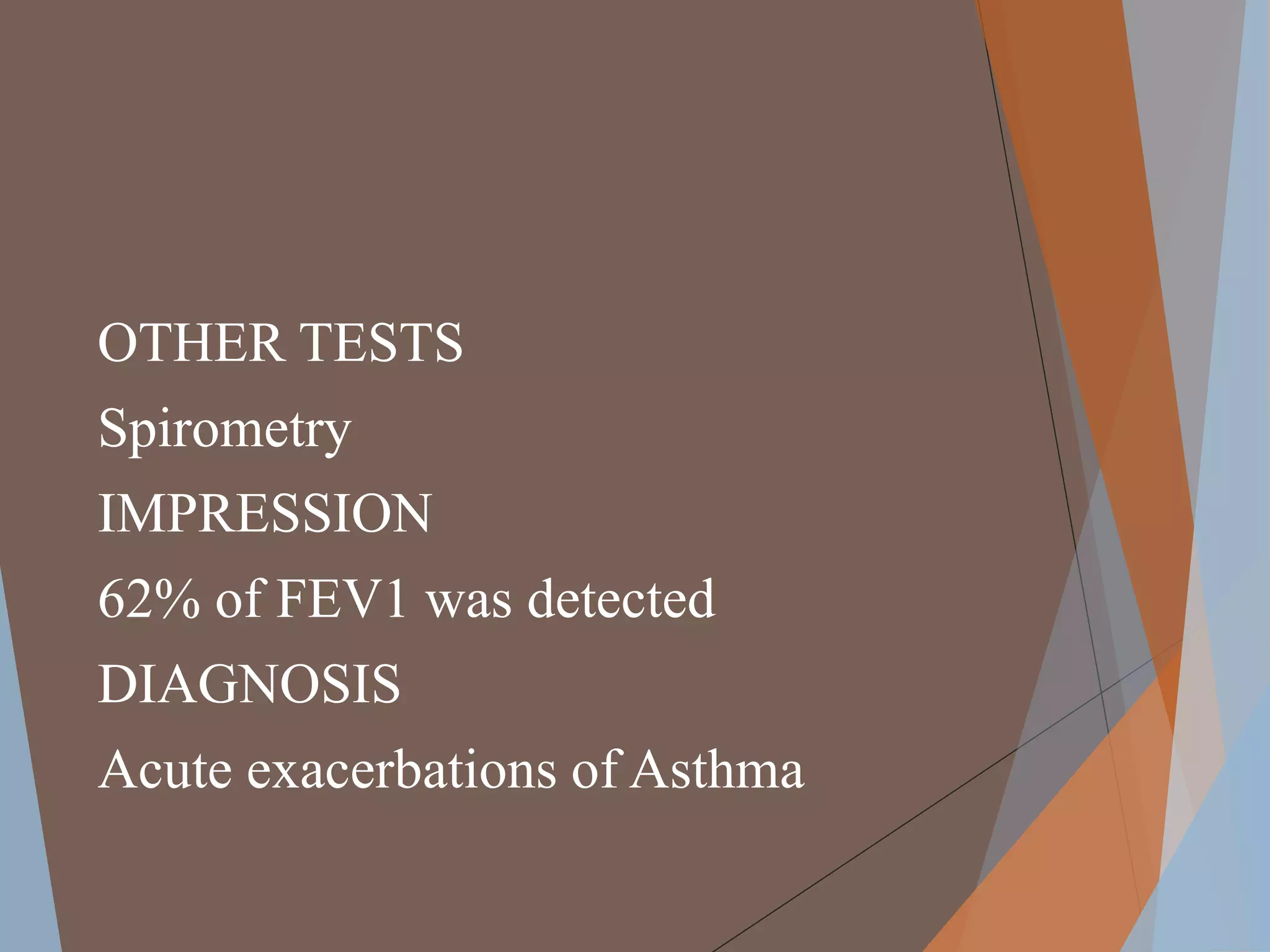
OTHER TESTS
Spirometry
IMPRESSION
62% of FEV1 was detected
DIAGNOSIS
Acute exacerbations of Asthma
DRUG DOSE ROA FREQUENCY DURATION
T.UNICONTINE
(Theophylline)
1 tab PO BD 5days
INJ.AUGMENTIN
(Amoxicillin+clavul
anicacid)
1.2gm IV BD 3days
T.MONTAK LC
(Monteleukast+
Levocetirizine)
4 mg+2.5 mg PO BD 5days
NEB.IPRAVENT
(Ipratropium
bromide)
1resp PN TDS 5days
T.LYCOLUT
(MV,Ca,Fe+FA)
1tab PO OD 5days
T.MAHACEF
(Cefixime)
200mg PO BD 2days
CRITICAL ANALYSIS OF
PRESCRIPTION
MEDICATION ERRORS
No medication errors were found
DRUG INTERACTIONS
Theophylline↔Food(Caeffine containing food)-
May increase the serum concentrations of
theophylline
PHARMACIST INTERVENTION
Patient was advised to avoid co-administration of
theophylline with caeffine containing foods
..like coffee
PATIENT COUNSELLING
REGARDING DISEASE
ASTHMA- is a common chronic inflammatory disease of
the airways characterized by variable and recurring
symptoms, reversible airflow obstruction,
and bronchospasm
Symptoms include wheezing, cough, chest tightness,
and shortness of breath.
REGARDING DRUGS
Full course of antibiotics should be taken
Don’t miss any dose
Avoid taking theophylline with caeffine
Any seizures ,nausea ,coughing up of blood etc if seen are
side effects of theophylline and if she experienced it
should be stopped
While inhaling ipratropium bromide, it should be prevented
from going into eyes,since it can cause irritation and
blurred vision.
After inhalation the patient should clean her mouth to avoid
throat irritation and dry mouth.
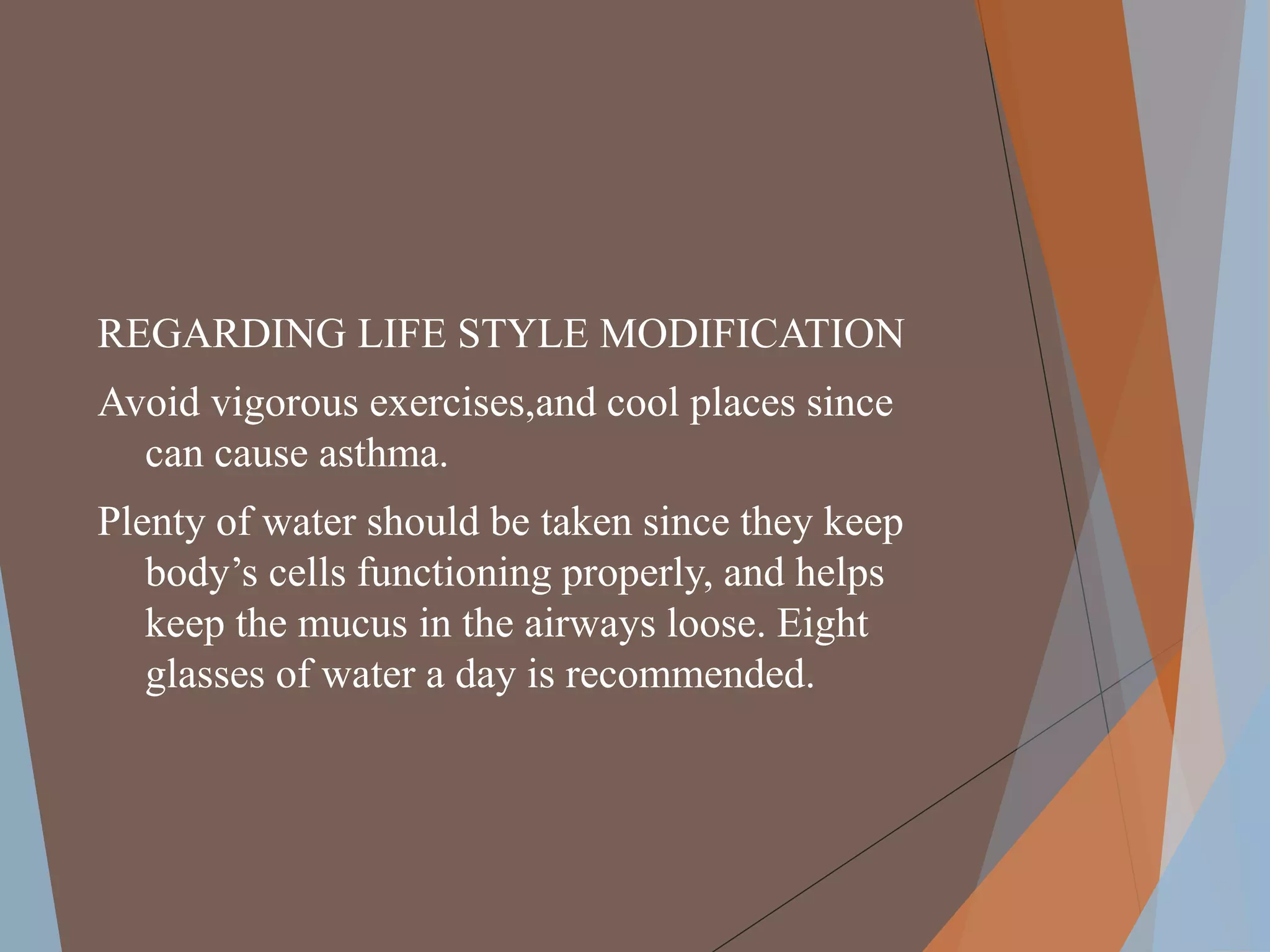
REGARDING LIFE STYLE MODIFICATION
Avoid vigorous exercises,and cool places since
can cause asthma.
Plenty of water should be taken since they keep
body’s cells functioning properly, and helps
keep the mucus in the airways loose. Eight
glasses of water a day is recommended.
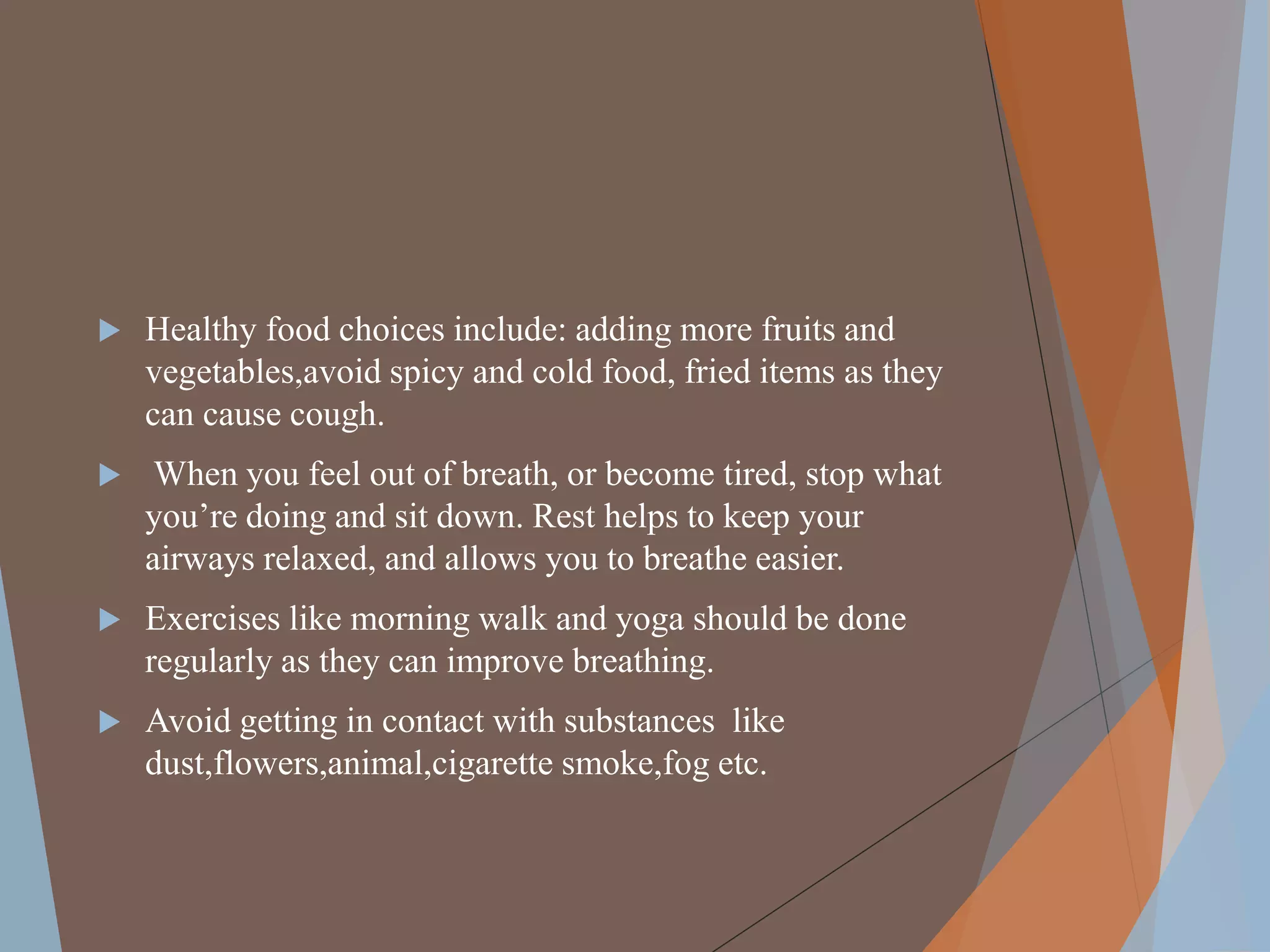
 Healthy food choices include: adding more fruits and
vegetables,avoid spicy and cold food, fried items as they
can cause cough.
 When you feel out of breath, or become tired, stop what
you’re doing and sit down. Rest helps to keep your
airways relaxed, and allows you to breathe easier.
 Exercises like morning walk and yoga should be done
regularly as they can improve breathing.
 Avoid getting in contact with substances like
dust,flowers,animal,cigarette smoke,fog etc.
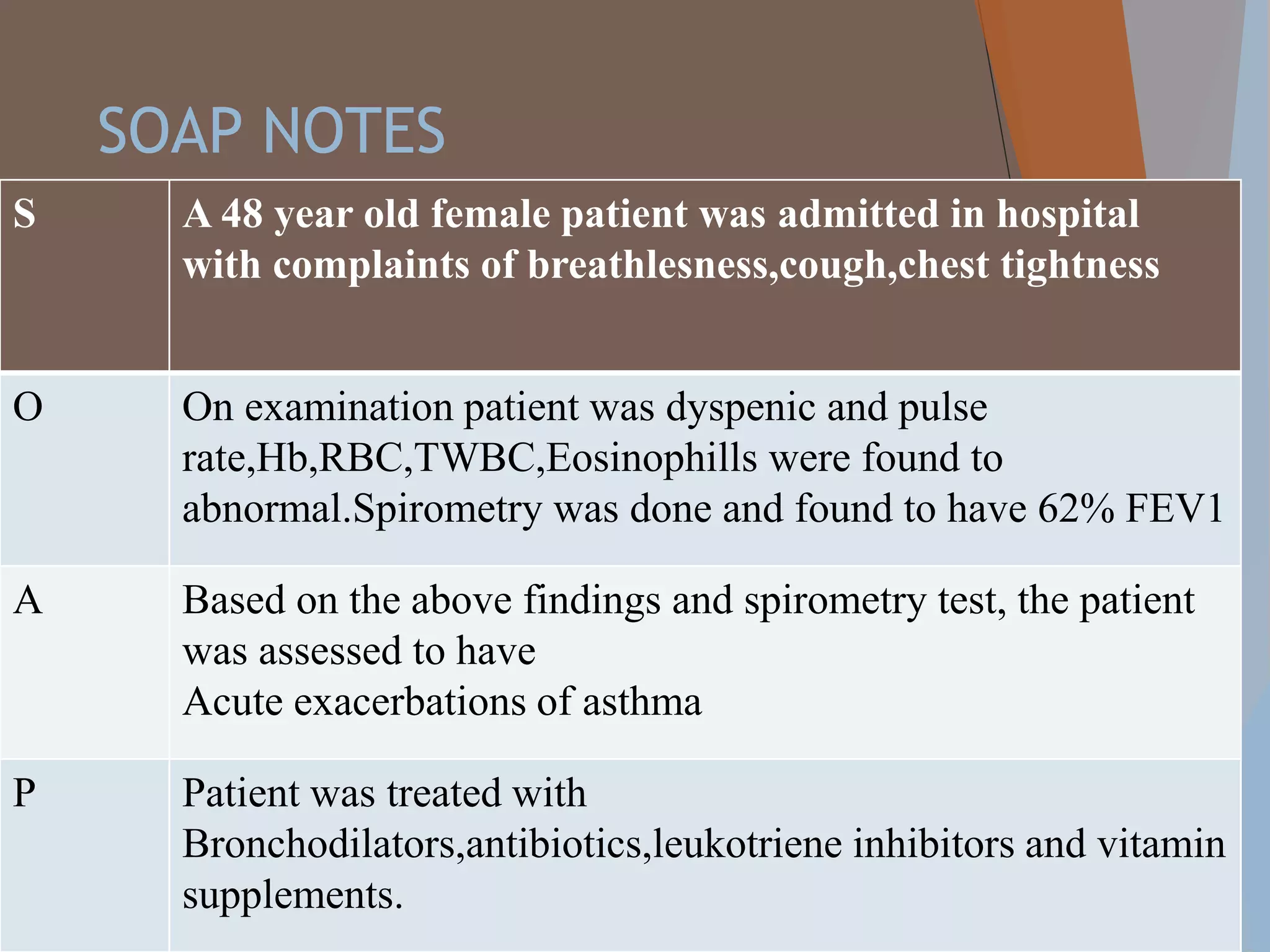
SOAP NOTES
S A 48 year old female patient was admitted in hospital
with complaints of breathlesness,cough,chest tightness
O On examination patient was dyspenic and pulse
rate,Hb,RBC,TWBC,Eosinophills were found to
abnormal.Spirometry was done and found to have 62% FEV1
A Based on the above findings and spirometry test, the patient
was assessed to have
Acute exacerbations of asthma
P Patient was treated with
Bronchodilators,antibiotics,leukotriene inhibitors and vitamin
supplements.

A case study on bronchial asthma

  • 1.
  • 2.
    A 48 yrsold female patient was admitted in the hospital with C/O breathlesness severe for the past one day Chest tightness Cough with expectoration HISTORY OF PRESENT ILLNESS Breathlessness since 7days Cough with expectoration since 7days PAST MEDICAL HISTORY Nil
  • 3.
    PHYSICAL EXAMINATION Patient isconscious,oriented,dyspenic O/E Temp-98.6F Pulse-120 beats/min BP-90/70mmHg RR-25 breaths/min SYSTEMIC EXAMINATION CVS-S1S2+ RS-Wheeze+ CNS-NFND+ P/A-Soft
  • 4.
    LAB INVESTIGATIONS Hb 16.0(↑)12-15.5g/dl RBC 5.6*×10ᶺ 6(↑)/UL 4.2-5.4×10ᶺ6/UL ESR 25(↑) 5-15mm/hr TOTAL WBC 15.00×10ᶺ9/L(↑) 4.0-11.0×10ᶺ9/L DC N-71 L-23 E-10(↑) 1-6%
  • 5.
    OTHER TESTS Spirometry IMPRESSION 62% ofFEV1 was detected DIAGNOSIS Acute exacerbations of Asthma
  • 6.
    DRUG DOSE ROAFREQUENCY DURATION T.UNICONTINE (Theophylline) 1 tab PO BD 5days INJ.AUGMENTIN (Amoxicillin+clavul anicacid) 1.2gm IV BD 3days T.MONTAK LC (Monteleukast+ Levocetirizine) 4 mg+2.5 mg PO BD 5days NEB.IPRAVENT (Ipratropium bromide) 1resp PN TDS 5days T.LYCOLUT (MV,Ca,Fe+FA) 1tab PO OD 5days T.MAHACEF (Cefixime) 200mg PO BD 2days
  • 7.
    CRITICAL ANALYSIS OF PRESCRIPTION MEDICATIONERRORS No medication errors were found DRUG INTERACTIONS Theophylline↔Food(Caeffine containing food)- May increase the serum concentrations of theophylline PHARMACIST INTERVENTION Patient was advised to avoid co-administration of theophylline with caeffine containing foods ..like coffee
  • 8.
    PATIENT COUNSELLING REGARDING DISEASE ASTHMA-is a common chronic inflammatory disease of the airways characterized by variable and recurring symptoms, reversible airflow obstruction, and bronchospasm Symptoms include wheezing, cough, chest tightness, and shortness of breath.
  • 9.
    REGARDING DRUGS Full courseof antibiotics should be taken Don’t miss any dose Avoid taking theophylline with caeffine Any seizures ,nausea ,coughing up of blood etc if seen are side effects of theophylline and if she experienced it should be stopped While inhaling ipratropium bromide, it should be prevented from going into eyes,since it can cause irritation and blurred vision. After inhalation the patient should clean her mouth to avoid throat irritation and dry mouth.
  • 10.
    REGARDING LIFE STYLEMODIFICATION Avoid vigorous exercises,and cool places since can cause asthma. Plenty of water should be taken since they keep body’s cells functioning properly, and helps keep the mucus in the airways loose. Eight glasses of water a day is recommended.
  • 11.
     Healthy foodchoices include: adding more fruits and vegetables,avoid spicy and cold food, fried items as they can cause cough.  When you feel out of breath, or become tired, stop what you’re doing and sit down. Rest helps to keep your airways relaxed, and allows you to breathe easier.  Exercises like morning walk and yoga should be done regularly as they can improve breathing.  Avoid getting in contact with substances like dust,flowers,animal,cigarette smoke,fog etc.
  • 12.
    SOAP NOTES S A48 year old female patient was admitted in hospital with complaints of breathlesness,cough,chest tightness O On examination patient was dyspenic and pulse rate,Hb,RBC,TWBC,Eosinophills were found to abnormal.Spirometry was done and found to have 62% FEV1 A Based on the above findings and spirometry test, the patient was assessed to have Acute exacerbations of asthma P Patient was treated with Bronchodilators,antibiotics,leukotriene inhibitors and vitamin supplements.