Histograms
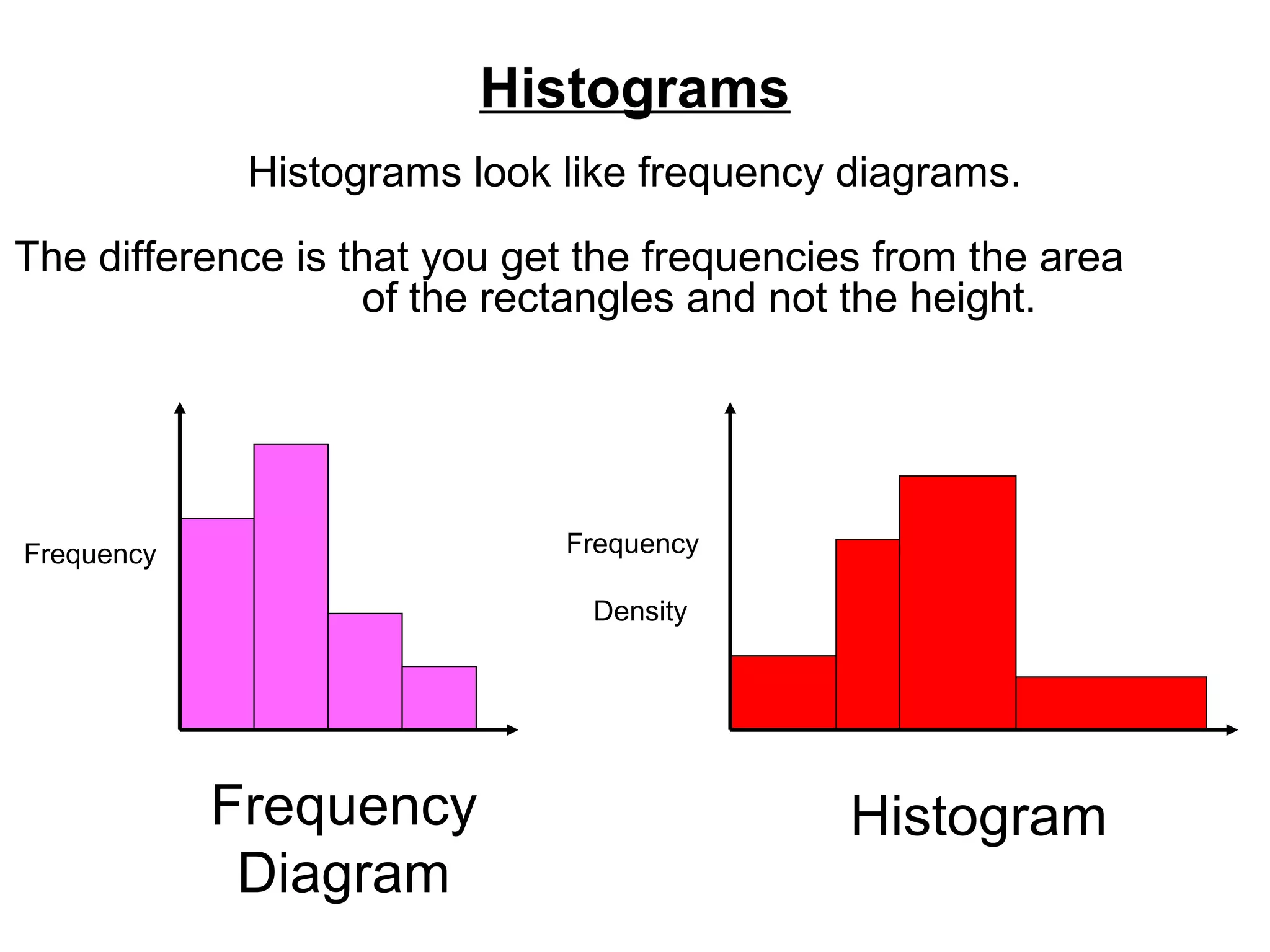
Histograms look like frequency diagrams.
The difference is that you get the frequencies from the area
of the rectangles and not the height.

Frequency

Frequency

Density

Frequency
Diagram

Histogram
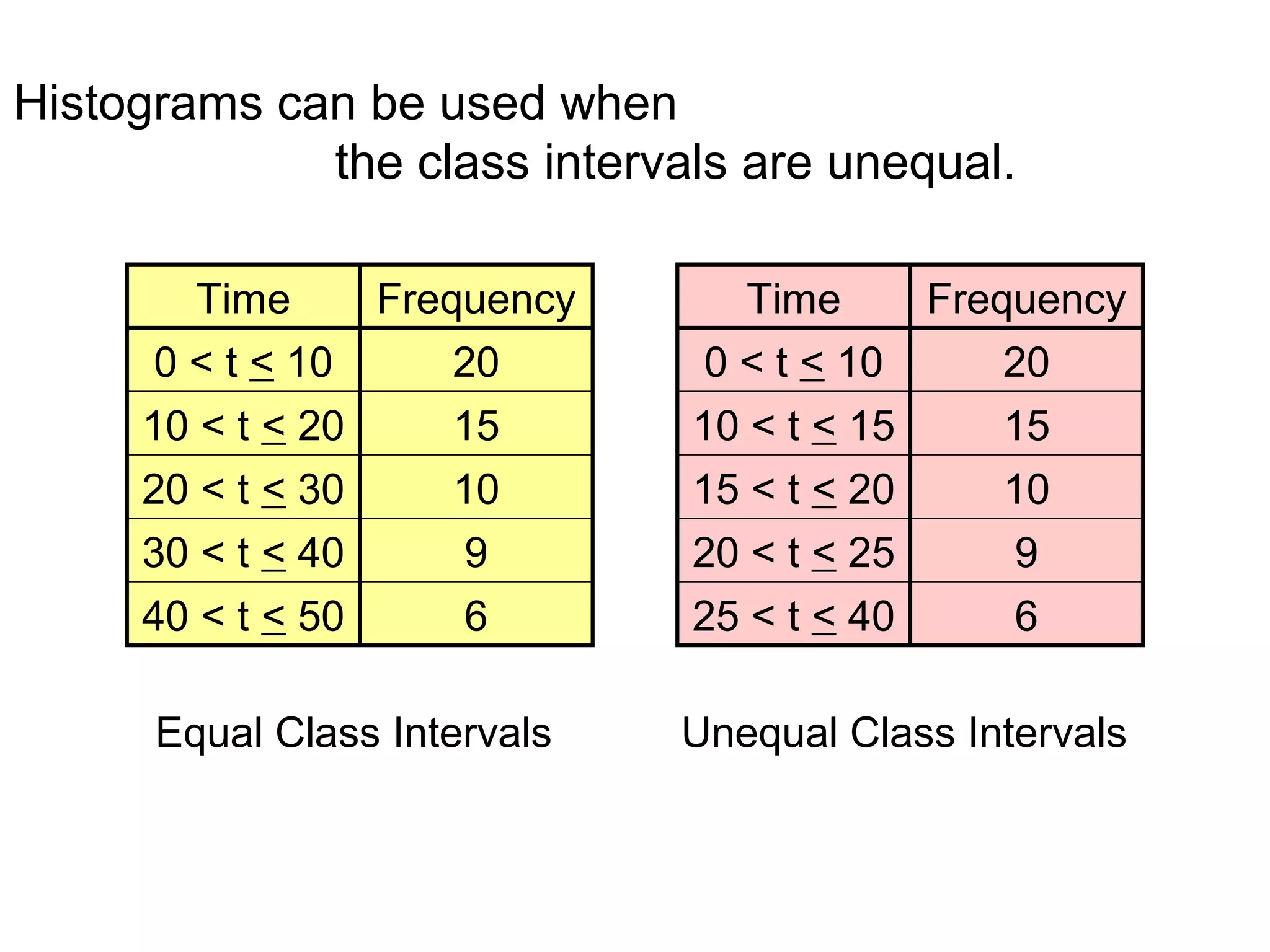
Histograms can be used when
the class intervals are unequal.
Time
Frequency
0 < t < 10
20
10 < t < 20
15
20 < t < 30
10
30 < t < 40
9
40 < t < 50
6

Time
Frequency
0 < t < 10
20
10 < t < 15
15
15 < t < 20
10
20 < t < 25
9
25 < t < 40
6

Equal Class Intervals

Unequal Class Intervals
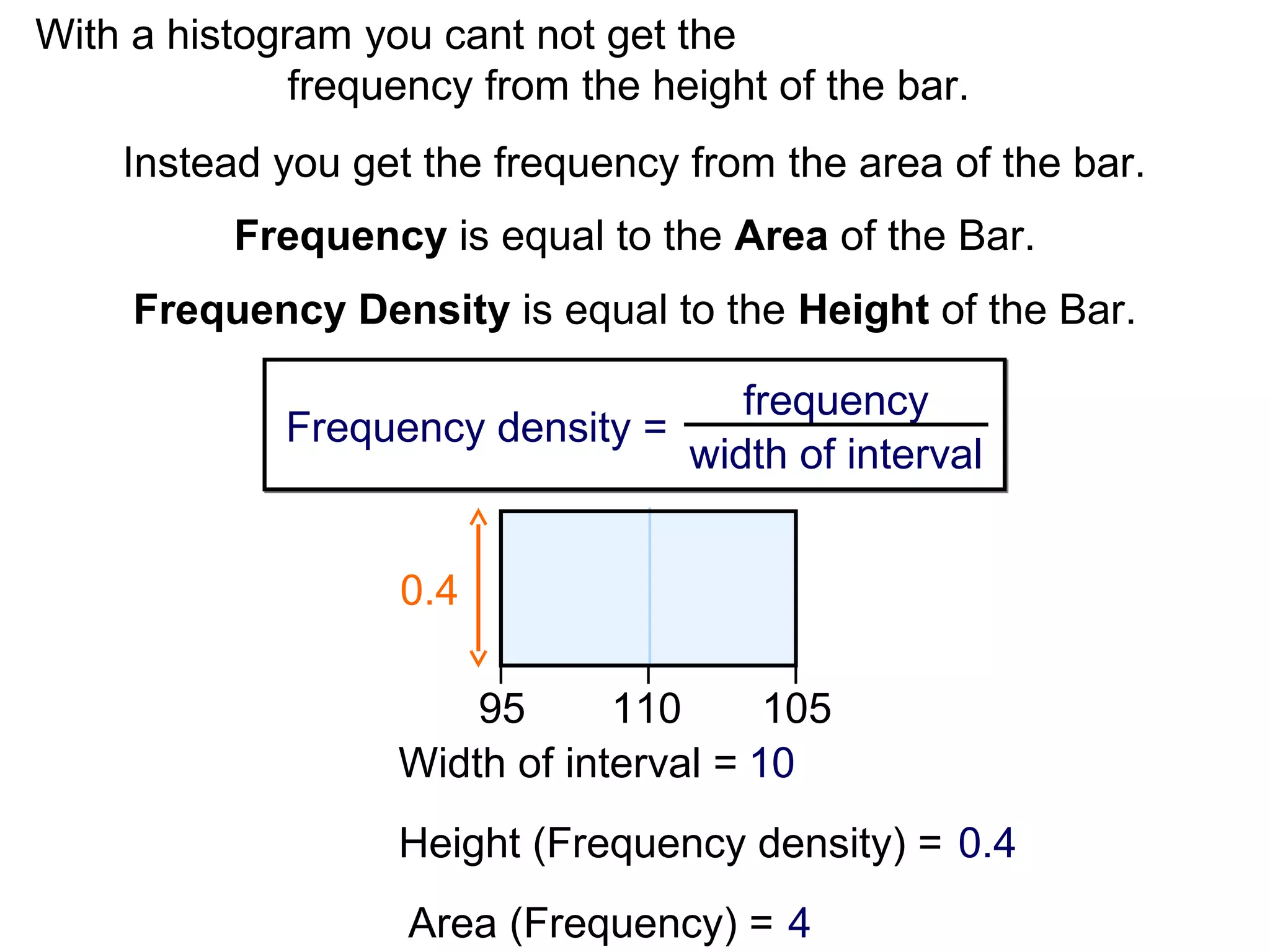
With a histogram you cant not get the
frequency from the height of the bar.
Instead you get the frequency from the area of the bar.
Frequency is equal to the Area of the Bar.
Frequency Density is equal to the Height of the Bar.
frequency
Frequency density =
width of interval
0.4
95
110
105
Width of interval = 10
Height (Frequency density) = 0.4
Area (Frequency) = 4
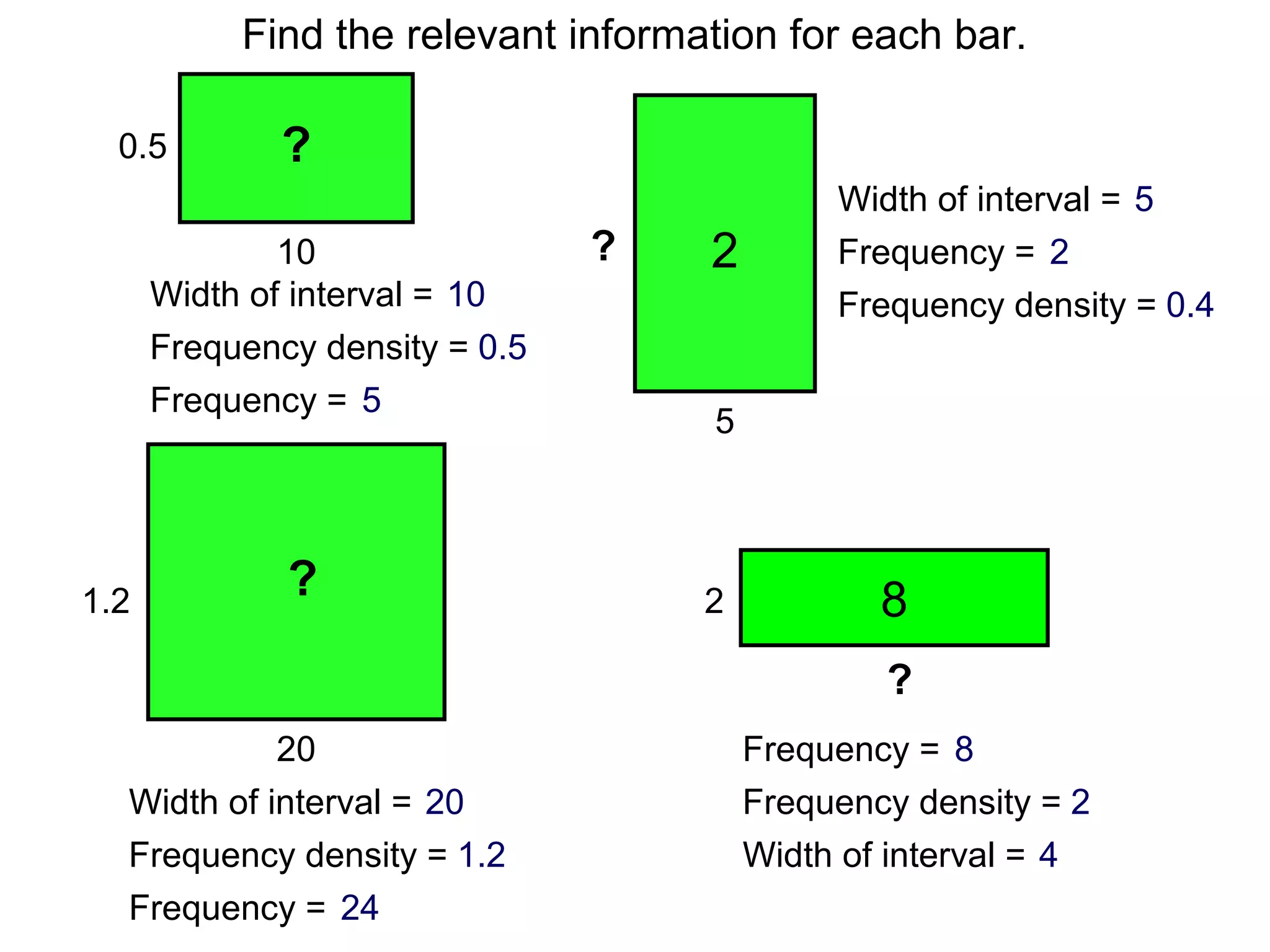
Find the relevant information for each bar.
0.5

?

10
Width of interval = 10
Frequency density = 0.5
Frequency = 5

1.2

?

?

2

Width of interval = 5
Frequency = 2
Frequency density = 0.4

5

2

8
?

20
Width of interval = 20
Frequency density = 1.2
Frequency = 24

Frequency = 8
Frequency density = 2
Width of interval = 4
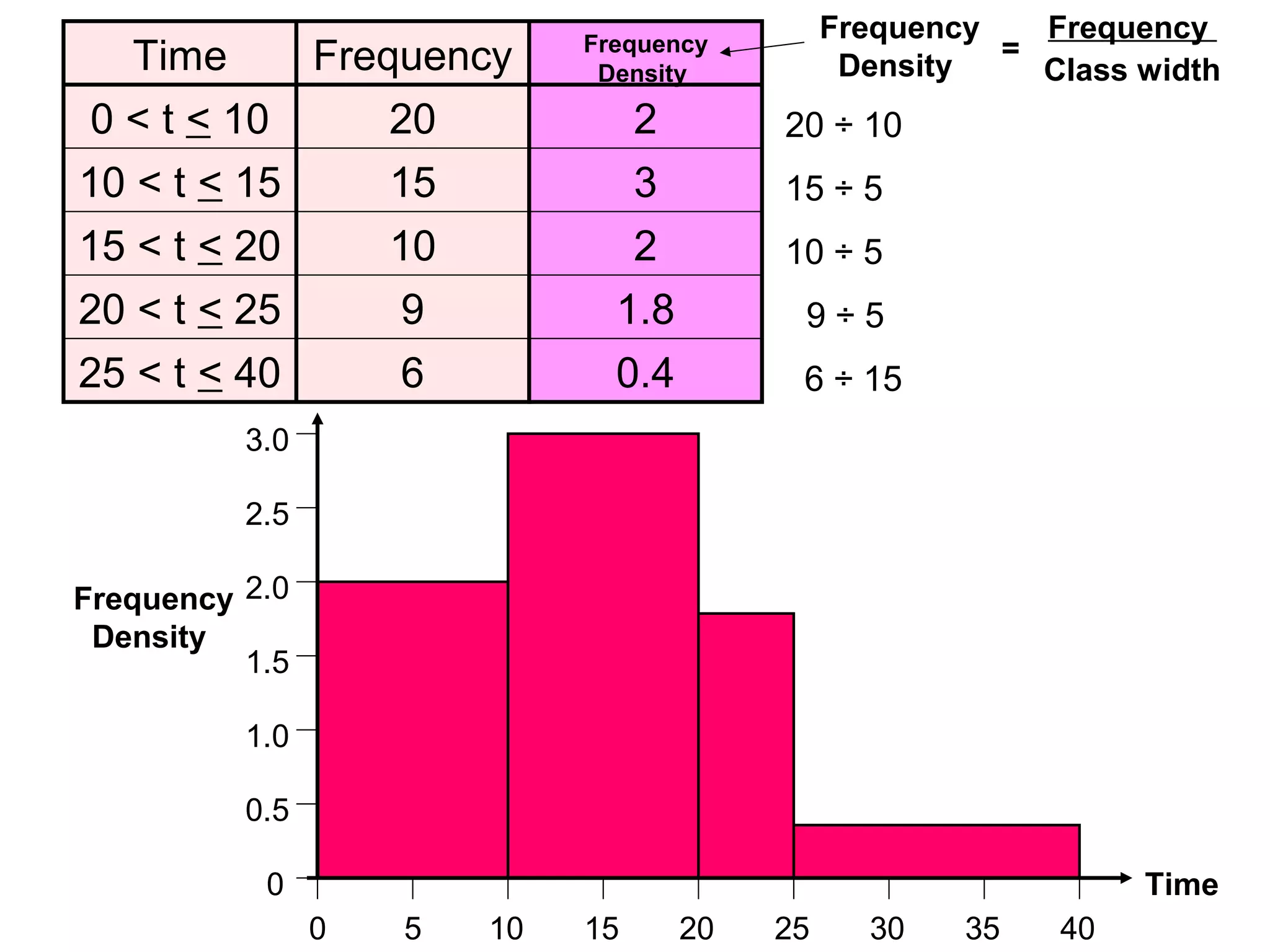
Time
Frequency
0 < t < 10
20
10 < t < 15
15
15 < t < 20
10
20 < t < 25
9
25 < t < 40
6

Frequency
Frequency
=
Density
Class width

Frequency
Density

2
3
2
1.8
0.4

20 ÷ 10
15 ÷ 5
10 ÷ 5
9÷5
6 ÷ 15

3.0
2.5
Frequency 2.0
Density
1.5
1.0
0.5
0

Time
0

5

10

15

20

25

30

35

40
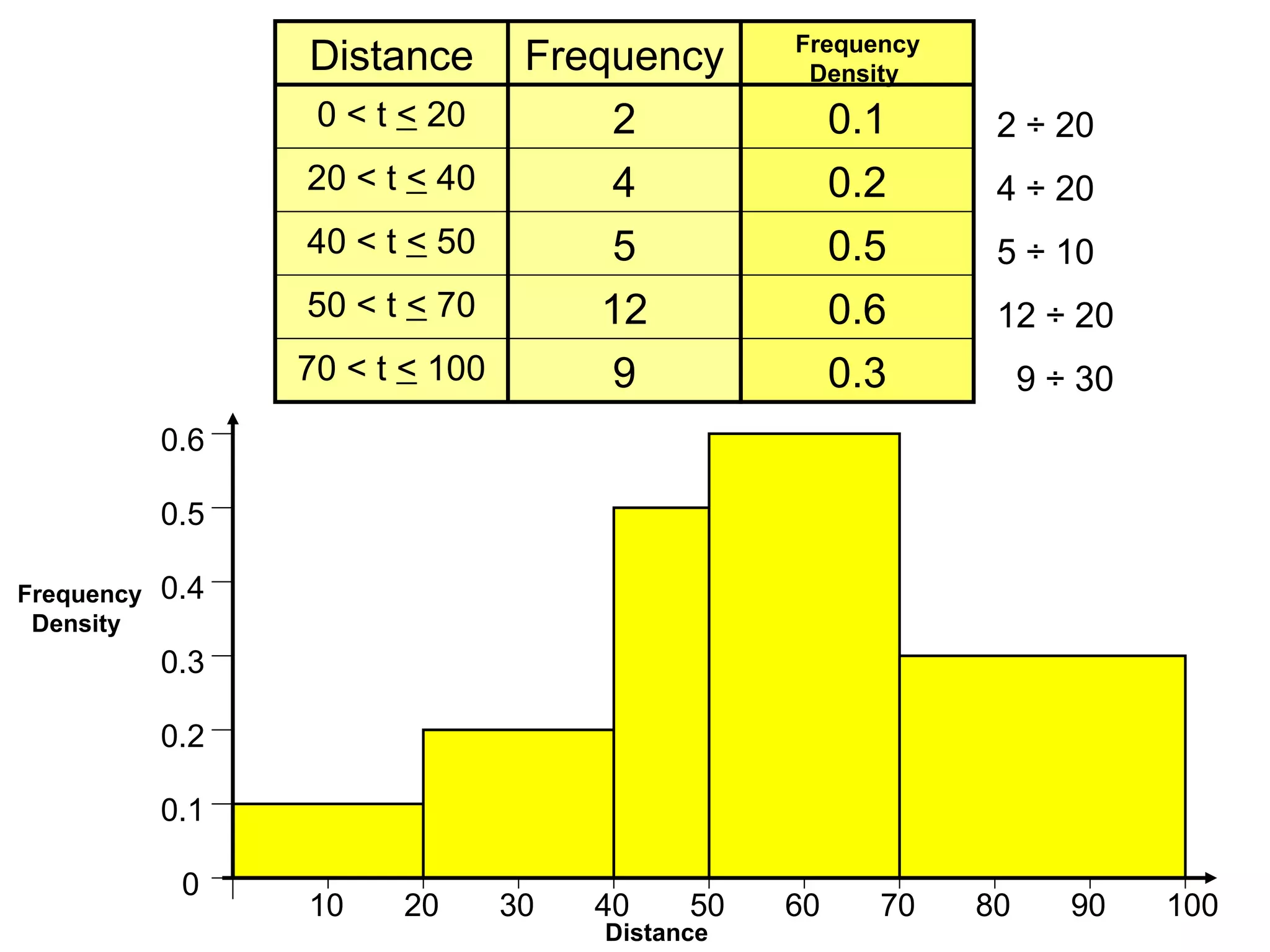
Distance

Frequency
0 < t < 20
2
20 < t < 40
4
40 < t < 50
5
50 < t < 70
12
70 < t < 100
9

Frequency
Density

0.1
0.2
0.5
0.6
0.3

2 ÷ 20
4 ÷ 20
5 ÷ 10
12 ÷ 20
9 ÷ 30

0.6
0.5
Frequency
Density

0.4
0.3
0.2
0.1
0

10

20

30

40

50

Distance

60

70

80

90

100
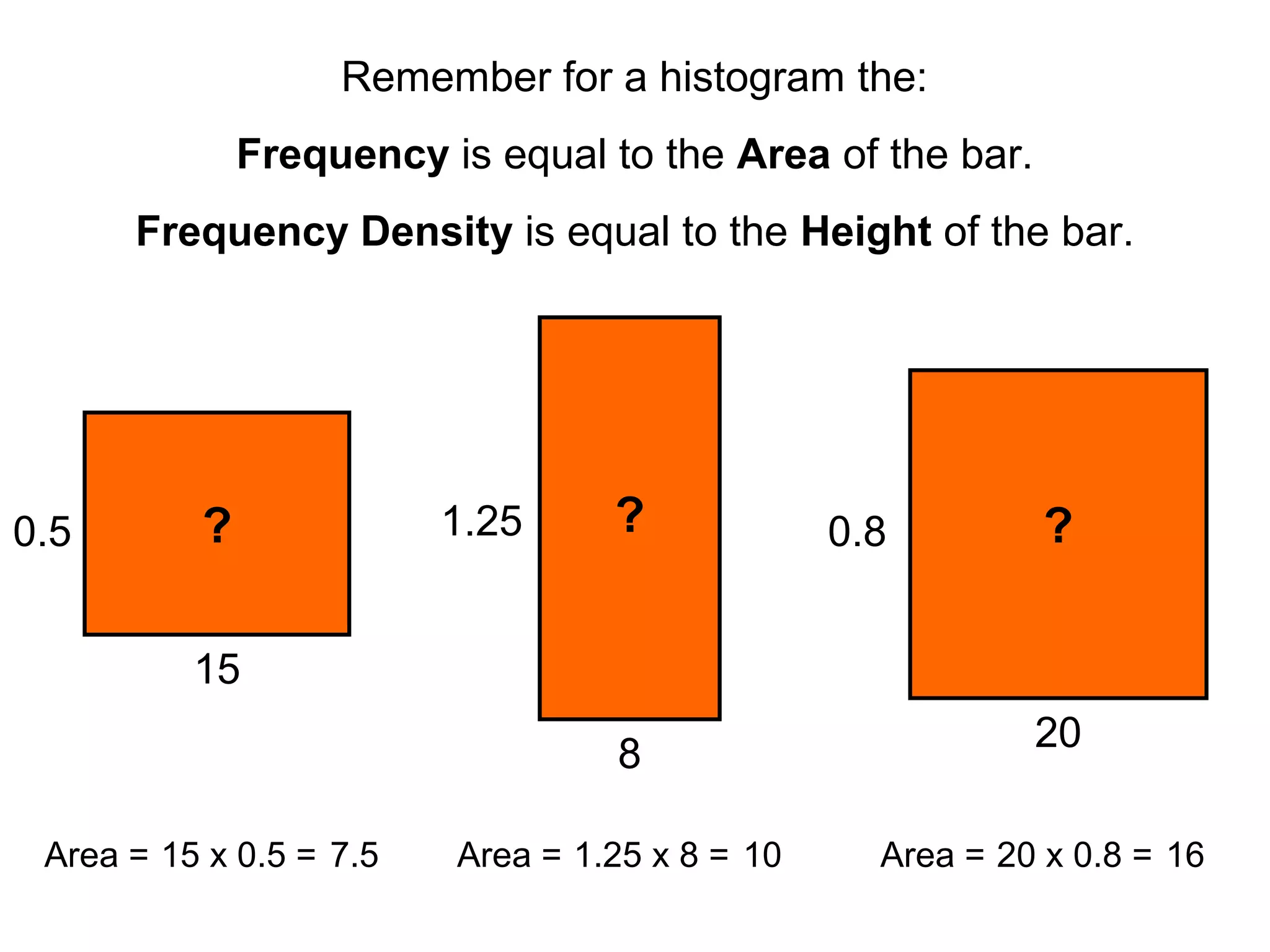
Remember for a histogram the:
Frequency is equal to the Area of the bar.
Frequency Density is equal to the Height of the bar.

0.5

?

1.25

?

0.8

?

15
8
Area = 15 x 0.5 = 7.5

Area = 1.25 x 8 = 10

20
Area = 20 x 0.8 = 16
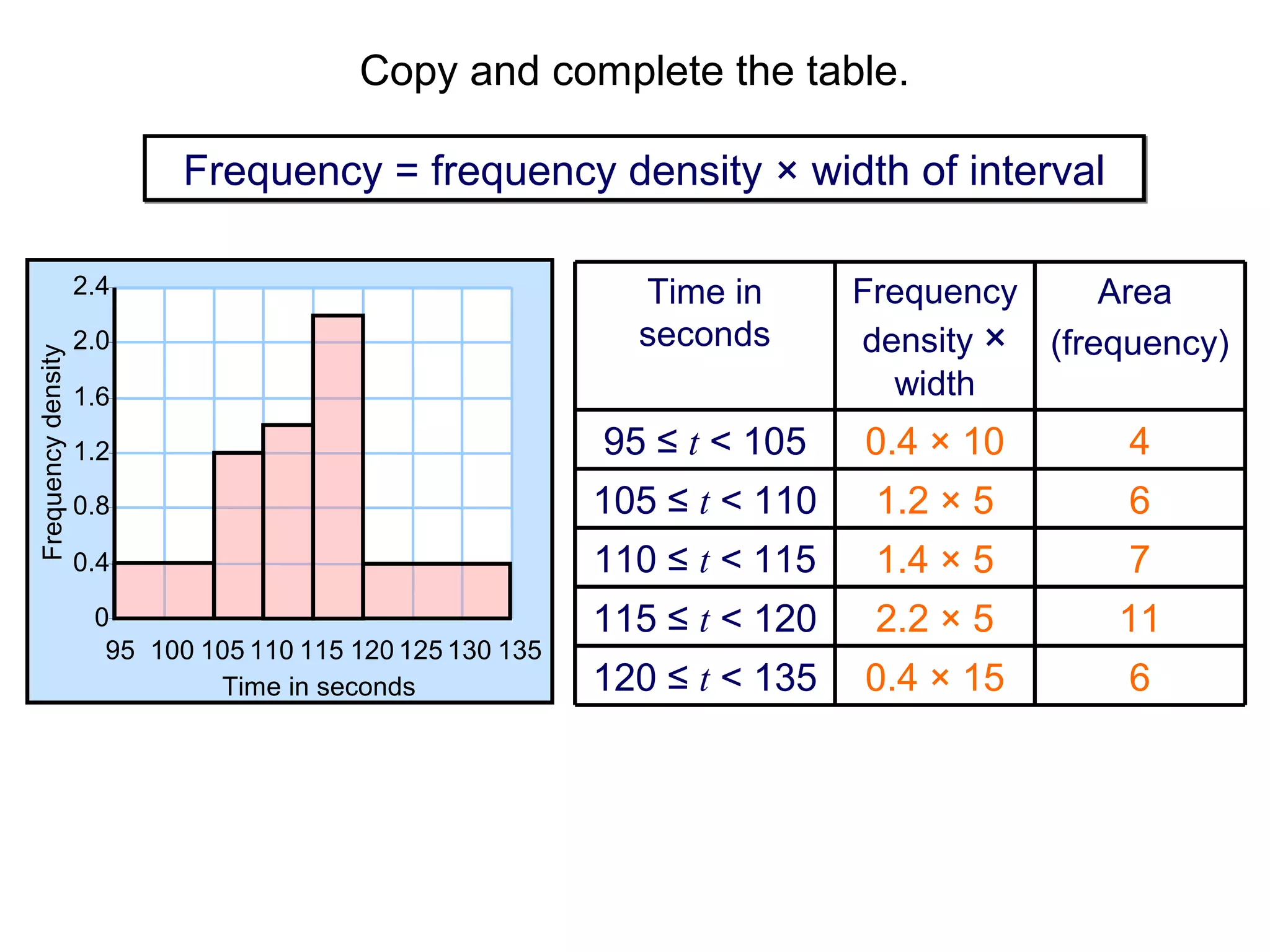
Copy and complete the table.
Frequency = frequency density × width of interval

Frequency density

2.4
2.0

Time in
seconds

1.6

Frequency
Area
density × (frequency)
width

1.2

95 ≤ t < 105

0.4 × 10

4

0.8

105 ≤ t < 110

1.2 × 5

6

0.4

110 ≤ t < 115

1.4 × 5

7

115 ≤ t < 120

2.2 × 5

11

120 ≤ t < 135

0.4 × 15

6

0
95 100 105 110 115 120 125 130 135
Time in seconds
1.0
0.8
Frequency
Density 0.6

0.4
0.2
0

0

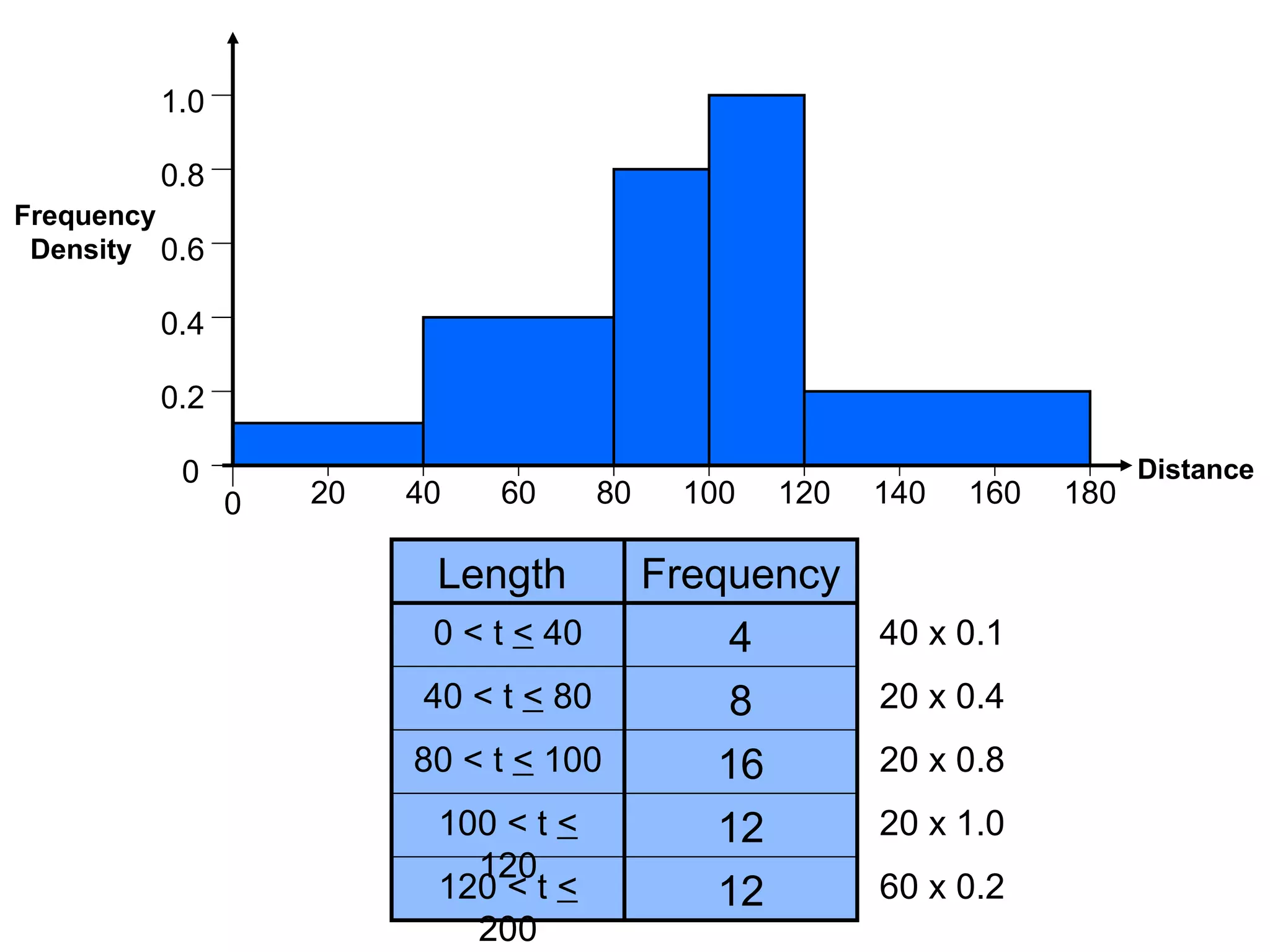
20

40

60

80

100

120

Frequency
0 < t < 40
4
40 < t < 80
8
80 < t < 100
16
100 < t <
12
120
120 < t <
12

140

160

Length

200

40 x 0.1
20 x 0.4
20 x 0.8
20 x 1.0
60 x 0.2

180

Distance
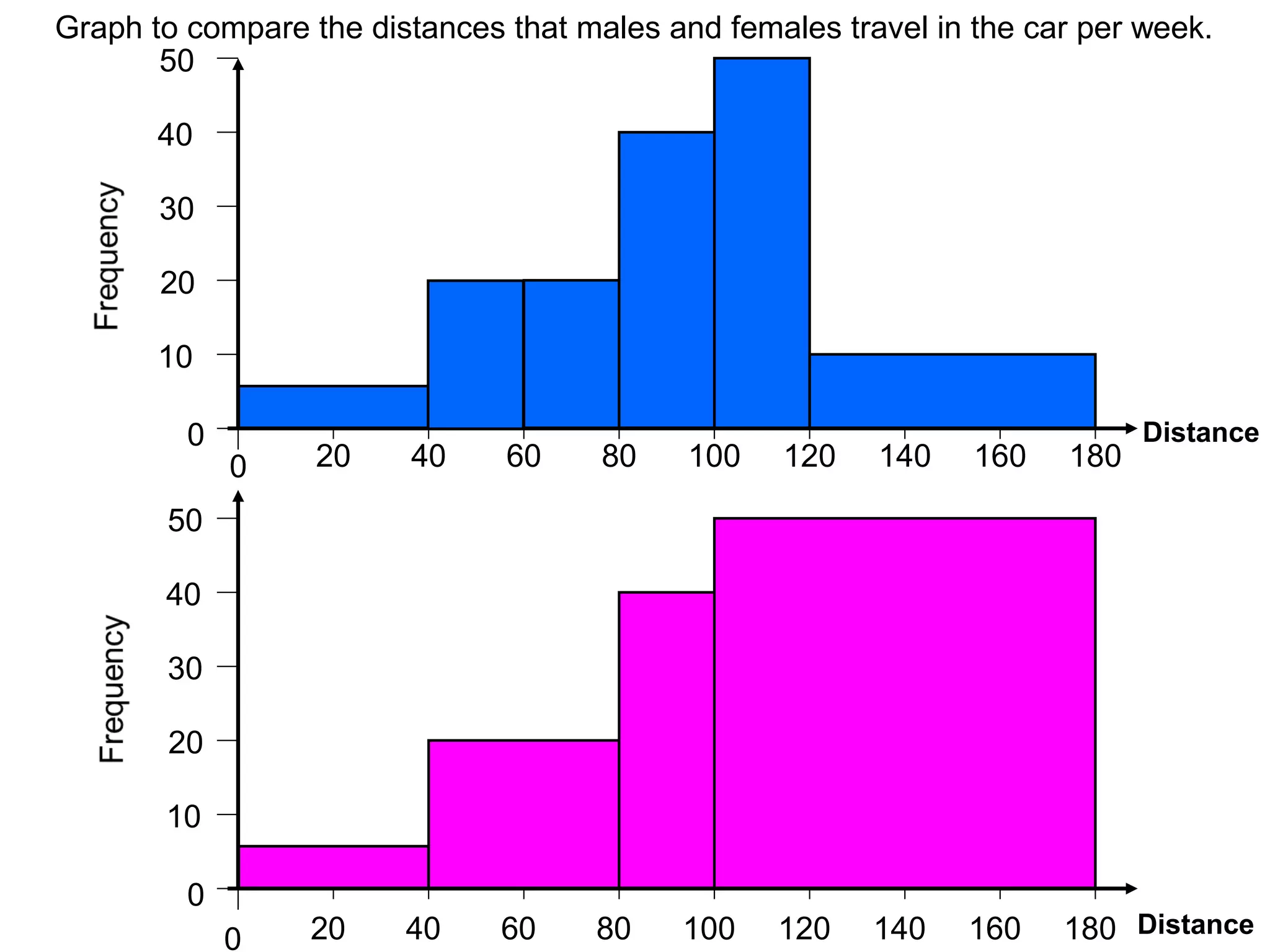
Graph to compare the distances that males and females travel in the car per week.
50
40
30
20
10
0

Distance

0

20

40

60

80

100

120

140

160

180

0

20

40

60

80

100

120

140

160

180 Distance

50
40
30
20
10
0
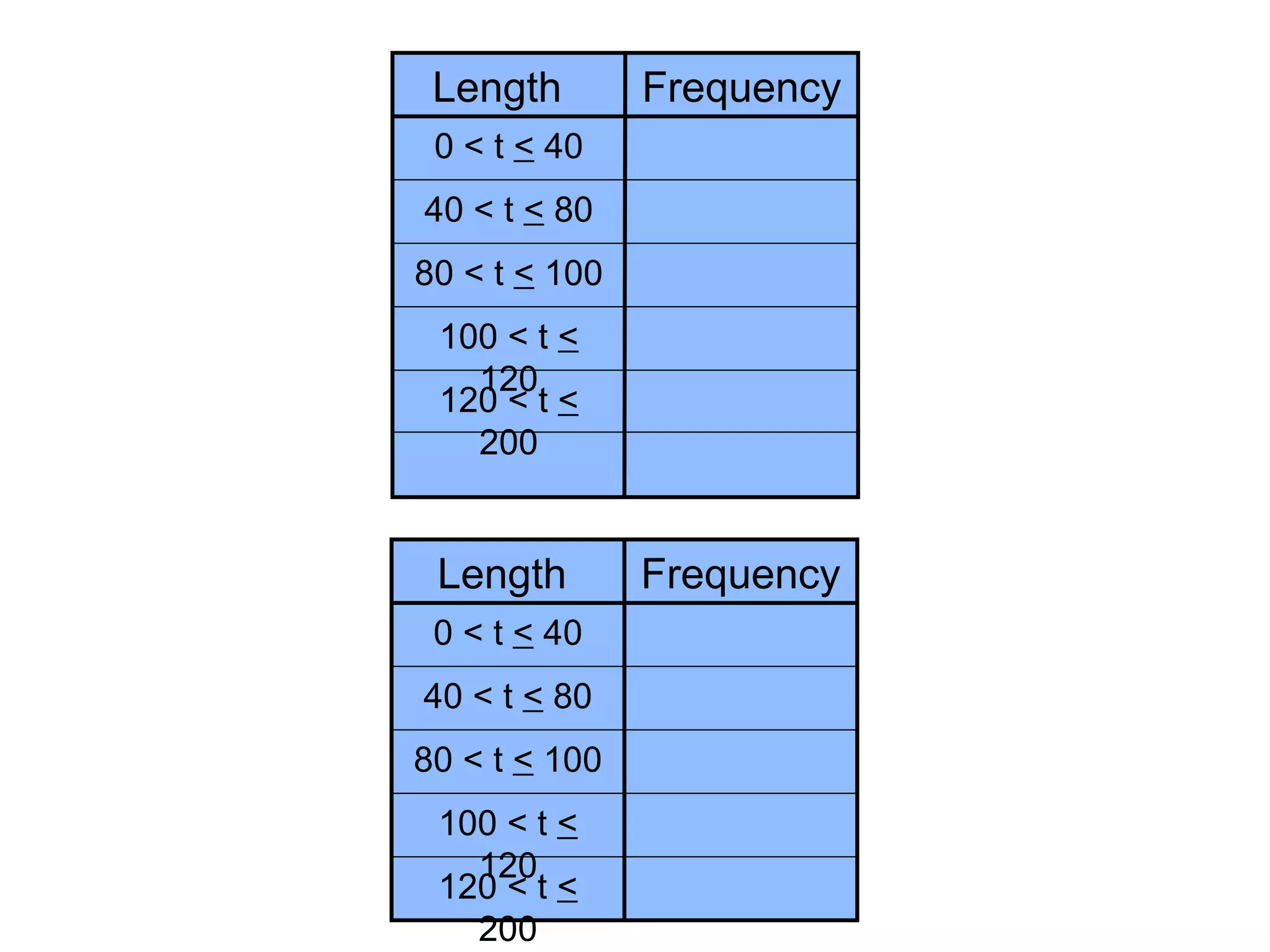
Length

Frequency

0 < t < 40
40 < t < 80
80 < t < 100
100 < t <
120
120 < t <
200

Length
0 < t < 40
40 < t < 80
80 < t < 100
100 < t <
120
120 < t <
200

Frequency
Review
Write a definition of each word below.
Include methods for calculating.
Data set

Frequency

Class interval

Frequency polygon

Midpoint

Class interval

Range

Histogram

Frequency diagram

Frequency density

Histograms

  • 1.
    Histograms Histograms look likefrequency diagrams. The difference is that you get the frequencies from the area of the rectangles and not the height. Frequency Frequency Density Frequency Diagram Histogram
  • 2.
    Histograms can beused when the class intervals are unequal. Time Frequency 0 < t < 10 20 10 < t < 20 15 20 < t < 30 10 30 < t < 40 9 40 < t < 50 6 Time Frequency 0 < t < 10 20 10 < t < 15 15 15 < t < 20 10 20 < t < 25 9 25 < t < 40 6 Equal Class Intervals Unequal Class Intervals
  • 3.
    With a histogramyou cant not get the frequency from the height of the bar. Instead you get the frequency from the area of the bar. Frequency is equal to the Area of the Bar. Frequency Density is equal to the Height of the Bar. frequency Frequency density = width of interval 0.4 95 110 105 Width of interval = 10 Height (Frequency density) = 0.4 Area (Frequency) = 4
  • 4.
    Find the relevantinformation for each bar. 0.5 ? 10 Width of interval = 10 Frequency density = 0.5 Frequency = 5 1.2 ? ? 2 Width of interval = 5 Frequency = 2 Frequency density = 0.4 5 2 8 ? 20 Width of interval = 20 Frequency density = 1.2 Frequency = 24 Frequency = 8 Frequency density = 2 Width of interval = 4
  • 5.
    Time Frequency 0 < t< 10 20 10 < t < 15 15 15 < t < 20 10 20 < t < 25 9 25 < t < 40 6 Frequency Frequency = Density Class width Frequency Density 2 3 2 1.8 0.4 20 ÷ 10 15 ÷ 5 10 ÷ 5 9÷5 6 ÷ 15 3.0 2.5 Frequency 2.0 Density 1.5 1.0 0.5 0 Time 0 5 10 15 20 25 30 35 40
  • 6.
    Distance Frequency 0 < t< 20 2 20 < t < 40 4 40 < t < 50 5 50 < t < 70 12 70 < t < 100 9 Frequency Density 0.1 0.2 0.5 0.6 0.3 2 ÷ 20 4 ÷ 20 5 ÷ 10 12 ÷ 20 9 ÷ 30 0.6 0.5 Frequency Density 0.4 0.3 0.2 0.1 0 10 20 30 40 50 Distance 60 70 80 90 100
  • 7.
    Remember for ahistogram the: Frequency is equal to the Area of the bar. Frequency Density is equal to the Height of the bar. 0.5 ? 1.25 ? 0.8 ? 15 8 Area = 15 x 0.5 = 7.5 Area = 1.25 x 8 = 10 20 Area = 20 x 0.8 = 16
  • 8.
    Copy and completethe table. Frequency = frequency density × width of interval Frequency density 2.4 2.0 Time in seconds 1.6 Frequency Area density × (frequency) width 1.2 95 ≤ t < 105 0.4 × 10 4 0.8 105 ≤ t < 110 1.2 × 5 6 0.4 110 ≤ t < 115 1.4 × 5 7 115 ≤ t < 120 2.2 × 5 11 120 ≤ t < 135 0.4 × 15 6 0 95 100 105 110 115 120 125 130 135 Time in seconds
  • 9.
    1.0 0.8 Frequency Density 0.6 0.4 0.2 0 0 20 40 60 80 100 120 Frequency 0 <t < 40 4 40 < t < 80 8 80 < t < 100 16 100 < t < 12 120 120 < t < 12 140 160 Length 200 40 x 0.1 20 x 0.4 20 x 0.8 20 x 1.0 60 x 0.2 180 Distance
  • 10.
    Graph to comparethe distances that males and females travel in the car per week. 50 40 30 20 10 0 Distance 0 20 40 60 80 100 120 140 160 180 0 20 40 60 80 100 120 140 160 180 Distance 50 40 30 20 10 0
  • 11.
    Length Frequency 0 < t< 40 40 < t < 80 80 < t < 100 100 < t < 120 120 < t < 200 Length 0 < t < 40 40 < t < 80 80 < t < 100 100 < t < 120 120 < t < 200 Frequency
  • 12.
    Review Write a definitionof each word below. Include methods for calculating. Data set Frequency Class interval Frequency polygon Midpoint Class interval Range Histogram Frequency diagram Frequency density

Editor's Notes

  • #9 The results obtained should be compared with the original graph.