Highs and Lows: A Resel-based
Approach to the Analysis of Data
 from Geophysical and Surface
        Artefact Survey


     John Pouncett and Emma Gowans
Introduction
●   Background
    Overview the case study on which this paper is based:
       a) Summary of the nature of data from surface artefact and
          geophysical survey
       b) Overview of the techniques used to process and
          analyse/interpret those datasets
●   Resels
    Introduce the concept of a resel (resolution element)
    Implement/extend Tobler's proposal for a resel-based GIS:
        a) Surface artefact survey – 'low density' scatters
        b) Geophysical survey – GPS enabled sensors
Case Study
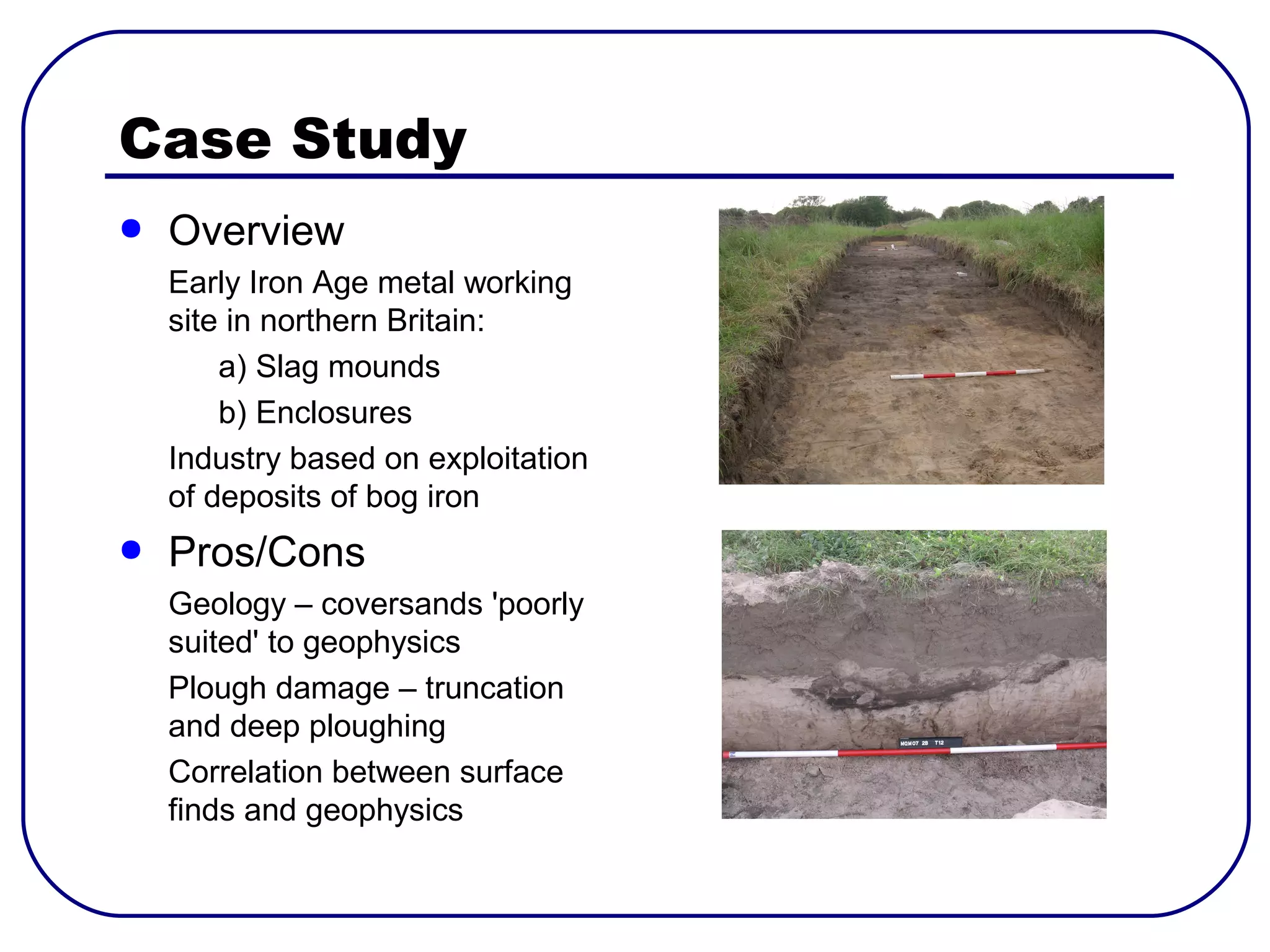
●   Overview
    Early Iron Age metal working
    site in northern Britain:
        a) Slag mounds
        b) Enclosures
    Industry based on exploitation
    of deposits of bog iron
●   Pros/Cons
    Geology – coversands 'poorly
    suited' to geophysics
    Plough damage – truncation
    and deep ploughing
    Correlation between surface
    finds and geophysics
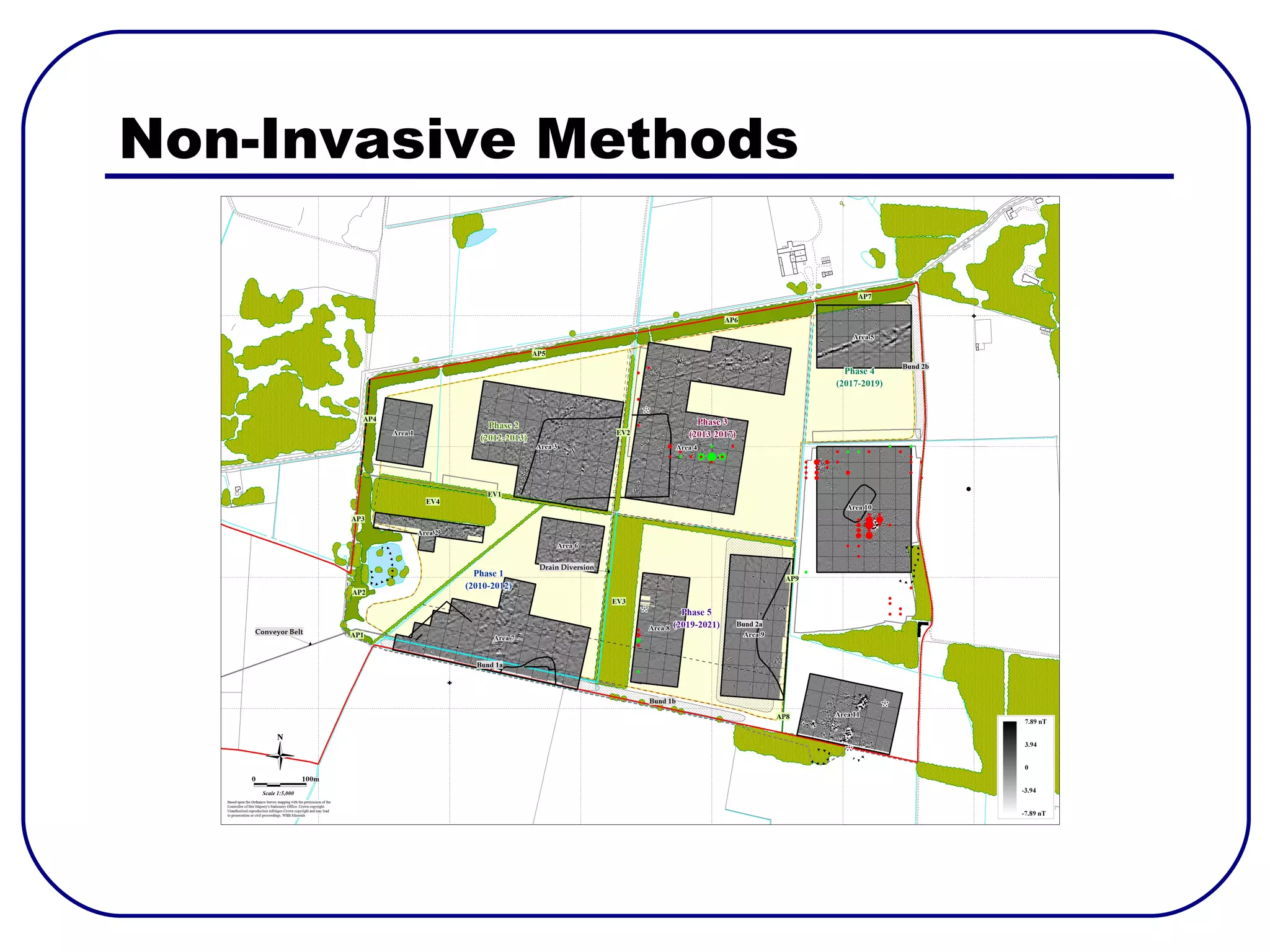
Non-Invasive Methods
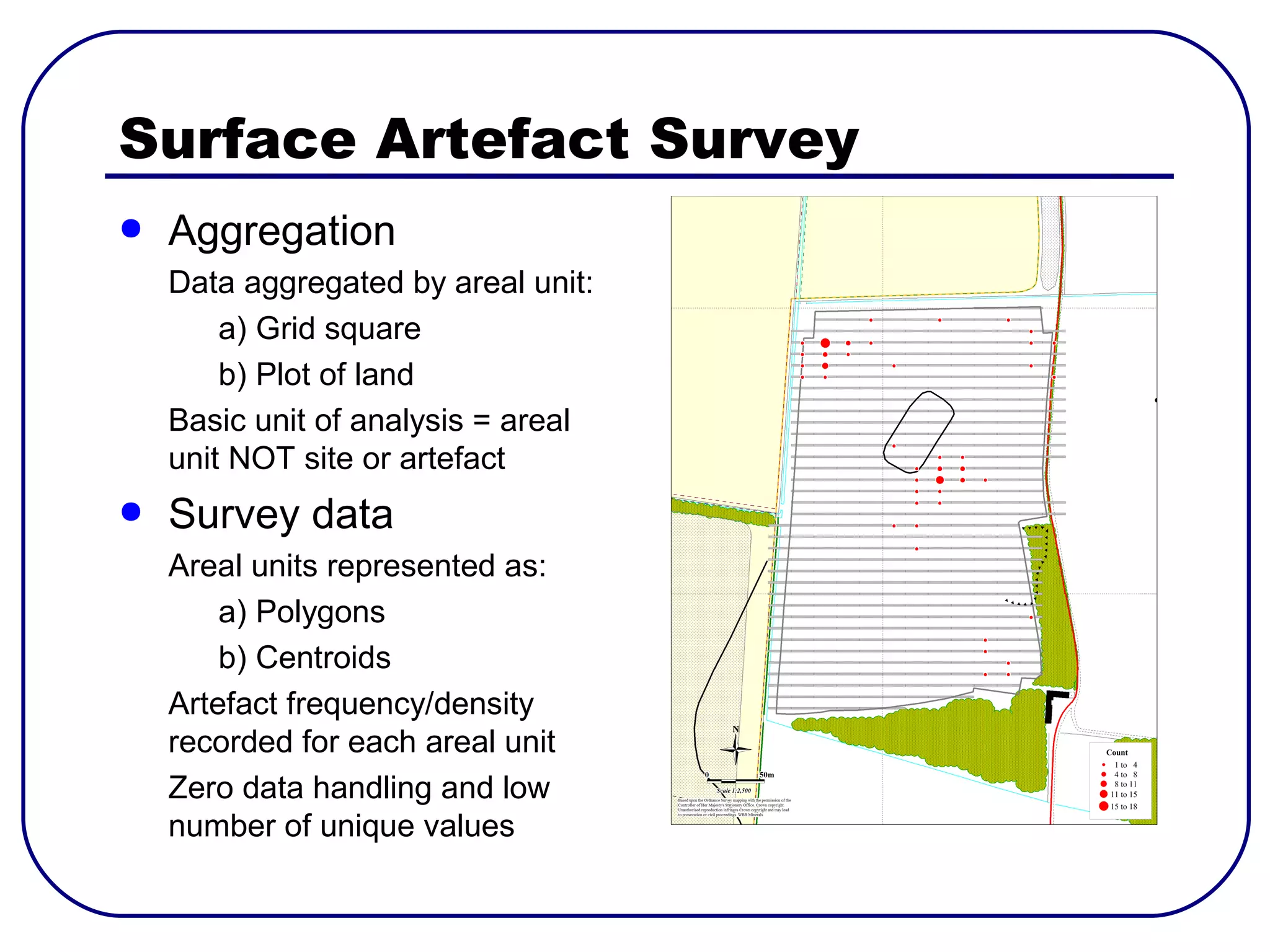
Surface Artefact Survey
●   Aggregation
    Data aggregated by areal unit:
        a) Grid square
        b) Plot of land
    Basic unit of analysis = areal
    unit NOT site or artefact
●   Survey data
    Areal units represented as:
        a) Polygons
        b) Centroids
    Artefact frequency/density
    recorded for each areal unit
    Zero data handling and low
    number of unique values
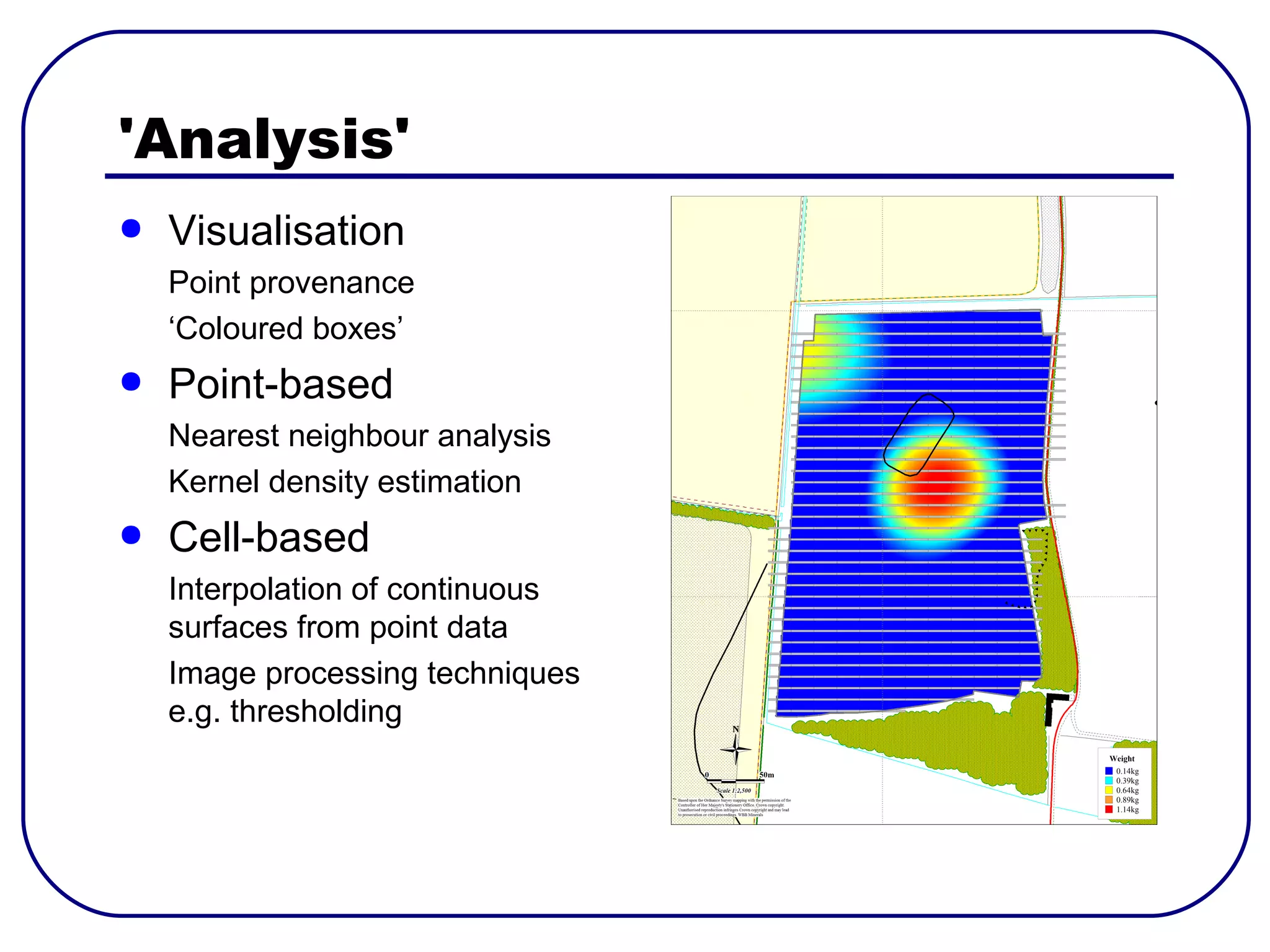
'Analysis'
●   Visualisation
    Point provenance
    ‘Coloured boxes’
●   Point-based
    Nearest neighbour analysis
    Kernel density estimation
●   Cell-based
    Interpolation of continuous
    surfaces from point data
    Image processing techniques
    e.g. thresholding
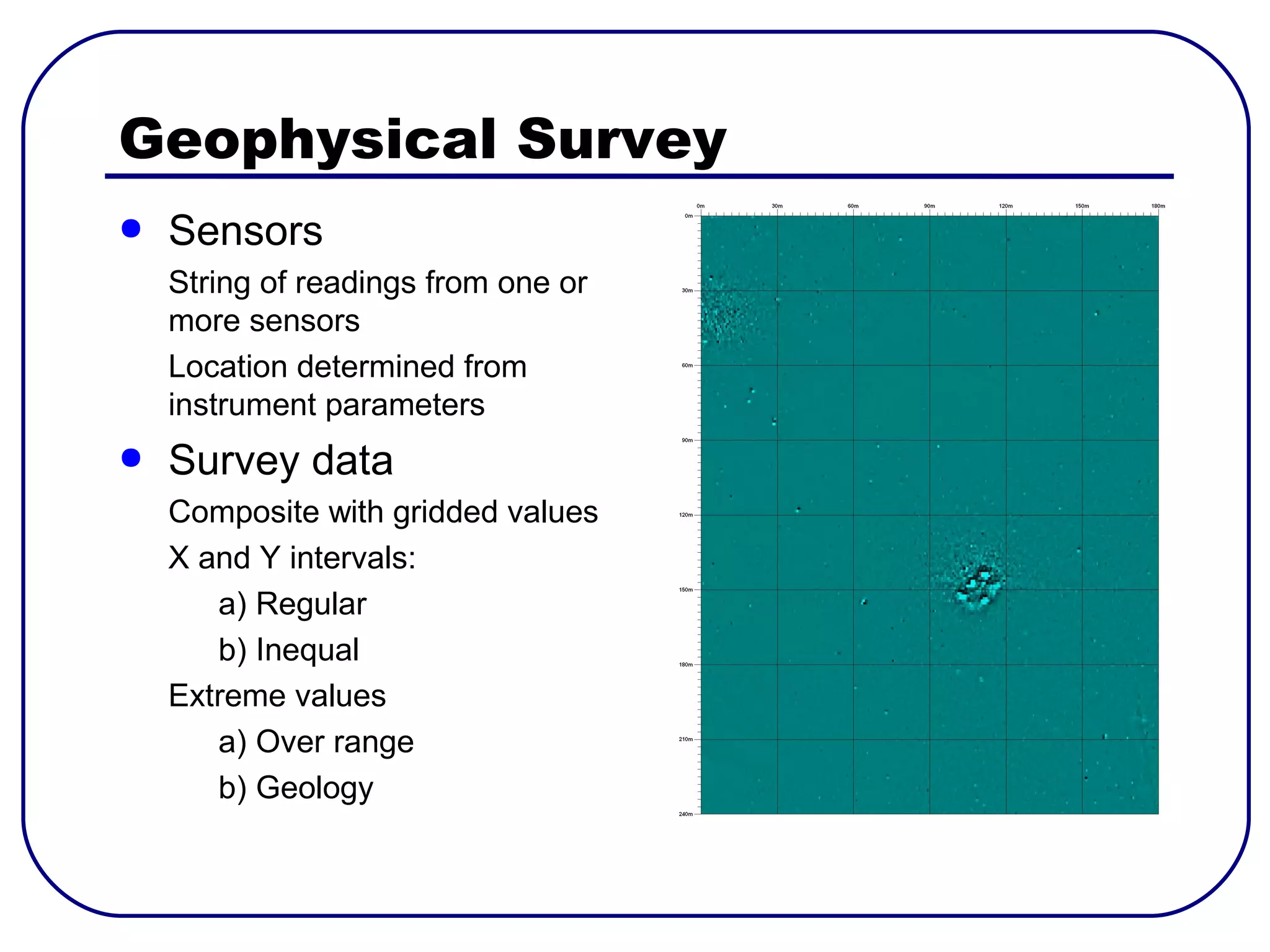
Geophysical Survey
●   Sensors
    String of readings from one or
    more sensors
    Location determined from
    instrument parameters
●   Survey data
    Composite with gridded values
    X and Y intervals:
       a) Regular
       b) Inequal
    Extreme values
       a) Over range
       b) Geology
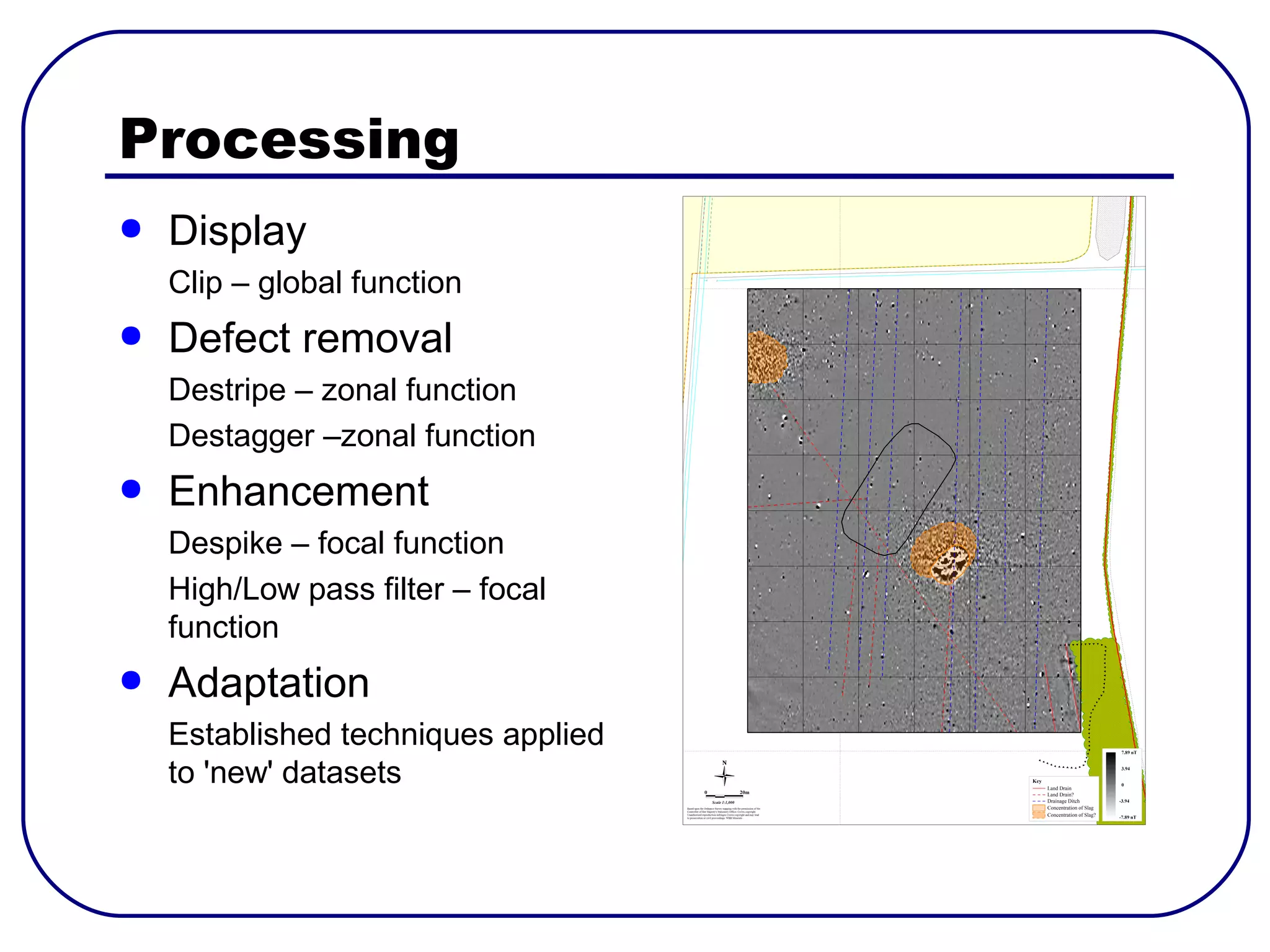
Processing
●   Display
    Clip – global function
●   Defect removal
    Destripe – zonal function
    Destagger –zonal function
●   Enhancement
    Despike – focal function
    High/Low pass filter – focal
    function
●   Adaptation
    Established techniques applied
    to 'new' datasets
Resels
●   Spatial Averages (Tobler & Kennedy 1985)
    Epidemiological and political data is often aggregated spatially:
       a) Interpolation – assign an average to the location(s) for which
          data is required
       b) Conventional distance-weighted averages computationally
          cumbersome
    Applied to both point-based and resel-based datasets
●   Resel-based GIS (Tobler 1995)
    Typical user doesn't know or care whether a system is raster or vector
    based
    Generalisation of techniques used in image processing based on a
    spreadsheet analogy
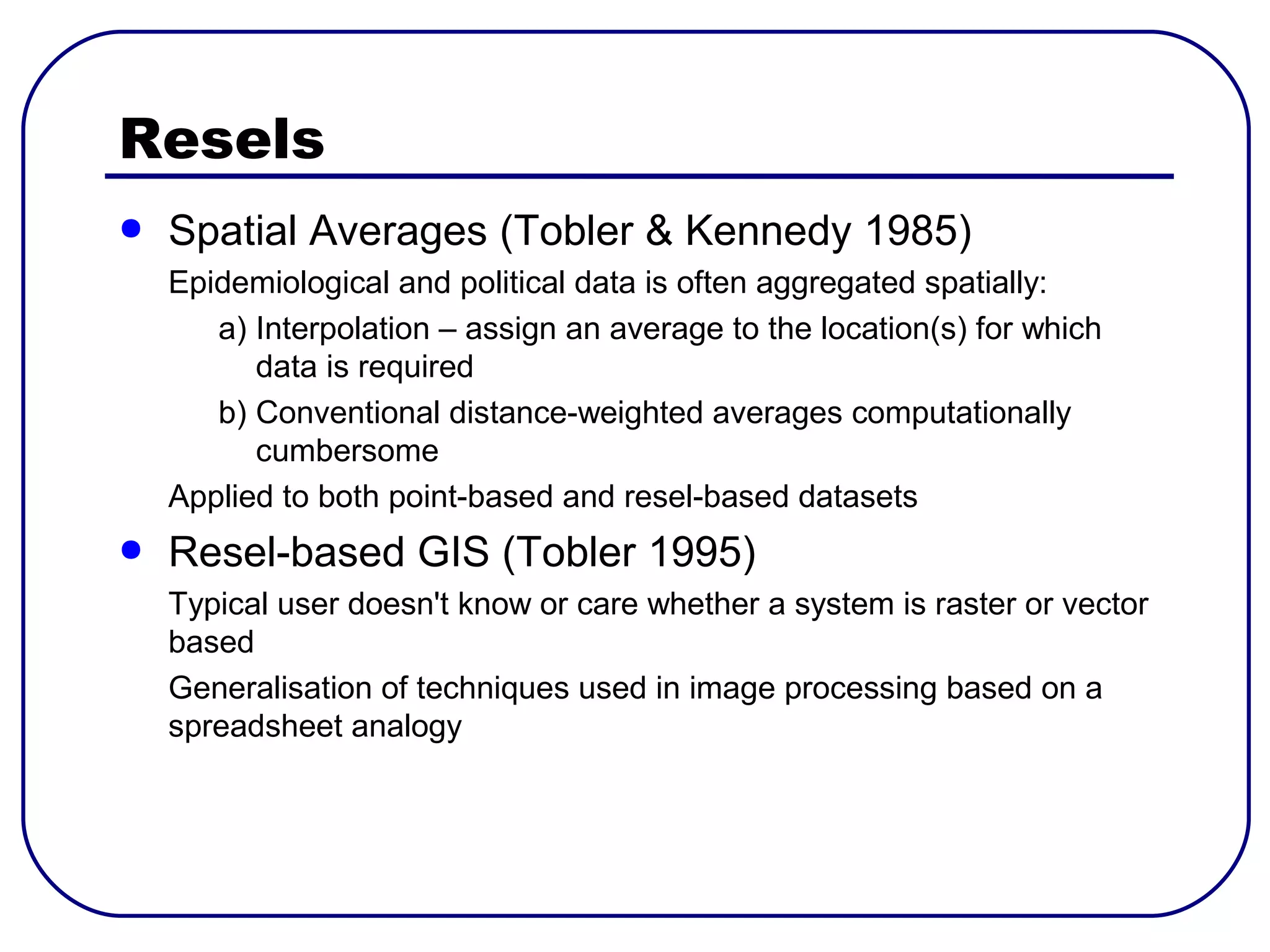
Representation


         Regular x and y – dummy values/no data
       Irregular x and y – single/contiguous entities
Cell-based Operations
●   Raster datasets                   1    2    3    4    5

    Regular configuration of cells,
                                      6    7    8    9    10
    each cell has the same:
       a) Geometric properties        11   12   13   14   15

       b) Number of neighbours
                                      16   17   18   19   20
    Robust syntax for map algebra
    based on:                         21   22   23   24   25

       a) Row/column offsets [r,c]
       b) Kernels (0/1 or weighted)
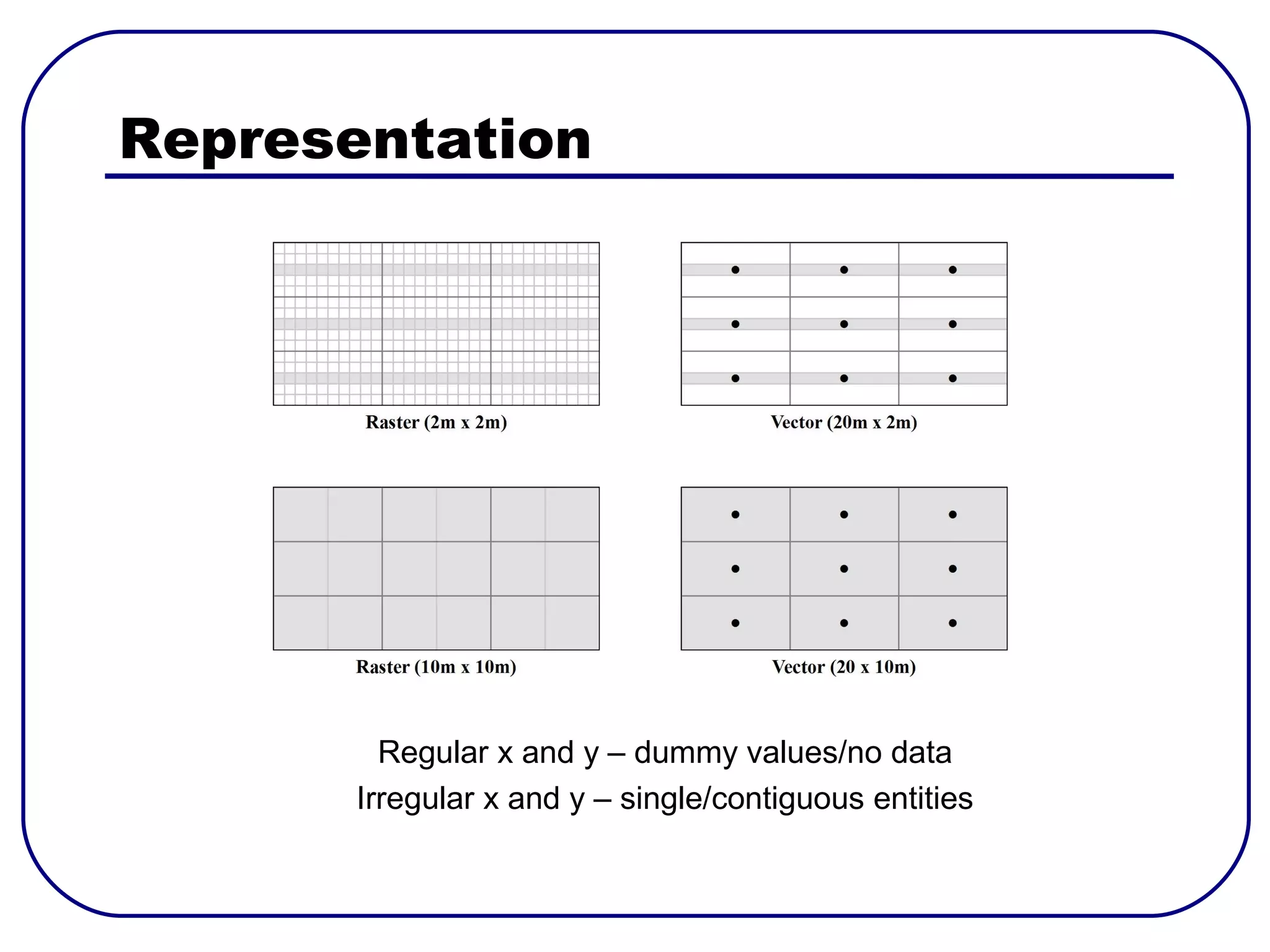
Point-based Operations


         1st order neighbours (light grey)
         2nd order neighbours (dark grey)
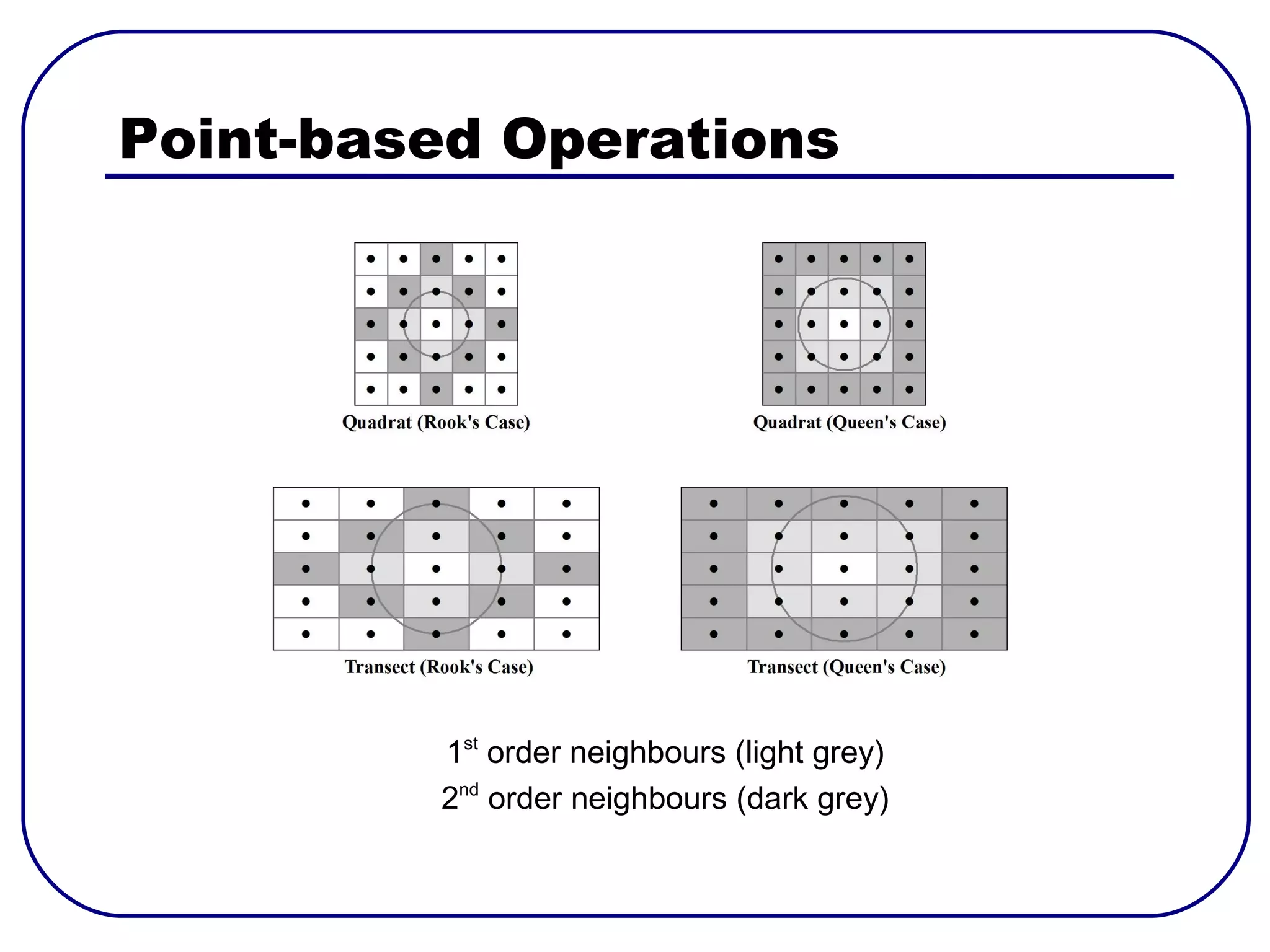
Spatial Relationships
●   Contiguous polygons
    Irregular configuration of areal
    units
    Conceptualisation of spatial
    relationships:
        a) Rook's case - shared
           edges
        b) Queen's case - shared
           edges and nodes
    Spatial weights e.g. length of
    shared edge
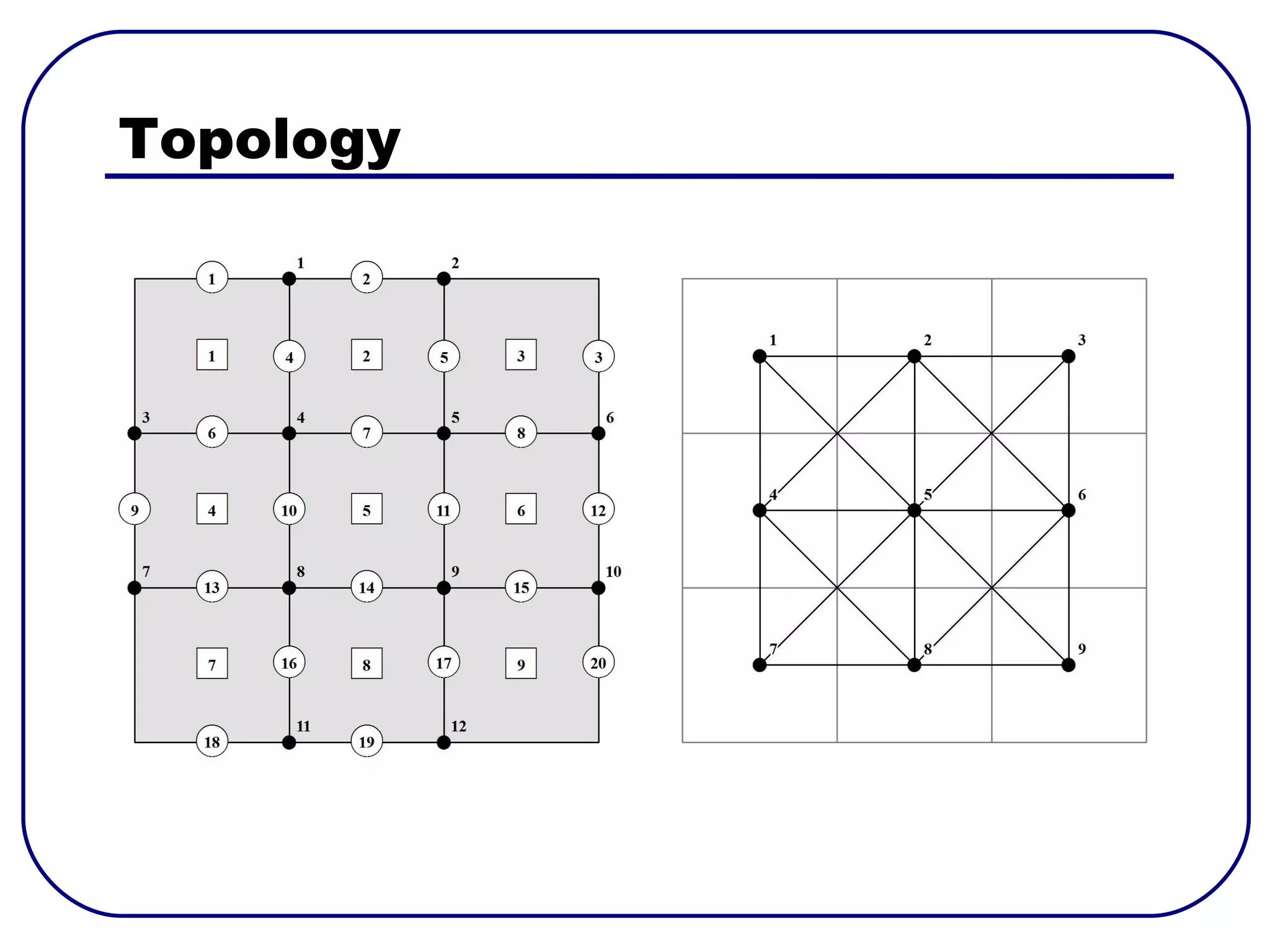
Topology
Adjacency
●   1st Order Neighbours    ●   2nd Order Neighbours
    Neighbours of cell 13       Neighbours of 1st neighbours
    ID FID NID Weight           # Neighbours
    1    13 7      0            7 1 2 3 6 8 11 12 13
    2    13 8      10           8 2 3 4 7 9 12 13 14
    3    13 9      0            9 3 4 5 8 10 13 14 15
    4    13 12 10               12 6 7 8 11 13 16 17 18
    5    13 14 10               14 8 9 10 13 15 18 19 20
    6    13 17 0                17 11 12 13 16 18 21 22 23
    7    13 18 10               18 12 13 14 17 19 22 23 24
    8    13 19 0                19 13 14 15 18 20 23 24 25
    0 = Queen's case            Remove duplicates
    10 = Rook's case            [Remove lower orders]
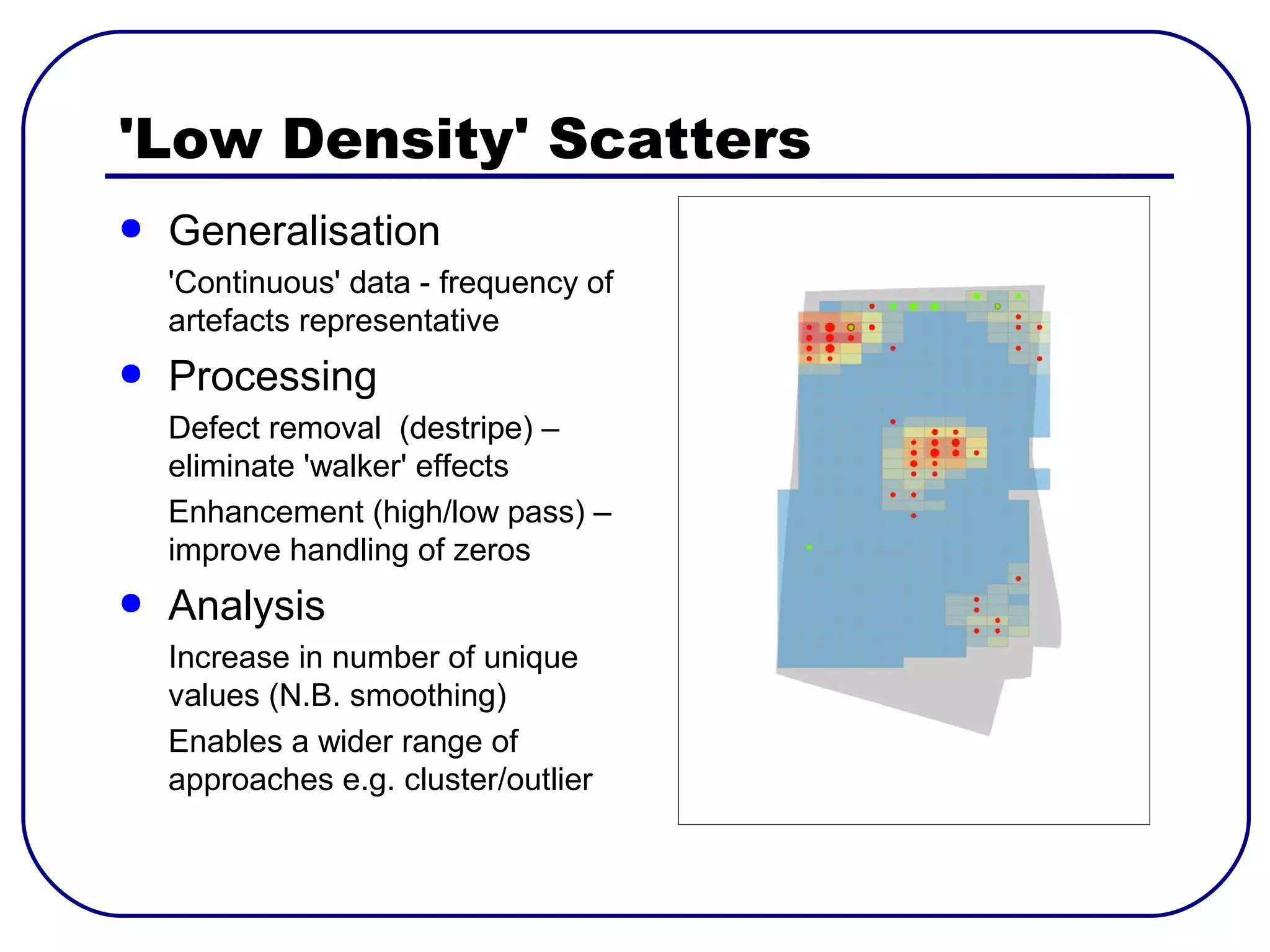
'Low Density' Scatters
●   Generalisation
    'Continuous' data - frequency of
    artefacts representative
●   Processing
    Defect removal (destripe) –
    eliminate 'walker' effects
    Enhancement (high/low pass) –
    improve handling of zeros
●   Analysis
    Increase in number of unique
    values (N.B. smoothing)
    Enables a wider range of
    approaches e.g. cluster/outlier
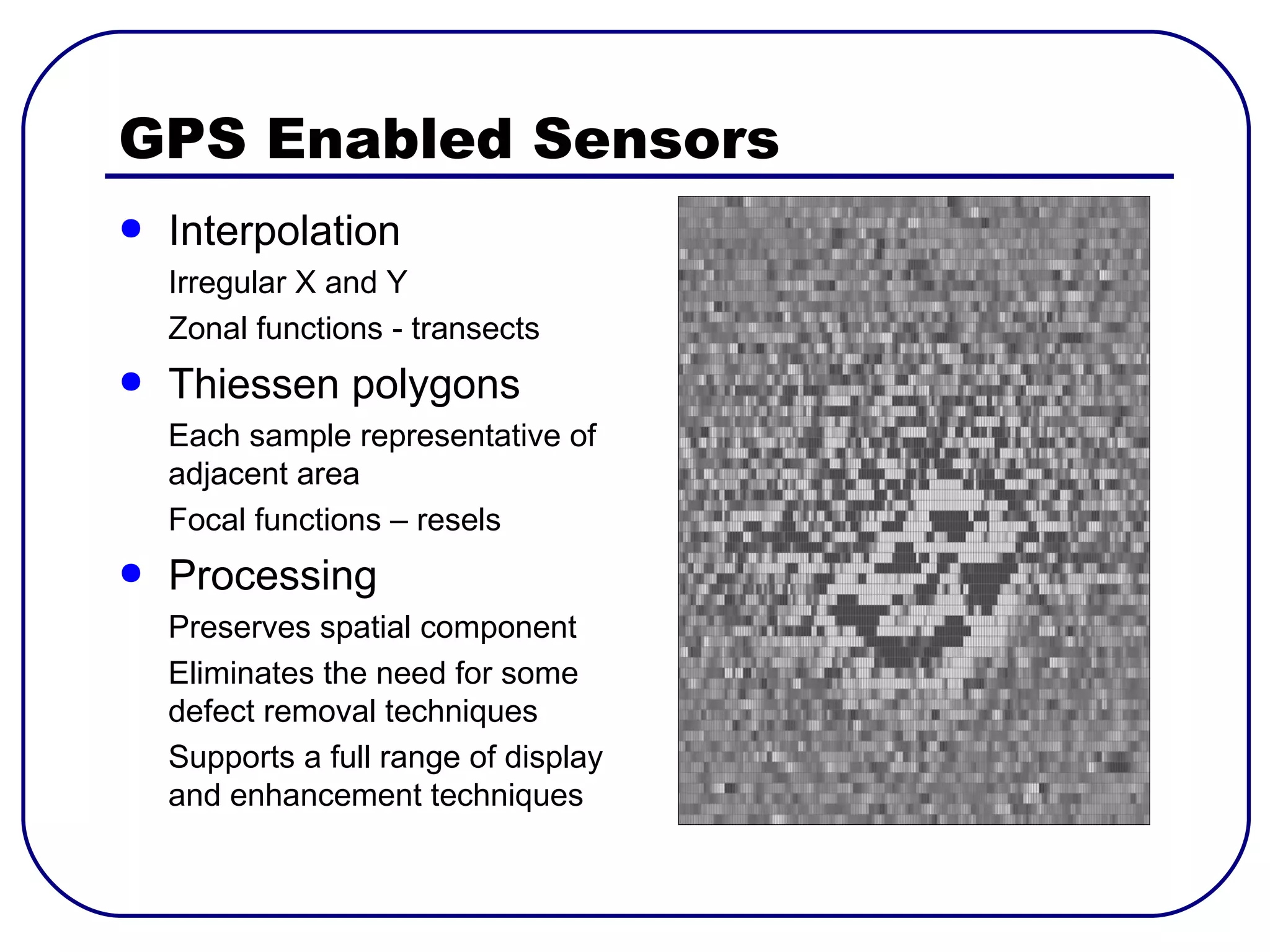
GPS Enabled Sensors
●   Interpolation
    Irregular X and Y
    Zonal functions - transects
●   Thiessen polygons
    Each sample representative of
    adjacent area
    Focal functions – resels
●   Processing
    Preserves spatial component
    Eliminates the need for some
    defect removal techniques
    Supports a full range of display
    and enhancement techniques
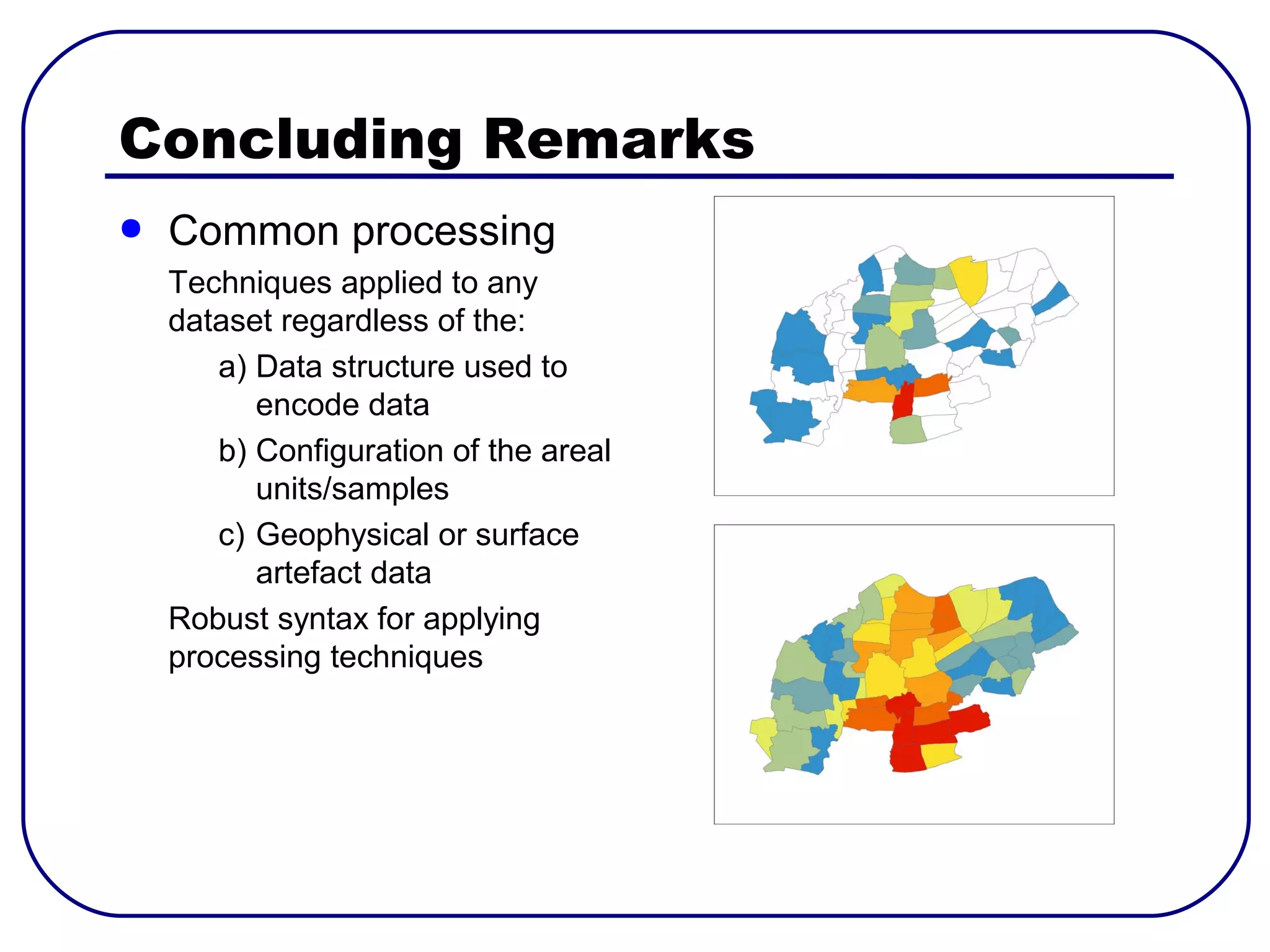
Concluding Remarks
●   Common processing
    Techniques applied to any
    dataset regardless of the:
       a) Data structure used to
          encode data
       b) Configuration of the areal
          units/samples
       c) Geophysical or surface
          artefact data
    Robust syntax for applying
    processing techniques

Highs and Lows: A Resel-based Approach to the Analysis of Data from Geophysical and Surface

  • 1.
    Highs and Lows:A Resel-based Approach to the Analysis of Data from Geophysical and Surface Artefact Survey John Pouncett and Emma Gowans
  • 2.
    Introduction ● Background Overview the case study on which this paper is based: a) Summary of the nature of data from surface artefact and geophysical survey b) Overview of the techniques used to process and analyse/interpret those datasets ● Resels Introduce the concept of a resel (resolution element) Implement/extend Tobler's proposal for a resel-based GIS: a) Surface artefact survey – 'low density' scatters b) Geophysical survey – GPS enabled sensors
  • 3.
    Case Study ● Overview Early Iron Age metal working site in northern Britain: a) Slag mounds b) Enclosures Industry based on exploitation of deposits of bog iron ● Pros/Cons Geology – coversands 'poorly suited' to geophysics Plough damage – truncation and deep ploughing Correlation between surface finds and geophysics
  • 4.
  • 5.
    Surface Artefact Survey ● Aggregation Data aggregated by areal unit: a) Grid square b) Plot of land Basic unit of analysis = areal unit NOT site or artefact ● Survey data Areal units represented as: a) Polygons b) Centroids Artefact frequency/density recorded for each areal unit Zero data handling and low number of unique values
  • 6.
    'Analysis' ● Visualisation Point provenance ‘Coloured boxes’ ● Point-based Nearest neighbour analysis Kernel density estimation ● Cell-based Interpolation of continuous surfaces from point data Image processing techniques e.g. thresholding
  • 7.
    Geophysical Survey ● Sensors String of readings from one or more sensors Location determined from instrument parameters ● Survey data Composite with gridded values X and Y intervals: a) Regular b) Inequal Extreme values a) Over range b) Geology
  • 8.
    Processing ● Display Clip – global function ● Defect removal Destripe – zonal function Destagger –zonal function ● Enhancement Despike – focal function High/Low pass filter – focal function ● Adaptation Established techniques applied to 'new' datasets
  • 9.
    Resels ● Spatial Averages (Tobler & Kennedy 1985) Epidemiological and political data is often aggregated spatially: a) Interpolation – assign an average to the location(s) for which data is required b) Conventional distance-weighted averages computationally cumbersome Applied to both point-based and resel-based datasets ● Resel-based GIS (Tobler 1995) Typical user doesn't know or care whether a system is raster or vector based Generalisation of techniques used in image processing based on a spreadsheet analogy
  • 10.
    Representation Regular x and y – dummy values/no data Irregular x and y – single/contiguous entities
  • 11.
    Cell-based Operations ● Raster datasets 1 2 3 4 5 Regular configuration of cells, 6 7 8 9 10 each cell has the same: a) Geometric properties 11 12 13 14 15 b) Number of neighbours 16 17 18 19 20 Robust syntax for map algebra based on: 21 22 23 24 25 a) Row/column offsets [r,c] b) Kernels (0/1 or weighted)
  • 12.
    Point-based Operations 1st order neighbours (light grey) 2nd order neighbours (dark grey)
  • 13.
    Spatial Relationships ● Contiguous polygons Irregular configuration of areal units Conceptualisation of spatial relationships: a) Rook's case - shared edges b) Queen's case - shared edges and nodes Spatial weights e.g. length of shared edge
  • 14.
  • 15.
    Adjacency ● 1st Order Neighbours ● 2nd Order Neighbours Neighbours of cell 13 Neighbours of 1st neighbours ID FID NID Weight # Neighbours 1 13 7 0 7 1 2 3 6 8 11 12 13 2 13 8 10 8 2 3 4 7 9 12 13 14 3 13 9 0 9 3 4 5 8 10 13 14 15 4 13 12 10 12 6 7 8 11 13 16 17 18 5 13 14 10 14 8 9 10 13 15 18 19 20 6 13 17 0 17 11 12 13 16 18 21 22 23 7 13 18 10 18 12 13 14 17 19 22 23 24 8 13 19 0 19 13 14 15 18 20 23 24 25 0 = Queen's case Remove duplicates 10 = Rook's case [Remove lower orders]
  • 16.
    'Low Density' Scatters ● Generalisation 'Continuous' data - frequency of artefacts representative ● Processing Defect removal (destripe) – eliminate 'walker' effects Enhancement (high/low pass) – improve handling of zeros ● Analysis Increase in number of unique values (N.B. smoothing) Enables a wider range of approaches e.g. cluster/outlier
  • 17.
    GPS Enabled Sensors ● Interpolation Irregular X and Y Zonal functions - transects ● Thiessen polygons Each sample representative of adjacent area Focal functions – resels ● Processing Preserves spatial component Eliminates the need for some defect removal techniques Supports a full range of display and enhancement techniques
  • 18.
    Concluding Remarks ● Common processing Techniques applied to any dataset regardless of the: a) Data structure used to encode data b) Configuration of the areal units/samples c) Geophysical or surface artefact data Robust syntax for applying processing techniques