Saleh Al-Mahlafi
2120004780
Mohammed Al-Mulhim
2130001959
Abdulaziz Bosailoom
2130000971
Saad Al-Dabal
2120003817

 Definition
 How is it used
 Techniques of CBT
 CBT with COPD Patients
 CBT with Asthma Patient
 Summary
Outlines:

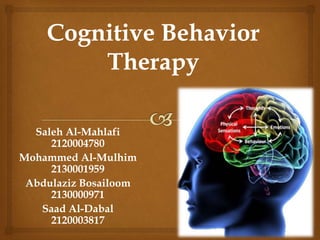
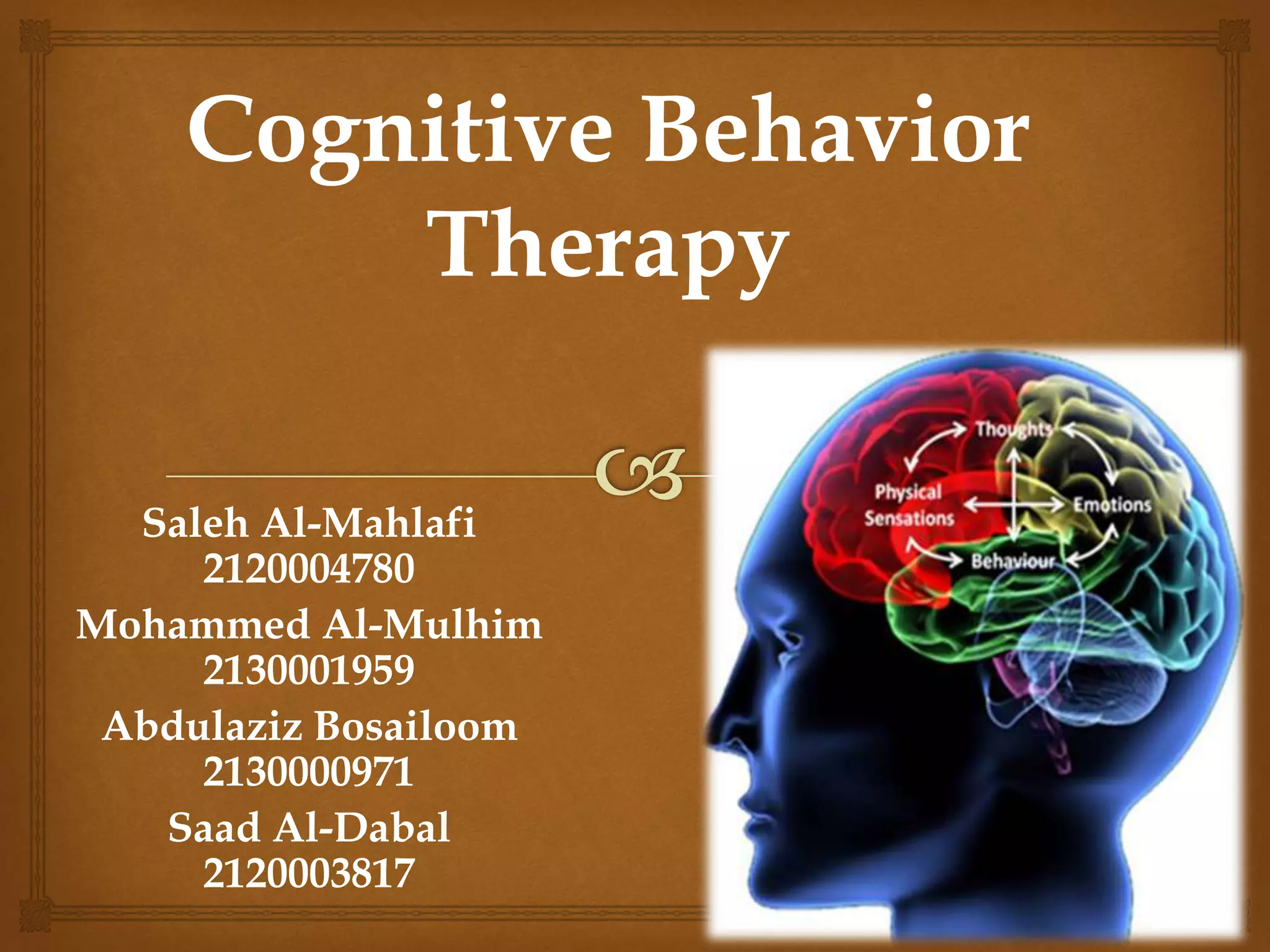
 CBT is a process of teaching, coaching, and
reinforcing positive behaviors. CBT helps people
to identify cognitive patterns or thoughts and
emotions that are linked with behaviors.
It a form of psychotherapy that assumes that
maladaptive, or faulty, thinking patterns cause
maladaptive behavior and "negative" emotions.
Definition:

 CBT aims to teach people that it is possible to have
control over their thoughts, feelings and behaviours.
 It helps the person to challenge and overcome
automatic beliefs, and use practical strategies to change
or modify their behaviour.
 The result is more positive feelings, which in turn lead
to more positive thoughts and behaviours.
How is it used?

 CBT is a learning process.
 It is basically a talking therapy.
 CBT is thought to be effective for the
treatment of a variety of conditions
including:
1. Phobias.
2. Addictions.
3. Depression.
CONT..

Cognitive vs Behavioural
therapy:
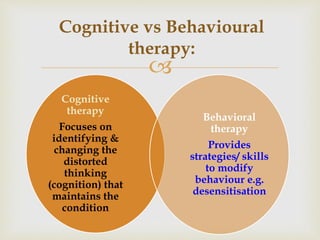
Cognitive
therapy
Focuses on
identifying &
changing the
distorted
thinking
(cognition) that
maintains the
condition
Behavioral
therapy
Provides
strategies/ skills
to modify
behaviour e.g.
desensitisation

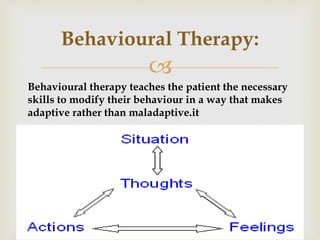
Behavioural therapy teaches the patient the necessary
skills to modify their behaviour in a way that makes
it.adaptive rather than maladaptive
Behavioural Therapy:

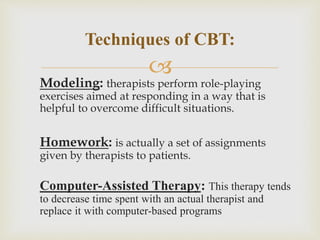
Modeling: therapists perform role-playing
exercises aimed at responding in a way that is
helpful to overcome difficult situations.
Homework: is actually a set of assignments
given by therapists to patients.
Computer-Assisted Therapy: This therapy tends
to decrease time spent with an actual therapist and
replace it with computer-based programs
Techniques of CBT:

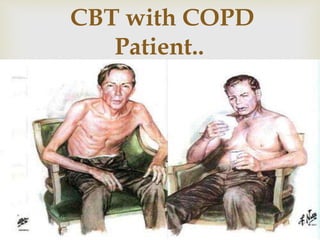
CBT with COPD
Patient..

A randomized controlled trial
of cognitive behavioral therapy
for anxiety and depression in
COPD:
Published Online:March 29, 2010
Minna J. Hynninen, Nina Bjerke, Ståle Pallesen, Per S.
Bakke, Inger Hilde Nordhus

 Previous research indicates a high prevalence of
untreated anxiety and depression in patients with
chronic obstructive pulmonary disease (COPD).
 The current study examined the effect of cognitive
behavioral therapy (CBT) in groups for co-morbid,
clinically significant anxiety and depression in
COPD outpatients of both sexes.
Objective:

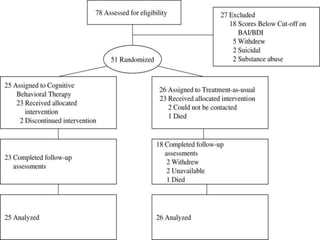
 In a randomized, controlled trial, CBT (n = 25) was
compared with enhanced standard care (n = 26).
Participants in both conditions were followed up at
2 and 8 months from baseline.
 Main outcome measures comprised the Beck
Anxiety Inventory and the Beck Depression
Inventory-II. Measures of health status and sleep
were included as secondary outcomes. The effects
of sex and age were also investigated.
Methods:

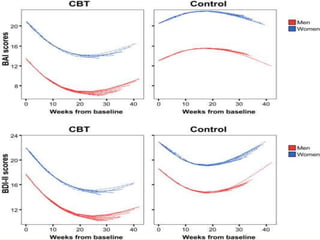
 CBT resulted in improvement in symptoms of anxiety
and depression, with effect sizes of 1.1 and 0.9 at post-
treatment, respectively. The improvement was
maintained at the 8-month follow-up, with effect sizes
of 1.4 and 0.9. In the control group, there was no
significant change.
 Compared to men, women had higher symptom levels
throughout the whole study period. Younger patients
had more anxiety and depression, age had also
differential effects in the two groups on change in
depressive symptoms. Changes in sleep and health
status were small in both groups.
Results:


The findings indicate that CBT may provide rapid
symptom relief for COPD patients with clinically
significant anxiety and depression, and underline
the need for integrating mental health care into the
overall medical regimen for COPD.
Conclusion:

CBT with Asthma
Patient..

Effectiveness of Cognitive Behavioral
Therapy a long with Conventional
Treatment in Asthma Patients
Compared with Solely Conventional
Therapy
2012;; Maryam Jamalimotlagh 1, Omid Rezaei 2*, Ladan
Fata 3, Hamidreza Jamaati 4,
Saeede Masafi 5

 Asthma is a chronic and recurrent disease.
 High levels of stress in this disease are associated
with increased hospitalization and mortality, so this
research aims to use cognitive behavioral therapy in
order to control stress among patients with Asthma.
Aim & objective:

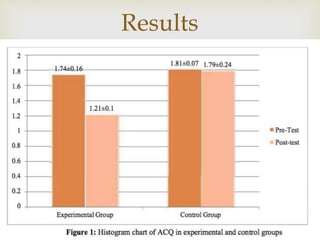
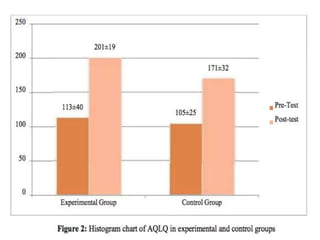
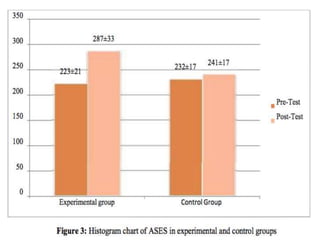
 Present study is a field and Quasi-experimental whose
statistical society includes all patients with Asthma who
have referred to Khatamol-Anbia Hospital for treatment.
 A total of 48 individuals were tested and controlled by
purposive sampling procedure.
 8 individual CBT sessions were conducted in experimental
group during intervention period then
the number of asthma attacks in the pre-test and
post-test periods was evaluated.
Method:

Results



J Asthma. 2015 Sep Case series: the
application of "third
wave" cognitive behavioural therapies
in difficult to treat asthma.
Fellows JL1, Flower L2, Blakey
J3, Kurukulaaratchy R2, Howard
R4, Mansur A1.

This paper provides for the first time
cases of individual psychological therapy
undertaken in tertiary, difficult to
treat asthma services using "third wave “
cognitive behavioral therapy (CBT) approaches.
Objective:

These cases were selected to represent common
psychological presentations in difficult to
treat asthma clinics, namely denial of severity and
over-identification with asthma. Assessment,
formulation, intervention and results are outlined.
Methods:

Case 1 demonstrated change from severe to mild
depression and anxiety, reduction in shame and
improved well-being.
Case 2 demonstrated improvements in well-being
and psychological symptoms. Both interventions
were experienced by the patients as highly
satisfactory
Results:

It is concluded that a psychological understanding
of patients' presentations can open up new avenues
for intervention. Further research into the potential
utility of third wave cognitive therapies in difficult to
treat asthma is warranted.
Conclusion:

 CBT helps people to identify cognitive patterns
or thoughts and emotions that are linked with behaviors.
 There are many techniques for CBT such as : modeling,
home work, and computer-assisted therapy etc…
 Studies shown that CBT is successful for some COPDs
and asthmatic patients.
Summary:


 Barlow. D. H & Nathar. P. E.,(2011). The Oxford
Handbook of Clinical Psychology. Published by Oxford
Press.Inc, New York.
 Doboson. D & Dobson. K., (2009). Evidence-Based
Practice of Cognitive -Behavior Therapy. Published by
Guilford publication.Inc.
 Sheldon. B.,(2011). Cognitive Behavior Therapy
Research and Practice in Health and Social Care. (2nd
Ed). Published by Routledge publication New York.
 Pubmed.
References:


cognitive behavioral therapy (CBT)

  • 1.
    Saleh Al-Mahlafi 2120004780 Mohammed Al-Mulhim 2130001959 AbdulazizBosailoom 2130000971 Saad Al-Dabal 2120003817
  • 2.
      Definition  Howis it used  Techniques of CBT  CBT with COPD Patients  CBT with Asthma Patient  Summary Outlines:
  • 3.
      CBT isa process of teaching, coaching, and reinforcing positive behaviors. CBT helps people to identify cognitive patterns or thoughts and emotions that are linked with behaviors. It a form of psychotherapy that assumes that maladaptive, or faulty, thinking patterns cause maladaptive behavior and "negative" emotions. Definition:
  • 4.
      CBT aimsto teach people that it is possible to have control over their thoughts, feelings and behaviours.  It helps the person to challenge and overcome automatic beliefs, and use practical strategies to change or modify their behaviour.  The result is more positive feelings, which in turn lead to more positive thoughts and behaviours. How is it used?
  • 5.
      CBT isa learning process.  It is basically a talking therapy.  CBT is thought to be effective for the treatment of a variety of conditions including: 1. Phobias. 2. Addictions. 3. Depression. CONT..
  • 6.
     Cognitive vs Behavioural therapy: Cognitive therapy Focuseson identifying & changing the distorted thinking (cognition) that maintains the condition Behavioral therapy Provides strategies/ skills to modify behaviour e.g. desensitisation
  • 7.
     Behavioural therapy teachesthe patient the necessary skills to modify their behaviour in a way that makes it.adaptive rather than maladaptive Behavioural Therapy:
  • 8.
     Modeling: therapists performrole-playing exercises aimed at responding in a way that is helpful to overcome difficult situations. Homework: is actually a set of assignments given by therapists to patients. Computer-Assisted Therapy: This therapy tends to decrease time spent with an actual therapist and replace it with computer-based programs Techniques of CBT:
  • 9.
  • 10.
     A randomized controlledtrial of cognitive behavioral therapy for anxiety and depression in COPD: Published Online:March 29, 2010 Minna J. Hynninen, Nina Bjerke, Ståle Pallesen, Per S. Bakke, Inger Hilde Nordhus
  • 11.
      Previous researchindicates a high prevalence of untreated anxiety and depression in patients with chronic obstructive pulmonary disease (COPD).  The current study examined the effect of cognitive behavioral therapy (CBT) in groups for co-morbid, clinically significant anxiety and depression in COPD outpatients of both sexes. Objective:
  • 12.
      In arandomized, controlled trial, CBT (n = 25) was compared with enhanced standard care (n = 26). Participants in both conditions were followed up at 2 and 8 months from baseline.  Main outcome measures comprised the Beck Anxiety Inventory and the Beck Depression Inventory-II. Measures of health status and sleep were included as secondary outcomes. The effects of sex and age were also investigated. Methods:
  • 13.
  • 14.
     CBT resultedin improvement in symptoms of anxiety and depression, with effect sizes of 1.1 and 0.9 at post- treatment, respectively. The improvement was maintained at the 8-month follow-up, with effect sizes of 1.4 and 0.9. In the control group, there was no significant change.  Compared to men, women had higher symptom levels throughout the whole study period. Younger patients had more anxiety and depression, age had also differential effects in the two groups on change in depressive symptoms. Changes in sleep and health status were small in both groups. Results:
  • 15.
  • 16.
     The findings indicatethat CBT may provide rapid symptom relief for COPD patients with clinically significant anxiety and depression, and underline the need for integrating mental health care into the overall medical regimen for COPD. Conclusion:
  • 17.
  • 18.
     Effectiveness of CognitiveBehavioral Therapy a long with Conventional Treatment in Asthma Patients Compared with Solely Conventional Therapy 2012;; Maryam Jamalimotlagh 1, Omid Rezaei 2*, Ladan Fata 3, Hamidreza Jamaati 4, Saeede Masafi 5
  • 19.
      Asthma isa chronic and recurrent disease.  High levels of stress in this disease are associated with increased hospitalization and mortality, so this research aims to use cognitive behavioral therapy in order to control stress among patients with Asthma. Aim & objective:
  • 20.
      Present studyis a field and Quasi-experimental whose statistical society includes all patients with Asthma who have referred to Khatamol-Anbia Hospital for treatment.  A total of 48 individuals were tested and controlled by purposive sampling procedure.  8 individual CBT sessions were conducted in experimental group during intervention period then the number of asthma attacks in the pre-test and post-test periods was evaluated. Method:
  • 21.
  • 22.
  • 23.
  • 24.
     J Asthma. 2015Sep Case series: the application of "third wave" cognitive behavioural therapies in difficult to treat asthma. Fellows JL1, Flower L2, Blakey J3, Kurukulaaratchy R2, Howard R4, Mansur A1.
  • 25.
     This paper providesfor the first time cases of individual psychological therapy undertaken in tertiary, difficult to treat asthma services using "third wave “ cognitive behavioral therapy (CBT) approaches. Objective:
  • 26.
     These cases wereselected to represent common psychological presentations in difficult to treat asthma clinics, namely denial of severity and over-identification with asthma. Assessment, formulation, intervention and results are outlined. Methods:
  • 27.
     Case 1 demonstratedchange from severe to mild depression and anxiety, reduction in shame and improved well-being. Case 2 demonstrated improvements in well-being and psychological symptoms. Both interventions were experienced by the patients as highly satisfactory Results:
  • 28.
     It is concludedthat a psychological understanding of patients' presentations can open up new avenues for intervention. Further research into the potential utility of third wave cognitive therapies in difficult to treat asthma is warranted. Conclusion:
  • 29.
      CBT helpspeople to identify cognitive patterns or thoughts and emotions that are linked with behaviors.  There are many techniques for CBT such as : modeling, home work, and computer-assisted therapy etc…  Studies shown that CBT is successful for some COPDs and asthmatic patients. Summary:
  • 30.
  • 31.
      Barlow. D.H & Nathar. P. E.,(2011). The Oxford Handbook of Clinical Psychology. Published by Oxford Press.Inc, New York.  Doboson. D & Dobson. K., (2009). Evidence-Based Practice of Cognitive -Behavior Therapy. Published by Guilford publication.Inc.  Sheldon. B.,(2011). Cognitive Behavior Therapy Research and Practice in Health and Social Care. (2nd Ed). Published by Routledge publication New York.  Pubmed. References:
  • 32.