By ifsha akhlaq
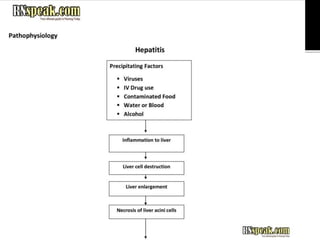
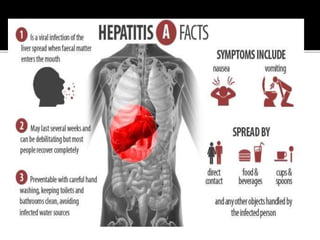
 HepatitisA is a liver disease caused by the
hepatitisA virus.The virus is spread when an
uninfected person ingest food or water that is
contaminated with the faeces of an infected
person.
 - 1.4 million cases of hepatitisA every year.
 - In Shanghai in 1988 about 300,000 people
reported with hepatitisA.
 - In developing countries about 90% children
are affected.
 HAV virus acquired by mouth and replicate in
liver. After 10-12 days virus present in blood
and excreted in the biliary system into are
feces.
 Virus is present in serum and virus excretion
begins to decline in at the onset of clinical
illness.
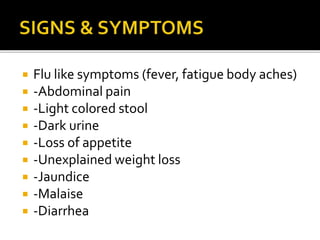
 Flu like symptoms (fever, fatigue body aches)
 -Abdominal pain
 -Light colored stool
 -Dark urine
 -Loss of appetite
 -Unexplained weight loss
 -Jaundice
 -Malaise
 -Diarrhea
 Detection of HAV-specific IgM and IgG
antibodies
 -Reverse transcriptase polymerase chain
reaction
 No specific treatments for hepatitisA but
symptoms are treated.
 Therapy used to maintain comfort such as
replacement of fluids which are lost from
vomiting and diarrhea.
 A liver disease caused by hepatitis C virus.
Virus can cause both acute and chronic
hepatitis infection.
 - 130-150 million people have chronic
hepatitisC.
 - 350000 to 500000 people die in a year.
 Most affected regions are Central and East
Asia and North Africa.
 The natural targets of HCV are hepatocytes
and B-lymphocytes.Viral clearance is
associated with the development and
persistence of strong virus-specific responses
byT lymphocytes and helperT cells.
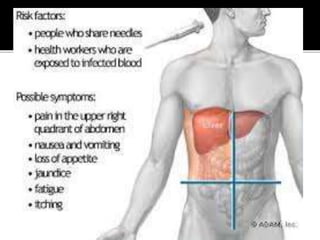
 80% patient have no symptoms but some
complain of mild to severe systems such as
 -Fever
 -Dark urine
 -Loss of appetite
 -Abdominal pain
 -Joint pain
 -Jaundice
 CBC test
 -Serological test
 -Nucleic acid test
 -Genotyping test
 -Liver function test
 -Liver biopsy
 Antiviral treatment
 Bed rest is recommended
 -Antiviral combination therapy with
interferon and ribavirin.

Hepatitis A and B

  • 1.
  • 2.
     HepatitisA isa liver disease caused by the hepatitisA virus.The virus is spread when an uninfected person ingest food or water that is contaminated with the faeces of an infected person.
  • 3.
     - 1.4million cases of hepatitisA every year.  - In Shanghai in 1988 about 300,000 people reported with hepatitisA.  - In developing countries about 90% children are affected.
  • 4.
     HAV virusacquired by mouth and replicate in liver. After 10-12 days virus present in blood and excreted in the biliary system into are feces.  Virus is present in serum and virus excretion begins to decline in at the onset of clinical illness.
  • 6.
     Flu likesymptoms (fever, fatigue body aches)  -Abdominal pain  -Light colored stool  -Dark urine  -Loss of appetite  -Unexplained weight loss  -Jaundice  -Malaise  -Diarrhea
  • 8.
     Detection ofHAV-specific IgM and IgG antibodies  -Reverse transcriptase polymerase chain reaction
  • 9.
     No specifictreatments for hepatitisA but symptoms are treated.  Therapy used to maintain comfort such as replacement of fluids which are lost from vomiting and diarrhea.
  • 10.
     A liverdisease caused by hepatitis C virus. Virus can cause both acute and chronic hepatitis infection.
  • 11.
     - 130-150million people have chronic hepatitisC.  - 350000 to 500000 people die in a year.  Most affected regions are Central and East Asia and North Africa.
  • 12.
     The naturaltargets of HCV are hepatocytes and B-lymphocytes.Viral clearance is associated with the development and persistence of strong virus-specific responses byT lymphocytes and helperT cells.
  • 13.
     80% patienthave no symptoms but some complain of mild to severe systems such as  -Fever  -Dark urine  -Loss of appetite  -Abdominal pain  -Joint pain  -Jaundice
  • 15.
     CBC test -Serological test  -Nucleic acid test  -Genotyping test  -Liver function test  -Liver biopsy
  • 16.
     Antiviral treatment Bed rest is recommended  -Antiviral combination therapy with interferon and ribavirin.