Viral Hepatitis
 bile production, which is essential to digestion
 filtering of toxins from your body
 excretion of bilirubin (a product of broken-down
red blood cells), cholesterol, hormones, and
drugs
 breakdown of carbohydrates, fats, and proteins
 activation of enzymes, which are specialized
proteins essential to body functions
 storage of glycogen (a form of sugar), minerals,
and vitamins (A, D, E, and K)
 synthesis of blood proteins, such as albumin
 synthesis of clotting factors
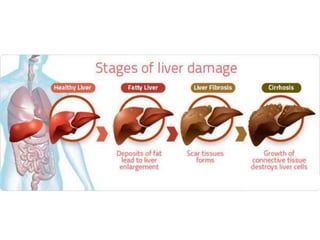
 Hepatitis is an inflammation of the liver.The
condition can be self-limiting or can progress
to fibrosis (scarring), cirrhosis or liver cancer.
Hepatitis viruses are the most common cause
of hepatitis in the world but other infections,
toxic substances (e.g. alcohol, certain drugs),
and autoimmune diseases can also cause
hepatitis.
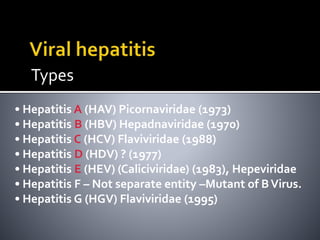
Types
• Hepatitis A (HAV) Picornaviridae (1973)
• Hepatitis B (HBV) Hepadnaviridae (1970)
• Hepatitis C (HCV) Flaviviridae (1988)
• Hepatitis D (HDV) ? (1977)
• Hepatitis E (HEV) (Caliciviridae) (1983), Hepeviridae
• Hepatitis F – Not separate entity –Mutant of BVirus.
• Hepatitis G (HGV) Flaviviridae (1995)
 The hepatitis caused by HAV is an acute
illness (acute viral hepatitis) that never
becomes chronic.
 Almost everyone recovers fully from hepatitis
A with a lifelong immunity. However, a very
small proportion of people infected with
hepatitisA could die from fulminant
hepatitis.
 Close personal contact
(e.g., household contact, sex contact, child day
care centers)
 Contaminated food, water
(e.g., infected food handlers, raw shellfish)
 Blood exposure (rare)
(e.g., injecting drug use, transfusion)
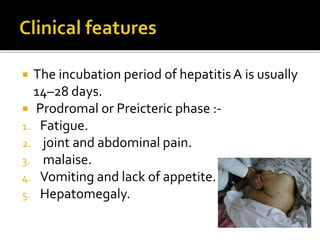
 The incubation period of hepatitisA is usually
14–28 days.
 Prodromal or Preicteric phase :-
1. Fatigue.
2. joint and abdominal pain.
3. malaise.
4. Vomiting and lack of appetite.
5. Hepatomegaly.
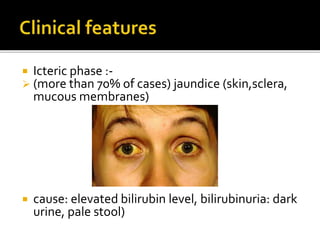
 Icteric phase :-
 (more than 70% of cases) jaundice (skin,sclera,
mucous membranes)
 cause: elevated bilirubin level, bilirubinuria: dark
urine, pale stool)
 Hepatitis B is a viral infection that attacks the
liver and can cause both acute and chronic
disease.
 In 2015, hepatitis B resulted in 887 000
deaths, mostly from complications (including
cirrhosis and hepatocellular carcinoma).
 Parenteral - IV drug abusers, health workers are
at increased risk.
 Sexual - sex workers and homosexuals are
particular at risk.
 Perinatal (Vertical) – mother (HBeAg+)
→infant.
 The incubation period of the hepatitis B virus is 75 days on
average, but can vary from 30 to 180 days.
 Insidious onset of symptoms.
Tends to cause a more severe disease than Hepatitis A.
 Clinical illness (jaundice): <5 yrs, <10%
≥ 5 yrs, 30%-50%
1/3 adults-no symptoms
 Clinical Illness at presentation 10 - 15%
 Acute case-fatality rate: 0.5%-1%
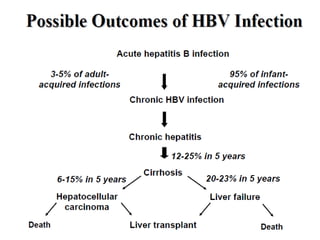
 Chronic infection: < 5 yrs, 30%-90%
≥ 5 yrs, 2%-10%
More likely in asymptomatic infections
 Premature mortality from chronic liver disease: 15%-25%
 Hepatitis C is a liver disease caused by the
hepatitisC virus: the virus can cause both
acute and chronic hepatitis, ranging in severity
from a mild illness lasting a few weeks to a
serious, lifelong illness.
 Approximately 399 000 people die each year
from hepatitisC, mostly from cirrhosis and
hepatocellular carcinoma.
 but NOW. Antiviral medicines can cure more
than 95% of persons with hepatitisC infection
 injecting drug use through the sharing of
injection equipment.
 the reuse or inadequate sterilization of
medical equipment, especially syringes and
needles in healthcare settings.
 the transfusion of unscreened blood and
blood products.
 Incubation period: Average 6-7 weeks
Range 2-26 weeks
 Clinical illness (jaundice): 30-40%
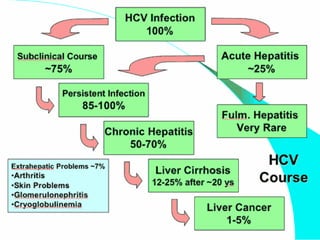
 Chronic hepatitis: 70%
 Persistent infection: 85-100%
 High incidence of liver cirrhosis.
 Immunity: No protectiveAntibody Response
identified.
 approximately 80% of people do not exhibit
any symptoms
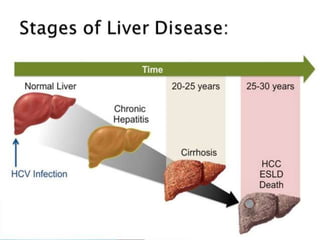
 The spectrum of chronic hepatitis C infection
is essentially the same as chronic hepatitis B
infection.
 All the manifestations of chronic hepatitis B
infection may be seen, albeit with a lower
frequency i.e. chronic persistent hepatitis,
chronic active hepatitis, cirrhosis, and
hepatocellular carcinoma.
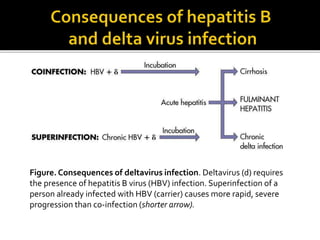
 Hepatitis D is a liver disease in both acute and
chronic forms caused by the hepatitis D virus
(HDV) that requires HBV for its replication.
Hepatitis D infection cannot occur in the
absence of hepatitis B virus.The coinfection
or super infection of HDV with HBV causes a
more severe disease than HBV
monoinfection.
 Percutaneous exposures.
 injecting drug use.
 Permucosal exposures.
 sex contact.
 The average incubation period for:
 Co-infection is 90 days (range 45-160 days)
 Superinfection is approximately 2-8 weeks.
 Persons with HBV-HDV superinfection are
the primary reservoirs of infection.
 Recovery is usually complete and
development of chronic hepatitis D is rare.
Figure. Consequences of deltavirus infection. Deltavirus (d) requires
the presence of hepatitis B virus (HBV) infection. Superinfection of a
person already infected with HBV (carrier) causes more rapid, severe
progression than co-infection (shorter arrow).
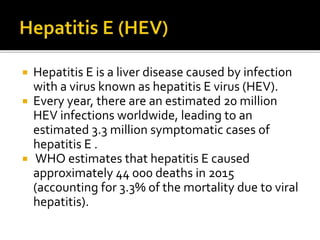
 Hepatitis E is a liver disease caused by infection
with a virus known as hepatitis E virus (HEV).
 Every year, there are an estimated 20 million
HEV infections worldwide, leading to an
estimated 3.3 million symptomatic cases of
hepatitis E .
 WHO estimates that hepatitis E caused
approximately 44 000 deaths in 2015
(accounting for 3.3% of the mortality due to viral
hepatitis).
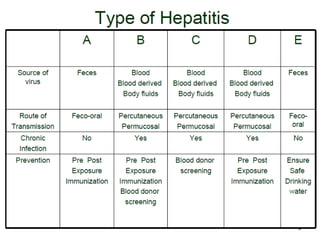
 The virus is transmitted via the faecal-oral
route, principally via contaminated water.
 ingestion of undercooked meat or meat
products derived from infected animals;
transfusion of infected blood products.
 vertical transmission from a pregnant woman
to her fetus.
 Incubation period: Average 40 days
Range 15-60 days
 Case-fatality rate: Overall, 1%-3%
Pregnant women,15%-25%
 Illness severity: Increased with age.
 Chronic sequelae: None identified
 FLAVIRUS: similar morphology and genome.
 in risk groups: acute, chronic and fulminant
hepatitis
 transmission: blood (mother- newborn
babies)
 prevalence is higher in HCV infected people

Viral hepatitis

  • 1.
  • 2.
     bile production,which is essential to digestion  filtering of toxins from your body  excretion of bilirubin (a product of broken-down red blood cells), cholesterol, hormones, and drugs  breakdown of carbohydrates, fats, and proteins  activation of enzymes, which are specialized proteins essential to body functions  storage of glycogen (a form of sugar), minerals, and vitamins (A, D, E, and K)  synthesis of blood proteins, such as albumin  synthesis of clotting factors
  • 3.
     Hepatitis isan inflammation of the liver.The condition can be self-limiting or can progress to fibrosis (scarring), cirrhosis or liver cancer. Hepatitis viruses are the most common cause of hepatitis in the world but other infections, toxic substances (e.g. alcohol, certain drugs), and autoimmune diseases can also cause hepatitis.
  • 5.
    Types • Hepatitis A(HAV) Picornaviridae (1973) • Hepatitis B (HBV) Hepadnaviridae (1970) • Hepatitis C (HCV) Flaviviridae (1988) • Hepatitis D (HDV) ? (1977) • Hepatitis E (HEV) (Caliciviridae) (1983), Hepeviridae • Hepatitis F – Not separate entity –Mutant of BVirus. • Hepatitis G (HGV) Flaviviridae (1995)
  • 7.
     The hepatitiscaused by HAV is an acute illness (acute viral hepatitis) that never becomes chronic.  Almost everyone recovers fully from hepatitis A with a lifelong immunity. However, a very small proportion of people infected with hepatitisA could die from fulminant hepatitis.
  • 8.
     Close personalcontact (e.g., household contact, sex contact, child day care centers)  Contaminated food, water (e.g., infected food handlers, raw shellfish)  Blood exposure (rare) (e.g., injecting drug use, transfusion)
  • 9.
     The incubationperiod of hepatitisA is usually 14–28 days.  Prodromal or Preicteric phase :- 1. Fatigue. 2. joint and abdominal pain. 3. malaise. 4. Vomiting and lack of appetite. 5. Hepatomegaly.
  • 10.
     Icteric phase:-  (more than 70% of cases) jaundice (skin,sclera, mucous membranes)  cause: elevated bilirubin level, bilirubinuria: dark urine, pale stool)
  • 11.
     Hepatitis Bis a viral infection that attacks the liver and can cause both acute and chronic disease.  In 2015, hepatitis B resulted in 887 000 deaths, mostly from complications (including cirrhosis and hepatocellular carcinoma).
  • 12.
     Parenteral -IV drug abusers, health workers are at increased risk.  Sexual - sex workers and homosexuals are particular at risk.  Perinatal (Vertical) – mother (HBeAg+) →infant.
  • 13.
     The incubationperiod of the hepatitis B virus is 75 days on average, but can vary from 30 to 180 days.  Insidious onset of symptoms. Tends to cause a more severe disease than Hepatitis A.  Clinical illness (jaundice): <5 yrs, <10% ≥ 5 yrs, 30%-50% 1/3 adults-no symptoms  Clinical Illness at presentation 10 - 15%  Acute case-fatality rate: 0.5%-1%  Chronic infection: < 5 yrs, 30%-90% ≥ 5 yrs, 2%-10% More likely in asymptomatic infections  Premature mortality from chronic liver disease: 15%-25%
  • 15.
     Hepatitis Cis a liver disease caused by the hepatitisC virus: the virus can cause both acute and chronic hepatitis, ranging in severity from a mild illness lasting a few weeks to a serious, lifelong illness.  Approximately 399 000 people die each year from hepatitisC, mostly from cirrhosis and hepatocellular carcinoma.  but NOW. Antiviral medicines can cure more than 95% of persons with hepatitisC infection
  • 16.
     injecting druguse through the sharing of injection equipment.  the reuse or inadequate sterilization of medical equipment, especially syringes and needles in healthcare settings.  the transfusion of unscreened blood and blood products.
  • 17.
     Incubation period:Average 6-7 weeks Range 2-26 weeks  Clinical illness (jaundice): 30-40%  Chronic hepatitis: 70%  Persistent infection: 85-100%  High incidence of liver cirrhosis.  Immunity: No protectiveAntibody Response identified.  approximately 80% of people do not exhibit any symptoms
  • 18.
     The spectrumof chronic hepatitis C infection is essentially the same as chronic hepatitis B infection.  All the manifestations of chronic hepatitis B infection may be seen, albeit with a lower frequency i.e. chronic persistent hepatitis, chronic active hepatitis, cirrhosis, and hepatocellular carcinoma.
  • 21.
     Hepatitis Dis a liver disease in both acute and chronic forms caused by the hepatitis D virus (HDV) that requires HBV for its replication. Hepatitis D infection cannot occur in the absence of hepatitis B virus.The coinfection or super infection of HDV with HBV causes a more severe disease than HBV monoinfection.
  • 22.
     Percutaneous exposures. injecting drug use.  Permucosal exposures.  sex contact.
  • 23.
     The averageincubation period for:  Co-infection is 90 days (range 45-160 days)  Superinfection is approximately 2-8 weeks.  Persons with HBV-HDV superinfection are the primary reservoirs of infection.  Recovery is usually complete and development of chronic hepatitis D is rare.
  • 24.
    Figure. Consequences ofdeltavirus infection. Deltavirus (d) requires the presence of hepatitis B virus (HBV) infection. Superinfection of a person already infected with HBV (carrier) causes more rapid, severe progression than co-infection (shorter arrow).
  • 25.
     Hepatitis Eis a liver disease caused by infection with a virus known as hepatitis E virus (HEV).  Every year, there are an estimated 20 million HEV infections worldwide, leading to an estimated 3.3 million symptomatic cases of hepatitis E .  WHO estimates that hepatitis E caused approximately 44 000 deaths in 2015 (accounting for 3.3% of the mortality due to viral hepatitis).
  • 26.
     The virusis transmitted via the faecal-oral route, principally via contaminated water.  ingestion of undercooked meat or meat products derived from infected animals; transfusion of infected blood products.  vertical transmission from a pregnant woman to her fetus.
  • 27.
     Incubation period:Average 40 days Range 15-60 days  Case-fatality rate: Overall, 1%-3% Pregnant women,15%-25%  Illness severity: Increased with age.  Chronic sequelae: None identified
  • 28.
     FLAVIRUS: similarmorphology and genome.  in risk groups: acute, chronic and fulminant hepatitis  transmission: blood (mother- newborn babies)  prevalence is higher in HCV infected people