Dr. Ajinkya Rodge
JR-1
Dept Of Pharmacology
TNMC, Mumbai
Date : 17th September 2016
Concepts
Biotransformation
Microsomal Enzymes
Cytochrome P450 Enzymes
UDP Glucuronosyl Transferases
Clinical Relevance Of Drug Metabolism
Conclusion
• Substances absorbed across lungs or skin
• Ingested either –
-Unintentionally as compounds present in food &
drinks
-Deliberately as drugs for therapeutic purposes
• Taken for recreational purposes
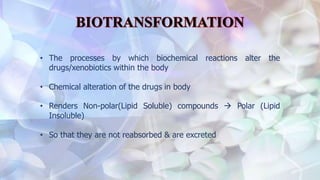
• The processes by which biochemical reactions alter the
drugs/xenobiotics within the body
• Chemical alteration of the drugs in body
• Renders Non-polar(Lipid Soluble) compounds  Polar (Lipid
Insoluble)
• So that they are not reabsorbed & are excreted
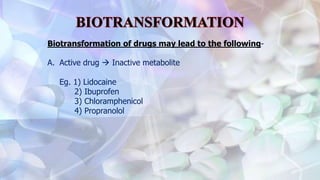
Biotransformation of drugs may lead to the following-
A. Active drug  Inactive metabolite
Eg. 1) Lidocaine
2) Ibuprofen
3) Chloramphenicol
4) Propranolol
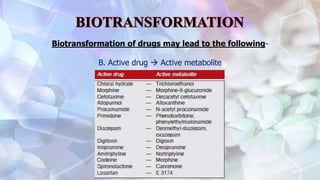
Biotransformation of drugs may lead to the following-
B. Active drug  Active metabolite
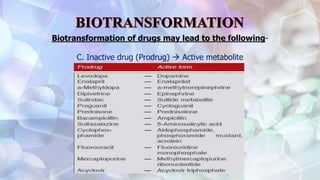
Biotransformation of drugs may lead to the following-
C. Inactive drug (Prodrug)  Active metabolite
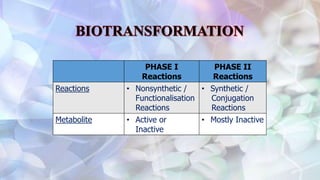
PHASE I
Reactions
PHASE II
Reactions
Reactions • Nonsynthetic /
Functionalisation
Reactions
• Synthetic /
Conjugation
Reactions
Metabolite • Active or
Inactive
• Mostly Inactive
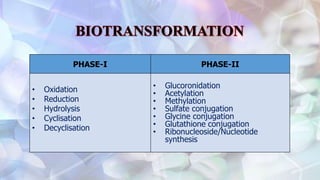
PHASE-I PHASE-II
• Oxidation
• Reduction
• Hydrolysis
• Cyclisation
• Decyclisation
• Glucoronidation
• Acetylation
• Methylation
• Sulfate conjugation
• Glycine conjugation
• Glutathione conjugation
• Ribonucleoside/Nucleotide
synthesis
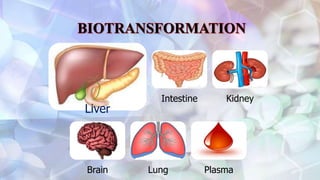
Liver
Intestine Kidney
Brain Lung Plasma
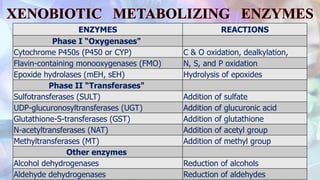
ENZYMES REACTIONS
Phase I “Oxygenases"
Cytochrome P450s (P450 or CYP) C & O oxidation, dealkylation,
Flavin-containing monooxygenases (FMO) N, S, and P oxidation
Epoxide hydrolases (mEH, sEH) Hydrolysis of epoxides
Phase II “Transferases"
Sulfotransferases (SULT) Addition of sulfate
UDP-glucuronosyltransferases (UGT) Addition of glucuronic acid
Glutathione-S-transferases (GST) Addition of glutathione
N-acetyltransferases (NAT) Addition of acetyl group
Methyltransferases (MT) Addition of methyl group
Other enzymes
Alcohol dehydrogenases Reduction of alcohols
Aldehyde dehydrogenases Reduction of aldehydes
• Located in Endoplasmic Reticulum
• Microsomes –
ER isolated by homogenisation & fractionation of cell
reform into
vesicles known as Microsomes
• Flavin Mono Oxygenases
• Cytochrome P450
• UDP Glucoronosyl Transferases (UGT)
• Glutathione-S-Transferases
• Epoxide Hydrolases
• Carboxyl Esterases
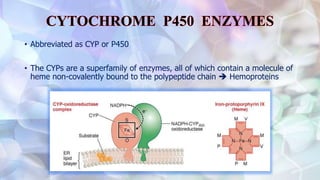
• Abbreviated as CYP or P450
• The CYPs are a superfamily of enzymes, all of which contain a molecule of
heme non-covalently bound to the polypeptide chain  Hemoproteins
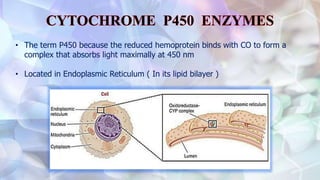
• The term P450 because the reduced hemoprotein binds with CO to form a
complex that absorbs light maximally at 450 nm
• Located in Endoplasmic Reticulum ( In its lipid bilayer )
• CYP’s are involved in synthesis and metabolism of some endogenous
substances
Eg. Synthesis of steroid hormones, bile acids
Metabolism of retinoic acid, fatty acids (PG’s & eicosanoids)
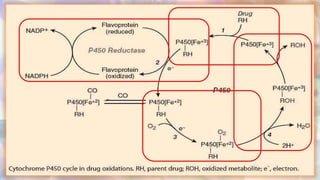
• CYP’s carry out the Oxidative reactions (Phase I) of the drug metabolism
• Along with CYP’s, microsomal drug oxidations also require- P450 reductase,
NADPH, and molecular oxygen
• About 100 different isoforms identified in humans
• Using Gene arrays, immunoblotting analyses, selective functional
markers & P450 inhibitors
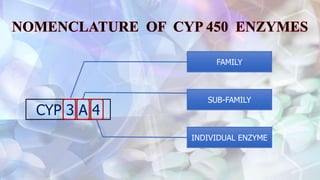
• Divided into Families & Subfamilies
CYP 3 A 4
FAMILY
INDIVIDUAL ENZYME
SUB-FAMILY
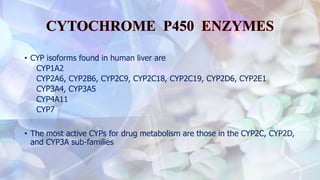
• CYP isoforms found in human liver are
CYP1A2
CYP2A6, CYP2B6, CYP2C9, CYP2C18, CYP2C19, CYP2D6, CYP2E1
CYP3A4, CYP3A5
CYP4A11
CYP7
• The most active CYPs for drug metabolism are those in the CYP2C, CYP2D,
and CYP3A sub-families
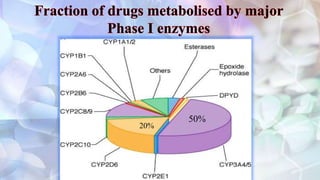
50%
20%
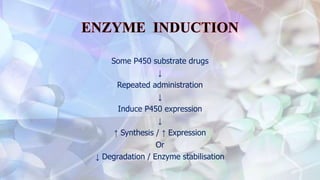
Some P450 substrate drugs
↓
Repeated administration
↓
Induce P450 expression
↓
↑ Synthesis / ↑ Expression
Or
↓ Degradation / Enzyme stabilisation
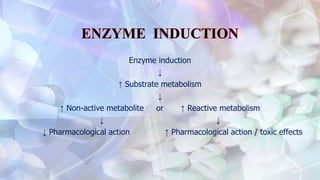
Enzyme induction
↓
↑ Substrate metabolism
↓
↑ Non-active metabolite or ↑ Reactive metabolism
↓ ↓
↓ Pharmacological action ↑ Pharmacological action / toxic effects
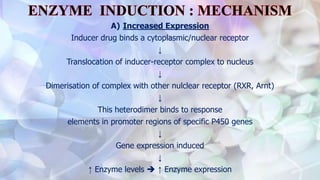
A) Increased Expression
Inducer drug binds a cytoplasmic/nuclear receptor
↓
Translocation of inducer-receptor complex to nucleus
↓
Dimerisation of complex with other nulclear receptor (RXR, Arnt)
↓
This heterodimer binds to response
elements in promoter regions of specific P450 genes
↓
Gene expression induced
↓
↑ Enzyme levels  ↑ Enzyme expression
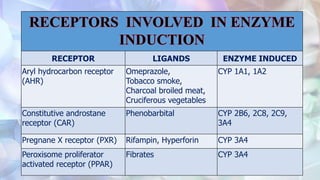
RECEPTOR LIGANDS ENZYME INDUCED
Aryl hydrocarbon receptor
(AHR)
Omeprazole,
Tobacco smoke,
Charcoal broiled meat,
Cruciferous vegetables
CYP 1A1, 1A2
Constitutive androstane
receptor (CAR)
Phenobarbital CYP 2B6, 2C8, 2C9,
3A4
Pregnane X receptor (PXR) Rifampin, Hyperforin CYP 3A4
Peroxisome proliferator
activated receptor (PPAR)
Fibrates CYP 3A4
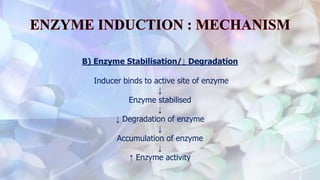
B) Enzyme Stabilisation/↓ Degradation
Inducer binds to active site of enzyme
↓
Enzyme stabilised
↓
↓ Degradation of enzyme
↓
Accumulation of enzyme
↓
↑ Enzyme activity
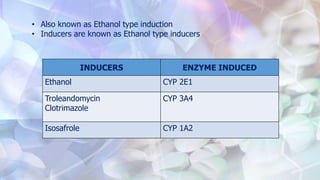
• Also known as Ethanol type induction
• Inducers are known as Ethanol type inducers
INDUCERS ENZYME INDUCED
Ethanol CYP 2E1
Troleandomycin
Clotrimazole
CYP 3A4
Isosafrole CYP 1A2
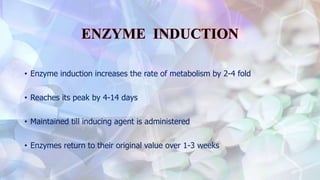
• Enzyme induction increases the rate of metabolism by 2-4 fold
• Reaches its peak by 4-14 days
• Maintained till inducing agent is administered
• Enzymes return to their original value over 1-3 weeks
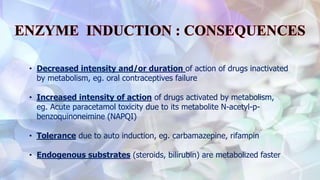
• Decreased intensity and/or duration of action of drugs inactivated
by metabolism, eg. oral contraceptives failure
• Increased intensity of action of drugs activated by metabolism,
eg. Acute paracetamol toxicity due to its metabolite N-acetyl-p-
benzoquinoneimine (NAPQI)
• Tolerance due to auto induction, eg. carbamazepine, rifampin
• Endogenous substrates (steroids, bilirubin) are metabolized faster
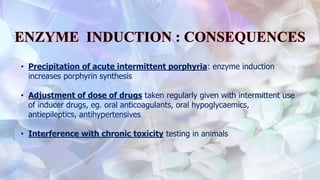
• Precipitation of acute intermittent porphyria: enzyme induction
increases porphyrin synthesis
• Adjustment of dose of drugs taken regularly given with intermittent use
of inducer drugs, eg. oral anticoagulants, oral hypoglycaemics,
antiepileptics, antihypertensives
• Interference with chronic toxicity testing in animals
• Congenital nonhaemolytic jaundice due to deficient glucuronidation
of bilirubin – Phenobarbitone hastens clearance of jaundice
• Cushing’s syndrome: phenytoin reduces manifestations by ↑
degradation of adrenal steroids produced in excess
• Chronic poisonings: by faster metabolism of the accumulated poisonous
substance
• Liver disease
• Enzyme inhibition takes place by action of inhibitor drugs directly on
enzymes
• As the inhibitors act directly on the enzymes, it has a fast time course
(within hours) compared to enzyme induction
• Inhibitor drugs functionally inactivate the enzymes
↓
Inhibition of drugs metabolism
↓
Toxicity of the object drug
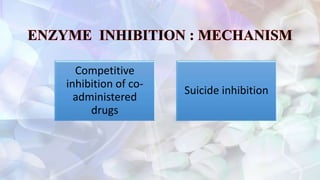
Competitive
inhibition of co-
administered
drugs
Suicide inhibition
A) Competitive Inhibition Of Co-administered Drugs
• Drugs or their metabolites tightly bind to P450 heme iron
↓
Competitive enzyme inhibition
↓
↓ metabolism of co-administerd drugs
1. Cimetidine, Ketoconazole (Drugs themselves inhibit enzymes)
2. Macrolide antibiotics like Troleandomycin, Erythromycin (Drug
metabolites inhibit Enzymes)
3. Proadifen(SKF-525 A) – Quasi-irreversibly inactivates enzyme
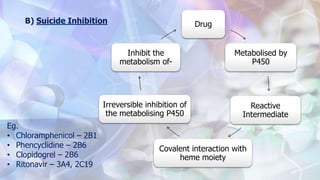
B) Suicide Inhibition Drug
Metabolised by
P450
Reactive
Intermediate
Covalent interaction with
heme moiety
Irreversible inhibition of
the metabolising P450
Inhibit the
metabolism of-
Eg.
• Chloramphenicol – 2B1
• Phencyclidine – 2B6
• Clopidogrel – 2B6
• Ritonavir – 3A4, 2C19
Substrates
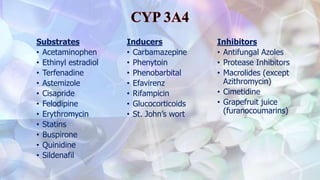
• Acetaminophen
• Ethinyl estradiol
• Terfenadine
• Astemizole
• Cisapride
• Felodipine
• Erythromycin
• Statins
• Buspirone
• Quinidine
• Sildenafil
Inducers
• Carbamazepine
• Phenytoin
• Phenobarbital
• Efavirenz
• Rifampicin
• Glucocorticoids
• St. John’s wort
Inhibitors
• Antifungal Azoles
• Protease Inhibitors
• Macrolides (except
Azithromycin)
• Cimetidine
• Grapefruit juice
(furanocoumarins)
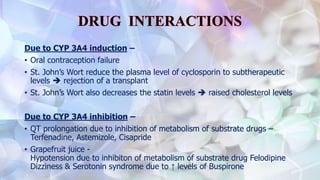
Due to CYP 3A4 induction –
• Oral contraception failure
• St. John’s Wort reduce the plasma level of cyclosporin to subtherapeutic
levels  rejection of a transplant
• St. John’s Wort also decreases the statin levels  raised cholesterol levels
Due to CYP 3A4 inhibition –
• QT prolongation due to inhibition of metabolism of substrate drugs –
Terfenadine, Astemizole, Cisapride
• Grapefruit juice -
Hypotension due to inhibiton of metabolism of substrate drug Felodipine
Dizziness & Serotonin syndrome due to ↑ levels of Buspirone
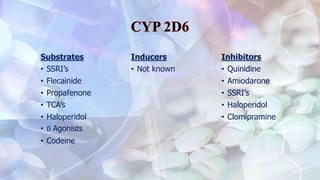
Substrates
• SSRI’s
• Flecainide
• Propafenone
• TCA’s
• Haloperidol
• ẞ Agonists
• Codeine
Inducers
• Not known
Inhibitors
• Quinidine
• Amiodarone
• SSRI’s
• Haloperidol
• Clomipramine
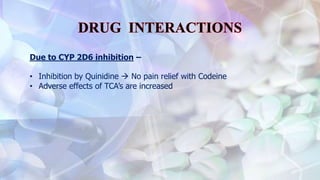
Due to CYP 2D6 inhibition –
• Inhibition by Quinidine  No pain relief with Codeine
• Adverse effects of TCA’s are increased
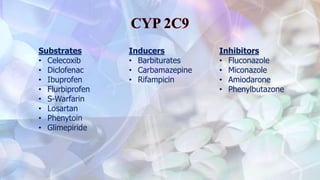
Substrates
• Celecoxib
• Diclofenac
• Ibuprofen
• Flurbiprofen
• S-Warfarin
• Losartan
• Phenytoin
• Glimepiride
Inducers
• Barbiturates
• Carbamazepine
• Rifampicin
Inhibitors
• Fluconazole
• Miconazole
• Amiodarone
• Phenylbutazone
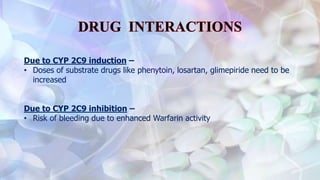
Due to CYP 2C9 induction –
• Doses of substrate drugs like phenytoin, losartan, glimepiride need to be
increased
Due to CYP 2C9 inhibition –
• Risk of bleeding due to enhanced Warfarin activity
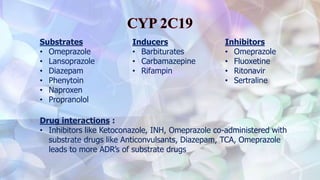
Substrates
• Omeprazole
• Lansoprazole
• Diazepam
• Phenytoin
• Naproxen
• Propranolol
Inducers
• Barbiturates
• Carbamazepine
• Rifampin
Inhibitors
• Omeprazole
• Fluoxetine
• Ritonavir
• Sertraline
Drug interactions :
• Inhibitors like Ketoconazole, INH, Omeprazole co-administered with
substrate drugs like Anticonvulsants, Diazepam, TCA, Omeprazole
leads to more ADR’s of substrate drugs
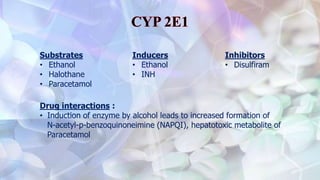
Substrates
• Ethanol
• Halothane
• Paracetamol
Inducers
• Ethanol
• INH
Inhibitors
• Disulfiram
Drug interactions :
• Induction of enzyme by alcohol leads to increased formation of
N-acetyl-p-benzoquinoneimine (NAPQI), hepatotoxic metabolite of
Paracetamol
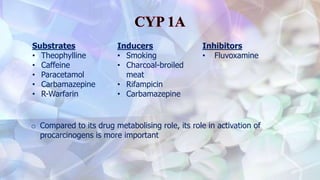
Substrates
• Theophylline
• Caffeine
• Paracetamol
• Carbamazepine
• R-Warfarin
Inducers
• Smoking
• Charcoal-broiled
meat
• Rifampicin
• Carbamazepine
Inhibitors
• Fluvoxamine
o Compared to its drug metabolising role, its role in activation of
procarcinogens is more important
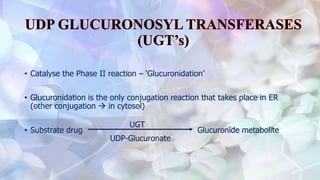
• Catalyse the Phase II reaction – ‘Glucuronidation’
• Glucuronidation is the only conjugation reaction that takes place in ER
(other conjugation  in cytosol)
• Substrate drug Glucuronide metabolite
• Glucuronides excreted via – 1. Kidney in urine (minor)
2. Intestines with bile (major)
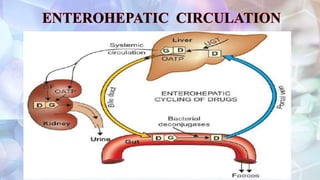
• Glucuronides are cleaved by ẞ-Glucuronidase which is found in bacteria of
lower GI tract  Enterohepatic circulation of drugs Eg. OCP’s
• UGT proteins encoded by 19 human genes
• UGT 1 locus  Chr. 2  9 Genes
UGT 2 locus  Chr. 4  10 Genes
• UGT 1 Family  Drug’s metabolism
UGT 2 Family  Endogenous substances metabolism
Substrates –
• Endogenous compounds – Bilirubin, Steroid hormones, Thyroxine
• Drugs - Chloramphenicol, Aspirin, Paracetamol, Diazepam,
Lorazepam, Morphine, Metronidazole, Digitoxin
• Involved in Phase I reactions (minor contribution)
• 6 families of FMO’s are present
• FMO3 is the most abundant in human liver
• Substrates -Nicotine, Cimetidine, Ranitidine, Clozapine
• FMOs are not induced or inhibited by any clinically used drugs
↓
Not involved in drug-drug interactions
• Carry out hydrolysis of epoxides, most of which are produced by CYPs
• Types – Soluble Epoxide Hydrolase (sEH)
Microsomal Epoxide Hydrolase (mEH)
• mEH metabolises very few drugs
• Substrate – Carbamazepine
• Inhibitor - Valnoctamide, Valproic acid
• Drug interaction – mEH inhibition  Toxic effects of Carbamazepine
• Found in both ER & cytosol
• Catalyse the hydrolysis of ester- and amide-containing chemicals
• Detoxification or Metabolic activation - drugs, environmental toxicants,
carcinogens
• Eg. Chemotherapeutic Prodrug Irinotecan  Active drug SN-38
• Found in both ER & cytosol
• 20 isoforms identified
• Microsomal Forms – Metabolism of endogenous leukotrienes &
prostaglandins
• Cytosolic forms - conjugation, reduction, isomerization reactions of
drug metabolism
• Dose and frequency of administration required to achieve effective
therapeutic levels vary in individuals
• Individual differences in rates of drug metabolism
• Depend on genetic and non-genetic factors
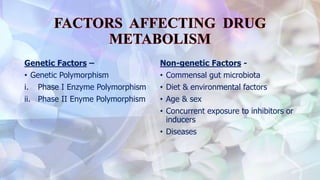
Genetic Factors –
• Genetic Polymorphism
i. Phase I Enzyme Polymorphism
ii. Phase II Enyme Polymorphism
Non-genetic Factors -
• Commensal gut microbiota
• Diet & environmental factors
• Age & sex
• Concurrent exposure to inhibitors or
inducers
• Diseases
Genetic Polymorphism –
• Definition - occurrence of a variant allele of a gene at a population
frequency of ≥ 1%, resulting in altered expression or functional activity of
the gene product, or both
• Clinically significant genetic polymorphisms seen in both phase I & II drug
metabolising enzymes
• ↑/↓ catalytic activity of enzyme
• Results in altered efficacy of drug therapy or adverse drug reactions
Genetic Polymorphism –
• Based on Metabolic Ratio, individuals are divided into –
1) Poor metabolisers (PM)
2) Extensive metabolisers (EM)
3) Ultra rapid metabolisers (UM)
• [Metabolic Ratio: defined as percent of dose excreted as unchanged drug
divided by the percent of dose excreted as metabolite in urine collected
over a time period after oral ingestion of drug]
P450 genetic polymorphism –
• Three P450 genetic polymorphisms have been particularly well
characterized –
1) CYP 2D6
2) CYP 2C19
3) CYP 2C9
• Debrisoquin-Spartein Oxidation type of polymorphism
• PM – 3-10% Caucasians
• UM – 33% Ethiopians & Saudi Arabians
• Inherited as autosomal recessive trait
• Faulty expression of the P450 protein due to either defective mRNA
splicing or protein folding
• CYP2D6 dependent oxidations of debrisoquin and other drugs are impaired
• In PM - ↓ CYP2D6-dependent metabolic activation of Tamoxifen to
Endoxifen  ↑ relapse in breast cancer
• In UM –
i. ↓ plasma levels of Nortriptyline - No therapeutic effect, ↑suicide rates
ii. ↑ prodrug Codeine  Morphine - ↑ s/e of Morphine, morphine-induced
death of breast-fed infant of mother taking excess Codeine
• 3–5% Caucasians and 18–23% Japanese
• Inherited as autosomal recessive trait
• Independent of CYP 2D6 polymorphism
• PM genotype – Due to splicing defects,
Allelic variants - CYP2C19*2, CYP2C19*3
• EM genotype – Due to increased transcription,
Allelic variant – CYP2C19*17
1) S-Mephenytoin  Hydroxylation  Glucuronidation  Inactive
metabolite excreted in urine
R-Mephenytoin  N-demethylation  Active metabolite Nirvanol
In PM’s - Hydroxylation of S-Mephenytoin ↓
N-demethylation to Nirvanol ↑
↑ adverse effects like sedation, ataxia
2) PM phenotype can significantly improve therapeutic efficacy of
Omeprazole in gastric ulcer & GERD
3) EM’s with allele CYP2C19*17 – higher expression and higher function
Higher metabolic activation of prodrugs –
-Tamoxifen↓relapse of breast cancer
-Clopidogrel↑risk of bleeding
Higher elimination of drugs –
-Antidepressants like Imipramine
-Antifungals like Voriconazole
• Alleles encode single amino acid mutations which are responsible for
altered metabolic activity of the enzyme
• CYP2C9*2 ↔ Arg144Cys mutation
• CYP2C9*3 ↔ Ile359Leu mutation
• Individuals with these mutations have lower tolerance for Warfarin 
adverse effect like bleeding
• Also low tolerance for drugs like Phenytoin, Losartan
• > 50 genetic lesions in UGT1A1 gene
• Lead to inheritable unconjugated hyperbilirubinemia –
• Crigler-Najjar syndrome I (AR)- Complete absence of bilirubin
glucuronidation
• Crigler-Najjar syndrome II (AR)- Decreased bilirubin glucuronidation
• Gilbert’s syndrome (AD)- circulating bilirubin levels are 60-70% higher
than normal subjects
Gilbert’s Syndrome –
• Most common genetic polymorphism - mutation in the UGT1A1 gene
promoter, UGT1A1*28 allele
• Patients may be predisposed to ADRs resulting from a reduced capacity of
UGT1A1 to metabolize drugs –
Toxicities of Irinotecan, Atazanavir
Commensal Gut Microbiota –
• Metabolism of drug by intestinal microorganisms – nonoxidative,
predominantly reductive and hydrolytic reactions; decarboxylation,
dehydroxylation, dealkylation, dehalogenation, and deamination
• Co-treatment with antibiotics like erythromycin, tetracycline leads to death
of commensal bacteria↓bacterial enzymes; this leads to –
i. Increased levels of drugs metabolised in intestine, Eg. Digoxin
ii. Decreased entero-hepatic circulation of glucuronidated drugs
Age –
• Increased susceptibility to the pharmacologic or toxic activity of drugs has
been reported in very young & very old patients compared with young
adults
• Differences in absorption, distribution, excretion and drug metabolism play
a role
• Both Microsomal & Non-microsomal enzymes deficient in newborns
• More susceptible to drugs like chloramphenicol, opiods
• Sulfate conjugation is rather well developed in the newborn
• Glururonide conjugation and oxidation occurs at a lower rate
• Paracetamol metabolised by Sulfate conjugation in newborn but by
Glucuronide conjugation in adults
Sex –
• Sex-dependent variations in drug metabolism well documented in rats
• Young adult male rats metabolize drugs much faster than mature female
rats or prepubertal male rats
• Sex-dependent differences in drug metabolism exist in humans for
ethanol, propranolol, some benzodiazepines, estrogens, and salicylates
Diet & Environmental Factors –
• Charcoal-broiled meat, Smoking, Cruciferous vegetables – Inducers
• Grapefruit Juice – Inhibitor
• Alcohol - Few days of relatively high doses of Alcohol cause inhibition of
various CYP 450 enzymes
- Regular long term intake (50 gms/day) cause induction of these
CYP 450 enzymes
• Industrial workers exposed to some pesticides metabolize certain drugs
more rapidly than unexposed individuals
Diseases –
• Acute & chronic liver diseases affecting liver architecture or function
impare hepatic metabolism of drugs
• Alcoholic hepatitis, active or inactive alcoholic cirrhosis, hemochromatosis,
chronic active hepatitis, biliary cirrhosis, viral hepatitis
• In liver, metabolism of drugs Propranolol, Verapamil, Amitriptyline,
Isoniazid, Lidocaine etc, is blood-flow limited  metabolism impaired in
cardiac diseases
• Understanding drug metabolism & drug interactions within the body allows
principles of biotransformation to be applied in better designing &
therapeutic usage of drugs
• Increased understanding of biotransformation based on
pharmacogenomics will also render pharmacologic treatment of disease
more individualised, efficacious and safe
Hepatic Micrisomal Enzyme System

Hepatic Micrisomal Enzyme System

  • 1.
    Dr. Ajinkya Rodge JR-1 DeptOf Pharmacology TNMC, Mumbai Date : 17th September 2016
  • 2.
    Concepts Biotransformation Microsomal Enzymes Cytochrome P450Enzymes UDP Glucuronosyl Transferases Clinical Relevance Of Drug Metabolism Conclusion
  • 3.
    • Substances absorbedacross lungs or skin • Ingested either – -Unintentionally as compounds present in food & drinks -Deliberately as drugs for therapeutic purposes • Taken for recreational purposes
  • 4.
    • The processesby which biochemical reactions alter the drugs/xenobiotics within the body • Chemical alteration of the drugs in body • Renders Non-polar(Lipid Soluble) compounds  Polar (Lipid Insoluble) • So that they are not reabsorbed & are excreted
  • 5.
    Biotransformation of drugsmay lead to the following- A. Active drug  Inactive metabolite Eg. 1) Lidocaine 2) Ibuprofen 3) Chloramphenicol 4) Propranolol
  • 6.
    Biotransformation of drugsmay lead to the following- B. Active drug  Active metabolite
  • 7.
    Biotransformation of drugsmay lead to the following- C. Inactive drug (Prodrug)  Active metabolite
  • 8.
    PHASE I Reactions PHASE II Reactions Reactions• Nonsynthetic / Functionalisation Reactions • Synthetic / Conjugation Reactions Metabolite • Active or Inactive • Mostly Inactive
  • 9.
    PHASE-I PHASE-II • Oxidation •Reduction • Hydrolysis • Cyclisation • Decyclisation • Glucoronidation • Acetylation • Methylation • Sulfate conjugation • Glycine conjugation • Glutathione conjugation • Ribonucleoside/Nucleotide synthesis
  • 10.
  • 11.
    ENZYMES REACTIONS Phase I“Oxygenases" Cytochrome P450s (P450 or CYP) C & O oxidation, dealkylation, Flavin-containing monooxygenases (FMO) N, S, and P oxidation Epoxide hydrolases (mEH, sEH) Hydrolysis of epoxides Phase II “Transferases" Sulfotransferases (SULT) Addition of sulfate UDP-glucuronosyltransferases (UGT) Addition of glucuronic acid Glutathione-S-transferases (GST) Addition of glutathione N-acetyltransferases (NAT) Addition of acetyl group Methyltransferases (MT) Addition of methyl group Other enzymes Alcohol dehydrogenases Reduction of alcohols Aldehyde dehydrogenases Reduction of aldehydes
  • 13.
    • Located inEndoplasmic Reticulum • Microsomes – ER isolated by homogenisation & fractionation of cell reform into vesicles known as Microsomes
  • 14.
    • Flavin MonoOxygenases • Cytochrome P450 • UDP Glucoronosyl Transferases (UGT) • Glutathione-S-Transferases • Epoxide Hydrolases • Carboxyl Esterases
  • 15.
    • Abbreviated asCYP or P450 • The CYPs are a superfamily of enzymes, all of which contain a molecule of heme non-covalently bound to the polypeptide chain  Hemoproteins
  • 16.
    • The termP450 because the reduced hemoprotein binds with CO to form a complex that absorbs light maximally at 450 nm • Located in Endoplasmic Reticulum ( In its lipid bilayer )
  • 17.
    • CYP’s areinvolved in synthesis and metabolism of some endogenous substances Eg. Synthesis of steroid hormones, bile acids Metabolism of retinoic acid, fatty acids (PG’s & eicosanoids) • CYP’s carry out the Oxidative reactions (Phase I) of the drug metabolism • Along with CYP’s, microsomal drug oxidations also require- P450 reductase, NADPH, and molecular oxygen
  • 19.
    • About 100different isoforms identified in humans • Using Gene arrays, immunoblotting analyses, selective functional markers & P450 inhibitors • Divided into Families & Subfamilies
  • 20.
    CYP 3 A4 FAMILY INDIVIDUAL ENZYME SUB-FAMILY
  • 21.
    • CYP isoformsfound in human liver are CYP1A2 CYP2A6, CYP2B6, CYP2C9, CYP2C18, CYP2C19, CYP2D6, CYP2E1 CYP3A4, CYP3A5 CYP4A11 CYP7 • The most active CYPs for drug metabolism are those in the CYP2C, CYP2D, and CYP3A sub-families
  • 22.
  • 23.
    Some P450 substratedrugs ↓ Repeated administration ↓ Induce P450 expression ↓ ↑ Synthesis / ↑ Expression Or ↓ Degradation / Enzyme stabilisation
  • 24.
    Enzyme induction ↓ ↑ Substratemetabolism ↓ ↑ Non-active metabolite or ↑ Reactive metabolism ↓ ↓ ↓ Pharmacological action ↑ Pharmacological action / toxic effects
  • 25.
    A) Increased Expression Inducerdrug binds a cytoplasmic/nuclear receptor ↓ Translocation of inducer-receptor complex to nucleus ↓ Dimerisation of complex with other nulclear receptor (RXR, Arnt) ↓ This heterodimer binds to response elements in promoter regions of specific P450 genes ↓ Gene expression induced ↓ ↑ Enzyme levels  ↑ Enzyme expression
  • 26.
    RECEPTOR LIGANDS ENZYMEINDUCED Aryl hydrocarbon receptor (AHR) Omeprazole, Tobacco smoke, Charcoal broiled meat, Cruciferous vegetables CYP 1A1, 1A2 Constitutive androstane receptor (CAR) Phenobarbital CYP 2B6, 2C8, 2C9, 3A4 Pregnane X receptor (PXR) Rifampin, Hyperforin CYP 3A4 Peroxisome proliferator activated receptor (PPAR) Fibrates CYP 3A4
  • 27.
    B) Enzyme Stabilisation/↓Degradation Inducer binds to active site of enzyme ↓ Enzyme stabilised ↓ ↓ Degradation of enzyme ↓ Accumulation of enzyme ↓ ↑ Enzyme activity
  • 28.
    • Also knownas Ethanol type induction • Inducers are known as Ethanol type inducers INDUCERS ENZYME INDUCED Ethanol CYP 2E1 Troleandomycin Clotrimazole CYP 3A4 Isosafrole CYP 1A2
  • 29.
    • Enzyme inductionincreases the rate of metabolism by 2-4 fold • Reaches its peak by 4-14 days • Maintained till inducing agent is administered • Enzymes return to their original value over 1-3 weeks
  • 30.
    • Decreased intensityand/or duration of action of drugs inactivated by metabolism, eg. oral contraceptives failure • Increased intensity of action of drugs activated by metabolism, eg. Acute paracetamol toxicity due to its metabolite N-acetyl-p- benzoquinoneimine (NAPQI) • Tolerance due to auto induction, eg. carbamazepine, rifampin • Endogenous substrates (steroids, bilirubin) are metabolized faster
  • 31.
    • Precipitation ofacute intermittent porphyria: enzyme induction increases porphyrin synthesis • Adjustment of dose of drugs taken regularly given with intermittent use of inducer drugs, eg. oral anticoagulants, oral hypoglycaemics, antiepileptics, antihypertensives • Interference with chronic toxicity testing in animals
  • 32.
    • Congenital nonhaemolyticjaundice due to deficient glucuronidation of bilirubin – Phenobarbitone hastens clearance of jaundice • Cushing’s syndrome: phenytoin reduces manifestations by ↑ degradation of adrenal steroids produced in excess • Chronic poisonings: by faster metabolism of the accumulated poisonous substance • Liver disease
  • 33.
    • Enzyme inhibitiontakes place by action of inhibitor drugs directly on enzymes • As the inhibitors act directly on the enzymes, it has a fast time course (within hours) compared to enzyme induction • Inhibitor drugs functionally inactivate the enzymes ↓ Inhibition of drugs metabolism ↓ Toxicity of the object drug
  • 34.
  • 35.
    A) Competitive InhibitionOf Co-administered Drugs • Drugs or their metabolites tightly bind to P450 heme iron ↓ Competitive enzyme inhibition ↓ ↓ metabolism of co-administerd drugs 1. Cimetidine, Ketoconazole (Drugs themselves inhibit enzymes) 2. Macrolide antibiotics like Troleandomycin, Erythromycin (Drug metabolites inhibit Enzymes) 3. Proadifen(SKF-525 A) – Quasi-irreversibly inactivates enzyme
  • 36.
    B) Suicide InhibitionDrug Metabolised by P450 Reactive Intermediate Covalent interaction with heme moiety Irreversible inhibition of the metabolising P450 Inhibit the metabolism of- Eg. • Chloramphenicol – 2B1 • Phencyclidine – 2B6 • Clopidogrel – 2B6 • Ritonavir – 3A4, 2C19
  • 37.
    Substrates • Acetaminophen • Ethinylestradiol • Terfenadine • Astemizole • Cisapride • Felodipine • Erythromycin • Statins • Buspirone • Quinidine • Sildenafil Inducers • Carbamazepine • Phenytoin • Phenobarbital • Efavirenz • Rifampicin • Glucocorticoids • St. John’s wort Inhibitors • Antifungal Azoles • Protease Inhibitors • Macrolides (except Azithromycin) • Cimetidine • Grapefruit juice (furanocoumarins)
  • 38.
    Due to CYP3A4 induction – • Oral contraception failure • St. John’s Wort reduce the plasma level of cyclosporin to subtherapeutic levels  rejection of a transplant • St. John’s Wort also decreases the statin levels  raised cholesterol levels Due to CYP 3A4 inhibition – • QT prolongation due to inhibition of metabolism of substrate drugs – Terfenadine, Astemizole, Cisapride • Grapefruit juice - Hypotension due to inhibiton of metabolism of substrate drug Felodipine Dizziness & Serotonin syndrome due to ↑ levels of Buspirone
  • 39.
    Substrates • SSRI’s • Flecainide •Propafenone • TCA’s • Haloperidol • ẞ Agonists • Codeine Inducers • Not known Inhibitors • Quinidine • Amiodarone • SSRI’s • Haloperidol • Clomipramine
  • 40.
    Due to CYP2D6 inhibition – • Inhibition by Quinidine  No pain relief with Codeine • Adverse effects of TCA’s are increased
  • 41.
    Substrates • Celecoxib • Diclofenac •Ibuprofen • Flurbiprofen • S-Warfarin • Losartan • Phenytoin • Glimepiride Inducers • Barbiturates • Carbamazepine • Rifampicin Inhibitors • Fluconazole • Miconazole • Amiodarone • Phenylbutazone
  • 42.
    Due to CYP2C9 induction – • Doses of substrate drugs like phenytoin, losartan, glimepiride need to be increased Due to CYP 2C9 inhibition – • Risk of bleeding due to enhanced Warfarin activity
  • 43.
    Substrates • Omeprazole • Lansoprazole •Diazepam • Phenytoin • Naproxen • Propranolol Inducers • Barbiturates • Carbamazepine • Rifampin Inhibitors • Omeprazole • Fluoxetine • Ritonavir • Sertraline Drug interactions : • Inhibitors like Ketoconazole, INH, Omeprazole co-administered with substrate drugs like Anticonvulsants, Diazepam, TCA, Omeprazole leads to more ADR’s of substrate drugs
  • 44.
    Substrates • Ethanol • Halothane •Paracetamol Inducers • Ethanol • INH Inhibitors • Disulfiram Drug interactions : • Induction of enzyme by alcohol leads to increased formation of N-acetyl-p-benzoquinoneimine (NAPQI), hepatotoxic metabolite of Paracetamol
  • 45.
    Substrates • Theophylline • Caffeine •Paracetamol • Carbamazepine • R-Warfarin Inducers • Smoking • Charcoal-broiled meat • Rifampicin • Carbamazepine Inhibitors • Fluvoxamine o Compared to its drug metabolising role, its role in activation of procarcinogens is more important
  • 46.
    • Catalyse thePhase II reaction – ‘Glucuronidation’ • Glucuronidation is the only conjugation reaction that takes place in ER (other conjugation  in cytosol) • Substrate drug Glucuronide metabolite
  • 47.
    • Glucuronides excretedvia – 1. Kidney in urine (minor) 2. Intestines with bile (major) • Glucuronides are cleaved by ẞ-Glucuronidase which is found in bacteria of lower GI tract  Enterohepatic circulation of drugs Eg. OCP’s
  • 49.
    • UGT proteinsencoded by 19 human genes • UGT 1 locus  Chr. 2  9 Genes UGT 2 locus  Chr. 4  10 Genes • UGT 1 Family  Drug’s metabolism UGT 2 Family  Endogenous substances metabolism
  • 50.
    Substrates – • Endogenouscompounds – Bilirubin, Steroid hormones, Thyroxine • Drugs - Chloramphenicol, Aspirin, Paracetamol, Diazepam, Lorazepam, Morphine, Metronidazole, Digitoxin
  • 51.
    • Involved inPhase I reactions (minor contribution) • 6 families of FMO’s are present • FMO3 is the most abundant in human liver • Substrates -Nicotine, Cimetidine, Ranitidine, Clozapine • FMOs are not induced or inhibited by any clinically used drugs ↓ Not involved in drug-drug interactions
  • 52.
    • Carry outhydrolysis of epoxides, most of which are produced by CYPs • Types – Soluble Epoxide Hydrolase (sEH) Microsomal Epoxide Hydrolase (mEH) • mEH metabolises very few drugs • Substrate – Carbamazepine • Inhibitor - Valnoctamide, Valproic acid • Drug interaction – mEH inhibition  Toxic effects of Carbamazepine
  • 53.
    • Found inboth ER & cytosol • Catalyse the hydrolysis of ester- and amide-containing chemicals • Detoxification or Metabolic activation - drugs, environmental toxicants, carcinogens • Eg. Chemotherapeutic Prodrug Irinotecan  Active drug SN-38
  • 54.
    • Found inboth ER & cytosol • 20 isoforms identified • Microsomal Forms – Metabolism of endogenous leukotrienes & prostaglandins • Cytosolic forms - conjugation, reduction, isomerization reactions of drug metabolism
  • 55.
    • Dose andfrequency of administration required to achieve effective therapeutic levels vary in individuals • Individual differences in rates of drug metabolism • Depend on genetic and non-genetic factors
  • 56.
    Genetic Factors – •Genetic Polymorphism i. Phase I Enzyme Polymorphism ii. Phase II Enyme Polymorphism Non-genetic Factors - • Commensal gut microbiota • Diet & environmental factors • Age & sex • Concurrent exposure to inhibitors or inducers • Diseases
  • 57.
    Genetic Polymorphism – •Definition - occurrence of a variant allele of a gene at a population frequency of ≥ 1%, resulting in altered expression or functional activity of the gene product, or both • Clinically significant genetic polymorphisms seen in both phase I & II drug metabolising enzymes • ↑/↓ catalytic activity of enzyme • Results in altered efficacy of drug therapy or adverse drug reactions
  • 58.
    Genetic Polymorphism – •Based on Metabolic Ratio, individuals are divided into – 1) Poor metabolisers (PM) 2) Extensive metabolisers (EM) 3) Ultra rapid metabolisers (UM) • [Metabolic Ratio: defined as percent of dose excreted as unchanged drug divided by the percent of dose excreted as metabolite in urine collected over a time period after oral ingestion of drug]
  • 59.
    P450 genetic polymorphism– • Three P450 genetic polymorphisms have been particularly well characterized – 1) CYP 2D6 2) CYP 2C19 3) CYP 2C9
  • 60.
    • Debrisoquin-Spartein Oxidationtype of polymorphism • PM – 3-10% Caucasians • UM – 33% Ethiopians & Saudi Arabians • Inherited as autosomal recessive trait • Faulty expression of the P450 protein due to either defective mRNA splicing or protein folding • CYP2D6 dependent oxidations of debrisoquin and other drugs are impaired
  • 61.
    • In PM- ↓ CYP2D6-dependent metabolic activation of Tamoxifen to Endoxifen  ↑ relapse in breast cancer • In UM – i. ↓ plasma levels of Nortriptyline - No therapeutic effect, ↑suicide rates ii. ↑ prodrug Codeine  Morphine - ↑ s/e of Morphine, morphine-induced death of breast-fed infant of mother taking excess Codeine
  • 62.
    • 3–5% Caucasiansand 18–23% Japanese • Inherited as autosomal recessive trait • Independent of CYP 2D6 polymorphism • PM genotype – Due to splicing defects, Allelic variants - CYP2C19*2, CYP2C19*3 • EM genotype – Due to increased transcription, Allelic variant – CYP2C19*17
  • 63.
    1) S-Mephenytoin Hydroxylation  Glucuronidation  Inactive metabolite excreted in urine R-Mephenytoin  N-demethylation  Active metabolite Nirvanol In PM’s - Hydroxylation of S-Mephenytoin ↓ N-demethylation to Nirvanol ↑ ↑ adverse effects like sedation, ataxia 2) PM phenotype can significantly improve therapeutic efficacy of Omeprazole in gastric ulcer & GERD
  • 64.
    3) EM’s withallele CYP2C19*17 – higher expression and higher function Higher metabolic activation of prodrugs – -Tamoxifen↓relapse of breast cancer -Clopidogrel↑risk of bleeding Higher elimination of drugs – -Antidepressants like Imipramine -Antifungals like Voriconazole
  • 65.
    • Alleles encodesingle amino acid mutations which are responsible for altered metabolic activity of the enzyme • CYP2C9*2 ↔ Arg144Cys mutation • CYP2C9*3 ↔ Ile359Leu mutation • Individuals with these mutations have lower tolerance for Warfarin  adverse effect like bleeding • Also low tolerance for drugs like Phenytoin, Losartan
  • 66.
    • > 50genetic lesions in UGT1A1 gene • Lead to inheritable unconjugated hyperbilirubinemia – • Crigler-Najjar syndrome I (AR)- Complete absence of bilirubin glucuronidation • Crigler-Najjar syndrome II (AR)- Decreased bilirubin glucuronidation • Gilbert’s syndrome (AD)- circulating bilirubin levels are 60-70% higher than normal subjects
  • 67.
    Gilbert’s Syndrome – •Most common genetic polymorphism - mutation in the UGT1A1 gene promoter, UGT1A1*28 allele • Patients may be predisposed to ADRs resulting from a reduced capacity of UGT1A1 to metabolize drugs – Toxicities of Irinotecan, Atazanavir
  • 68.
    Commensal Gut Microbiota– • Metabolism of drug by intestinal microorganisms – nonoxidative, predominantly reductive and hydrolytic reactions; decarboxylation, dehydroxylation, dealkylation, dehalogenation, and deamination • Co-treatment with antibiotics like erythromycin, tetracycline leads to death of commensal bacteria↓bacterial enzymes; this leads to – i. Increased levels of drugs metabolised in intestine, Eg. Digoxin ii. Decreased entero-hepatic circulation of glucuronidated drugs
  • 69.
    Age – • Increasedsusceptibility to the pharmacologic or toxic activity of drugs has been reported in very young & very old patients compared with young adults • Differences in absorption, distribution, excretion and drug metabolism play a role • Both Microsomal & Non-microsomal enzymes deficient in newborns • More susceptible to drugs like chloramphenicol, opiods • Sulfate conjugation is rather well developed in the newborn • Glururonide conjugation and oxidation occurs at a lower rate • Paracetamol metabolised by Sulfate conjugation in newborn but by Glucuronide conjugation in adults
  • 70.
    Sex – • Sex-dependentvariations in drug metabolism well documented in rats • Young adult male rats metabolize drugs much faster than mature female rats or prepubertal male rats • Sex-dependent differences in drug metabolism exist in humans for ethanol, propranolol, some benzodiazepines, estrogens, and salicylates
  • 71.
    Diet & EnvironmentalFactors – • Charcoal-broiled meat, Smoking, Cruciferous vegetables – Inducers • Grapefruit Juice – Inhibitor • Alcohol - Few days of relatively high doses of Alcohol cause inhibition of various CYP 450 enzymes - Regular long term intake (50 gms/day) cause induction of these CYP 450 enzymes • Industrial workers exposed to some pesticides metabolize certain drugs more rapidly than unexposed individuals
  • 72.
    Diseases – • Acute& chronic liver diseases affecting liver architecture or function impare hepatic metabolism of drugs • Alcoholic hepatitis, active or inactive alcoholic cirrhosis, hemochromatosis, chronic active hepatitis, biliary cirrhosis, viral hepatitis • In liver, metabolism of drugs Propranolol, Verapamil, Amitriptyline, Isoniazid, Lidocaine etc, is blood-flow limited  metabolism impaired in cardiac diseases
  • 73.
    • Understanding drugmetabolism & drug interactions within the body allows principles of biotransformation to be applied in better designing & therapeutic usage of drugs • Increased understanding of biotransformation based on pharmacogenomics will also render pharmacologic treatment of disease more individualised, efficacious and safe

Editor's Notes

  • #10 Active metabolite after phase 2 reactn – acyl glucuronidation of nsaids; n-acetylation of inh; morphine glucuronidation
  • #23 In humans, 12 CYPs (CYP1A1, 1A2, 1B1, 2A6, 2B6, 2C8, 2C9, 2C19, 2D6, 2E1, 3A4, and 3A5) are known to be important for metabolism of xenobiotics The most active CYPs for drug metabolism are those in the CYP2C, CYP2D, and CYP3A sub-families. CYP3A4, the most abundantly expressed in liver, is involved in the metabolism of over 50% of clinically used drugs (Figure 6–3A). The CYP1A, CYP1B, CYP2A, CYP2B, and CYP2E subfamilies are not significantly involved in the metabolism of therapeutic drugs, but they do catalyze the metabolic activation of many protoxins and procarcinogens to their ultimate reactive metabolites.
  • #28 CAR- anticonvulsants, mainly phenobarbital, phenytoin, carbamazepine and primidone ; 2 oxazaphosphorines, cyclophosphamide and ifosfamide PXR- dexamethasone, rifampicin, mifepristone, atorvastatin, lovastatin, clotrimazole, and phenobarbital
  • #34 Chronic poisonings – charcoal is inducer multiple-dose activated charcoal is believed to have the most potential utility in overdoses of carbamazepine, dapsone, phenobarbital, quinine, theophylline
  • #40 Terfenadine, astemizole, cisapride- banned; cisapride used for investigational purpose in usa
  • #42 Tca s/e – “switch over” in bipolar depression
  • #43 Phenylbutazone- nsaid
  • #45 Warfarin- s form – 2c9; r form – 1a, 3a4; partially glucuronidated
  • #50 Oatp – organic anion transport peptide
  • #54 Valnoctamide –used as sedative hypnotic in epilepsy, approved in Europe, not by fda, available in India
  • #62 Debrisoquin is a guanidine derivative, similar to guanithidine Spartein- class 1a antiarrythmic