HEMODIALYSIS
PRESENTED BY
DR.SHALI B.S
PROFESSOR
MAMATA COLLEGE OF NURSING.KHAMMAM
INTRODUCTION
Dialysis is used to remove fluid and uremic waste products from the
body when the kidneys cannot do so. It may also be usedto treat
patients with edema that does not respond to treatment,hepatic coma,
hyperkalemia, hypercalcemia, hypertension, anduremia. Methods of
therapy include hemodialysis, continuous renal replacement therapy
(CRRT; discussed later), and various forms of peritoneal dialysis.
MEANING
Hemodialysis is a process of cleansing the blood of accumulated waste
products. It is used for patients with end-stage renal failure or for
acutely ill patients who require short-term dialysis.
• A dialyzer (once referred to as an artificial kidney) serves as a
synthetic semipermeable membrane, replacing the renal glomeruli
and tubules as the filter for the impaired kidneys.
Principles of Hemodialysis
The objectives of hemodialysis are to extract toxic nitrogenous
substances from the blood and to remove excess water. In
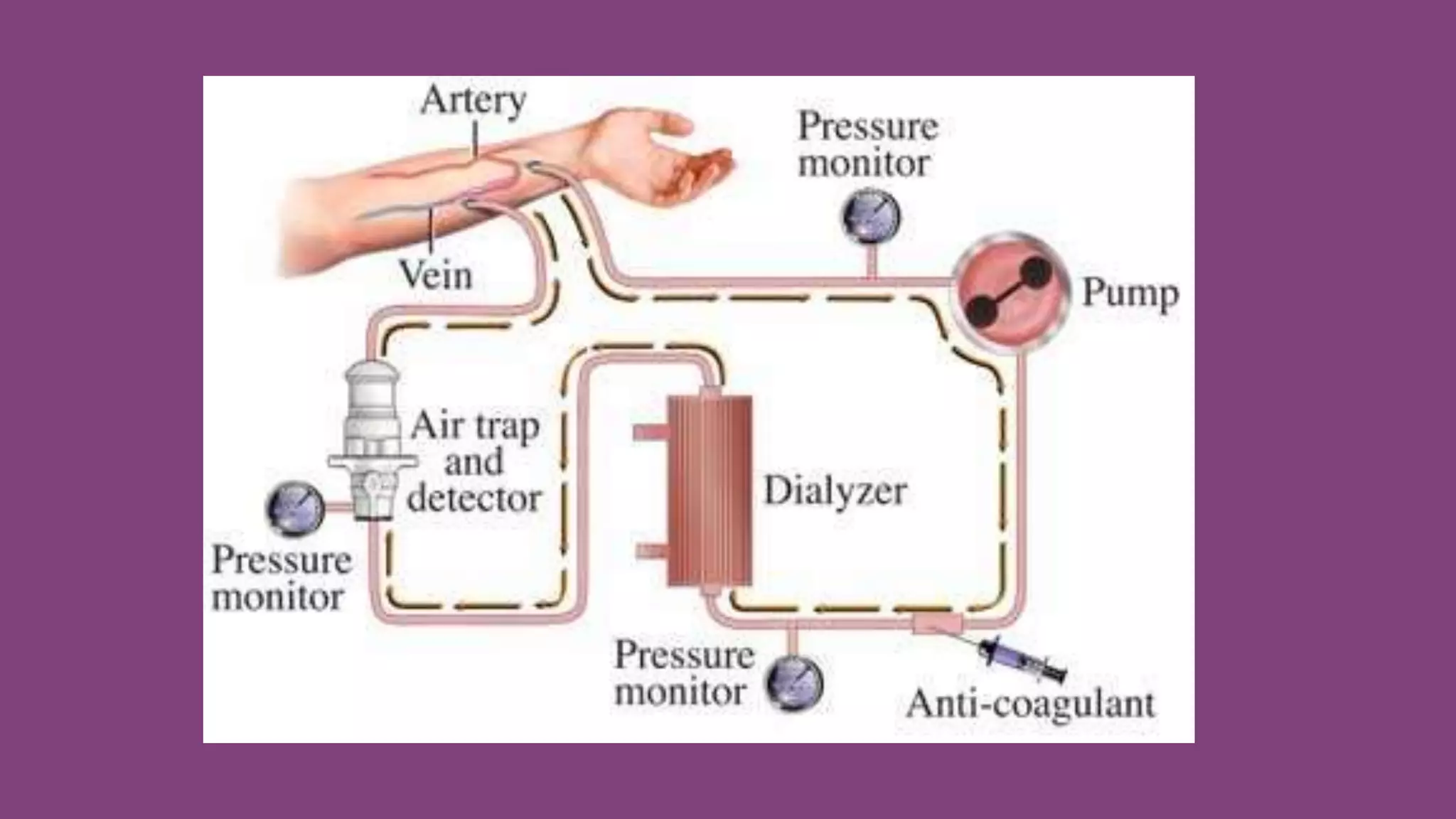
hemodialysis, the blood, laden with toxins and nitrogenous wastes, is
diverted from the patient to a machine, a dialyzer, in which the blood
is cleansed and then returned to the patient.
• Diffusion
• Osmosis
• Ultrafiltration.
Diffusion: The toxins and wastes in the blood are removed by
diffusion—that is, they move from an area of higher concentration in
the blood to an area of lower concentration in the dialysate. The
semipermeable membrane impedes the diffusion of large molecules,
such as red blood cells and proteins.
• Osmosis: Excess water is removed from the blood by osmosis, in
which water moves from an area of higher solute concentration (the
blood) to an area of lower solute concentration (the dialysate bath).
• Ultrafiltration is defined as water moving under high pressure to an
area of lower pressure.
Procedure
• The patient's access is prepared and cannulated.
• Heparin is administered (unless contraindicated).
• Heparinized blood flows through a semipermeable dialyzer in one direction,
and dialysis solution surrounds the membranes and flows in the opposite
direction.
• Dialysis solution consists of highly purified water to which sodium,
potassium, calcium, magnesium, chloride, and dextrose have been added.
Bicarbonate or acetate is also added to achieve the proper pH balance.
• Through the process of diffusion, solute in the form of electrolytes,
metabolic waste products, and acidic base components can be removed or
added to the blood.
• Excess water is removed from the blood (ultrafiltration).
• The blood is then returned to the body through the patient's access.
Requirements for Hemodialysis
• Access to the patient's circulation
• Dialysis machine and dialyzer with semipermeable membrane
• Appropriate dialysate bath
• Time approximately 4 hours, three times weekly
• Place dialysis center or home (if feasible)
Methods of Circulatory Access
• Arteriovenous fistula (AVF) creation of a vascular communication by
suturing a vein directly to an artery
• Usually, radial artery and cephalic vein are anastomosed in nondominant arm;
vessels in the upper arm may also be used.
• After the procedure, the superficial venous system of the arm dilates.
• By means of two large-bore needles inserted into the dilated venous system,
blood may be obtained and passed through the dialyzer. The arterial end is
used for arterial flow and the distal end for reinfusion of dialyzed blood.
• Healing of AVF requires several weeks; a central vein catheter is used .
• Arteriovenous graft arteriovenous connection consisting of a tube
graft made from autologous saphenous vein or from
polytetrafluoroethylene. Ready to use in 2 to 3 weeks.
• Central vein catheters direct cannulation of veins (subclavian, internal
jugular, or femoral); may be used as temporary or permanent dialysis
access.
Monitoring During Hemodialysis
• Involves constant monitoring of hemodynamic status, electrolyte, and
acid–base balance as well as maintenance of sterility and a closed
system.
• Usually performed by a specially trained nurse who is familiar with
the protocol and equipment being used.
Lifestyle Management for Chronic Hemodialysis
• Dietary management involves restriction or adjustment of protein,
sodium, potassium, or fluid intake.
• Ongoing health care monitoring includes careful adjustment of
medications that are normally excreted by the kidney or are dialyzable.
• Surveillance for complications.
• Arteriosclerotic cardiovascular disease, heart failure, disturbance of lipid
metabolism (hypertriglyceridemia), coronary heart disease, stroke
• Intercurrent infection
• Anemia and fatigue
• Gastric ulcers and other problems
• Bone problems (renal osteodystrophy, aseptic necrosis of hip)—from
disturbed calcium metabolism
• Hypertension
• Psychosocial problems: depression, suicide, sexual dysfunction
• REHABILITATION
• Encouragement: Patients, families, and staff need encouragement to adopt
a positive attitude toward rehabilitation.
• Education: Patients need to understand their disease. They need to learn
strategies for successful adaptation to dialysis and how to maximize
functional status, among many other subjects. Parents, staff, and
employers require education about the many positive life options of
dialysis patients.
• Exercise: Exercise is critical to rehabilitation, just as with heartndisease.
Many levels of activity to fit the different abilities of renal patients are
helpful, from vigorous workouts to stretching exercises.
• Employment: The primary goal is to allow dialysis patients to keep their
current jobs whenever possible. If not possible, vocational rehabilitation
counseling should be used.
• Evaluation: Systematic evaluation of rehabilitation outcomes is necessary
to identify and measure which interventions have made an impact.
Complications of Vascular Access
• Infection
• Catheter clotting
• Central vein thrombosis or stricture
• Stenosis or thrombosis
• Ischemia of the hand (steal syndrome)
• Aneurysm or pseudoaneurysm
REFERENCES
1.Sandra MN. The Lippincott manual of nursing practice. 7th ed.
Lippincott: Jaypee brothers; 2003. P. 770-73.
2. Rochelle LB, Maribeth. American association of critical care nurses,
procedure manual for critical care. Philadelphia: WB Saunders
company; 1993. P. 555-58

HEMODIALYSIS

  • 1.
  • 2.
    INTRODUCTION Dialysis is usedto remove fluid and uremic waste products from the body when the kidneys cannot do so. It may also be usedto treat patients with edema that does not respond to treatment,hepatic coma, hyperkalemia, hypercalcemia, hypertension, anduremia. Methods of therapy include hemodialysis, continuous renal replacement therapy (CRRT; discussed later), and various forms of peritoneal dialysis.
  • 3.
    MEANING Hemodialysis is aprocess of cleansing the blood of accumulated waste products. It is used for patients with end-stage renal failure or for acutely ill patients who require short-term dialysis. • A dialyzer (once referred to as an artificial kidney) serves as a synthetic semipermeable membrane, replacing the renal glomeruli and tubules as the filter for the impaired kidneys.
  • 4.
    Principles of Hemodialysis Theobjectives of hemodialysis are to extract toxic nitrogenous substances from the blood and to remove excess water. In hemodialysis, the blood, laden with toxins and nitrogenous wastes, is diverted from the patient to a machine, a dialyzer, in which the blood is cleansed and then returned to the patient. • Diffusion • Osmosis • Ultrafiltration.
  • 5.
    Diffusion: The toxinsand wastes in the blood are removed by diffusion—that is, they move from an area of higher concentration in the blood to an area of lower concentration in the dialysate. The semipermeable membrane impedes the diffusion of large molecules, such as red blood cells and proteins.
  • 6.
    • Osmosis: Excesswater is removed from the blood by osmosis, in which water moves from an area of higher solute concentration (the blood) to an area of lower solute concentration (the dialysate bath). • Ultrafiltration is defined as water moving under high pressure to an area of lower pressure.
  • 8.
    Procedure • The patient'saccess is prepared and cannulated. • Heparin is administered (unless contraindicated). • Heparinized blood flows through a semipermeable dialyzer in one direction, and dialysis solution surrounds the membranes and flows in the opposite direction. • Dialysis solution consists of highly purified water to which sodium, potassium, calcium, magnesium, chloride, and dextrose have been added. Bicarbonate or acetate is also added to achieve the proper pH balance. • Through the process of diffusion, solute in the form of electrolytes, metabolic waste products, and acidic base components can be removed or added to the blood. • Excess water is removed from the blood (ultrafiltration). • The blood is then returned to the body through the patient's access.
  • 9.
    Requirements for Hemodialysis •Access to the patient's circulation • Dialysis machine and dialyzer with semipermeable membrane • Appropriate dialysate bath • Time approximately 4 hours, three times weekly • Place dialysis center or home (if feasible)
  • 10.
    Methods of CirculatoryAccess • Arteriovenous fistula (AVF) creation of a vascular communication by suturing a vein directly to an artery • Usually, radial artery and cephalic vein are anastomosed in nondominant arm; vessels in the upper arm may also be used. • After the procedure, the superficial venous system of the arm dilates. • By means of two large-bore needles inserted into the dilated venous system, blood may be obtained and passed through the dialyzer. The arterial end is used for arterial flow and the distal end for reinfusion of dialyzed blood. • Healing of AVF requires several weeks; a central vein catheter is used .
  • 11.
    • Arteriovenous graftarteriovenous connection consisting of a tube graft made from autologous saphenous vein or from polytetrafluoroethylene. Ready to use in 2 to 3 weeks. • Central vein catheters direct cannulation of veins (subclavian, internal jugular, or femoral); may be used as temporary or permanent dialysis access.
  • 12.
    Monitoring During Hemodialysis •Involves constant monitoring of hemodynamic status, electrolyte, and acid–base balance as well as maintenance of sterility and a closed system. • Usually performed by a specially trained nurse who is familiar with the protocol and equipment being used.
  • 13.
    Lifestyle Management forChronic Hemodialysis • Dietary management involves restriction or adjustment of protein, sodium, potassium, or fluid intake. • Ongoing health care monitoring includes careful adjustment of medications that are normally excreted by the kidney or are dialyzable. • Surveillance for complications. • Arteriosclerotic cardiovascular disease, heart failure, disturbance of lipid metabolism (hypertriglyceridemia), coronary heart disease, stroke • Intercurrent infection • Anemia and fatigue • Gastric ulcers and other problems • Bone problems (renal osteodystrophy, aseptic necrosis of hip)—from disturbed calcium metabolism • Hypertension • Psychosocial problems: depression, suicide, sexual dysfunction
  • 14.
    • REHABILITATION • Encouragement:Patients, families, and staff need encouragement to adopt a positive attitude toward rehabilitation. • Education: Patients need to understand their disease. They need to learn strategies for successful adaptation to dialysis and how to maximize functional status, among many other subjects. Parents, staff, and employers require education about the many positive life options of dialysis patients. • Exercise: Exercise is critical to rehabilitation, just as with heartndisease. Many levels of activity to fit the different abilities of renal patients are helpful, from vigorous workouts to stretching exercises. • Employment: The primary goal is to allow dialysis patients to keep their current jobs whenever possible. If not possible, vocational rehabilitation counseling should be used. • Evaluation: Systematic evaluation of rehabilitation outcomes is necessary to identify and measure which interventions have made an impact.
  • 15.
    Complications of VascularAccess • Infection • Catheter clotting • Central vein thrombosis or stricture • Stenosis or thrombosis • Ischemia of the hand (steal syndrome) • Aneurysm or pseudoaneurysm
  • 16.
    REFERENCES 1.Sandra MN. TheLippincott manual of nursing practice. 7th ed. Lippincott: Jaypee brothers; 2003. P. 770-73. 2. Rochelle LB, Maribeth. American association of critical care nurses, procedure manual for critical care. Philadelphia: WB Saunders company; 1993. P. 555-58