MEDICAL SURGICAL NURSING
UNIT- VI
DIALYSIS
Definition-
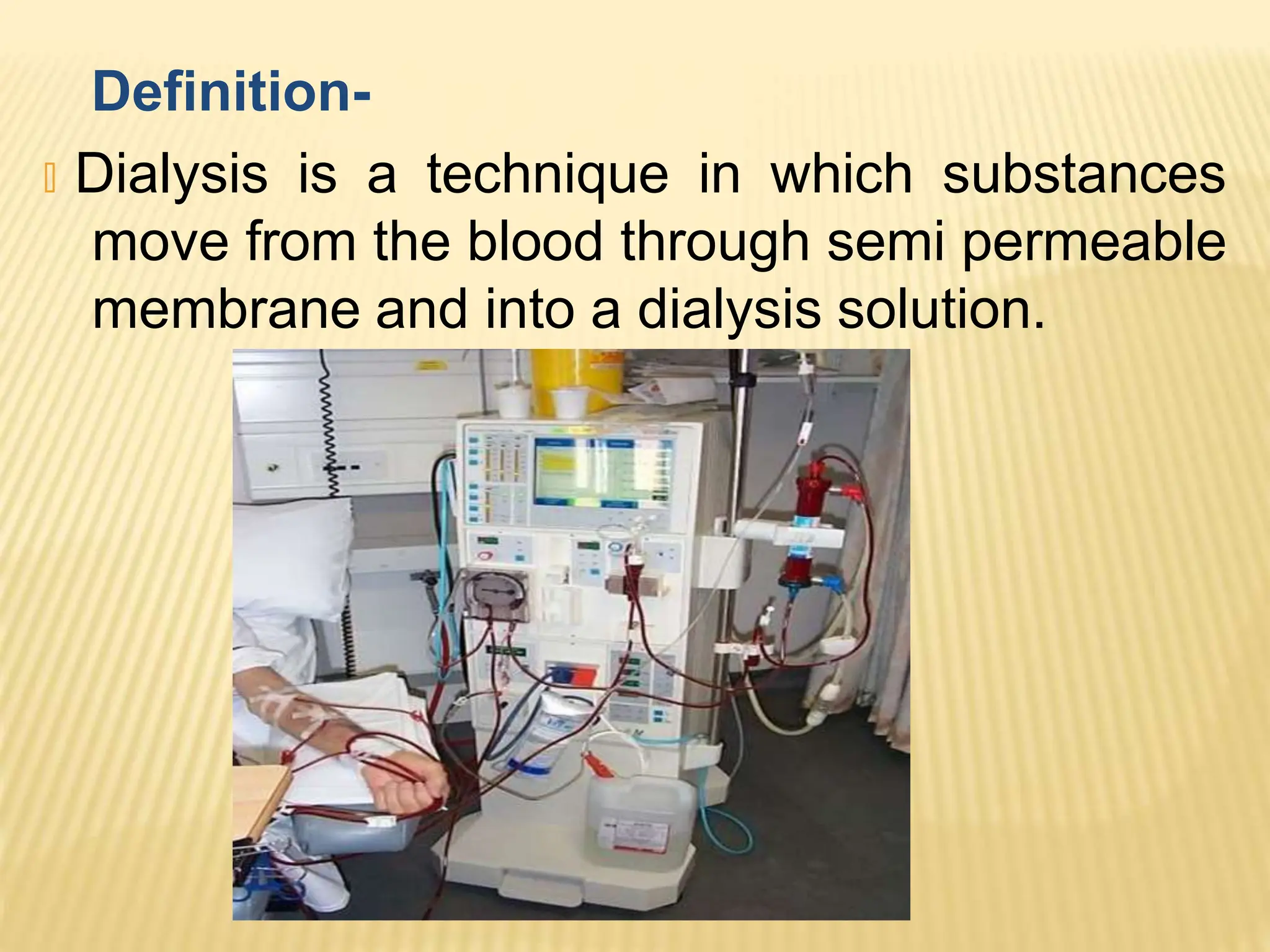
🞭 Dialysis is a technique in which substances
move from the blood through semi permeable
membrane and into a dialysis solution.
🞭 A semipermeable membrane
is a thin layer of material that
contains holes of various
sizes, or pores.
🞭 This replicates the filtering
process that takes place in the
kidneys, when the blood
enters the
larger
kidneys
substances
and the
are
separated from the smaller
ones in the glomerulus.
PURPOSE
🞭 The purpose of dialysis is to maintain fluid
electrolyte and acid base balance and to
remove endogenous and exogenous toxins
METHODS/TYPES OF DIALYSIS
2. Peritoneal dialysis
1. Hemodialysis
HEMODIALYSIS
 Hemo simply means “blood”. Dialysis meaning “to pass
through”. It removes the nitrogenous waste products, excess
fluid and electrolyte from the blood by means of artificial
kidney.
It is the procedure of cleansing the blood of accumulated
waste products. It is used for patient with end stage renal
failure or for acutely ill patient who require short term.
Nearly 90% of all dialysis patients receives hemodialysis.
DIALYZER
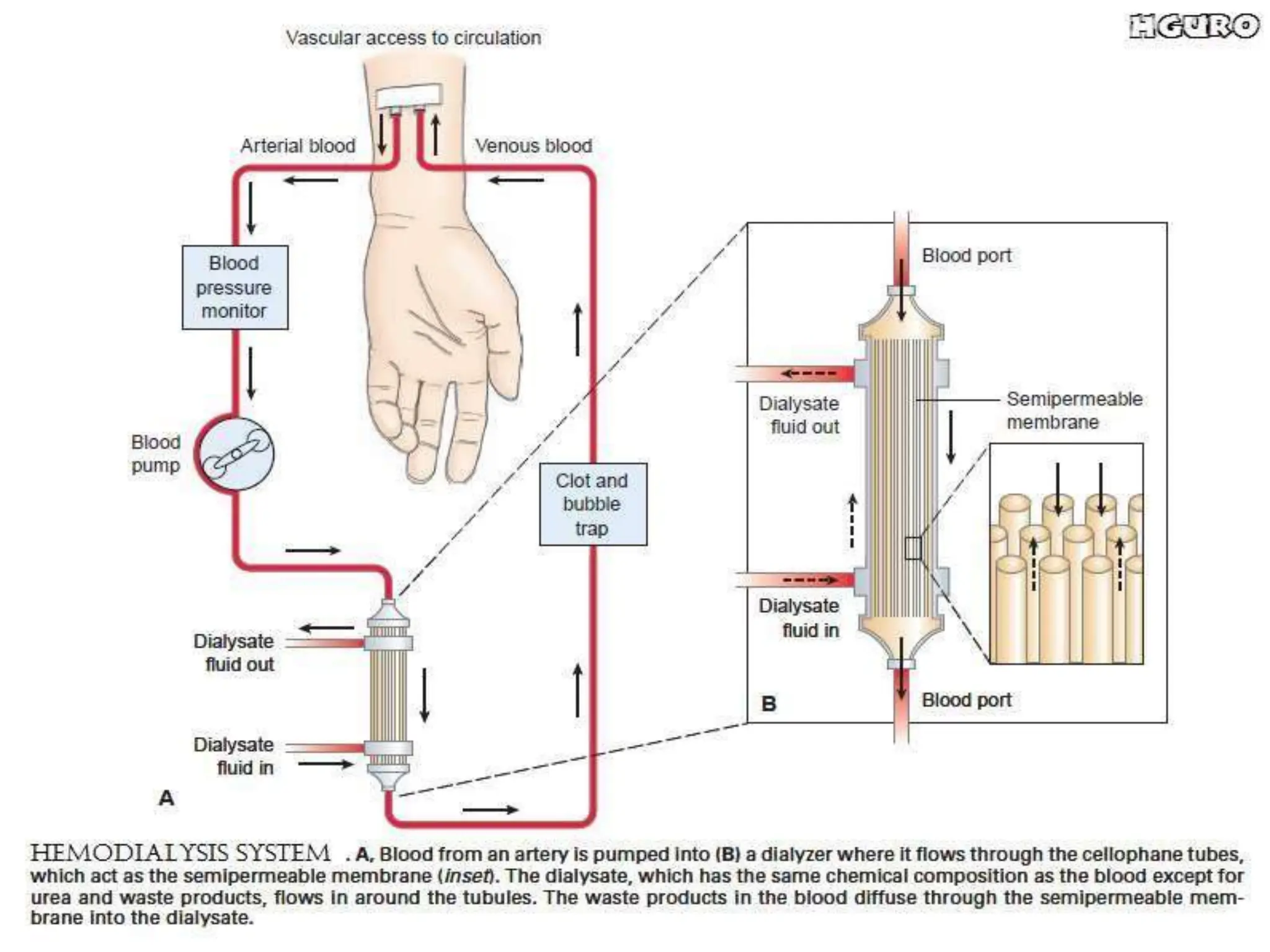
Dialyzer are hollow-fiber artificial kidneys that contain
thousands of tiny tubules that act as semipermeable
membranes.
The blood flows through the tubules, while a solution
(the dialysate) circulates around the tubules.
The exchange of wastes from the blood to the dialysate
occurs through the semipermeable membrane of the
tubules.
DIALYZER
DIALYSATE
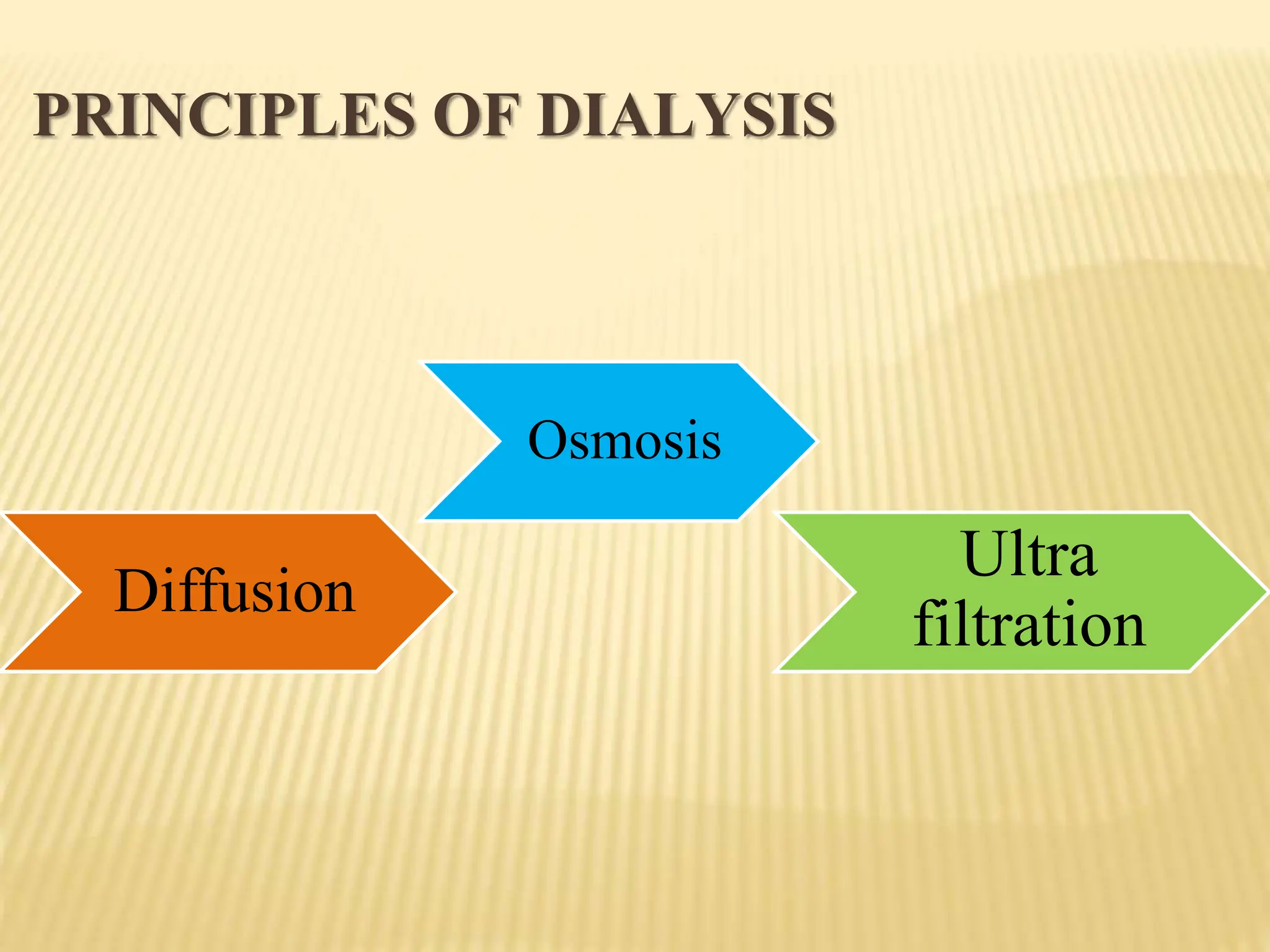
PRINCIPLES OF DIALYSIS
Diffusion
Osmosis
Ultra
filtration
Diffusion – movement of solutes from an area of greater
concentration to an area of lower concentration.
In renal failure urea, creatinine, uric acid, and electrolytes
(potassium, phosphate), move from the blood to the
dialysate with the net effect of lowering their concentration
in the blood.
But WBCs, RBCs and other contents within the blood are
too large to diffuse across the membrane
Osmosis
The movement of fluid from an area of lesser to an area of
greater concentration of solutes
Glucose is added to the dialyzing solution and creates an
osmotic gradient across the membrane to remove excess
fluid from the blood
Ultra filtration
Ultra filtration is defined as water moving under high
pressure to an area of lower pressure. This process is much
more efficient at water removal than osmosis
Ultra filtration is accompanied by applying negative
pressure or a suctioning force to the dialysis membrane.
METHODS OF CIRCULATORYACCESS
 Arteriovenous fistula- An arteriovenous fistula
is an abnormal connection or passageway
between an artery and a vein.
🞭 Usually radial artery and cephalic vein are
anastomosed in nondominant arm. Vessels in the
upper arm may also be used.
🞭After the procedure the superficial venous system
of the arm dilates.
🞭By means of two large bore needles inserted into the
dilated venous system, blood may be obtained and
passess through the dialyzer.
🞭The arterial end is used for the arterial flow and the
distal end is used for the reinfusion of dialysed blood.
🞭Healing of AVF requires at least 6 to 8 weeks; a central
vein catheter is used.
ARTERIOVENOUS GRAFT
🞭 If a patient is not a good candidate for an
arteriovenous fistula, an arteriovenous graft is
considered.
CENTRAL VEIN CATHETER
🞭 A third type of vascular access is a venous catheter. A
venous catheter is a plastic tube which is inserted into a
large vein, usually in the neck.
REQUIREMENT FOR HEMODIALYSIS
🞭 Access to patients circulation.
dialyzer with
🞭 Dialysis machine and
semipermeable membrane.
🞭 Appropriate dialysis bath.
🞭 Time- approximately 4 hours, three times
weekly.
🞭 Place- dialysis centre or home (if feasible)
PROCEDURE
🞭 Patient access is prepared and cannulated
🞭Heparin is administered
🞭Heparin and red blood flows through semipermeable
dialysis in one direction and dialysis solution
surrounds the membrane and flows in the opposite
direction.
🞭 Dialysis solution consist of highly purified water to
which sodium, potassium , calcium, magnesium
chloride, and dextrose have been added, bicarbonate
is added to achieve the the proper pH balance.
🞭Through the process of diffusion solute in the form of
electrolytes, metabolic waste products acid base balance
components can be removed or added to the blood.
🞭Excess water is removed from the blood
(ultrafiltration).
🞭The blood is then returned to the body through
patient access.
MONITIORING DURING HEMODIALYSIS
🞭 Involves constant monitoring of
hemodynamic status, electrolyte and acid
base balance as well as maintainence of
sterility and closed system.
🞭 Performed by a specially trained nurse and
dialysis technician who are familiar with the
protocol and equipment being used.
LIFE STYLE MANAGEMENT FOR CHRONIC
HEMODIALYSIS
🞭 DIETARY MANAGEMENT involves restriction
or adjustment of protein , sodium,
potassium, phosphorus or fluid intake.
🞭 Ongoing health care monitoring includes
carefull adjustment of medication that are
normally excreted by the kidney or are
dialyzable.
HEMODIALYSIS TREATMENT AND COMPLICATIONS:
🞭 Performs head to toe physical assessment
before, during and after hemodialysis regarding
complications and access's security.
🞭 Confirm and deliver dialysis prescription after
review most update lab results. Address any
concerns of the patient and educate patient when
recognizing the learning gap.
COMPLICATIONS
🞭 Infection
🞭 Catheter clotting
🞭 Central vein thrombosis
🞭 Stenosis or thrombosis.
🞭 Ischemia of the hand
🞭 Aneurysm
DAY-TO-DAY CARE OF ARTERIAL FISTULA
🞭 Always wash your hands with soap and warm water
before and after touching your access. Clean the area
around the access with antibacterial soap or rubbing
alcohol before your dialysis treatments.
🞭 Change where the needle goes into your fistula or graft
for each dialysis treatment.
🞭 Do not let anyone take your blood pressure, start an
I.V, or draw blood from your access arm.
🞭 Do not let anyone draw blood from your tunneled
central venous catheter.
🞭 Do not sleep on your access arm.
🞭 Do not carry more than 10 lb with your access
arm.
🞭 Do not wear a watch, jewelry, or tight
clothes over your access site.
🞭 Be careful not to bump or cut your access.
PERITONEAL DIALYSIS
🞭Peritoneal dialysis is a type of dialysis that uses the
abdominal peritoneal lining as the membrane through
which fluid and dissolved substances are exchanged with
the blood to remove toxins, excess fluid and to correct
electrolyte imbalances.
PERITONEAL DIALYSIS
Continuous ambulatory peritoneal
dialysis.
Automated Peritoneal dialysis
Intermittent peritoneal dialysis
INDICATIONS
🞭 Vascular access failure
🞭 Intolerance to hemodialysis
🞭 Congestive heart failure
🞭 Prosthetic valvular disease
PROCEDURE
Preparing the patient-
🞭 The nurse’s preparation of the patient and the family for PD
depends upon the patients physical and psychological
status, level of alertness, previous experience with dialysis,
and understanding of and familiarity with the procedure.
CONTD..
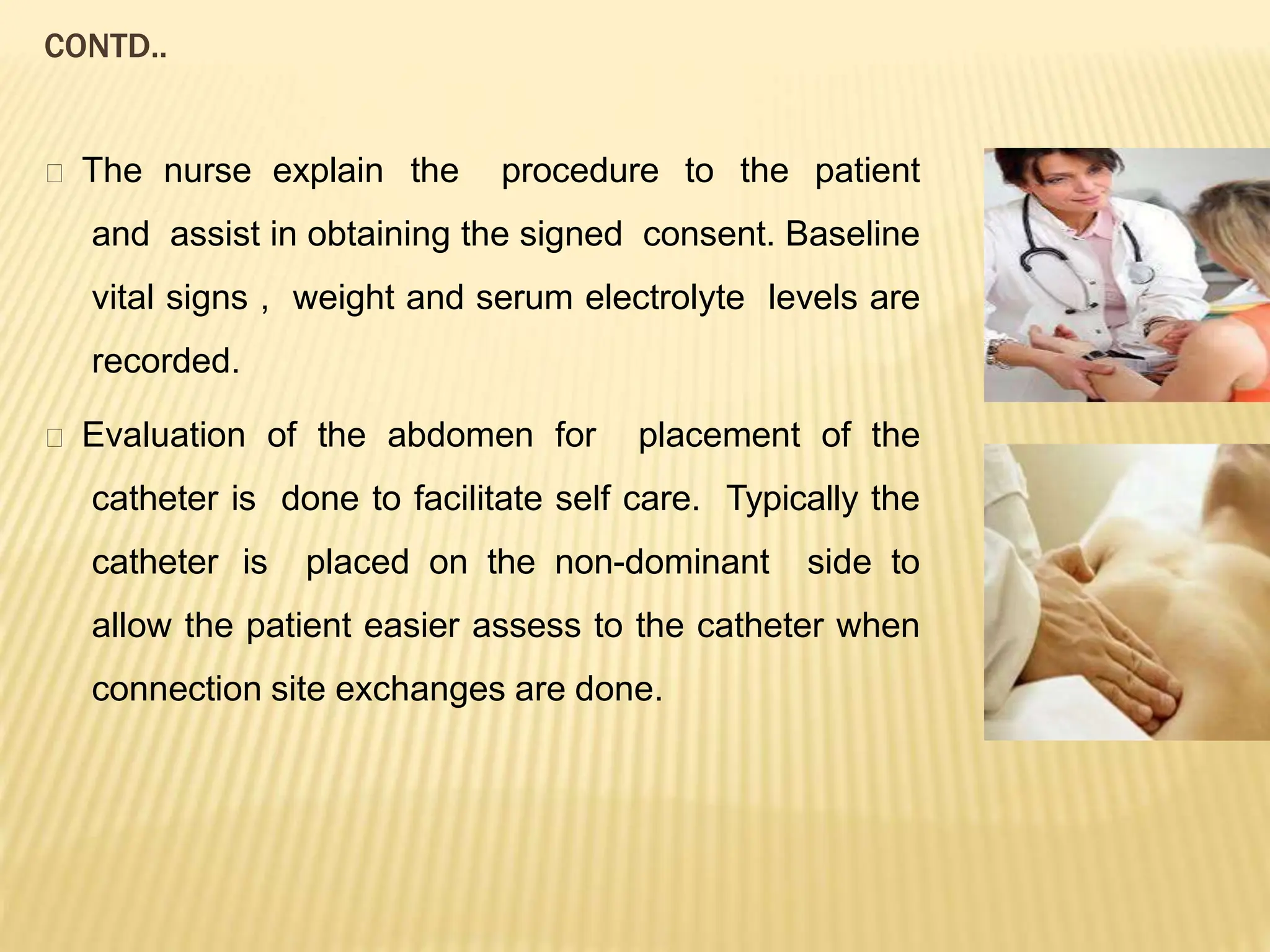
🞭 The nurse explain the procedure to the patient
and assist in obtaining the signed consent. Baseline
vital signs , weight and serum electrolyte levels are
recorded.
🞭 Evaluation of the abdomen for placement of the
catheter is done to facilitate self care. Typically the
catheter is placed on the non-dominant side to
allow the patient easier assess to the catheter when
connection site exchanges are done.
CONTD…
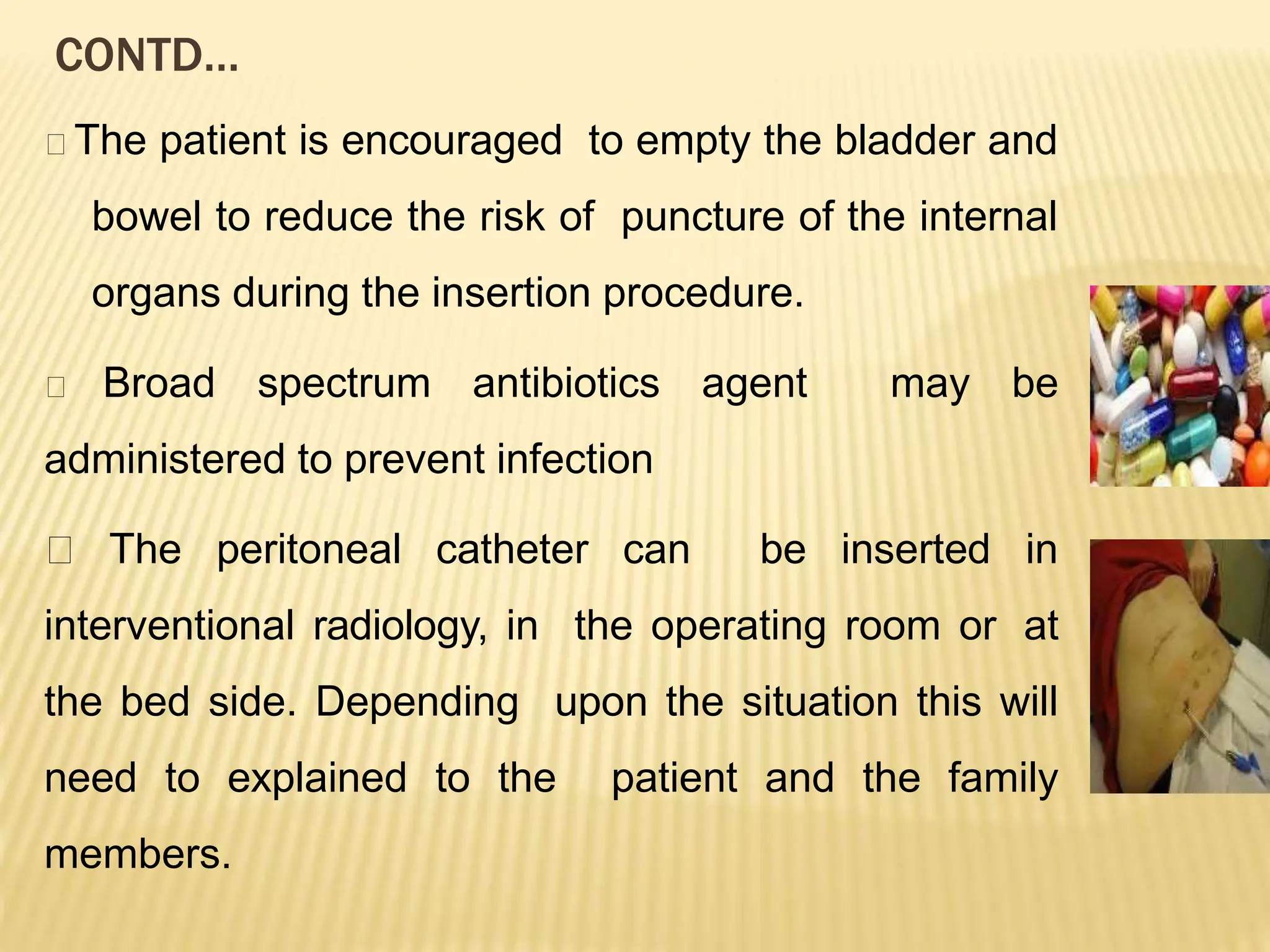
🞭 The patient is encouraged to empty the bladder and
bowel to reduce the risk of puncture of the internal
organs during the insertion procedure.
🞭 Broad spectrum antibiotics agent may be
administered to prevent infection
🞭 The peritoneal catheter can be inserted in
interventional radiology, in the operating room or at
the bed side. Depending upon the situation this will
need to explained to the patient and the family
members.
PREPARING THE EQUIPMENTS
🞭In addition to assembling the
equipments for PD
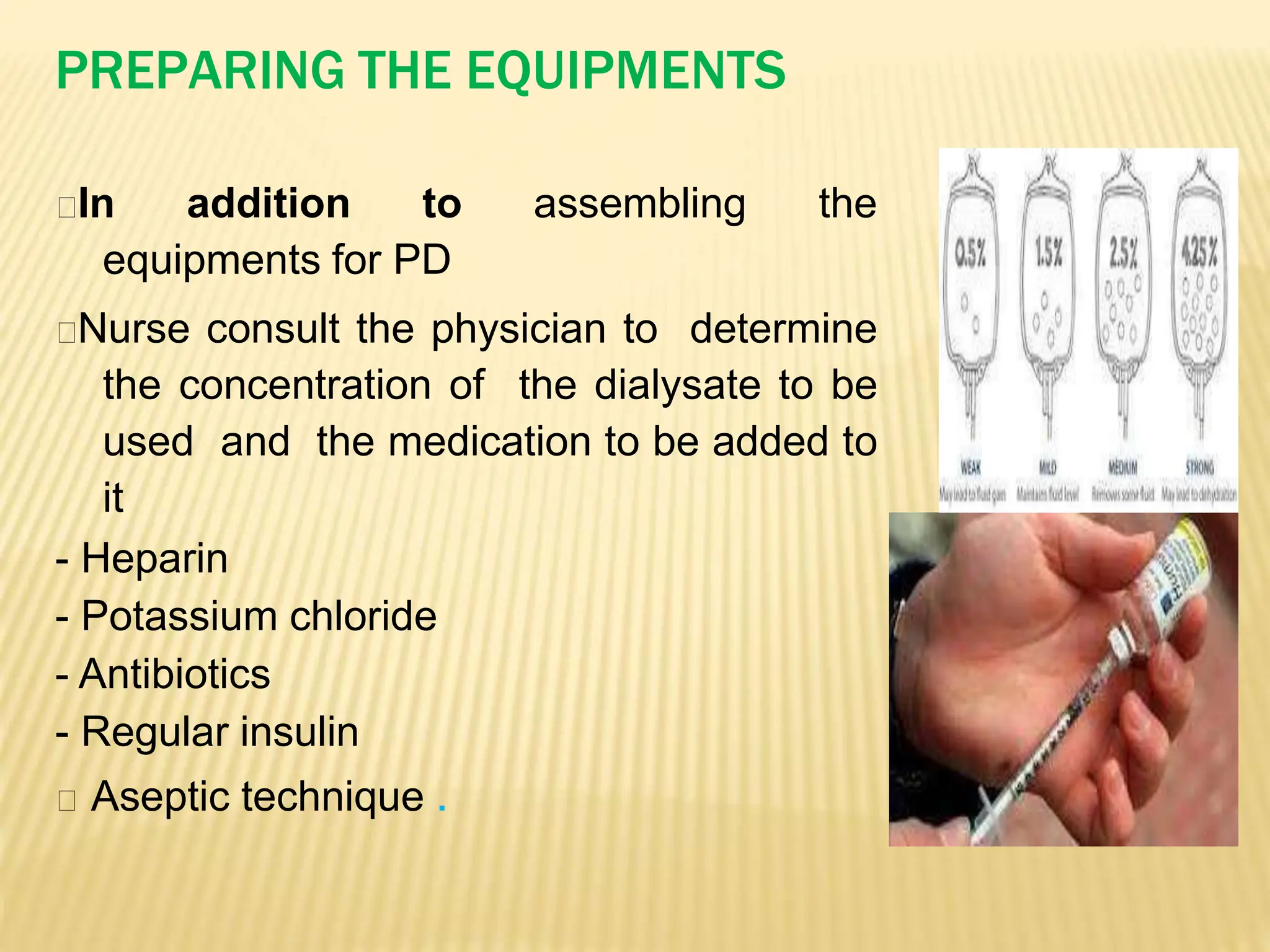
🞭Nurse consult the physician to determine
the concentration of the dialysate to be
used and the medication to be added to
it
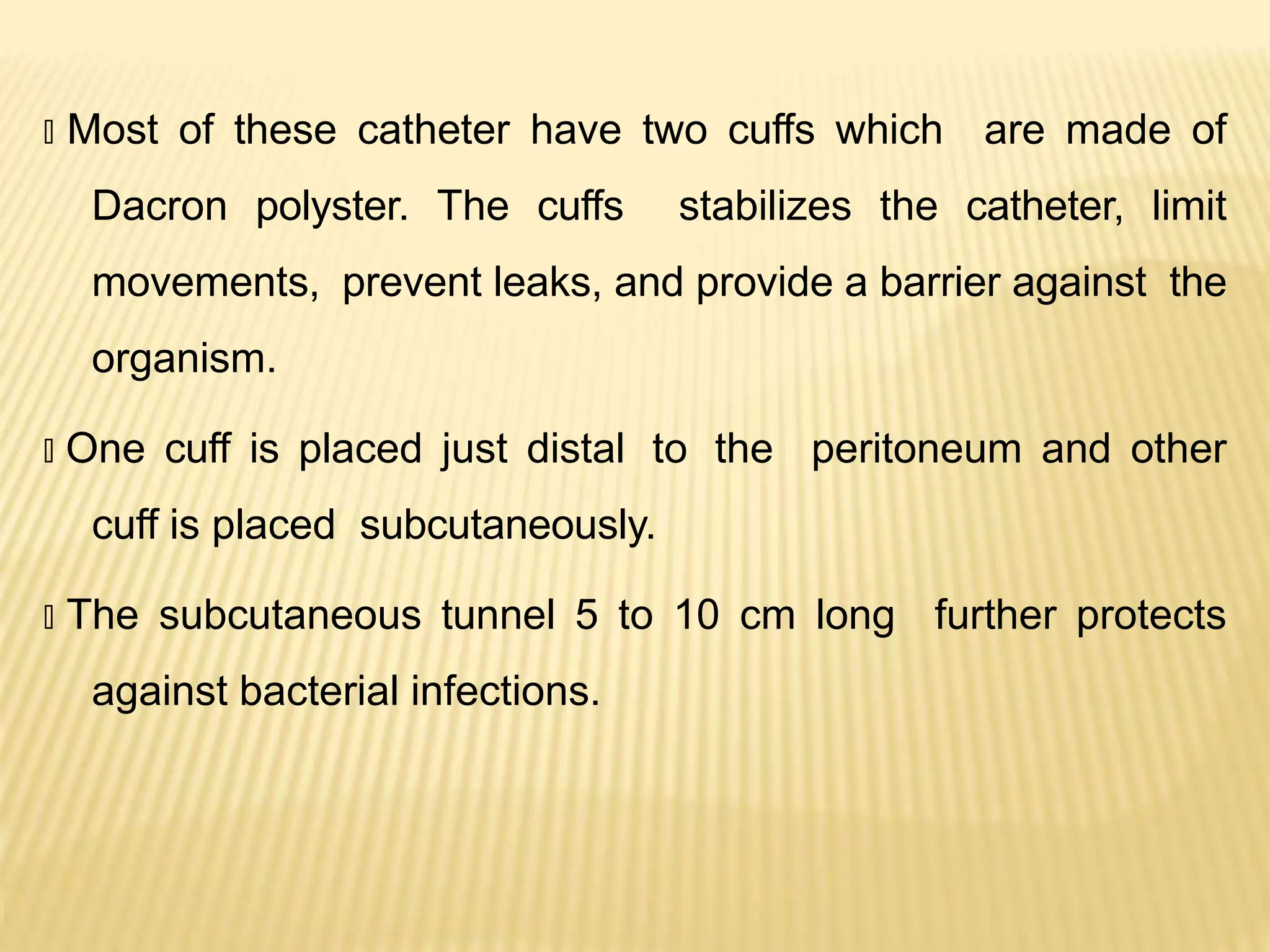
- Heparin
- Potassium chloride
- Antibiotics
- Regular insulin
🞭 Aseptic technique .
CONTD...
🞭 Before medication are added the dialysate
is warmed to body temparatuire.
🞭 Solution that are too cold cause pain
cramping and vasoconstriction and reduce
clearance
🞭 Dry heating is recommended.
🞭 Methods not recommended
1. Soaking the bags of the solution in warm
water
2. Use of microwave to heat the fluid.
CONTD…
🞭 Immediately before initiating dialysis using aseptic
technique, the nurse assemble the administration
set and tubing.
🞭 The tubing is filled with the prepared dialysate to
reduce the amount of air entering the catheter
and peritoneal cavity which could increase
abdominal discomfort and interfere with instillation
and drainage of the fluid
INSERTING THE CATHETER
🞭 Ideally, the peritoneal catheter is inserted in the
operating room or radiology suite to maintain surgical
asepsis and minimize the risk of contamination.
🞭 However in some circumstances the physician may insert
the rigid stylet catheter at the bedside using strict asepsis
🞭 Whenever a rigid catheter is used, carefully securing
and close observation for bowel perforation is
essential to minimize the complications.
🞭 Catheter for long term use ( e.g tenckhoff, swan)are
usually soft and flexible and made of silicon with a
radiopaque strip to permit visualization on X- ray.
These catheter have three section:
🞭 An intraperitoneal section with numerous openings and an
open tip to let dialysate to flow freely.
🞭 A subcutaneous section that passes from the peritoneal
membrane and tunnels through muscle and subcutaneous
fat to the skin.
🞭 An external section for connection to the dialysate system.
🞭 Most of these catheter have two cuffs which are made of
Dacron polyster. The cuffs stabilizes the catheter, limit
movements, prevent leaks, and provide a barrier against the
organism.
🞭 One cuff is placed just distal to the peritoneum and other
cuff is placed subcutaneously.
🞭 The subcutaneous tunnel 5 to 10 cm long further protects
against bacterial infections.
CONTINUOUS AMBULATORY PERITONEAL DIALYSIS (CAPD)
CAPD means :
C – Continuous: The process is uninterrupted (treatment without stopping
for 24 hours a day, 7 days a week).
A – Ambulatory: The patient can walk around and perform routine activities.
P – Peritoneal: The peritoneal membrane in the abdomen works as a filter.
D – Dialysis: The method of purification of blood.
Continuous Ambulatory Peritoneal Dialysis (CAPD) is a form of dialysis
which can be carried out by a patient at home without the use of a machine.
As CAPD provides convenience and independence it is a popular dialysis
modality in many countries.
PROCEDURE:
CAPD catheter: The permanent access for peritoneal dialysis
(CAPD catheter) is a soft thin flexible silicon rubber tube with
numerous side holes.
It is surgically inserted into the patient’s abdomen through the
abdominal wall, about an inch below and to the side of the
navel or belly button.
The CAPD catheter is inserted about 10 to 14 days before
CAPD starts.
PERFORMING THE EXCHANGE
🞭 PD involves a series of exchange or cycles.
An exchange is defined as the process of fill, dwell, and
drainage of the dialysate. This cycle is repeated through
out the course of the dialysis.
Fill: Peritoneal dialysis fluid from the sterile PD bag is
raised to shoulder level and infused by gravity,
through sterile tubing connected to the PD catheter,
into the abdominal cavity.
Usually, 2 to 3 liters of fluid is infused.
The bag emptied of PD fluid is rolled up and tucked
in the patient’s inner wear until the next exchange.
Dwell: The period of time in which PD fluid remains inside the
abdominal cavity is called the dwell time.
This lasts for about 4 to 6 hours per exchange during the day
and 6 to 8 hours at night.
The process of cleaning the blood takes place during dwell
time.
The peritoneal membrane works like a filter allowing waste
products, unwanted substances and excess fluid to pass from
blood into the PD fluid. The patient is free to walk around during
this time (hence the term, ambulatory).
Drain: When the dwell time is completed, the PD fluid is drained into the
empty collection bag (which had been rolled up and tucked in the patient’s
inner clothing).
The bag with the drained fluid is weighed and discarded; the weight is
recorded.
The drained fluid should be clear. The drainage fluid is normally colour
less or straw colour and should not be cloudy.
Bloody drainage may be seen in the first few exchanges after insertion of
a new catheter but should not occur after that time.
Drainage and replacement with fresh solution takes about 30 to 40
minutes.
CONTD…
 Exchanges may be done from 3 to 5 times during the day and
once during the night, 7 days per week. Fluid for the night
exchange is left in the abdomen overnight and drained in the
morning.
 After the dialysate is drained, a fresh bag of dialysate solution is
infused using aseptic technique and procedure is repeated.
 The number of cycles or exchanges and their frequency are
prescribed based on the monthly laboratory values and presence
of uremic symptoms.
ADVANTAGES
🞭 Physical and psychological freedom
🞭 More liberal diet and fluid intake
🞭 Relatively simple and easy to use.
🞭 Satisfactory biochemical control of uremia.
COMPLICATIONS
🞭Infectious peritonitis, exit-site and tunnel
infections.
🞭Peritoneal pleural communication, hernia
formation.
🞭 GI bloating.
🞭 Hypervolemia, hypovolemia.
🞭 Bleeding at catheter site.
PATIENT EDUCATION
🞭 The use of CAPD as a long term
treatment depends on prevention,
recurring peritonitis.
🞭 Use a strict aseptic technique when
performing bag use.
🞭 Perform bag exchange in clean,
closed off area without pets and other
activities.
AUTOMATED PERITONEAL DIALYSIS
An automated device called a cycler is used to deliver the
dialysate for APD. The automated cycler times and controls the
fill, dwell, and drain phases.
The machine cycles four or more exchanges per night with 1
to 2 hours per exchange.
Alarms and monitors are built
into the system to make it safe
for the patient to sleep while
dialyzing.
The patient disconnects from
the machine in the morning and
usually leaves fluid in the
abdomen during the day
INTERMITTENT PERITONEAL DIALYSIS
🞭 It is an option for treating acute kidney injury when
access to the bloodstream is not possible or
hemodialysis /CRRT is not available.
🞭 It is similar to CAPD in that it involves access to the
peritoneal cavity either with a newly inserted rigid stylet
catheter or in chronic peritoneal patient the existing
chronic catheter can be used.
🞭 In IPD exchange ranges from 30 min to 2 hours. Exchanges
are repeated continuously for a prescribed period of time
which varies from 12 to 36 hours.
🞭 Due to the rapid exchange patients are on bed rest. As
with all peritoneal dialysis procedure aseptic technique
is essential during catheter insertion exchanges and
dressing changes to prevent peritonitis.
DIALYSIS2 Hemodialysis peritoneal d.pptx

DIALYSIS2 Hemodialysis peritoneal d.pptx

  • 1.
  • 2.
    Definition- 🞭 Dialysis isa technique in which substances move from the blood through semi permeable membrane and into a dialysis solution.
  • 3.
    🞭 A semipermeablemembrane is a thin layer of material that contains holes of various sizes, or pores. 🞭 This replicates the filtering process that takes place in the kidneys, when the blood enters the larger kidneys substances and the are separated from the smaller ones in the glomerulus.
  • 4.
    PURPOSE 🞭 The purposeof dialysis is to maintain fluid electrolyte and acid base balance and to remove endogenous and exogenous toxins
  • 5.
    METHODS/TYPES OF DIALYSIS 2.Peritoneal dialysis 1. Hemodialysis
  • 6.
    HEMODIALYSIS  Hemo simplymeans “blood”. Dialysis meaning “to pass through”. It removes the nitrogenous waste products, excess fluid and electrolyte from the blood by means of artificial kidney. It is the procedure of cleansing the blood of accumulated waste products. It is used for patient with end stage renal failure or for acutely ill patient who require short term. Nearly 90% of all dialysis patients receives hemodialysis.
  • 7.
    DIALYZER Dialyzer are hollow-fiberartificial kidneys that contain thousands of tiny tubules that act as semipermeable membranes. The blood flows through the tubules, while a solution (the dialysate) circulates around the tubules. The exchange of wastes from the blood to the dialysate occurs through the semipermeable membrane of the tubules.
  • 8.
  • 10.
  • 11.
  • 12.
    Diffusion – movementof solutes from an area of greater concentration to an area of lower concentration. In renal failure urea, creatinine, uric acid, and electrolytes (potassium, phosphate), move from the blood to the dialysate with the net effect of lowering their concentration in the blood. But WBCs, RBCs and other contents within the blood are too large to diffuse across the membrane
  • 13.
    Osmosis The movement offluid from an area of lesser to an area of greater concentration of solutes Glucose is added to the dialyzing solution and creates an osmotic gradient across the membrane to remove excess fluid from the blood
  • 14.
    Ultra filtration Ultra filtrationis defined as water moving under high pressure to an area of lower pressure. This process is much more efficient at water removal than osmosis Ultra filtration is accompanied by applying negative pressure or a suctioning force to the dialysis membrane.
  • 15.
    METHODS OF CIRCULATORYACCESS Arteriovenous fistula- An arteriovenous fistula is an abnormal connection or passageway between an artery and a vein.
  • 16.
    🞭 Usually radialartery and cephalic vein are anastomosed in nondominant arm. Vessels in the upper arm may also be used. 🞭After the procedure the superficial venous system of the arm dilates. 🞭By means of two large bore needles inserted into the dilated venous system, blood may be obtained and passess through the dialyzer. 🞭The arterial end is used for the arterial flow and the distal end is used for the reinfusion of dialysed blood. 🞭Healing of AVF requires at least 6 to 8 weeks; a central vein catheter is used.
  • 17.
    ARTERIOVENOUS GRAFT 🞭 Ifa patient is not a good candidate for an arteriovenous fistula, an arteriovenous graft is considered.
  • 18.
    CENTRAL VEIN CATHETER 🞭A third type of vascular access is a venous catheter. A venous catheter is a plastic tube which is inserted into a large vein, usually in the neck.
  • 19.
    REQUIREMENT FOR HEMODIALYSIS 🞭Access to patients circulation. dialyzer with 🞭 Dialysis machine and semipermeable membrane. 🞭 Appropriate dialysis bath. 🞭 Time- approximately 4 hours, three times weekly. 🞭 Place- dialysis centre or home (if feasible)
  • 20.
    PROCEDURE 🞭 Patient accessis prepared and cannulated 🞭Heparin is administered 🞭Heparin and red blood flows through semipermeable dialysis in one direction and dialysis solution surrounds the membrane and flows in the opposite direction. 🞭 Dialysis solution consist of highly purified water to which sodium, potassium , calcium, magnesium chloride, and dextrose have been added, bicarbonate is added to achieve the the proper pH balance.
  • 21.
    🞭Through the processof diffusion solute in the form of electrolytes, metabolic waste products acid base balance components can be removed or added to the blood. 🞭Excess water is removed from the blood (ultrafiltration). 🞭The blood is then returned to the body through patient access.
  • 23.
    MONITIORING DURING HEMODIALYSIS 🞭Involves constant monitoring of hemodynamic status, electrolyte and acid base balance as well as maintainence of sterility and closed system. 🞭 Performed by a specially trained nurse and dialysis technician who are familiar with the protocol and equipment being used.
  • 24.
    LIFE STYLE MANAGEMENTFOR CHRONIC HEMODIALYSIS 🞭 DIETARY MANAGEMENT involves restriction or adjustment of protein , sodium, potassium, phosphorus or fluid intake. 🞭 Ongoing health care monitoring includes carefull adjustment of medication that are normally excreted by the kidney or are dialyzable.
  • 25.
    HEMODIALYSIS TREATMENT ANDCOMPLICATIONS: 🞭 Performs head to toe physical assessment before, during and after hemodialysis regarding complications and access's security. 🞭 Confirm and deliver dialysis prescription after review most update lab results. Address any concerns of the patient and educate patient when recognizing the learning gap.
  • 26.
    COMPLICATIONS 🞭 Infection 🞭 Catheterclotting 🞭 Central vein thrombosis 🞭 Stenosis or thrombosis. 🞭 Ischemia of the hand 🞭 Aneurysm
  • 27.
    DAY-TO-DAY CARE OFARTERIAL FISTULA 🞭 Always wash your hands with soap and warm water before and after touching your access. Clean the area around the access with antibacterial soap or rubbing alcohol before your dialysis treatments. 🞭 Change where the needle goes into your fistula or graft for each dialysis treatment.
  • 28.
    🞭 Do notlet anyone take your blood pressure, start an I.V, or draw blood from your access arm. 🞭 Do not let anyone draw blood from your tunneled central venous catheter. 🞭 Do not sleep on your access arm. 🞭 Do not carry more than 10 lb with your access arm. 🞭 Do not wear a watch, jewelry, or tight clothes over your access site. 🞭 Be careful not to bump or cut your access.
  • 29.
    PERITONEAL DIALYSIS 🞭Peritoneal dialysisis a type of dialysis that uses the abdominal peritoneal lining as the membrane through which fluid and dissolved substances are exchanged with the blood to remove toxins, excess fluid and to correct electrolyte imbalances.
  • 30.
    PERITONEAL DIALYSIS Continuous ambulatoryperitoneal dialysis. Automated Peritoneal dialysis Intermittent peritoneal dialysis
  • 31.
    INDICATIONS 🞭 Vascular accessfailure 🞭 Intolerance to hemodialysis 🞭 Congestive heart failure 🞭 Prosthetic valvular disease
  • 32.
    PROCEDURE Preparing the patient- 🞭The nurse’s preparation of the patient and the family for PD depends upon the patients physical and psychological status, level of alertness, previous experience with dialysis, and understanding of and familiarity with the procedure.
  • 33.
    CONTD.. 🞭 The nurseexplain the procedure to the patient and assist in obtaining the signed consent. Baseline vital signs , weight and serum electrolyte levels are recorded. 🞭 Evaluation of the abdomen for placement of the catheter is done to facilitate self care. Typically the catheter is placed on the non-dominant side to allow the patient easier assess to the catheter when connection site exchanges are done.
  • 34.
    CONTD… 🞭 The patientis encouraged to empty the bladder and bowel to reduce the risk of puncture of the internal organs during the insertion procedure. 🞭 Broad spectrum antibiotics agent may be administered to prevent infection 🞭 The peritoneal catheter can be inserted in interventional radiology, in the operating room or at the bed side. Depending upon the situation this will need to explained to the patient and the family members.
  • 35.
    PREPARING THE EQUIPMENTS 🞭Inaddition to assembling the equipments for PD 🞭Nurse consult the physician to determine the concentration of the dialysate to be used and the medication to be added to it - Heparin - Potassium chloride - Antibiotics - Regular insulin 🞭 Aseptic technique .
  • 36.
    CONTD... 🞭 Before medicationare added the dialysate is warmed to body temparatuire. 🞭 Solution that are too cold cause pain cramping and vasoconstriction and reduce clearance 🞭 Dry heating is recommended. 🞭 Methods not recommended 1. Soaking the bags of the solution in warm water 2. Use of microwave to heat the fluid.
  • 37.
    CONTD… 🞭 Immediately beforeinitiating dialysis using aseptic technique, the nurse assemble the administration set and tubing. 🞭 The tubing is filled with the prepared dialysate to reduce the amount of air entering the catheter and peritoneal cavity which could increase abdominal discomfort and interfere with instillation and drainage of the fluid
  • 38.
    INSERTING THE CATHETER 🞭Ideally, the peritoneal catheter is inserted in the operating room or radiology suite to maintain surgical asepsis and minimize the risk of contamination. 🞭 However in some circumstances the physician may insert the rigid stylet catheter at the bedside using strict asepsis
  • 39.
    🞭 Whenever arigid catheter is used, carefully securing and close observation for bowel perforation is essential to minimize the complications. 🞭 Catheter for long term use ( e.g tenckhoff, swan)are usually soft and flexible and made of silicon with a radiopaque strip to permit visualization on X- ray.
  • 41.
    These catheter havethree section: 🞭 An intraperitoneal section with numerous openings and an open tip to let dialysate to flow freely. 🞭 A subcutaneous section that passes from the peritoneal membrane and tunnels through muscle and subcutaneous fat to the skin. 🞭 An external section for connection to the dialysate system.
  • 43.
    🞭 Most ofthese catheter have two cuffs which are made of Dacron polyster. The cuffs stabilizes the catheter, limit movements, prevent leaks, and provide a barrier against the organism. 🞭 One cuff is placed just distal to the peritoneum and other cuff is placed subcutaneously. 🞭 The subcutaneous tunnel 5 to 10 cm long further protects against bacterial infections.
  • 44.
    CONTINUOUS AMBULATORY PERITONEALDIALYSIS (CAPD) CAPD means : C – Continuous: The process is uninterrupted (treatment without stopping for 24 hours a day, 7 days a week). A – Ambulatory: The patient can walk around and perform routine activities. P – Peritoneal: The peritoneal membrane in the abdomen works as a filter. D – Dialysis: The method of purification of blood. Continuous Ambulatory Peritoneal Dialysis (CAPD) is a form of dialysis which can be carried out by a patient at home without the use of a machine. As CAPD provides convenience and independence it is a popular dialysis modality in many countries.
  • 45.
    PROCEDURE: CAPD catheter: Thepermanent access for peritoneal dialysis (CAPD catheter) is a soft thin flexible silicon rubber tube with numerous side holes. It is surgically inserted into the patient’s abdomen through the abdominal wall, about an inch below and to the side of the navel or belly button. The CAPD catheter is inserted about 10 to 14 days before CAPD starts.
  • 47.
    PERFORMING THE EXCHANGE 🞭PD involves a series of exchange or cycles. An exchange is defined as the process of fill, dwell, and drainage of the dialysate. This cycle is repeated through out the course of the dialysis.
  • 48.
    Fill: Peritoneal dialysisfluid from the sterile PD bag is raised to shoulder level and infused by gravity, through sterile tubing connected to the PD catheter, into the abdominal cavity. Usually, 2 to 3 liters of fluid is infused. The bag emptied of PD fluid is rolled up and tucked in the patient’s inner wear until the next exchange.
  • 49.
    Dwell: The periodof time in which PD fluid remains inside the abdominal cavity is called the dwell time. This lasts for about 4 to 6 hours per exchange during the day and 6 to 8 hours at night. The process of cleaning the blood takes place during dwell time. The peritoneal membrane works like a filter allowing waste products, unwanted substances and excess fluid to pass from blood into the PD fluid. The patient is free to walk around during this time (hence the term, ambulatory).
  • 50.
    Drain: When thedwell time is completed, the PD fluid is drained into the empty collection bag (which had been rolled up and tucked in the patient’s inner clothing). The bag with the drained fluid is weighed and discarded; the weight is recorded. The drained fluid should be clear. The drainage fluid is normally colour less or straw colour and should not be cloudy. Bloody drainage may be seen in the first few exchanges after insertion of a new catheter but should not occur after that time. Drainage and replacement with fresh solution takes about 30 to 40 minutes.
  • 51.
    CONTD…  Exchanges maybe done from 3 to 5 times during the day and once during the night, 7 days per week. Fluid for the night exchange is left in the abdomen overnight and drained in the morning.  After the dialysate is drained, a fresh bag of dialysate solution is infused using aseptic technique and procedure is repeated.  The number of cycles or exchanges and their frequency are prescribed based on the monthly laboratory values and presence of uremic symptoms.
  • 52.
    ADVANTAGES 🞭 Physical andpsychological freedom 🞭 More liberal diet and fluid intake 🞭 Relatively simple and easy to use. 🞭 Satisfactory biochemical control of uremia.
  • 53.
    COMPLICATIONS 🞭Infectious peritonitis, exit-siteand tunnel infections. 🞭Peritoneal pleural communication, hernia formation. 🞭 GI bloating. 🞭 Hypervolemia, hypovolemia. 🞭 Bleeding at catheter site.
  • 54.
    PATIENT EDUCATION 🞭 Theuse of CAPD as a long term treatment depends on prevention, recurring peritonitis. 🞭 Use a strict aseptic technique when performing bag use. 🞭 Perform bag exchange in clean, closed off area without pets and other activities.
  • 55.
    AUTOMATED PERITONEAL DIALYSIS Anautomated device called a cycler is used to deliver the dialysate for APD. The automated cycler times and controls the fill, dwell, and drain phases. The machine cycles four or more exchanges per night with 1 to 2 hours per exchange.
  • 56.
    Alarms and monitorsare built into the system to make it safe for the patient to sleep while dialyzing. The patient disconnects from the machine in the morning and usually leaves fluid in the abdomen during the day
  • 57.
    INTERMITTENT PERITONEAL DIALYSIS 🞭It is an option for treating acute kidney injury when access to the bloodstream is not possible or hemodialysis /CRRT is not available.
  • 58.
    🞭 It issimilar to CAPD in that it involves access to the peritoneal cavity either with a newly inserted rigid stylet catheter or in chronic peritoneal patient the existing chronic catheter can be used. 🞭 In IPD exchange ranges from 30 min to 2 hours. Exchanges are repeated continuously for a prescribed period of time which varies from 12 to 36 hours. 🞭 Due to the rapid exchange patients are on bed rest. As with all peritoneal dialysis procedure aseptic technique is essential during catheter insertion exchanges and dressing changes to prevent peritonitis.