Heavy metal pollution in soil and its possible
mitigation aspect
Speaker: Dr.Tarik Mitran
Agricultural Chemistry and Soil Science
What is a Heavy Metal?
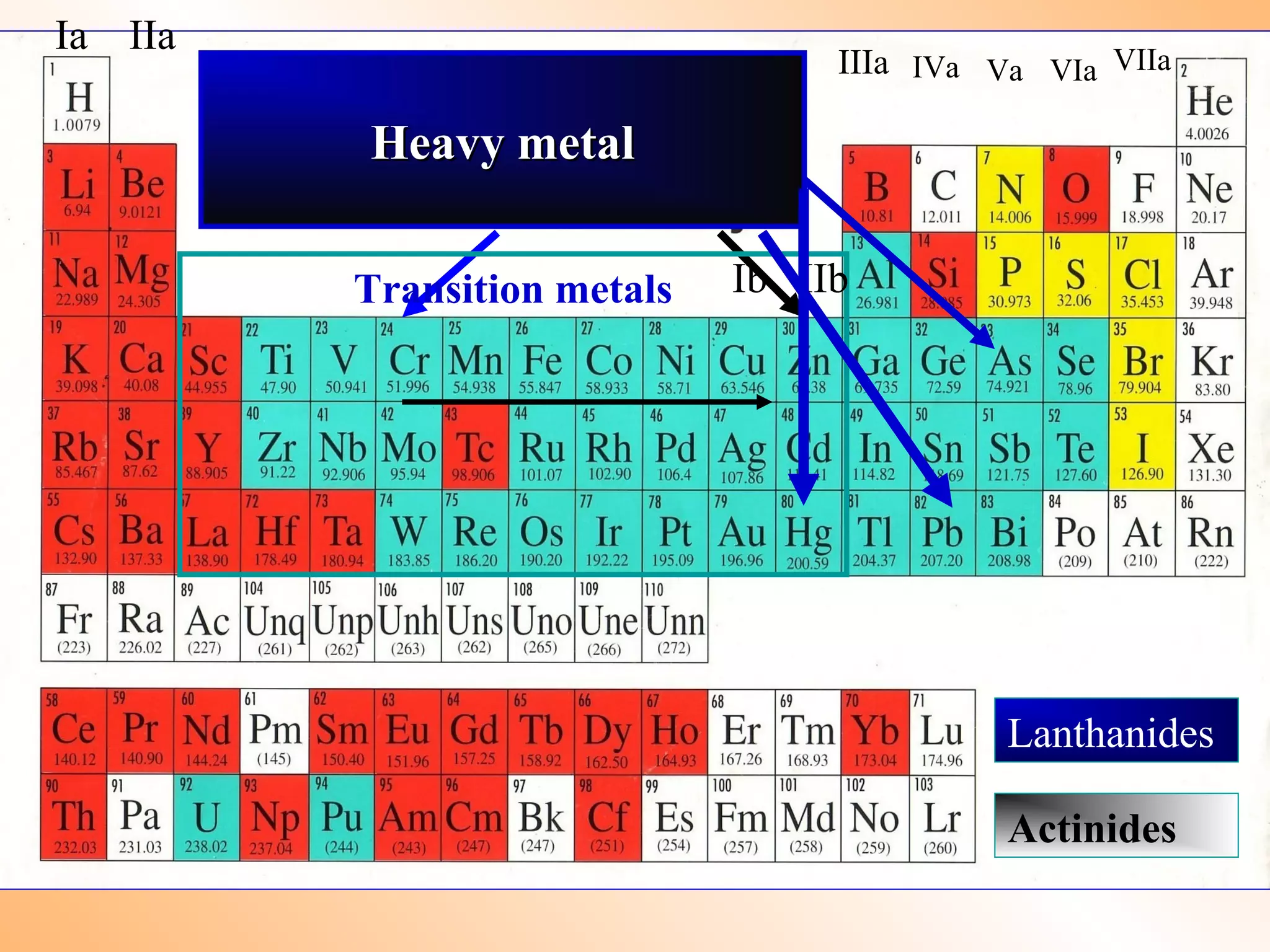
The term heavy metal refers to any metallic chemical element that has a
relatively high density and is toxic or poisonous at low concentrations.
Examples of heavy metals include mercury (Hg), cadmium (Cd), arsenic
(As), chromium (Cr), thallium (Ti), and lead (Pb).
Heavy metals are those having densities five times greater than water,
and the light metals are those having lesser densities.
Humans consume metallic elements through both water and food.
Source: Brady(1994)
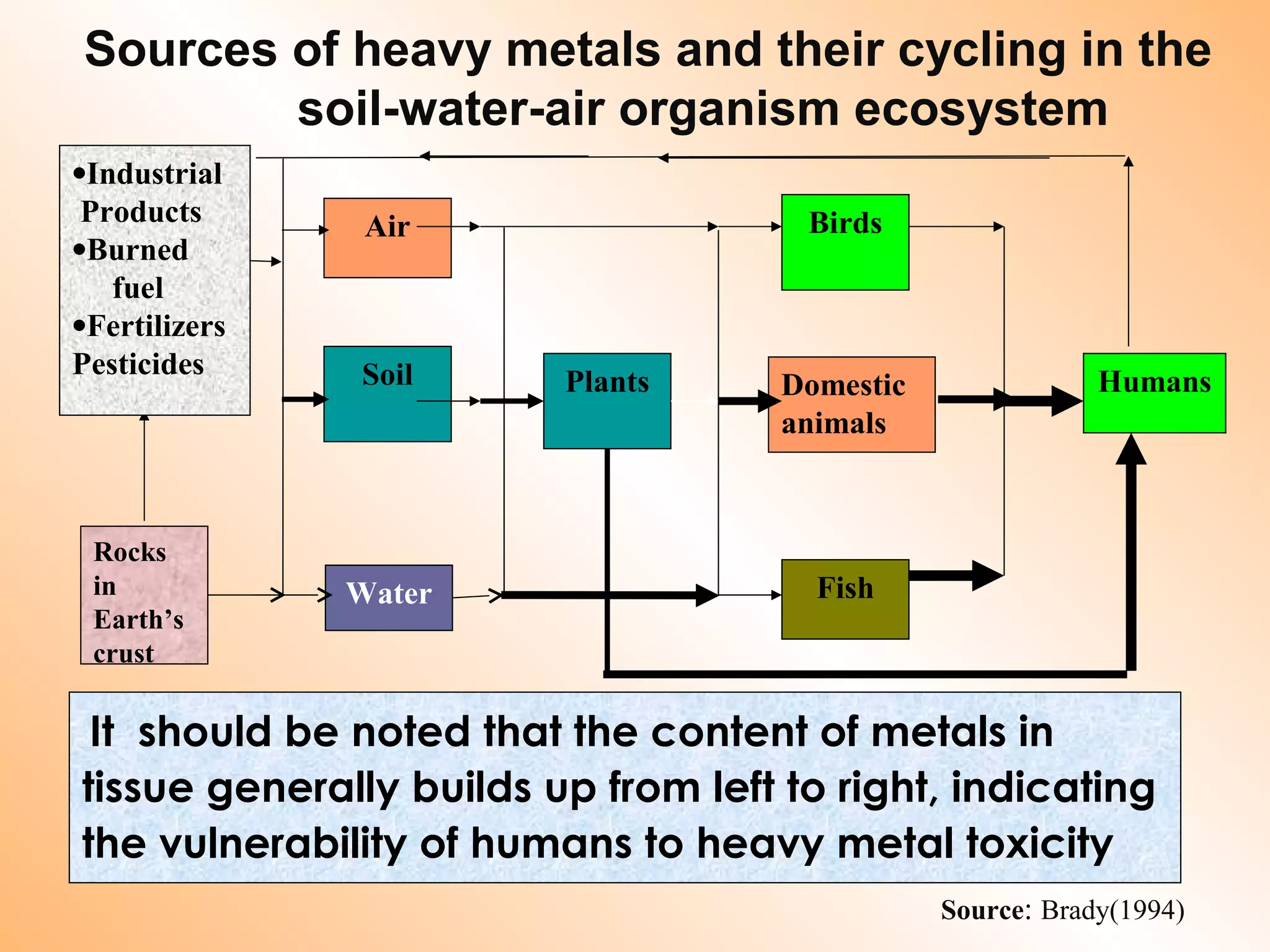
It should be noted that the content of metals in
tissue generally builds up from left to right, indicating
the vulnerability of humans to heavy metal toxicity
Sources of heavy metals and their cycling in the
soil-water-air organism ecosystem
Rocks
in
Earth’s
crust
Air
Soil
Water
Plants
Birds
Domestic
animals
Fish
Humans
•Industrial
Products
•Burned
fuel
•Fertilizers
Pesticides
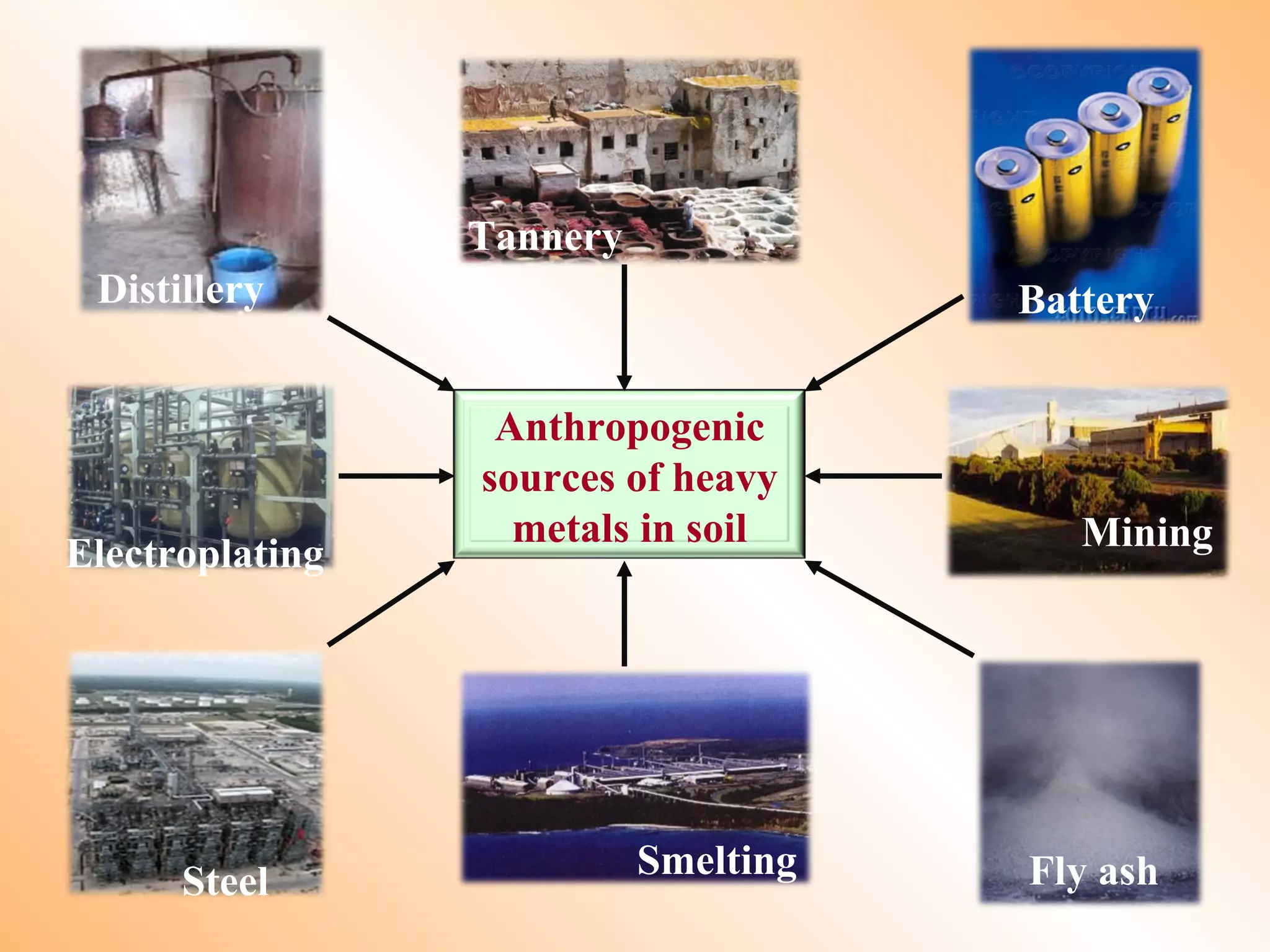
Anthropogenic
sources of heavy
metals in soil
Tannery
BatteryDistillery
Steel Fly ash
Electroplating
Mining
Smelting
Heavy metalHeavy metal
Transition metals
Ia IIa
IIIa IVa Va VIa VIIa
Ib IIb
Lanthanides
Actinides
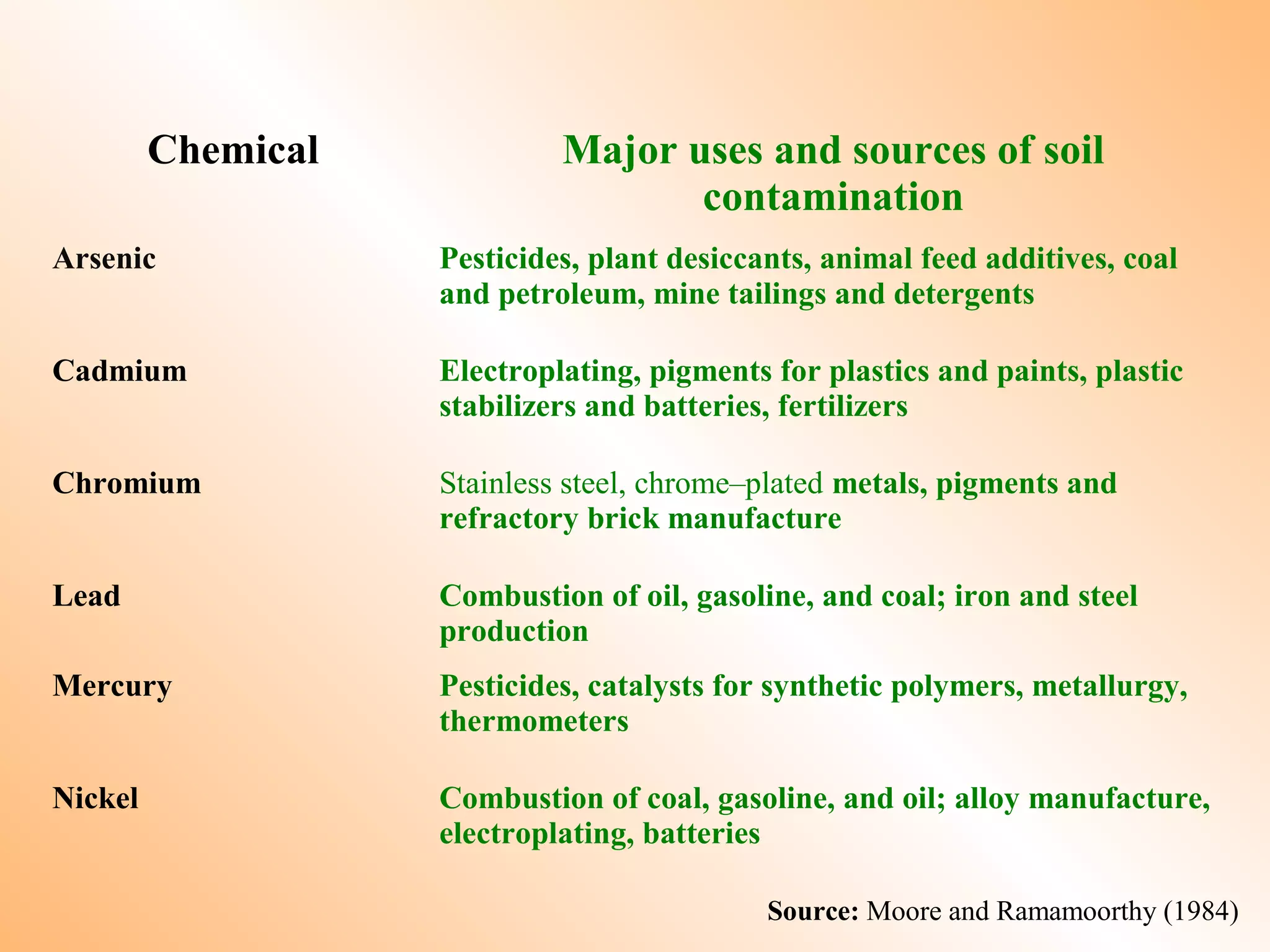
Chemical Major uses and sources of soil
contamination
Arsenic Pesticides, plant desiccants, animal feed additives, coal
and petroleum, mine tailings and detergents
Cadmium Electroplating, pigments for plastics and paints, plastic
stabilizers and batteries, fertilizers
Chromium Stainless steel, chrome–plated metals, pigments and
refractory brick manufacture
Lead Combustion of oil, gasoline, and coal; iron and steel
production
Mercury Pesticides, catalysts for synthetic polymers, metallurgy,
thermometers
Nickel Combustion of coal, gasoline, and oil; alloy manufacture,
electroplating, batteries
Source: Moore and Ramamoorthy (1984)
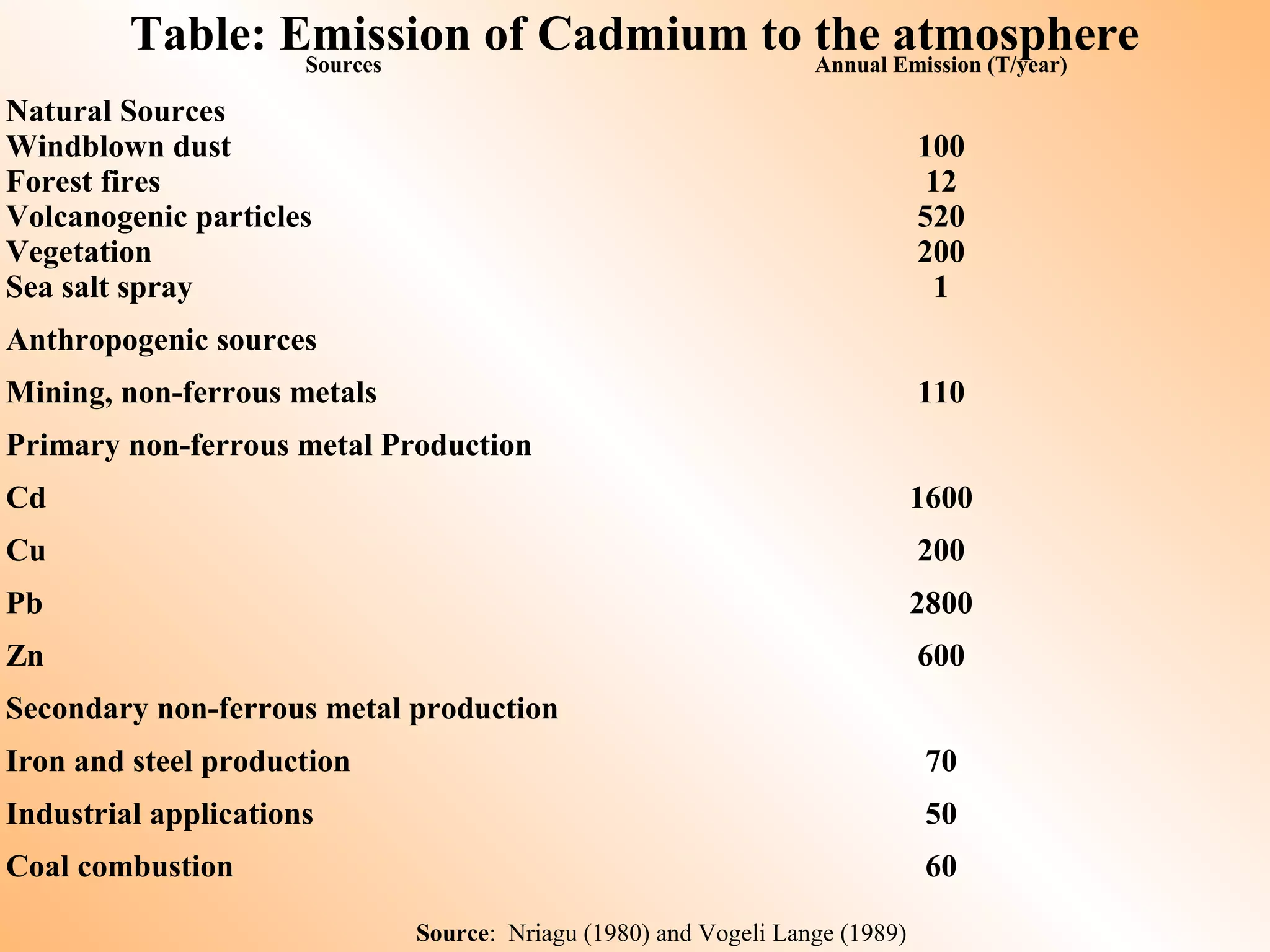
Sources Annual Emission (T/year)
Natural Sources
Windblown dust
Forest fires
Volcanogenic particles
Vegetation
Sea salt spray
100
12
520
200
1
Anthropogenic sources
Mining, non-ferrous metals
Primary non-ferrous metal Production
Cd
Cu
Pb
Zn
Secondary non-ferrous metal production
Iron and steel production
Industrial applications
Coal combustion
110
1600
200
2800
600
70
50
60
Table: Emission of Cadmium to the atmosphere
Source: Nriagu (1980) and Vogeli Lange (1989)
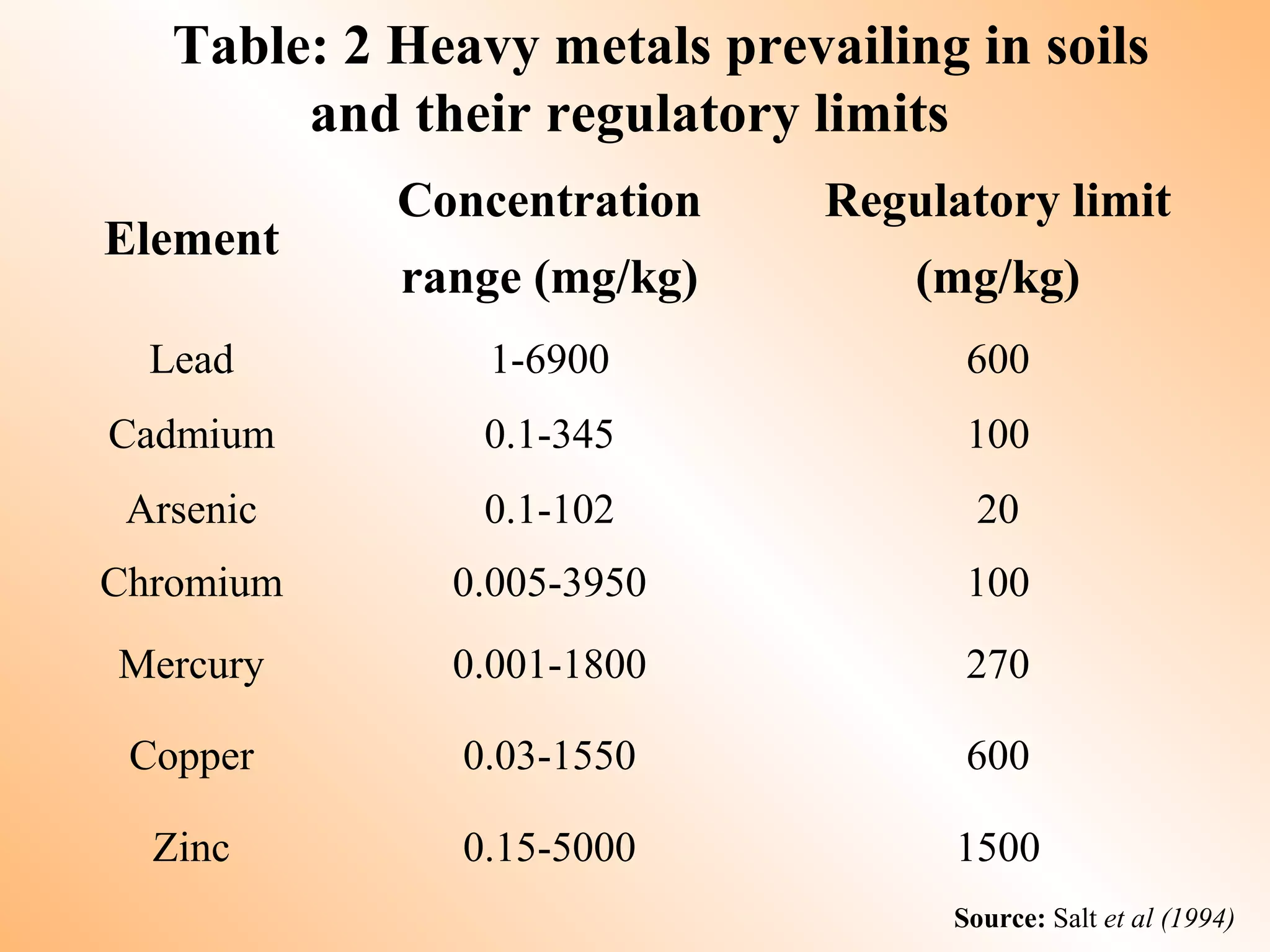
Element
Concentration
range (mg/kg)
Regulatory limit
(mg/kg)
Lead 1-6900 600
Cadmium 0.1-345 100
Arsenic 0.1-102 20
Chromium 0.005-3950 100
Mercury 0.001-1800 270
Copper 0.03-1550 600
Zinc 0.15-5000 1500
Table: 2 Heavy metals prevailing in soils
and their regulatory limits
Source: Salt et al (1994)
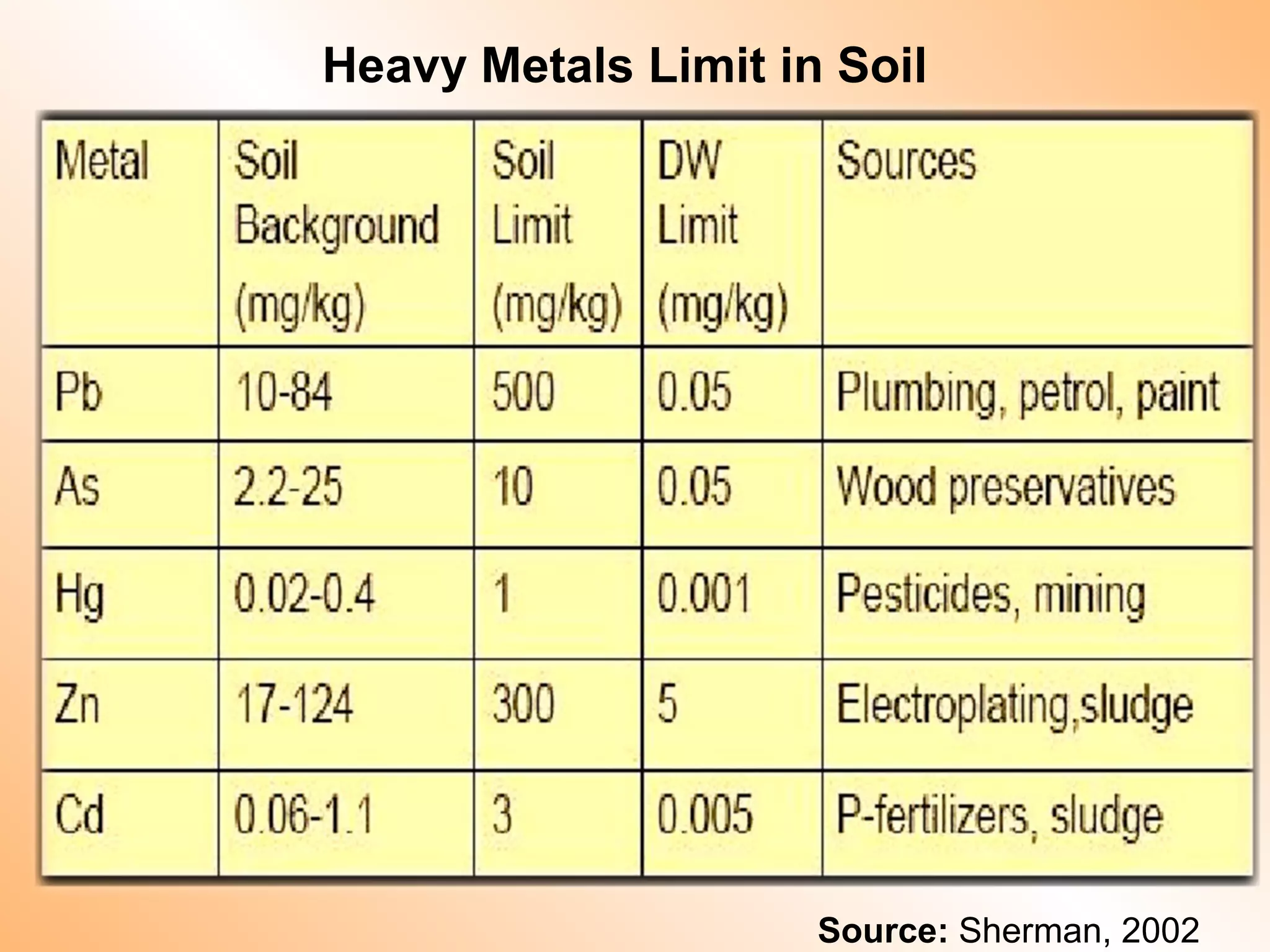
Heavy Metals Limit in Soil
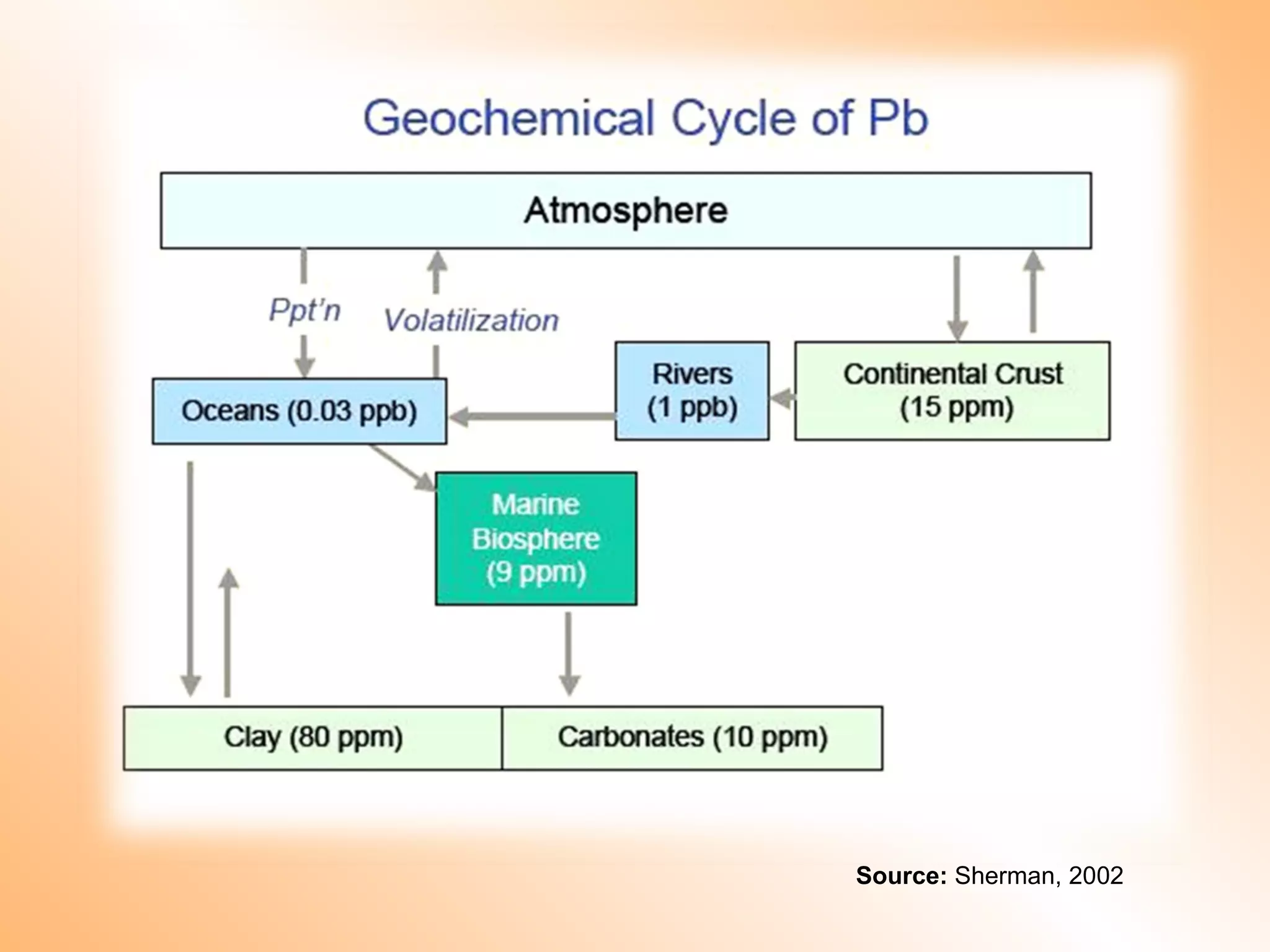
Source: Sherman, 2002
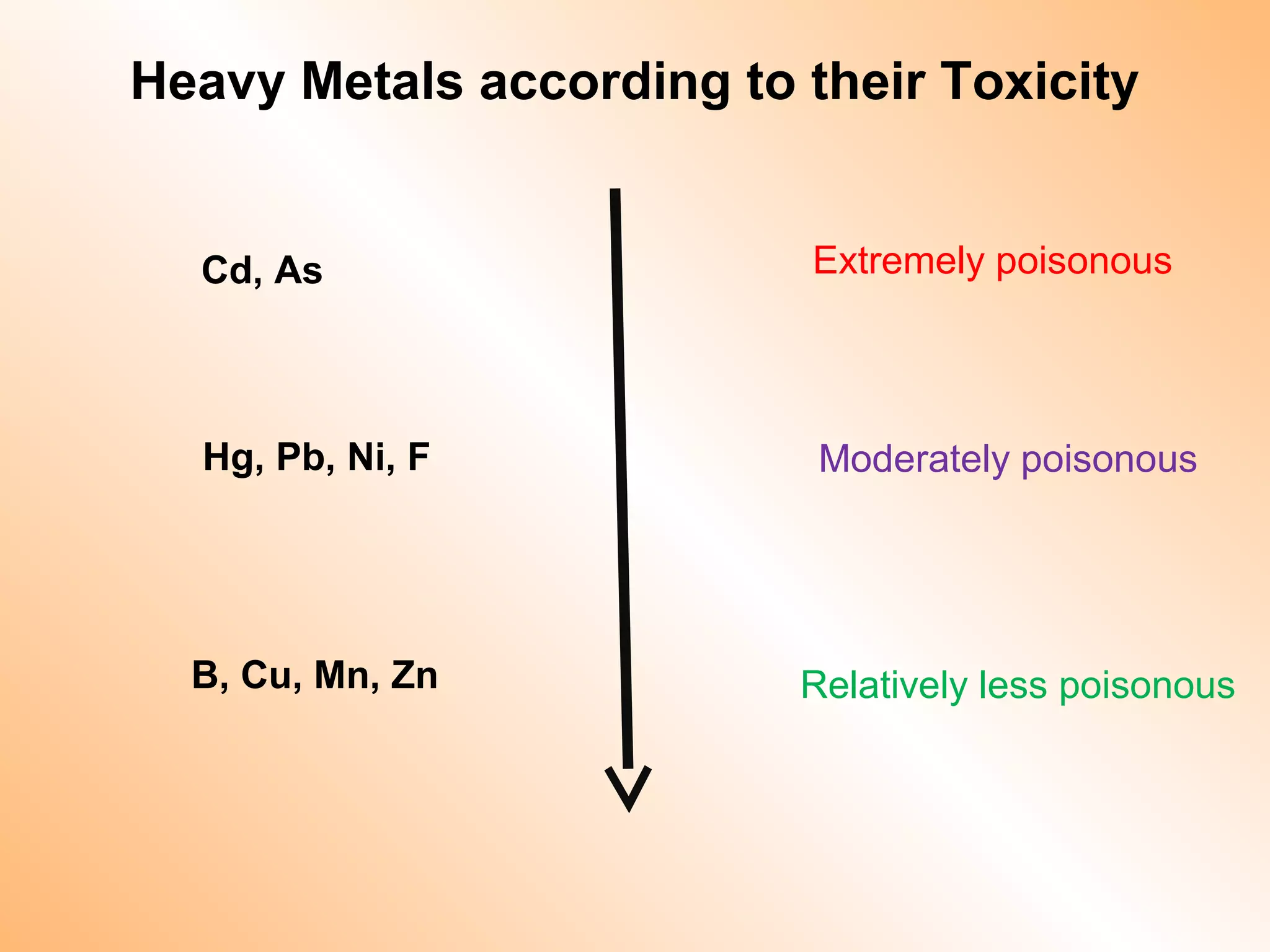
Heavy Metals according to their Toxicity
Cd, As
Hg, Pb, Ni, F
B, Cu, Mn, Zn
Extremely poisonous
Moderately poisonous
Relatively less poisonous
Behavior of Hg in the Environment
Source: US EPA, (1997)
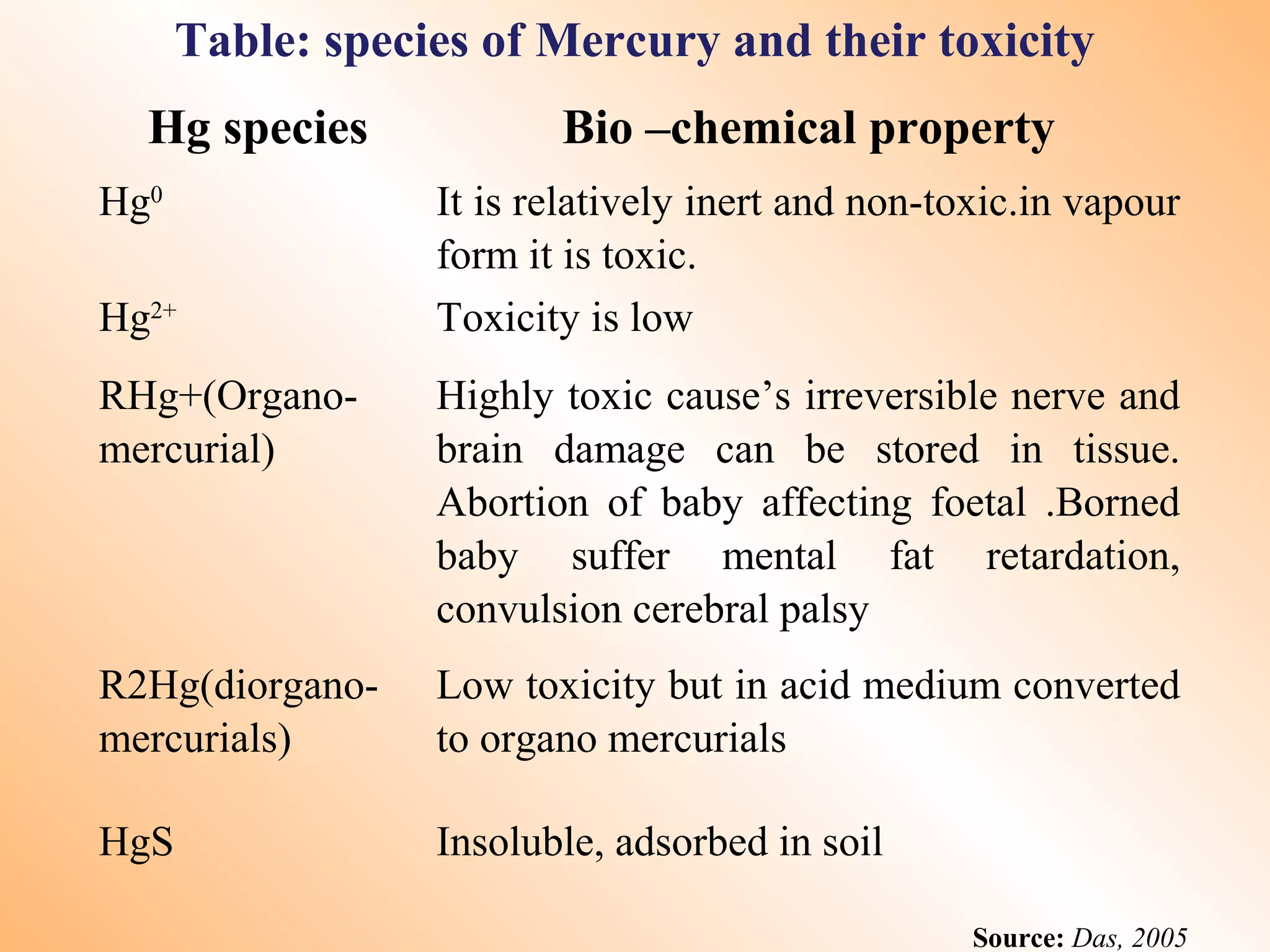
Hg species Bio –chemical property
Hg0
It is relatively inert and non-toxic.in vapour
form it is toxic.
Hg2+
Toxicity is low
RHg+(Organo-
mercurial)
Highly toxic cause’s irreversible nerve and
brain damage can be stored in tissue.
Abortion of baby affecting foetal .Borned
baby suffer mental fat retardation,
convulsion cerebral palsy
R2Hg(diorgano-
mercurials)
Low toxicity but in acid medium converted
to organo mercurials
HgS Insoluble, adsorbed in soil
Table: species of Mercury and their toxicity
Source: Das, 2005
Fate of selenite in soil (1:10 water extract)
Heavy metal load field experiment: Dr. Imre Kádár, Nagyhörcsök
0
100000
200000
300000
400000
500000
600000
700000
800000
900000
1000000
0 10 20
duration [min]
ICP-MSsignal[CPS]
0
5000
10000
15000
20000
25000
0 10 20
duration [min]
ICP-MSsignal[CPS]
0
5000
10000
15000
20000
25000
0 10 20
duration [min]
ICP-MSsignal[CPS]
1993 1993 2003
oxidation
selenite
selenate
organic selenium
Conclusion: selenite will be oxidised in soil to selenate
selenate more available for plants (it is analogous to sulphate)
risk of leaching
selenite
selenate
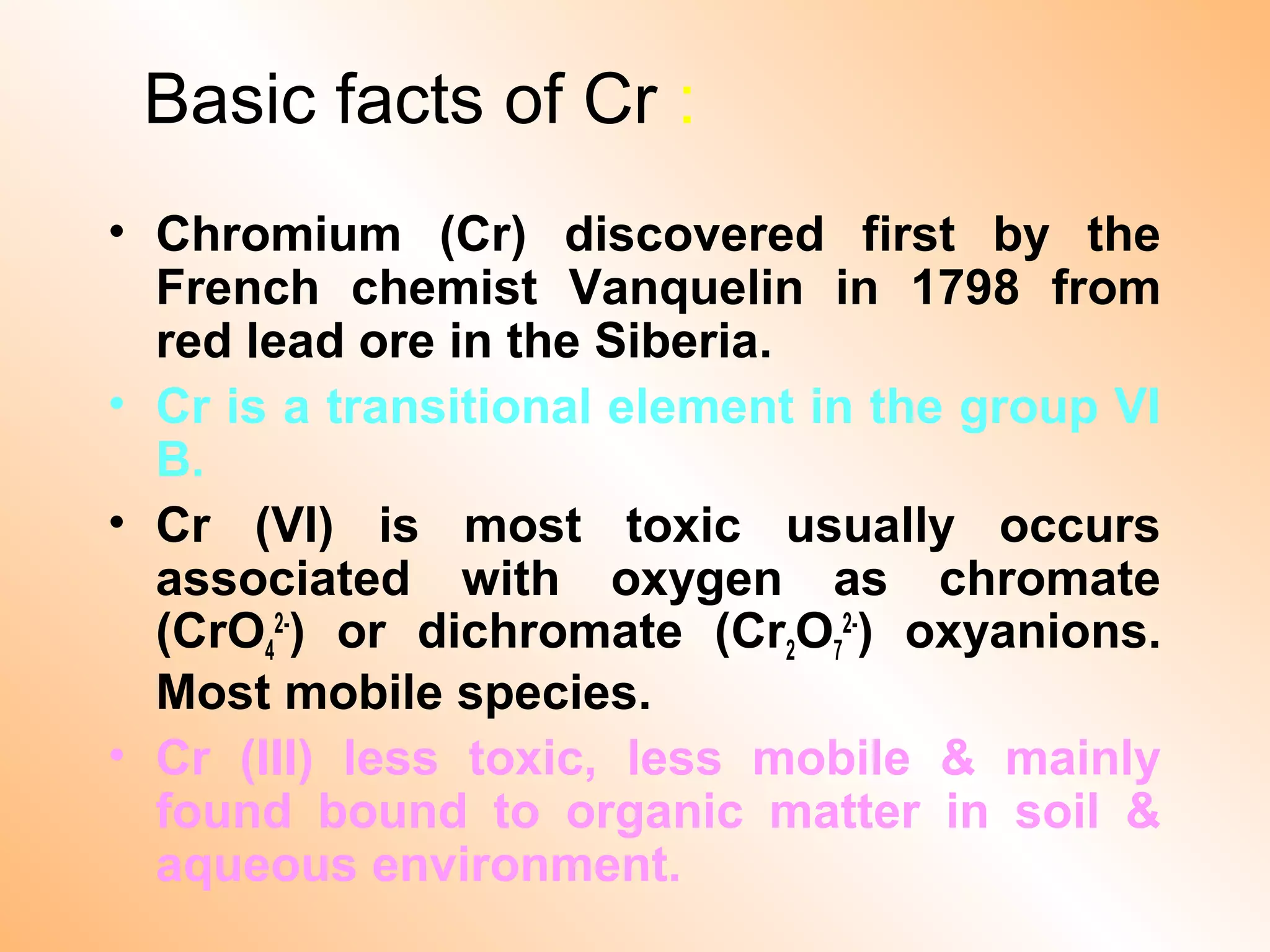
Basic facts of Cr :
• Chromium (Cr) discovered first by the
French chemist Vanquelin in 1798 from
red lead ore in the Siberia.
• Cr is a transitional element in the group VI
B.
• Cr (VI) is most toxic usually occurs
associated with oxygen as chromate
(CrO4
2-
) or dichromate (Cr2O7
2-
) oxyanions.
Most mobile species.
• Cr (III) less toxic, less mobile & mainly
found bound to organic matter in soil &
aqueous environment.
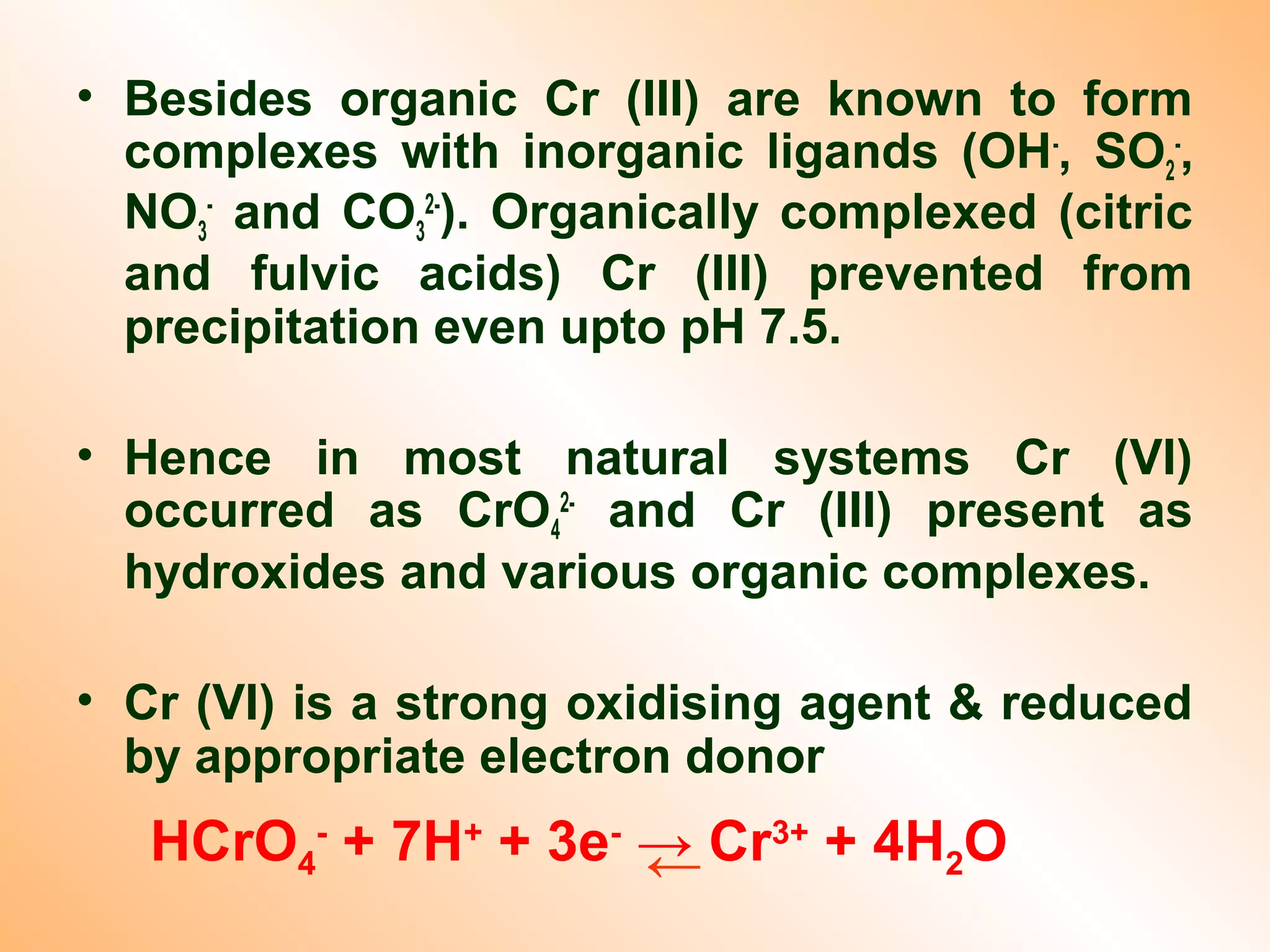
• Besides organic Cr (III) are known to form
complexes with inorganic ligands (OH-
, SO2
-
,
NO3
-
and CO3
2-
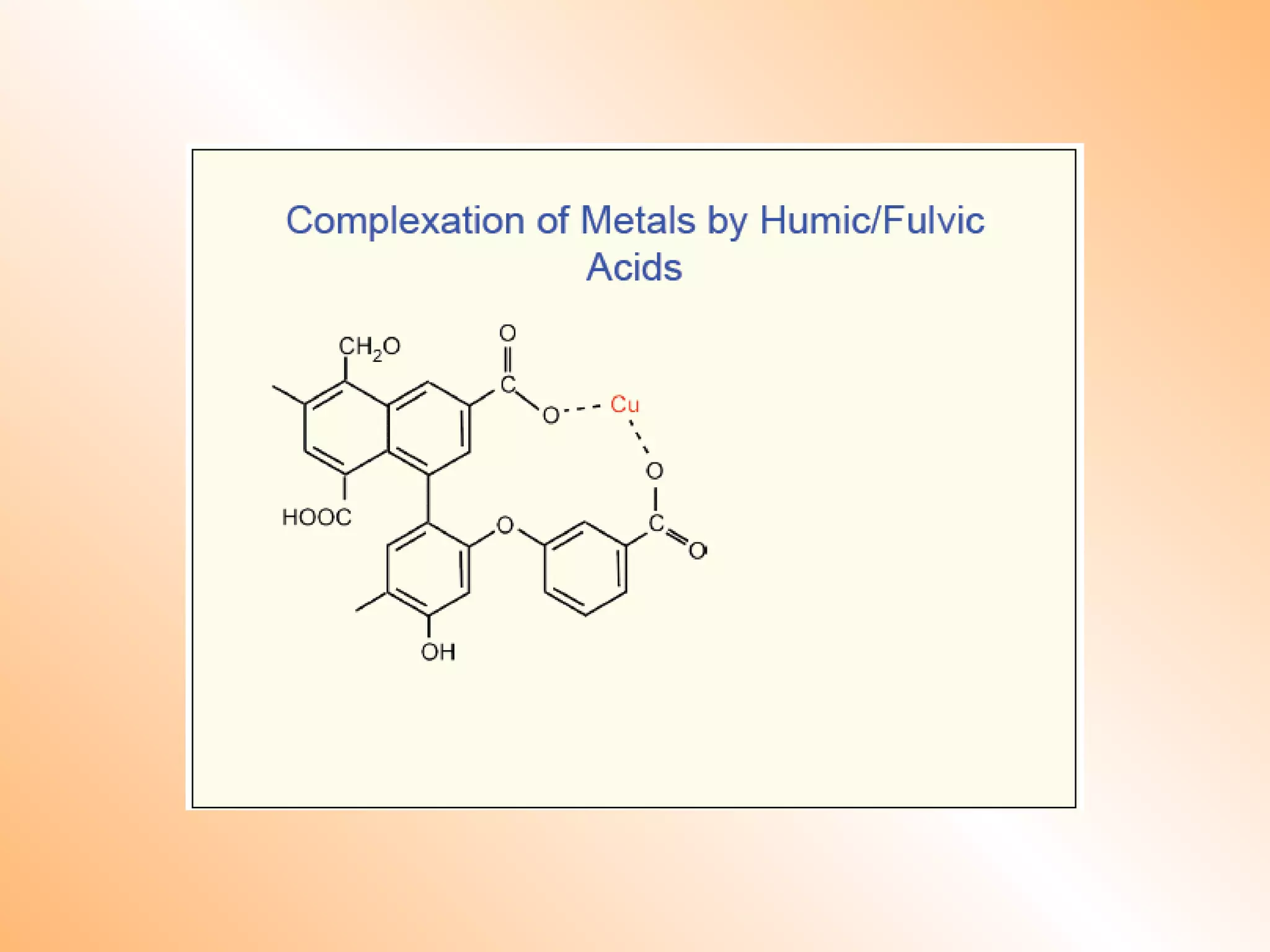
). Organically complexed (citric
and fulvic acids) Cr (III) prevented from
precipitation even upto pH 7.5.
• Hence in most natural systems Cr (VI)
occurred as CrO4
2-
and Cr (III) present as
hydroxides and various organic complexes.
• Cr (VI) is a strong oxidising agent & reduced
by appropriate electron donor
HCrO4
-
+ 7H+
+ 3e-
→ Cr3+
+ 4H2O←
Reactions in Soil – Water System
• In most natural systems, hexavalent Cr6+
present as CrO4
2-
& major trivalent Cr3+
species
include hydroxides & various organic
complexes.
• Cr undergoes various chemical & biological
reactions in natural system that govern
speciation & in turn, environmental
behaviour.
• Important among these reactions include
Oxidation or reduction
Precipitation or dissolution and
Adsorption or desorption
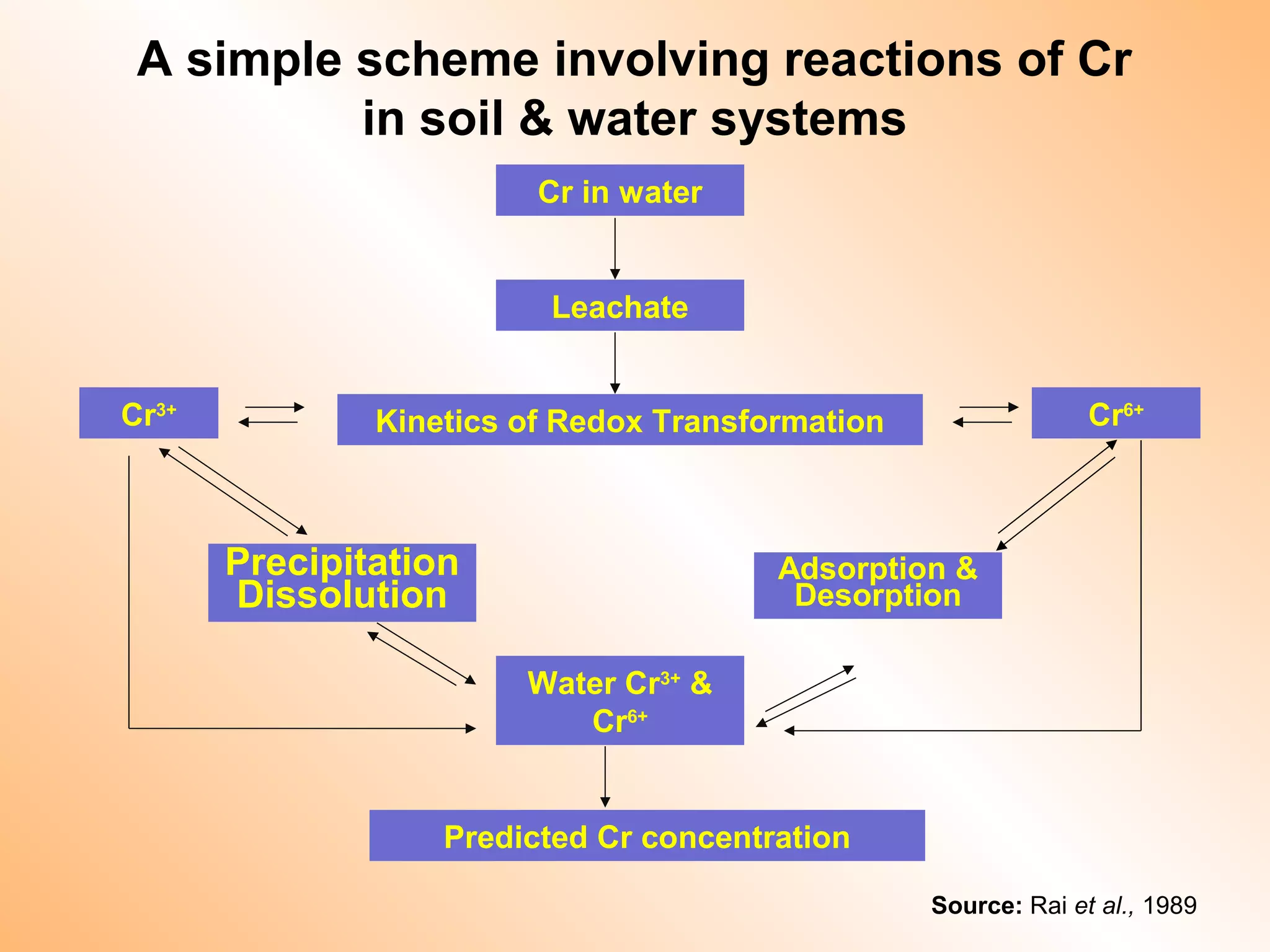
Cr in water
Leachate
Kinetics of Redox TransformationCr3+
Cr6+
Precipitation
Dissolution
Adsorption &
Desorption
Water Cr3+
&
Cr6+
Predicted Cr concentration
A simple scheme involving reactions of Cr
in soil & water systems
Source: Rai et al., 1989
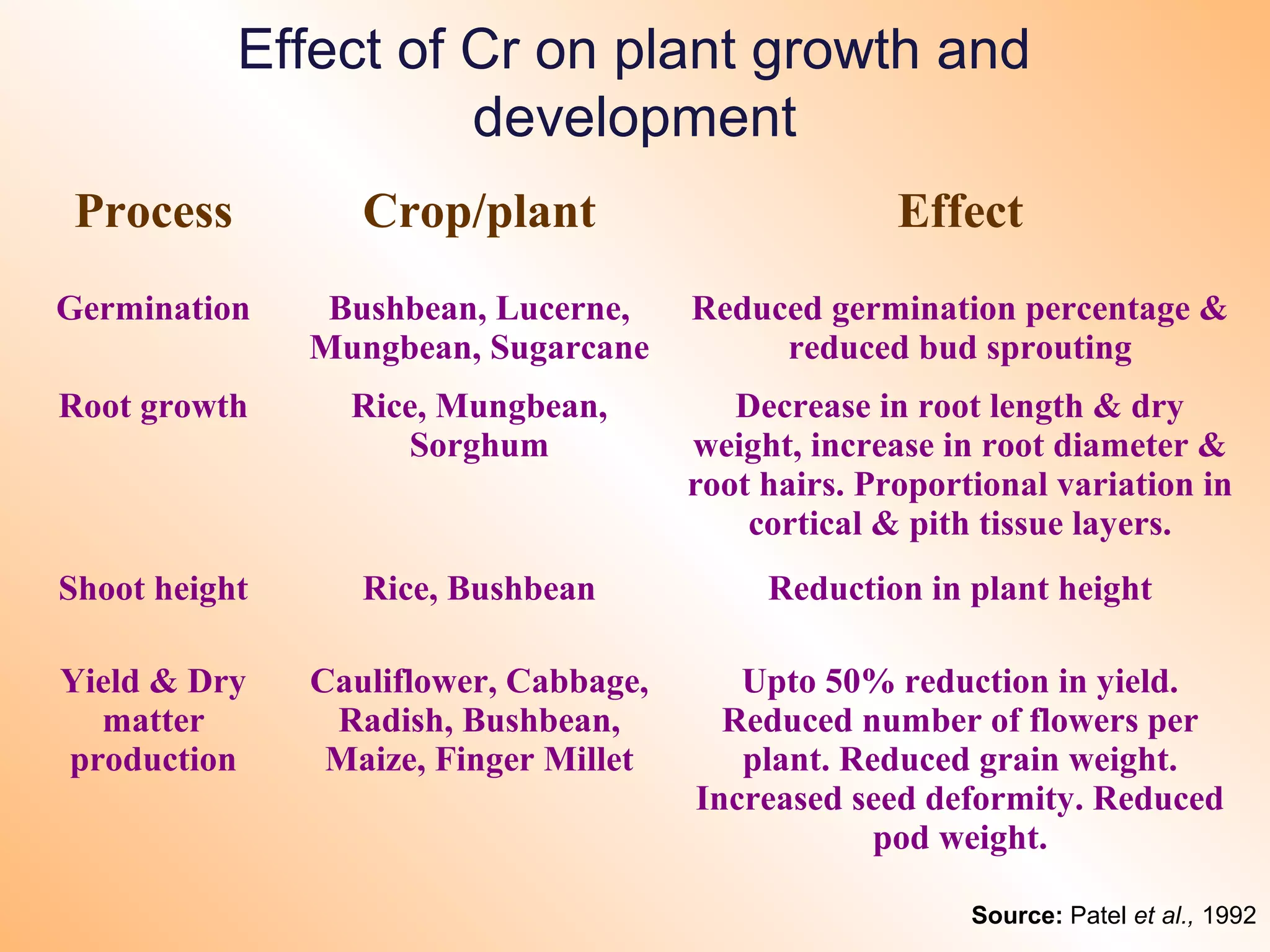
Effect of Cr on plant growth and
development
Process Crop/plant Effect
Germination Bushbean, Lucerne,
Mungbean, Sugarcane
Reduced germination percentage &
reduced bud sprouting
Root growth Rice, Mungbean,
Sorghum
Decrease in root length & dry
weight, increase in root diameter &
root hairs. Proportional variation in
cortical & pith tissue layers.
Shoot height Rice, Bushbean Reduction in plant height
Yield & Dry
matter
production
Cauliflower, Cabbage,
Radish, Bushbean,
Maize, Finger Millet
Upto 50% reduction in yield.
Reduced number of flowers per
plant. Reduced grain weight.
Increased seed deformity. Reduced
pod weight.
Source: Patel et al., 1992
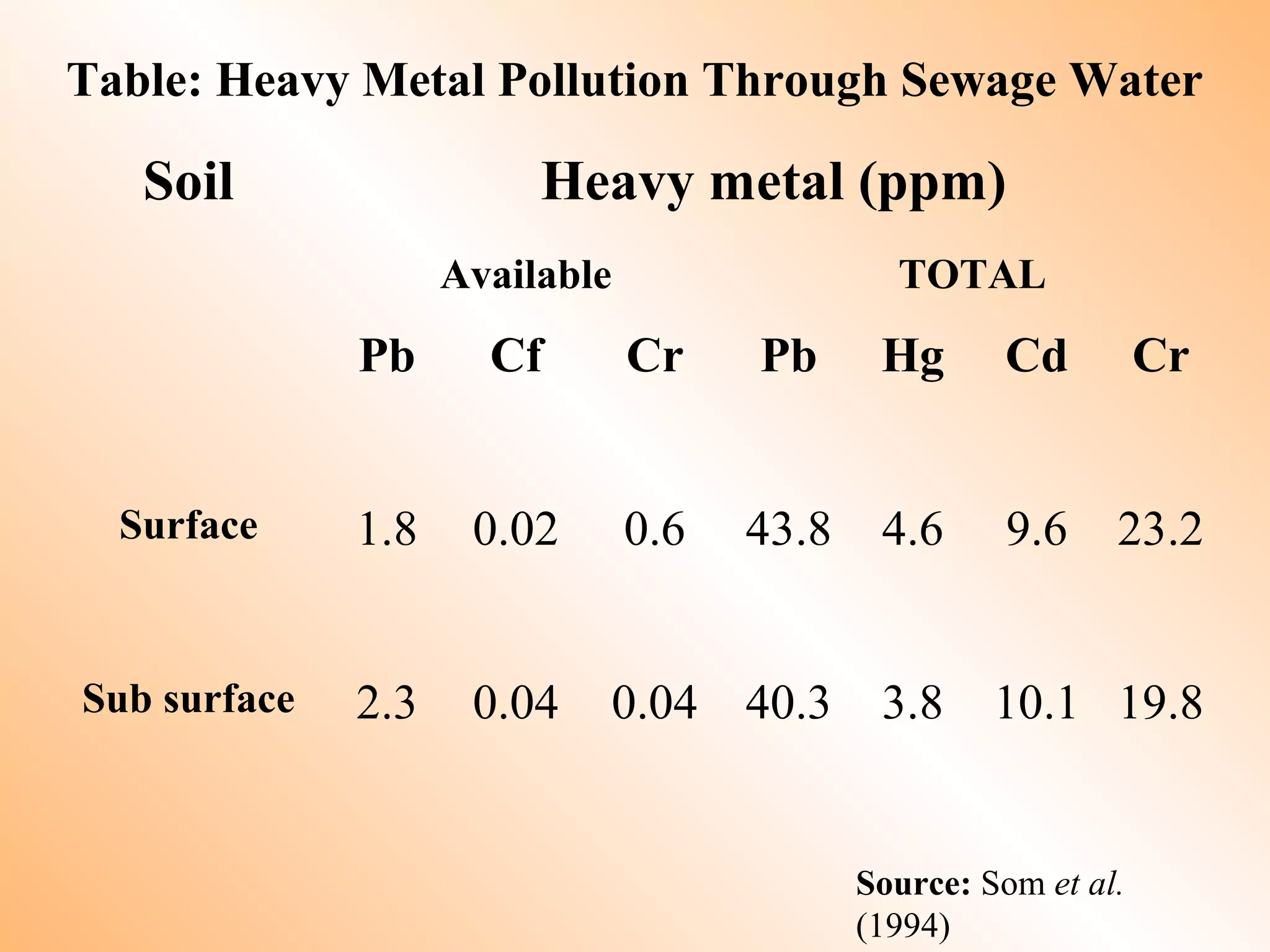
Source: Sherman, 2002
Soil Heavy metal (ppm)
Available TOTAL
Pb Cf Cr Pb Hg Cd Cr
Surface 1.8 0.02 0.6 43.8 4.6 9.6 23.2
Sub surface 2.3 0.04 0.04 40.3 3.8 10.1 19.8
Table: Heavy Metal Pollution Through Sewage Water
Source: Som et al.
(1994)
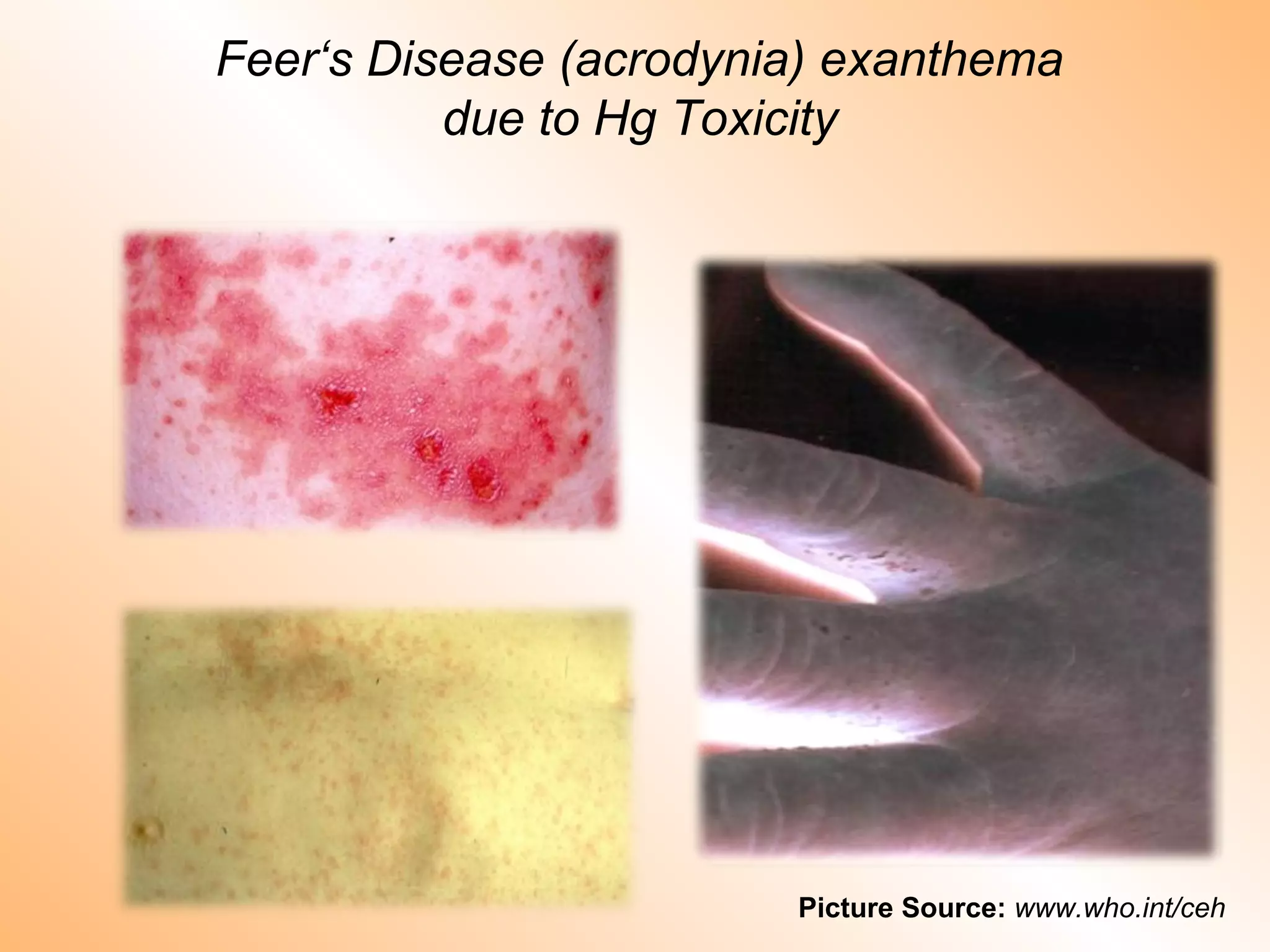
Feer‘s Disease (acrodynia) exanthema
due to Hg Toxicity
Picture Source: www.who.int/ceh
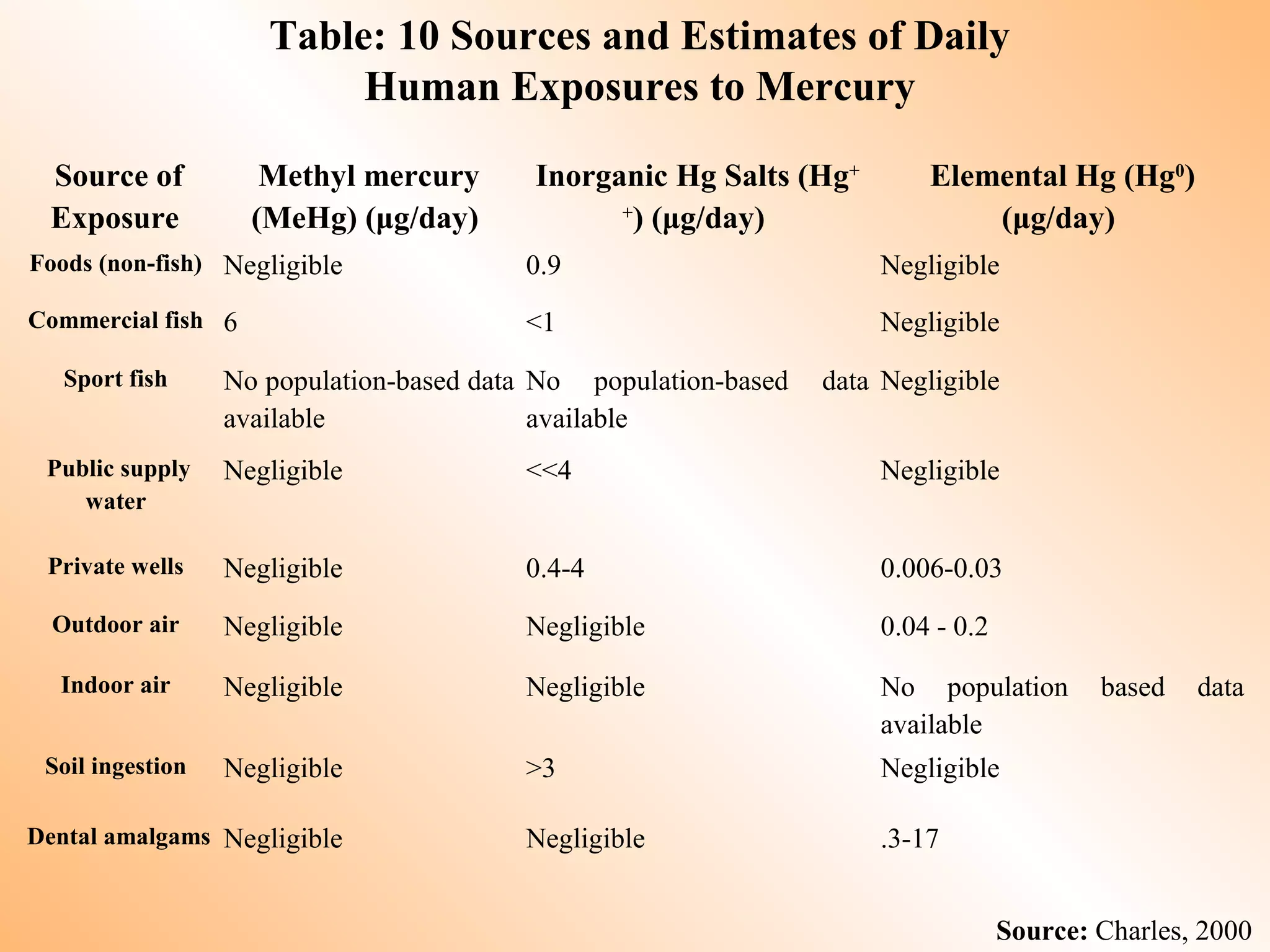
Source of
Exposure
Methyl mercury
(MeHg) (μg/day)
Inorganic Hg Salts (Hg+
+
) (μg/day)
Elemental Hg (Hg0
)
(μg/day)
Foods (non-fish) Negligible 0.9 Negligible
Commercial fish 6 <1 Negligible
Sport fish No population-based data
available
No population-based data
available
Negligible
Public supply
water
Negligible <<4 Negligible
Private wells Negligible 0.4-4 0.006-0.03
Outdoor air Negligible Negligible 0.04 - 0.2
Indoor air Negligible Negligible No population based data
available
Soil ingestion Negligible >3 Negligible
Dental amalgams Negligible Negligible .3-17
Table: 10 Sources and Estimates of Daily
Human Exposures to Mercury
Source: Charles, 2000
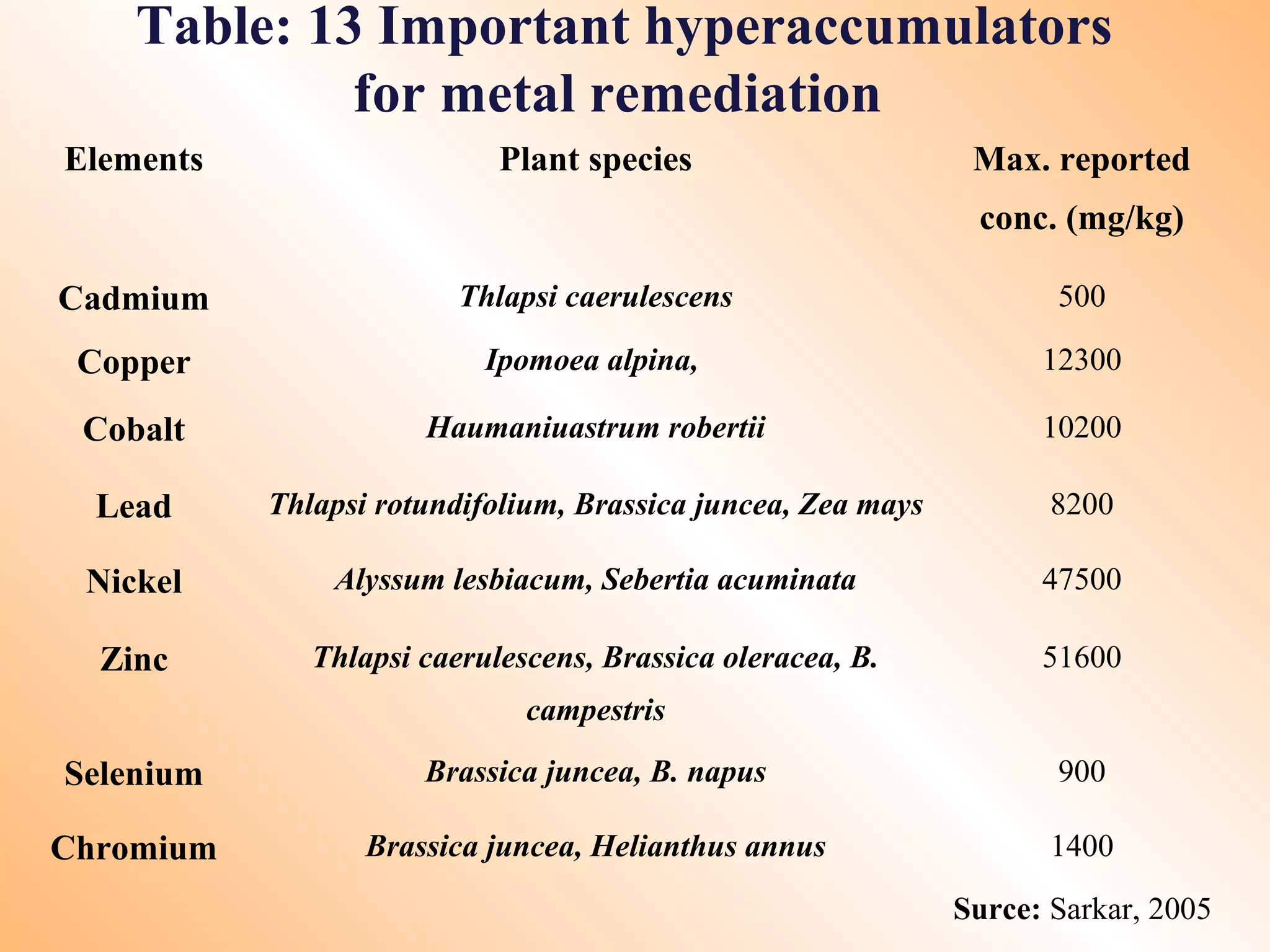
Elements Plant species Max. reported
conc. (mg/kg)
Cadmium Thlapsi caerulescens 500
Copper Ipomoea alpina, 12300
Cobalt Haumaniuastrum robertii 10200
Lead Thlapsi rotundifolium, Brassica juncea, Zea mays 8200
Nickel Alyssum lesbiacum, Sebertia acuminata 47500
Zinc Thlapsi caerulescens, Brassica oleracea, B.
campestris
51600
Selenium Brassica juncea, B. napus 900
Chromium Brassica juncea, Helianthus annus 1400
Table: 13 Important hyperaccumulators
for metal remediation
Surce: Sarkar, 2005
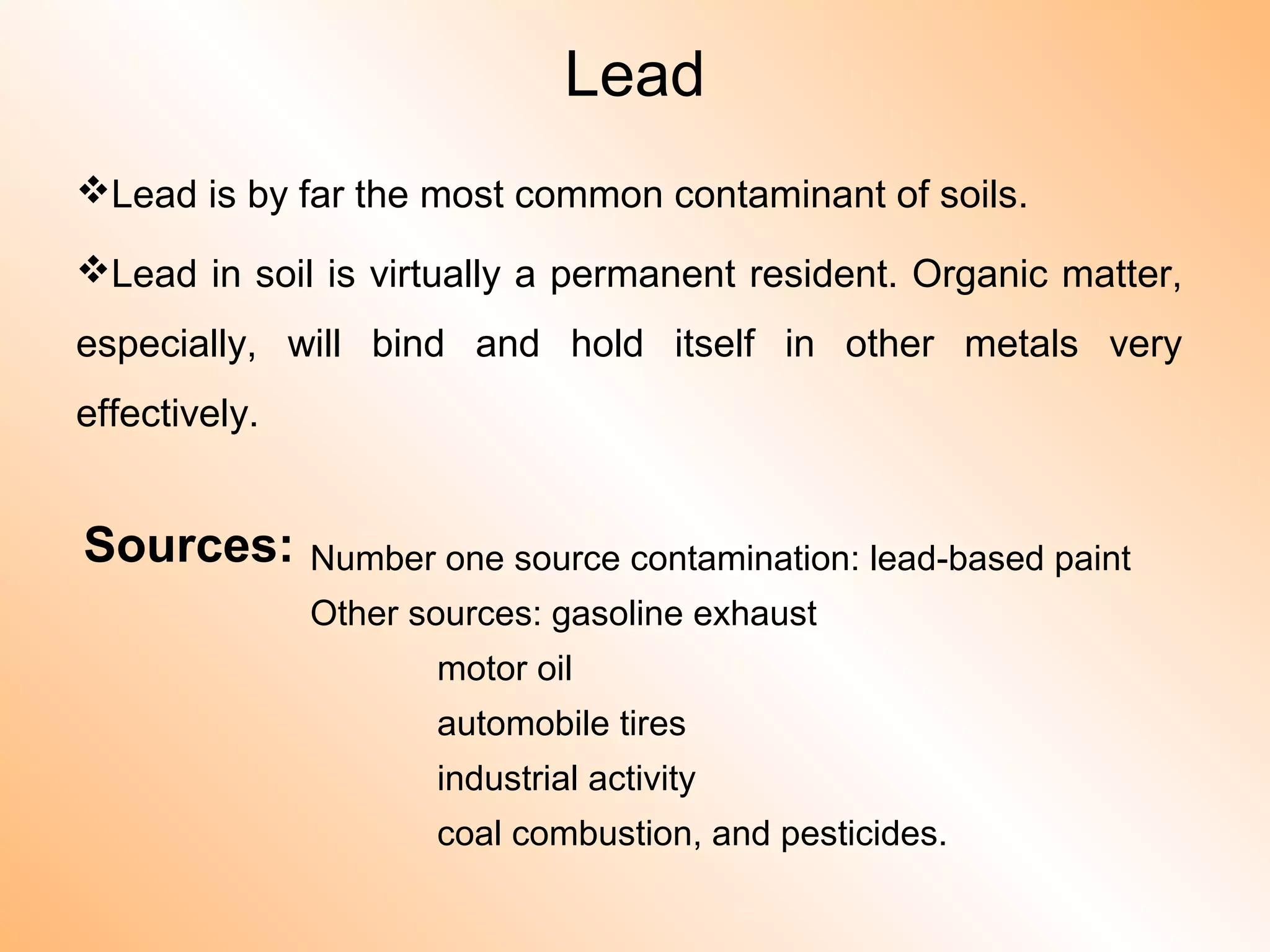
Lead
Lead is by far the most common contaminant of soils.
Lead in soil is virtually a permanent resident. Organic matter,
especially, will bind and hold itself in other metals very
effectively.
Sources: Number one source contamination: lead-based paint
Other sources: gasoline exhaust
motor oil
automobile tires
industrial activity
coal combustion, and pesticides.
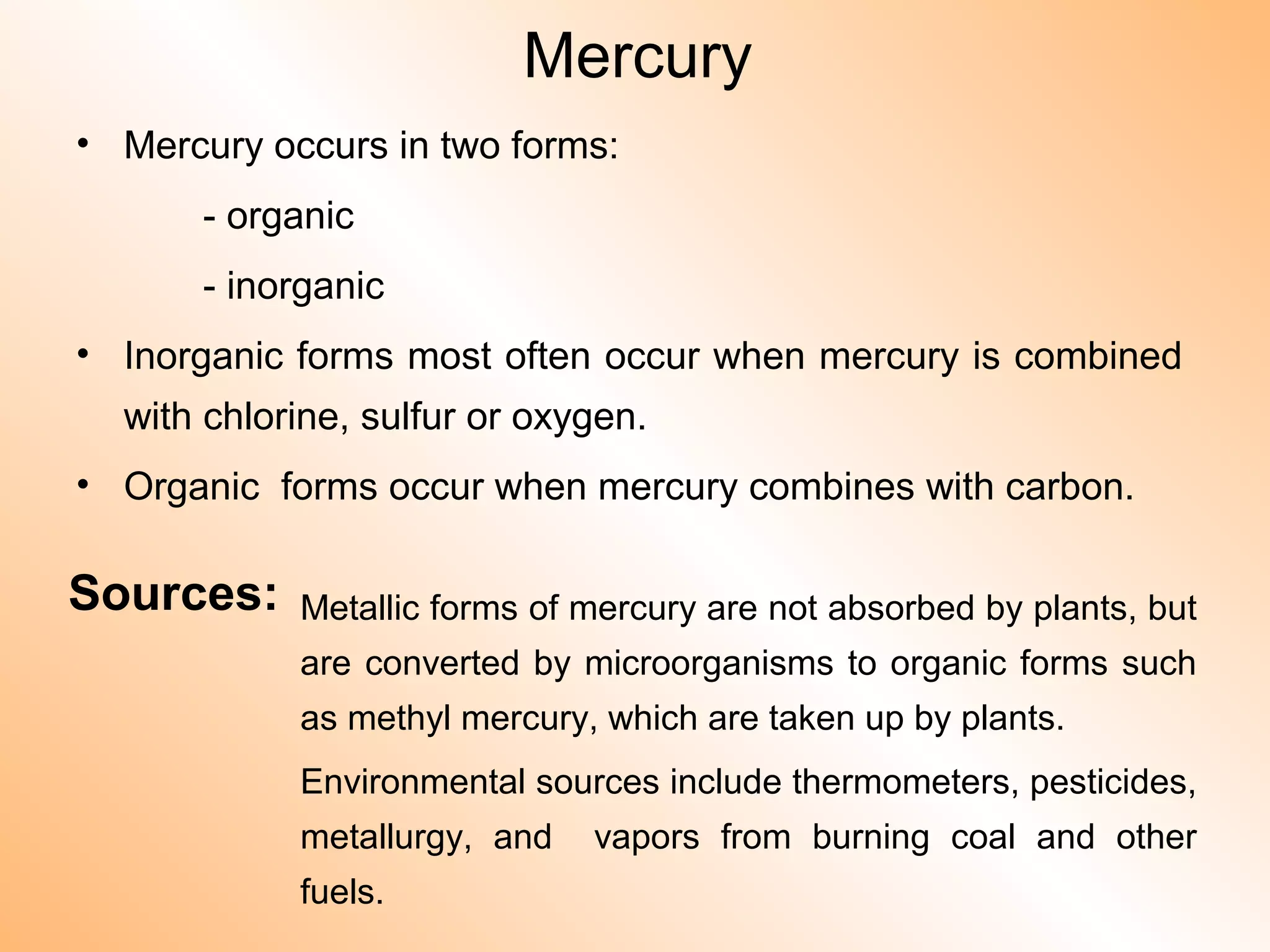
Mercury
• Mercury occurs in two forms:
- organic
- inorganic
• Inorganic forms most often occur when mercury is combined
with chlorine, sulfur or oxygen.
• Organic forms occur when mercury combines with carbon.
Sources: Metallic forms of mercury are not absorbed by plants, but
are converted by microorganisms to organic forms such
as methyl mercury, which are taken up by plants.
Environmental sources include thermometers, pesticides,
metallurgy, and vapors from burning coal and other
fuels.
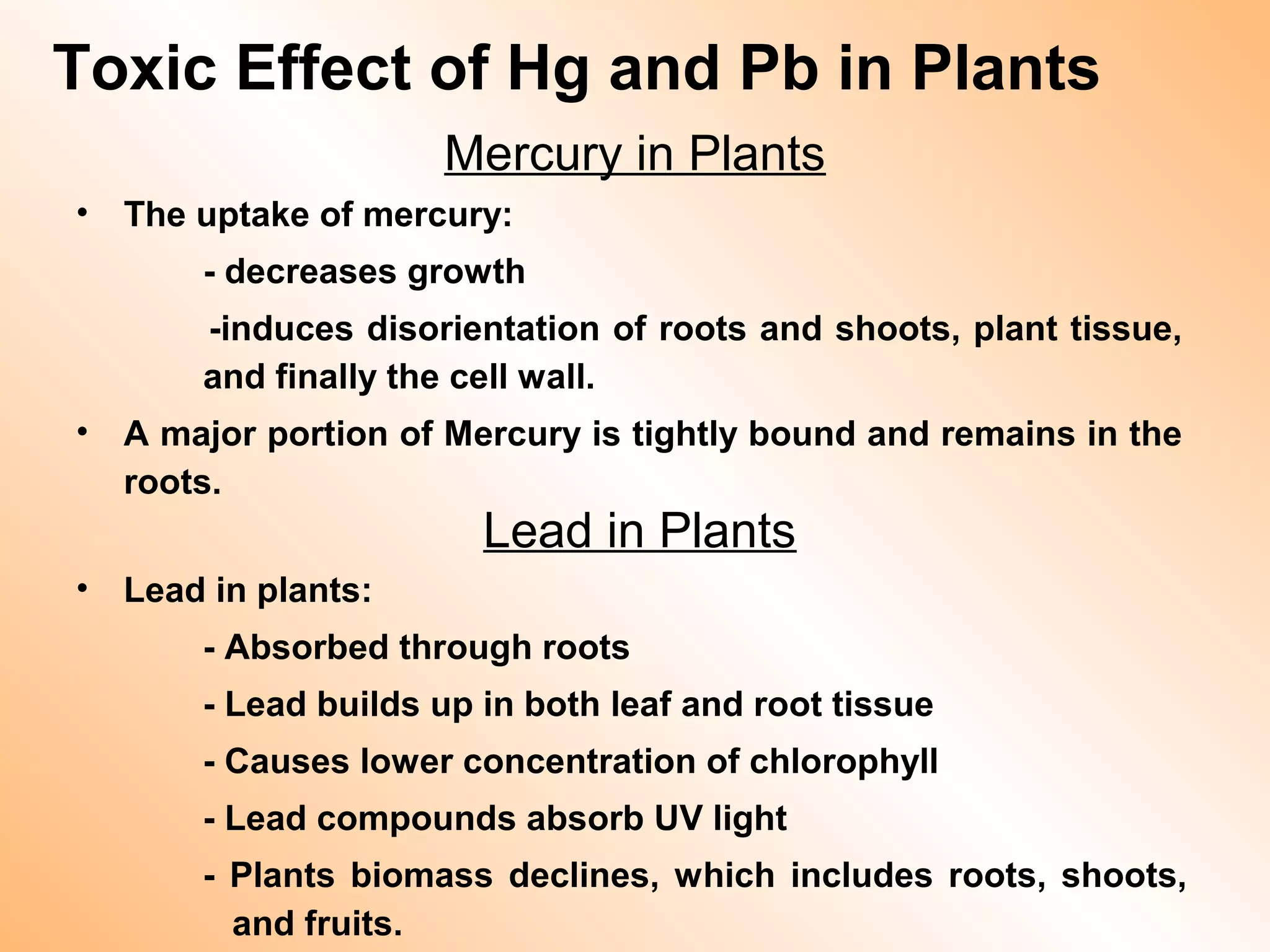
Mercury in Plants
• The uptake of mercury:
- decreases growth
-induces disorientation of roots and shoots, plant tissue,
and finally the cell wall.
• A major portion of Mercury is tightly bound and remains in the
roots.
Lead in Plants
• Lead in plants:
- Absorbed through roots
- Lead builds up in both leaf and root tissue
- Causes lower concentration of chlorophyll
- Lead compounds absorb UV light
- Plants biomass declines, which includes roots, shoots,
and fruits.
Toxic Effect of Hg and Pb in Plants
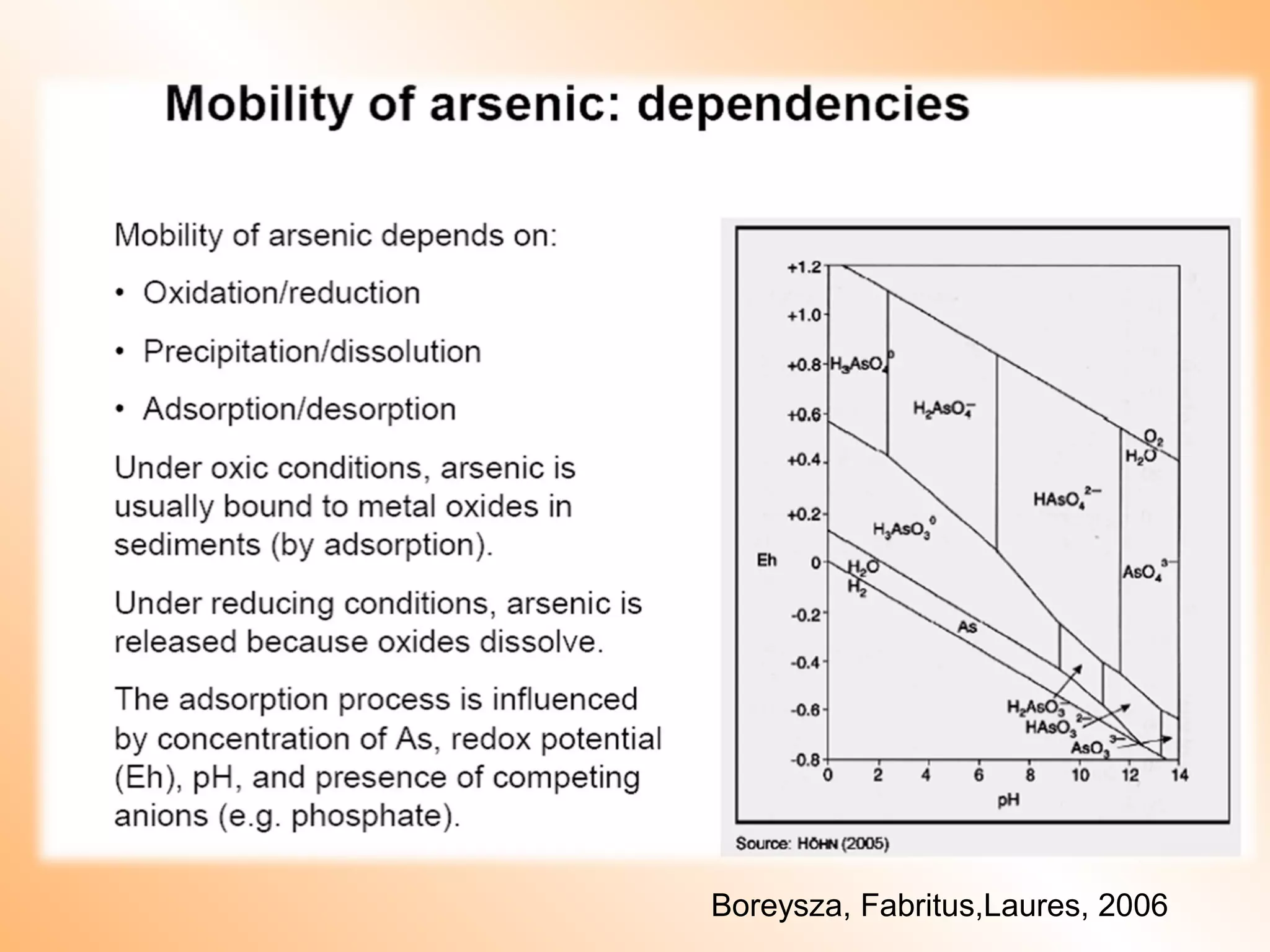
Boreysza, Fabritus,Laures, 2006
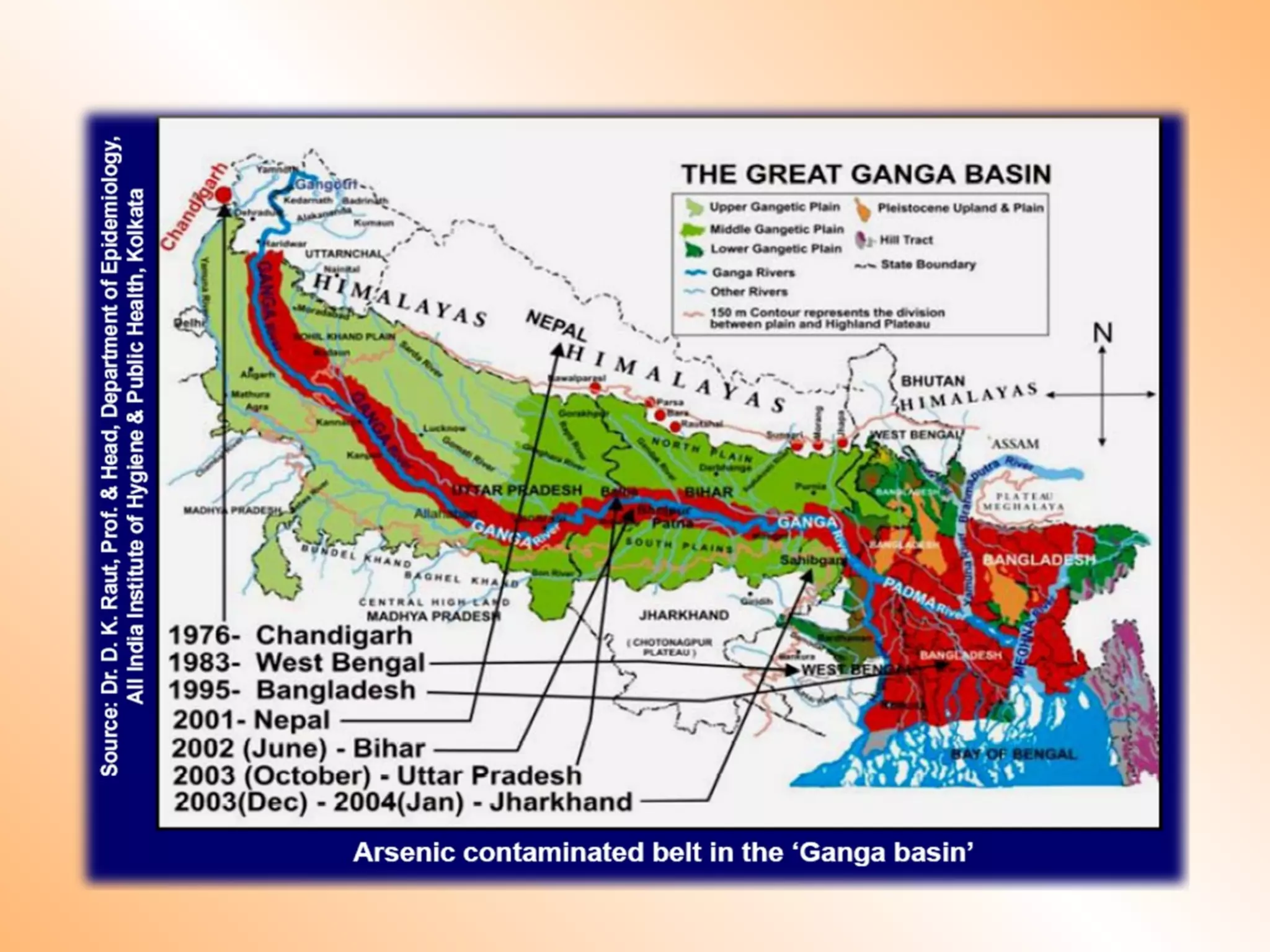
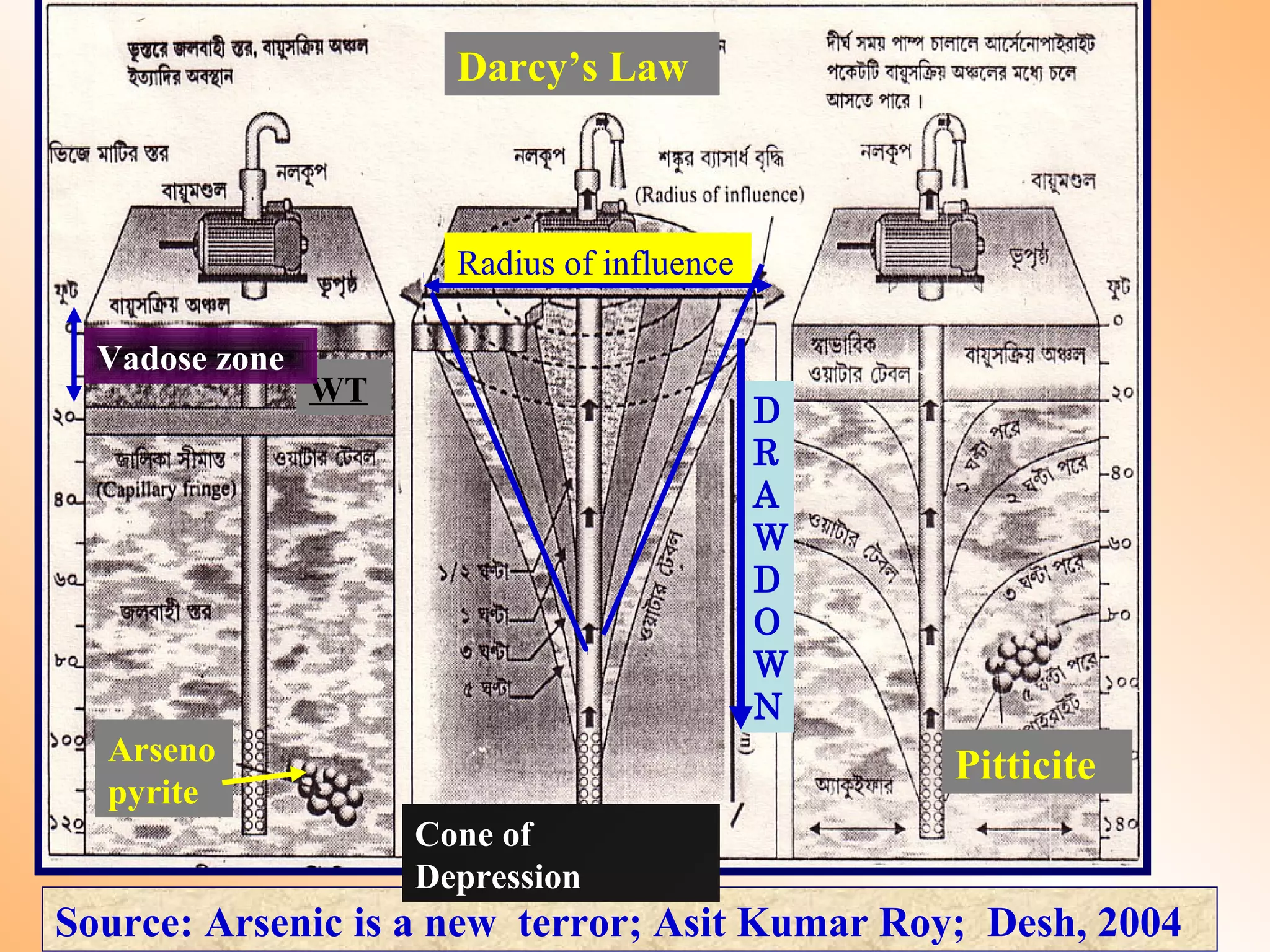
Source: Arsenic is a new terror; Asit Kumar Roy; Desh, 2004
D
R
A
W
D
O
W
N
Radius of influence
Cone of
Depression
WT
Vadose zone
Arseno
pyrite
Darcy’s Law
Pitticite
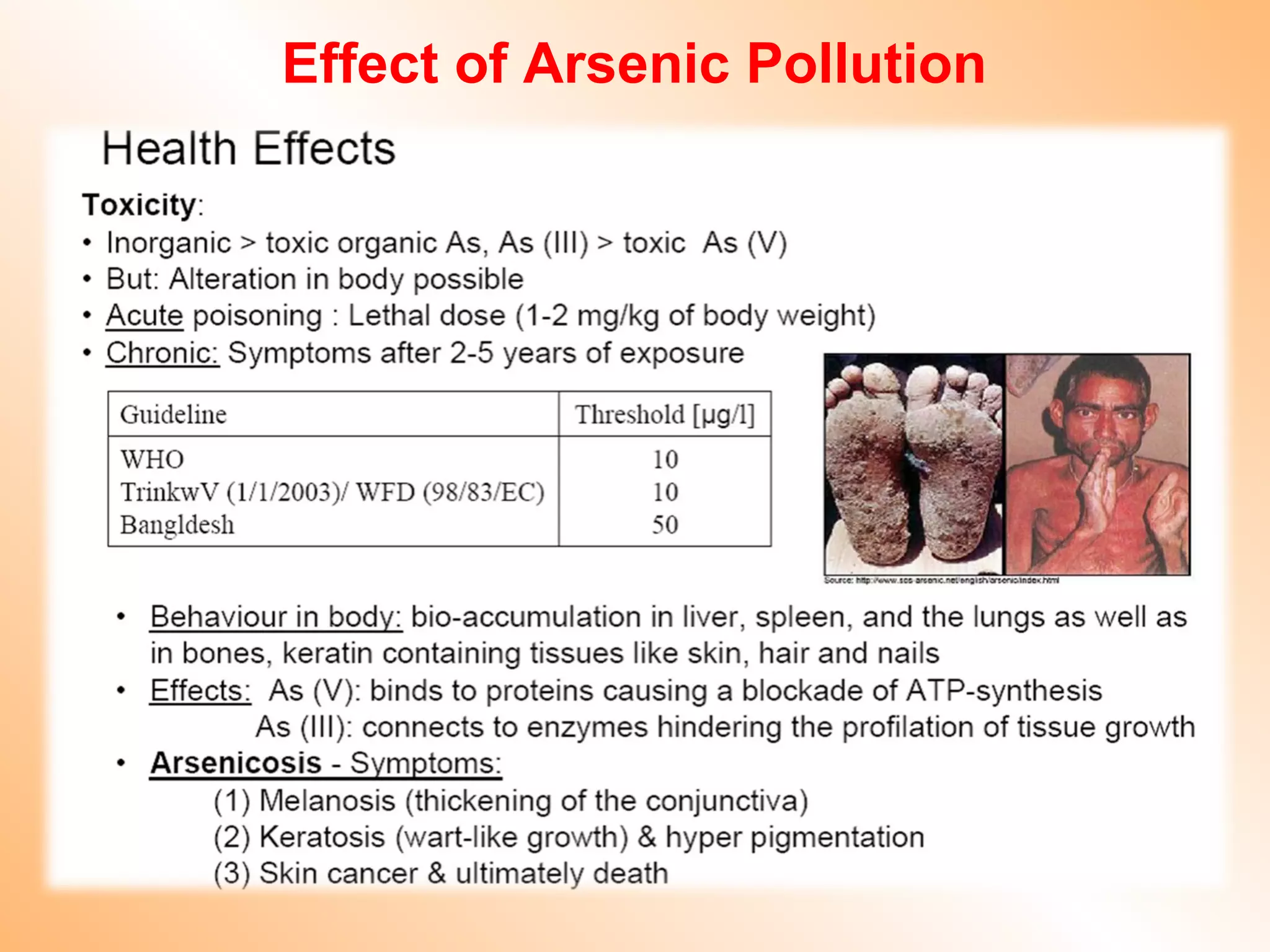
Effect of Arsenic Pollution
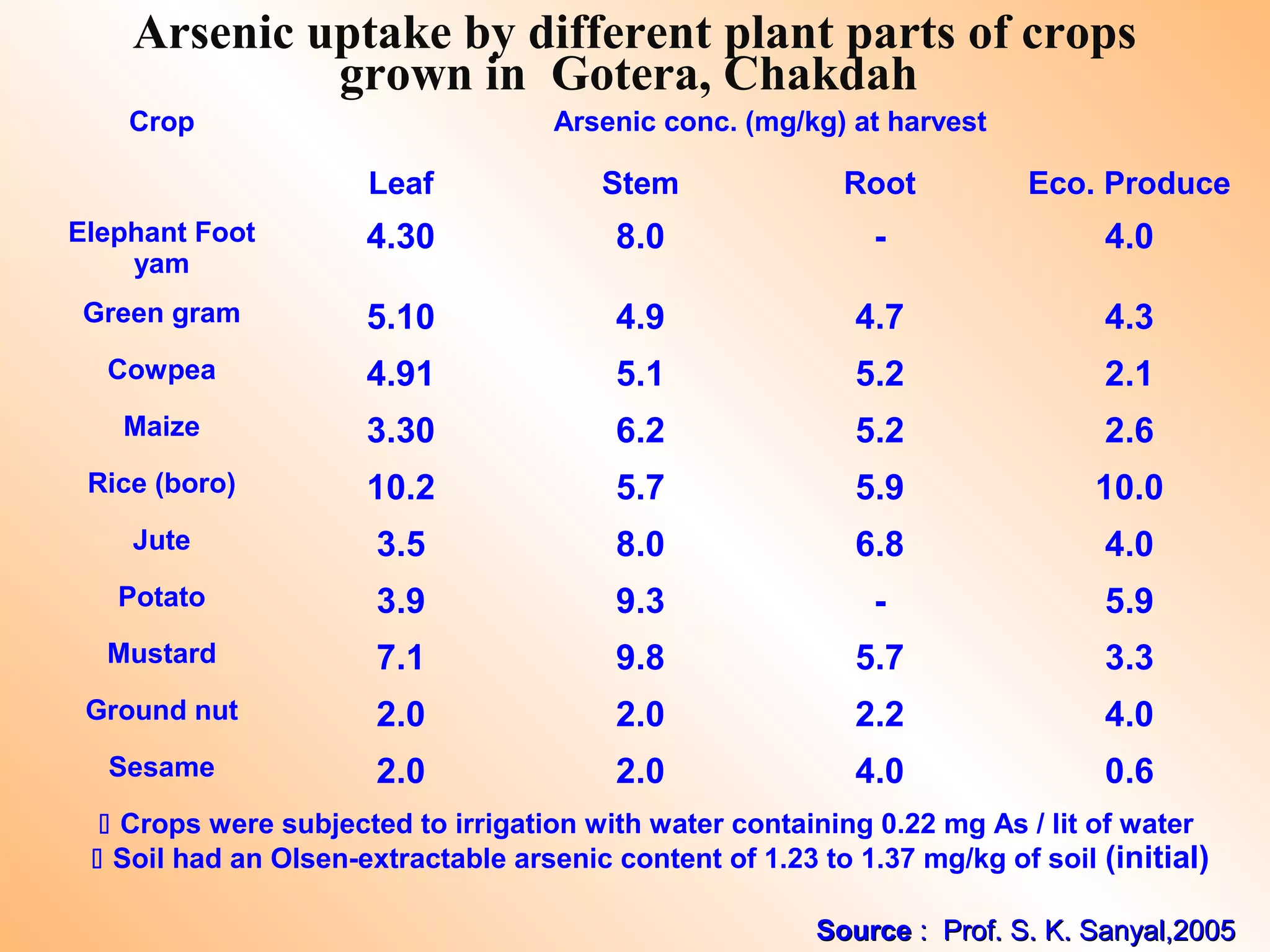
Crop Arsenic conc. (mg/kg) at harvest
Leaf Stem Root Eco. Produce
Elephant Foot
yam
4.30 8.0 - 4.0
Green gram 5.10 4.9 4.7 4.3
Cowpea 4.91 5.1 5.2 2.1
Maize 3.30 6.2 5.2 2.6
Rice (boro) 10.2 5.7 5.9 10.0
Jute 3.5 8.0 6.8 4.0
Potato 3.9 9.3 - 5.9
Mustard 7.1 9.8 5.7 3.3
Ground nut 2.0 2.0 2.2 4.0
Sesame 2.0 2.0 4.0 0.6
 Crops were subjected to irrigation with water containing 0.22 mg As / lit of water
 Soil had an Olsen-extractable arsenic content of 1.23 to 1.37 mg/kg of soil (initial)
Arsenic uptake by different plant parts of crops
grown in Gotera, Chakdah
SourceSource : Prof. S. K. Sanyal,2005: Prof. S. K. Sanyal,2005
Then what is the way out???Then what is the way out???
PHYTOREMEDIATION
THE GREEN-CURE TECHNOLOGY
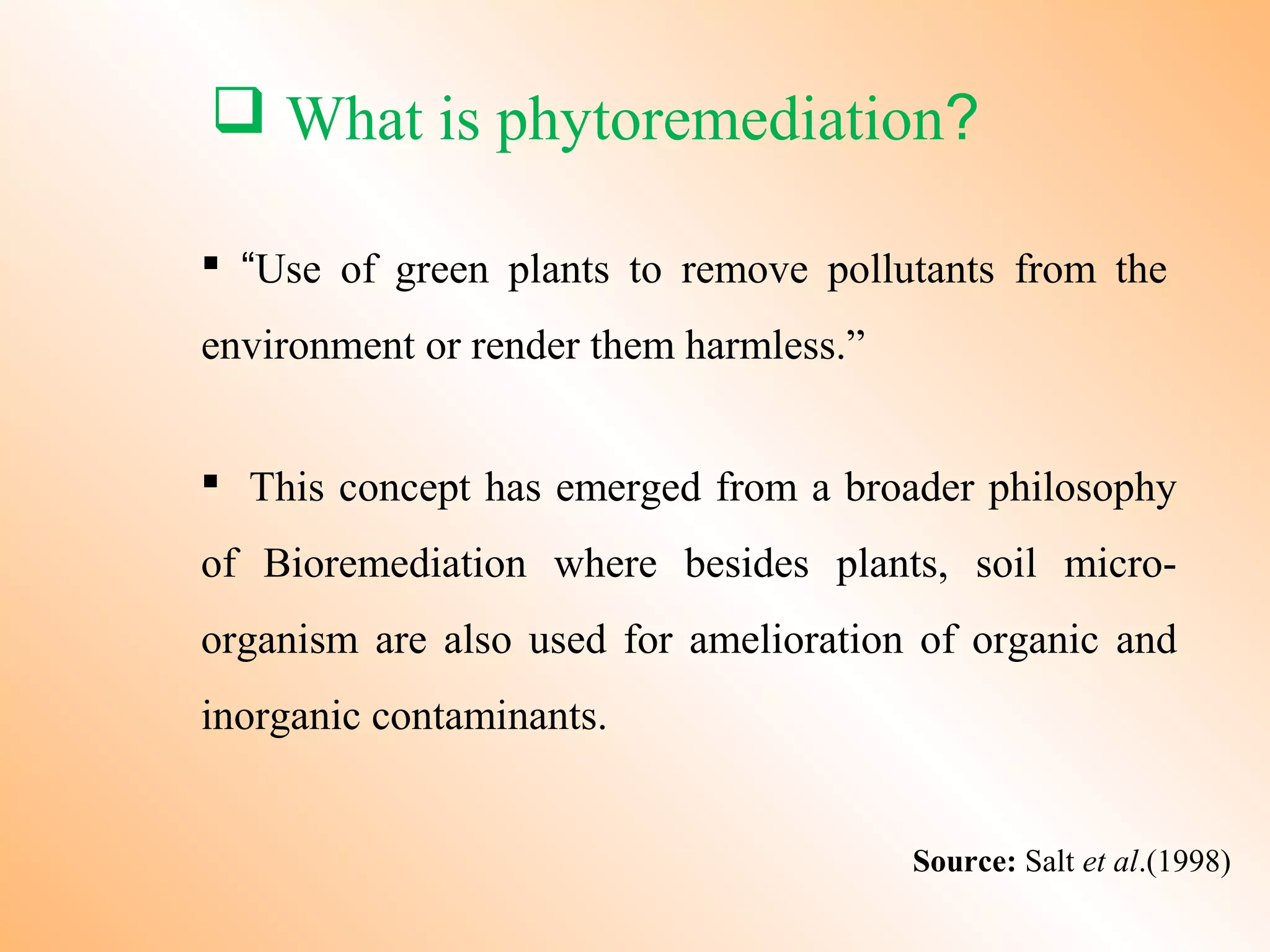
 What is phytoremediation?
 “Use of green plants to remove pollutants from the
environment or render them harmless.”
 This concept has emerged from a broader philosophy
of Bioremediation where besides plants, soil micro-
organism are also used for amelioration of organic and
inorganic contaminants.
Source: Salt et al.(1998)
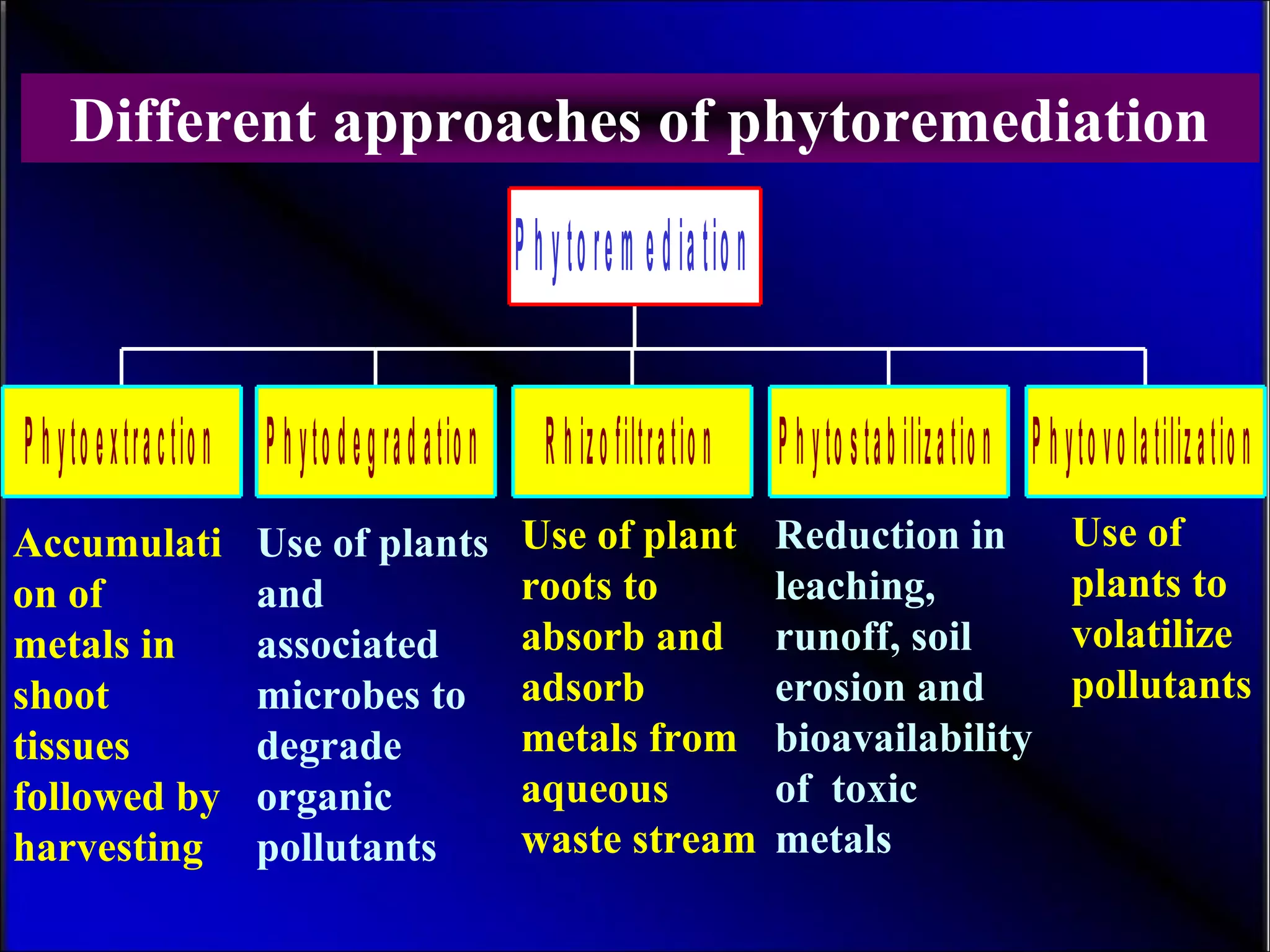
Phytoextraction Phytodegradation Rhizofiltration Phytostabilization Phytovolatilization
Phytorem ediation
Different approaches of phytoremediation
Accumulati
on of
metals in
shoot
tissues
followed by
harvesting
Use of plants
and
associated
microbes to
degrade
organic
pollutants
Use of plant
roots to
absorb and
adsorb
metals from
aqueous
waste stream
Reduction in
leaching,
runoff, soil
erosion and
bioavailability
of toxic
metals
Use of
plants to
volatilize
pollutants
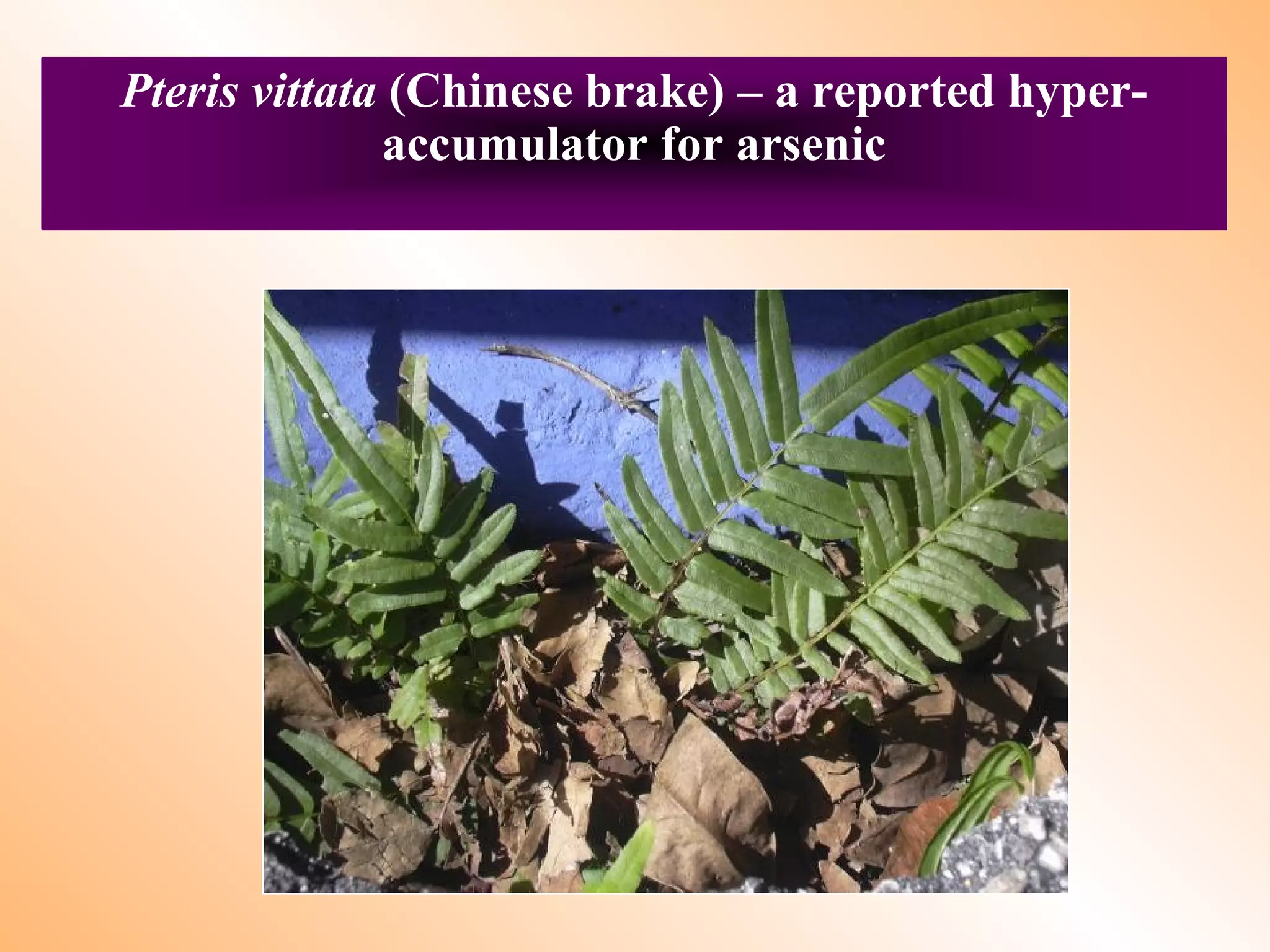
Pteris vittata (Chinese brake) – a reported hyper-
accumulator for arsenic
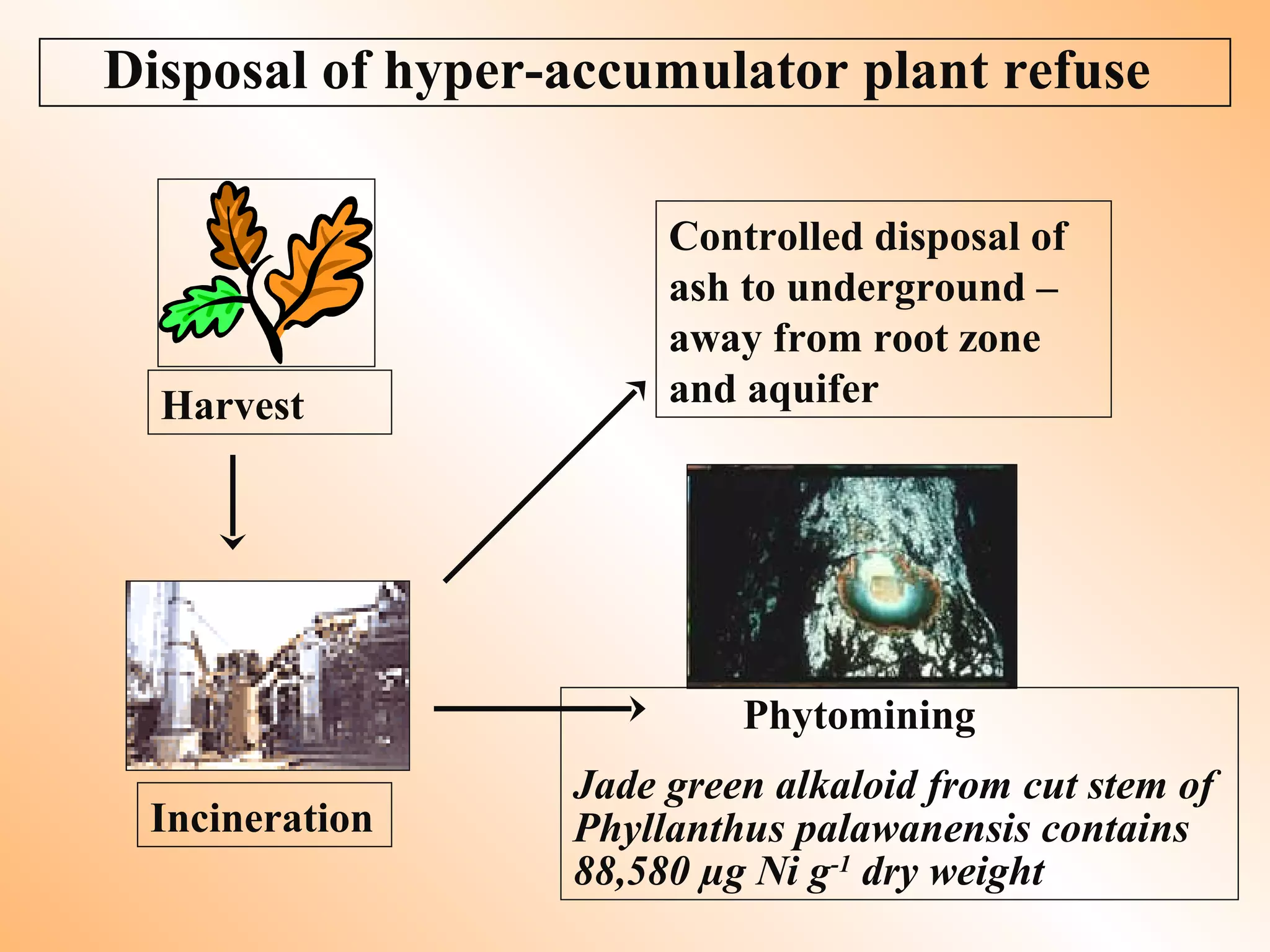
Disposal of hyper-accumulator plant refuse
Harvest
Incineration
Controlled disposal of
ash to underground –
away from root zone
and aquifer
Phytomining
Jade green alkaloid from cut stem of
Phyllanthus palawanensis contains
88,580 µg Ni g-1
dry weight
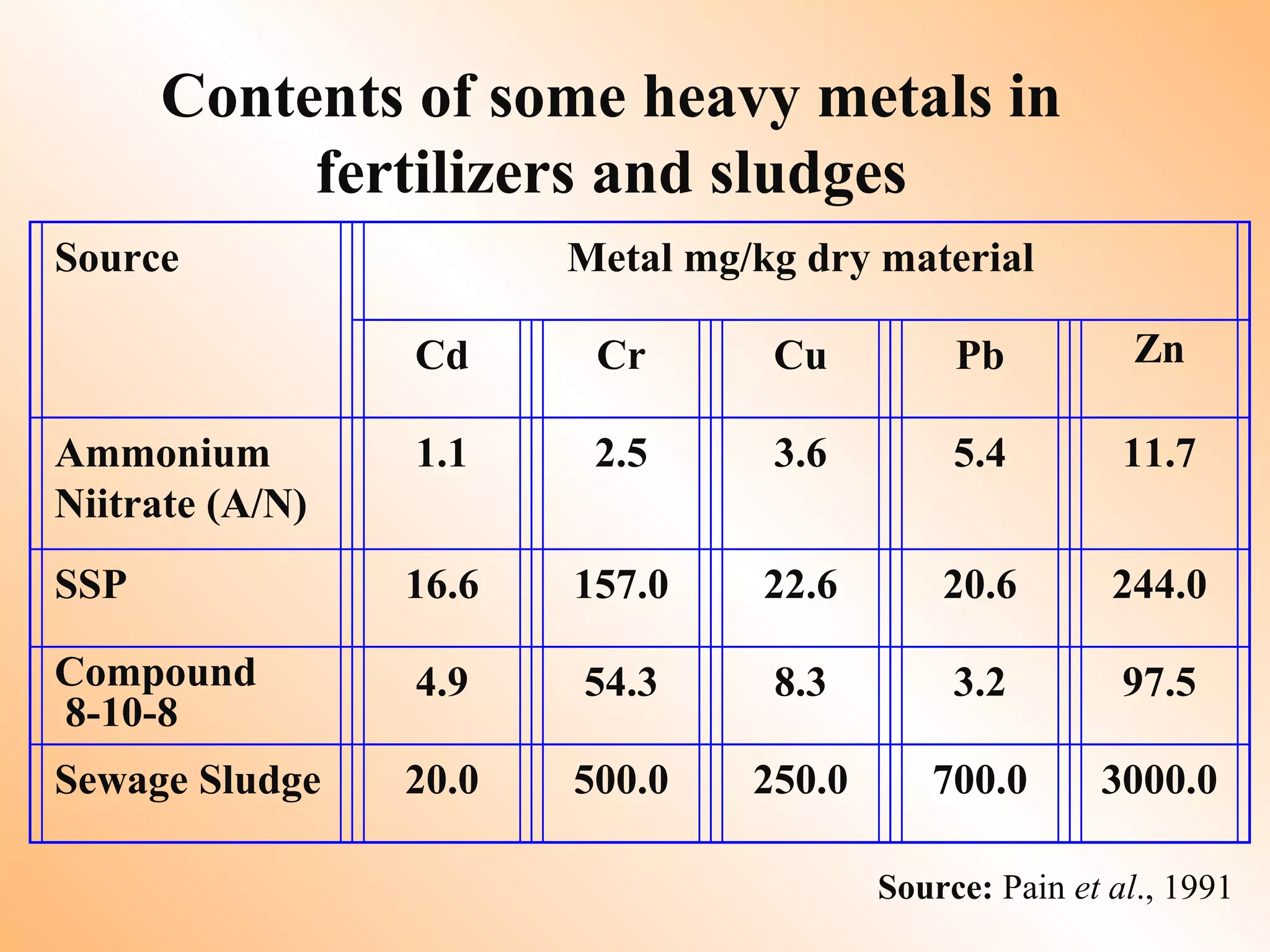
Contents of some heavy metals in
fertilizers and sludges
Source Metal mg/kg dry material
Cd Cr Cu Pb Zn
Ammonium
Niitrate (A/N)
1.1 2.5 3.6 5.4 11.7
SSP 16.6 157.0 22.6 20.6 244.0
Compound
8-10-8
4.9 54.3 8.3 3.2 97.5
Sewage Sludge 20.0 500.0 250.0 700.0 3000.0
Source: Pain et al., 1991
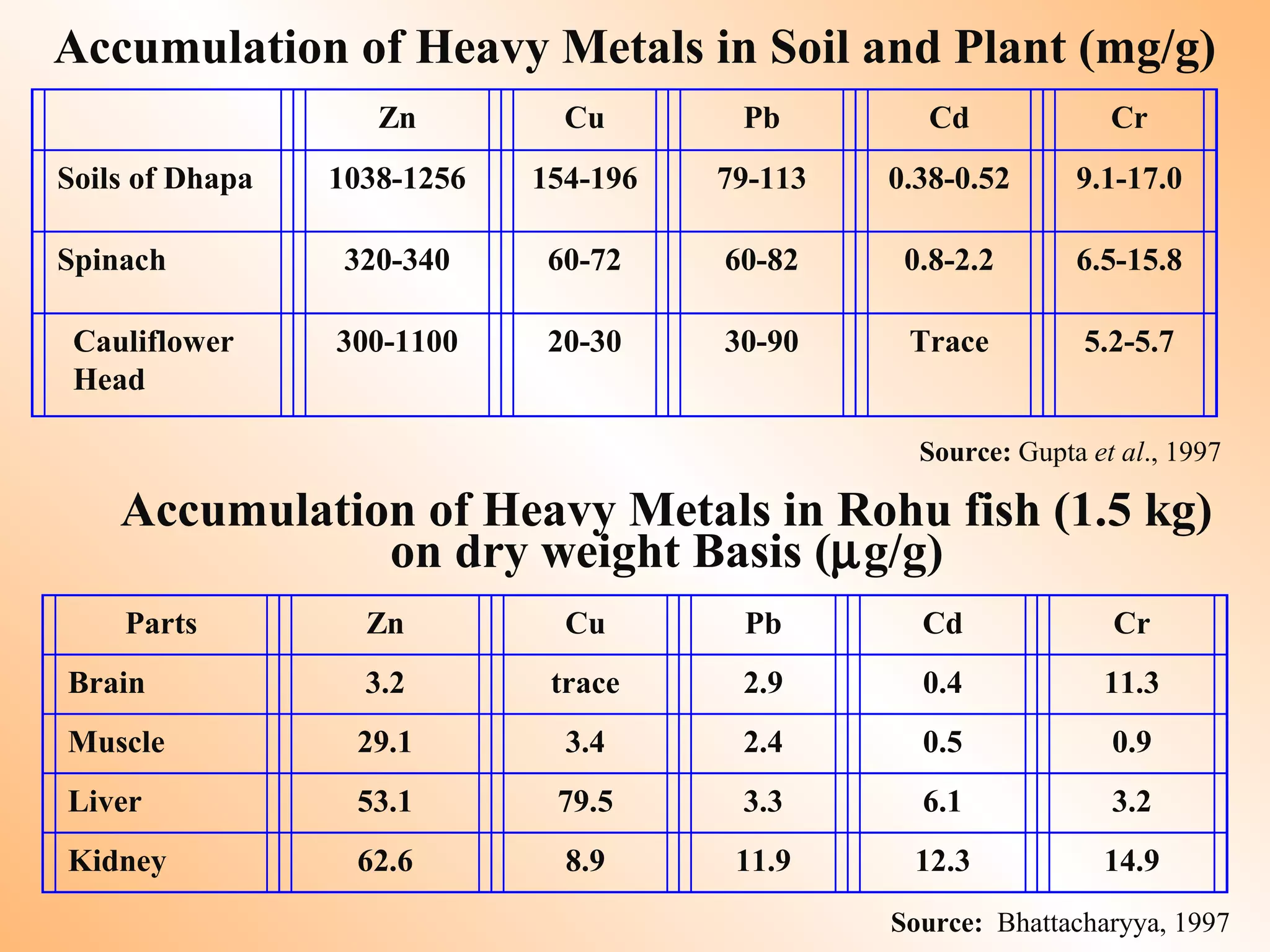
Accumulation of Heavy Metals in Soil and Plant (mg/g)
Zn Cu Pb Cd Cr
Soils of Dhapa 1038-1256 154-196 79-113 0.38-0.52 9.1-17.0
Spinach 320-340 60-72 60-82 0.8-2.2 6.5-15.8
Cauliflower
Head
300-1100 20-30 30-90 Trace 5.2-5.7
Source: Gupta et al., 1997
Parts Zn Cu Pb Cd Cr
Brain 3.2 trace 2.9 0.4 11.3
Muscle 29.1 3.4 2.4 0.5 0.9
Liver 53.1 79.5 3.3 6.1 3.2
Kidney 62.6 8.9 11.9 12.3 14.9
Source: Bhattacharyya, 1997
Accumulation of Heavy Metals in Rohu fish (1.5 kg)
on dry weight Basis (µg/g)
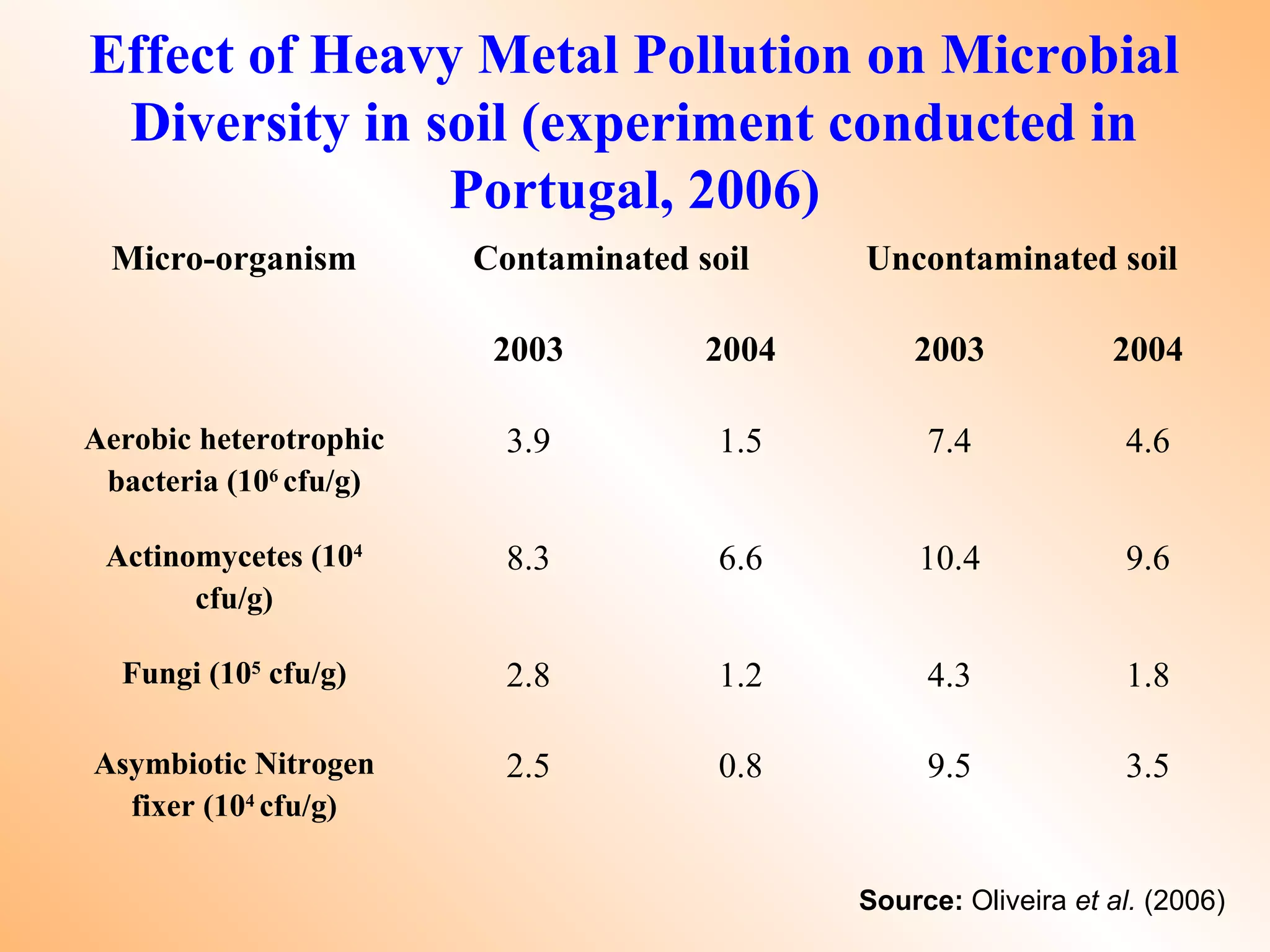
Effect of Heavy Metal Pollution on Microbial
Diversity in soil (experiment conducted in
Portugal, 2006)
Source: Oliveira et al. (2006)
Micro-organism Contaminated soil Uncontaminated soil
2003 2004 2003 2004
Aerobic heterotrophic
bacteria (106
cfu/g)
3.9 1.5 7.4 4.6
Actinomycetes (104
cfu/g)
8.3 6.6 10.4 9.6
Fungi (105
cfu/g) 2.8 1.2 4.3 1.8
Asymbiotic Nitrogen
fixer (104
cfu/g)
2.5 0.8 9.5 3.5
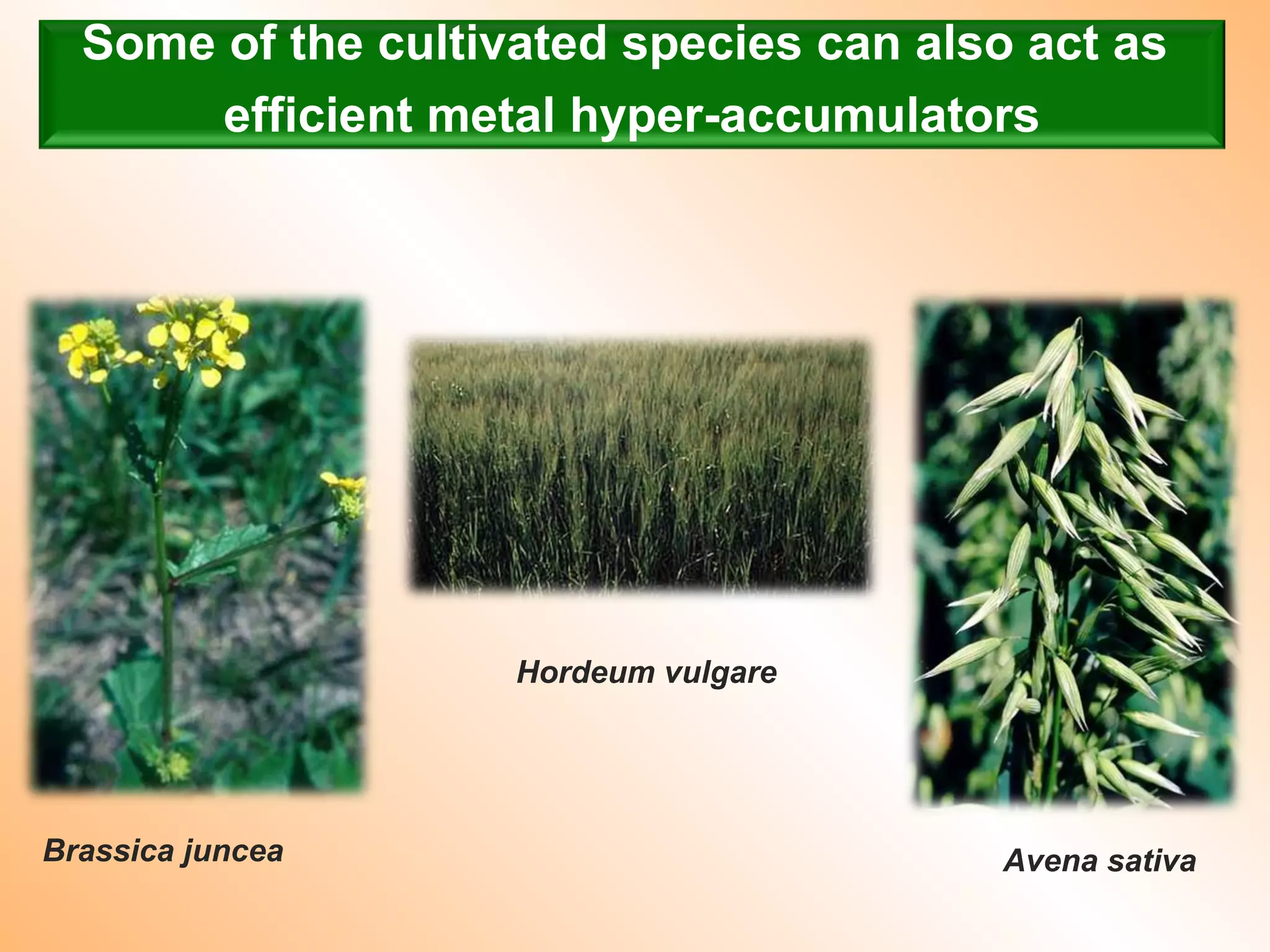
Some of the cultivated species can also act as
efficient metal hyper-accumulators
Brassica juncea
Hordeum vulgare
Avena sativa
Remedial / Mitigation Options
1. Optimum conjunctive use of ground & surface water
[ e.g. harvested rainwater]
2. Irrigation with pond-stored groundwater – decontamination facilitated
by rainfall and sedimentation
3. Recharge groundwater resource
4. Enhance water use efficiency (optimum water management)
5. Prefer low-water requiring farmer-attractive cropping sequences
(especially for the lean period)
6. Increased use of FYM and other manures + green manure crops,
inclusion of pulses/other legumes as well as application of appropriate
amendments (Zn/Fe salts as and where applicable)
7. Cost-effective phytoremediation options
8. Creation of general awareness: Mass campaigning, holding of farmers’
day, field demonstrations, socioeconomic factors
(Source: Sanyal, 2008)
The chemicals to which life is asked to make
its adjustment are . . . the synthetic creations
of man's inventive mind, brewed in his
laboratories, and having no counterparts in
nature.
Rachel Carson
Silent Spring

Heavy metal pollution in soil and its mitigation aspect by Dr. Tarik Mitran

  • 1.
    Heavy metal pollutionin soil and its possible mitigation aspect Speaker: Dr.Tarik Mitran Agricultural Chemistry and Soil Science
  • 2.
    What is aHeavy Metal? The term heavy metal refers to any metallic chemical element that has a relatively high density and is toxic or poisonous at low concentrations. Examples of heavy metals include mercury (Hg), cadmium (Cd), arsenic (As), chromium (Cr), thallium (Ti), and lead (Pb). Heavy metals are those having densities five times greater than water, and the light metals are those having lesser densities. Humans consume metallic elements through both water and food.
  • 3.
    Source: Brady(1994) It shouldbe noted that the content of metals in tissue generally builds up from left to right, indicating the vulnerability of humans to heavy metal toxicity Sources of heavy metals and their cycling in the soil-water-air organism ecosystem Rocks in Earth’s crust Air Soil Water Plants Birds Domestic animals Fish Humans •Industrial Products •Burned fuel •Fertilizers Pesticides
  • 4.
    Anthropogenic sources of heavy metalsin soil Tannery BatteryDistillery Steel Fly ash Electroplating Mining Smelting
  • 5.
    Heavy metalHeavy metal Transitionmetals Ia IIa IIIa IVa Va VIa VIIa Ib IIb Lanthanides Actinides
  • 6.
    Chemical Major usesand sources of soil contamination Arsenic Pesticides, plant desiccants, animal feed additives, coal and petroleum, mine tailings and detergents Cadmium Electroplating, pigments for plastics and paints, plastic stabilizers and batteries, fertilizers Chromium Stainless steel, chrome–plated metals, pigments and refractory brick manufacture Lead Combustion of oil, gasoline, and coal; iron and steel production Mercury Pesticides, catalysts for synthetic polymers, metallurgy, thermometers Nickel Combustion of coal, gasoline, and oil; alloy manufacture, electroplating, batteries Source: Moore and Ramamoorthy (1984)
  • 7.
    Sources Annual Emission(T/year) Natural Sources Windblown dust Forest fires Volcanogenic particles Vegetation Sea salt spray 100 12 520 200 1 Anthropogenic sources Mining, non-ferrous metals Primary non-ferrous metal Production Cd Cu Pb Zn Secondary non-ferrous metal production Iron and steel production Industrial applications Coal combustion 110 1600 200 2800 600 70 50 60 Table: Emission of Cadmium to the atmosphere Source: Nriagu (1980) and Vogeli Lange (1989)
  • 8.
    Element Concentration range (mg/kg) Regulatory limit (mg/kg) Lead1-6900 600 Cadmium 0.1-345 100 Arsenic 0.1-102 20 Chromium 0.005-3950 100 Mercury 0.001-1800 270 Copper 0.03-1550 600 Zinc 0.15-5000 1500 Table: 2 Heavy metals prevailing in soils and their regulatory limits Source: Salt et al (1994)
  • 9.
    Heavy Metals Limitin Soil Source: Sherman, 2002
  • 10.
    Heavy Metals accordingto their Toxicity Cd, As Hg, Pb, Ni, F B, Cu, Mn, Zn Extremely poisonous Moderately poisonous Relatively less poisonous
  • 11.
    Behavior of Hgin the Environment Source: US EPA, (1997)
  • 12.
    Hg species Bio–chemical property Hg0 It is relatively inert and non-toxic.in vapour form it is toxic. Hg2+ Toxicity is low RHg+(Organo- mercurial) Highly toxic cause’s irreversible nerve and brain damage can be stored in tissue. Abortion of baby affecting foetal .Borned baby suffer mental fat retardation, convulsion cerebral palsy R2Hg(diorgano- mercurials) Low toxicity but in acid medium converted to organo mercurials HgS Insoluble, adsorbed in soil Table: species of Mercury and their toxicity Source: Das, 2005
  • 17.
    Fate of selenitein soil (1:10 water extract) Heavy metal load field experiment: Dr. Imre Kádár, Nagyhörcsök 0 100000 200000 300000 400000 500000 600000 700000 800000 900000 1000000 0 10 20 duration [min] ICP-MSsignal[CPS] 0 5000 10000 15000 20000 25000 0 10 20 duration [min] ICP-MSsignal[CPS] 0 5000 10000 15000 20000 25000 0 10 20 duration [min] ICP-MSsignal[CPS] 1993 1993 2003 oxidation selenite selenate organic selenium Conclusion: selenite will be oxidised in soil to selenate selenate more available for plants (it is analogous to sulphate) risk of leaching selenite selenate
  • 19.
    Basic facts ofCr : • Chromium (Cr) discovered first by the French chemist Vanquelin in 1798 from red lead ore in the Siberia. • Cr is a transitional element in the group VI B. • Cr (VI) is most toxic usually occurs associated with oxygen as chromate (CrO4 2- ) or dichromate (Cr2O7 2- ) oxyanions. Most mobile species. • Cr (III) less toxic, less mobile & mainly found bound to organic matter in soil & aqueous environment.
  • 20.
    • Besides organicCr (III) are known to form complexes with inorganic ligands (OH- , SO2 - , NO3 - and CO3 2- ). Organically complexed (citric and fulvic acids) Cr (III) prevented from precipitation even upto pH 7.5. • Hence in most natural systems Cr (VI) occurred as CrO4 2- and Cr (III) present as hydroxides and various organic complexes. • Cr (VI) is a strong oxidising agent & reduced by appropriate electron donor HCrO4 - + 7H+ + 3e- → Cr3+ + 4H2O←
  • 21.
    Reactions in Soil– Water System • In most natural systems, hexavalent Cr6+ present as CrO4 2- & major trivalent Cr3+ species include hydroxides & various organic complexes. • Cr undergoes various chemical & biological reactions in natural system that govern speciation & in turn, environmental behaviour. • Important among these reactions include Oxidation or reduction Precipitation or dissolution and Adsorption or desorption
  • 22.
    Cr in water Leachate Kineticsof Redox TransformationCr3+ Cr6+ Precipitation Dissolution Adsorption & Desorption Water Cr3+ & Cr6+ Predicted Cr concentration A simple scheme involving reactions of Cr in soil & water systems Source: Rai et al., 1989
  • 23.
    Effect of Cron plant growth and development Process Crop/plant Effect Germination Bushbean, Lucerne, Mungbean, Sugarcane Reduced germination percentage & reduced bud sprouting Root growth Rice, Mungbean, Sorghum Decrease in root length & dry weight, increase in root diameter & root hairs. Proportional variation in cortical & pith tissue layers. Shoot height Rice, Bushbean Reduction in plant height Yield & Dry matter production Cauliflower, Cabbage, Radish, Bushbean, Maize, Finger Millet Upto 50% reduction in yield. Reduced number of flowers per plant. Reduced grain weight. Increased seed deformity. Reduced pod weight. Source: Patel et al., 1992
  • 24.
  • 26.
    Soil Heavy metal(ppm) Available TOTAL Pb Cf Cr Pb Hg Cd Cr Surface 1.8 0.02 0.6 43.8 4.6 9.6 23.2 Sub surface 2.3 0.04 0.04 40.3 3.8 10.1 19.8 Table: Heavy Metal Pollution Through Sewage Water Source: Som et al. (1994)
  • 27.
    Feer‘s Disease (acrodynia)exanthema due to Hg Toxicity Picture Source: www.who.int/ceh
  • 28.
    Source of Exposure Methyl mercury (MeHg)(μg/day) Inorganic Hg Salts (Hg+ + ) (μg/day) Elemental Hg (Hg0 ) (μg/day) Foods (non-fish) Negligible 0.9 Negligible Commercial fish 6 <1 Negligible Sport fish No population-based data available No population-based data available Negligible Public supply water Negligible <<4 Negligible Private wells Negligible 0.4-4 0.006-0.03 Outdoor air Negligible Negligible 0.04 - 0.2 Indoor air Negligible Negligible No population based data available Soil ingestion Negligible >3 Negligible Dental amalgams Negligible Negligible .3-17 Table: 10 Sources and Estimates of Daily Human Exposures to Mercury Source: Charles, 2000
  • 29.
    Elements Plant speciesMax. reported conc. (mg/kg) Cadmium Thlapsi caerulescens 500 Copper Ipomoea alpina, 12300 Cobalt Haumaniuastrum robertii 10200 Lead Thlapsi rotundifolium, Brassica juncea, Zea mays 8200 Nickel Alyssum lesbiacum, Sebertia acuminata 47500 Zinc Thlapsi caerulescens, Brassica oleracea, B. campestris 51600 Selenium Brassica juncea, B. napus 900 Chromium Brassica juncea, Helianthus annus 1400 Table: 13 Important hyperaccumulators for metal remediation Surce: Sarkar, 2005
  • 30.
    Lead Lead is byfar the most common contaminant of soils. Lead in soil is virtually a permanent resident. Organic matter, especially, will bind and hold itself in other metals very effectively. Sources: Number one source contamination: lead-based paint Other sources: gasoline exhaust motor oil automobile tires industrial activity coal combustion, and pesticides.
  • 31.
    Mercury • Mercury occursin two forms: - organic - inorganic • Inorganic forms most often occur when mercury is combined with chlorine, sulfur or oxygen. • Organic forms occur when mercury combines with carbon. Sources: Metallic forms of mercury are not absorbed by plants, but are converted by microorganisms to organic forms such as methyl mercury, which are taken up by plants. Environmental sources include thermometers, pesticides, metallurgy, and vapors from burning coal and other fuels.
  • 32.
    Mercury in Plants •The uptake of mercury: - decreases growth -induces disorientation of roots and shoots, plant tissue, and finally the cell wall. • A major portion of Mercury is tightly bound and remains in the roots. Lead in Plants • Lead in plants: - Absorbed through roots - Lead builds up in both leaf and root tissue - Causes lower concentration of chlorophyll - Lead compounds absorb UV light - Plants biomass declines, which includes roots, shoots, and fruits. Toxic Effect of Hg and Pb in Plants
  • 37.
  • 38.
    Source: Arsenic isa new terror; Asit Kumar Roy; Desh, 2004 D R A W D O W N Radius of influence Cone of Depression WT Vadose zone Arseno pyrite Darcy’s Law Pitticite
  • 39.
  • 40.
    Crop Arsenic conc.(mg/kg) at harvest Leaf Stem Root Eco. Produce Elephant Foot yam 4.30 8.0 - 4.0 Green gram 5.10 4.9 4.7 4.3 Cowpea 4.91 5.1 5.2 2.1 Maize 3.30 6.2 5.2 2.6 Rice (boro) 10.2 5.7 5.9 10.0 Jute 3.5 8.0 6.8 4.0 Potato 3.9 9.3 - 5.9 Mustard 7.1 9.8 5.7 3.3 Ground nut 2.0 2.0 2.2 4.0 Sesame 2.0 2.0 4.0 0.6  Crops were subjected to irrigation with water containing 0.22 mg As / lit of water  Soil had an Olsen-extractable arsenic content of 1.23 to 1.37 mg/kg of soil (initial) Arsenic uptake by different plant parts of crops grown in Gotera, Chakdah SourceSource : Prof. S. K. Sanyal,2005: Prof. S. K. Sanyal,2005
  • 41.
    Then what isthe way out???Then what is the way out??? PHYTOREMEDIATION THE GREEN-CURE TECHNOLOGY
  • 42.
     What isphytoremediation?  “Use of green plants to remove pollutants from the environment or render them harmless.”  This concept has emerged from a broader philosophy of Bioremediation where besides plants, soil micro- organism are also used for amelioration of organic and inorganic contaminants. Source: Salt et al.(1998)
  • 43.
    Phytoextraction Phytodegradation RhizofiltrationPhytostabilization Phytovolatilization Phytorem ediation Different approaches of phytoremediation Accumulati on of metals in shoot tissues followed by harvesting Use of plants and associated microbes to degrade organic pollutants Use of plant roots to absorb and adsorb metals from aqueous waste stream Reduction in leaching, runoff, soil erosion and bioavailability of toxic metals Use of plants to volatilize pollutants
  • 44.
    Pteris vittata (Chinesebrake) – a reported hyper- accumulator for arsenic
  • 45.
    Disposal of hyper-accumulatorplant refuse Harvest Incineration Controlled disposal of ash to underground – away from root zone and aquifer Phytomining Jade green alkaloid from cut stem of Phyllanthus palawanensis contains 88,580 µg Ni g-1 dry weight
  • 46.
    Contents of someheavy metals in fertilizers and sludges Source Metal mg/kg dry material Cd Cr Cu Pb Zn Ammonium Niitrate (A/N) 1.1 2.5 3.6 5.4 11.7 SSP 16.6 157.0 22.6 20.6 244.0 Compound 8-10-8 4.9 54.3 8.3 3.2 97.5 Sewage Sludge 20.0 500.0 250.0 700.0 3000.0 Source: Pain et al., 1991
  • 47.
    Accumulation of HeavyMetals in Soil and Plant (mg/g) Zn Cu Pb Cd Cr Soils of Dhapa 1038-1256 154-196 79-113 0.38-0.52 9.1-17.0 Spinach 320-340 60-72 60-82 0.8-2.2 6.5-15.8 Cauliflower Head 300-1100 20-30 30-90 Trace 5.2-5.7 Source: Gupta et al., 1997 Parts Zn Cu Pb Cd Cr Brain 3.2 trace 2.9 0.4 11.3 Muscle 29.1 3.4 2.4 0.5 0.9 Liver 53.1 79.5 3.3 6.1 3.2 Kidney 62.6 8.9 11.9 12.3 14.9 Source: Bhattacharyya, 1997 Accumulation of Heavy Metals in Rohu fish (1.5 kg) on dry weight Basis (µg/g)
  • 48.
    Effect of HeavyMetal Pollution on Microbial Diversity in soil (experiment conducted in Portugal, 2006) Source: Oliveira et al. (2006) Micro-organism Contaminated soil Uncontaminated soil 2003 2004 2003 2004 Aerobic heterotrophic bacteria (106 cfu/g) 3.9 1.5 7.4 4.6 Actinomycetes (104 cfu/g) 8.3 6.6 10.4 9.6 Fungi (105 cfu/g) 2.8 1.2 4.3 1.8 Asymbiotic Nitrogen fixer (104 cfu/g) 2.5 0.8 9.5 3.5
  • 50.
    Some of thecultivated species can also act as efficient metal hyper-accumulators Brassica juncea Hordeum vulgare Avena sativa
  • 51.
    Remedial / MitigationOptions 1. Optimum conjunctive use of ground & surface water [ e.g. harvested rainwater] 2. Irrigation with pond-stored groundwater – decontamination facilitated by rainfall and sedimentation 3. Recharge groundwater resource 4. Enhance water use efficiency (optimum water management) 5. Prefer low-water requiring farmer-attractive cropping sequences (especially for the lean period) 6. Increased use of FYM and other manures + green manure crops, inclusion of pulses/other legumes as well as application of appropriate amendments (Zn/Fe salts as and where applicable) 7. Cost-effective phytoremediation options 8. Creation of general awareness: Mass campaigning, holding of farmers’ day, field demonstrations, socioeconomic factors (Source: Sanyal, 2008)
  • 52.
    The chemicals towhich life is asked to make its adjustment are . . . the synthetic creations of man's inventive mind, brewed in his laboratories, and having no counterparts in nature. Rachel Carson Silent Spring