Pesticides 
 Pesticides are substances meant for 
attracting, seducing, destroying, or 
mitigating any pest. 
 Goal: to stop or limit pest occurrence 
 Types: 
 Insecticides – kill insects 
 Herbicides – kill weeds 
 Fungicides – suppress or kill fungi
Benefits 
 Allow agricultural producers to improve 
the quality, quantity, and diversity of our 
food supply. 
 Used in timber, turf, horticulture, aquatic, 
and structural pest control industries. 
 Homeowners and home gardeners often 
use pesticides in their homes, yards, and 
on pets.
Disadvantages 
 Reduction of beneficial species. Non-target organisms, including predators and parasites 
of pests, can also be affected by chemical application. The reduction of these beneficial 
organisms can result in changes in the natural biological balances 
 Residues in food for humans and feed for livestock can be a consequence of direct 
application of a chemical to the food source, by the presence of pollutants in the 
environment or by transfer and biomagnification of the chemical along a food chain. Not all 
residues are undesirable although good agricultural practice must be observed to prevent 
unnecessary and excessive levels of residues. 
 Ground water contamination by leached chemicals can occur in high use areas if 
persistent products are used. 
 Resistance to the pesticide used can develop in target pests due to overuse and incorrect 
use of the chemical. 
 Poisoning hazards and other health effects to operators can occur through excessive 
exposure if safe handling procedures are not followed and protective clothing
What Happens after Application? 
 When pesticides are applied the goal is that 
they will remain in the target area long 
enough to control a specific pest and then 
degrade into harmless compounds without 
contaminating the environment. 
 Once applied, many pesticides are mobile in 
the environment (air, soil, water). 
 This movement can be beneficial (moving 
pesticide to target area, such as roots) but 
can also reduce the effect on the target pest 
and injure nontarget plants and animals.
Pathways of pesticide movement 
 Runoff 
 Chemical degradation 
 Volatilize (gas vapor) 
 Leaching and breakdown in soil 
 Leaching and degradation by microbes 
 Photo degradation (sun)
Conditions where & when applied 
 Geology – depth to water table (larger 
distances give more soil to act as filter) 
 Surrounding water sources – nearby water is 
more susceptible to contamination when 
pesticides are applied to highly erodible soils, 
over-irrigated, or rain-soaked soils. Managing 
crop residues and maintaining grass 
waterways and filter strips help to protect 
surface waters from sediment and pesticide 
pollution.
Conditions where & when applied 
 Environmental conditions – heavy or sustained 
rainfall or irrigation shortly after pesticide 
application can increase runoff, leaching, and 
volatilization. 
 Soil temperatures (extremely high or low) can 
interfere with pesticide performance. Pesticides 
generally become more volatile in high 
temperatures and windy weather. 
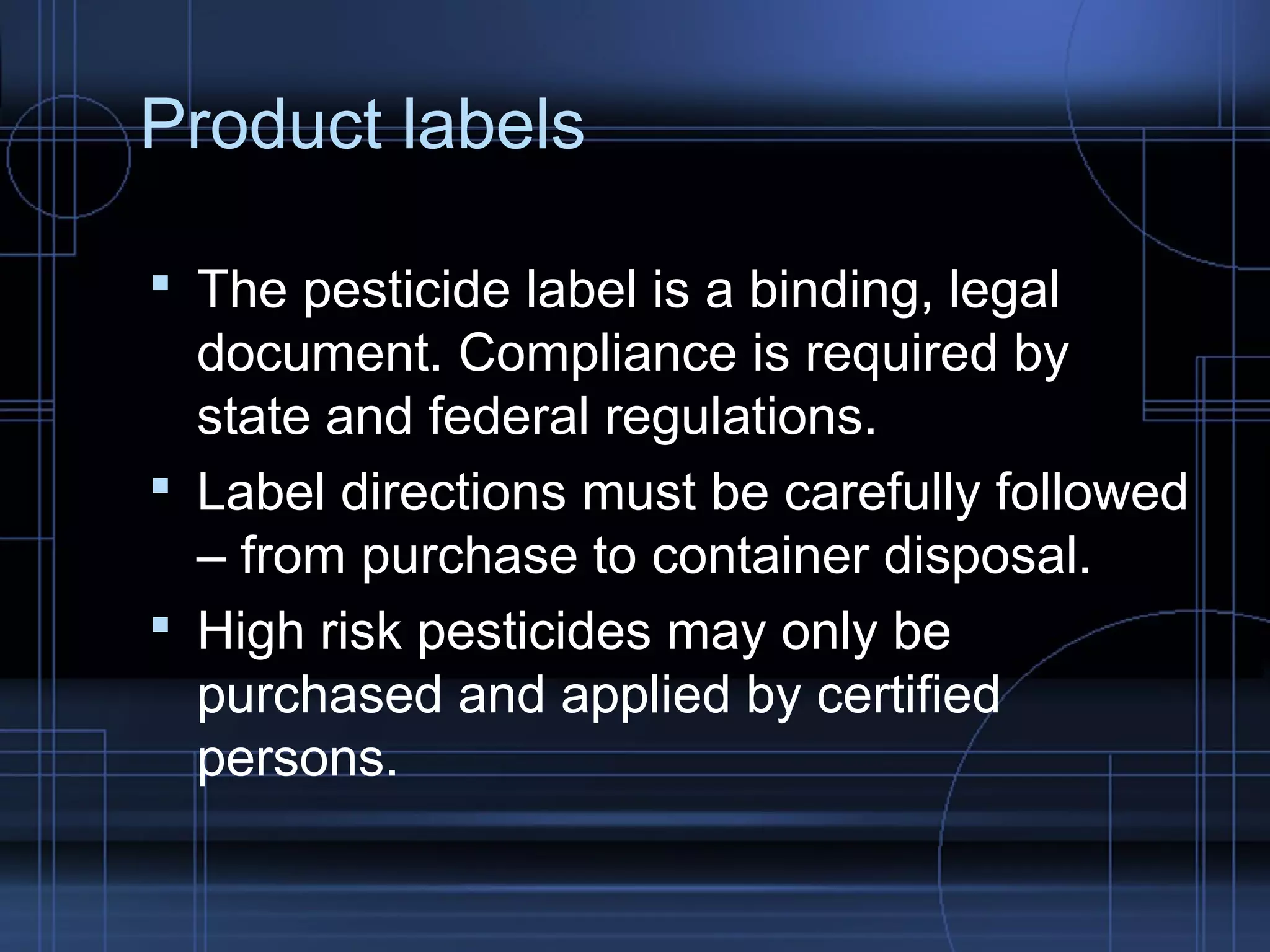
 Pesticides can be incorporated (disked in) or 
applied directly into the soil to decrease the 
potential for drift and volatilization.
Product labels 
 The pesticide label is a binding, legal 
document. Compliance is required by 
state and federal regulations. 
 Label directions must be carefully followed 
– from purchase to container disposal. 
 High risk pesticides may only be 
purchased and applied by certified 
persons.
Pesticide Use 
 Careful selection for a specific pest – 
understand the pest, site, product, and 
risks. 
 Careful and responsible use. 
…shows a consideration for the 
environment. 
….responsible stewardship

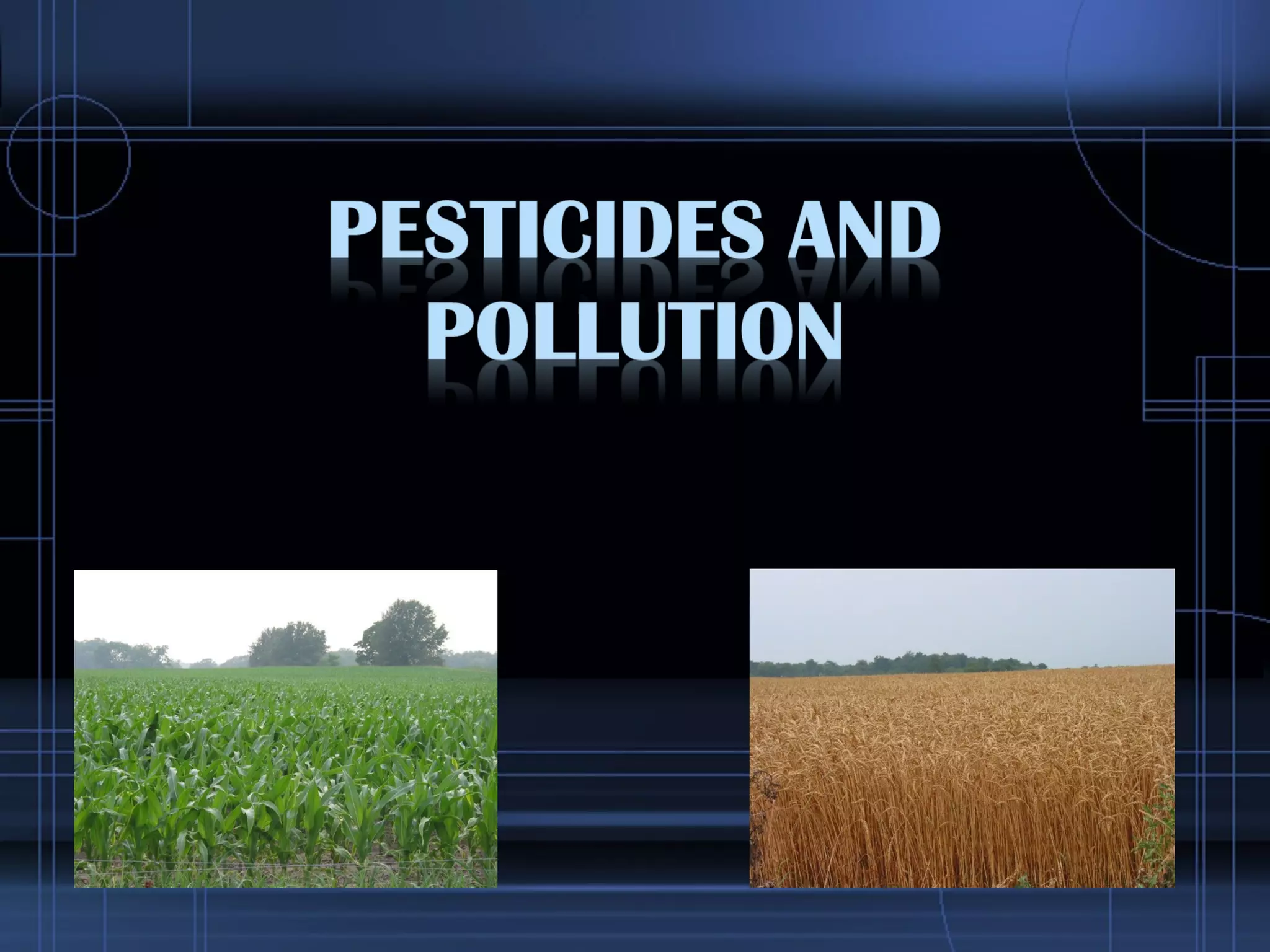
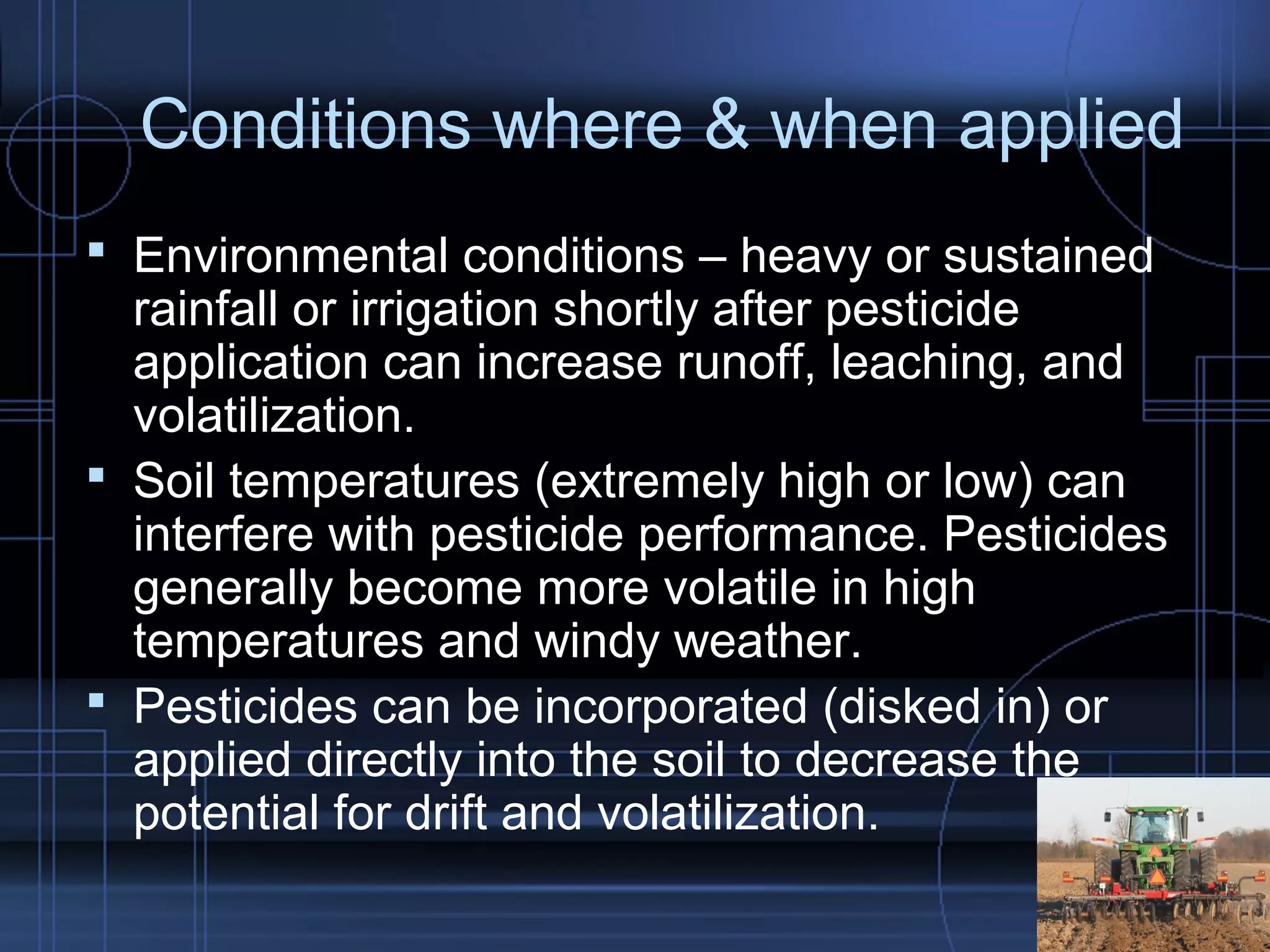
Pesticides and Pollution

  • 2.
    Pesticides  Pesticidesare substances meant for attracting, seducing, destroying, or mitigating any pest.  Goal: to stop or limit pest occurrence  Types:  Insecticides – kill insects  Herbicides – kill weeds  Fungicides – suppress or kill fungi
  • 3.
    Benefits  Allowagricultural producers to improve the quality, quantity, and diversity of our food supply.  Used in timber, turf, horticulture, aquatic, and structural pest control industries.  Homeowners and home gardeners often use pesticides in their homes, yards, and on pets.
  • 4.
    Disadvantages  Reductionof beneficial species. Non-target organisms, including predators and parasites of pests, can also be affected by chemical application. The reduction of these beneficial organisms can result in changes in the natural biological balances  Residues in food for humans and feed for livestock can be a consequence of direct application of a chemical to the food source, by the presence of pollutants in the environment or by transfer and biomagnification of the chemical along a food chain. Not all residues are undesirable although good agricultural practice must be observed to prevent unnecessary and excessive levels of residues.  Ground water contamination by leached chemicals can occur in high use areas if persistent products are used.  Resistance to the pesticide used can develop in target pests due to overuse and incorrect use of the chemical.  Poisoning hazards and other health effects to operators can occur through excessive exposure if safe handling procedures are not followed and protective clothing
  • 5.
    What Happens afterApplication?  When pesticides are applied the goal is that they will remain in the target area long enough to control a specific pest and then degrade into harmless compounds without contaminating the environment.  Once applied, many pesticides are mobile in the environment (air, soil, water).  This movement can be beneficial (moving pesticide to target area, such as roots) but can also reduce the effect on the target pest and injure nontarget plants and animals.
  • 6.
    Pathways of pesticidemovement  Runoff  Chemical degradation  Volatilize (gas vapor)  Leaching and breakdown in soil  Leaching and degradation by microbes  Photo degradation (sun)
  • 7.
    Conditions where &when applied  Geology – depth to water table (larger distances give more soil to act as filter)  Surrounding water sources – nearby water is more susceptible to contamination when pesticides are applied to highly erodible soils, over-irrigated, or rain-soaked soils. Managing crop residues and maintaining grass waterways and filter strips help to protect surface waters from sediment and pesticide pollution.
  • 8.
    Conditions where &when applied  Environmental conditions – heavy or sustained rainfall or irrigation shortly after pesticide application can increase runoff, leaching, and volatilization.  Soil temperatures (extremely high or low) can interfere with pesticide performance. Pesticides generally become more volatile in high temperatures and windy weather.  Pesticides can be incorporated (disked in) or applied directly into the soil to decrease the potential for drift and volatilization.
  • 9.
    Product labels The pesticide label is a binding, legal document. Compliance is required by state and federal regulations.  Label directions must be carefully followed – from purchase to container disposal.  High risk pesticides may only be purchased and applied by certified persons.
  • 10.
    Pesticide Use Careful selection for a specific pest – understand the pest, site, product, and risks.  Careful and responsible use. …shows a consideration for the environment. ….responsible stewardship