Downloaded 61 times



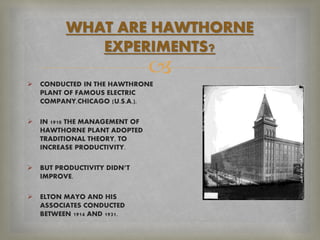
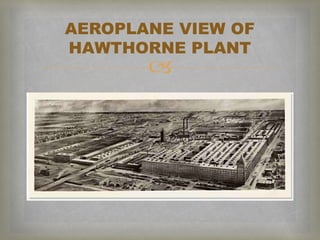
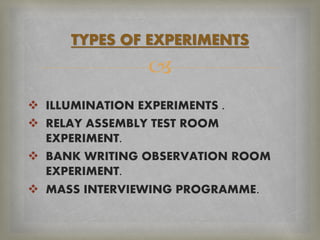

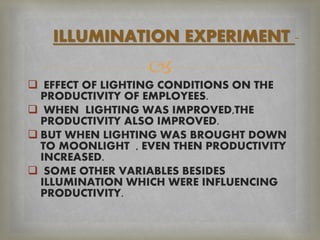
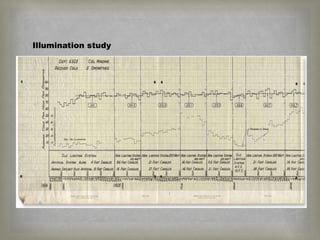
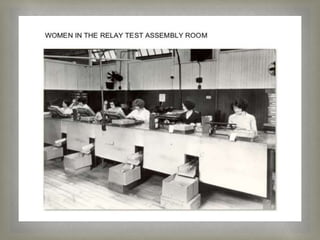

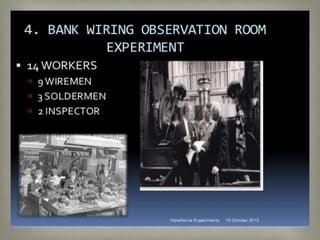
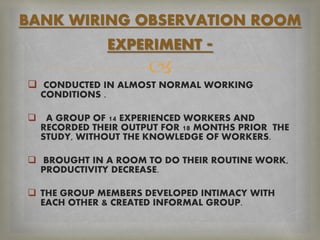

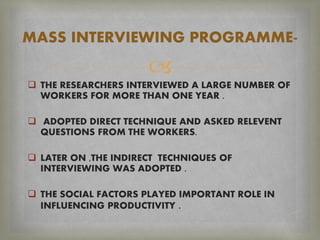

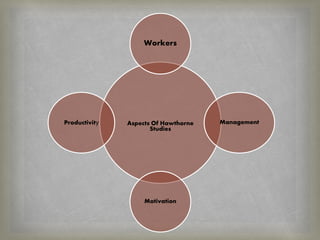



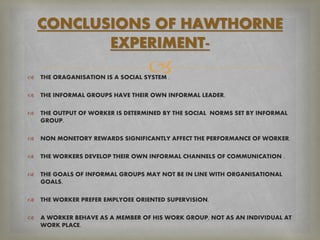



The Hawthorne experiments, conducted from 1914 to 1931 at the Hawthorne plant in Chicago by Elton Mayo and associates, focused on the impact of social factors and working conditions on employee productivity. Key findings revealed that factors such as lighting, working conditions, and informal group dynamics significantly influenced worker output, leading to important insights for modern industrial psychology. The studies concluded that organizations function as social systems where informal groups and non-monetary incentives play crucial roles in enhancing productivity.


