HAWTHRONE EXPERIMENTS Research & Presenting by: Amrita Banerjee, Anupriya Baranwal, Sneha Poddar, Rubina Khatoon,  Digvijay N. Singh,  Amit Keshri & Amit Saboo
About Western Electric Company Engaged in manufacturing equipment for the telephone industry. High standards, concern for welfare of employees regarding wages and hours. No worker strike in over 20 years. High employee morale.
The Essence of Human Relation Organizational situation. Social process.
Finally… The term was coined in 1955 by Elton Mayo, Whitehead & Roethlisberger. Research began with a study conducted by Hawthorne at Western Electric Company. Conducted Research in Four Phases: - Illumination Experiments - Relay Assembly Test Room Experiments - Mass Interviewing Experiments - Bank Wiring Observation Room Experiments
Experiment # 1  -  Illumination Experiments (1924 – 1927) Varied levels of illumination. - higher illumination – increase productivity First experiment - Two separate groups - one group – varied intensities of illumination - second group – constant intensities of illumination
Experiment & Result Increased illumination – both group – production increased. Intensity of illumination – decreased – production still increase. Production decrease – when intensity of illumination gets to the level of moonlight.
Final Conclusion Illumination – No effect on productivity. Human factor is responsible New Experiments started.
Experiment # 2 – Relay Assembly Test Room Experiments (1927 – 1928) Sets a relay assembly test room. Two girls. Four more girls – coworkers. Work – assembly of telephone relays. Output depend – speed & continuity One observer
Changes & Outcomes Each girl’s extra pay was based on the other five. Two 5min. rest later made it to 10min. Frequent break decrease the rhythm of work. In the Morning break coffee or soup served along with sandwich
Contd... In the evening break snack was provided. Change in working hours i.e. instead 5.00 p.m. changed to 4.30 p.m. later 4.00 p.m. Each change introduced - Absenteeism Decreased - Morale Increased - Less Supervision Revert back all changes – production increased
Final Result Change in Girl’s attitude – work & work group. Stability. Sense of belongingness. More freedom of work – responsibility & self discipline.
Experiment # 3 – Mass Interviewing Experiments (1928 – 1930) 20,000 interviews conducted during 1928-30. Direct questioning Disadvantage – not get to the root of the problem Now non-directive interviewing.
Major Finding Complaint is not necessarily an objective recital of facts. Objects, persons, and events are carriers of social meanings. Personal situation of the worker is a configuration of emotional balancing.
Contd… Status of the worker in the company – work allotted to him. Satisfaction or Dissatisfaction - Social status and social rewards. Social Demand – Social experiences
Conclusion Not satisfactory. Workers behavior influenced by group behavior. Study started on shop situation.
Experiment # 4 – Bank Wiring Observation Room Experiments (1931 – 1932) Analyze the functioning of small group & impact on individual behavior. 14 male workers employed - 9 wireman - 3 soldermen - 2 inspectors Work - to attach wire to switches.
Contd… Hourly wage rate – average output of each worker. Bonus – average group output. To earn more – produce more. To earn bonus – help each other Workers decided target for themselves – lower than companies.
Reason for restricted output Fear for unemployment. Fear of raising the standard. Protection of slower workers. Satisfaction on the part of management.
Result Workers sets certain norms. Informal relationship – important factor. Workers counseled – good human relations in regards to – - personal adjustment - Supervision - employee relations - management – employee relations.
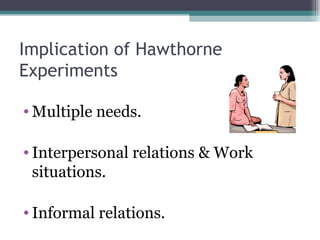
Implication of Hawthorne Experiments Multiple needs. Interpersonal relations & Work situations. Informal relations.
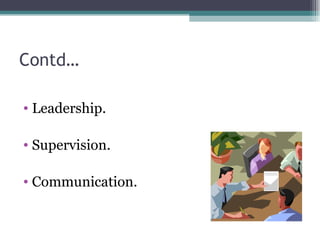
Contd… Leadership. Supervision. Communication.
Criticism of Hawthorne Experiments Productivity is Ignored. Incomplete Package.
Contd… Missing link between humanization & Productivity. Keeping Employee happy is not enough.
 

Hawthrone Experiments

  • 1.
    HAWTHRONE EXPERIMENTS Research& Presenting by: Amrita Banerjee, Anupriya Baranwal, Sneha Poddar, Rubina Khatoon, Digvijay N. Singh, Amit Keshri & Amit Saboo
  • 2.
    About Western ElectricCompany Engaged in manufacturing equipment for the telephone industry. High standards, concern for welfare of employees regarding wages and hours. No worker strike in over 20 years. High employee morale.
  • 3.
    The Essence ofHuman Relation Organizational situation. Social process.
  • 4.
    Finally… The termwas coined in 1955 by Elton Mayo, Whitehead & Roethlisberger. Research began with a study conducted by Hawthorne at Western Electric Company. Conducted Research in Four Phases: - Illumination Experiments - Relay Assembly Test Room Experiments - Mass Interviewing Experiments - Bank Wiring Observation Room Experiments
  • 5.
    Experiment # 1 - Illumination Experiments (1924 – 1927) Varied levels of illumination. - higher illumination – increase productivity First experiment - Two separate groups - one group – varied intensities of illumination - second group – constant intensities of illumination
  • 6.
    Experiment & ResultIncreased illumination – both group – production increased. Intensity of illumination – decreased – production still increase. Production decrease – when intensity of illumination gets to the level of moonlight.
  • 7.
    Final Conclusion Illumination– No effect on productivity. Human factor is responsible New Experiments started.
  • 8.
    Experiment # 2– Relay Assembly Test Room Experiments (1927 – 1928) Sets a relay assembly test room. Two girls. Four more girls – coworkers. Work – assembly of telephone relays. Output depend – speed & continuity One observer
  • 9.
    Changes & OutcomesEach girl’s extra pay was based on the other five. Two 5min. rest later made it to 10min. Frequent break decrease the rhythm of work. In the Morning break coffee or soup served along with sandwich
  • 10.
    Contd... In theevening break snack was provided. Change in working hours i.e. instead 5.00 p.m. changed to 4.30 p.m. later 4.00 p.m. Each change introduced - Absenteeism Decreased - Morale Increased - Less Supervision Revert back all changes – production increased
  • 11.
    Final Result Changein Girl’s attitude – work & work group. Stability. Sense of belongingness. More freedom of work – responsibility & self discipline.
  • 12.
    Experiment # 3– Mass Interviewing Experiments (1928 – 1930) 20,000 interviews conducted during 1928-30. Direct questioning Disadvantage – not get to the root of the problem Now non-directive interviewing.
  • 13.
    Major Finding Complaintis not necessarily an objective recital of facts. Objects, persons, and events are carriers of social meanings. Personal situation of the worker is a configuration of emotional balancing.
  • 14.
    Contd… Status ofthe worker in the company – work allotted to him. Satisfaction or Dissatisfaction - Social status and social rewards. Social Demand – Social experiences
  • 15.
    Conclusion Not satisfactory.Workers behavior influenced by group behavior. Study started on shop situation.
  • 16.
    Experiment # 4– Bank Wiring Observation Room Experiments (1931 – 1932) Analyze the functioning of small group & impact on individual behavior. 14 male workers employed - 9 wireman - 3 soldermen - 2 inspectors Work - to attach wire to switches.
  • 17.
    Contd… Hourly wagerate – average output of each worker. Bonus – average group output. To earn more – produce more. To earn bonus – help each other Workers decided target for themselves – lower than companies.
  • 18.
    Reason for restrictedoutput Fear for unemployment. Fear of raising the standard. Protection of slower workers. Satisfaction on the part of management.
  • 19.
    Result Workers setscertain norms. Informal relationship – important factor. Workers counseled – good human relations in regards to – - personal adjustment - Supervision - employee relations - management – employee relations.
  • 20.
    Implication of HawthorneExperiments Multiple needs. Interpersonal relations & Work situations. Informal relations.
  • 21.
  • 22.
    Criticism of HawthorneExperiments Productivity is Ignored. Incomplete Package.
  • 23.
    Contd… Missing linkbetween humanization & Productivity. Keeping Employee happy is not enough.
  • 24.