ProfessorVidhya Srinivas
 Management
 Organize
 Individuals
 Groups
 Organization
 Behaviour
 Is the study and application of knowledge
about how people – as individuals and groups
act within the organizations.
 Levels in the organization
▪ Individuals
▪ Interpersonal – dyad
▪ Small Groups
▪ Intergroup
▪ Whole System
 Describe
 Understand
 Predict
 Control
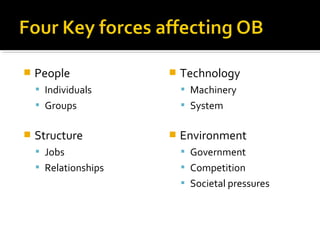
 People
 Individuals
 Groups
 Structure
 Jobs
 Relationships
 Technology
 Machinery
 System
 Environment
 Government
 Competition
 Societal pressures
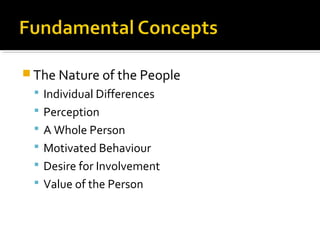
 The Nature of the People
 Individual Differences
 Perception
 A Whole Person
 Motivated Behaviour
 Desire for Involvement
 Value of the Person
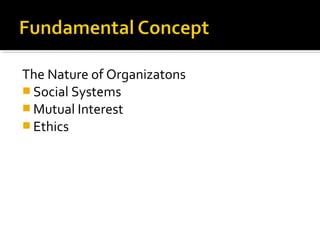
The Nature of Organizatons
 Social Systems
 Mutual Interest
 Ethics
Do Organizations make Individuals or Individuals Make Organizations???
 Founder of Infosys
 Middle class family of 8 children
 He was the fifth child
 Siddalghatta in Karnataka
 School Topper and cleared IIT entrance but
could not study because of high fees
 So studied from a local engineering college
in Maysore as a top ranking graduate in
electrical engineering
 Availed a scholarship to study M-tech from
IIT Kanpur
 Ist Job at IIM as chief systems programmer
 His Paris Stint
 His Pune Stint
 His Bangalore Stint
 Birth of Infosys
 Personal Factors: Age, Sex, Education, Abilities (IQ),
Marital Status, Dependents, Creativity, EQ
 Psychological: Personality, Perceptions, Attitudes,
Values and Learning
 Environmental: Economic, Social norms and cultural
values, Ethics and Social Responsibility, Political
 Organizational Systems and resources: physical
facilities, Organization structure and design,
Leadership, Reward System, Work related Behaviour
 Impact of age: performance, turnover,
absenteeism, productivity and satisfaction
 Impact of gender/sex: leadership, analytical,
problem solving ability, turnover,
absenteeism
 Education: generalist vs specialist
 Abilities: deals with IQ based on number
reasoning, verbal comprehension, perceptual
speed, inductive reasoning, deductive
reasoning, spatial visualization, memory
 Physical abilities:
 Strength factors: dynamic, trunk, static, explosive
 Flexibility factors: extent, dynamic
 Other factors: body coordination, balance, stamina
 Marital Status: absenteeism, turnover,
satisfaction
 Creativity: background experience, personal
traits, cognitive abilities
 Emotions: anger, joy, love, fear, hatred, sadness,
surprise. They are universal
 Moods and Impact on performance
 Emotional Intelligence:
 Emotional attainment or self awareness and
people skills
 Emotional management
 Using emotions
 Self-Motivation
 Economic factors: employment
opportunities, wages, economic cycles,
technological change
 Cultural factors: ethics, achievement need,
effect and reward
 Ethics and social responsibility: satyam vs
TATA
 Political: political ideology viz a viz
organizations ideology
 Facilities
 Organization structure and design
 Leadership
 Reward system
 Work related behaviour
 Joining the organization
 Remaining with the organization
 Maintaining work attendance
 Performing required task
 Exhibiting organizational citizenship
 Form 5 teams of 5 students each. Each team
shall select one job out of the given five
below make a list of duties and
responsibilities of each together with the
physical and mental exertions involved. Take
15 mins to complete this . Make a batch wise
presentation to the class. Summarize the
exercise
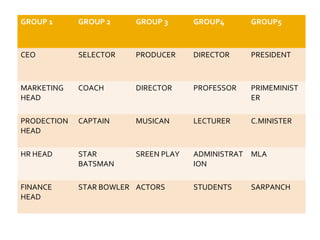
GROUP 1 GROUP 2 GROUP 3 GROUP4 GROUP5
CEO SELECTOR PRODUCER DIRECTOR PRESIDENT
MARKETING
HEAD
COACH DIRECTOR PROFESSOR PRIMEMINIST
ER
PRODECTION
HEAD
CAPTAIN MUSICAN LECTURER C.MINISTER
HR HEAD STAR
BATSMAN
SREEN PLAY ADMINISTRAT
ION
MLA
FINANCE
HEAD
STAR BOWLER ACTORS STUDENTS SARPANCH
Foundations of organizational behaviour

Foundations of organizational behaviour

  • 1.
  • 2.
     Management  Organize Individuals  Groups  Organization  Behaviour
  • 3.
     Is thestudy and application of knowledge about how people – as individuals and groups act within the organizations.  Levels in the organization ▪ Individuals ▪ Interpersonal – dyad ▪ Small Groups ▪ Intergroup ▪ Whole System
  • 4.
  • 5.
     People  Individuals Groups  Structure  Jobs  Relationships  Technology  Machinery  System  Environment  Government  Competition  Societal pressures
  • 6.
     The Natureof the People  Individual Differences  Perception  A Whole Person  Motivated Behaviour  Desire for Involvement  Value of the Person
  • 7.
    The Nature ofOrganizatons  Social Systems  Mutual Interest  Ethics
  • 8.
    Do Organizations makeIndividuals or Individuals Make Organizations???
  • 9.
     Founder ofInfosys  Middle class family of 8 children  He was the fifth child  Siddalghatta in Karnataka  School Topper and cleared IIT entrance but could not study because of high fees  So studied from a local engineering college in Maysore as a top ranking graduate in electrical engineering
  • 10.
     Availed ascholarship to study M-tech from IIT Kanpur  Ist Job at IIM as chief systems programmer  His Paris Stint  His Pune Stint  His Bangalore Stint  Birth of Infosys
  • 11.
     Personal Factors:Age, Sex, Education, Abilities (IQ), Marital Status, Dependents, Creativity, EQ  Psychological: Personality, Perceptions, Attitudes, Values and Learning  Environmental: Economic, Social norms and cultural values, Ethics and Social Responsibility, Political  Organizational Systems and resources: physical facilities, Organization structure and design, Leadership, Reward System, Work related Behaviour
  • 12.
     Impact ofage: performance, turnover, absenteeism, productivity and satisfaction  Impact of gender/sex: leadership, analytical, problem solving ability, turnover, absenteeism  Education: generalist vs specialist  Abilities: deals with IQ based on number reasoning, verbal comprehension, perceptual speed, inductive reasoning, deductive reasoning, spatial visualization, memory
  • 13.
     Physical abilities: Strength factors: dynamic, trunk, static, explosive  Flexibility factors: extent, dynamic  Other factors: body coordination, balance, stamina  Marital Status: absenteeism, turnover, satisfaction  Creativity: background experience, personal traits, cognitive abilities  Emotions: anger, joy, love, fear, hatred, sadness, surprise. They are universal
  • 14.
     Moods andImpact on performance  Emotional Intelligence:  Emotional attainment or self awareness and people skills  Emotional management  Using emotions  Self-Motivation
  • 15.
     Economic factors:employment opportunities, wages, economic cycles, technological change  Cultural factors: ethics, achievement need, effect and reward  Ethics and social responsibility: satyam vs TATA  Political: political ideology viz a viz organizations ideology
  • 16.
     Facilities  Organizationstructure and design  Leadership  Reward system  Work related behaviour  Joining the organization  Remaining with the organization  Maintaining work attendance  Performing required task  Exhibiting organizational citizenship
  • 17.
     Form 5teams of 5 students each. Each team shall select one job out of the given five below make a list of duties and responsibilities of each together with the physical and mental exertions involved. Take 15 mins to complete this . Make a batch wise presentation to the class. Summarize the exercise
  • 18.
    GROUP 1 GROUP2 GROUP 3 GROUP4 GROUP5 CEO SELECTOR PRODUCER DIRECTOR PRESIDENT MARKETING HEAD COACH DIRECTOR PROFESSOR PRIMEMINIST ER PRODECTION HEAD CAPTAIN MUSICAN LECTURER C.MINISTER HR HEAD STAR BATSMAN SREEN PLAY ADMINISTRAT ION MLA FINANCE HEAD STAR BOWLER ACTORS STUDENTS SARPANCH