BEHAVIOURAL APPROACH TO MANAGEMENT
CNETRAL UNIVERSITY OF HARYANA
PRINICIPLE OF MANAGEMENT
Pranav Kishor Choudhary
Amit Kumar
Yogesh
Behavioral approach focused on employees
• As individuals
• As parts of work groups
• As persons with needs to be met by the organization
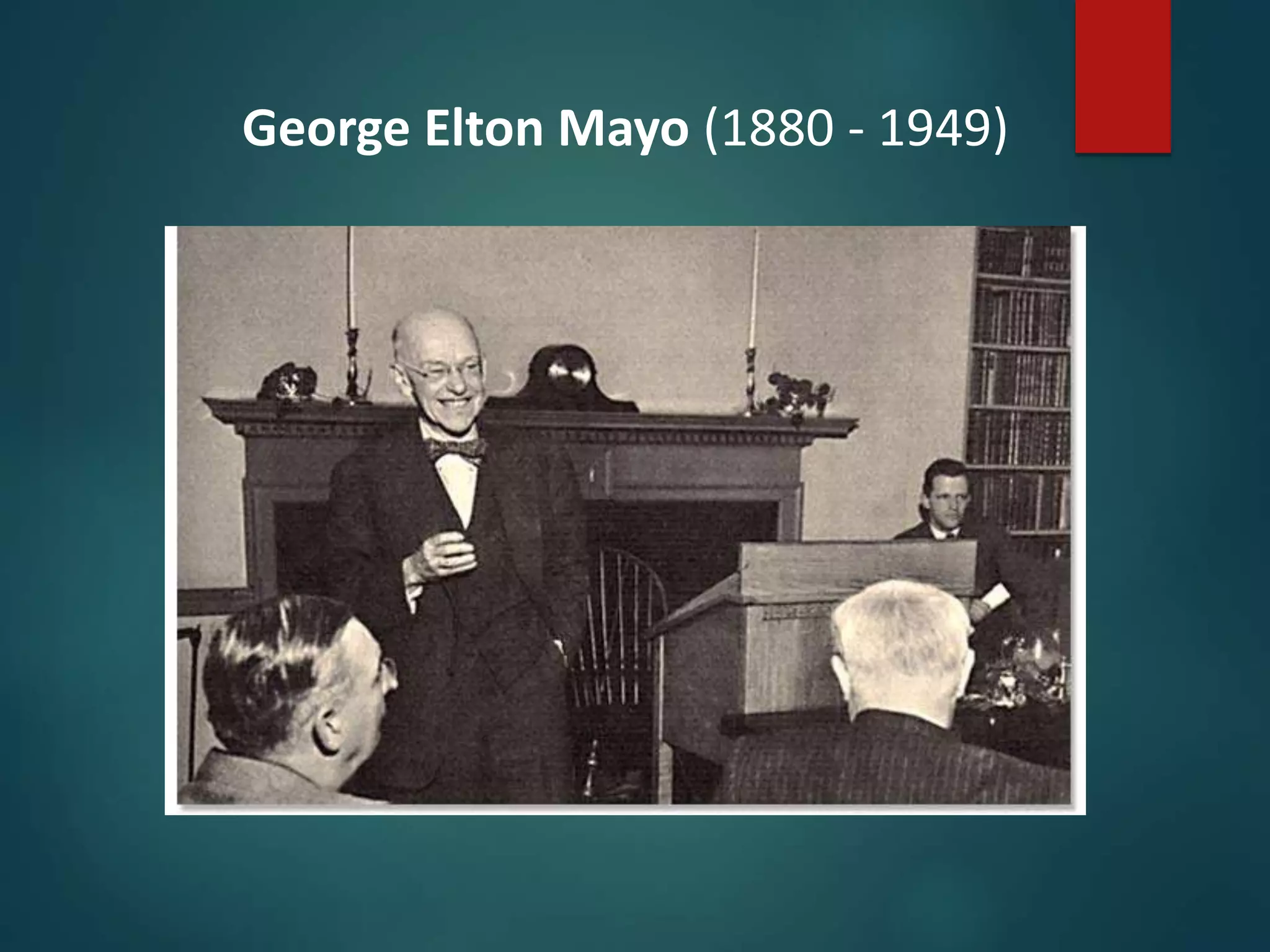
George Elton Mayo (1880 - 1949)
Discoveries of Mayo
• Human are social and they need this in the work place also.
• Mayo found that workers acted according to sentiments and emotion.
• He felt that if you treated the worker with respect and tried to meet their
needs than they would be a better worker for you and both management
and the employer would benefit.
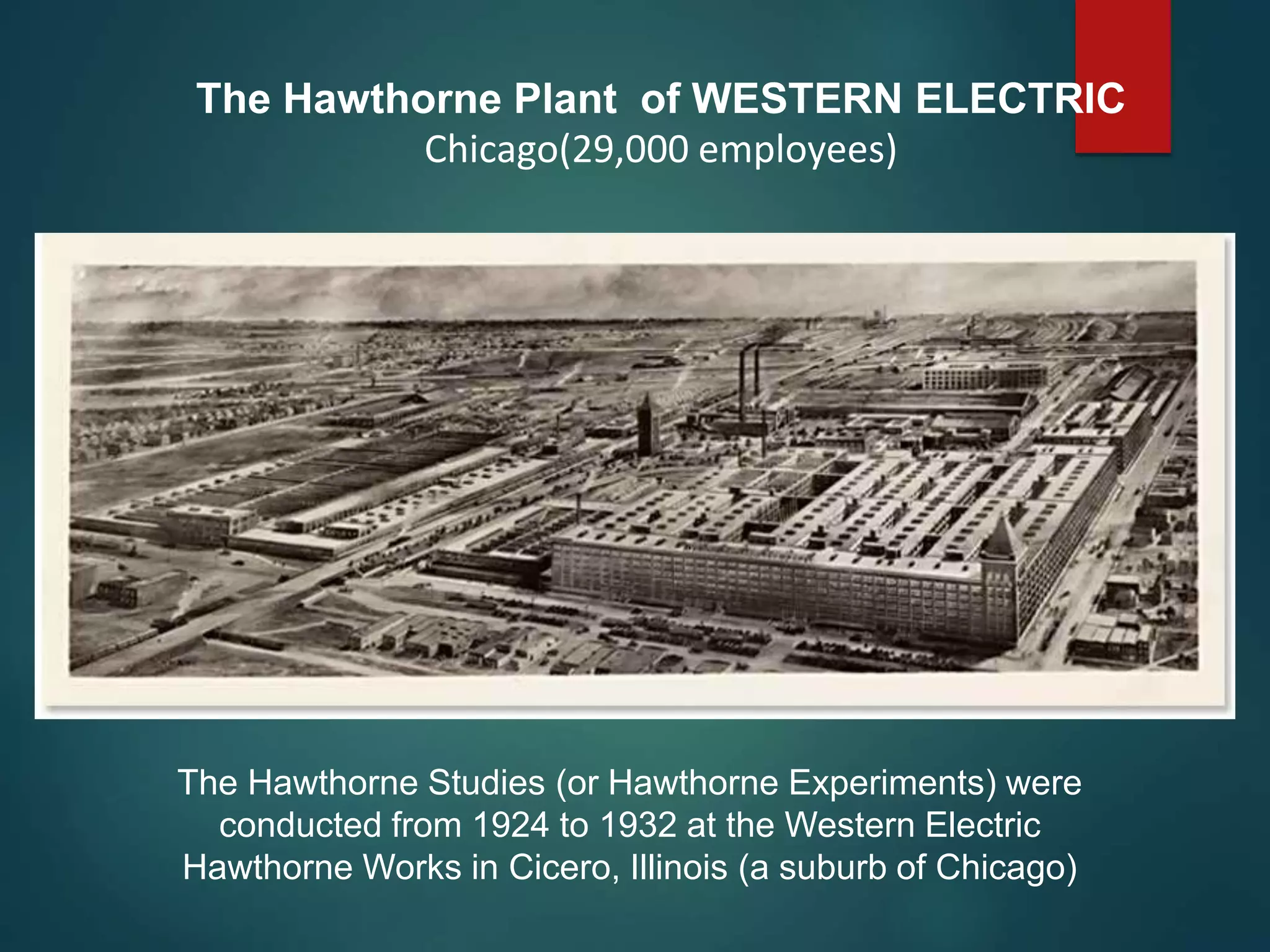
The Hawthorne Plant of WESTERN ELECTRIC
Chicago(29,000 employees)
The Hawthorne Studies (or Hawthorne Experiments) were
conducted from 1924 to 1932 at the Western Electric
Hawthorne Works in Cicero, Illinois (a suburb of Chicago)
The experiments
• There were four main phases to the Hawthorne
experiments:
• The illumination experiments (1924-27)
• The relay assembly test room (1927-28)
• The interviewing program (1928-30)
• The bank wiring observation room (1931-32)
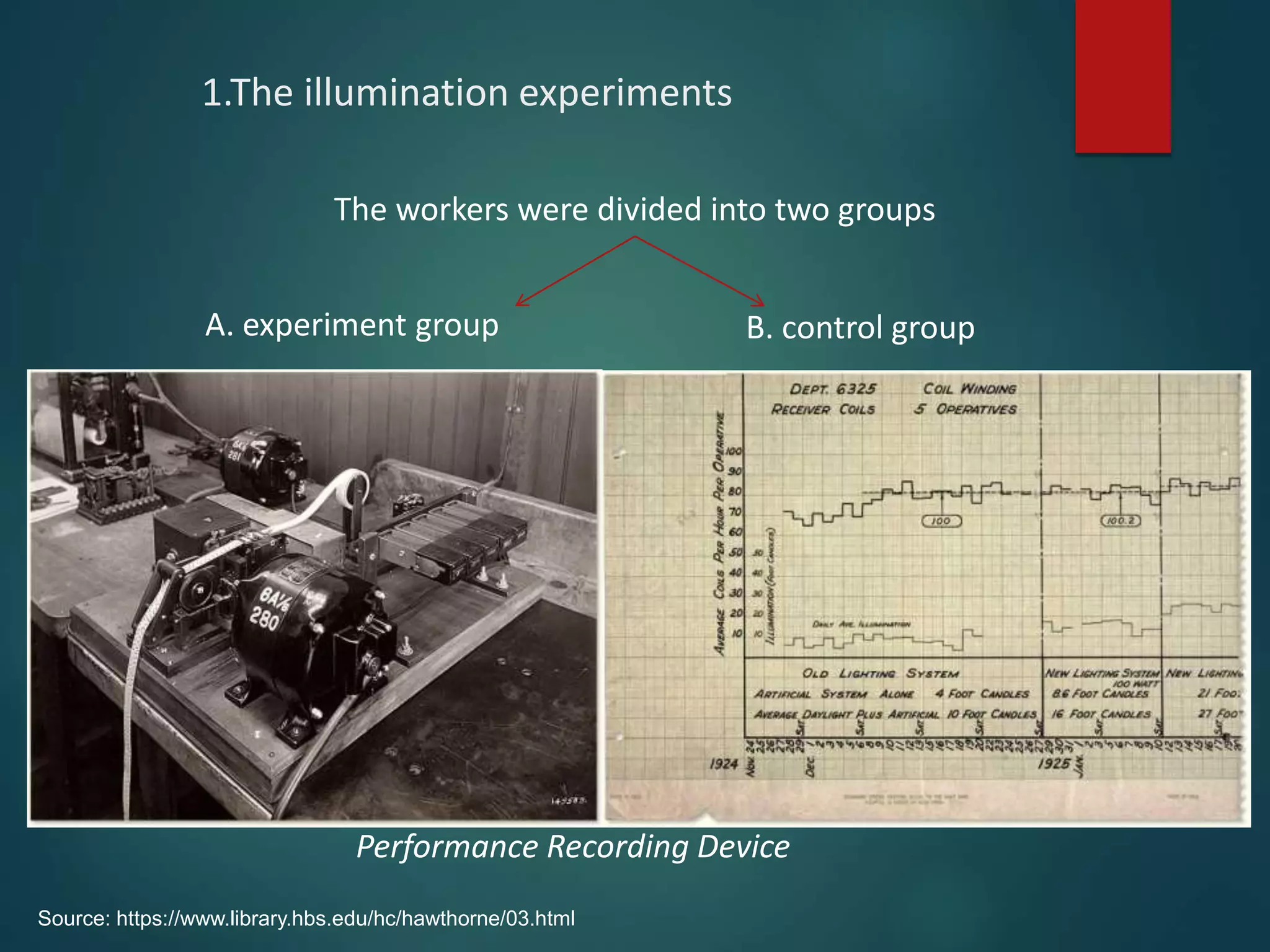
1.The illumination experiments
The workers were divided into two groups
A. experiment group B. control group
Source: https://www.library.hbs.edu/hc/hawthorne/03.html
Performance Recording Device
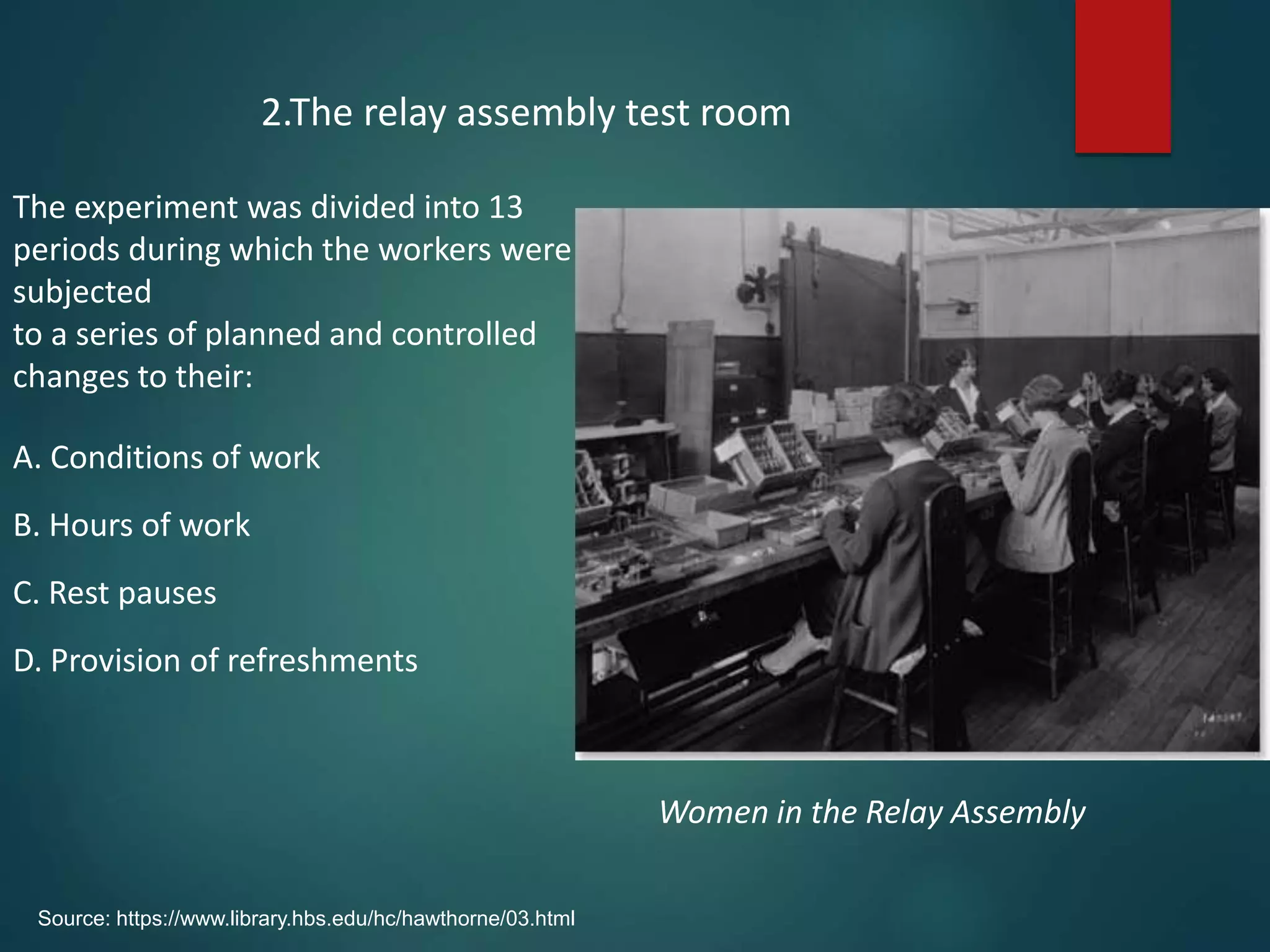
2.The relay assembly test room
Women in the Relay Assembly
A. Conditions of work
B. Hours of work
C. Rest pauses
D. Provision of refreshments
The experiment was divided into 13
periods during which the workers were
subjected
to a series of planned and controlled
changes to their:
Source: https://www.library.hbs.edu/hc/hawthorne/03.html
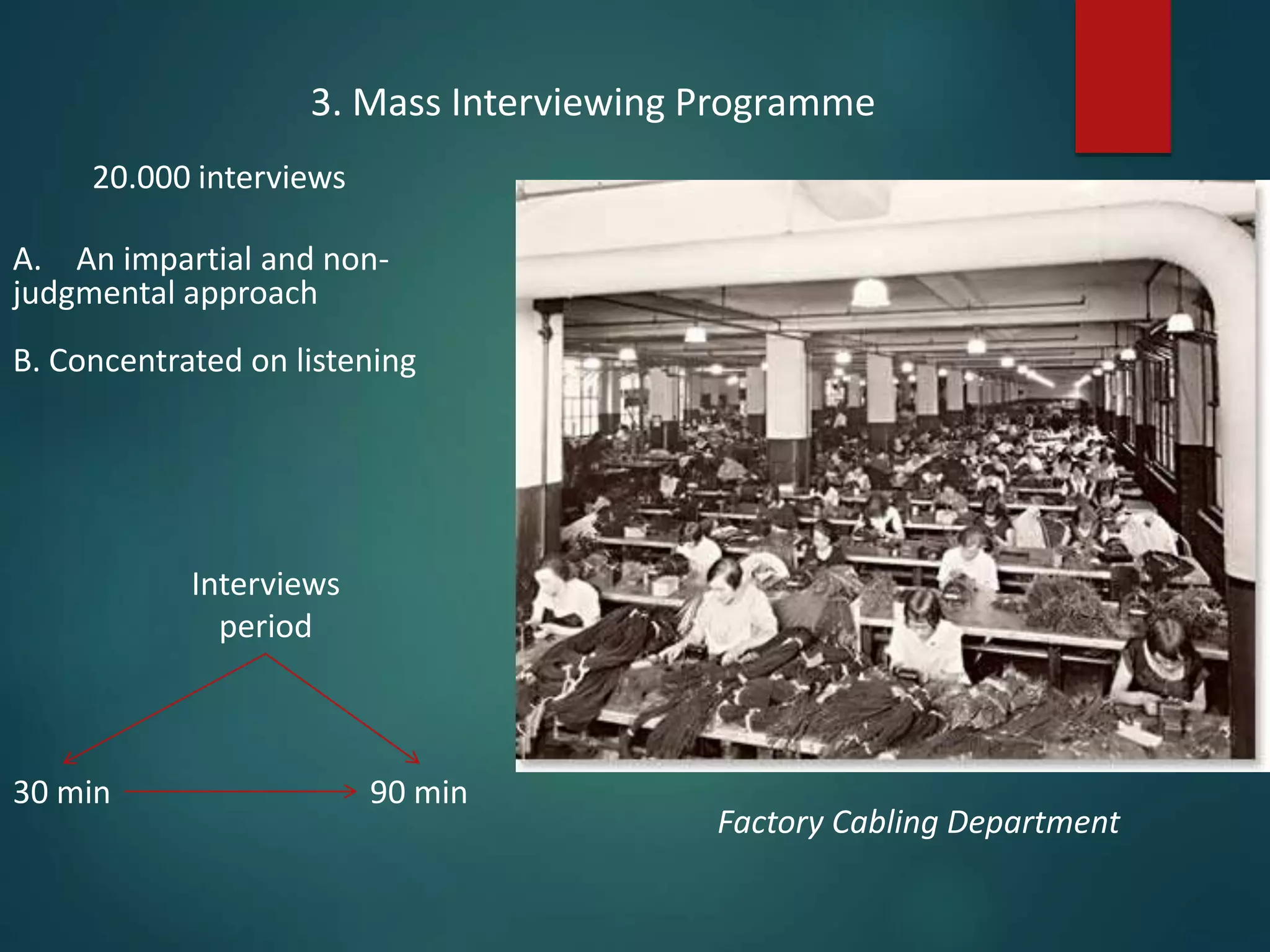
3. Mass Interviewing Programme
Factory Cabling Department
Interviews
period
30 min
20.000 interviews
90 min
A. An impartial and non-
judgmental approach
B. Concentrated on listening
4.The bank wiring observation room
14 men
The group developed it’s own pattern of informal social relations
and norms of what constituted proper behaviour
Group pressures on individual workers were stonger than financial
incentives offered by management
Workplaces are social environments and within them, people
are motivated by much more than financial self-interest
CONCLUSION
The mere act of showing people that you're concerned about them usually
motivates them to better job performance
When people spend a large portion of their time at work, they must have a sense
of belonging, of being part of a team. When they do, they produce better.
Carrying the theory to the edges of cynicism, some would say it
doesn't make any difference what you teach because the Hawthorne
Effect will produce the positive outcome you want.
In fact, the contention is that about 50% of any successful
training session can be attributed to the Hawthorne Effect.
The Hawthorne Effect has also been called the 'Somebody Upstairs
Cares' syndrome

BEHAVIOURAL APPROACH TO MANAGEMENT

  • 1.
    BEHAVIOURAL APPROACH TOMANAGEMENT CNETRAL UNIVERSITY OF HARYANA PRINICIPLE OF MANAGEMENT Pranav Kishor Choudhary Amit Kumar Yogesh
  • 2.
    Behavioral approach focusedon employees • As individuals • As parts of work groups • As persons with needs to be met by the organization
  • 3.
    George Elton Mayo(1880 - 1949)
  • 4.
    Discoveries of Mayo •Human are social and they need this in the work place also. • Mayo found that workers acted according to sentiments and emotion. • He felt that if you treated the worker with respect and tried to meet their needs than they would be a better worker for you and both management and the employer would benefit.
  • 5.
    The Hawthorne Plantof WESTERN ELECTRIC Chicago(29,000 employees) The Hawthorne Studies (or Hawthorne Experiments) were conducted from 1924 to 1932 at the Western Electric Hawthorne Works in Cicero, Illinois (a suburb of Chicago)
  • 6.
    The experiments • Therewere four main phases to the Hawthorne experiments: • The illumination experiments (1924-27) • The relay assembly test room (1927-28) • The interviewing program (1928-30) • The bank wiring observation room (1931-32)
  • 7.
    1.The illumination experiments Theworkers were divided into two groups A. experiment group B. control group Source: https://www.library.hbs.edu/hc/hawthorne/03.html Performance Recording Device
  • 8.
    2.The relay assemblytest room Women in the Relay Assembly A. Conditions of work B. Hours of work C. Rest pauses D. Provision of refreshments The experiment was divided into 13 periods during which the workers were subjected to a series of planned and controlled changes to their: Source: https://www.library.hbs.edu/hc/hawthorne/03.html
  • 9.
    3. Mass InterviewingProgramme Factory Cabling Department Interviews period 30 min 20.000 interviews 90 min A. An impartial and non- judgmental approach B. Concentrated on listening
  • 10.
    4.The bank wiringobservation room 14 men The group developed it’s own pattern of informal social relations and norms of what constituted proper behaviour Group pressures on individual workers were stonger than financial incentives offered by management
  • 11.
    Workplaces are socialenvironments and within them, people are motivated by much more than financial self-interest CONCLUSION The mere act of showing people that you're concerned about them usually motivates them to better job performance When people spend a large portion of their time at work, they must have a sense of belonging, of being part of a team. When they do, they produce better.
  • 12.
    Carrying the theoryto the edges of cynicism, some would say it doesn't make any difference what you teach because the Hawthorne Effect will produce the positive outcome you want. In fact, the contention is that about 50% of any successful training session can be attributed to the Hawthorne Effect. The Hawthorne Effect has also been called the 'Somebody Upstairs Cares' syndrome