HAPPINESS AT WORK
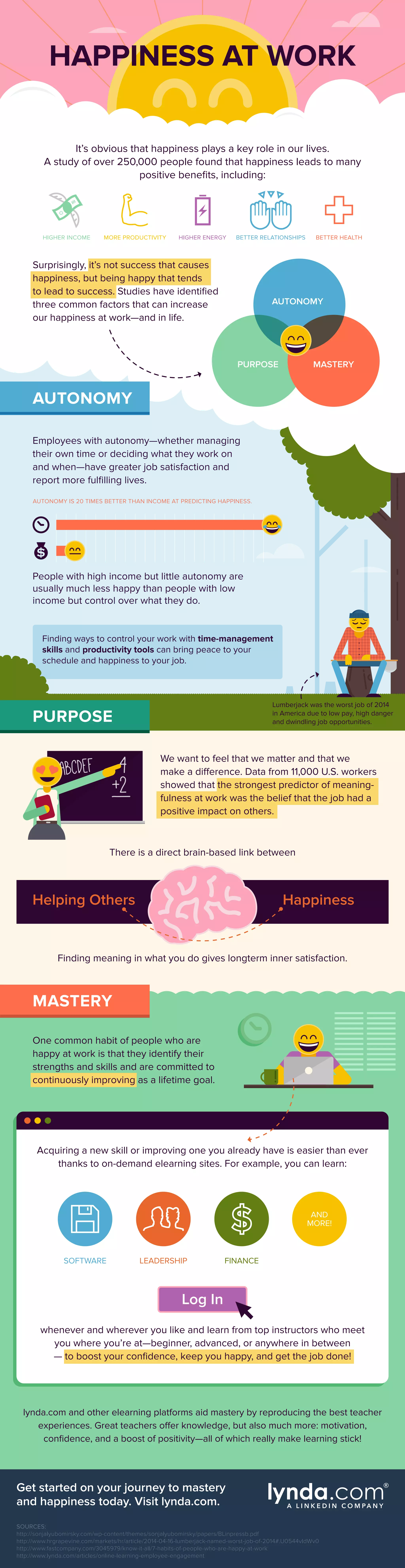
It’s obvious that happiness plays a key role in our lives.
A study of over 250,000 people found that happiness leads to many
positive benefits, including:
PURPOSE
abcdef 4
+2
Employees with autonomy—whether managing
their own time or deciding what they work on
and when—have greater job satisfaction and
report more fulfilling lives.
We want to feel that we matter and that we
make a difference. Data from 11,000 U.S. workers
showed that the strongest predictor of meaning-
fulness at work was the belief that the job had a
positive impact on others.
Acquiring a new skill or improving one you already have is easier than ever
thanks to on-demand elearning sites. For example, you can learn:
lynda.com and other elearning platforms aid mastery by reproducing the best teacher
experiences. Great teachers offer knowledge, but also much more: motivation,
confidence, and a boost of positivity—all of which really make learning stick!
LEADERSHIP FINANCESOFTWARE
Log In
Get started on your journey to mastery
and happiness today. Visit lynda.com.
HIGHER INCOME MORE PRODUCTIVITY BETTER RELATIONSHIPSHIGHER ENERGY BETTER HEALTH
Surprisingly, it’s not success that causes
happiness, but being happy that tends
to lead to success. Studies have identified
three common factors that can increase
our happiness at work—and in life.
AUTONOMY
MASTERY
AUTONOMY
There is a direct brain-based link between
Helping Others Happiness
Finding meaning in what you do gives longterm inner satisfaction.
AUTONOMY IS 20 TIMES BETTER THAN INCOME AT PREDICTING HAPPINESS.
One common habit of people who are
happy at work is that they identify their
strengths and skills and are committed to
continuously improving as a lifetime goal.
People with high income but little autonomy are
usually much less happy than people with low
income but control over what they do.
whenever and wherever you like and learn from top instructors who meet
you where you’re at—beginner, advanced, or anywhere in between
— to boost your confidence, keep you happy, and get the job done!
MASTERY
AND
MORE!
SOURCES:
http://sonjalyubomirsky.com/wp-content/themes/sonjalyubomirsky/papers/BLinpressb.pdf
http://www.hrgrapevine.com/markets/hr/article/2014-04-16-lumberjack-named-worst-job-of-2014#.U0544vldWv0
http://www.fastcompany.com/3045979/know-it-all/7-habits-of-people-who-are-happy-at-work
http://www.lynda.com/articles/online-learning-employee-engagement
Lumberjack was the worst job of 2014
in America due to low pay, high danger
and dwindling job opportunities.PURPOSE
Finding ways to control your work with time-management
skills and productivity tools can bring peace to your
schedule and happiness to your job.

Happiness at Work

  • 1.
    HAPPINESS AT WORK It’sobvious that happiness plays a key role in our lives. A study of over 250,000 people found that happiness leads to many positive benefits, including: PURPOSE abcdef 4 +2 Employees with autonomy—whether managing their own time or deciding what they work on and when—have greater job satisfaction and report more fulfilling lives. We want to feel that we matter and that we make a difference. Data from 11,000 U.S. workers showed that the strongest predictor of meaning- fulness at work was the belief that the job had a positive impact on others. Acquiring a new skill or improving one you already have is easier than ever thanks to on-demand elearning sites. For example, you can learn: lynda.com and other elearning platforms aid mastery by reproducing the best teacher experiences. Great teachers offer knowledge, but also much more: motivation, confidence, and a boost of positivity—all of which really make learning stick! LEADERSHIP FINANCESOFTWARE Log In Get started on your journey to mastery and happiness today. Visit lynda.com. HIGHER INCOME MORE PRODUCTIVITY BETTER RELATIONSHIPSHIGHER ENERGY BETTER HEALTH Surprisingly, it’s not success that causes happiness, but being happy that tends to lead to success. Studies have identified three common factors that can increase our happiness at work—and in life. AUTONOMY MASTERY AUTONOMY There is a direct brain-based link between Helping Others Happiness Finding meaning in what you do gives longterm inner satisfaction. AUTONOMY IS 20 TIMES BETTER THAN INCOME AT PREDICTING HAPPINESS. One common habit of people who are happy at work is that they identify their strengths and skills and are committed to continuously improving as a lifetime goal. People with high income but little autonomy are usually much less happy than people with low income but control over what they do. whenever and wherever you like and learn from top instructors who meet you where you’re at—beginner, advanced, or anywhere in between — to boost your confidence, keep you happy, and get the job done! MASTERY AND MORE! SOURCES: http://sonjalyubomirsky.com/wp-content/themes/sonjalyubomirsky/papers/BLinpressb.pdf http://www.hrgrapevine.com/markets/hr/article/2014-04-16-lumberjack-named-worst-job-of-2014#.U0544vldWv0 http://www.fastcompany.com/3045979/know-it-all/7-habits-of-people-who-are-happy-at-work http://www.lynda.com/articles/online-learning-employee-engagement Lumberjack was the worst job of 2014 in America due to low pay, high danger and dwindling job opportunities.PURPOSE Finding ways to control your work with time-management skills and productivity tools can bring peace to your schedule and happiness to your job.