November 5th, 2008 [email_address] Evidence Based Interventions
Introduction Onno Hamburger, happiness coach Psychologist, senior trainer and happiness coach at Van Harte & Lingsma Developer of Happiness@work trainingprograms, coaching & workshops Founding father of  www.geluk.startpagina.nl ,  &  the weblog about  happiness in the workplace  www.gelukkigwerken.nl
Introduction Hein Zegers, happiness researcher University of Leuven Belgium ENPP Representative Researcher on evidence based happiness interventions  www.evidencebasedhappiness.com ,  Researcher on employee well-being at   www.iswlimits.be Worldwide qualitative researcher on happiness
What is happiness@work?
Meaning Satisfaction Pleasure HAPPINESS @work
Why Happiness@Work?
Happy employees are: More productive More creative & innovative More flexible & open to change More involved & loyal Healthier (less on sick leave) More profitable
What makes people happy in their job?
Factors people say makes them happier at the workplace In rank order of importance: Friendly, supportive colleagues Enjoyable work Good boss or line manager Good balance Work/Life Varied work Belief that they’re doing something worthwile Research by Chiumento, January 2007
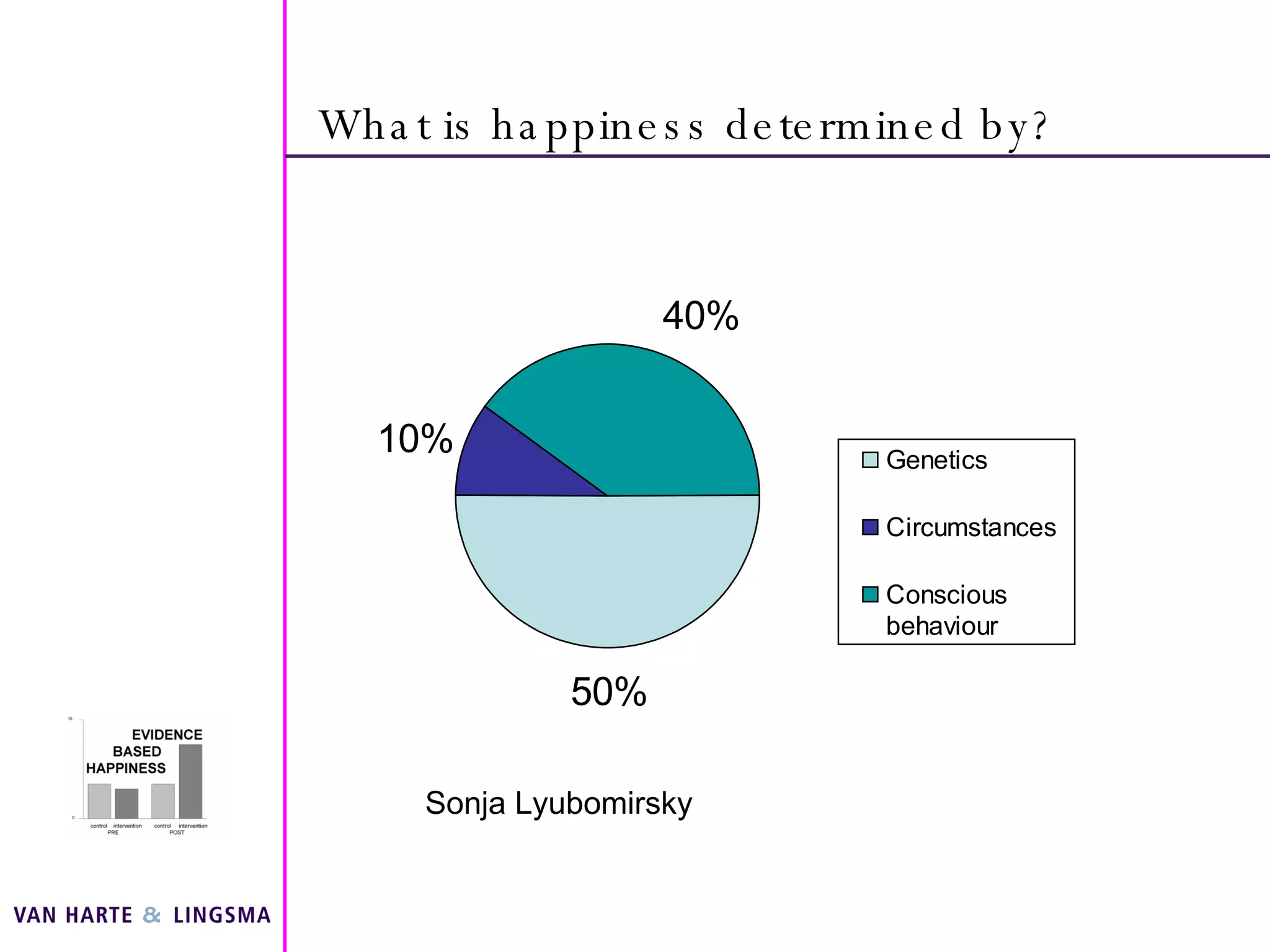
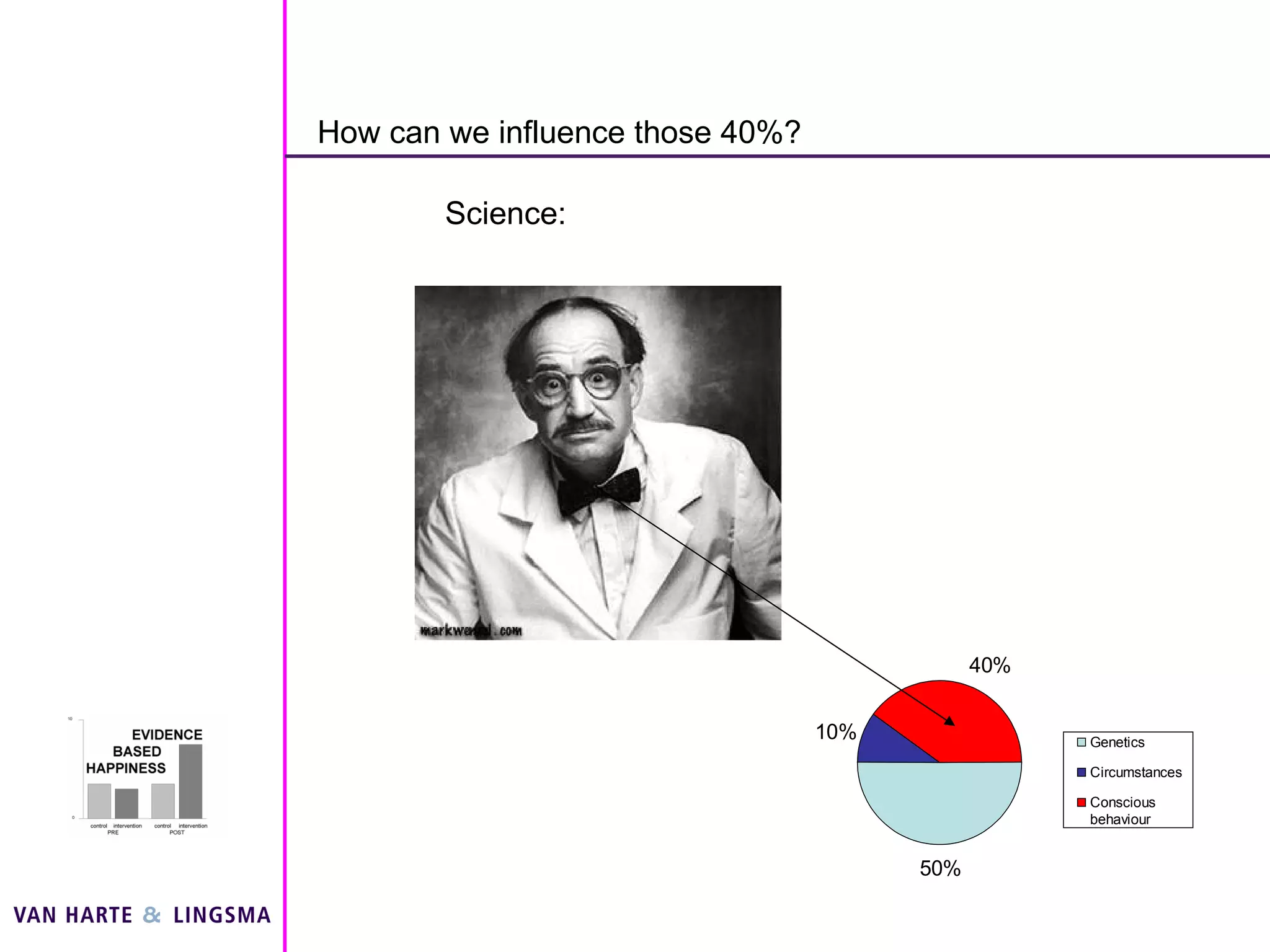
What is happiness determined by? Sonja Lyubomirsky
How can we influence those 40%? Science:
The science of Happiness@work Descriptive vs. Experimental research:
Experimental Happiness Research Happiness interventions:
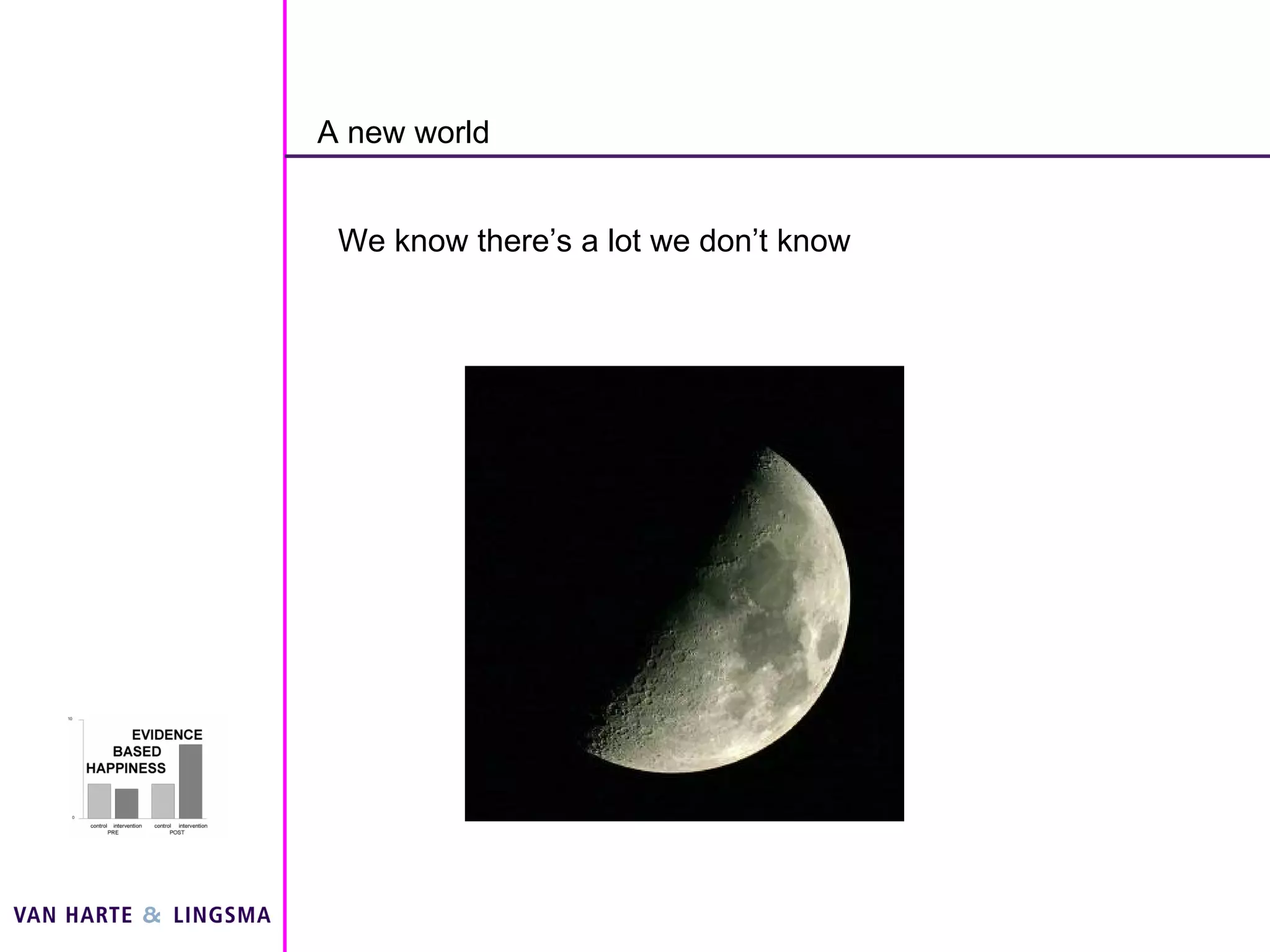
A new world We know there’s a lot we don’t know
What we do know: Evidence Based Interventions RET/ CBT/… Physical movement Strengthen optimism Gratitude Random Acts of kindness Forgiveness Developing & using strengths Flow/ goal setting Mission/ Vision/Visualisations Mindfulness Heart Math
What do we need? More …… & and more …
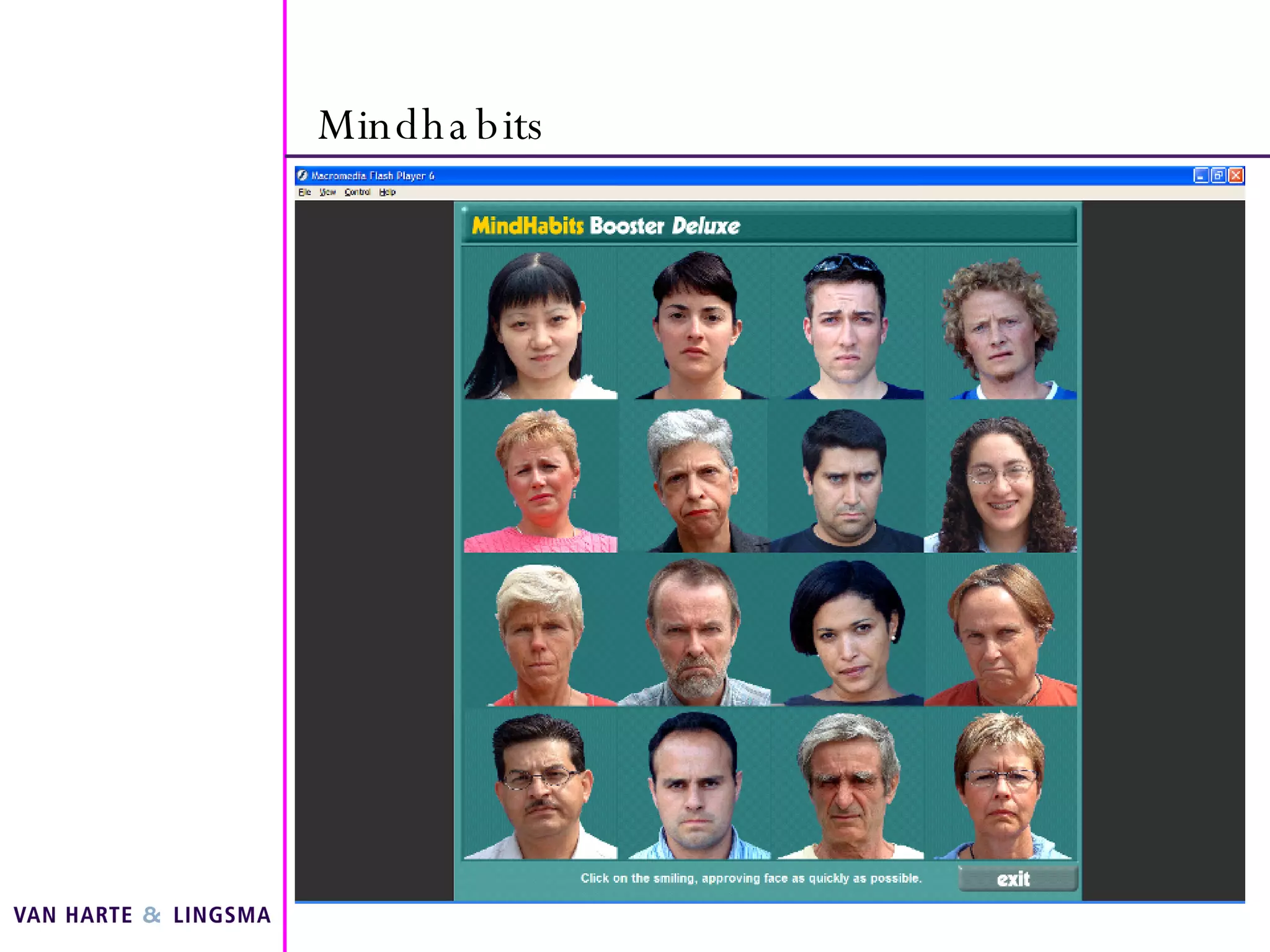
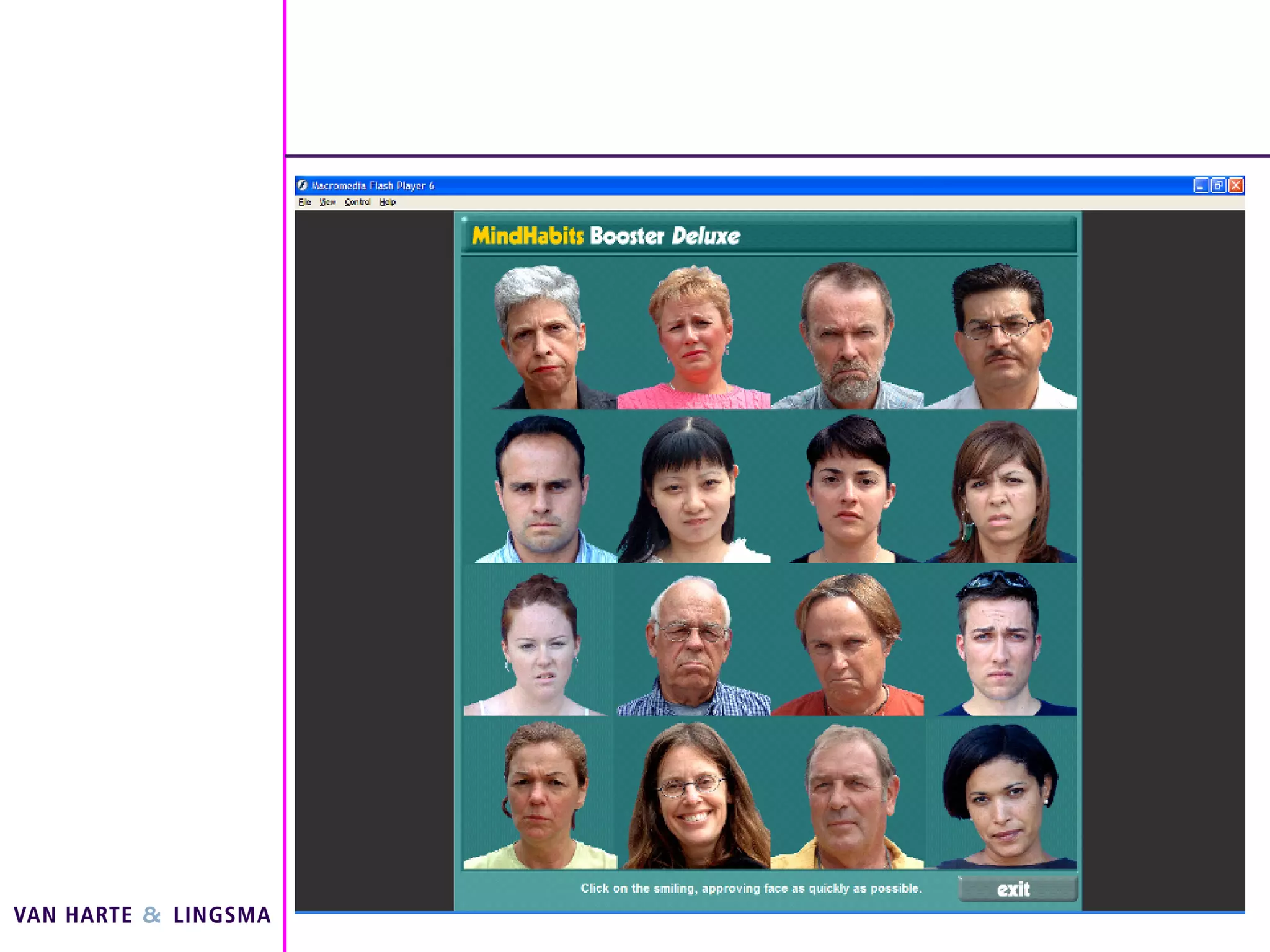
Mindhabits Filmpje Paul Potts
Filmpje Paul Potts
Filmpje Paul Potts
Filmpje Paul Potts
“ Reduce cortisol (stress hormone) levels by 17 percent in people who played the game five minutes a day.  ” October 2007, Journal of Personality and Social Psychology.
 
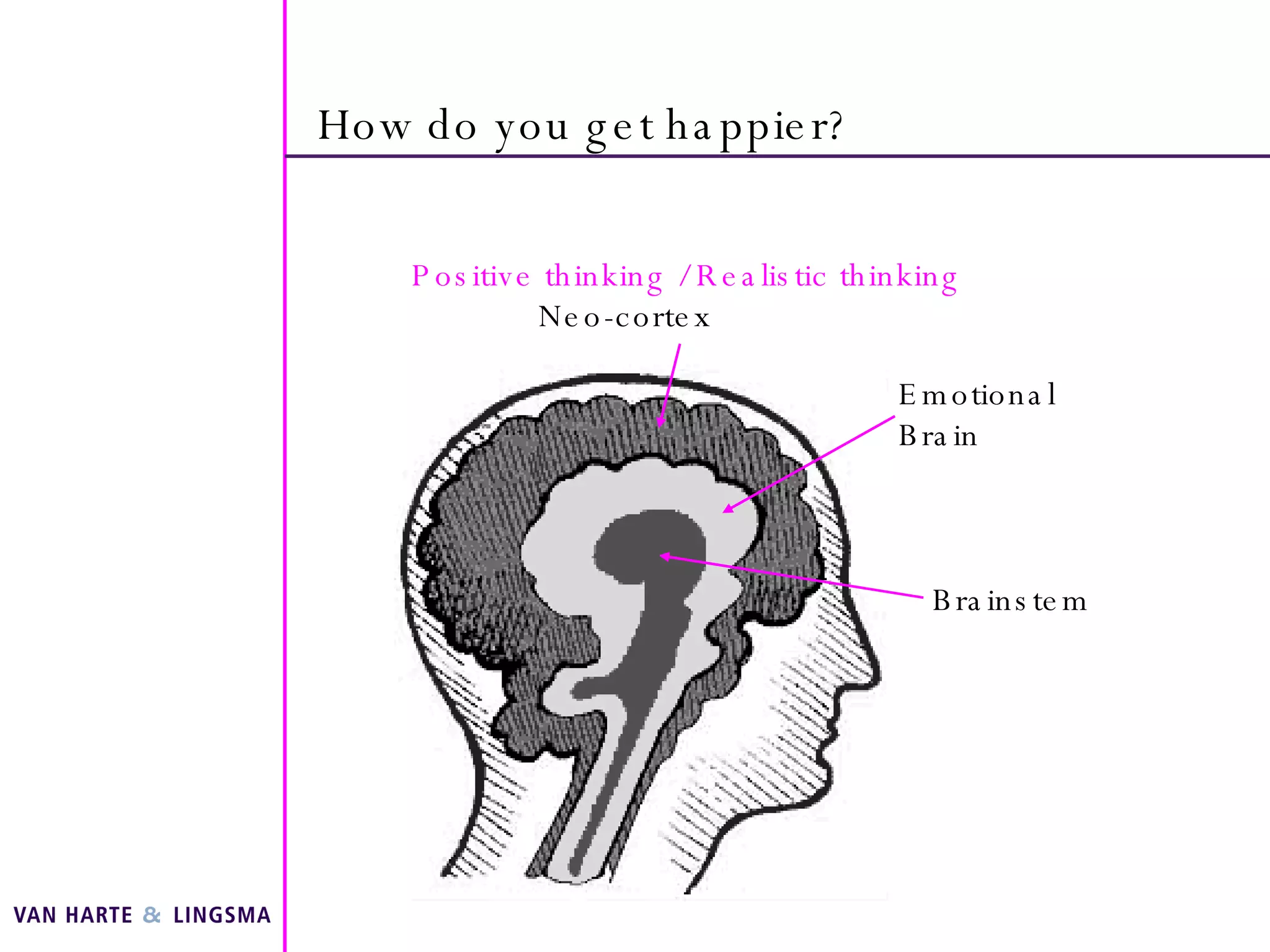
How do you get happier? Positive thinking / Realistic thinking Neo-cortex Emotional Brain Brainstem
Few neural pathways from the outer to the inner layers This makes cognitive psychological  interventions less effective Source:  Ledoux (2003).
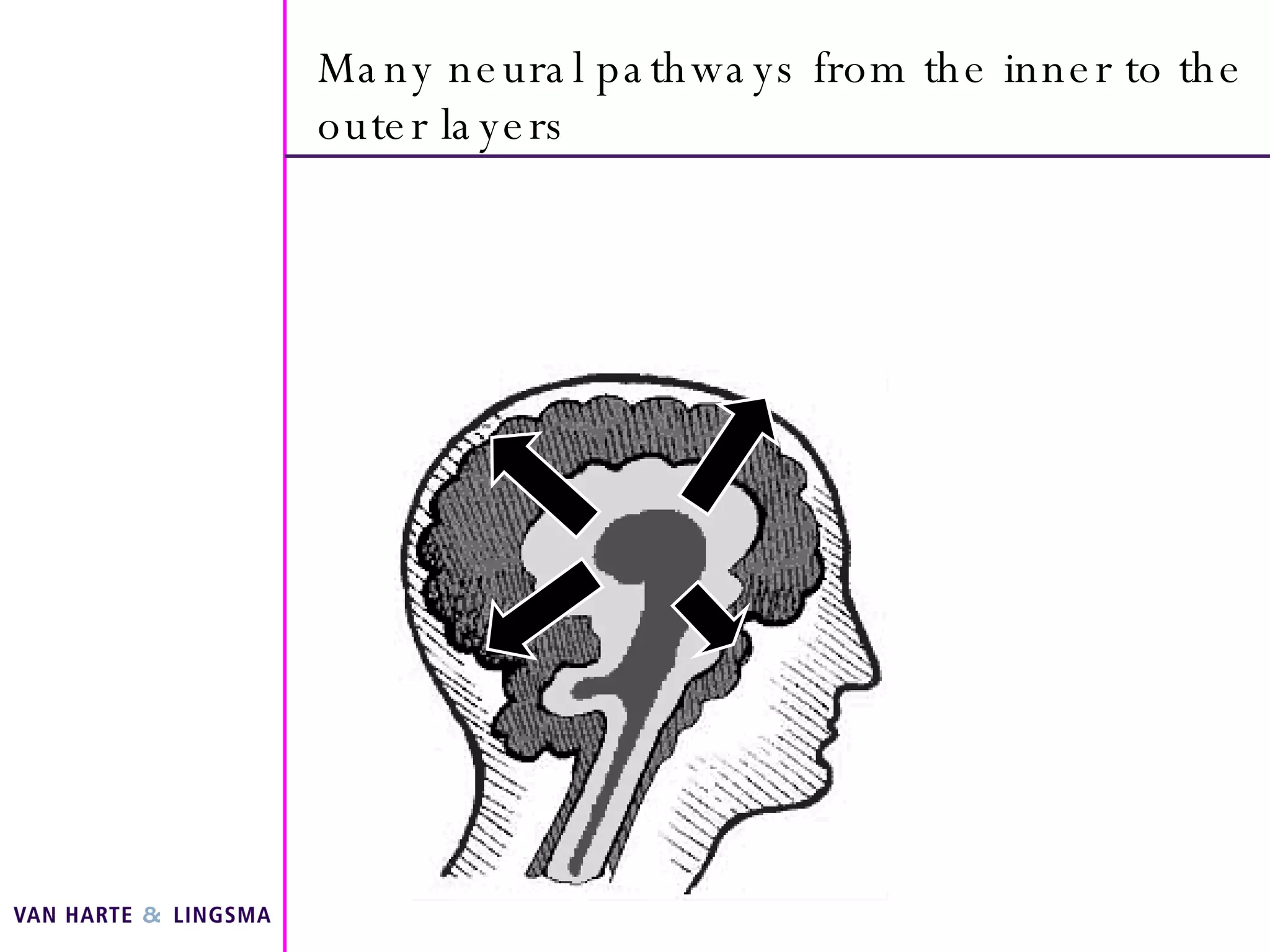
Many neural pathways from the inner to the outer layers
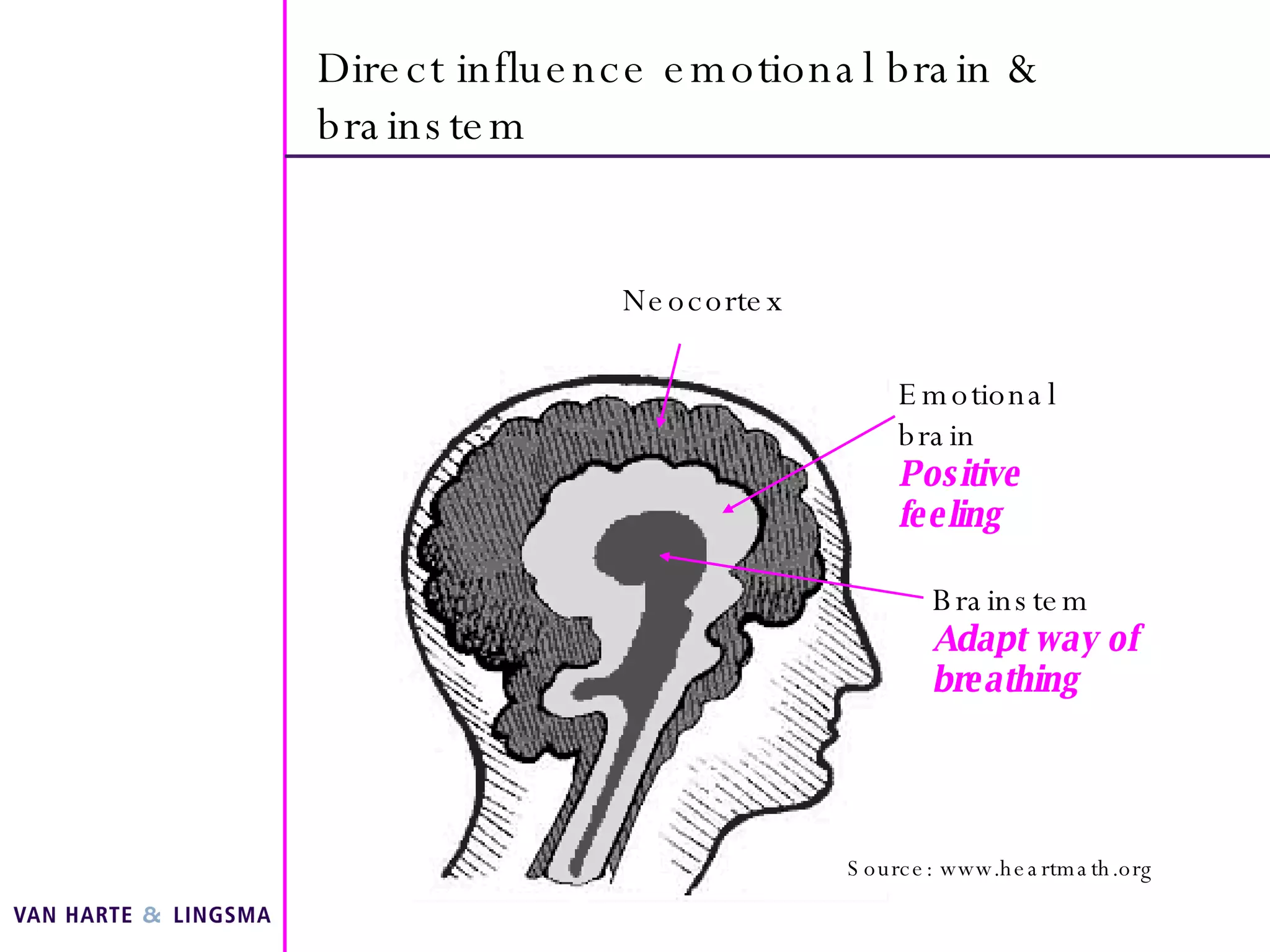
Direct influence emotional brain & brainstem Neocortex Emotional brain Positive feeling Brainstem Adapt way of breathing Source: www.heartmath.org
HeartMath
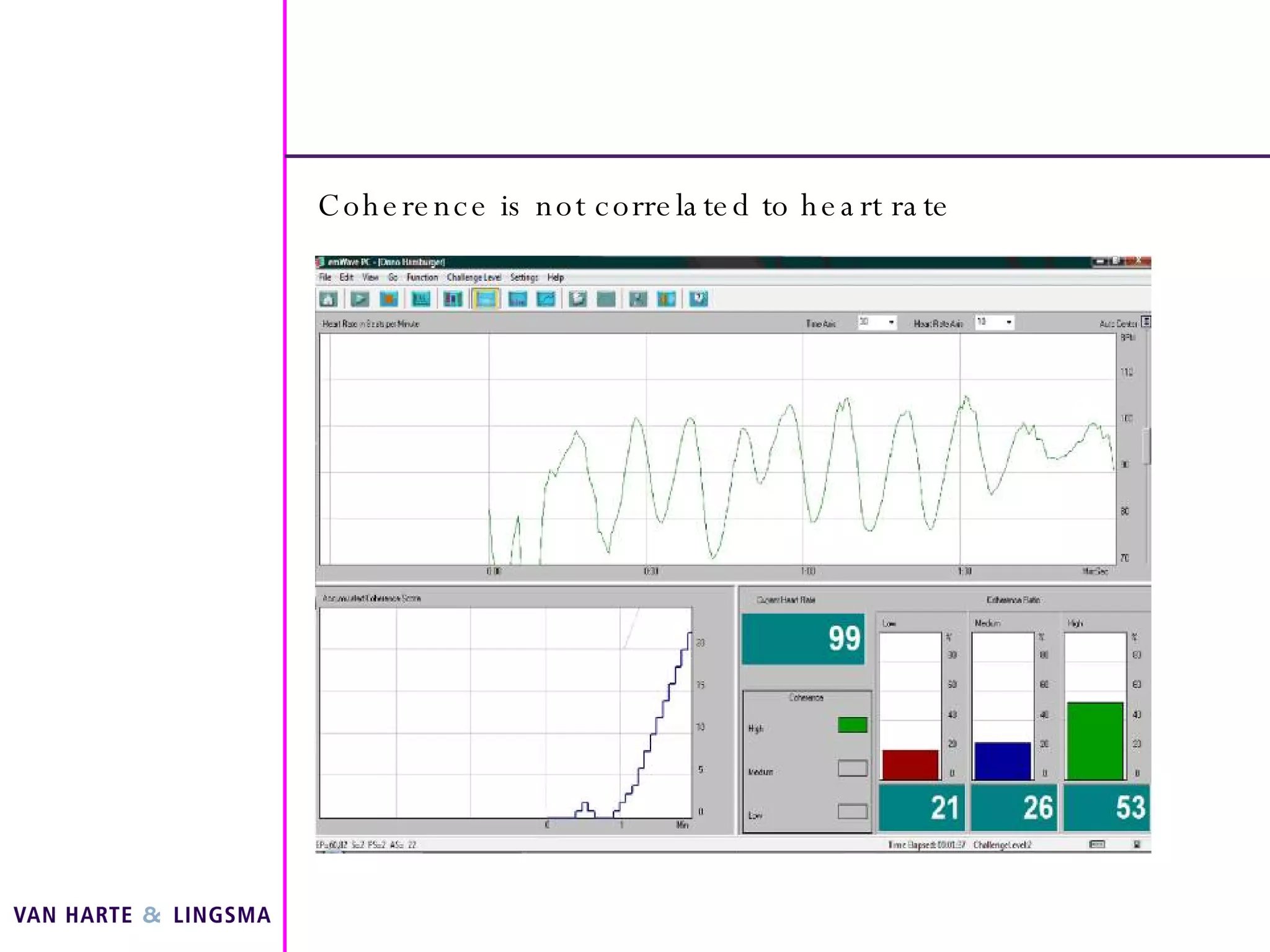
Coherence is not correlated to heart rate
Summary Happiness@work is important for both employees and organizations Happiness@work is common sense but not common practice Different happiness@work interventions are available (see also hand-out) More research and open mindedness is needed
Sources www.h-l.nl/happiness   www.gelukkigwerken.nl   www.thoughtsonhappiness.nl www.positivesharing.com www.greatplacetowork.com www.heartmathbenelux.com Randstad research into happiness@work:  onderzoek geluk What is cortisol?  Backgrounds   Cortisol Employee  Satisfaction  is not enough

Happiness at Work Versie 07

  • 1.
    November 5th, 2008[email_address] Evidence Based Interventions
  • 2.
    Introduction Onno Hamburger,happiness coach Psychologist, senior trainer and happiness coach at Van Harte & Lingsma Developer of Happiness@work trainingprograms, coaching & workshops Founding father of www.geluk.startpagina.nl , & the weblog about happiness in the workplace www.gelukkigwerken.nl
  • 3.
    Introduction Hein Zegers,happiness researcher University of Leuven Belgium ENPP Representative Researcher on evidence based happiness interventions www.evidencebasedhappiness.com , Researcher on employee well-being at www.iswlimits.be Worldwide qualitative researcher on happiness
  • 4.
  • 5.
  • 6.
  • 7.
    Happy employees are:More productive More creative & innovative More flexible & open to change More involved & loyal Healthier (less on sick leave) More profitable
  • 8.
    What makes peoplehappy in their job?
  • 9.
    Factors people saymakes them happier at the workplace In rank order of importance: Friendly, supportive colleagues Enjoyable work Good boss or line manager Good balance Work/Life Varied work Belief that they’re doing something worthwile Research by Chiumento, January 2007
  • 10.
    What is happinessdetermined by? Sonja Lyubomirsky
  • 11.
    How can weinfluence those 40%? Science:
  • 12.
    The science ofHappiness@work Descriptive vs. Experimental research:
  • 13.
    Experimental Happiness ResearchHappiness interventions:
  • 14.
    A new worldWe know there’s a lot we don’t know
  • 15.
    What we doknow: Evidence Based Interventions RET/ CBT/… Physical movement Strengthen optimism Gratitude Random Acts of kindness Forgiveness Developing & using strengths Flow/ goal setting Mission/ Vision/Visualisations Mindfulness Heart Math
  • 16.
    What do weneed? More …… & and more …
  • 17.
  • 18.
  • 19.
  • 20.
  • 21.
    “ Reduce cortisol(stress hormone) levels by 17 percent in people who played the game five minutes a day. ” October 2007, Journal of Personality and Social Psychology.
  • 22.
  • 23.
    How do youget happier? Positive thinking / Realistic thinking Neo-cortex Emotional Brain Brainstem
  • 24.
    Few neural pathwaysfrom the outer to the inner layers This makes cognitive psychological interventions less effective Source: Ledoux (2003).
  • 25.
    Many neural pathwaysfrom the inner to the outer layers
  • 26.
    Direct influence emotionalbrain & brainstem Neocortex Emotional brain Positive feeling Brainstem Adapt way of breathing Source: www.heartmath.org
  • 27.
  • 28.
    Coherence is notcorrelated to heart rate
  • 29.
    Summary Happiness@work isimportant for both employees and organizations Happiness@work is common sense but not common practice Different happiness@work interventions are available (see also hand-out) More research and open mindedness is needed
  • 30.
    Sources www.h-l.nl/happiness www.gelukkigwerken.nl www.thoughtsonhappiness.nl www.positivesharing.com www.greatplacetowork.com www.heartmathbenelux.com Randstad research into happiness@work: onderzoek geluk What is cortisol? Backgrounds Cortisol Employee Satisfaction is not enough