Leveraging
The Science of Happiness @ Work
Wall posters
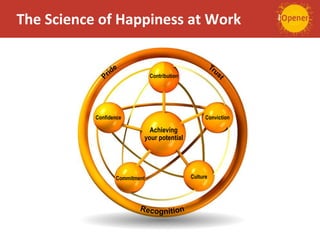
The Science of Happiness at Work
Achieving
your potential
Contribution
Confidence Conviction
CultureCommitment
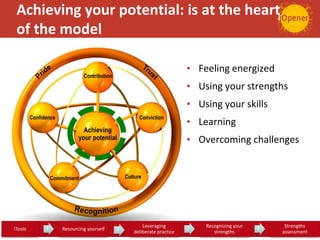
Achieving your potential: is at the heart
of the model
• Feeling energized
• Using your strengths
• Using your skills
• Learning
• Overcoming challenges
Achieving
your potential
Contribution
Confidence Conviction
CultureCommitment
iTools 2 Resourcing yourself 3
Leveraging
deliberate practice
4
Recognizing your
strengths
5
Strengths
assessment
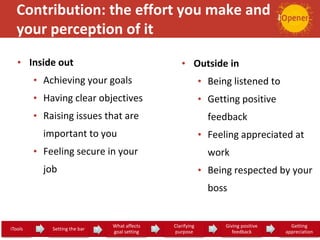
Contribution: the effort you make and
your perception of it
• Outside in
• Being listened to
• Getting positive
feedback
• Feeling appreciated at
work
• Being respected by your
boss
• Inside out
• Achieving your goals
• Having clear objectives
• Raising issues that are
important to you
• Feeling secure in your
job
iTools 6 Setting the bar 7
What affects
goal setting
8
Clarifying
purpose
9
Giving positive
feedback
10
Getting
appreciation
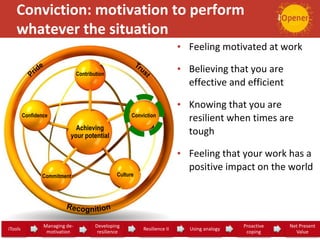
Conviction: motivation to perform
whatever the situation
• Feeling motivated at work
• Believing that you are
effective and efficient
• Knowing that you are
resilient when times are
tough
• Feeling that your work has a
positive impact on the world
Achieving
your potential
Contribution
Confidence Conviction
CultureCommitment
iTools 11
Managing de-
motivation 12
Developing
resilience
13 Resilience II 14 Using analogy 15
Proactive
coping
16
Net Present
Value
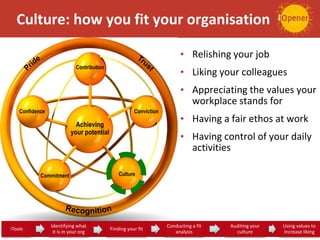
Culture: how you fit your organisation
• Relishing your job
• Liking your colleagues
• Appreciating the values your
workplace stands for
• Having a fair ethos at work
• Having control of your daily
activities
Achieving
your potential
Contribution
Confidence Conviction
CultureCommitment
iTools 17
Identifying what
it is in your org 18 Finding your fit 19
Conducting a fit
analysis
20
Auditing your
culture
21
Using values to
increase liking
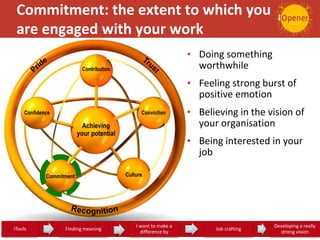
Commitment: the extent to which you
are engaged with your work
• Doing something
worthwhile
• Feeling strong burst of
positive emotion
• Believing in the vision of
your organisation
• Being interested in your
job
Achieving
your potential
Contribution
Confidence Conviction
CultureCommitment
iTools 22 Finding meaning 23
I want to make a
difference by
24 Job crafting 25
Developing a really
strong vision
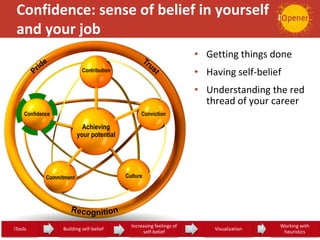
Confidence: sense of belief in yourself
and your job
• Getting things done
• Having self-belief
• Understanding the red
thread of your career
Achieving
your potential
Contribution
Confidence Conviction
CultureCommitment
iTools 26 Building self-belief 27
Increasing feelings of
self-belief
28 Visualization 29
Working with
heuristics
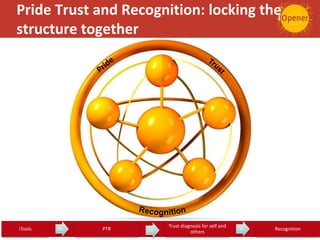
Pride Trust and Recognition: locking the
structure together
iTools 30 PTR 31
Trust diagnosis for self and
others
32 Recognition
The structure of Happiness at Work

So h@w rkj wall posters v2

  • 1.
    Leveraging The Science ofHappiness @ Work Wall posters
  • 2.
    The Science ofHappiness at Work Achieving your potential Contribution Confidence Conviction CultureCommitment
  • 3.
    Achieving your potential:is at the heart of the model • Feeling energized • Using your strengths • Using your skills • Learning • Overcoming challenges Achieving your potential Contribution Confidence Conviction CultureCommitment iTools 2 Resourcing yourself 3 Leveraging deliberate practice 4 Recognizing your strengths 5 Strengths assessment
  • 4.
    Contribution: the effortyou make and your perception of it • Outside in • Being listened to • Getting positive feedback • Feeling appreciated at work • Being respected by your boss • Inside out • Achieving your goals • Having clear objectives • Raising issues that are important to you • Feeling secure in your job iTools 6 Setting the bar 7 What affects goal setting 8 Clarifying purpose 9 Giving positive feedback 10 Getting appreciation
  • 5.
    Conviction: motivation toperform whatever the situation • Feeling motivated at work • Believing that you are effective and efficient • Knowing that you are resilient when times are tough • Feeling that your work has a positive impact on the world Achieving your potential Contribution Confidence Conviction CultureCommitment iTools 11 Managing de- motivation 12 Developing resilience 13 Resilience II 14 Using analogy 15 Proactive coping 16 Net Present Value
  • 6.
    Culture: how youfit your organisation • Relishing your job • Liking your colleagues • Appreciating the values your workplace stands for • Having a fair ethos at work • Having control of your daily activities Achieving your potential Contribution Confidence Conviction CultureCommitment iTools 17 Identifying what it is in your org 18 Finding your fit 19 Conducting a fit analysis 20 Auditing your culture 21 Using values to increase liking
  • 7.
    Commitment: the extentto which you are engaged with your work • Doing something worthwhile • Feeling strong burst of positive emotion • Believing in the vision of your organisation • Being interested in your job Achieving your potential Contribution Confidence Conviction CultureCommitment iTools 22 Finding meaning 23 I want to make a difference by 24 Job crafting 25 Developing a really strong vision
  • 8.
    Confidence: sense ofbelief in yourself and your job • Getting things done • Having self-belief • Understanding the red thread of your career Achieving your potential Contribution Confidence Conviction CultureCommitment iTools 26 Building self-belief 27 Increasing feelings of self-belief 28 Visualization 29 Working with heuristics
  • 9.
    Pride Trust andRecognition: locking the structure together iTools 30 PTR 31 Trust diagnosis for self and others 32 Recognition
  • 10.
    The structure ofHappiness at Work