B
M.SC II Year – IV Semester
Department of Environmental science
 It, often referred to as , is a
collection of scientific techniques and technologies
used to improve both the efficiency and
environmental footprint of modern industrial
production.
 Microbial technology constitutes the core of
Industrial Biotechnology.
 Microbial technology refers to the use of microbes to
obtain a product or service of economic value. It is
also called as .
 Isolation of microorganisms from nature,
 Their screening for product formation,
 Improvement of product yields,
 Maintenance of cultures,
 Mass culture using bioreactors, and
 Recovery of products or services.
 Metabolite production.
 Anaerobic digestion (for methane production).
 Waste treatment (both organic and industrial).
 Production of biocontrol agents, and
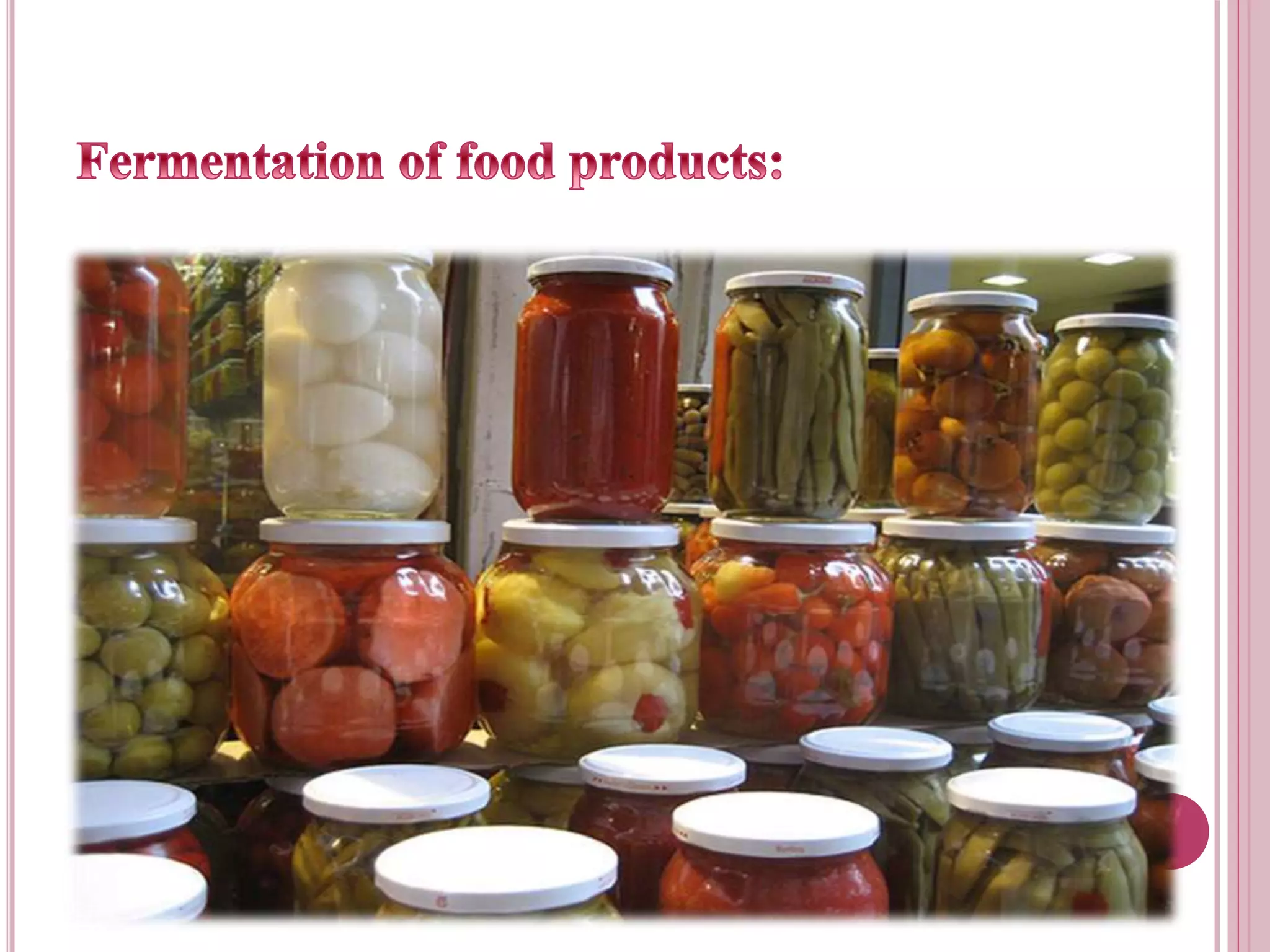
 Fermentation of food products.
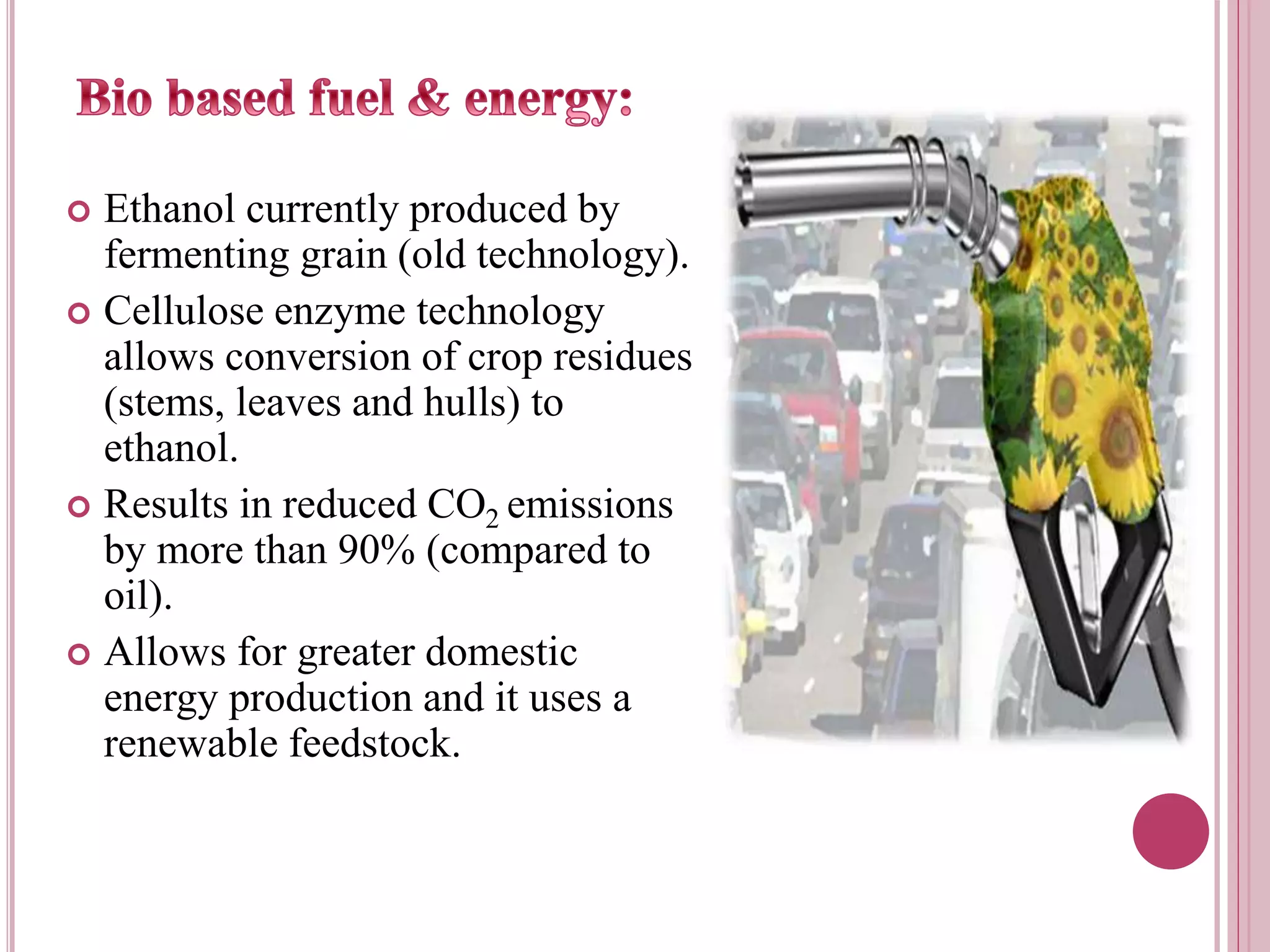
 Bio based fuel &energy.
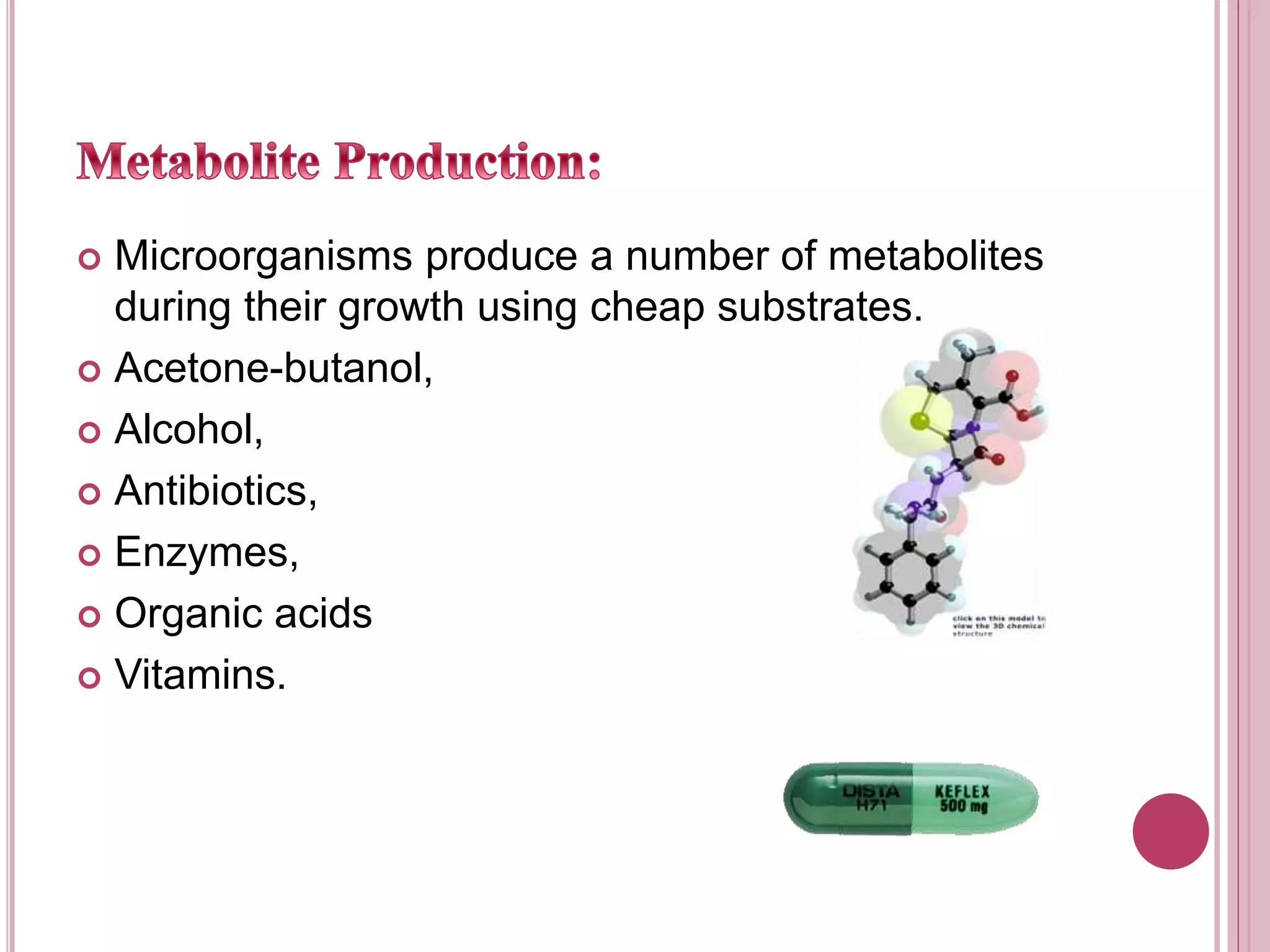
 Microorganisms produce a number of metabolites
during their growth using cheap substrates.
 Acetone-butanol,
 Alcohol,
 Antibiotics,
 Enzymes,
 Organic acids
 Vitamins.
 Microorganisms employed to enhance the availability of
nutrients, viz., nitrogen (by fixing atmospheric N2) and
phosphorus (by solubilizing soil phosphorus), to the
crops are called biofertilizers.
 Rhizobium spp.
 Blue-green Algae and Azolla.
 Azotobacter and Azospirillum.
 Microbes can be employed to recover valuable metals
from low grade ores and also from dilute solutions for
which the conventional metallurgical processes are
uneconomical and, generally, rather polluting.
E.g
 leaching of copper as copper sulphate from ores.
 Desulphurization of Coals by Thiobacillus spp.
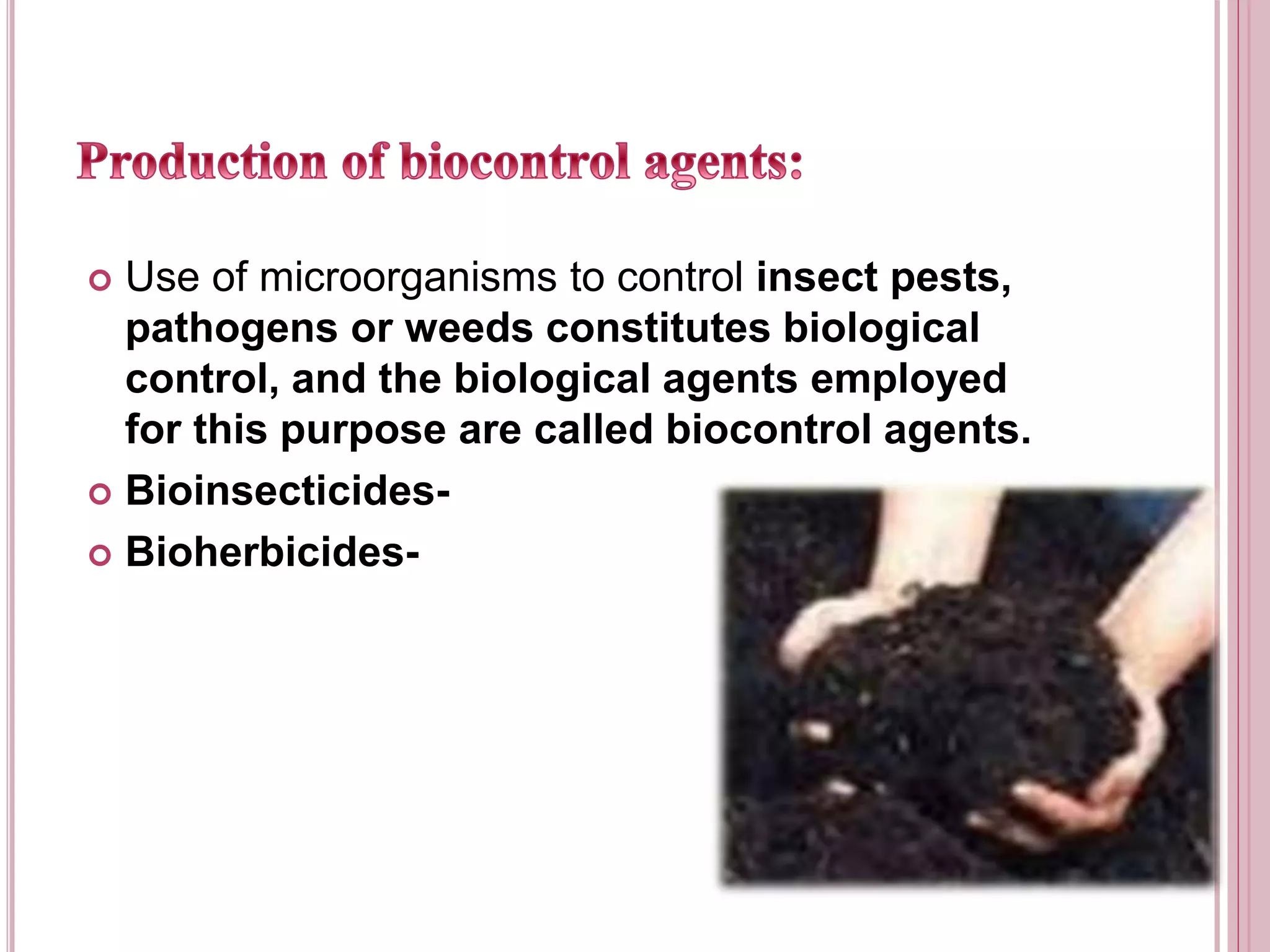
 Use of microorganisms to control insect pests,
pathogens or weeds constitutes biological
control, and the biological agents employed
for this purpose are called biocontrol agents.
 Bioinsecticides-
 Bioherbicides-
 Ethanol currently produced by
fermenting grain (old technology).
 Cellulose enzyme technology
allows conversion of crop residues
(stems, leaves and hulls) to
ethanol.
 Results in reduced CO2 emissions
by more than 90% (compared to
oil).
 Allows for greater domestic
energy production and it uses a
renewable feedstock.
 Low input of substrate.
 High rate of output.
 Friendly to environment.
 Renewable.
 Increased efficiency.
 Application of industrial Biotechnology

Application of industrial Biotechnology

  • 1.
    B M.SC II Year– IV Semester Department of Environmental science
  • 2.
     It, oftenreferred to as , is a collection of scientific techniques and technologies used to improve both the efficiency and environmental footprint of modern industrial production.  Microbial technology constitutes the core of Industrial Biotechnology.  Microbial technology refers to the use of microbes to obtain a product or service of economic value. It is also called as .
  • 3.
     Isolation ofmicroorganisms from nature,  Their screening for product formation,  Improvement of product yields,  Maintenance of cultures,  Mass culture using bioreactors, and  Recovery of products or services.
  • 4.
     Metabolite production. Anaerobic digestion (for methane production).  Waste treatment (both organic and industrial).  Production of biocontrol agents, and  Fermentation of food products.  Bio based fuel &energy.
  • 5.
     Microorganisms producea number of metabolites during their growth using cheap substrates.  Acetone-butanol,  Alcohol,  Antibiotics,  Enzymes,  Organic acids  Vitamins.
  • 6.
     Microorganisms employedto enhance the availability of nutrients, viz., nitrogen (by fixing atmospheric N2) and phosphorus (by solubilizing soil phosphorus), to the crops are called biofertilizers.  Rhizobium spp.  Blue-green Algae and Azolla.  Azotobacter and Azospirillum.
  • 7.
     Microbes canbe employed to recover valuable metals from low grade ores and also from dilute solutions for which the conventional metallurgical processes are uneconomical and, generally, rather polluting. E.g  leaching of copper as copper sulphate from ores.  Desulphurization of Coals by Thiobacillus spp.
  • 8.
     Use ofmicroorganisms to control insect pests, pathogens or weeds constitutes biological control, and the biological agents employed for this purpose are called biocontrol agents.  Bioinsecticides-  Bioherbicides-
  • 10.
     Ethanol currentlyproduced by fermenting grain (old technology).  Cellulose enzyme technology allows conversion of crop residues (stems, leaves and hulls) to ethanol.  Results in reduced CO2 emissions by more than 90% (compared to oil).  Allows for greater domestic energy production and it uses a renewable feedstock.
  • 11.
     Low inputof substrate.  High rate of output.  Friendly to environment.  Renewable.  Increased efficiency.