Graphing
inequalities
THAT INVOLVE VERTICAL & HORIZONTAL LINES
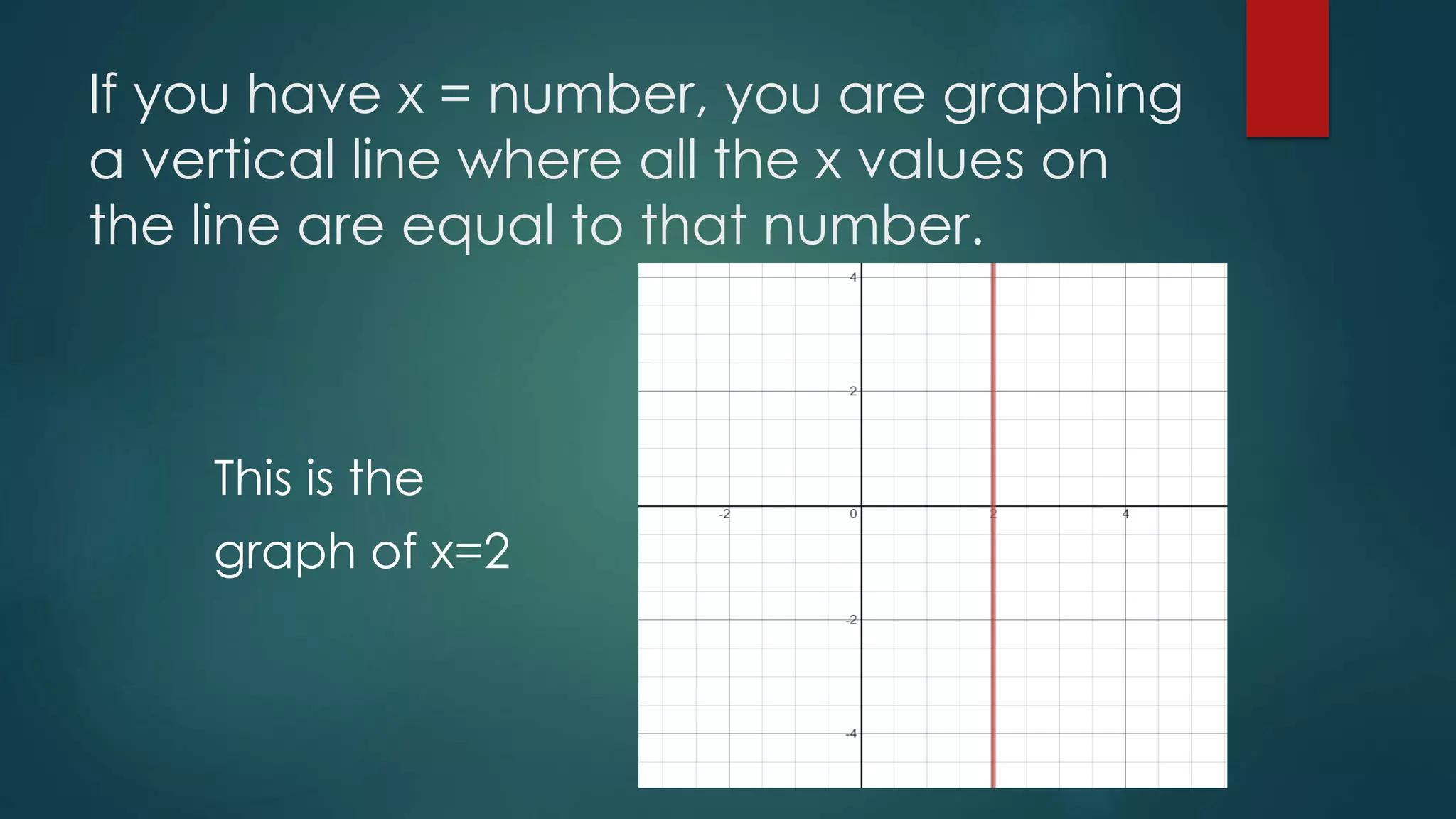
If you have x = number, you are graphing
a vertical line where all the x values on
the line are equal to that number.
This is the
graph of x=2
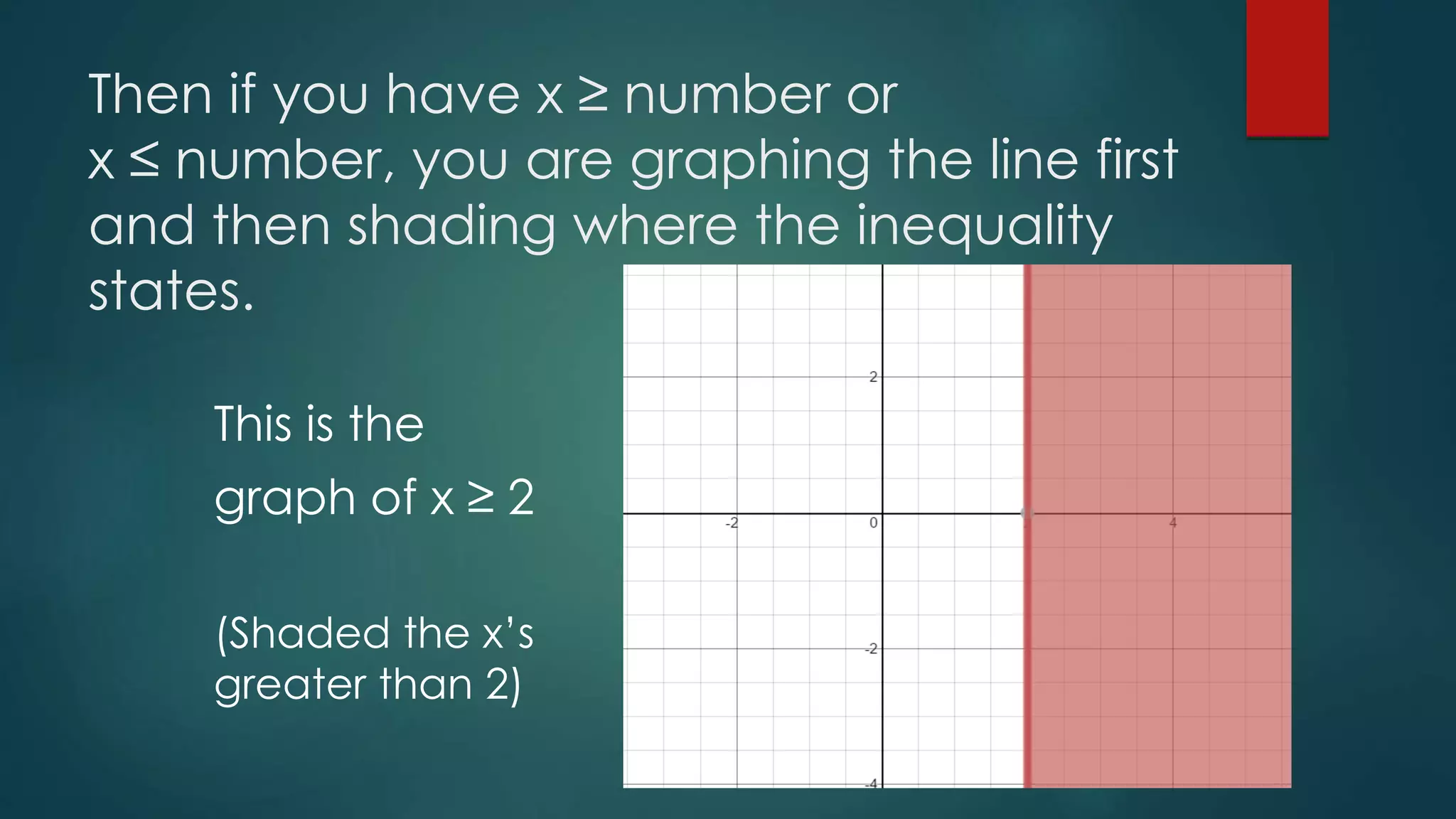
Then if you have x ≥ number or
x ≤ number, you are graphing the line first
and then shading where the inequality
states.
This is the
graph of x ≥ 2
(Shaded the x’s
greater than 2)
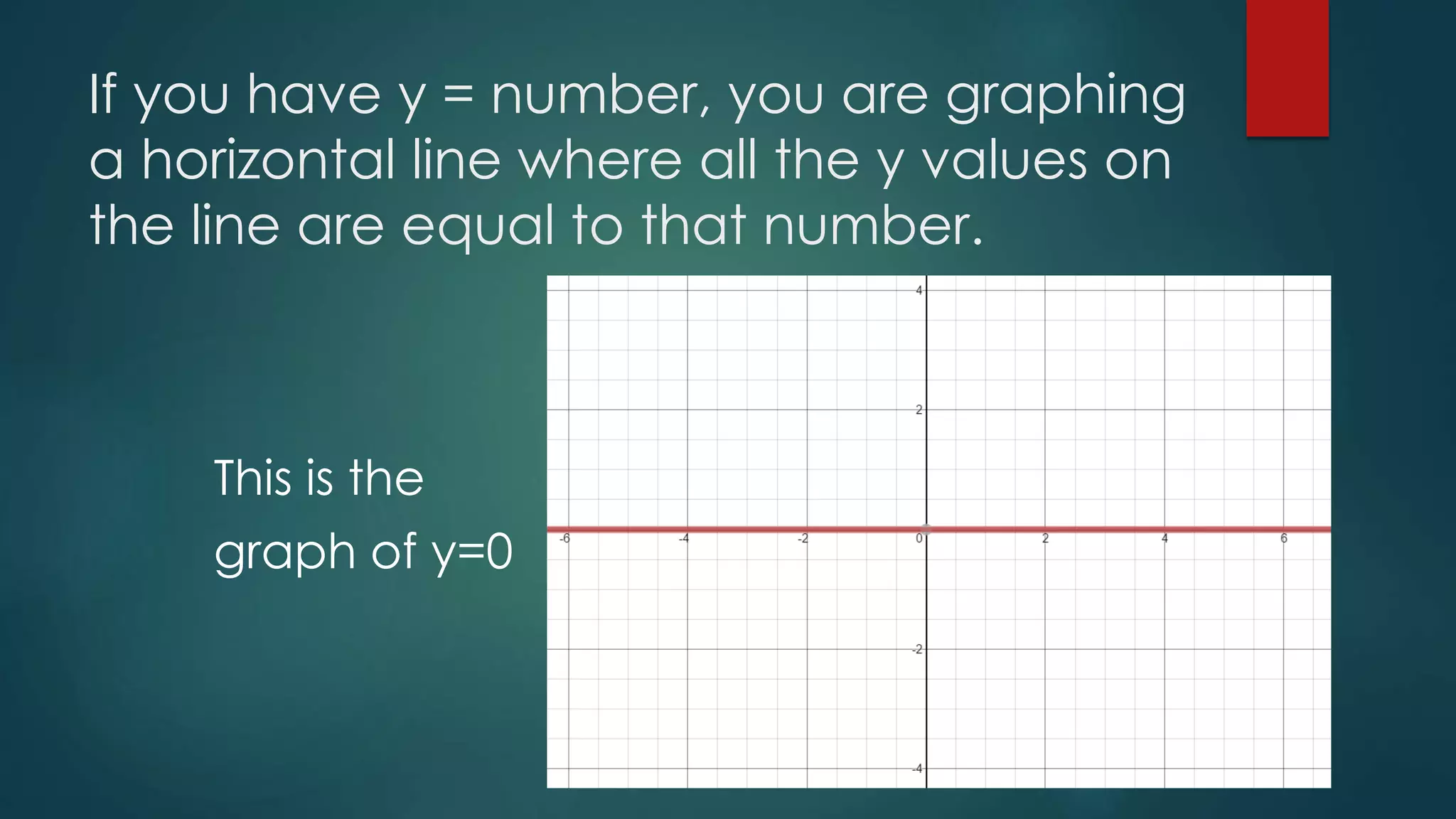
If you have y = number, you are graphing
a horizontal line where all the y values on
the line are equal to that number.
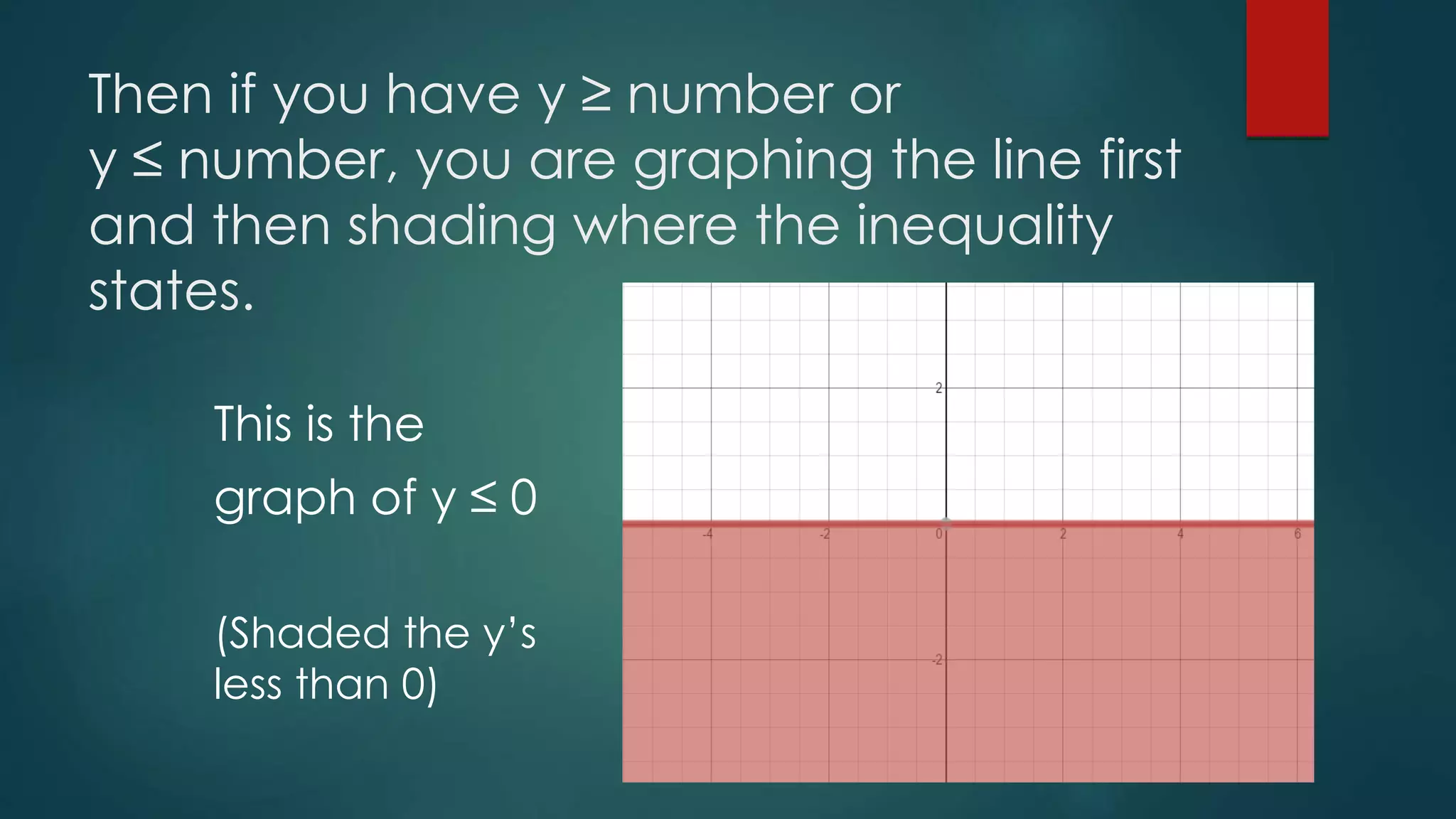
This is the
graph of y=0
Then if you have y ≥ number or
y ≤ number, you are graphing the line first
and then shading where the inequality
states.
This is the
graph of y ≤ 0
(Shaded the y’s
less than 0)
Remember ≤ and ≥ mean you use
a solid line when graphing.
But > and < mean you use a dotted
line when graphing.
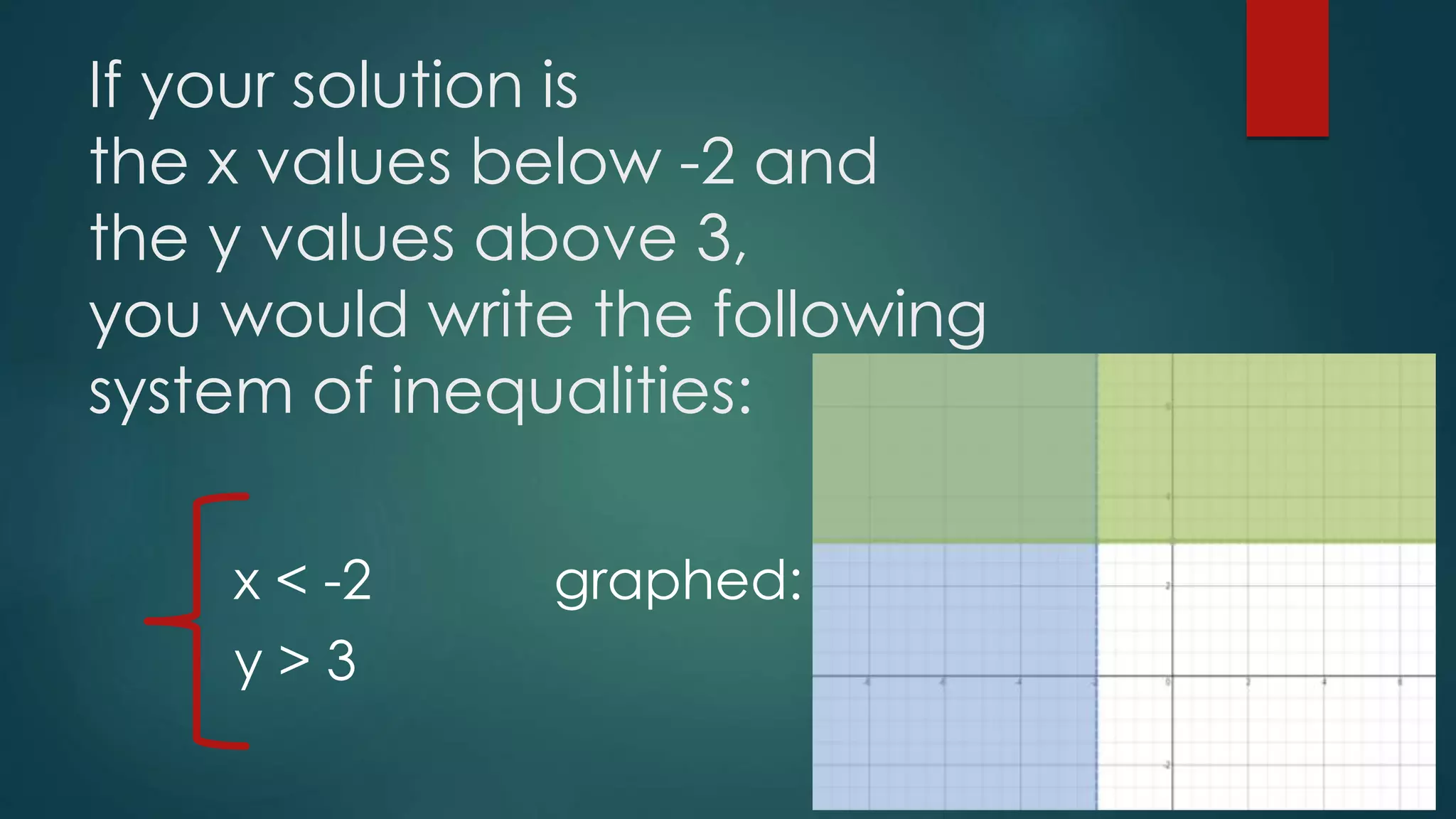
If your solution is
the x values below -2 and
the y values above 3,
you would write the following
system of inequalities:
x < -2 graphed:
y > 3

Graphing inequalities

  • 1.
  • 2.
    If you havex = number, you are graphing a vertical line where all the x values on the line are equal to that number. This is the graph of x=2
  • 3.
    Then if youhave x ≥ number or x ≤ number, you are graphing the line first and then shading where the inequality states. This is the graph of x ≥ 2 (Shaded the x’s greater than 2)
  • 4.
    If you havey = number, you are graphing a horizontal line where all the y values on the line are equal to that number. This is the graph of y=0
  • 5.
    Then if youhave y ≥ number or y ≤ number, you are graphing the line first and then shading where the inequality states. This is the graph of y ≤ 0 (Shaded the y’s less than 0)
  • 6.
    Remember ≤ and≥ mean you use a solid line when graphing. But > and < mean you use a dotted line when graphing.
  • 7.
    If your solutionis the x values below -2 and the y values above 3, you would write the following system of inequalities: x < -2 graphed: y > 3