


BY
UROLOGY UNIT
LASUTH
 Case presentatons
 Introduction/Definition
 Historical perspective of Mainz II pouch
 Overview of Mainz II pouch
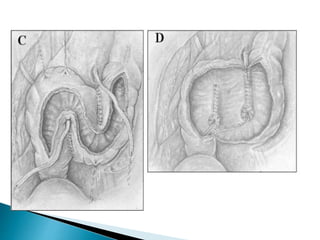
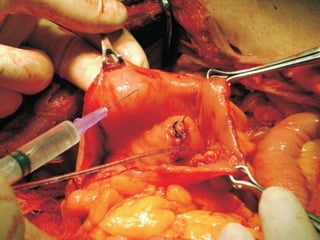
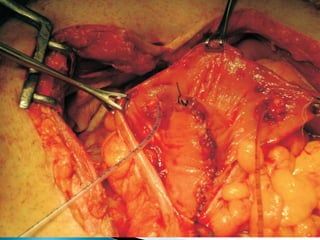
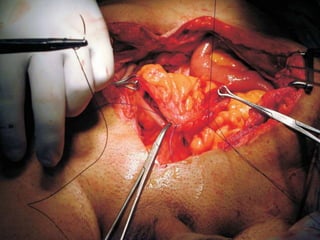
 Operative technique
 Complication
 LASUTH experience
 Conclusion
 References
 NAME: O.M
 AGE: 65 years
 SEX: Female
 ADRESS: Ejigbo, Lagos
 OCCUPATION: House wife
 TRIBE: Yoruba
 RELIGION: Christianity
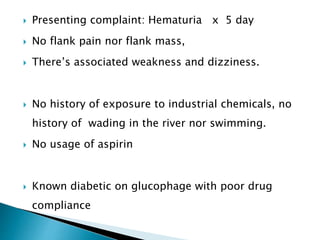
 Presenting complaint: Hematuria x 5 day
 No flank pain nor flank mass,
 There’s associated weakness and dizziness.
 No history of exposure to industrial chemicals, no
history of wading in the river nor swimming.
 No usage of aspirin
 Known diabetic on glucophage with poor drug
compliance
 On examination: Pale , afebrile, anicteric, nil pedal
edema.
Temp:370 C RR:20 PR:88 bpm BP: 120/60mmHg
 Abdomen:
Full, moves with respiration,
suprapubic mass 6cm above the pubic symphysis.
can’t get below it, Mobile, non-tender.
 DRE: Normal finding.
 Diagnosis: Hematuria secondary to ? Bladder tumour
 PCV was 14% , E/U/Cr within normal limit
 4 pints of blood was transfused
 Urethral catheter was passed and clots evacuated
 IV Tranexamic acid and diacynone were given.
 Post transfusion PCV was 33%
 She had cystoscopy and biopsy done with histology report of
muscle-invasive urothelial tumour
 She was worked up for radical cystectomy and Mainz II pouch
urinary diversion.
 Surgery was done on 16/01/16 and was discharged home on
the 6/02/16 to be seen in clinic.
 She was readmitted 3 months after the surgery on
account of gastroenteritis with electrolyte
derangement
 (Na-140, K-3.0, HCO3-15)
 she was rehydrated and electrolyte corrected.
 Discharged home with subsequent satisfactory
clinic follow up visits.
 NAME: G. A
 SEX: Male
 AGE: 63 years
 ADDRESS: Onigbongbo, Lagos
 OCCUPATION: Retired Banker
 TRIBE: Yoruba
 RELIGION: Christianity
 Presenting complaints: Hematuria X 3month
 Total, associated with blood clots.
 Lower urinary tract symptoms (nocturia and frequency).
 No flank pain nor flank mass, no associated weakness
and dizziness.
 No history of exposure to industrial chemicals, no
history of wading in the river nor swimming
 No usage of aspirin or anticoagulant
 Not diabetic nor hypertensive
 No family history of blood related diseases.
 On examination: middle aged man, pale , anicteric, not
dehydrated, no pedal edema
 Temp:36.80 C RR:20cpm PR:90bpm BP:110/70mmHg
 Chest: Clinically clear
S1,S2 are normal
 Abdomen: Full, moves with respiration
No tenderness, no suprapubic mass.
 DRE: prostate was mildly enlarged, firm and smooth.
 Diagnosis: Hematuria secondary to BPH R/O Bladder tumor
 PCV:27%, others parameters :all normal
 E/U/Cr: All within normal limit
 Urinalysis: numerous rbc, 4-5 pus cells
 LFT: revealed no abnormalities
 Clotting profile: within normal limit
 He was transfused with 2 pint of blood.
 He was catheterised and clot evacuated.
 IV tranaxemic acid and IV diacynone
 Had cystoscopy done which revealed tumor in
right lateral wall of the bladder
 Histopathology: Muscle invasive Papillary
transitional cell carcinoma
 CT Urogram: showed localized bladder tumor with
intramural extension, no lymph node involvement.
 Patient was adequately counseled for need for a radical cysto-
prostatectomy + Urterosigmoidostomy (Mainz II pouch) to
achieve continent urinary diversion
 He was adequately worked up for the surgery ,through rectal
training, adequate bowel preparation.
 Had surgery as planned and was successful.
 Rectal tube was removed 6 days post op ,with urinary
continence achieved.
 Patient was discharged 15 days post operation for regular
visits in clinic.
 Urinary diversion are surgical procedures that re-
route the normal outflow of urine from the body
temporarily or permanently in a diseased or
defective urinary tract.
 It is being used in the management of some
urological cases e.g. pelvic tumors, birth defects
involving the urinary tract .
 This has evolved from simple cutaneous urostomy to
highly refined ,high capacity, low pressure, orthotopic
bladder substitution with excellent continence rate.
 The earliest attempt at urinary diversion was in 1851
by John Simon
 Ureterosigmoidostomy was the first form of
supravesical continent urinary diversion and was
popular during the first half of the 20th century.
 In 1967 :Hanley used Rectosigmoid as a reservoir
of urine and diverted stool to a terminal colostomy.
 This was also marred with complications such as
metabolic imbalance, ureteral reflux etc.
 In 1988,Fisch modified the classical
ureterosigmoidostomy by de-tubularization of the
Rectosigmoid to form a Low pressure, high
volume : MAINZ II POUCH.
OVERVIEW OF MAINZ II POUCH
 Determining the optimal mode of urinary tract
reconstruction following cystectomy is a challenge
the urologic surgeon.
 No single technique is ideal for all patients and
clinical situations.
 Fisch introduced the Mainz II pouch as a simple
detubularized Ureterosigmoidostomy procedure.
 Ureterosigmoidostomy remained the method of choice
for urinary diversion until the late 1950s, when
electrolyte imbalance and secondary malignancies
arising at the ureteral implantation site were described.
 The development of new absorbable suture material,
modern ureteric stents, antibiotics, and alkalinizing
drugs has solved many of the traditional shortcomings
of ureterosigmoidostomy and has rekindled the interest
in this technique.
 When the bladder has to be removed
 When the sphincters of the bladder & the detrusor
muscle damaged or have lost their normal
neurological control
 When there is irremovable obstruction in the
bladder
 Ectopic vesicae
 Incurable vesico- vagina fistula
Maximal tumor control
Minimal complications
Best possible QOL
Selection based on Clinical factors
Inform and honest discussion
Long and short term risks and benefits
Intergroup talk
Possibility of change in diversion method
Age/ Survival rate
Comorbidities
Oncological Extent of disease
Renal and Hepatic functional status
Bowel condition
Patient’s preferences
Available expertise
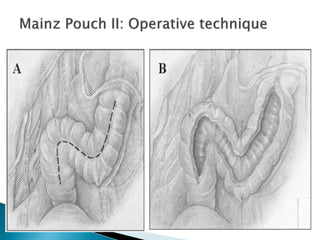
 By interrupting the circular contractions (anti-
mesenteric opening of the bowel and reconfiguration), a
low-pressure reservoir can be created, thus improving
continence rates and protecting the upper urinary tract.
 The low pressure improves continence and protect the
upper urinary tract with basal Pressure=24cmH 2O and
Peak Pressure =35cmH 2O ( Vs Pressure of 65-200cmH
2O).
 The pouch is drained by a rectal tube for 14 days.
 Abdominal drains are removed after cessation of
fluid drainage and the ureteric stents removed after
surgery.
 Patient follow-up consists of serum biochemistry,
blood gas analysis and renal ultrasonography
Complications
◦ Electrolyte abnormalities,
◦ Abnormal drug metabolism,
◦ Osteomalacia, growth retardation,
◦ Persistent and recurrent infections,
◦ Formation of renal and reservoir calculi,
◦ Renal failure
◦ Development of urothelial or intestinal cancer.
 Between 2007 to 2016
 There were 11 patients who had Mainz II pouch
after radical cystectomy during this period.
 2 patients had cystectomy + Mainz II pouch due
to persistent uninary incontinence, VVF
 The age of the patients ranges between 52 and
65 (Mean ± SD = 58.6±4.9) years.
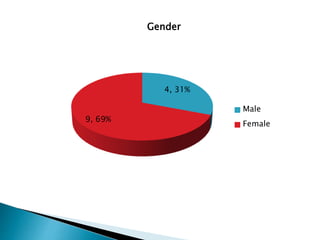
4, 31%
9, 69%
Gender
Male
Female
 All were cases of muscle-invasive bladder tumour
with pathological evidence of nodal involvement in
4 (36.4%) of the cases.
 According to TNM Staging, 2 (18.1%), 7 (63.6%),
and 2 (18.1 %) patients had pT2, pT3 and pT4
diseases respectively.
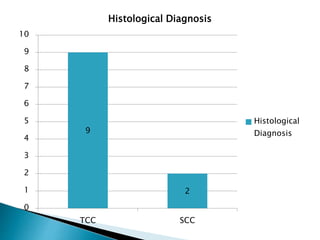
 Ten patients (90.9%) had high grade disease while
one patient had low grade disease.
9
2
0
1
2
3
4
5
6
7
8
9
10
TCC SCC
Histological Diagnosis
Histological
Diagnosis
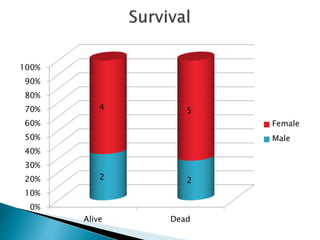
 Overall, 6 (46.1%) patients are alive, while
7(53.8%) are dead.
 Out of the 4 (36.4%) cases that were males,
2(50%) are alive and 2(50%) are dead
 Out of the 9(69.0%) cases that were females,
4 (44.4 %) of them are alive while 5(55.6%) are
dead.
0%
10%
20%
30%
40%
50%
60%
70%
80%
90%
100%
Alive Dead
2 2
4 5
Female
Male
 Out of the 9 patients with histological diagnosis of
transitional cell carcinoma, 4(44.4%) are alive while
5(55.6%) are dead.
 The 2 patients who had squamous cell carcinoma
are dead, both within 12 months of surgery.
 The two patients with T2 disease are alive.
 Radical cystectomy + Mainz II pouch urinary
diversion is a complex surgery.
 Requires extensive monitoring for patients’
survival.
 Offers continent, high capacity, low-pressure
reservoir for the patient and improves quality
of life.
 Ferris DO, Odel HM. Electrolyte pattern of the blood after bilateral
ureterosigmoidostomy. J Am Med Assoc. 1950 Mar 4. 142(9):634-41.
 Haupt G, Pannek J, Knopf HJ, eet al. Rupture of ileal neobladder due to
urethral obstruction by mucous plug. J Urol. 1990 Sep. 144(3):740-1
 Schmid M, Rink M, Traumann M, et al. Evidence from the 'PROspective
MulticEnTer RadIcal Cystectomy Series 2011 (PROMETRICS 2011)' study: how
are preoperative patient characteristics associated with urinary diversion type
after radical cystectomy for bladder cancer?. Ann Surg Oncol. 2015 Mar. 22
(3):1032-42.
 Lee RK, Abol-Enein H, Artibani W, Bochner B, Dalbagni G, Daneshmand S, et
al. Urinary diversion after radical cystectomy for bladder cancer: options,
patient selection, and outcomes. BJU Int. 2014 Jan. 113 (1):11-23.
 Pannek J, Haupt G, Schulze H, et al. Influence of continent ileal urinary
diversion on vitamin B12 absorption. J Urol. 1996 Apr. 155(4):1206-8
 Tal R, Cohen MM, Yossepowitch O, Golan S, Regev S, Zertzer S, et al. An
ileal conduit-who takes care of the stoma?. J Urol. 2012 May.
187(5):1707-12.
 Benson MC, Olsson CA. Walsh PC, Retik AB, Vaughan ED, Wein AJ, eds.
Campbell's Urology. 7th ed. Philadelphia, Pa: WB Saunders; 1998. 3190-
227.
 Brand E. Cecal rupture after continent ileocecal urinary diversion during
total pelvic exenteration. Obstet Gynecol. 1991 Sep. 78(3 Pt 2):570-2.
Grand round
Grand round

Grand round

  • 1.
  • 2.
     Case presentatons Introduction/Definition  Historical perspective of Mainz II pouch  Overview of Mainz II pouch  Operative technique  Complication  LASUTH experience  Conclusion  References
  • 3.
     NAME: O.M AGE: 65 years  SEX: Female  ADRESS: Ejigbo, Lagos  OCCUPATION: House wife  TRIBE: Yoruba  RELIGION: Christianity
  • 4.
     Presenting complaint:Hematuria x 5 day  No flank pain nor flank mass,  There’s associated weakness and dizziness.  No history of exposure to industrial chemicals, no history of wading in the river nor swimming.  No usage of aspirin  Known diabetic on glucophage with poor drug compliance
  • 5.
     On examination:Pale , afebrile, anicteric, nil pedal edema. Temp:370 C RR:20 PR:88 bpm BP: 120/60mmHg  Abdomen: Full, moves with respiration, suprapubic mass 6cm above the pubic symphysis. can’t get below it, Mobile, non-tender.  DRE: Normal finding.  Diagnosis: Hematuria secondary to ? Bladder tumour
  • 6.
     PCV was14% , E/U/Cr within normal limit  4 pints of blood was transfused  Urethral catheter was passed and clots evacuated  IV Tranexamic acid and diacynone were given.  Post transfusion PCV was 33%  She had cystoscopy and biopsy done with histology report of muscle-invasive urothelial tumour  She was worked up for radical cystectomy and Mainz II pouch urinary diversion.  Surgery was done on 16/01/16 and was discharged home on the 6/02/16 to be seen in clinic.
  • 7.
     She wasreadmitted 3 months after the surgery on account of gastroenteritis with electrolyte derangement  (Na-140, K-3.0, HCO3-15)  she was rehydrated and electrolyte corrected.  Discharged home with subsequent satisfactory clinic follow up visits.
  • 8.
     NAME: G.A  SEX: Male  AGE: 63 years  ADDRESS: Onigbongbo, Lagos  OCCUPATION: Retired Banker  TRIBE: Yoruba  RELIGION: Christianity
  • 9.
     Presenting complaints:Hematuria X 3month  Total, associated with blood clots.  Lower urinary tract symptoms (nocturia and frequency).  No flank pain nor flank mass, no associated weakness and dizziness.  No history of exposure to industrial chemicals, no history of wading in the river nor swimming  No usage of aspirin or anticoagulant  Not diabetic nor hypertensive  No family history of blood related diseases.
  • 10.
     On examination:middle aged man, pale , anicteric, not dehydrated, no pedal edema  Temp:36.80 C RR:20cpm PR:90bpm BP:110/70mmHg  Chest: Clinically clear S1,S2 are normal  Abdomen: Full, moves with respiration No tenderness, no suprapubic mass.  DRE: prostate was mildly enlarged, firm and smooth.  Diagnosis: Hematuria secondary to BPH R/O Bladder tumor
  • 11.
     PCV:27%, othersparameters :all normal  E/U/Cr: All within normal limit  Urinalysis: numerous rbc, 4-5 pus cells  LFT: revealed no abnormalities  Clotting profile: within normal limit  He was transfused with 2 pint of blood.  He was catheterised and clot evacuated.  IV tranaxemic acid and IV diacynone
  • 12.
     Had cystoscopydone which revealed tumor in right lateral wall of the bladder  Histopathology: Muscle invasive Papillary transitional cell carcinoma  CT Urogram: showed localized bladder tumor with intramural extension, no lymph node involvement.
  • 13.
     Patient wasadequately counseled for need for a radical cysto- prostatectomy + Urterosigmoidostomy (Mainz II pouch) to achieve continent urinary diversion  He was adequately worked up for the surgery ,through rectal training, adequate bowel preparation.  Had surgery as planned and was successful.  Rectal tube was removed 6 days post op ,with urinary continence achieved.  Patient was discharged 15 days post operation for regular visits in clinic.
  • 14.
     Urinary diversionare surgical procedures that re- route the normal outflow of urine from the body temporarily or permanently in a diseased or defective urinary tract.  It is being used in the management of some urological cases e.g. pelvic tumors, birth defects involving the urinary tract .
  • 15.
     This hasevolved from simple cutaneous urostomy to highly refined ,high capacity, low pressure, orthotopic bladder substitution with excellent continence rate.  The earliest attempt at urinary diversion was in 1851 by John Simon  Ureterosigmoidostomy was the first form of supravesical continent urinary diversion and was popular during the first half of the 20th century.
  • 16.
     In 1967:Hanley used Rectosigmoid as a reservoir of urine and diverted stool to a terminal colostomy.  This was also marred with complications such as metabolic imbalance, ureteral reflux etc.  In 1988,Fisch modified the classical ureterosigmoidostomy by de-tubularization of the Rectosigmoid to form a Low pressure, high volume : MAINZ II POUCH.
  • 17.
    OVERVIEW OF MAINZII POUCH  Determining the optimal mode of urinary tract reconstruction following cystectomy is a challenge the urologic surgeon.  No single technique is ideal for all patients and clinical situations.  Fisch introduced the Mainz II pouch as a simple detubularized Ureterosigmoidostomy procedure.
  • 18.
     Ureterosigmoidostomy remainedthe method of choice for urinary diversion until the late 1950s, when electrolyte imbalance and secondary malignancies arising at the ureteral implantation site were described.  The development of new absorbable suture material, modern ureteric stents, antibiotics, and alkalinizing drugs has solved many of the traditional shortcomings of ureterosigmoidostomy and has rekindled the interest in this technique.
  • 19.
     When thebladder has to be removed  When the sphincters of the bladder & the detrusor muscle damaged or have lost their normal neurological control  When there is irremovable obstruction in the bladder  Ectopic vesicae  Incurable vesico- vagina fistula
  • 20.
    Maximal tumor control Minimalcomplications Best possible QOL
  • 21.
    Selection based onClinical factors Inform and honest discussion Long and short term risks and benefits Intergroup talk Possibility of change in diversion method
  • 22.
    Age/ Survival rate Comorbidities OncologicalExtent of disease Renal and Hepatic functional status Bowel condition Patient’s preferences Available expertise
  • 23.
     By interruptingthe circular contractions (anti- mesenteric opening of the bowel and reconfiguration), a low-pressure reservoir can be created, thus improving continence rates and protecting the upper urinary tract.  The low pressure improves continence and protect the upper urinary tract with basal Pressure=24cmH 2O and Peak Pressure =35cmH 2O ( Vs Pressure of 65-200cmH 2O).
  • 29.
     The pouchis drained by a rectal tube for 14 days.  Abdominal drains are removed after cessation of fluid drainage and the ureteric stents removed after surgery.  Patient follow-up consists of serum biochemistry, blood gas analysis and renal ultrasonography
  • 30.
    Complications ◦ Electrolyte abnormalities, ◦Abnormal drug metabolism, ◦ Osteomalacia, growth retardation, ◦ Persistent and recurrent infections, ◦ Formation of renal and reservoir calculi, ◦ Renal failure ◦ Development of urothelial or intestinal cancer.
  • 31.
     Between 2007to 2016  There were 11 patients who had Mainz II pouch after radical cystectomy during this period.  2 patients had cystectomy + Mainz II pouch due to persistent uninary incontinence, VVF  The age of the patients ranges between 52 and 65 (Mean ± SD = 58.6±4.9) years.
  • 32.
  • 33.
     All werecases of muscle-invasive bladder tumour with pathological evidence of nodal involvement in 4 (36.4%) of the cases.  According to TNM Staging, 2 (18.1%), 7 (63.6%), and 2 (18.1 %) patients had pT2, pT3 and pT4 diseases respectively.  Ten patients (90.9%) had high grade disease while one patient had low grade disease.
  • 34.
  • 35.
     Overall, 6(46.1%) patients are alive, while 7(53.8%) are dead.  Out of the 4 (36.4%) cases that were males, 2(50%) are alive and 2(50%) are dead  Out of the 9(69.0%) cases that were females, 4 (44.4 %) of them are alive while 5(55.6%) are dead.
  • 36.
  • 37.
     Out ofthe 9 patients with histological diagnosis of transitional cell carcinoma, 4(44.4%) are alive while 5(55.6%) are dead.  The 2 patients who had squamous cell carcinoma are dead, both within 12 months of surgery.  The two patients with T2 disease are alive.
  • 38.
     Radical cystectomy+ Mainz II pouch urinary diversion is a complex surgery.  Requires extensive monitoring for patients’ survival.  Offers continent, high capacity, low-pressure reservoir for the patient and improves quality of life.
  • 39.
     Ferris DO,Odel HM. Electrolyte pattern of the blood after bilateral ureterosigmoidostomy. J Am Med Assoc. 1950 Mar 4. 142(9):634-41.  Haupt G, Pannek J, Knopf HJ, eet al. Rupture of ileal neobladder due to urethral obstruction by mucous plug. J Urol. 1990 Sep. 144(3):740-1  Schmid M, Rink M, Traumann M, et al. Evidence from the 'PROspective MulticEnTer RadIcal Cystectomy Series 2011 (PROMETRICS 2011)' study: how are preoperative patient characteristics associated with urinary diversion type after radical cystectomy for bladder cancer?. Ann Surg Oncol. 2015 Mar. 22 (3):1032-42.  Lee RK, Abol-Enein H, Artibani W, Bochner B, Dalbagni G, Daneshmand S, et al. Urinary diversion after radical cystectomy for bladder cancer: options, patient selection, and outcomes. BJU Int. 2014 Jan. 113 (1):11-23.
  • 40.
     Pannek J,Haupt G, Schulze H, et al. Influence of continent ileal urinary diversion on vitamin B12 absorption. J Urol. 1996 Apr. 155(4):1206-8  Tal R, Cohen MM, Yossepowitch O, Golan S, Regev S, Zertzer S, et al. An ileal conduit-who takes care of the stoma?. J Urol. 2012 May. 187(5):1707-12.  Benson MC, Olsson CA. Walsh PC, Retik AB, Vaughan ED, Wein AJ, eds. Campbell's Urology. 7th ed. Philadelphia, Pa: WB Saunders; 1998. 3190- 227.  Brand E. Cecal rupture after continent ileocecal urinary diversion during total pelvic exenteration. Obstet Gynecol. 1991 Sep. 78(3 Pt 2):570-2.