Mateo Cooper2nd periodEl 9 de deciembreGrammar Book
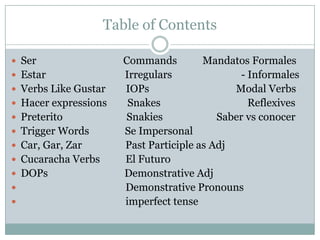
Table of ContentsSer                                  Commands          MandatosFormalesEstar                               Irregulars                           - InformalesVerbs Like Gustar        IOPs                                  Modal VerbsHacer expressions        Snakes                                  ReflexivesPreteritoSnakies                     Saber vsconocerTrigger Words              Se Impersonal                Car, Gar, Zar                 Past Participle as AdjCucaracha Verbs          El FuturoDOPs                              Demonstrative Adj                                         Demonstrative Pronouns                                         imperfect tense
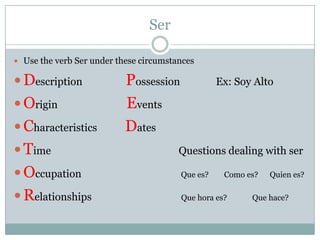
SerUse the verb Ser under these circumstancesDescription                 Possession              Ex: Soy AltoOrigin                           EventsCharacteristics           DatesTime                                                  Questions dealing with serOccupation                                       Quees?        Como es?      Quienes?Relationships                                   Quehoraes?             Quehace?
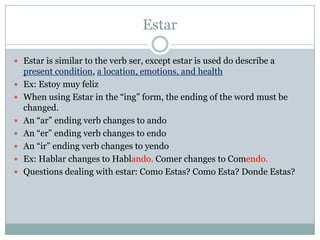
EstarEstar is similar to the verb ser, except estar is used do describe a present condition, a location, emotions, and healthEx: EstoymuyfelizWhen using Estar in the “ing” form, the ending of the word must be changed. An “ar” ending verb changes to andoAn “er” ending verb changes to endoAn “ir” ending verb changes to yendoEx: Hablar changes to Hablando. Comer changes to Comendo. Questions dealing with estar: Como Estas? Como Esta? DondeEstas?
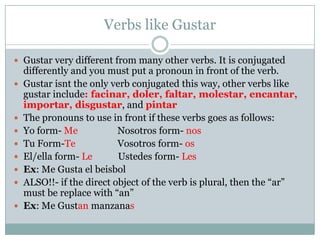
Verbs like GustarGustar very different from many other verbs. It is conjugated differently and you must put a pronoun in front of the verb. Gustarisnt the only verb conjugated this way, other verbs like gustar include: facinar, doler, faltar, molestar, encantar, importar, disgustar, and pintarThe pronouns to use in front if these verbs goes as follows:Yo form- MeNosotros form- nosTuForm-TeVosotros form- osEl/ella form- Le Ustedes form- LesEx: Me Gusta el beisbolALSO!!- if the direct object of the verb is plural, then the “ar” must be replace with “an”Ex: Me Gustanmanzanas
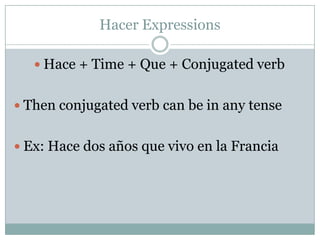
Hacer ExpressionsHace + Time + Que + Conjugated verbThen conjugated verb can be in any tenseEx: Hacedos añosque vivo en la Francia
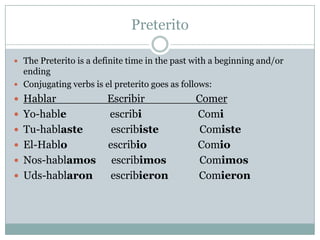
PreteritoThe Preterito is a definite time in the past with a beginning and/or endingConjugating verbs is el preterito goes as follows:HablarEscribir                    ComerYo-hableescribiComiTu-hablasteescribisteComisteEl-HabloescribioComioNos-hablamosescribimosComimosUds-hablaronescribieronComieron
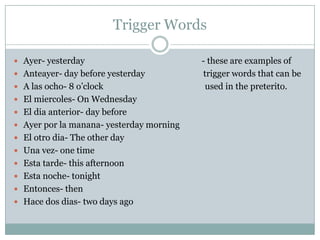
Trigger WordsAyer- yesterday                                                      - these are examples of Anteayer- day before yesterday                           trigger words that can be A lasocho- 8 o’clock                                               used in the preterito.El miercoles- On WednesdayEl dia anterior- day beforeAyer por la manana- yesterday morningEl otrodia- The other dayUnavez- one timeEstatarde- this afternoonEstanoche- tonightEntonces- thenHace dos dias- two days ago
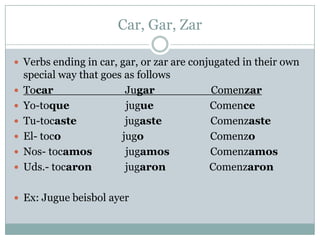
Car, Gar, ZarVerbs ending in car, gar, or zar are conjugated in their own special way that goes as followsTocarJugarComenzarYo-toquejugueComenceTu-tocastejugasteComenzasteEl- tocojugoComenzoNos- tocamosjugamosComenzamosUds.- tocaronjugaronComenzaronEx: Juguebeisbolayer
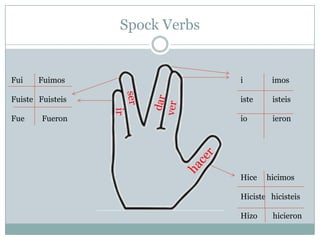
Spock VerbsFuiFuimosFuisteFuisteisFueFueroni               imosisteisteisioierondarserverirhacerHicehicimosHicistehicisteisHizohicieron
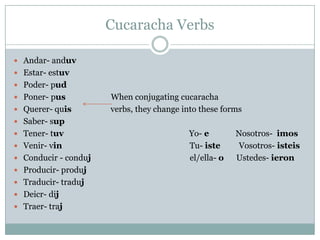
Cucaracha VerbsAndar- anduvEstar- estuvPoder- pudPoner- pus                      When conjugating cucaracha Querer- quis                   verbs, they change into these formsSaber- supTener- tuvYo- eNosotros-  imosVenir- vinTu- isteVosotros- isteisConducir - conduj                                                el/ella- o Ustedes- ieronProducir- produjTraducir- tradujDeicr- dijTraer- traj
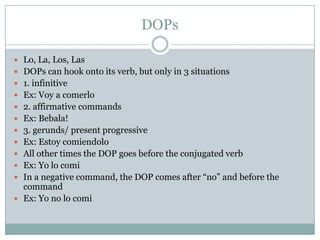
DOPsLo, La, Los, LasDOPs can hook onto its verb, but only in 3 situations1. infinitiveEx: Voy a comerlo2. affirmative commandsEx: Bebala!3. gerunds/ present progressiveEx: EstoycomiendoloAll other times the DOP goes before the conjugated verbEx: Yo lo comiIn a negative command, the DOP comes after “no” and before the commandEx: Yo no lo comi
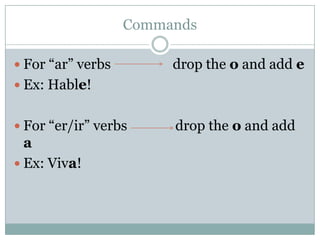
CommandsFor “ar” verbs                  drop the o and add eEx: Hable!For “er/ir” verbs              drop the o and add aEx: Viva!
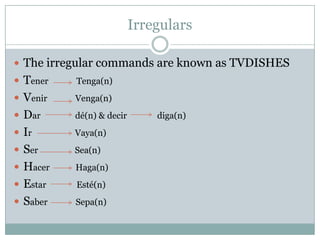
IrregularsThe irregular commands are known as TVDISHESTenerTenga(n)VenirVenga(n)Dar                dé(n) & decirdiga(n)IrVaya(n)Ser                 Sea(n)HacerHaga(n)EstarEsté(n)Saber             Sepa(n)
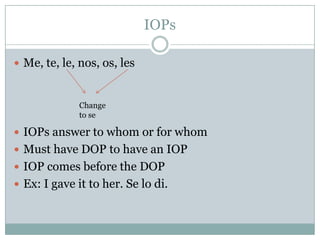
IOPsMe, te, le, nos, os, lesIOPs answer to whom or for whomMust have DOP to have an IOPIOP comes before the DOPEx: I gave it to her. Se lo di. Change to se
Snakes and SnakeysIn the snakes group”, there is a stem change in the 3rd personEx: Dormir      Dorm
Se impersonal“se” is used to show who is conducting the action
Past Participle as Adjective- Agree with nouns they modify in gender and numberAdd- “ado” for “ar” verbsAdd- “ido” for  “ir” verbsEx- El pollocomido, la manzana comida           - los polloscomidos, lasmanzanascomidasIrregulars: Abrir-abierto, cubrir-cubierto, decir-dicho, escribir-escrito, hacer-hecho, morir-muerto, poner-puesto, Romper-roto, ver-visto, volver-vuelto, ir-ido
El FuturoYo- infinitive + e                        Nos- infinitive + emosTu- infinitive + as                      Vos- infinitive + eisEl- infinitive + a                         Uds- infinitive + anEx: ComereComeremosComerasComereisComeraComeranIrregulars: Decir-dir, Hacer-har, Salir-saldr, tener-tendr, valer-valdr, poder-podr, querer-querr, saber-sabr, caber-cabr, haber-habr
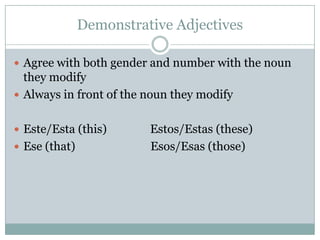
Demonstrative AdjectivesAgree with both gender and number with the noun they modifyAlways in front of the noun they modifyEste/Esta (this)               Estos/Estas (these)Ese (that)                          Esos/Esas (those)
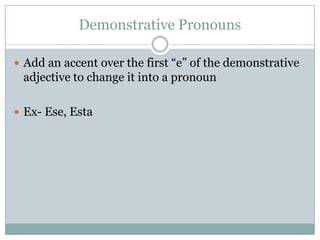
Demonstrative PronounsAdd an accent over the first “e” of the demonstrative adjective to change it into a pronounEx- Ese, Esta
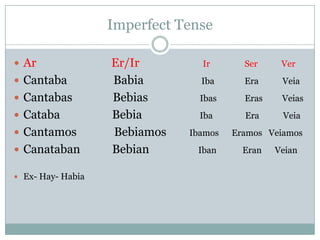
Imperfect TenseArEr/IrIrSerVerCantaba                Babia                    Iba              Era           VeiaCantabasBebiasIbas             Eras         VeiasCatabaBebiaIba               Era           VeiaCantamosBebiamosIbamosEramosVeiamosCanatabanBebianIbanEranVeianEx- Hay- Habia
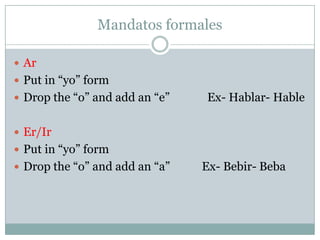
MandatosformalesArPut in “yo” formDrop the “o” and add an “e”             Ex- Hablar- HableEr/IrPut in “yo” formDrop the “o” and add an “a”           Ex- Bebir- Beba
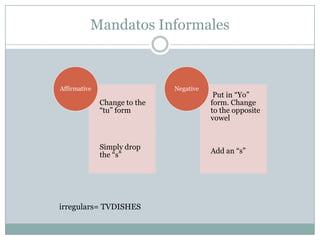
MandatosInformalesirregulars= TVDISHES
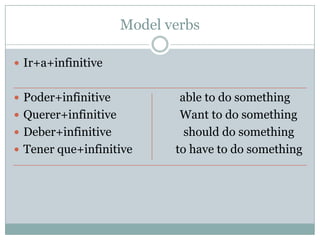
Model verbsIr+a+infinitivePoder+infinitive                        able to do somethingQuerer+infinitive                      Want to do somethingDeber+infinitive                         should do somethingTenerque+infinitive               to have to do something
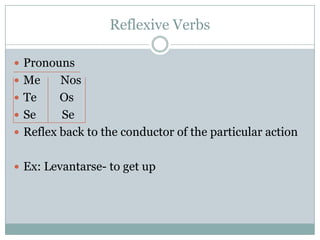
Reflexive VerbsPronounsMe       NosTeOsSe         SeReflex back to the conductor of the particular actionEx: Levantarse- to get up
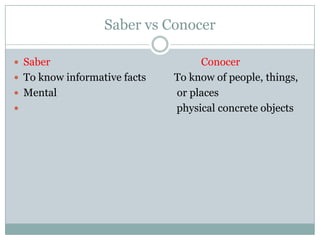
Saber vsConocerSaber  ConocerTo know informative facts           To know of people, things,Mental                                               or places                                                           physical concrete objects

Grammar book

  • 1.
    Mateo Cooper2nd periodEl9 de deciembreGrammar Book
  • 2.
    Table of ContentsSer Commands MandatosFormalesEstar Irregulars - InformalesVerbs Like Gustar IOPs Modal VerbsHacer expressions Snakes ReflexivesPreteritoSnakies Saber vsconocerTrigger Words Se Impersonal Car, Gar, Zar Past Participle as AdjCucaracha Verbs El FuturoDOPs Demonstrative Adj Demonstrative Pronouns imperfect tense
  • 3.
    SerUse the verbSer under these circumstancesDescription Possession Ex: Soy AltoOrigin EventsCharacteristics DatesTime Questions dealing with serOccupation Quees? Como es? Quienes?Relationships Quehoraes? Quehace?
  • 4.
    EstarEstar is similarto the verb ser, except estar is used do describe a present condition, a location, emotions, and healthEx: EstoymuyfelizWhen using Estar in the “ing” form, the ending of the word must be changed. An “ar” ending verb changes to andoAn “er” ending verb changes to endoAn “ir” ending verb changes to yendoEx: Hablar changes to Hablando. Comer changes to Comendo. Questions dealing with estar: Como Estas? Como Esta? DondeEstas?
  • 5.
    Verbs like GustarGustarvery different from many other verbs. It is conjugated differently and you must put a pronoun in front of the verb. Gustarisnt the only verb conjugated this way, other verbs like gustar include: facinar, doler, faltar, molestar, encantar, importar, disgustar, and pintarThe pronouns to use in front if these verbs goes as follows:Yo form- MeNosotros form- nosTuForm-TeVosotros form- osEl/ella form- Le Ustedes form- LesEx: Me Gusta el beisbolALSO!!- if the direct object of the verb is plural, then the “ar” must be replace with “an”Ex: Me Gustanmanzanas
  • 6.
    Hacer ExpressionsHace +Time + Que + Conjugated verbThen conjugated verb can be in any tenseEx: Hacedos añosque vivo en la Francia
  • 7.
    PreteritoThe Preterito isa definite time in the past with a beginning and/or endingConjugating verbs is el preterito goes as follows:HablarEscribir ComerYo-hableescribiComiTu-hablasteescribisteComisteEl-HabloescribioComioNos-hablamosescribimosComimosUds-hablaronescribieronComieron
  • 8.
    Trigger WordsAyer- yesterday - these are examples of Anteayer- day before yesterday trigger words that can be A lasocho- 8 o’clock used in the preterito.El miercoles- On WednesdayEl dia anterior- day beforeAyer por la manana- yesterday morningEl otrodia- The other dayUnavez- one timeEstatarde- this afternoonEstanoche- tonightEntonces- thenHace dos dias- two days ago
  • 9.
    Car, Gar, ZarVerbsending in car, gar, or zar are conjugated in their own special way that goes as followsTocarJugarComenzarYo-toquejugueComenceTu-tocastejugasteComenzasteEl- tocojugoComenzoNos- tocamosjugamosComenzamosUds.- tocaronjugaronComenzaronEx: Juguebeisbolayer
  • 10.
    Spock VerbsFuiFuimosFuisteFuisteisFueFueroni imosisteisteisioierondarserverirhacerHicehicimosHicistehicisteisHizohicieron
  • 11.
    Cucaracha VerbsAndar- anduvEstar-estuvPoder- pudPoner- pus When conjugating cucaracha Querer- quis verbs, they change into these formsSaber- supTener- tuvYo- eNosotros- imosVenir- vinTu- isteVosotros- isteisConducir - conduj el/ella- o Ustedes- ieronProducir- produjTraducir- tradujDeicr- dijTraer- traj
  • 12.
    DOPsLo, La, Los,LasDOPs can hook onto its verb, but only in 3 situations1. infinitiveEx: Voy a comerlo2. affirmative commandsEx: Bebala!3. gerunds/ present progressiveEx: EstoycomiendoloAll other times the DOP goes before the conjugated verbEx: Yo lo comiIn a negative command, the DOP comes after “no” and before the commandEx: Yo no lo comi
  • 13.
    CommandsFor “ar” verbs drop the o and add eEx: Hable!For “er/ir” verbs drop the o and add aEx: Viva!
  • 14.
    IrregularsThe irregular commandsare known as TVDISHESTenerTenga(n)VenirVenga(n)Dar dé(n) & decirdiga(n)IrVaya(n)Ser Sea(n)HacerHaga(n)EstarEsté(n)Saber Sepa(n)
  • 15.
    IOPsMe, te, le,nos, os, lesIOPs answer to whom or for whomMust have DOP to have an IOPIOP comes before the DOPEx: I gave it to her. Se lo di. Change to se
  • 16.
    Snakes and SnakeysInthe snakes group”, there is a stem change in the 3rd personEx: Dormir Dorm
  • 17.
    Se impersonal“se” isused to show who is conducting the action
  • 18.
    Past Participle asAdjective- Agree with nouns they modify in gender and numberAdd- “ado” for “ar” verbsAdd- “ido” for “ir” verbsEx- El pollocomido, la manzana comida - los polloscomidos, lasmanzanascomidasIrregulars: Abrir-abierto, cubrir-cubierto, decir-dicho, escribir-escrito, hacer-hecho, morir-muerto, poner-puesto, Romper-roto, ver-visto, volver-vuelto, ir-ido
  • 19.
    El FuturoYo- infinitive+ e Nos- infinitive + emosTu- infinitive + as Vos- infinitive + eisEl- infinitive + a Uds- infinitive + anEx: ComereComeremosComerasComereisComeraComeranIrregulars: Decir-dir, Hacer-har, Salir-saldr, tener-tendr, valer-valdr, poder-podr, querer-querr, saber-sabr, caber-cabr, haber-habr
  • 20.
    Demonstrative AdjectivesAgree withboth gender and number with the noun they modifyAlways in front of the noun they modifyEste/Esta (this) Estos/Estas (these)Ese (that) Esos/Esas (those)
  • 21.
    Demonstrative PronounsAdd anaccent over the first “e” of the demonstrative adjective to change it into a pronounEx- Ese, Esta
  • 22.
    Imperfect TenseArEr/IrIrSerVerCantaba Babia Iba Era VeiaCantabasBebiasIbas Eras VeiasCatabaBebiaIba Era VeiaCantamosBebiamosIbamosEramosVeiamosCanatabanBebianIbanEranVeianEx- Hay- Habia
  • 23.
    MandatosformalesArPut in “yo”formDrop the “o” and add an “e” Ex- Hablar- HableEr/IrPut in “yo” formDrop the “o” and add an “a” Ex- Bebir- Beba
  • 24.
  • 25.
    Model verbsIr+a+infinitivePoder+infinitive able to do somethingQuerer+infinitive Want to do somethingDeber+infinitive should do somethingTenerque+infinitive to have to do something
  • 26.
    Reflexive VerbsPronounsMe NosTeOsSe SeReflex back to the conductor of the particular actionEx: Levantarse- to get up
  • 27.
    Saber vsConocerSaber ConocerTo know informative facts To know of people, things,Mental or places physical concrete objects