Grammar Book Carlota Davis
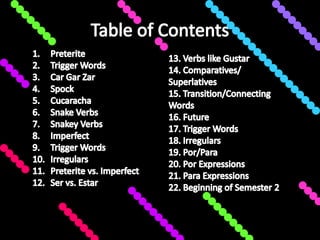
Table of Contents Preterite Trigger Words Car Gar Zar Spock CucarachaSnake Verbs  Snakey Verbs Imperfect Trigger Words Irregulars Preterite vs. Imperfect Ser vs. Estar13. Verbs like Gustar 14. Comparatives/ Superlatives 15. Transition/Connecting Words 16. Future 17. Trigger Words 18. Irregulars 19. Por/Para 20. Por Expressions 21. Para Expressions 22. Beginning of Semester 2
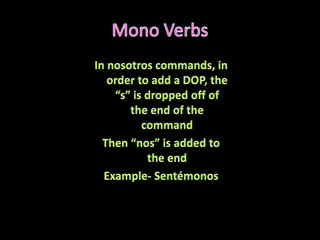
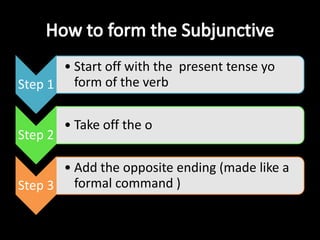
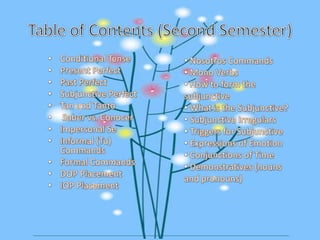
Table of Contents (SecondSemester) Conditional Tense PresentPerfectPastPerfectSubjunctivePerfectTan and Tanto  Saber vs. ConocerImpersonal Se Informal (Tu) CommandsFormal CommandsDOP PlacementIOP Placement Nosotros Commands
 Mono Verbs
Howtoformthesubjunctive
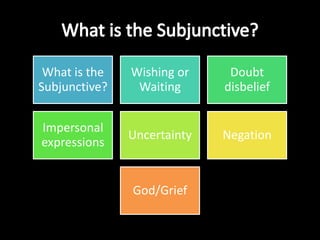
WhatistheSubjunctive?
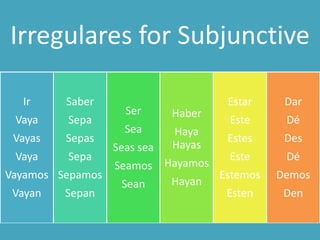
SubjunctiveIrregulars
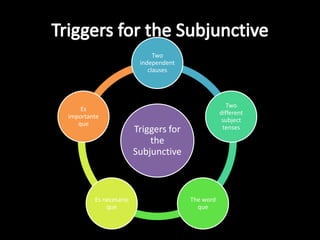
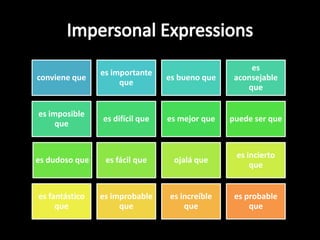
TriggersforSubjunctive
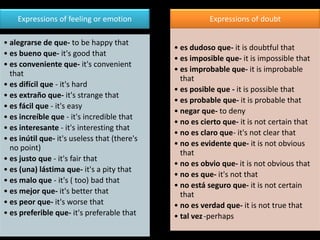
Expressionsof Emotion
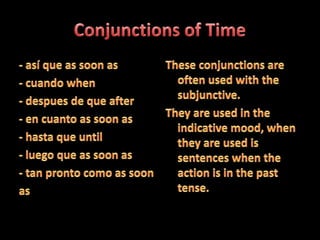
Conjunctionsof Time
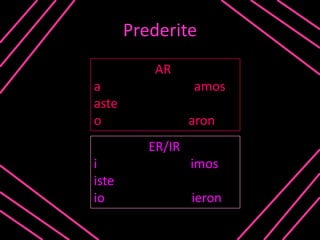
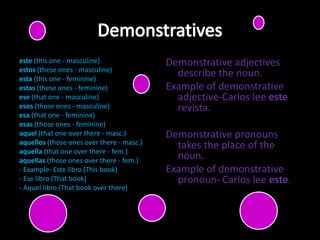
Demonstratives (nouns and pronouns)  Prederite                    AR a                             amosasteo                           aron                 ER/IR iimosisteioieron
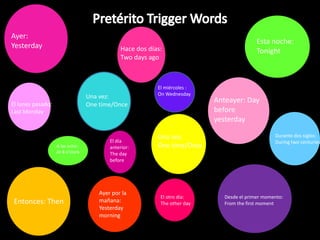
Pretérito Trigger Words Ayer: YesterdayEstanoche: TonightHace dos días: Two days agoEl miércoles : On WednesdayUnavez: One time/OnceAnteayer: Day before yesterdayEl lunespasado: Last MondayUnavez: One time/OnceDurante dos siglos: During two centuriesEl día anterior: The day beforeA lasocho: At 8 o'clockAyer por la mañana: Yesterday morningEl otrodía: The other dayDesde el primer momento: From the first momentEntonces: Then
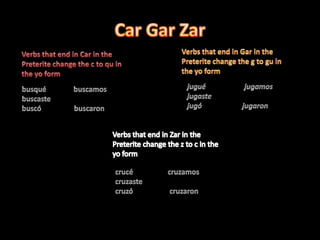
Car Gar Zar Verbs that end in Gar in the Preterite change the g to gu in the yo form   Verbs that end in Car in the Preterite change the c to qu in the yo form   juguéjugamosjugastejugójugaronbusqué               buscamosbuscastebuscó                  buscaronVerbs that end in Zar in the Preterite change the z to c in the yo form  crucé                   cruzamoscruzastecruzó                    cruzaron
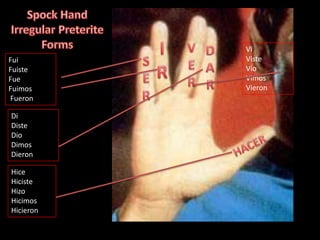
Spock HandIrregular Preterite Forms IRVERDARVi Viste Vio Vimos Vieron SERFui Fuiste FueFuimos  Fueron DiDiste Dio Dimos Dieron HACERHice Hiciste Hizo HicimosHicieron
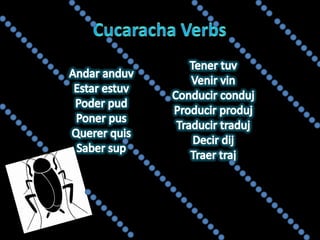
Cucaracha Verbs TenertuvVenirvinConducircondujProducirprodujTraducirtradujDecirdijTraer trajAndaranduvEstarestuvPoderpudPoner pusQuererquisSaber sup
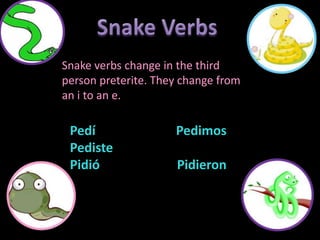
Snake Verbs Snake verbs change in the third person preterite. They change from an i to an e. PedíPedimosPedistePidióPidieron
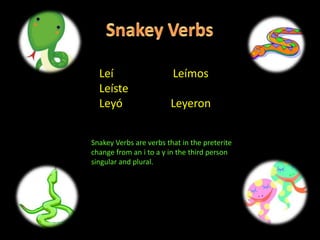
Snakey Verbs LeíLeímosLeísteLeyóLeyeronSnakey Verbs are verbs that in the preterite change from an i to a y in the third person singular and plural.
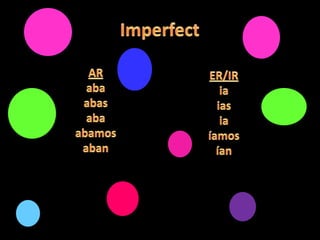
Imperfect ARabaabasabaabamosabanER/IRiaiasiaíamosían
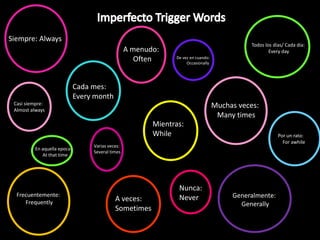
Imperfecto Trigger Words Siempre: AlwaysTodos los días/ Cadadía: Every dayA menudo: OftenDe vez en cuando: OccasionallyCadames: Every monthMuchasveces: Many timesCasisiempre: Almost alwaysMientras: WhilePor un rato: For awhileVariasveces: Several timesEn aquellaepoca: At that timeNunca: NeverGeneralmente: GenerallyFrecuentemente: FrequentlyA veces: Sometimes
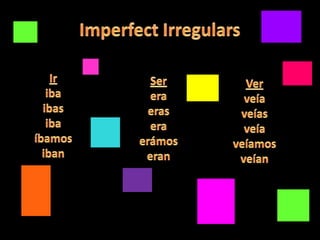
Imperfect Irregulars IribaibasibaíbamosibanSereraeras era erámoseranVerveíaveíasveíaveíamosveían
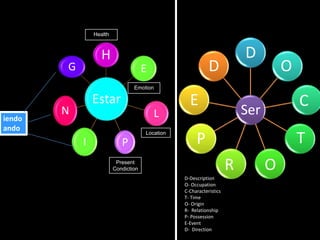
HealthOEmotionCOriginiendoandoTLocationORPresent CondictionD-Description O- Occupation C-Characteristics T- Time O- Origin R-  RelationshipP- Possession E-Event D-  Direction
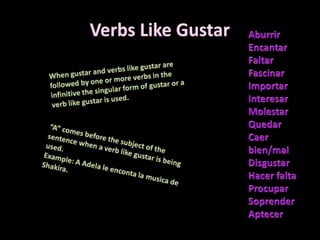
Verbs Like Gustar AburrirEncantarFaltarFascinarImportarInteresarMolestarQuedarCaerbien/mal DisgustarHacerfaltaProcuparSoprenderAptecerWhen gustar and verbs like gustar are followed by one or more verbs in the infinitive the singular form of gustar or a verb like gustar is used. “A” comes before the subject of the sentence when a verb like gustar is being used. Example: A Adela le enconta la musica de Shakira.
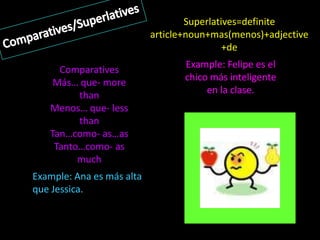
Comparatives/SuperlativesSuperlatives=definite article+noun+mas(menos)+adjective+deExample: Felipe es el chico más inteligente en la clase. Comparatives Más… que- more than Menos… que- less than Tan…como- as…as Tanto…como- as much  Example: Ana esmásaltaque Jessica.
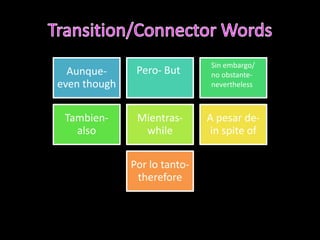
Transition/Connector WordsSin embargo/ no obstante-neverthelessPero- But
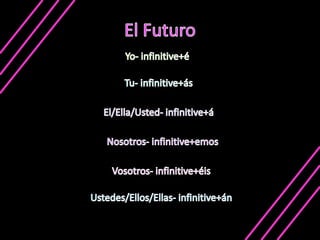
El FuturoYo- infinitive+éTu- infinitive+ásEl/Ella/Usted- infinitive+áNosotros- infinitive+emosVosotros- infinitive+éisUstedes/Ellos/Ellas- infinitive+án
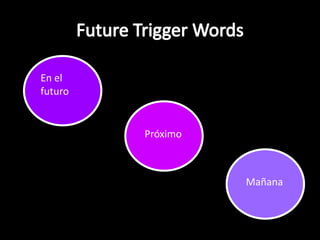
Future Trigger WordsEn el futuroEn el futuro  PróximoMañana
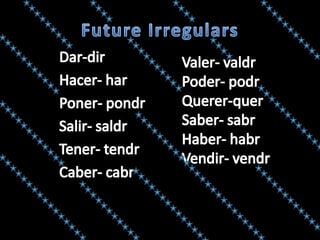
Future Irregulars Dar-dir Hacer- harPoner- pondrSalir- saldrTener- tendrCaber- cabrValer- valdrPoder- podrQuerer-querSaber- sabrHaber- habrVendir- vendr
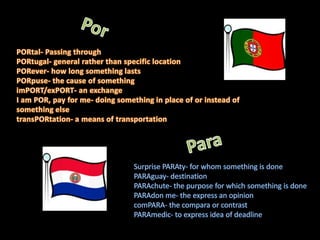
PorPORtal- Passing through PORtugal- general rather than specific location PORever- how long something lasts PORpuse- the cause of something imPORT/exPORT- an exchange I am POR, pay for me- doing something in place of or instead of something else transPORtation- a means of transportation ParaSurprise PARAty- for whom something is done PARAguay- destination PARAchute- the purpose for which something is done PARAdon me- the express an opinion comPARA- the compara or contrast PARAmedic- to express idea of deadline
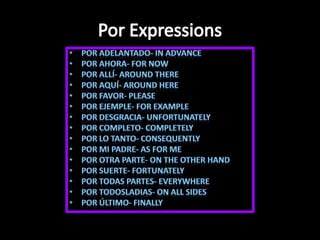
Por Expressions Por adelantado- in advancePor ahora- fornowPor allí- aroundtherePor aquí- aroundherePor favor- pleasePor ejemple- forexamplePor desgracia- unfortunatelyPor completo- completelyPor lo tanto- consequentlyPor mi padre- as for me Por otra parte- ontheotherhandPor suerte- fortunatelyPor todas partes- everywherePor todosladias- onallsidesPor último- finally
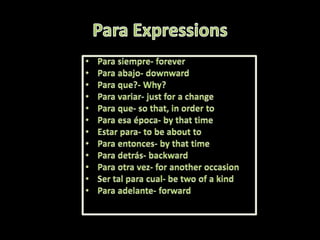
Para Expressions Para siempre- foreverPara abajo- downwardPara que?- Why? Para variar- justfor a changePara que- so that, in ordertoPara esa época- bythat time Estar para- tobeabouttoPara entonces- bythat timePara detrás- backwardPara otra vez- foranotheroccasionSer tal para cual- betwo of a kindPara adelante- forward
Semester 2
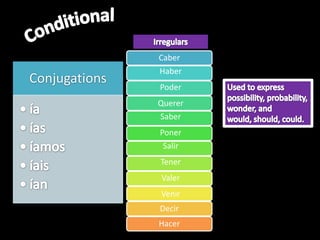
ConditionalIrregularsHaberUsed to express possibility, probability, wonder, and would, should, could. PoderQuererSaberPonerSalirTenerValerVenir
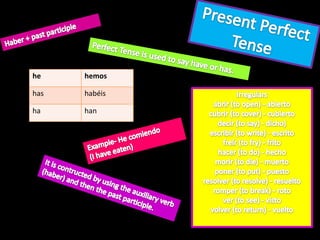
Present Perfect Tense Haber + pastparticiplePerfect Tense isusedtosayhaveor has.Irregulars abrir (to open) - abiertocubrir (to cover) - cubiertodecir (to say) - dicho)escribir (to write) - escritofreír (to fry) - fritohacer (to do) - hechomorir (to die) - muertoponer (to put) - puestoresolver (to resolve) - resueltoromper (to break) - rotover (to see) - vistovolver (to return) - vueltoExample- He comiendo (I haveeaten) Itiscontructedbyusingtheauxiliaryverb (haber) and thenthepastparticiple.
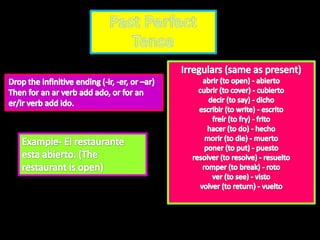
Past Perfect Tense Irregulars (same as present) abrir (to open) - abiertocubrir (to cover) - cubiertodecir (to say) - dichoescribir (to write) - escritofreír (to fry) - fritohacer (to do) - hechomorir (to die) - muertoponer (to put) - puestoresolver (to resolve) - resueltoromper (to break) - rotover (to see) - vistovolver (to return) - vueltoDroptheinfinitiveending (-ir, -er, or –ar) Thenforanarverbaddado, orforaner/ir verbadd ido. Example- El restaurante esta abierto. (The restaurant is open)
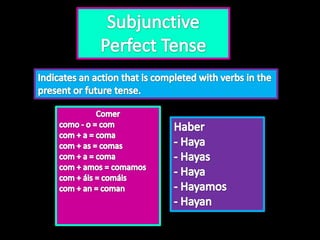
Subjunctive Perfect TenseIndicates an action that is completed with verbs in the present or future tense. Comercomo - o = comcom + a = comacom + as = comascom + a = comacom + amos = comamoscom + áis = comáiscom + an = comanHaber - Haya- Hayas- Haya- Hayamos- Hayan
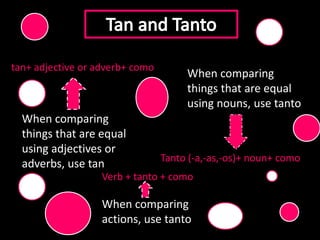
Tan and Tantotan+ adjectiveoradverb+ comoWhencomparingthingsthat are equalusingnouns, use tantoWhencomparingthingsthat are equalusingadjectivesoradverbs, use tanTanto (-a,-as,-os)+ noun+ comoVerb + tanto + comoWhencomparingactions, use tanto
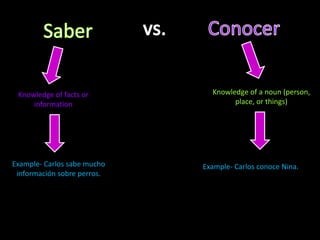
Conocervs.SaberKnowledge of a noun (person, place, orthings)  Knowledge of factsorinformationExample- Carlos sabe mucho información sobre perros.Example- Carlos conoce Nina.
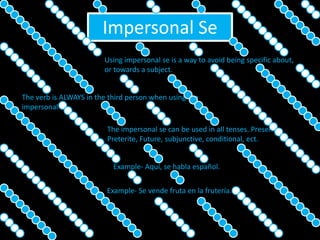
Impersonal Se Using impersonal se is a way to avoid being specific about, or towards a subject. The verb is ALWAYS in the third person when using the impersonal se. The impersonal se can be used in all tenses. Present, Preterite, Future, subjunctive, conditional, ect. Example- Aquí, se habla español. Example- Se vende fruta en la frutería.
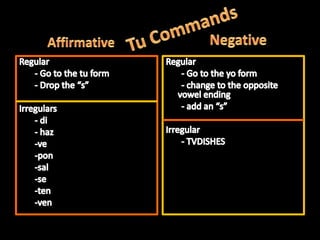
Tu CommandsRegular        - Go to the tu form        - Drop the “s” Irregulars        - di       - haz       -ve       -pon       -sal       -se       -ten       -venRegular        - Go to the yo form       - change to the opposite vowel ending        - add an “s” Irregular        - TVDISHES NegativeAffirmative
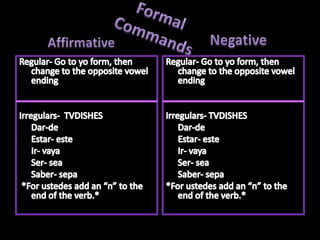
Formal CommandsRegular- Go to yo form, then change to the opposite vowel endingIrregulars-  TVDISHES	Dar-deEstar- esteIr- vaya	Ser- sea	Saber- sepa *For ustedes add an “n” to the end of the verb.*Regular- Go to yo form, then change to the opposite vowel ending Irregulars- TVDISHES	Dar-deEstar- esteIr- vaya	Ser- sea	Saber- sepa*For ustedes add an “n” to the end of the verb.*NegativeAffirmative
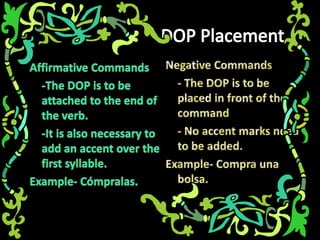
DOP Placement Affirmative Commands	-The DOP is to be attached to the end of the verb. 	-It is also necessary to add an accent over the first syllable. Example- Cómpralas. Negative Commands 	- The DOP is to be placed in front of the command	- No accent marks need to be added. Example- Compraunabolsa.
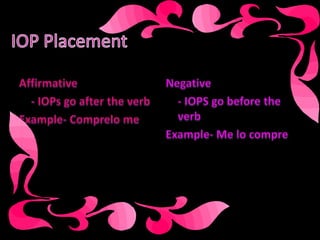
IOP PlacementAffirmative	- IOPsgoaftertheverbExample- Comprelo me Negative	- IOPS gobeforetheverbExample- Me lo compre
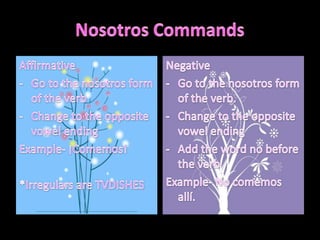
Nosotros CommandsAffirmative Go to the nosotros form of the verb
Change to the opposite vowel ending Example- ¡Comemos! *Irregulars are TVDISHESNegative Go to the nosotros form of the verb.
Change to the opposite vowel ending

Grammar handbook

  • 1.
  • 2.
    Table of ContentsPreterite Trigger Words Car Gar Zar Spock CucarachaSnake Verbs Snakey Verbs Imperfect Trigger Words Irregulars Preterite vs. Imperfect Ser vs. Estar13. Verbs like Gustar 14. Comparatives/ Superlatives 15. Transition/Connecting Words 16. Future 17. Trigger Words 18. Irregulars 19. Por/Para 20. Por Expressions 21. Para Expressions 22. Beginning of Semester 2
  • 3.
    Table of Contents(SecondSemester) Conditional Tense PresentPerfectPastPerfectSubjunctivePerfectTan and Tanto Saber vs. ConocerImpersonal Se Informal (Tu) CommandsFormal CommandsDOP PlacementIOP Placement Nosotros Commands
  • 4.
  • 5.
  • 6.
  • 7.
  • 8.
  • 9.
  • 10.
  • 11.
    Demonstratives (nouns andpronouns) Prederite AR a amosasteo aron ER/IR iimosisteioieron
  • 12.
    Pretérito Trigger WordsAyer: YesterdayEstanoche: TonightHace dos días: Two days agoEl miércoles : On WednesdayUnavez: One time/OnceAnteayer: Day before yesterdayEl lunespasado: Last MondayUnavez: One time/OnceDurante dos siglos: During two centuriesEl día anterior: The day beforeA lasocho: At 8 o'clockAyer por la mañana: Yesterday morningEl otrodía: The other dayDesde el primer momento: From the first momentEntonces: Then
  • 13.
    Car Gar ZarVerbs that end in Gar in the Preterite change the g to gu in the yo form Verbs that end in Car in the Preterite change the c to qu in the yo form juguéjugamosjugastejugójugaronbusqué buscamosbuscastebuscó buscaronVerbs that end in Zar in the Preterite change the z to c in the yo form crucé cruzamoscruzastecruzó cruzaron
  • 14.
    Spock HandIrregular PreteriteForms IRVERDARVi Viste Vio Vimos Vieron SERFui Fuiste FueFuimos Fueron DiDiste Dio Dimos Dieron HACERHice Hiciste Hizo HicimosHicieron
  • 15.
    Cucaracha Verbs TenertuvVenirvinConducircondujProducirprodujTraducirtradujDecirdijTraertrajAndaranduvEstarestuvPoderpudPoner pusQuererquisSaber sup
  • 16.
    Snake Verbs Snakeverbs change in the third person preterite. They change from an i to an e. PedíPedimosPedistePidióPidieron
  • 17.
    Snakey Verbs LeíLeímosLeísteLeyóLeyeronSnakeyVerbs are verbs that in the preterite change from an i to a y in the third person singular and plural.
  • 18.
  • 19.
    Imperfecto Trigger WordsSiempre: AlwaysTodos los días/ Cadadía: Every dayA menudo: OftenDe vez en cuando: OccasionallyCadames: Every monthMuchasveces: Many timesCasisiempre: Almost alwaysMientras: WhilePor un rato: For awhileVariasveces: Several timesEn aquellaepoca: At that timeNunca: NeverGeneralmente: GenerallyFrecuentemente: FrequentlyA veces: Sometimes
  • 20.
    Imperfect Irregulars IribaibasibaíbamosibanSereraerasera erámoseranVerveíaveíasveíaveíamosveían
  • 22.
    HealthOEmotionCOriginiendoandoTLocationORPresent CondictionD-Description O-Occupation C-Characteristics T- Time O- Origin R- RelationshipP- Possession E-Event D- Direction
  • 23.
    Verbs Like GustarAburrirEncantarFaltarFascinarImportarInteresarMolestarQuedarCaerbien/mal DisgustarHacerfaltaProcuparSoprenderAptecerWhen gustar and verbs like gustar are followed by one or more verbs in the infinitive the singular form of gustar or a verb like gustar is used. “A” comes before the subject of the sentence when a verb like gustar is being used. Example: A Adela le enconta la musica de Shakira.
  • 24.
    Comparatives/SuperlativesSuperlatives=definite article+noun+mas(menos)+adjective+deExample: Felipees el chico más inteligente en la clase. Comparatives Más… que- more than Menos… que- less than Tan…como- as…as Tanto…como- as much Example: Ana esmásaltaque Jessica.
  • 25.
    Transition/Connector WordsSin embargo/no obstante-neverthelessPero- But
  • 26.
    El FuturoYo- infinitive+éTu-infinitive+ásEl/Ella/Usted- infinitive+áNosotros- infinitive+emosVosotros- infinitive+éisUstedes/Ellos/Ellas- infinitive+án
  • 27.
    Future Trigger WordsEnel futuroEn el futuro PróximoMañana
  • 28.
    Future Irregulars Dar-dirHacer- harPoner- pondrSalir- saldrTener- tendrCaber- cabrValer- valdrPoder- podrQuerer-querSaber- sabrHaber- habrVendir- vendr
  • 29.
    PorPORtal- Passing throughPORtugal- general rather than specific location PORever- how long something lasts PORpuse- the cause of something imPORT/exPORT- an exchange I am POR, pay for me- doing something in place of or instead of something else transPORtation- a means of transportation ParaSurprise PARAty- for whom something is done PARAguay- destination PARAchute- the purpose for which something is done PARAdon me- the express an opinion comPARA- the compara or contrast PARAmedic- to express idea of deadline
  • 30.
    Por Expressions Poradelantado- in advancePor ahora- fornowPor allí- aroundtherePor aquí- aroundherePor favor- pleasePor ejemple- forexamplePor desgracia- unfortunatelyPor completo- completelyPor lo tanto- consequentlyPor mi padre- as for me Por otra parte- ontheotherhandPor suerte- fortunatelyPor todas partes- everywherePor todosladias- onallsidesPor último- finally
  • 31.
    Para Expressions Parasiempre- foreverPara abajo- downwardPara que?- Why? Para variar- justfor a changePara que- so that, in ordertoPara esa época- bythat time Estar para- tobeabouttoPara entonces- bythat timePara detrás- backwardPara otra vez- foranotheroccasionSer tal para cual- betwo of a kindPara adelante- forward
  • 32.
  • 33.
    ConditionalIrregularsHaberUsed to expresspossibility, probability, wonder, and would, should, could. PoderQuererSaberPonerSalirTenerValerVenir
  • 34.
    Present Perfect TenseHaber + pastparticiplePerfect Tense isusedtosayhaveor has.Irregulars abrir (to open) - abiertocubrir (to cover) - cubiertodecir (to say) - dicho)escribir (to write) - escritofreír (to fry) - fritohacer (to do) - hechomorir (to die) - muertoponer (to put) - puestoresolver (to resolve) - resueltoromper (to break) - rotover (to see) - vistovolver (to return) - vueltoExample- He comiendo (I haveeaten) Itiscontructedbyusingtheauxiliaryverb (haber) and thenthepastparticiple.
  • 35.
    Past Perfect TenseIrregulars (same as present) abrir (to open) - abiertocubrir (to cover) - cubiertodecir (to say) - dichoescribir (to write) - escritofreír (to fry) - fritohacer (to do) - hechomorir (to die) - muertoponer (to put) - puestoresolver (to resolve) - resueltoromper (to break) - rotover (to see) - vistovolver (to return) - vueltoDroptheinfinitiveending (-ir, -er, or –ar) Thenforanarverbaddado, orforaner/ir verbadd ido. Example- El restaurante esta abierto. (The restaurant is open)
  • 36.
    Subjunctive Perfect TenseIndicatesan action that is completed with verbs in the present or future tense. Comercomo - o = comcom + a = comacom + as = comascom + a = comacom + amos = comamoscom + áis = comáiscom + an = comanHaber - Haya- Hayas- Haya- Hayamos- Hayan
  • 37.
    Tan and Tantotan+adjectiveoradverb+ comoWhencomparingthingsthat are equalusingnouns, use tantoWhencomparingthingsthat are equalusingadjectivesoradverbs, use tanTanto (-a,-as,-os)+ noun+ comoVerb + tanto + comoWhencomparingactions, use tanto
  • 38.
    Conocervs.SaberKnowledge of anoun (person, place, orthings) Knowledge of factsorinformationExample- Carlos sabe mucho información sobre perros.Example- Carlos conoce Nina.
  • 39.
    Impersonal Se Usingimpersonal se is a way to avoid being specific about, or towards a subject. The verb is ALWAYS in the third person when using the impersonal se. The impersonal se can be used in all tenses. Present, Preterite, Future, subjunctive, conditional, ect. Example- Aquí, se habla español. Example- Se vende fruta en la frutería.
  • 40.
    Tu CommandsRegular - Go to the tu form - Drop the “s” Irregulars - di - haz -ve -pon -sal -se -ten -venRegular - Go to the yo form - change to the opposite vowel ending - add an “s” Irregular - TVDISHES NegativeAffirmative
  • 41.
    Formal CommandsRegular- Goto yo form, then change to the opposite vowel endingIrregulars- TVDISHES Dar-deEstar- esteIr- vaya Ser- sea Saber- sepa *For ustedes add an “n” to the end of the verb.*Regular- Go to yo form, then change to the opposite vowel ending Irregulars- TVDISHES Dar-deEstar- esteIr- vaya Ser- sea Saber- sepa*For ustedes add an “n” to the end of the verb.*NegativeAffirmative
  • 42.
    DOP Placement AffirmativeCommands -The DOP is to be attached to the end of the verb. -It is also necessary to add an accent over the first syllable. Example- Cómpralas. Negative Commands - The DOP is to be placed in front of the command - No accent marks need to be added. Example- Compraunabolsa.
  • 43.
    IOP PlacementAffirmative - IOPsgoaftertheverbExample-Comprelo me Negative - IOPS gobeforetheverbExample- Me lo compre
  • 44.
    Nosotros CommandsAffirmative Goto the nosotros form of the verb
  • 45.
    Change to theopposite vowel ending Example- ¡Comemos! *Irregulars are TVDISHESNegative Go to the nosotros form of the verb.
  • 46.
    Change to theopposite vowel ending