Bautista Sassi
Period 2 SP2H
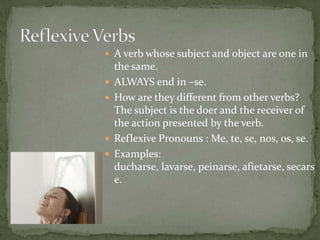
 A verb whose subject and object are one in
    the same.
   ALWAYS end in –se.
   How are they different from other verbs?
    The subject is the doer and the receiver of
    the action presented by the verb.
   Reflexive Pronouns : Me, te, se, nos, os, se.
   Examples:
    ducharse, lavarse, peinarse, afietarse, secars
    e.
 Affirmative: Simply drop the “s”. Comes, Hablas, etc.
 When you change the syllabification of a verb an “ ‘ “
  (accent mark) is added to the 3rd to last syllable.
 Examples: Beber el aqua.-¡Bèbela!, Leer el Periodico-
  ¡Leelo!
 Negative: Must use opposite verb letters er=a+s b/c its
  in tu format. Ir=as as well.

    DON’T EAT IT     lo            No lo comas
          Comer
     NO
          como      comas
decir --> no digas
 Irregulars:              hacer --> no hagas
                           ir --> no vayas
Di - Decir
                           poner --> no pongas
Haz – Hacer
                           salir --> no salgas
Ve - Ir
                           venir --> no vengas
Pon - Poner
                           ser --> no seas
Sal - Salir
Sè - Ser        Take the present indicative
Ten - Tener
                1st person singular
Ven - Venir
                conjugation, then replace
                the ending with -as. the
                verb ir is the exception.
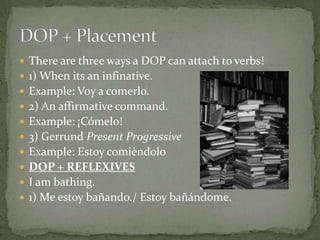
 There are three ways a DOP can attach to verbs!
 1) When its an infinative.
 Example: Voy a comerlo.
 2) An affirmative command.
 Example: ¡Cómelo!
 3) Gerrund Present Progressive
 Example: Estoy comièndolo
 DOP + REFLEXIVES
 I am bathing.
 1) Me estoy bañando./ Estoy bañándome.
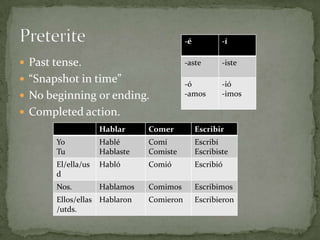
-é           -í

 Past tense.                             -aste        -iste

 “Snapshot in time”                      -ó           -ió
 No beginning or ending.                 -amos        -imos

 Completed action.
                    Hablar     Comer           Escribir
       Yo           Hablé      Comí            Escribí
       Tu           Hablaste   Comiste         Escribiste
       El/ella/us   Habló      Comió           Escribió
       d
       Nos.         Hablamos   Comimos         Escribimos
       Ellos/ellas Hablaron    Comieron        Escribieron
       /utds.

Grammar book

  • 1.
  • 2.
     A verbwhose subject and object are one in the same.  ALWAYS end in –se.  How are they different from other verbs? The subject is the doer and the receiver of the action presented by the verb.  Reflexive Pronouns : Me, te, se, nos, os, se.  Examples: ducharse, lavarse, peinarse, afietarse, secars e.
  • 3.
     Affirmative: Simplydrop the “s”. Comes, Hablas, etc.  When you change the syllabification of a verb an “ ‘ “ (accent mark) is added to the 3rd to last syllable.  Examples: Beber el aqua.-¡Bèbela!, Leer el Periodico- ¡Leelo!  Negative: Must use opposite verb letters er=a+s b/c its in tu format. Ir=as as well.  DON’T EAT IT lo No lo comas Comer NO como comas
  • 4.
    decir --> nodigas  Irregulars: hacer --> no hagas ir --> no vayas Di - Decir poner --> no pongas Haz – Hacer salir --> no salgas Ve - Ir venir --> no vengas Pon - Poner ser --> no seas Sal - Salir Sè - Ser Take the present indicative Ten - Tener 1st person singular Ven - Venir conjugation, then replace the ending with -as. the verb ir is the exception.
  • 5.
     There arethree ways a DOP can attach to verbs!  1) When its an infinative.  Example: Voy a comerlo.  2) An affirmative command.  Example: ¡Cómelo!  3) Gerrund Present Progressive  Example: Estoy comièndolo  DOP + REFLEXIVES  I am bathing.  1) Me estoy bañando./ Estoy bañándome.
  • 6.
    -í  Past tense. -aste -iste  “Snapshot in time” -ó -ió  No beginning or ending. -amos -imos  Completed action. Hablar Comer Escribir Yo Hablé Comí Escribí Tu Hablaste Comiste Escribiste El/ella/us Habló Comió Escribió d Nos. Hablamos Comimos Escribimos Ellos/ellas Hablaron Comieron Escribieron /utds.