French 421-422 Chapter 2 Grammar 1
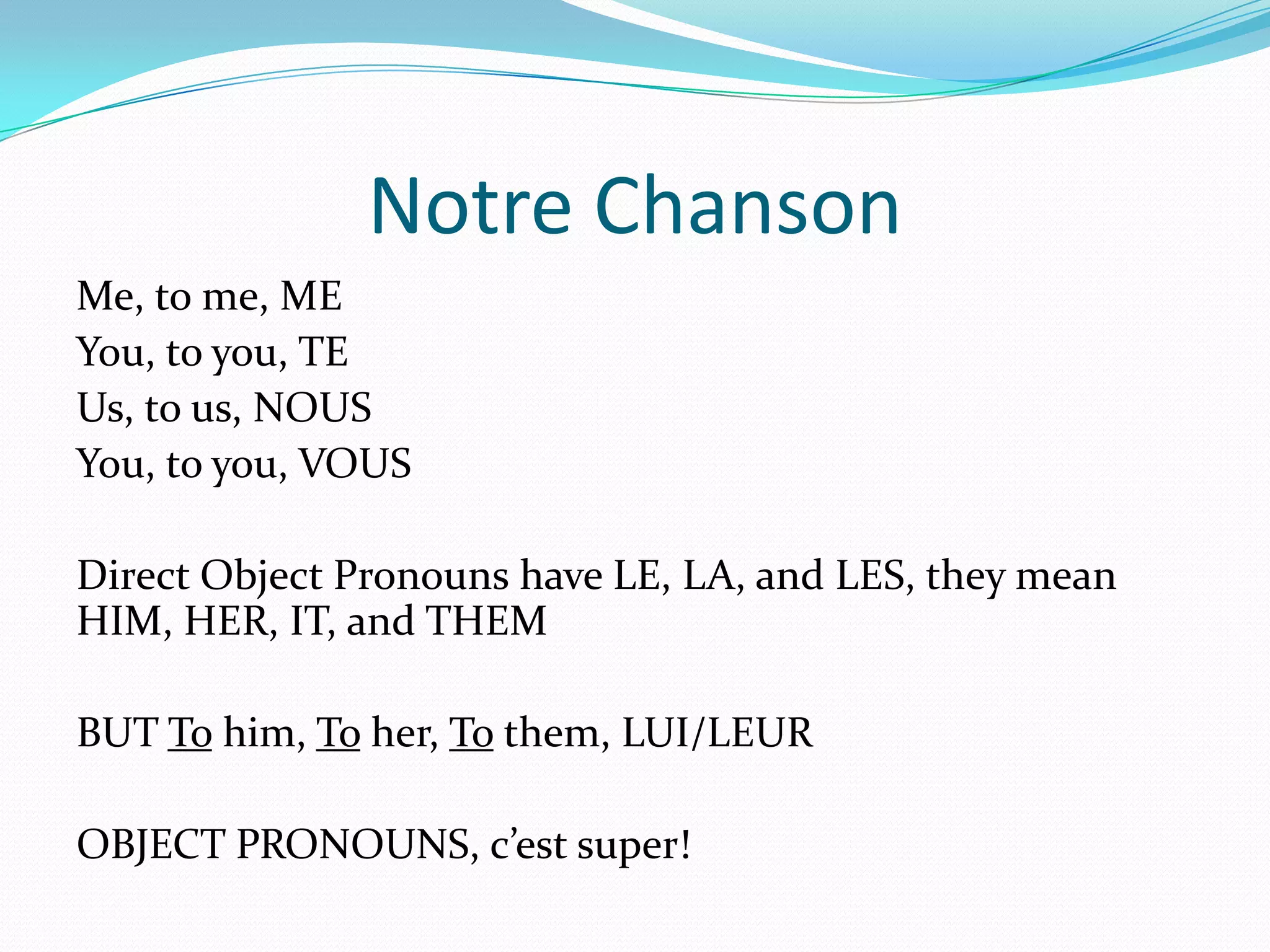
Notre Chanson
Me, to me, ME
You, to you, TE
Us, to us, NOUS
You, to you, VOUS

Direct Object Pronouns have LE, LA, and LES, they mean
HIM, HER, IT, and THEM

BUT To him, To her, To them, LUI/LEUR

OBJECT PRONOUNS, c’est super!
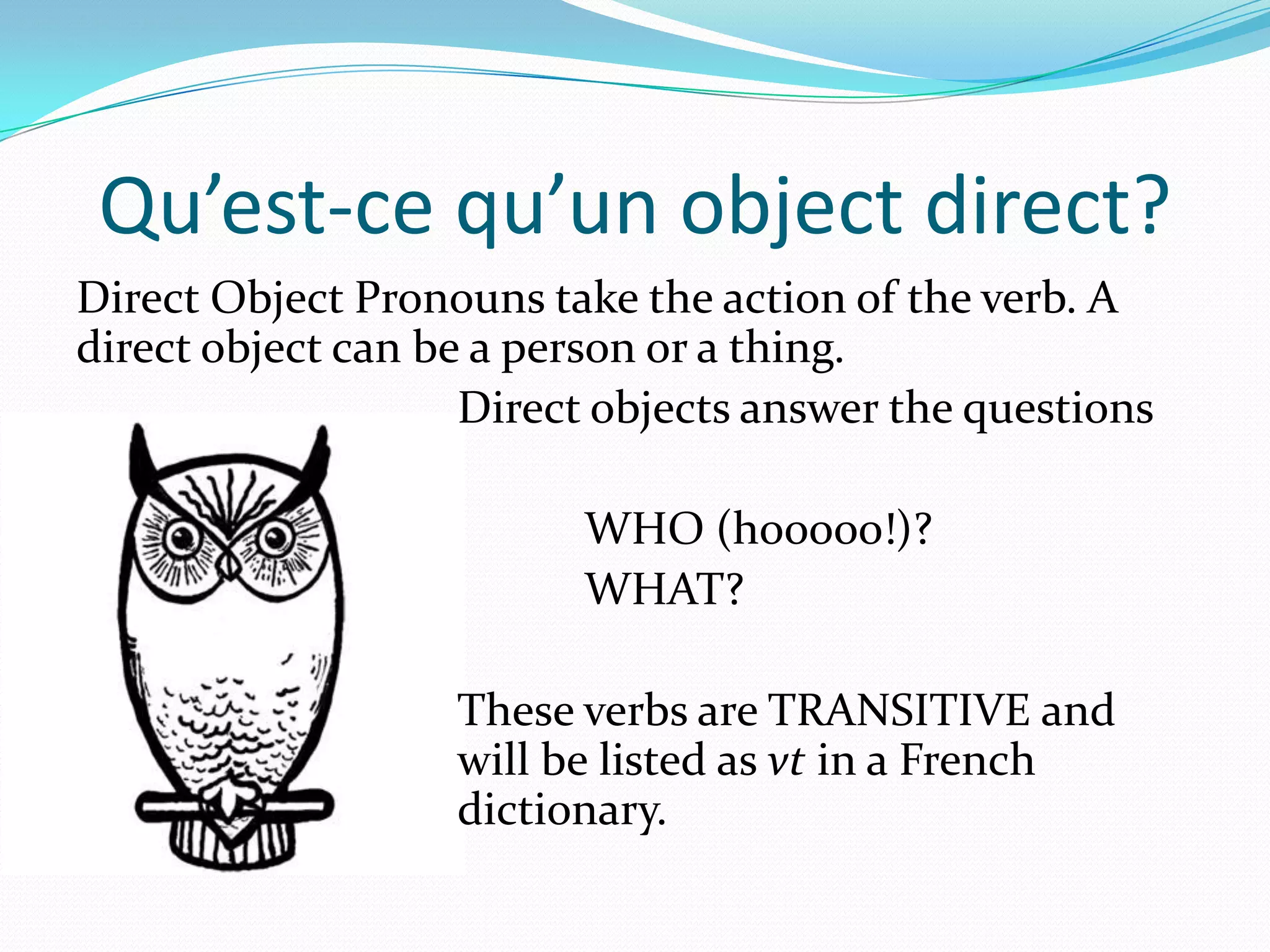
Qu’est-ce qu’un object direct?
Direct Object Pronouns take the action of the verb. A
direct object can be a person or a thing.
                    Direct objects answer the questions

                         WHO (hooooo!)?
                         WHAT?

                   These verbs are TRANSITIVE and
                   will be listed as vt in a French
                   dictionary.
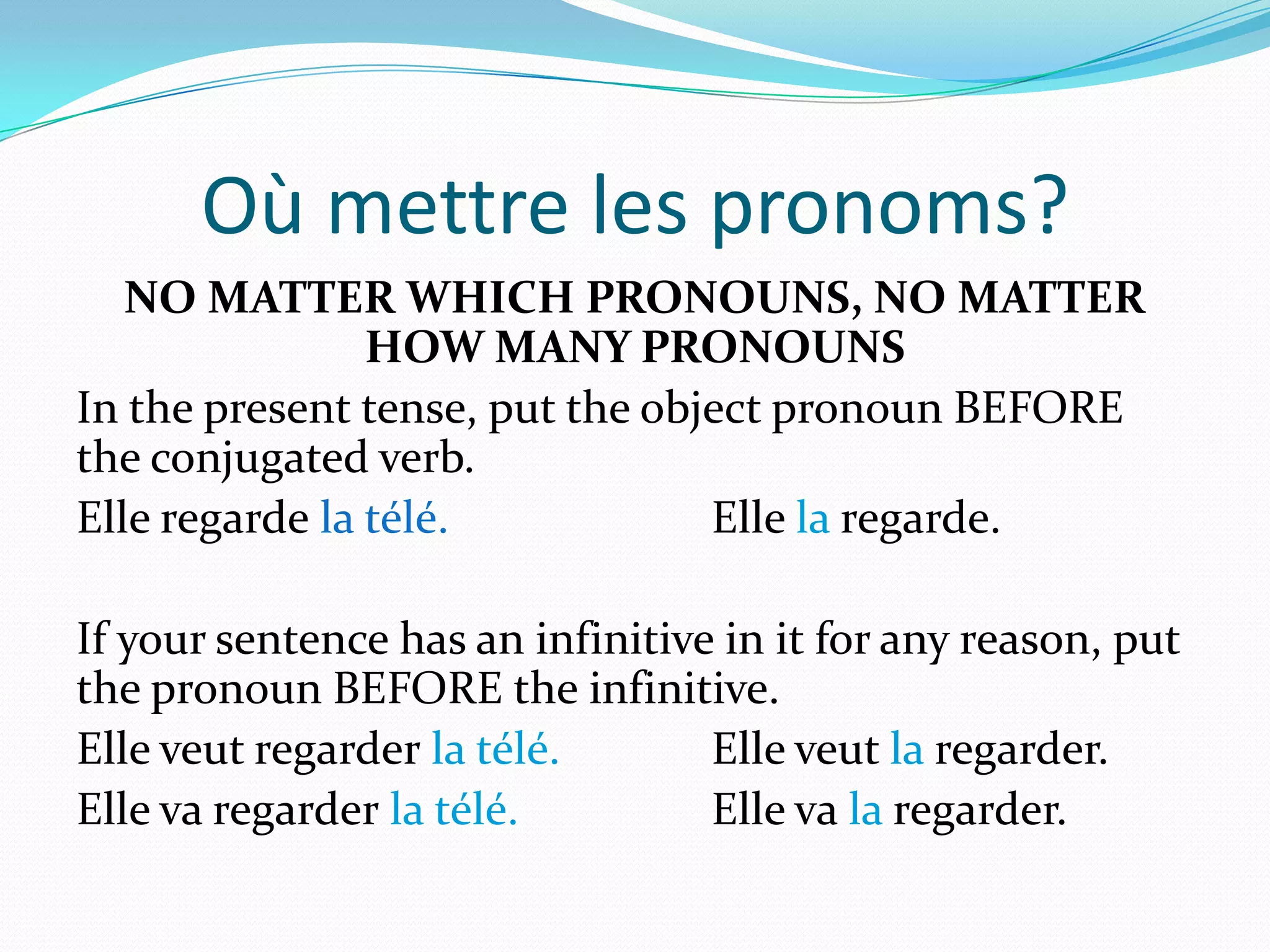
Où mettre les pronoms?
   NO MATTER WHICH PRONOUNS, NO MATTER
                HOW MANY PRONOUNS
In the present tense, put the object pronoun BEFORE
the conjugated verb.
Elle regarde la télé.            Elle la regarde.

If your sentence has an infinitive in it for any reason, put
the pronoun BEFORE the infinitive.
Elle veut regarder la télé.       Elle veut la regarder.
Elle va regarder la télé.         Elle va la regarder.
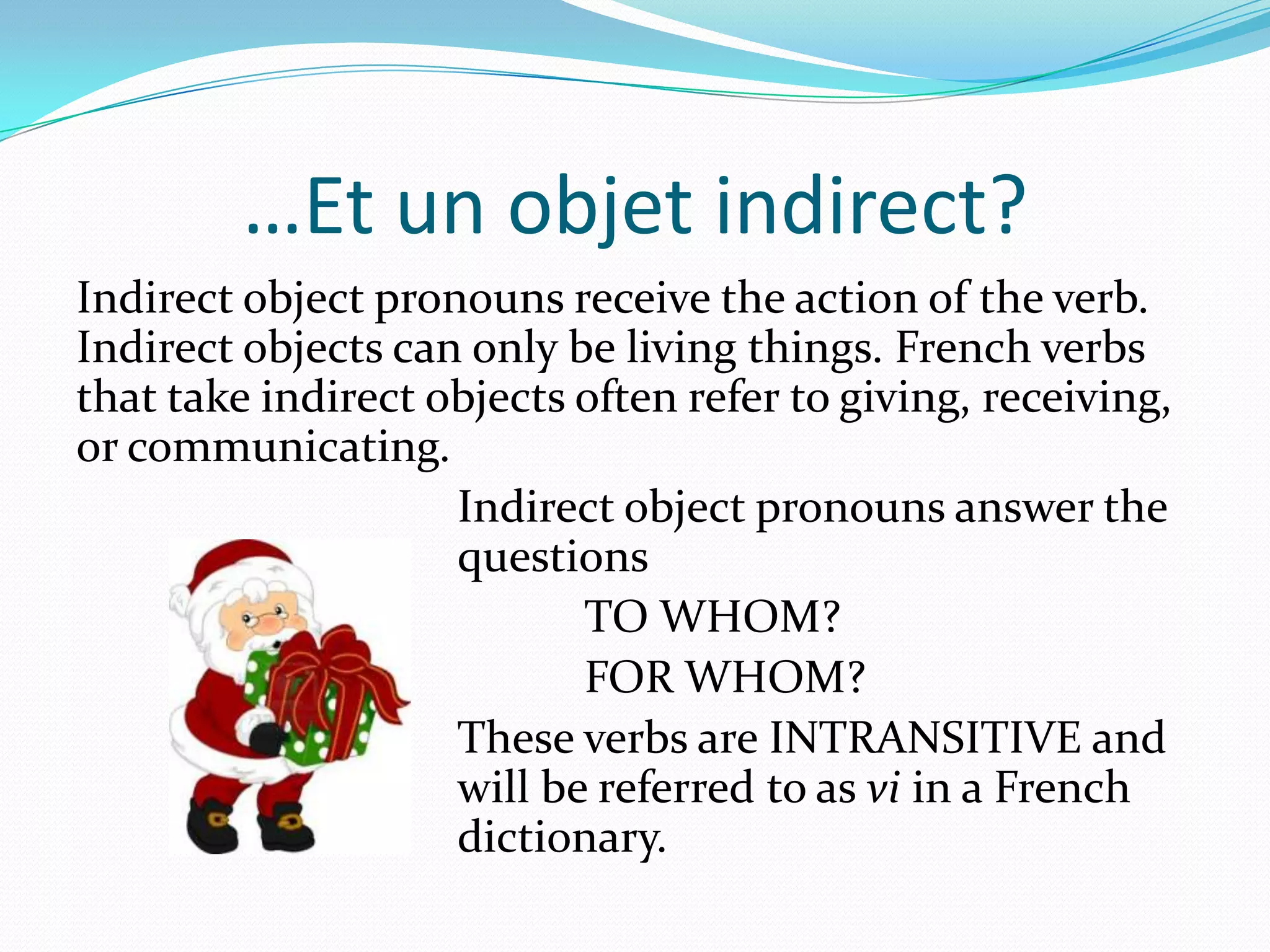
…Et un objet indirect?
Indirect object pronouns receive the action of the verb.
Indirect objects can only be living things. French verbs
that take indirect objects often refer to giving, receiving,
or communicating.
                    Indirect object pronouns answer the
                    questions
                           TO WHOM?
                           FOR WHOM?
                    These verbs are INTRANSITIVE and
                    will be referred to as vi in a French
                    dictionary.
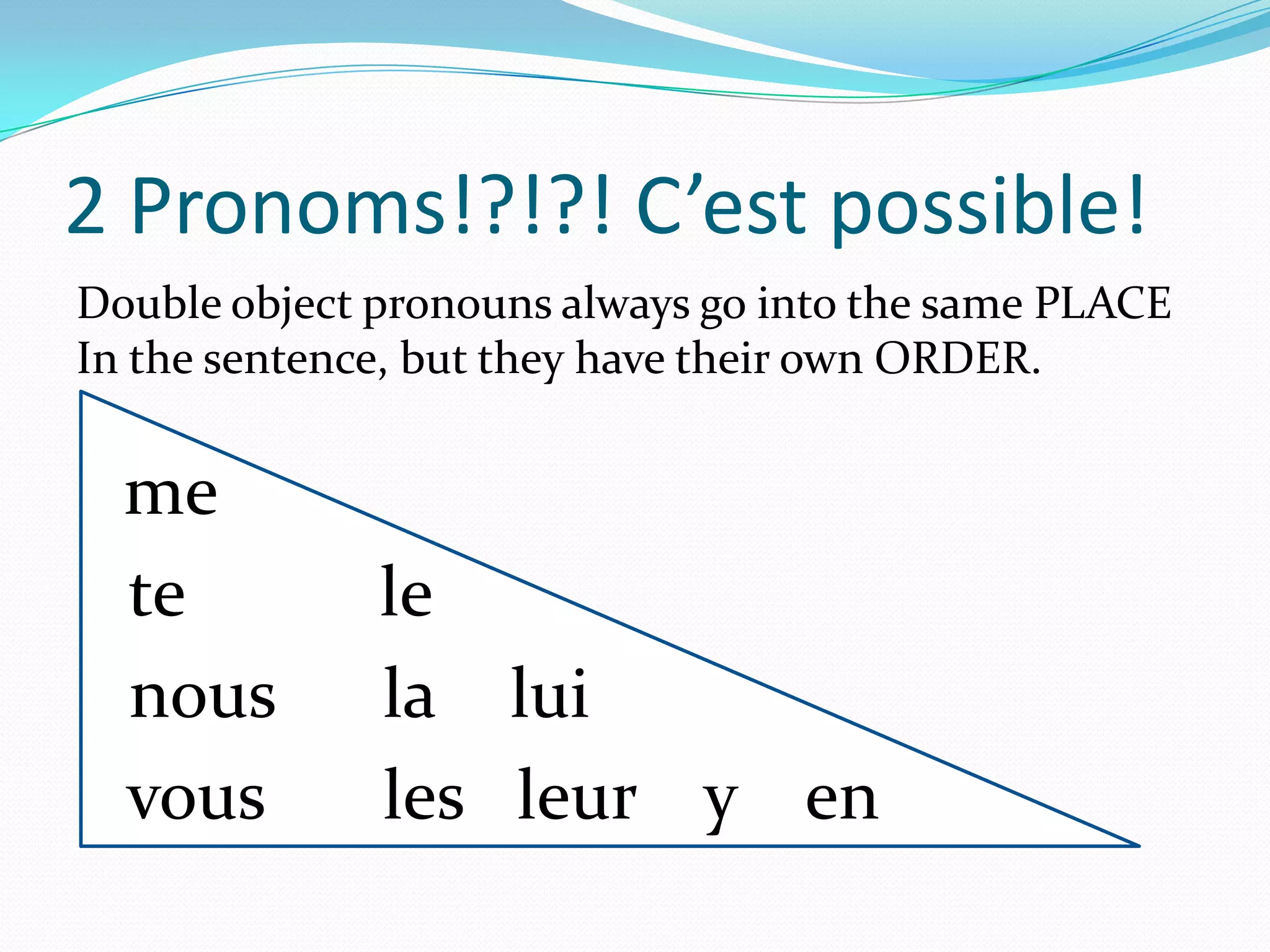
2 Pronoms!?!?! C’est possible!
Double object pronouns always go into the same PLACE
In the sentence, but they have their own ORDER.


  me
  te          le
  nous        la lui
  vous        les leur y en

Direct and indirect object pronouns

  • 1.
  • 2.
    Notre Chanson Me, tome, ME You, to you, TE Us, to us, NOUS You, to you, VOUS Direct Object Pronouns have LE, LA, and LES, they mean HIM, HER, IT, and THEM BUT To him, To her, To them, LUI/LEUR OBJECT PRONOUNS, c’est super!
  • 3.
    Qu’est-ce qu’un objectdirect? Direct Object Pronouns take the action of the verb. A direct object can be a person or a thing. Direct objects answer the questions WHO (hooooo!)? WHAT? These verbs are TRANSITIVE and will be listed as vt in a French dictionary.
  • 4.
    Où mettre lespronoms? NO MATTER WHICH PRONOUNS, NO MATTER HOW MANY PRONOUNS In the present tense, put the object pronoun BEFORE the conjugated verb. Elle regarde la télé. Elle la regarde. If your sentence has an infinitive in it for any reason, put the pronoun BEFORE the infinitive. Elle veut regarder la télé. Elle veut la regarder. Elle va regarder la télé. Elle va la regarder.
  • 5.
    …Et un objetindirect? Indirect object pronouns receive the action of the verb. Indirect objects can only be living things. French verbs that take indirect objects often refer to giving, receiving, or communicating. Indirect object pronouns answer the questions TO WHOM? FOR WHOM? These verbs are INTRANSITIVE and will be referred to as vi in a French dictionary.
  • 6.
    2 Pronoms!?!?! C’estpossible! Double object pronouns always go into the same PLACE In the sentence, but they have their own ORDER. me te le nous la lui vous les leur y en