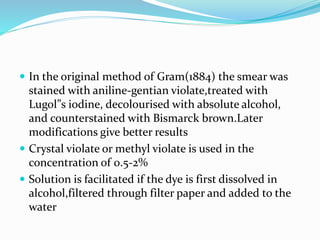
1. Gram staining is a differential staining technique developed by Hans Christian Gram in 1884 that is used to classify bacteria into two groups: Gram-positive and Gram-negative.
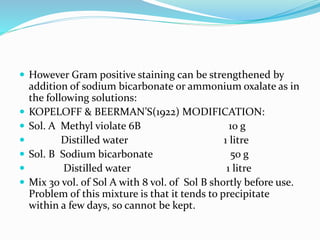
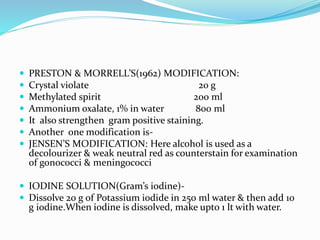
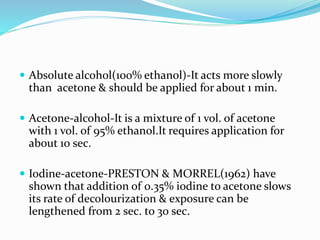
2. The key steps of Gram staining involve staining with crystal violet dye, treating with iodine, decolorizing with alcohol or acetone, and counterstaining with safranin.
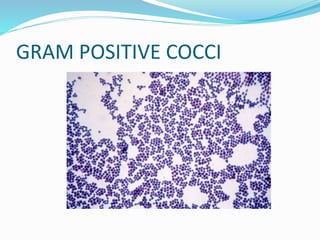
3. Gram-positive bacteria retain the crystal violet dye after decolorization due to their thick peptidoglycan cell wall, while Gram-negative bacteria lose the dye due to their thinner cell wall. This allows bacteria to be classified based on their staining.