THE DIGESTIVE SYSTEM
DIGESTION
-the process of reducing
food into smaller molecules
that can be absorbed into
the body and used by the
cells in the body
Types of Digestion
 Mechanical Phase
- process which food is acted
upon physically or mechanically
- means grinding, cutting and
mashing large bits of food into
fine mixture
Types of Digestion
 Chemical Phase
- it needs actions of
digestive enzymes into more
soluble form
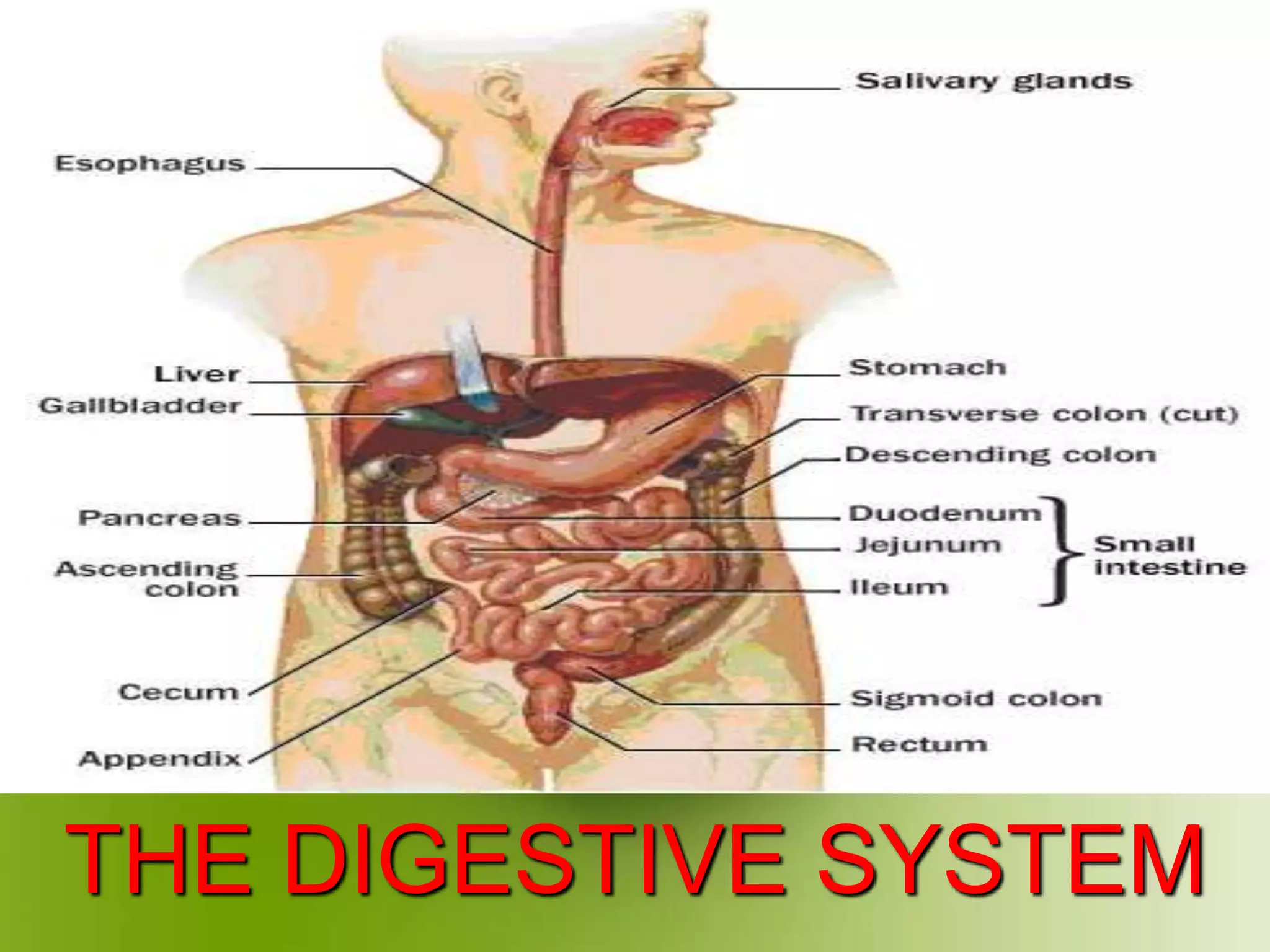
Your digestive tracts or food tube
consist of the following: (1) mouth (2)
esophagus (3) stomach (4) small
intestine (5) large intestine (6) anus
The accessory organs are (1)
salivary glands (2) pancreas (3) liver
(4) gallbladder
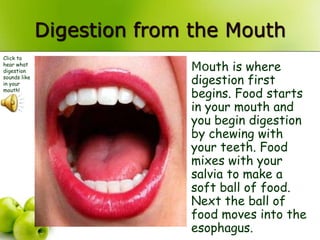
Digestion from the Mouth
Mouth is where
digestion first
begins. Food starts
in your mouth and
you begin digestion
by chewing with
your teeth. Food
mixes with your
salvia to make a
soft ball of food.
Next the ball of
food moves into the
esophagus.
Click to
hear what
digestion
sounds like
in your
mouth!
Digestion from the Mouth
 Saliva – lubricates the food
and secretes an
enzyme, ptyalin or salivary
amylase, that convert starch
to maltose
Digestion from the Mouth
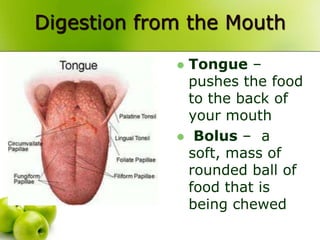
 Tongue –
pushes the food
to the back of
your mouth
 Bolus – a
soft, mass of
rounded ball of
food that is
being chewed
Digestion in the Esophagus
 Pharynx – an alimentary canal
where food goes down after the
digestion in the mouth
 Epiglottis- a flap of tissue that closes
over the trachea to prevent the food
from entering
Digestion in the Esophagus
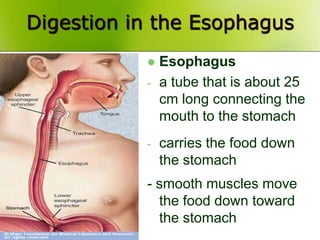
 Esophagus
- a tube that is about 25
cm long connecting the
mouth to the stomach
- carries the food down
the stomach
- smooth muscles move
the food down toward
the stomach
Digestion in the Stomach
 Stomach
– a large J-shape organ found
at the end of the esophagus
-large muscular sac that
continues the mechanical and
chemical digestion of food.
- it is where partial digestion
of food happens
Digestion in the Stomach
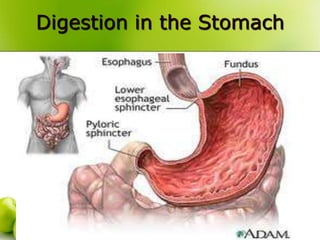
 Cardiac spincter – closes and opens
to allow the flow of food from the
esophagus to the stomach
 Pepsin – enzymes secreted in the
stomach that breaks down the protein
Digestion in the Stomach
 Pyloric valve or spincter – opens
and closes to allow the food getting in
the small intestine
 Chyme – partial product retained in
the stomach before transferring into
the small intestine
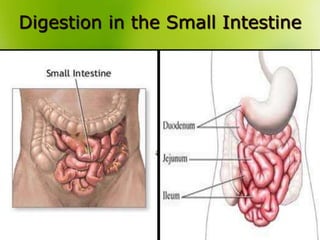
Digestion in the Small Intestine
 It is where the final digestion and
absorption of food take place
3 Major Parts
Duodenum – upper 20 cm
Jejunum – 2.5 meters long
Ileum – longest half coiled
into the abdominal
cavity
Digestion in the Small Intestine
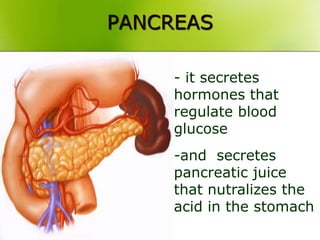
PANCREAS
- it secretes
hormones that
regulate blood
glucose
-and secretes
pancreatic juice
that nutralizes the
acid in the stomach
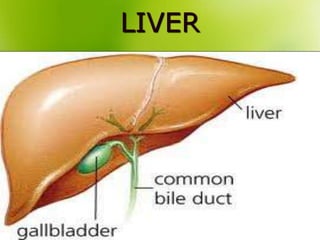
LIVER AND BILE
 The liver is the largest gland in your
body that carries the gall bladder
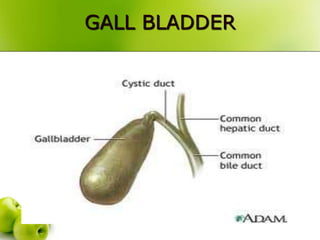
 Gall bladder – produces a blue green
fluid called bile
LIVER
GALL BLADDER
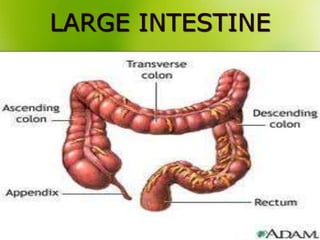
LARGE INTESTINE
LARGE INTESTINE
 Undigested food goes down into
the large intestine
 It is where the absorption of
water is happen
 Keeps water inside your body so
that you do not dehydrate
 It is also called as colon

RECTUM AND ANUS
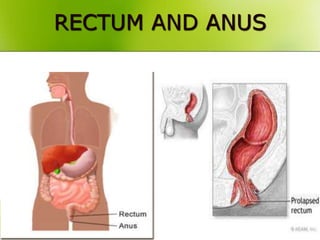
The rectum and anus are part of your
large intestines. They release your waste
material from the body.
 Rectum – 20 to 30 cm
 Anus – end of the alimentary canal
RECTUM AND ANUS
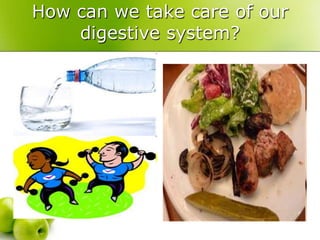
How can we take care of our
digestive system?
How can we take care of our
digestive system?
 step1: Eat right, consume
protein, carbohydrates in right amount
and make sure you get plenty of fiber.
Eat on right time schedule.
 step2: Drink plenty of water and avoid
sugary drinks or those that contain
caffeine. Limit alcohol drinks to 2 times
a day.
 step3: Exercise. Moving around helps
things move along
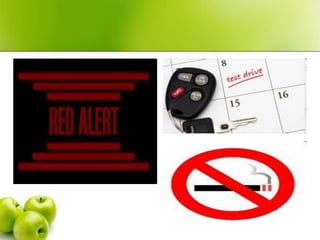
 step4: Be alert problems that don't go
away. Symptoms such as
heartburn, constipation and stomach
upset can be caused by as serious as
cancer. If you've been suffering for
more than a couple of weeks, see your
doctor.
 step5: Get scheduled tests. your
doctor will tell you when you need to
have regular colonoscopy to find and
remove precancerous polyps. If your
doctor recommend you other tests, get
those as well.
 step6: Quit smoking!!!
Among the many
reasons to quit
smoking, it contributes
digestive problems such
as
heartburn, ulcers, and
gallstones.

Digestive system

  • 1.
  • 2.
    DIGESTION -the process ofreducing food into smaller molecules that can be absorbed into the body and used by the cells in the body
  • 3.
    Types of Digestion Mechanical Phase - process which food is acted upon physically or mechanically - means grinding, cutting and mashing large bits of food into fine mixture
  • 4.
    Types of Digestion Chemical Phase - it needs actions of digestive enzymes into more soluble form
  • 5.
    Your digestive tractsor food tube consist of the following: (1) mouth (2) esophagus (3) stomach (4) small intestine (5) large intestine (6) anus The accessory organs are (1) salivary glands (2) pancreas (3) liver (4) gallbladder
  • 6.
    Digestion from theMouth Mouth is where digestion first begins. Food starts in your mouth and you begin digestion by chewing with your teeth. Food mixes with your salvia to make a soft ball of food. Next the ball of food moves into the esophagus. Click to hear what digestion sounds like in your mouth!
  • 7.
    Digestion from theMouth  Saliva – lubricates the food and secretes an enzyme, ptyalin or salivary amylase, that convert starch to maltose
  • 8.
    Digestion from theMouth  Tongue – pushes the food to the back of your mouth  Bolus – a soft, mass of rounded ball of food that is being chewed
  • 9.
    Digestion in theEsophagus  Pharynx – an alimentary canal where food goes down after the digestion in the mouth  Epiglottis- a flap of tissue that closes over the trachea to prevent the food from entering
  • 10.
    Digestion in theEsophagus  Esophagus - a tube that is about 25 cm long connecting the mouth to the stomach - carries the food down the stomach - smooth muscles move the food down toward the stomach
  • 11.
    Digestion in theStomach  Stomach – a large J-shape organ found at the end of the esophagus -large muscular sac that continues the mechanical and chemical digestion of food. - it is where partial digestion of food happens
  • 12.
  • 13.
    Digestion in theStomach  Cardiac spincter – closes and opens to allow the flow of food from the esophagus to the stomach  Pepsin – enzymes secreted in the stomach that breaks down the protein
  • 14.
    Digestion in theStomach  Pyloric valve or spincter – opens and closes to allow the food getting in the small intestine  Chyme – partial product retained in the stomach before transferring into the small intestine
  • 15.
    Digestion in theSmall Intestine  It is where the final digestion and absorption of food take place 3 Major Parts Duodenum – upper 20 cm Jejunum – 2.5 meters long Ileum – longest half coiled into the abdominal cavity
  • 16.
    Digestion in theSmall Intestine
  • 17.
    PANCREAS - it secretes hormonesthat regulate blood glucose -and secretes pancreatic juice that nutralizes the acid in the stomach
  • 18.
    LIVER AND BILE The liver is the largest gland in your body that carries the gall bladder  Gall bladder – produces a blue green fluid called bile
  • 19.
  • 20.
  • 21.
  • 22.
    LARGE INTESTINE  Undigestedfood goes down into the large intestine  It is where the absorption of water is happen  Keeps water inside your body so that you do not dehydrate  It is also called as colon 
  • 23.
    RECTUM AND ANUS Therectum and anus are part of your large intestines. They release your waste material from the body.  Rectum – 20 to 30 cm  Anus – end of the alimentary canal
  • 24.
  • 25.
    How can wetake care of our digestive system?
  • 26.
    How can wetake care of our digestive system?  step1: Eat right, consume protein, carbohydrates in right amount and make sure you get plenty of fiber. Eat on right time schedule.  step2: Drink plenty of water and avoid sugary drinks or those that contain caffeine. Limit alcohol drinks to 2 times a day.  step3: Exercise. Moving around helps things move along
  • 28.
     step4: Bealert problems that don't go away. Symptoms such as heartburn, constipation and stomach upset can be caused by as serious as cancer. If you've been suffering for more than a couple of weeks, see your doctor.  step5: Get scheduled tests. your doctor will tell you when you need to have regular colonoscopy to find and remove precancerous polyps. If your doctor recommend you other tests, get those as well.
  • 29.
     step6: Quitsmoking!!! Among the many reasons to quit smoking, it contributes digestive problems such as heartburn, ulcers, and gallstones.