Hi, My
name is
Sonu
Hi, My
name is
Monu
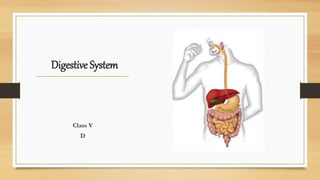
Digestive System
Class V
D
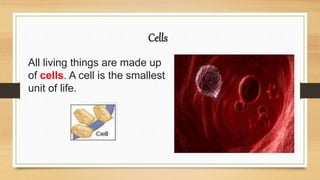
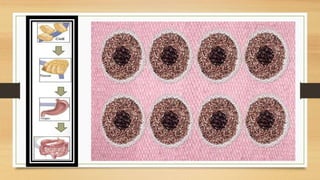
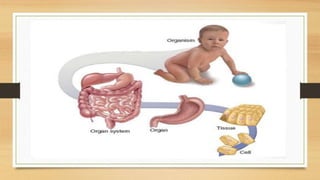
All living things are made up
of cells. A cell is the smallest
unit of life.
Cells
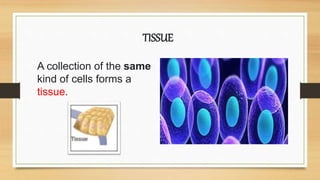
A collection of the same
kind of cells forms a
tissue.
TISSUE
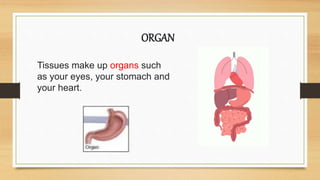
Tissues make up organs such
as your eyes, your stomach and
your heart.
ORGAN
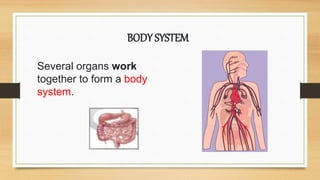
Several organs work
together to form a body
system.
BODY SYSTEM
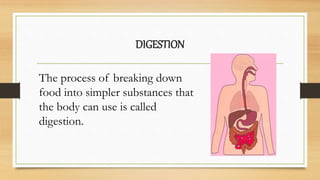
DIGESTION
The process of breaking down
food into simpler substances that
the body can use is called
digestion.
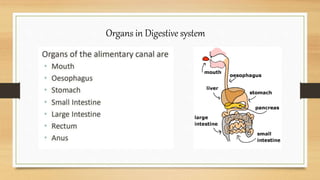
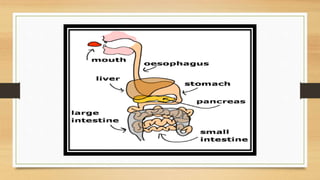
• Our digestive system is
made up of a long,
twisting tube that starts
from the mouth and ends
at the anus.
• This long twisting tube is
called an alimentary
canal or digestive tract.
Organs in Digestive system
MOUTH
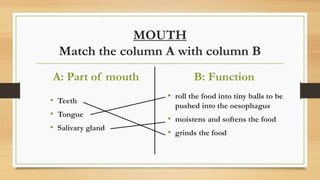
Match the column A with column B
A: Part of mouth
• Teeth
• Tongue
• Salivary gland
B: Function
• roll the food into tiny balls to be
pushed into the oesophagus
• moistens and softens the food
• grinds the food
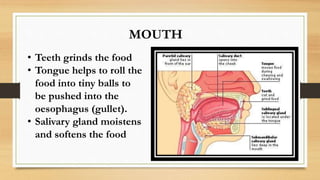
MOUTH
• Teeth grinds the food
• Tongue helps to roll the
food into tiny balls to
be pushed into the
oesophagus (gullet).
• Salivary gland moistens
and softens the food
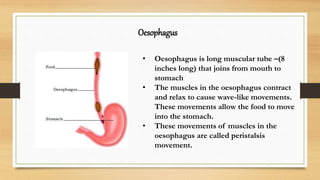
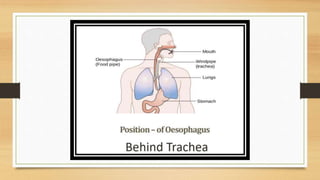
Oesophagus
• Oesophagus is long muscular tube –(8
inches long) that joins from mouth to
stomach
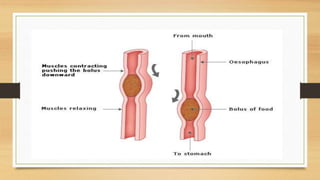
• The muscles in the oesophagus contract
and relax to cause wave-like movements.
These movements allow the food to move
into the stomach.
• These movements of muscles in the
oesophagus are called peristalsis
movement.
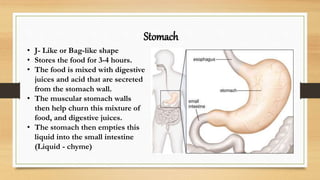
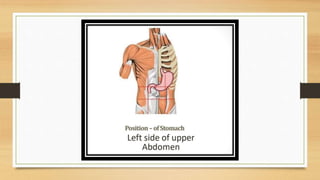
Stomach
• J- Like or Bag-like shape
• Stores the food for 3-4 hours.
• The food is mixed with digestive
juices and acid that are secreted
from the stomach wall.
• The muscular stomach walls
then help churn this mixture of
food, and digestive juices.
• The stomach then empties this
liquid into the small intestine
(Liquid - chyme)
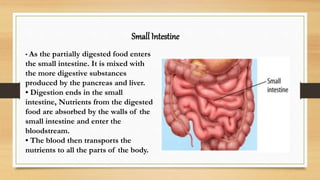
Small Intestine
• As the partially digested food enters
the small intestine. It is mixed with
the more digestive substances
produced by the pancreas and liver.
• Digestion ends in the small
intestine, Nutrients from the digested
food are absorbed by the walls of the
small intestine and enter the
bloodstream.
• The blood then transports the
nutrients to all the parts of the body.
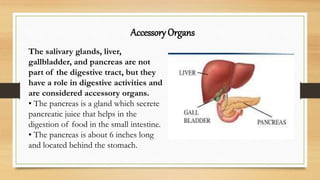
Accessory Organs
The salivary glands, liver,
gallbladder, and pancreas are not
part of the digestive tract, but they
have a role in digestive activities and
are considered accessory organs.
• The pancreas is a gland which secrete
pancreatic juice that helps in the
digestion of food in the small intestine.
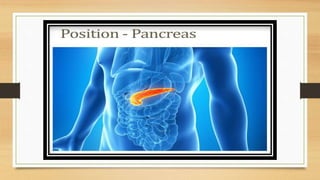
• The pancreas is about 6 inches long
and located behind the stomach.
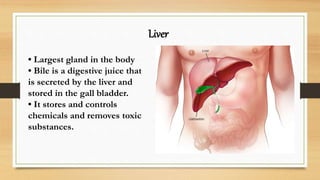
Liver
• Largest gland in the body
• Bile is a digestive juice that
is secreted by the liver and
stored in the gall bladder.
• It stores and controls
chemicals and removes toxic
substances.
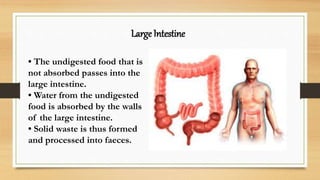
Large Intestine
• The undigested food that is
not absorbed passes into the
large intestine.
• Water from the undigested
food is absorbed by the walls
of the large intestine.
• Solid waste is thus formed
and processed into faeces.
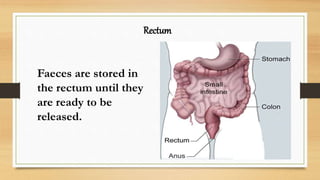
Rectum
Faeces are stored in
the rectum until they
are ready to be
released.
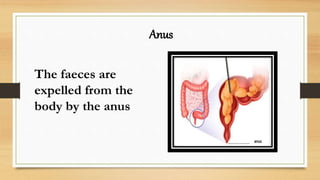
Anus
The faeces are
expelled from the
body by the anus
QUIZ
• All living things are made up of ______.
a) cells
b) tissue
c) Organs
d) body system
Ans. a) cells
• A collection of the same kind of cells forms a _____.
a) cells
b) tissue
c) Organs
d) body system
Ans. b) tissue
QUIZ
• Several organs work together to form a ________.
a) cells
b) tissue
c) Organs
d) body system
Ans. d) body system
• Our digestive system is made up of a long, twisting tube that starts from
the mouth and ends at the anus. This long twisting tube is called an
________.
a) alimentary canal
b) Small intestine
c) large intestine
d) body system
Ans. a) alimentary canal
QUIZ
• Largest gland in the body
a) Rectum
b) Liver
c) Stomach
d) Tissue
Ans. d) Liver
• The undigested food that is not absorbed passes into the _______.
a) alimentary canal
b) Small intestine
c) large intestine
d) body system
Ans. c) large intestine
Digestive system - CLASS V

Digestive system - CLASS V

  • 1.
    Hi, My name is Sonu Hi,My name is Monu
  • 2.
  • 4.
    All living thingsare made up of cells. A cell is the smallest unit of life. Cells
  • 5.
    A collection ofthe same kind of cells forms a tissue. TISSUE
  • 6.
    Tissues make uporgans such as your eyes, your stomach and your heart. ORGAN
  • 7.
    Several organs work togetherto form a body system. BODY SYSTEM
  • 10.
    DIGESTION The process ofbreaking down food into simpler substances that the body can use is called digestion.
  • 11.
    • Our digestivesystem is made up of a long, twisting tube that starts from the mouth and ends at the anus. • This long twisting tube is called an alimentary canal or digestive tract.
  • 12.
  • 13.
    MOUTH Match the columnA with column B A: Part of mouth • Teeth • Tongue • Salivary gland B: Function • roll the food into tiny balls to be pushed into the oesophagus • moistens and softens the food • grinds the food
  • 14.
    MOUTH • Teeth grindsthe food • Tongue helps to roll the food into tiny balls to be pushed into the oesophagus (gullet). • Salivary gland moistens and softens the food
  • 15.
    Oesophagus • Oesophagus islong muscular tube –(8 inches long) that joins from mouth to stomach • The muscles in the oesophagus contract and relax to cause wave-like movements. These movements allow the food to move into the stomach. • These movements of muscles in the oesophagus are called peristalsis movement.
  • 18.
    Stomach • J- Likeor Bag-like shape • Stores the food for 3-4 hours. • The food is mixed with digestive juices and acid that are secreted from the stomach wall. • The muscular stomach walls then help churn this mixture of food, and digestive juices. • The stomach then empties this liquid into the small intestine (Liquid - chyme)
  • 20.
    Small Intestine • Asthe partially digested food enters the small intestine. It is mixed with the more digestive substances produced by the pancreas and liver. • Digestion ends in the small intestine, Nutrients from the digested food are absorbed by the walls of the small intestine and enter the bloodstream. • The blood then transports the nutrients to all the parts of the body.
  • 21.
    Accessory Organs The salivaryglands, liver, gallbladder, and pancreas are not part of the digestive tract, but they have a role in digestive activities and are considered accessory organs. • The pancreas is a gland which secrete pancreatic juice that helps in the digestion of food in the small intestine. • The pancreas is about 6 inches long and located behind the stomach.
  • 23.
    Liver • Largest glandin the body • Bile is a digestive juice that is secreted by the liver and stored in the gall bladder. • It stores and controls chemicals and removes toxic substances.
  • 24.
    Large Intestine • Theundigested food that is not absorbed passes into the large intestine. • Water from the undigested food is absorbed by the walls of the large intestine. • Solid waste is thus formed and processed into faeces.
  • 25.
    Rectum Faeces are storedin the rectum until they are ready to be released.
  • 26.
    Anus The faeces are expelledfrom the body by the anus
  • 28.
    QUIZ • All livingthings are made up of ______. a) cells b) tissue c) Organs d) body system Ans. a) cells • A collection of the same kind of cells forms a _____. a) cells b) tissue c) Organs d) body system Ans. b) tissue
  • 29.
    QUIZ • Several organswork together to form a ________. a) cells b) tissue c) Organs d) body system Ans. d) body system • Our digestive system is made up of a long, twisting tube that starts from the mouth and ends at the anus. This long twisting tube is called an ________. a) alimentary canal b) Small intestine c) large intestine d) body system Ans. a) alimentary canal
  • 30.
    QUIZ • Largest glandin the body a) Rectum b) Liver c) Stomach d) Tissue Ans. d) Liver • The undigested food that is not absorbed passes into the _______. a) alimentary canal b) Small intestine c) large intestine d) body system Ans. c) large intestine