How Does Digestive
System Work?
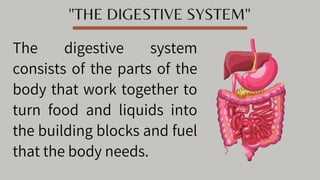
"THE DIGESTIVE SYSTEM"
The digestive system
consists of the parts of the
body that work together to
turn food and liquids into
the building blocks and fuel
that the body needs.
The Process of Digestion
Digestion - is the process by which
complex food materials are
converted into simpler substances
that can be used by all body cells.
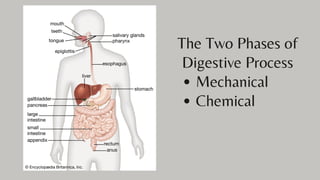
Mechanical
Chemical
The Two Phases of
Digestive Process
MECHANICAL PHASE OF DIGESTION
Food particles are broken down into
smaller pieces, pushed down into the food
tube and mixed with digestive juices.
It begins in the mouth through the action
of teeth and tongue.
MECHANICAL PHASE OF DIGESTION
Peristalsis or the wavelike contraction of
the food tube, pushes the chewed food
down the esophagus and mixes it with
digestive juices in the stomach and the
small intestine.
CHEMICAL PHASE OF DIGESTION
Involves the action of digestive enzymes.
They break up complex food nutrients into
smaller substances that can be absorbed
for distribution to all the body cells.
CHEMICAL PHASE OF DIGESTION
It starts in the mouth through the action of
starch digesting enzyme of saliva.
It also take place in the stomach and the
small intestine.
Accessory digestive glands such as liver and
pancreas.
PARTS OF THE DIGESTIVE
SYSTEM AND THEIR
FUNCTIONS
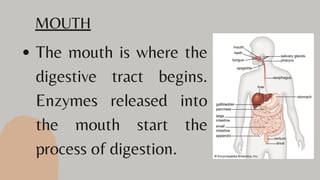
The mouth is where the
digestive tract begins.
Enzymes released into
the mouth start the
process of digestion.
MOUTH
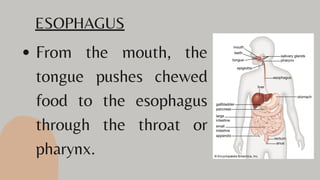
From the mouth, the
tongue pushes chewed
food to the esophagus
through the throat or
pharynx.
ESOPHAGUS
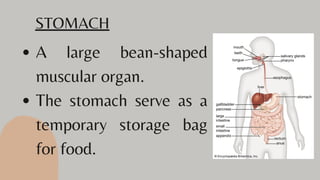
A large bean-shaped
muscular organ.
The stomach serve as a
temporary storage bag
for food.
STOMACH
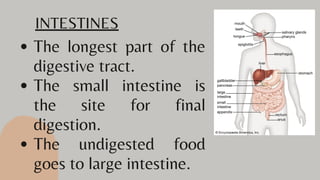
The longest part of the
digestive tract.
The small intestine is
the site for final
digestion.
The undigested food
goes to large intestine.
INTESTINES
ACCESSORY
DIGESTIVE ORGANS
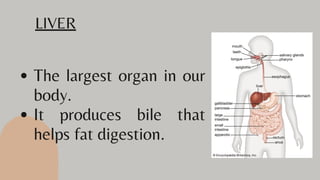
The largest organ in our
body.
It produces bile that
helps fat digestion.
LIVER
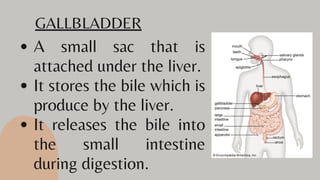
A small sac that is
attached under the liver.
It stores the bile which is
produce by the liver.
It releases the bile into
the small intestine
during digestion.
GALLBLADDER
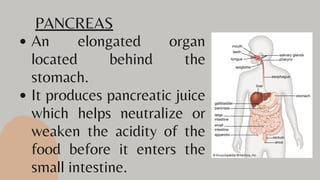
An elongated organ
located behind the
stomach.
It produces pancreatic juice
which helps neutralize or
weaken the acidity of the
food before it enters the
small intestine.
PANCREAS
DISEASES AND
DISORDERS OF THE
DIGESTIVE SYSTEM
Or dyspepsia is the discomfort felt in
the upper stomach caused by eating
too much or too quickly.
INDIGESTION
It is also known as "kabag".
Due to eating hurriedly or swallowing
large chunks of food.
There is the feeling of being bloated
because gas builds up in the abdomen.
FLATULENCE
The painful discharge of hard feces.
CONSTIPATION
DIARRHEA
The frequent bowel movement of
watery feces or stool.
Gastric juices contains acids and
enzymes that are needed for
digestion. The acids may damage or
"eat away" the lining of the stomach
forming a sore or gastric ulcer.
GASTRIC ULCER
The so-called "stones" that are formed
in the gallbladder due to too much
bad cholesterol in one's diet.
GALLSTONES
The inflammation of the appendix.
When food containing bacteria
happens to enter the appendix, it
becomes inflamed or swollen.
APPENDICITIS
An inflammation of the liver, may be
caused by a virus, drugs or chemicals.
HEPATITIS
It may cause abdominal pain
accompanied by diarrhea, nausea and
vomiting. They are worms that usually
enter the digestive tract through the
food and water.
INTESTINAL PARASITES
PROPER CARE OF THE
DIGESTIVE SYSTEM
Eat food rich in fibers to help in bowel
movement.
Avoid too much spicy food.
Eat less sweets in-between meals.
Refrain from buying uncovered ready-
to-eat foods.
Observe the following good food habits:
Eat slowly to chew the food well.
Avoid swallowing big chunks of food
to prevent blocking in the pharynx.
The following eating habits help maintain
the healthy condition of our digestive
system.
Avoid eating too much at a time to
prevent indigestion.
Drink plenty of fluids every day.
Relax and have pleasant conversation
to enjoy every meal.

Digestive system Lesson for Grade 6 students.pdf

  • 1.
  • 2.
    "THE DIGESTIVE SYSTEM" Thedigestive system consists of the parts of the body that work together to turn food and liquids into the building blocks and fuel that the body needs.
  • 3.
    The Process ofDigestion Digestion - is the process by which complex food materials are converted into simpler substances that can be used by all body cells.
  • 4.
  • 5.
    MECHANICAL PHASE OFDIGESTION Food particles are broken down into smaller pieces, pushed down into the food tube and mixed with digestive juices. It begins in the mouth through the action of teeth and tongue.
  • 6.
    MECHANICAL PHASE OFDIGESTION Peristalsis or the wavelike contraction of the food tube, pushes the chewed food down the esophagus and mixes it with digestive juices in the stomach and the small intestine.
  • 7.
    CHEMICAL PHASE OFDIGESTION Involves the action of digestive enzymes. They break up complex food nutrients into smaller substances that can be absorbed for distribution to all the body cells.
  • 8.
    CHEMICAL PHASE OFDIGESTION It starts in the mouth through the action of starch digesting enzyme of saliva. It also take place in the stomach and the small intestine. Accessory digestive glands such as liver and pancreas.
  • 9.
    PARTS OF THEDIGESTIVE SYSTEM AND THEIR FUNCTIONS
  • 10.
    The mouth iswhere the digestive tract begins. Enzymes released into the mouth start the process of digestion. MOUTH
  • 11.
    From the mouth,the tongue pushes chewed food to the esophagus through the throat or pharynx. ESOPHAGUS
  • 12.
    A large bean-shaped muscularorgan. The stomach serve as a temporary storage bag for food. STOMACH
  • 13.
    The longest partof the digestive tract. The small intestine is the site for final digestion. The undigested food goes to large intestine. INTESTINES
  • 14.
  • 15.
    The largest organin our body. It produces bile that helps fat digestion. LIVER
  • 16.
    A small sacthat is attached under the liver. It stores the bile which is produce by the liver. It releases the bile into the small intestine during digestion. GALLBLADDER
  • 17.
    An elongated organ locatedbehind the stomach. It produces pancreatic juice which helps neutralize or weaken the acidity of the food before it enters the small intestine. PANCREAS
  • 18.
    DISEASES AND DISORDERS OFTHE DIGESTIVE SYSTEM
  • 19.
    Or dyspepsia isthe discomfort felt in the upper stomach caused by eating too much or too quickly. INDIGESTION
  • 20.
    It is alsoknown as "kabag". Due to eating hurriedly or swallowing large chunks of food. There is the feeling of being bloated because gas builds up in the abdomen. FLATULENCE
  • 21.
    The painful dischargeof hard feces. CONSTIPATION DIARRHEA The frequent bowel movement of watery feces or stool.
  • 22.
    Gastric juices containsacids and enzymes that are needed for digestion. The acids may damage or "eat away" the lining of the stomach forming a sore or gastric ulcer. GASTRIC ULCER
  • 23.
    The so-called "stones"that are formed in the gallbladder due to too much bad cholesterol in one's diet. GALLSTONES
  • 24.
    The inflammation ofthe appendix. When food containing bacteria happens to enter the appendix, it becomes inflamed or swollen. APPENDICITIS
  • 25.
    An inflammation ofthe liver, may be caused by a virus, drugs or chemicals. HEPATITIS
  • 26.
    It may causeabdominal pain accompanied by diarrhea, nausea and vomiting. They are worms that usually enter the digestive tract through the food and water. INTESTINAL PARASITES
  • 27.
    PROPER CARE OFTHE DIGESTIVE SYSTEM
  • 28.
    Eat food richin fibers to help in bowel movement. Avoid too much spicy food. Eat less sweets in-between meals. Refrain from buying uncovered ready- to-eat foods. Observe the following good food habits:
  • 29.
    Eat slowly tochew the food well. Avoid swallowing big chunks of food to prevent blocking in the pharynx. The following eating habits help maintain the healthy condition of our digestive system.
  • 30.
    Avoid eating toomuch at a time to prevent indigestion. Drink plenty of fluids every day. Relax and have pleasant conversation to enjoy every meal.