RESPIRATORY
SYSTEM
Objectives
• Explain how the respiratory and circulatory systems work together to
transport nutrients, gases and other molecules to and from the different
parts of the body
• Infer how one’s lifestyle can affect the functioning of respiratory and
circulatory systems.
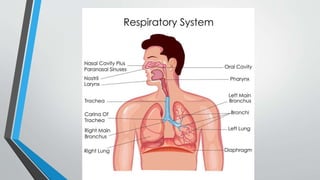
The respiratory system, which includes air
passages, pulmonary vessels, the lungs, and
breathing muscles, aids the body in the exchange
of gases between the air and blood, and between
the blood and the body’s billions of cells. Most of
the organs of the respiratory system help to
distribute air, but only the tiny, grape-like alveoli
and the alveolar ducts are responsible for actual
gas exchange.
PARTS AND
FUNCTIONS
The respiratory system is
divided into two main
components:
Upper respiratory tract: Composed of the
nose, the pharynx, and the larynx, the
organs of the upper respiratory tract are
located outside the chest cavity.
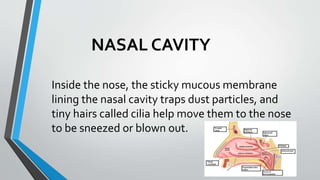
NASAL CAVITY
Inside the nose, the sticky mucous membrane
lining the nasal cavity traps dust particles, and
tiny hairs called cilia help move them to the nose
to be sneezed or blown out.
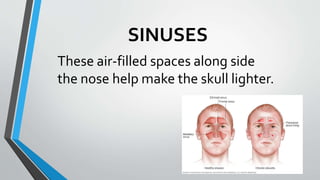
SINUSES
These air-filled spaces along side
the nose help make the skull lighter.
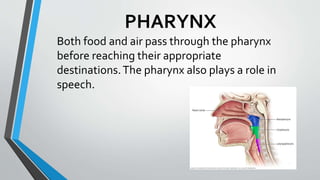
PHARYNX
Both food and air pass through the pharynx
before reaching their appropriate
destinations.The pharynx also plays a role in
speech.
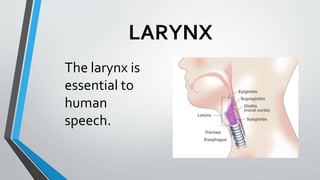
LARYNX
The larynx is
essential to
human
speech.
Lower respiratory tract: Composed of the
trachea, the lungs, and all segments of the
bronchial tree (including the alveoli), the
organs of the lower respiratory tract are
located inside the chest cavity.
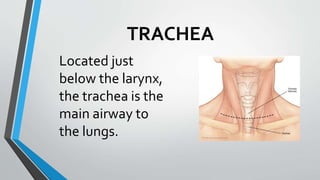
TRACHEA
Located just
below the larynx,
the trachea is the
main airway to
the lungs.
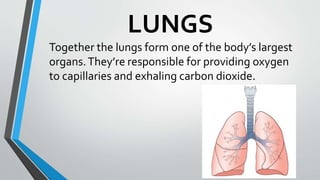
LUNGS
Together the lungs form one of the body’s largest
organs.They’re responsible for providing oxygen
to capillaries and exhaling carbon dioxide.
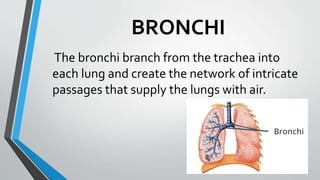
BRONCHI
The bronchi branch from the trachea into
each lung and create the network of intricate
passages that supply the lungs with air.
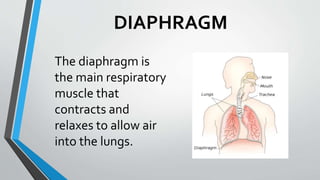
DIAPHRAGM
The diaphragm is
the main respiratory
muscle that
contracts and
relaxes to allow air
into the lungs.
DISEASES
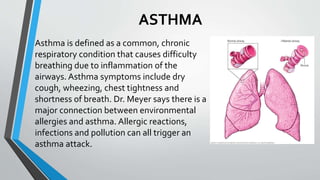
ASTHMA
Asthma is defined as a common, chronic
respiratory condition that causes difficulty
breathing due to inflammation of the
airways. Asthma symptoms include dry
cough, wheezing, chest tightness and
shortness of breath. Dr. Meyer says there is a
major connection between environmental
allergies and asthma. Allergic reactions,
infections and pollution can all trigger an
asthma attack.
CHRONIC OBSTRUCTIVE PULMONARY
DISEASE (COPD)
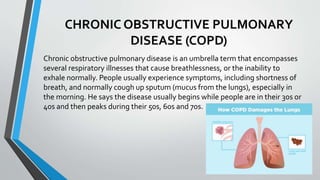
Chronic obstructive pulmonary disease is an umbrella term that encompasses
several respiratory illnesses that cause breathlessness, or the inability to
exhale normally. People usually experience symptoms, including shortness of
breath, and normally cough up sputum (mucus from the lungs), especially in
the morning. He says the disease usually begins while people are in their 30s or
40s and then peaks during their 50s, 60s and 70s.
CHRONIC BRONCHITIS
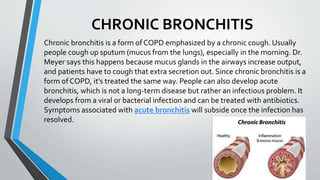
Chronic bronchitis is a form of COPD emphasized by a chronic cough. Usually
people cough up sputum (mucus from the lungs), especially in the morning. Dr.
Meyer says this happens because mucus glands in the airways increase output,
and patients have to cough that extra secretion out. Since chronic bronchitis is a
form of COPD, it’s treated the same way. People can also develop acute
bronchitis, which is not a long-term disease but rather an infectious problem. It
develops from a viral or bacterial infection and can be treated with antibiotics.
Symptoms associated with acute bronchitis will subside once the infection has
resolved.
EMPHYSEMA
Emphysema is a serious respiratory disease, which is another form of COPD.The
most common cause is smoking.Those who suffer from emphysema have
trouble exhaling air from their lungs. Cigarette smoke damages the air sacs in the
lungs to a point where they can no longer repair themselves. Dr. Meyer says this
respiratory system illness most commonly leads to respiratory failure and the
need for extra oxygen to meet breathing needs. Emphysema evolves slowly over
the years, and there is no cure; however, those who quit smoking are more likely
to see the disease’s progression slow.
LUNG CANCER
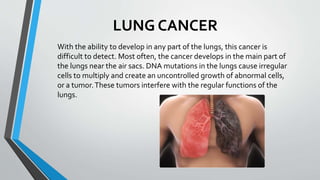
With the ability to develop in any part of the lungs, this cancer is
difficult to detect. Most often, the cancer develops in the main part of
the lungs near the air sacs. DNA mutations in the lungs cause irregular
cells to multiply and create an uncontrolled growth of abnormal cells,
or a tumor.These tumors interfere with the regular functions of the
lungs.
PNEUMONIA
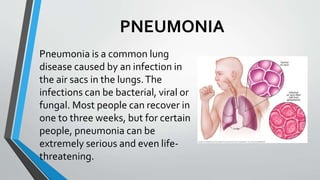
Pneumonia is a common lung
disease caused by an infection in
the air sacs in the lungs.The
infections can be bacterial, viral or
fungal. Most people can recover in
one to three weeks, but for certain
people, pneumonia can be
extremely serious and even life-
threatening.
HOWTOTAKE CARE OFTHE
RESPIRATORY SYSTEM
7 WAYSTO IMPROVEYOUR
RESPIRATORY HEALTH
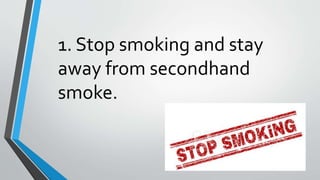
1. Stop smoking and stay
away from secondhand
smoke.
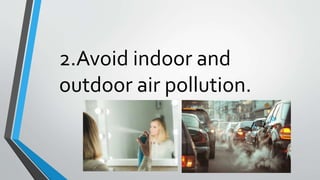
2.Avoid indoor and
outdoor air pollution.
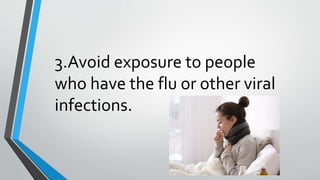
3.Avoid exposure to people
who have the flu or other viral
infections.
4.Exercise regularly.
5.See your doctor for an
annual physical.
6.Eat a healthy, balanced
diet.
7.Maintain a healthy weight.

The Respiratory System for Science 9

  • 1.
  • 2.
    Objectives • Explain howthe respiratory and circulatory systems work together to transport nutrients, gases and other molecules to and from the different parts of the body • Infer how one’s lifestyle can affect the functioning of respiratory and circulatory systems.
  • 3.
    The respiratory system,which includes air passages, pulmonary vessels, the lungs, and breathing muscles, aids the body in the exchange of gases between the air and blood, and between the blood and the body’s billions of cells. Most of the organs of the respiratory system help to distribute air, but only the tiny, grape-like alveoli and the alveolar ducts are responsible for actual gas exchange.
  • 4.
  • 5.
    The respiratory systemis divided into two main components:
  • 7.
    Upper respiratory tract:Composed of the nose, the pharynx, and the larynx, the organs of the upper respiratory tract are located outside the chest cavity.
  • 8.
    NASAL CAVITY Inside thenose, the sticky mucous membrane lining the nasal cavity traps dust particles, and tiny hairs called cilia help move them to the nose to be sneezed or blown out.
  • 9.
    SINUSES These air-filled spacesalong side the nose help make the skull lighter.
  • 10.
    PHARYNX Both food andair pass through the pharynx before reaching their appropriate destinations.The pharynx also plays a role in speech.
  • 11.
  • 12.
    Lower respiratory tract:Composed of the trachea, the lungs, and all segments of the bronchial tree (including the alveoli), the organs of the lower respiratory tract are located inside the chest cavity.
  • 13.
    TRACHEA Located just below thelarynx, the trachea is the main airway to the lungs.
  • 14.
    LUNGS Together the lungsform one of the body’s largest organs.They’re responsible for providing oxygen to capillaries and exhaling carbon dioxide.
  • 15.
    BRONCHI The bronchi branchfrom the trachea into each lung and create the network of intricate passages that supply the lungs with air.
  • 16.
    DIAPHRAGM The diaphragm is themain respiratory muscle that contracts and relaxes to allow air into the lungs.
  • 17.
  • 18.
    ASTHMA Asthma is definedas a common, chronic respiratory condition that causes difficulty breathing due to inflammation of the airways. Asthma symptoms include dry cough, wheezing, chest tightness and shortness of breath. Dr. Meyer says there is a major connection between environmental allergies and asthma. Allergic reactions, infections and pollution can all trigger an asthma attack.
  • 19.
    CHRONIC OBSTRUCTIVE PULMONARY DISEASE(COPD) Chronic obstructive pulmonary disease is an umbrella term that encompasses several respiratory illnesses that cause breathlessness, or the inability to exhale normally. People usually experience symptoms, including shortness of breath, and normally cough up sputum (mucus from the lungs), especially in the morning. He says the disease usually begins while people are in their 30s or 40s and then peaks during their 50s, 60s and 70s.
  • 20.
    CHRONIC BRONCHITIS Chronic bronchitisis a form of COPD emphasized by a chronic cough. Usually people cough up sputum (mucus from the lungs), especially in the morning. Dr. Meyer says this happens because mucus glands in the airways increase output, and patients have to cough that extra secretion out. Since chronic bronchitis is a form of COPD, it’s treated the same way. People can also develop acute bronchitis, which is not a long-term disease but rather an infectious problem. It develops from a viral or bacterial infection and can be treated with antibiotics. Symptoms associated with acute bronchitis will subside once the infection has resolved.
  • 21.
    EMPHYSEMA Emphysema is aserious respiratory disease, which is another form of COPD.The most common cause is smoking.Those who suffer from emphysema have trouble exhaling air from their lungs. Cigarette smoke damages the air sacs in the lungs to a point where they can no longer repair themselves. Dr. Meyer says this respiratory system illness most commonly leads to respiratory failure and the need for extra oxygen to meet breathing needs. Emphysema evolves slowly over the years, and there is no cure; however, those who quit smoking are more likely to see the disease’s progression slow.
  • 22.
    LUNG CANCER With theability to develop in any part of the lungs, this cancer is difficult to detect. Most often, the cancer develops in the main part of the lungs near the air sacs. DNA mutations in the lungs cause irregular cells to multiply and create an uncontrolled growth of abnormal cells, or a tumor.These tumors interfere with the regular functions of the lungs.
  • 23.
    PNEUMONIA Pneumonia is acommon lung disease caused by an infection in the air sacs in the lungs.The infections can be bacterial, viral or fungal. Most people can recover in one to three weeks, but for certain people, pneumonia can be extremely serious and even life- threatening.
  • 24.
  • 25.
  • 26.
    1. Stop smokingand stay away from secondhand smoke.
  • 27.
  • 28.
    3.Avoid exposure topeople who have the flu or other viral infections.
  • 29.
  • 30.
    5.See your doctorfor an annual physical.
  • 31.
    6.Eat a healthy,balanced diet.
  • 32.