Downloaded 1,965 times
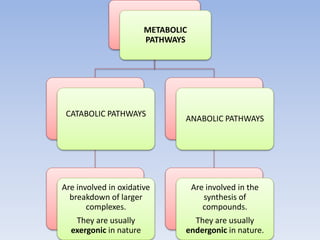

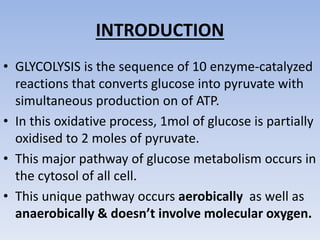
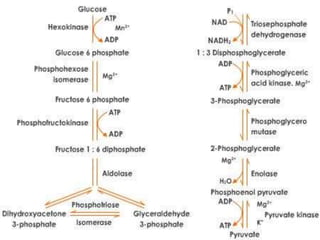
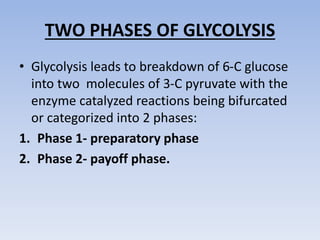
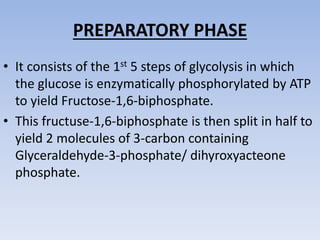
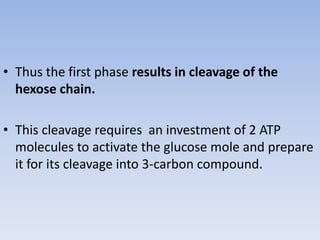
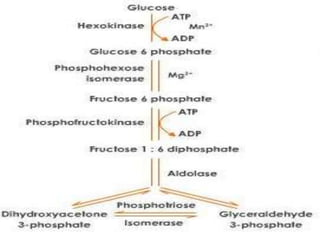
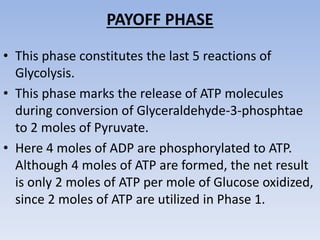
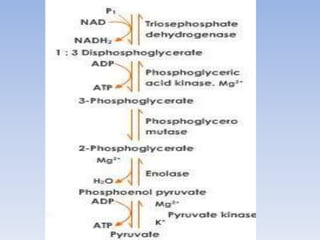
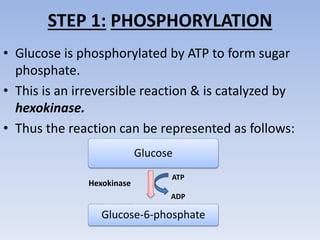
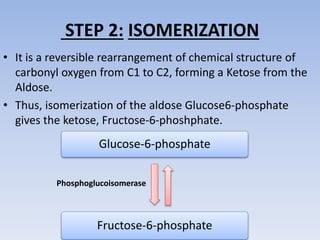
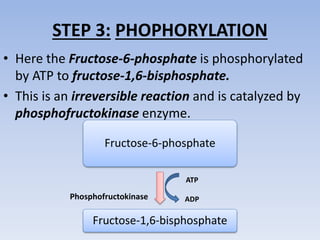
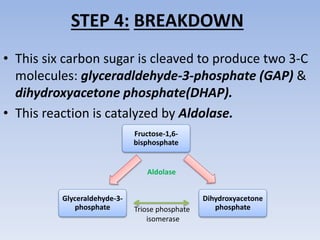
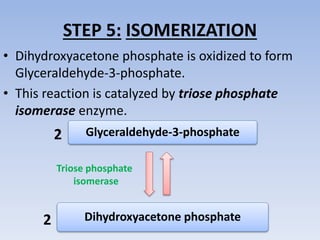
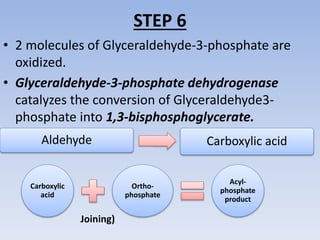
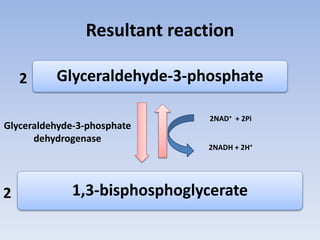
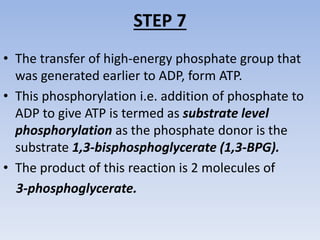
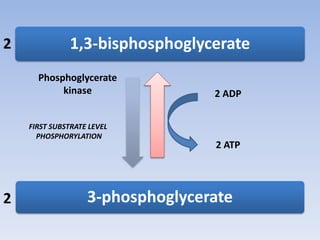
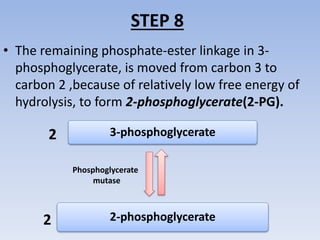
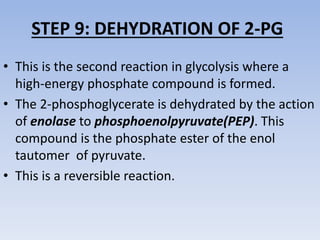
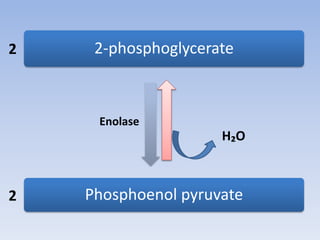
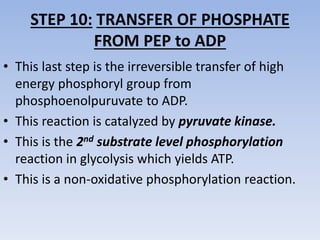
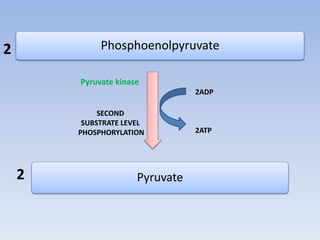
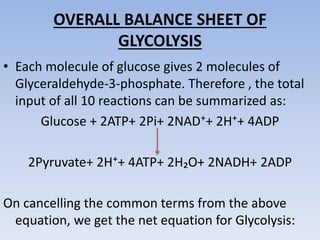
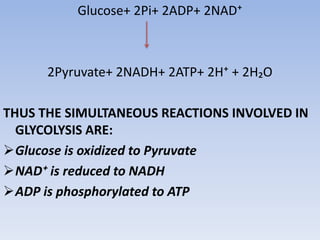
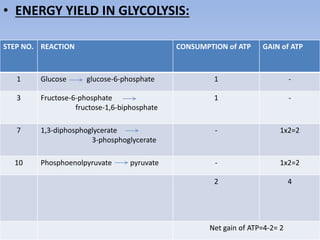
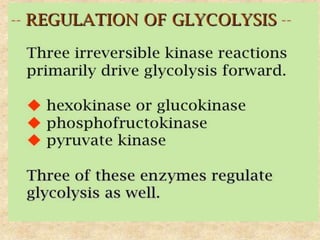
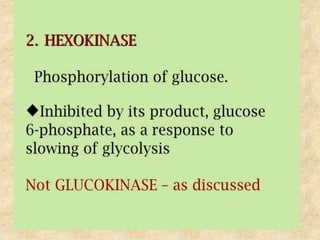
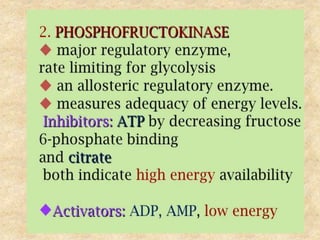
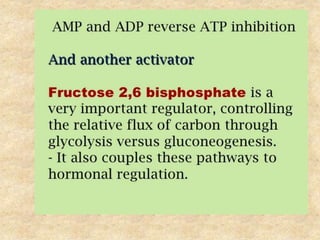
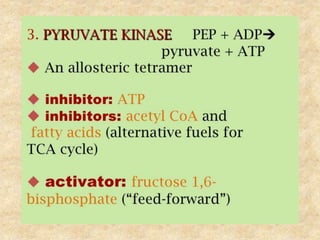

Metabolic pathways can be catabolic, involving the breakdown of complexes, or anabolic, involving synthesis. Glycolysis is the catabolic pathway that breaks down glucose into pyruvate, producing a net yield of 2 ATP per glucose molecule. It occurs in two phases: the preparatory phase requires 2 ATP to phosphorylate and cleave glucose, while the payoff phase generates 4 ATP from substrate-level phosphorylation as the intermediates are oxidized to pyruvate. Overall, glycolysis oxidizes glucose to pyruvate, reduces NAD+ to NADH, and generates a small amount of ATP through substrate-level phosphorylation.


