Downloaded 53 times
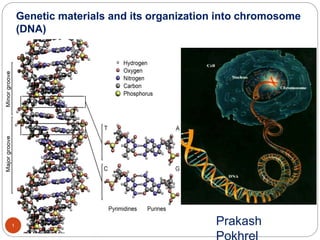
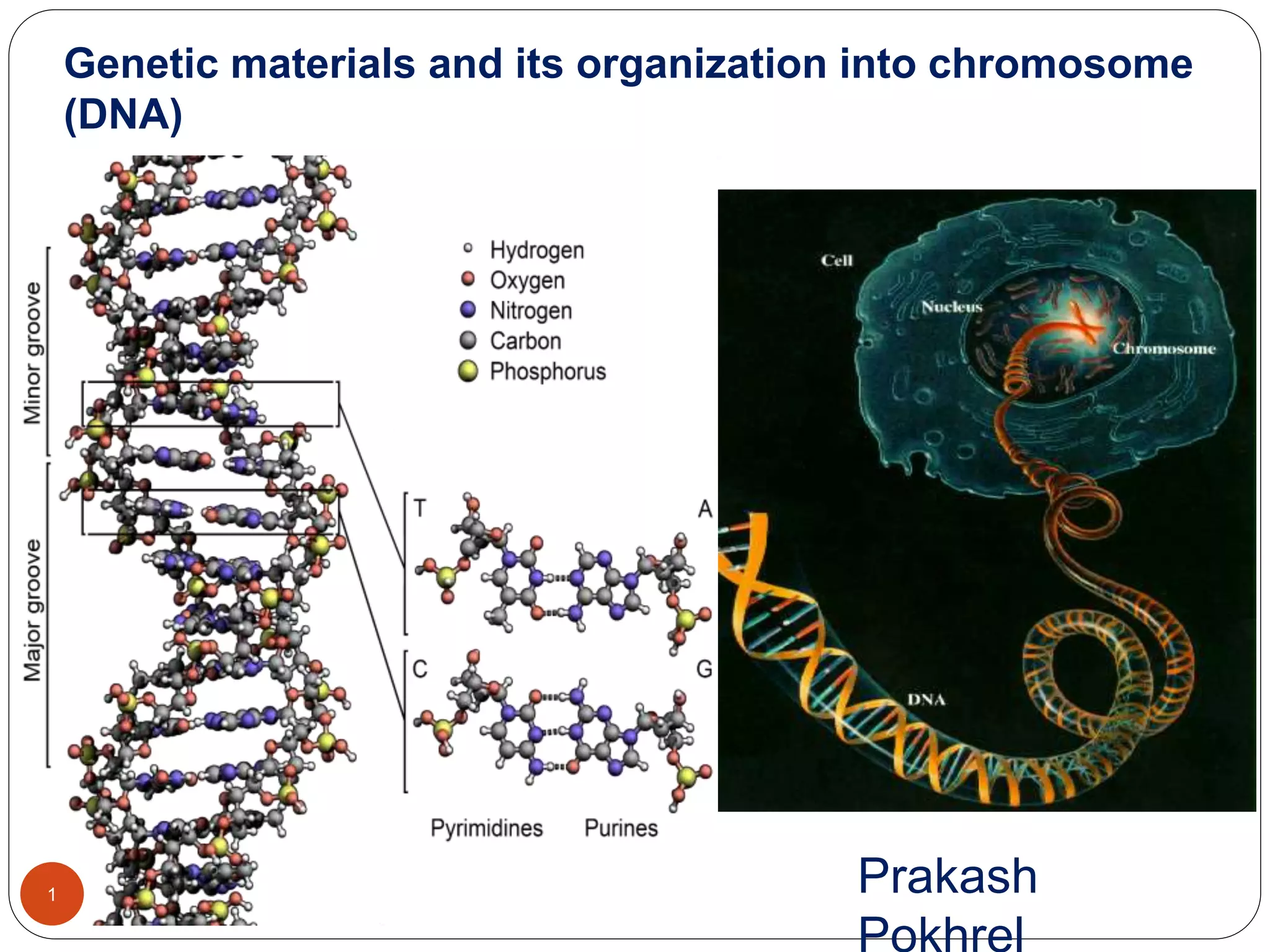
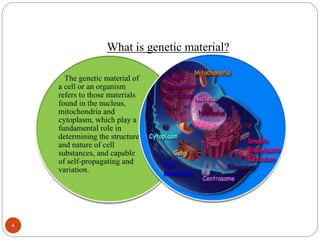
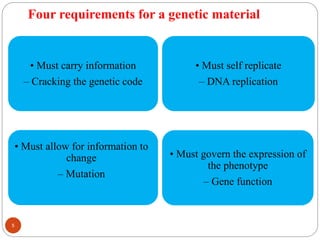
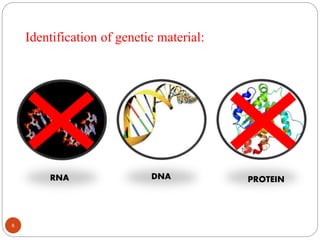
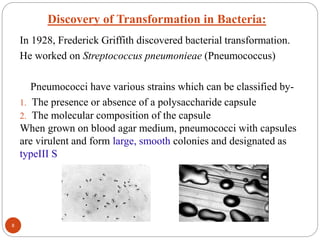
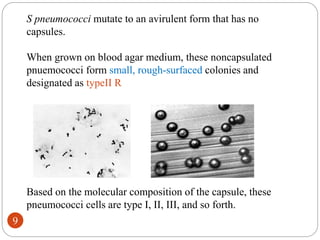
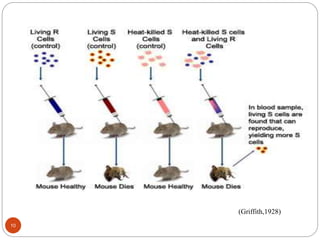
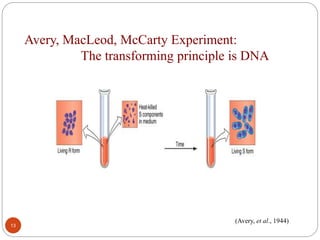
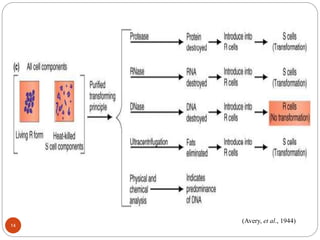
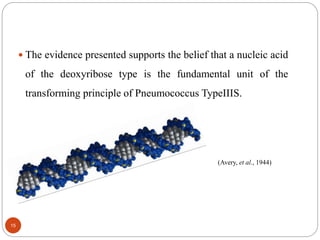
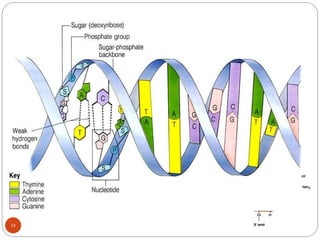
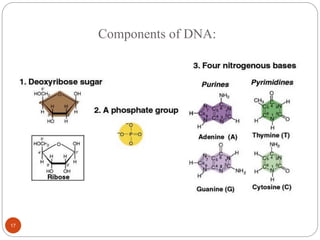
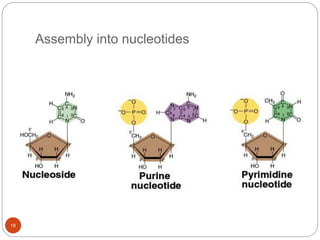
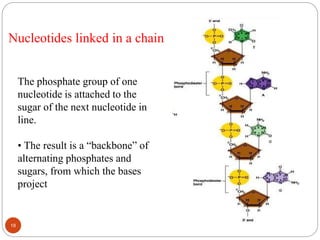
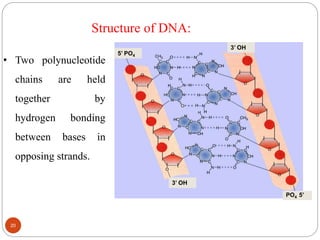
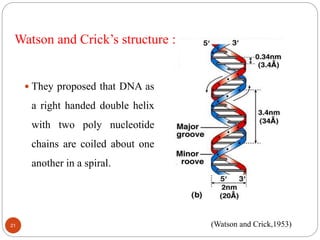
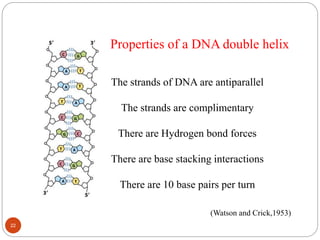
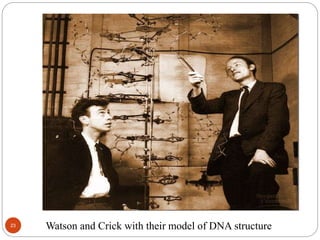
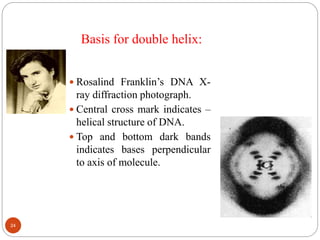
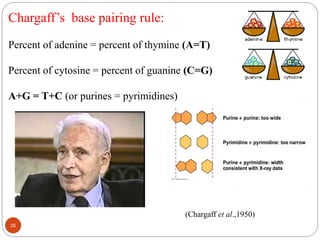
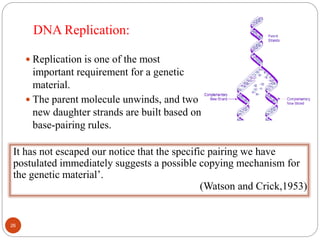
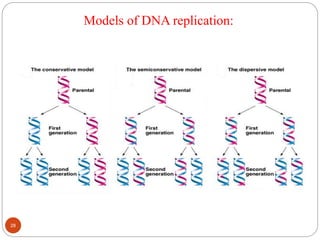
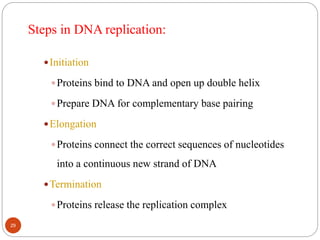
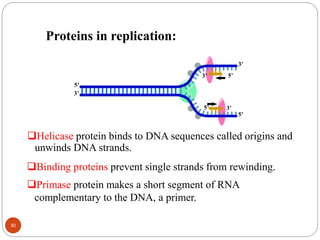
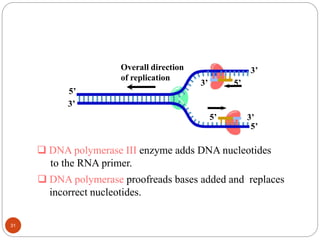
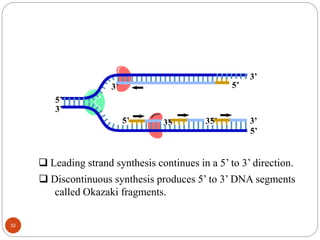
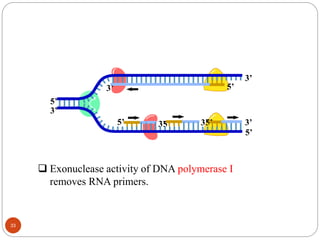
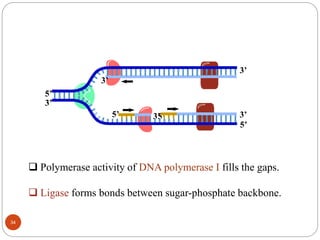
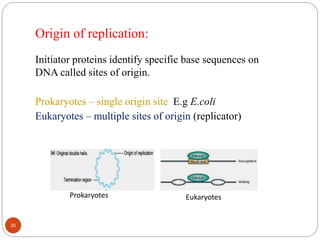
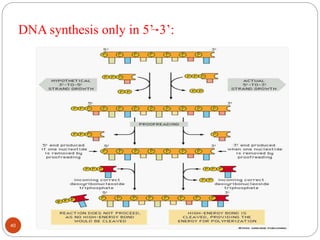
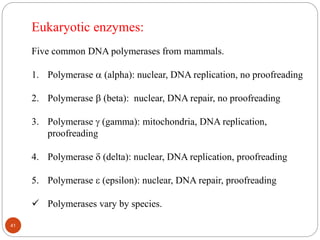
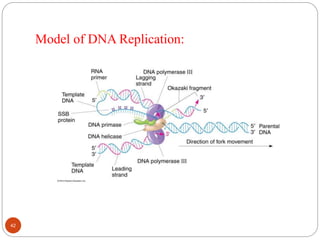
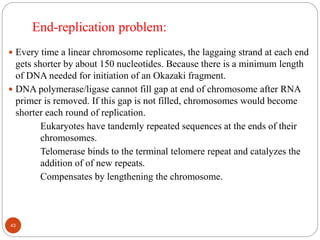
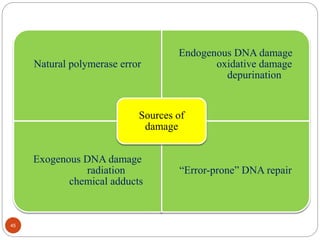
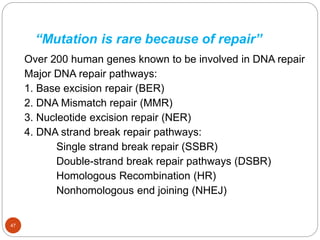
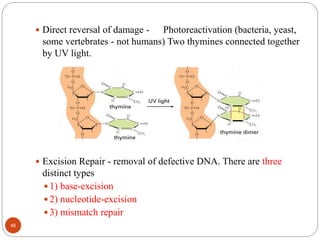
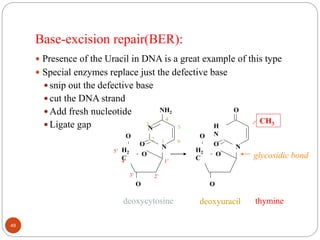
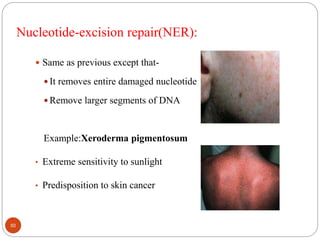
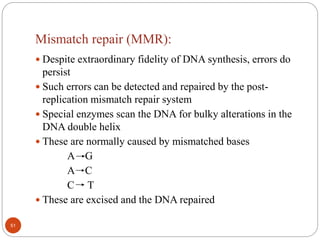
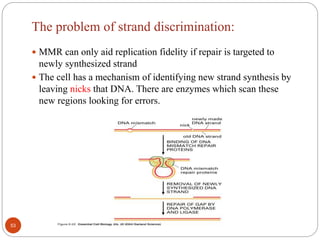
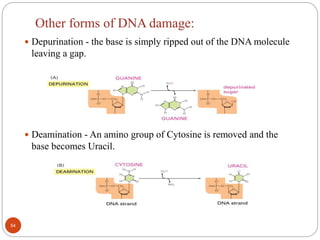
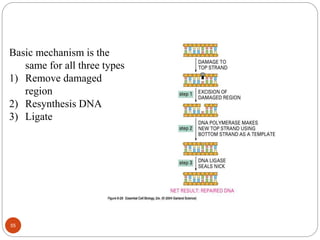


This document discusses genetic material and its organization into chromosomes. It begins by outlining the requirements for something to be considered a genetic material, including that it must carry information, self-replicate, allow for changes in information, and govern phenotype expression. The identification of DNA as the genetic material is then summarized, from Griffith's discovery of transformation in bacteria to the conclusive experiments of Avery, MacLeod, and McCarty. The structure of DNA is covered briefly, including Watson and Crick's double helix model. DNA replication and repair mechanisms such as base excision repair, nucleotide excision repair, and mismatch repair are then summarized in 1-2 sentences each.


