GLYCOGEN
METABOLISM
DR. FARHANA ATIA
ASSOCIATE PROFESSOR
DEPARTMENT OF BIOCHEMISTRY
NILPHAMARI MEDICAL COLLEGE, NILPHAMARI
GLYCOGEN
Glycogen is polymer of
glucose and major storage
carbohydrate in animal
Stored site
Skeletal muscle: Serve fuel
for muscle activity
Liver: maintain blood glucose
concentration in early stage of
fasting (12-18 hours)
Brain: modest amount
Liver glycogen Muscle glycogen
1. Amount
90 g [5% of tissue
weight -1.8 kg]
245 g [0.7% of tissue
weight- 35 kg]
2. Source
Dietary carbohydrate
& gluconeogenesis
Blood glucose & muscle
lactic acid
3. Turnover rate Rapid Slow
4. Maintenance of
blood glucose
concentration
Positive role
No role due to absence of
glucose-6-phosphatase
5. Fuel for muscle
activity
No role
Ready source of glucose-1-
phosphate for glycolysis
GLYCOGENESIS
Glycogenesis is the formation of glycogen from glucose
Substrate: Glucose as Glucose-1-phosphate
Product: Glycogen
Site: Liver, Muscle
Comp: Cytoplasm
Nature: Anabolic
Rate limiting enzyme: Glycogen synthase
Steps of Glycogenesis
Glucose is phosphorylated
to glucose-6-phosphate,
catalyzed by hexokinase
(muscle) and glucokinase
(liver)
Glucose-6-phosphate is
isomerized to glucose-1-
phosphate by
phosphoglucomutase
Steps of Glycogenesis
Glucose-1-phosphate reacts
with uridine triphosphate
(UTP) to form the active
nucleotide uridine
diphosphate glucose
(UDPGlc) and pyrophosphate
catalyzed by UDPGlc
pyrophosphorylase
Steps of Glycogenesis
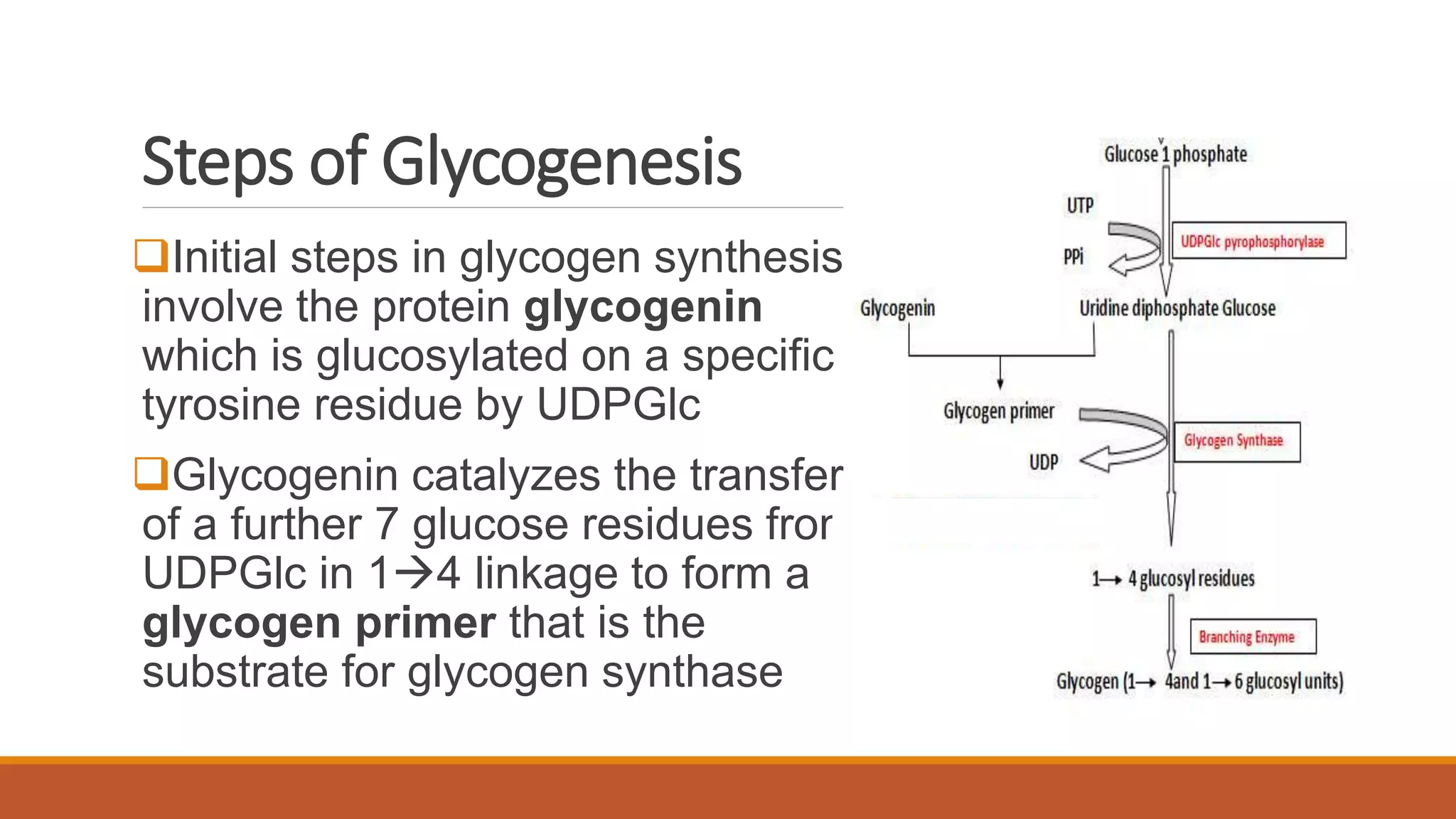
Initial steps in glycogen synthesis
involve the protein glycogenin
which is glucosylated on a specific
tyrosine residue by UDPGlc
Glycogenin catalyzes the transfer
of a further 7 glucose residues from
UDPGlc in 14 linkage to form a
glycogen primer that is the
substrate for glycogen synthase
Steps of Glycogenesis
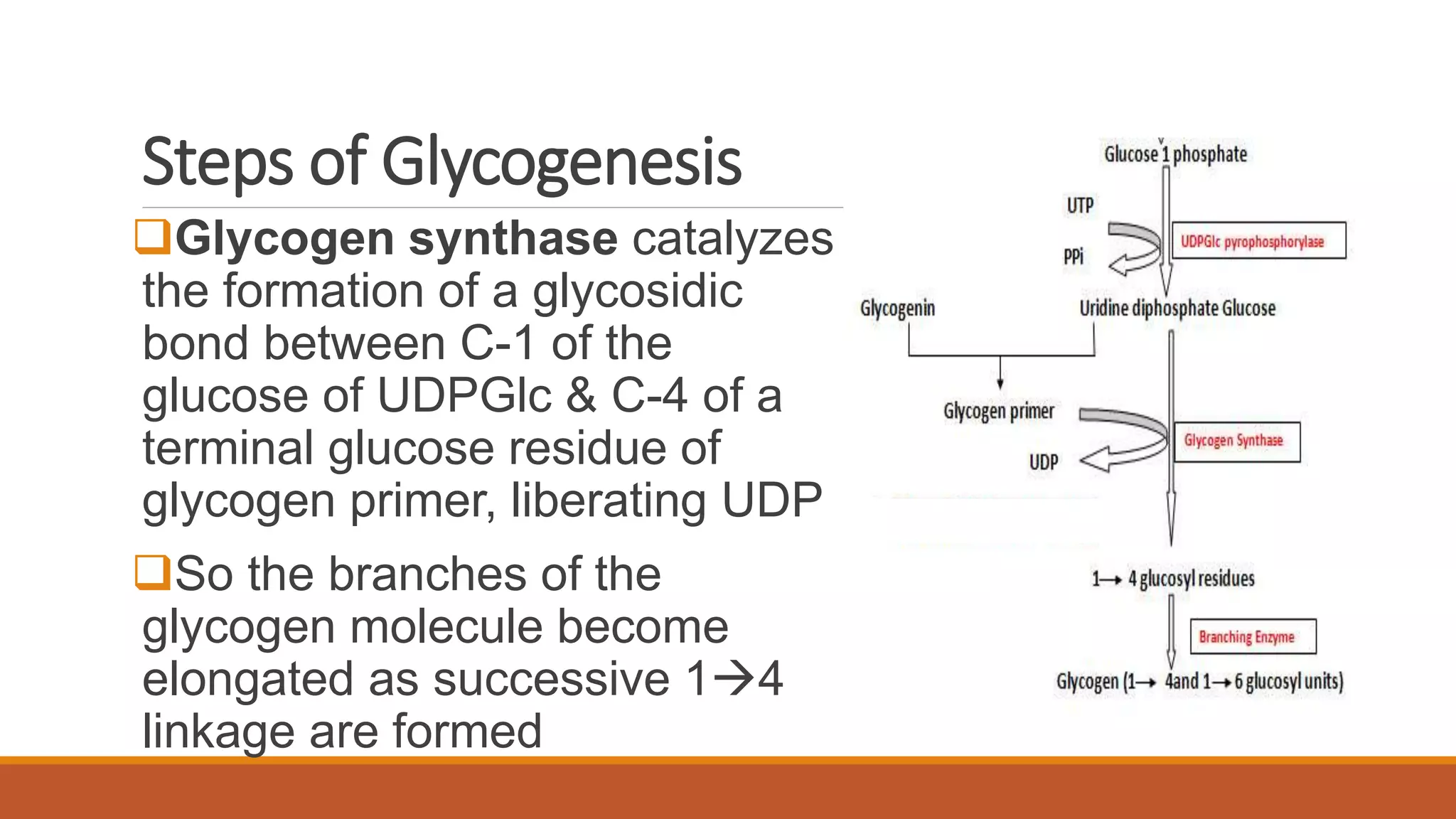
Glycogen synthase catalyzes
the formation of a glycosidic
bond between C-1 of the
glucose of UDPGlc & C-4 of a
terminal glucose residue of
glycogen primer, liberating UDP
So the branches of the
glycogen molecule become
elongated as successive 14
linkage are formed
Steps of Glycogenesis
When growing chain is at least
11 glucose residues long,
branching enzyme transfers a
part of the 14 chain (at least 6
glucose) to a neighboring chain
to form a 16 linkage
establishing a branch point
The branches grow by further
addition of 14 glucosyl units &
further branching
Pathway
of
Glycogenesis
Harper’s Biochemistry 31st edn p-165
Glycogenolysis
Substrate: Glycogen
Product: Glucose-1-phosphate [finally glucose in liver,
but in muscle G1P:free glucose = 10:1]
Site: Liver, Muscle, Brain
Comp: Cytoplasm
Nature: Catabolic
Rate limiting enzyme: Glycogen phosphorylase
Steps in Glycogenolysis
Glycogenolysis is not the reverse of
glycogenesis, it is a separate pathway
Glycogen phosphorylase catalyzes
the rate limiting step in glycogenolysis-
the phosphorolytic cleavage of the 14
linkages of glycogen to yield glucose-1-
phosphate. The enzyme requires
pyridoxal phosphate as it’s coenzyme
Steps in Glycogenolysis
The terminal glucosyl
residues are removed
sequentially until
approximately 4 residues
remain on either side of
16 branch
Steps in Glycogenolysis
The debranching enzyme has
2 catalytic sites
Glucan transferase: Transfers a
trisaccharide unit from one
branch to the other, exposing the
16 branch point
A 1,6-glycosidase: Catalyzes
hydrolysis of 16 glycoside bond
to liberate free glucose
Steps in Glycogenolysis
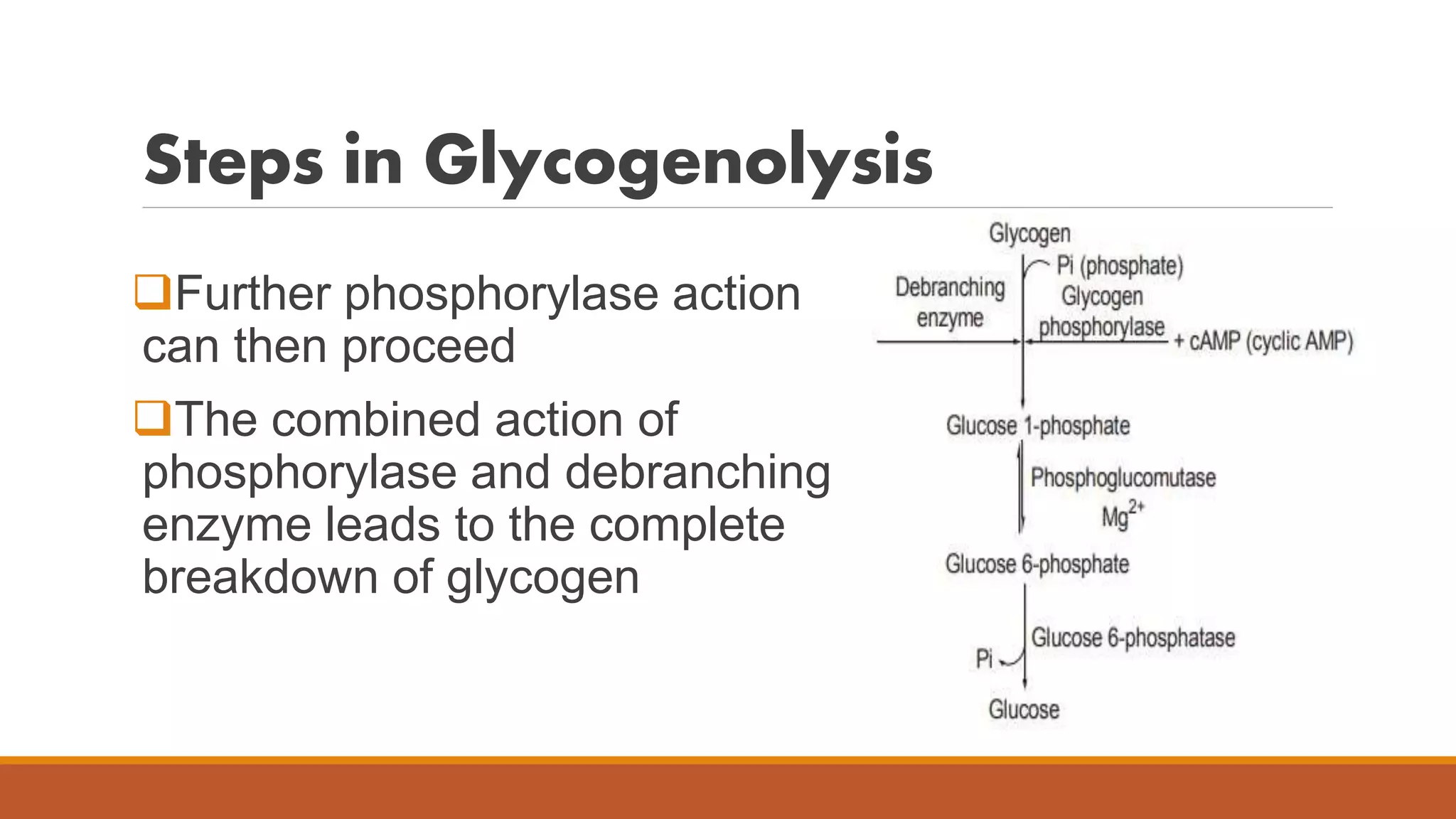
Further phosphorylase action
can then proceed
The combined action of
phosphorylase and debranching
enzyme leads to the complete
breakdown of glycogen
Steps in Glycogenolysis
Phosphoglucomutase
catalyzes the conversion of
glucose-1-phosphate to glucose-
6-phosphate
In liver (not muscle) glucose-6-
phosphatase catalyzes hydrolysis
of glucose-6-phosphate yielding
glucose
Pathway
of
Glycogenolysis
Harper’s Biochemistry 31st edn p-165
Regulation
Glycogen metabolism is
regulated by a balance in
activities between
glycogen synthase &
phosphorylase
Cyclic-AMP
simultaneously activate
phosphorylase & inhibit
glycogen synthase
Insulin
Glycogen
synthase
C-AMP
Glycogen
phosphorylase
Glucagon
Epinephrine
Regulation
cAMP is stimulated by
epinephrine & glucagon,
which in turn enhances
glycogenolysis
Whereas c-AMP is
inhibited by high
concentration of insulin
which in turn inhibits the
glycogenolysis
Insulin
Glycogen
synthase
c-AMP
Glycogen
phosphorylase
Glucagon
Epinephrine
Glycogen storage disease
Inherited deficiencies of enzymes of glycogen
metabolism in both liver & muscle cause glycogen
storage disease
Characterized by deficient mobilization of glycogen or
deposition of abnormal forms of glycogen
Leading to liver damage and muscle weakness; some
result in early death.
Glycogen metabolism
Glycogen metabolism

Glycogen metabolism

  • 1.
    GLYCOGEN METABOLISM DR. FARHANA ATIA ASSOCIATEPROFESSOR DEPARTMENT OF BIOCHEMISTRY NILPHAMARI MEDICAL COLLEGE, NILPHAMARI
  • 2.
    GLYCOGEN Glycogen is polymerof glucose and major storage carbohydrate in animal Stored site Skeletal muscle: Serve fuel for muscle activity Liver: maintain blood glucose concentration in early stage of fasting (12-18 hours) Brain: modest amount
  • 3.
    Liver glycogen Muscleglycogen 1. Amount 90 g [5% of tissue weight -1.8 kg] 245 g [0.7% of tissue weight- 35 kg] 2. Source Dietary carbohydrate & gluconeogenesis Blood glucose & muscle lactic acid 3. Turnover rate Rapid Slow 4. Maintenance of blood glucose concentration Positive role No role due to absence of glucose-6-phosphatase 5. Fuel for muscle activity No role Ready source of glucose-1- phosphate for glycolysis
  • 4.
    GLYCOGENESIS Glycogenesis is theformation of glycogen from glucose Substrate: Glucose as Glucose-1-phosphate Product: Glycogen Site: Liver, Muscle Comp: Cytoplasm Nature: Anabolic Rate limiting enzyme: Glycogen synthase
  • 5.
    Steps of Glycogenesis Glucoseis phosphorylated to glucose-6-phosphate, catalyzed by hexokinase (muscle) and glucokinase (liver) Glucose-6-phosphate is isomerized to glucose-1- phosphate by phosphoglucomutase
  • 6.
    Steps of Glycogenesis Glucose-1-phosphatereacts with uridine triphosphate (UTP) to form the active nucleotide uridine diphosphate glucose (UDPGlc) and pyrophosphate catalyzed by UDPGlc pyrophosphorylase
  • 7.
    Steps of Glycogenesis Initialsteps in glycogen synthesis involve the protein glycogenin which is glucosylated on a specific tyrosine residue by UDPGlc Glycogenin catalyzes the transfer of a further 7 glucose residues from UDPGlc in 14 linkage to form a glycogen primer that is the substrate for glycogen synthase
  • 8.
    Steps of Glycogenesis Glycogensynthase catalyzes the formation of a glycosidic bond between C-1 of the glucose of UDPGlc & C-4 of a terminal glucose residue of glycogen primer, liberating UDP So the branches of the glycogen molecule become elongated as successive 14 linkage are formed
  • 9.
    Steps of Glycogenesis Whengrowing chain is at least 11 glucose residues long, branching enzyme transfers a part of the 14 chain (at least 6 glucose) to a neighboring chain to form a 16 linkage establishing a branch point The branches grow by further addition of 14 glucosyl units & further branching
  • 10.
  • 11.
    Glycogenolysis Substrate: Glycogen Product: Glucose-1-phosphate[finally glucose in liver, but in muscle G1P:free glucose = 10:1] Site: Liver, Muscle, Brain Comp: Cytoplasm Nature: Catabolic Rate limiting enzyme: Glycogen phosphorylase
  • 12.
    Steps in Glycogenolysis Glycogenolysisis not the reverse of glycogenesis, it is a separate pathway Glycogen phosphorylase catalyzes the rate limiting step in glycogenolysis- the phosphorolytic cleavage of the 14 linkages of glycogen to yield glucose-1- phosphate. The enzyme requires pyridoxal phosphate as it’s coenzyme
  • 13.
    Steps in Glycogenolysis Theterminal glucosyl residues are removed sequentially until approximately 4 residues remain on either side of 16 branch
  • 14.
    Steps in Glycogenolysis Thedebranching enzyme has 2 catalytic sites Glucan transferase: Transfers a trisaccharide unit from one branch to the other, exposing the 16 branch point A 1,6-glycosidase: Catalyzes hydrolysis of 16 glycoside bond to liberate free glucose
  • 15.
    Steps in Glycogenolysis Furtherphosphorylase action can then proceed The combined action of phosphorylase and debranching enzyme leads to the complete breakdown of glycogen
  • 16.
    Steps in Glycogenolysis Phosphoglucomutase catalyzesthe conversion of glucose-1-phosphate to glucose- 6-phosphate In liver (not muscle) glucose-6- phosphatase catalyzes hydrolysis of glucose-6-phosphate yielding glucose
  • 17.
  • 18.
    Regulation Glycogen metabolism is regulatedby a balance in activities between glycogen synthase & phosphorylase Cyclic-AMP simultaneously activate phosphorylase & inhibit glycogen synthase Insulin Glycogen synthase C-AMP Glycogen phosphorylase Glucagon Epinephrine
  • 19.
    Regulation cAMP is stimulatedby epinephrine & glucagon, which in turn enhances glycogenolysis Whereas c-AMP is inhibited by high concentration of insulin which in turn inhibits the glycogenolysis Insulin Glycogen synthase c-AMP Glycogen phosphorylase Glucagon Epinephrine
  • 20.
    Glycogen storage disease Inheriteddeficiencies of enzymes of glycogen metabolism in both liver & muscle cause glycogen storage disease Characterized by deficient mobilization of glycogen or deposition of abnormal forms of glycogen Leading to liver damage and muscle weakness; some result in early death.