GLACIATION
(Intro to Geology)

by:
Mr. Marjonlien A. Mahusay
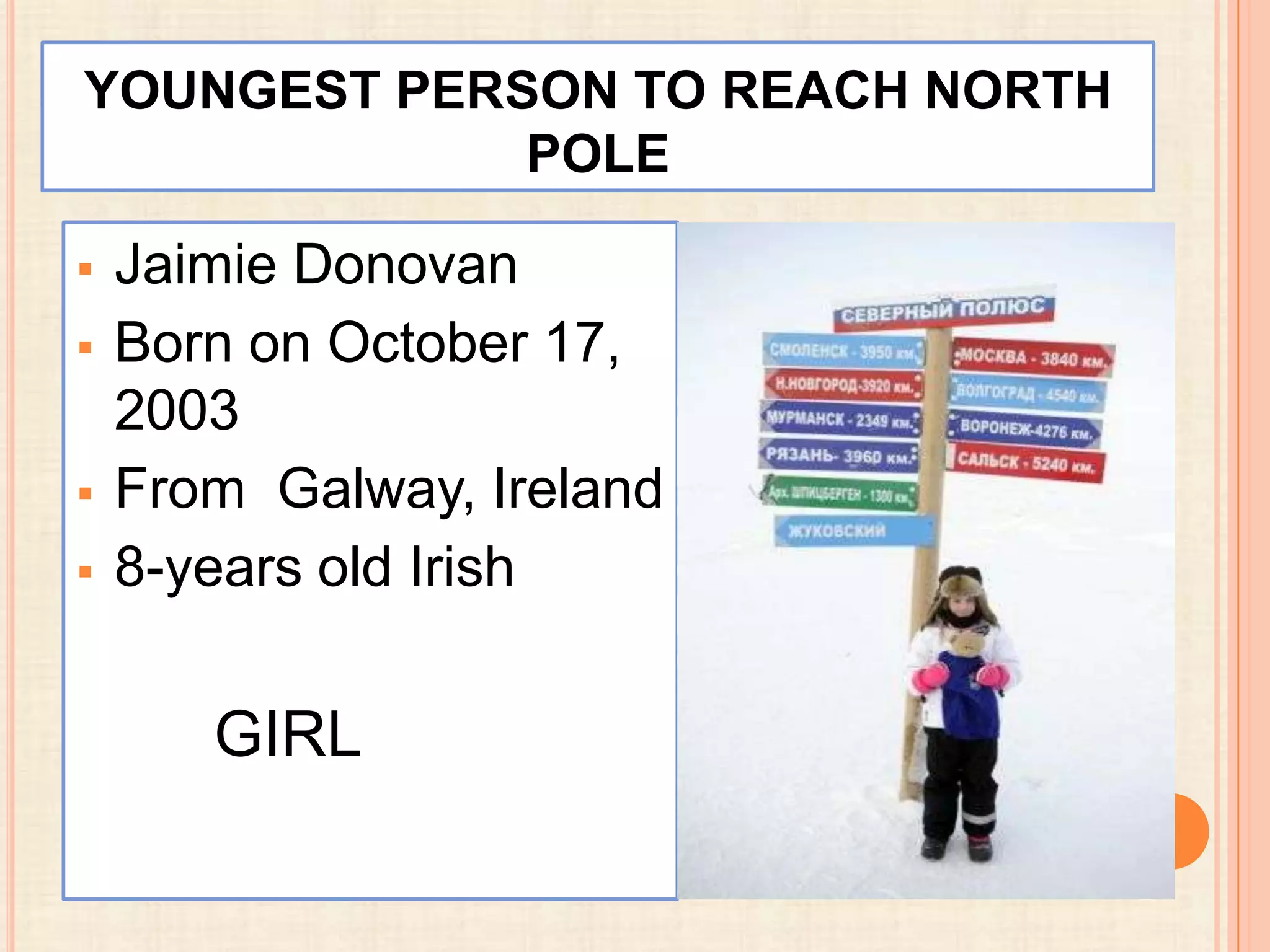
YOUNGEST PERSON TO REACH NORTH
POLE








Jaimie Donovan
Born on October 17,
2003
From Galway, Ireland
8-years old Irish

GIRL
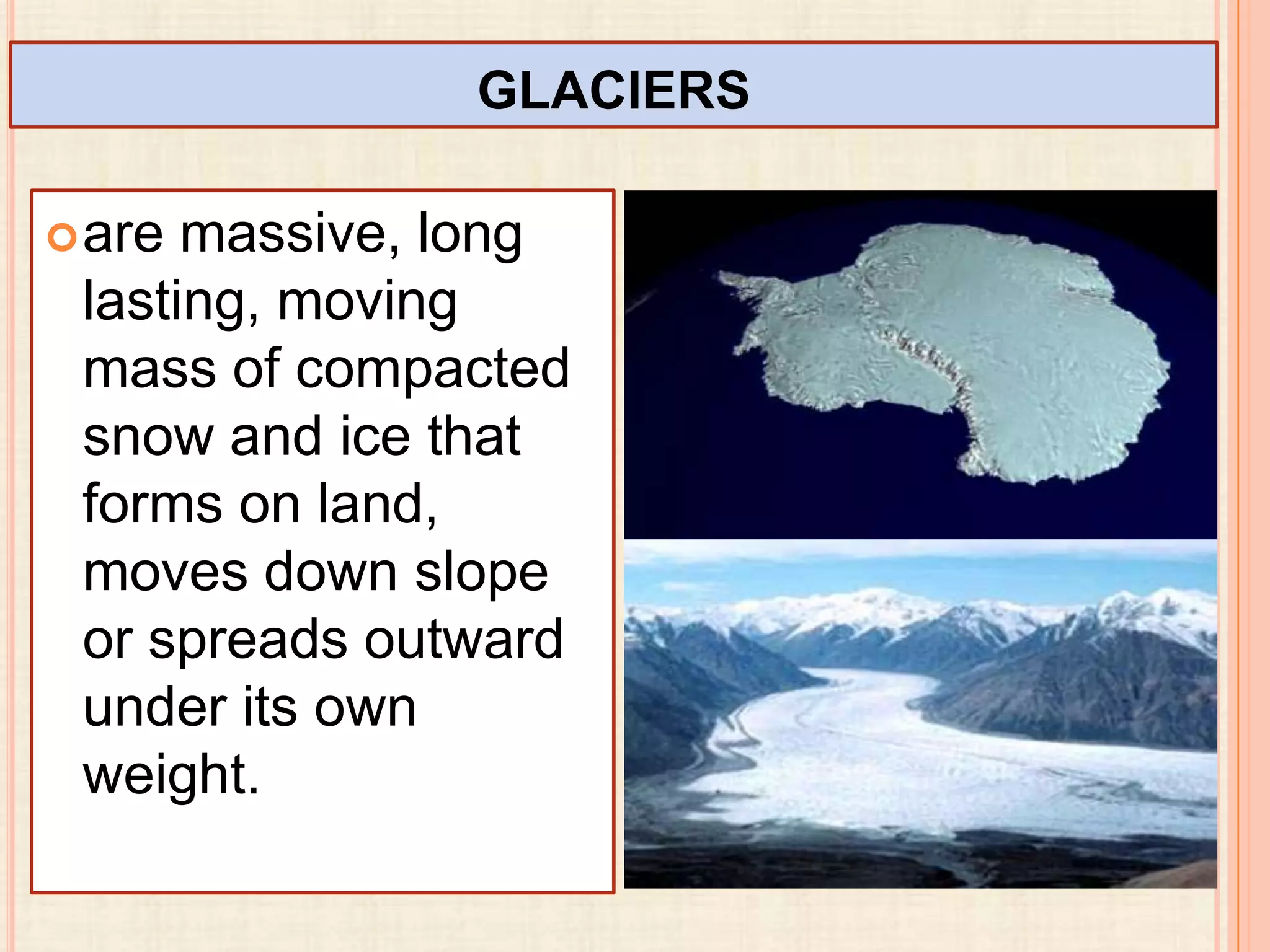
GLACIERS
 are

massive, long
lasting, moving
mass of compacted
snow and ice that
forms on land,
moves down slope
or spreads outward
under its own
weight.
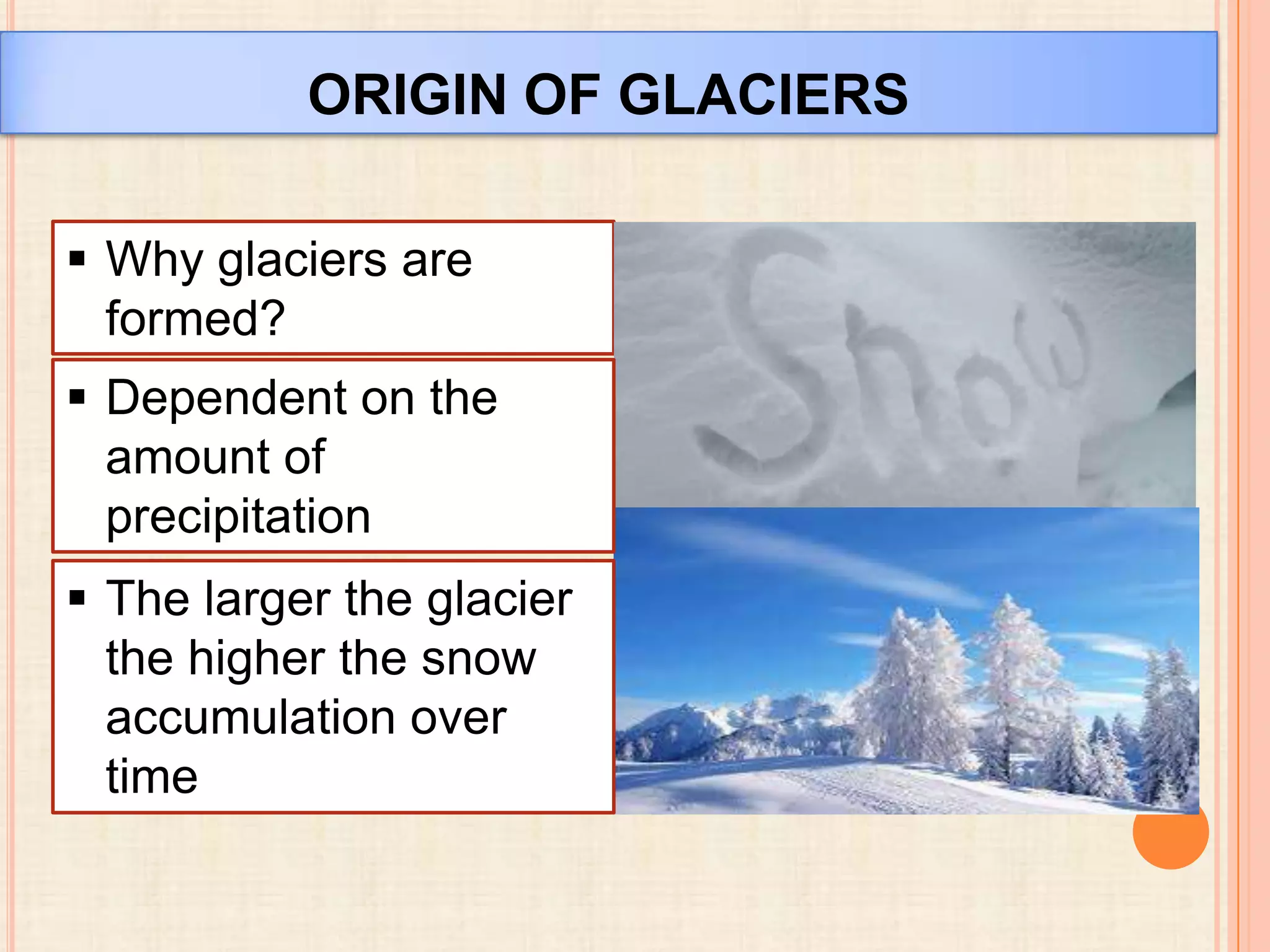
ORIGIN OF GLACIERS
 Why glaciers are
formed?
 Dependent on the
amount of
precipitation
 The larger the glacier
the higher the snow
accumulation over
time
DID YOU KNOW???
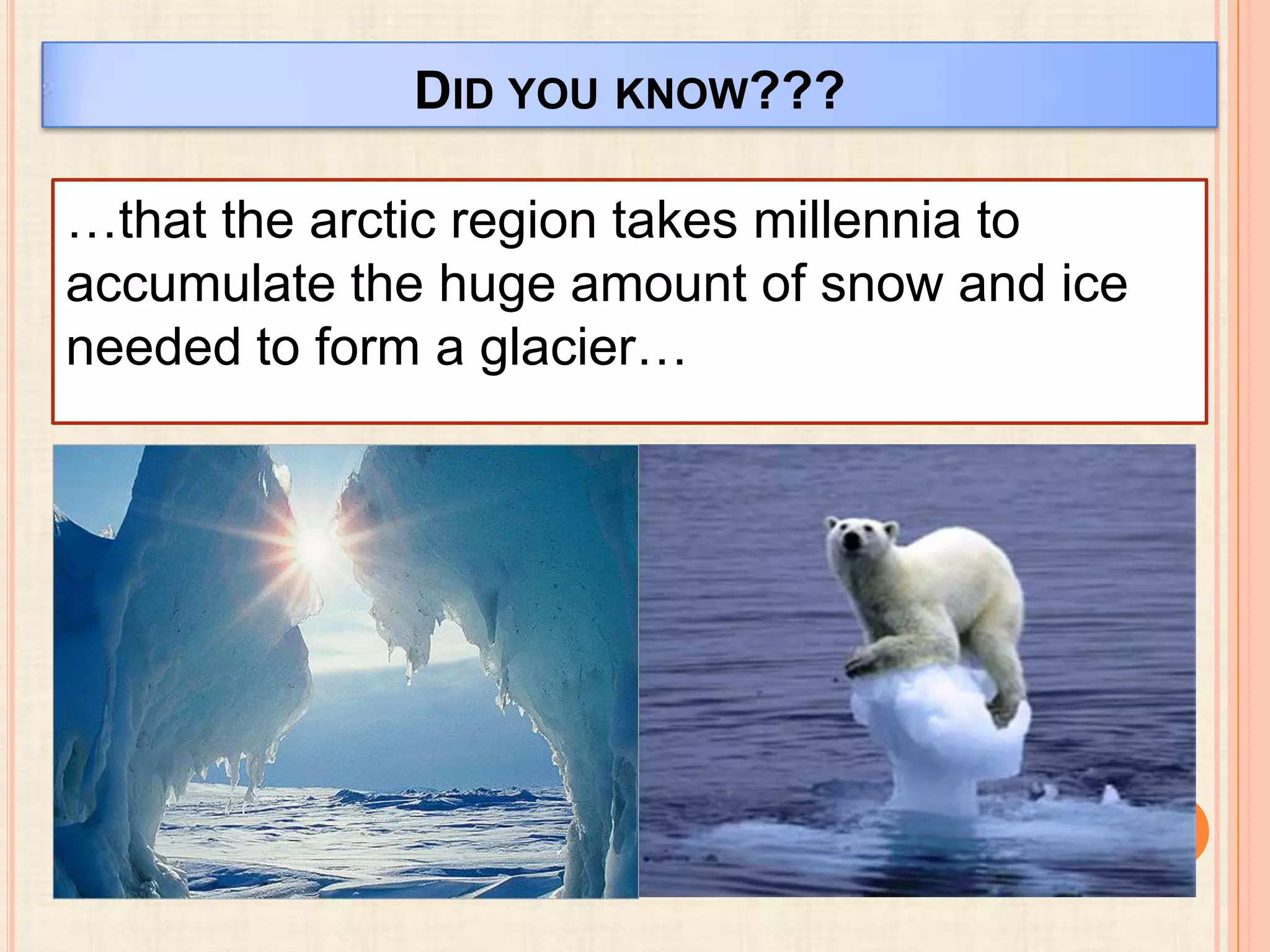
…that the arctic region takes millennia to
accumulate the huge amount of snow and ice
needed to form a glacier…
DID YOU KNOW???
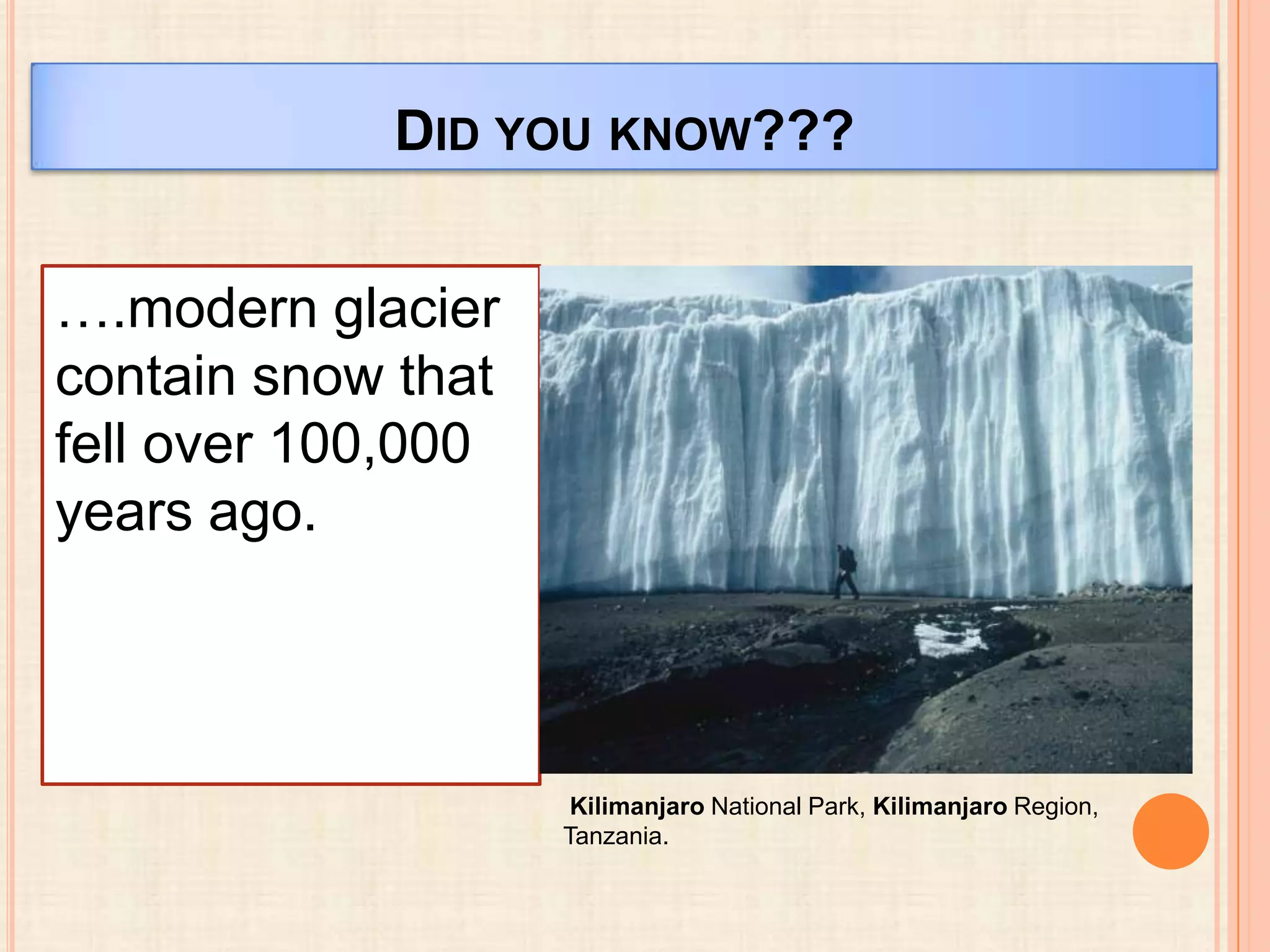
….modern glacier
contain snow that
fell over 100,000
years ago.

Kilimanjaro National Park, Kilimanjaro Region,
Tanzania.
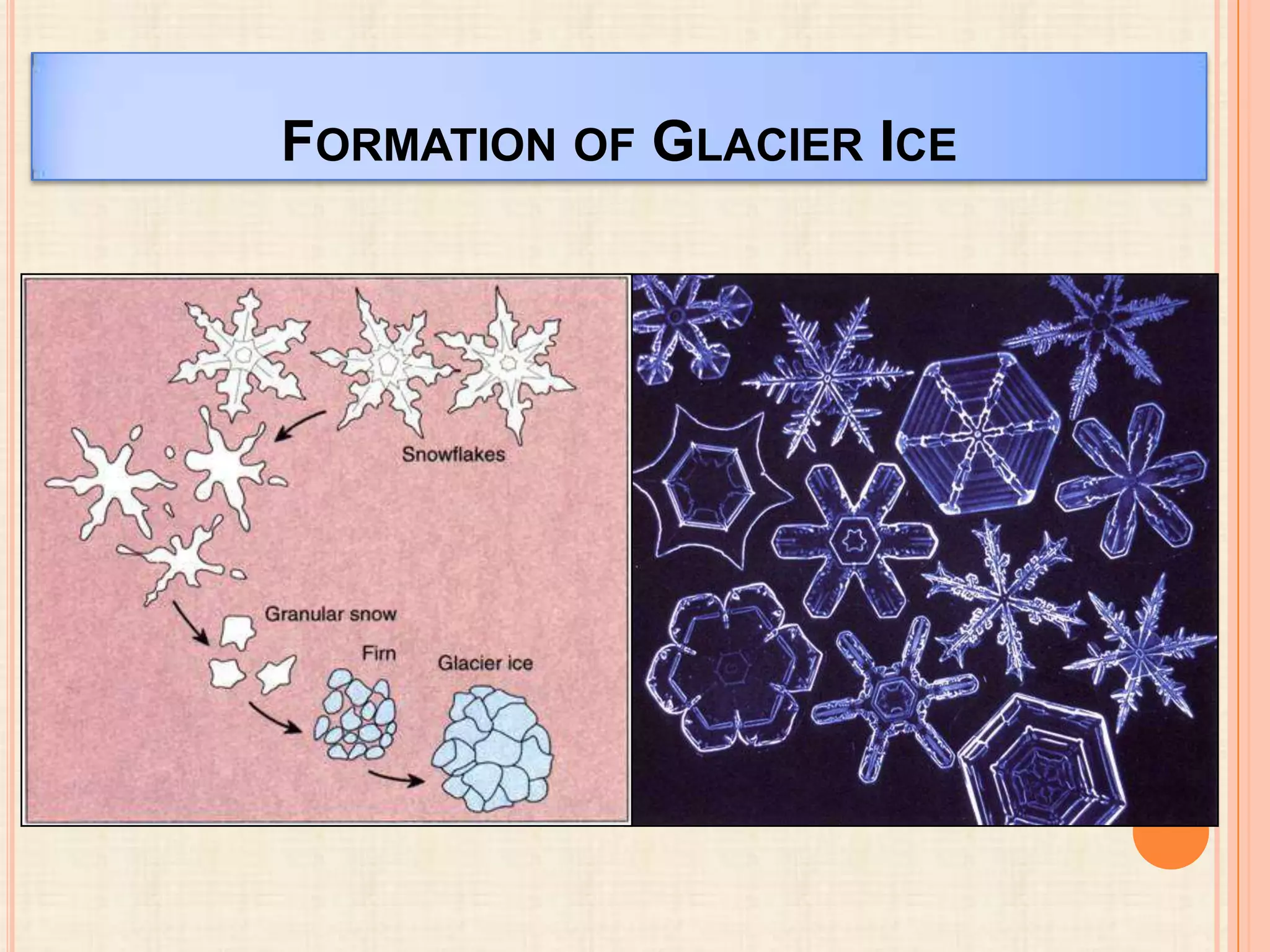
FORMATION OF GLACIER ICE
...if you chunk a glacial ice melted in your
glass of water, you would have dirt, gravel
and even organic matter or living stuff in
your water
...all the pressurized air bubbles would rush
out that they might explode your glass
CAUSES OF GLACIATIONS
What causes glaciations?

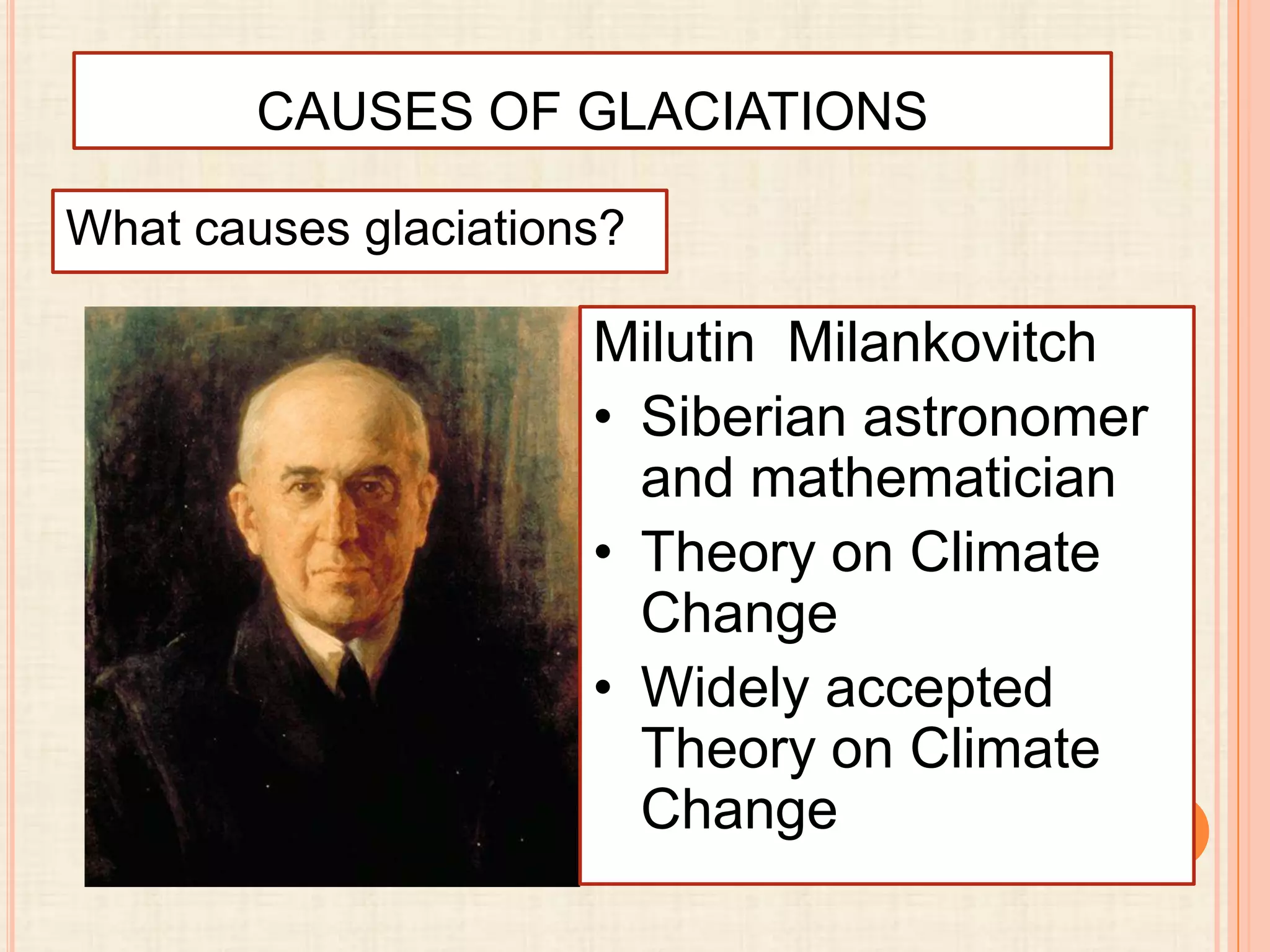
Milutin Milankovitch
• Siberian astronomer
and mathematician
• Theory on Climate
Change
• Widely accepted
Theory on Climate
Change
CAUSES OF GLACIATIONS
 Cyclical

changes on earth’s orbit and tilt

1.

Eccentricity of earth’s orbit

2.

Tilt of the earth’s axis

3.

Wobbling of the earth's axis
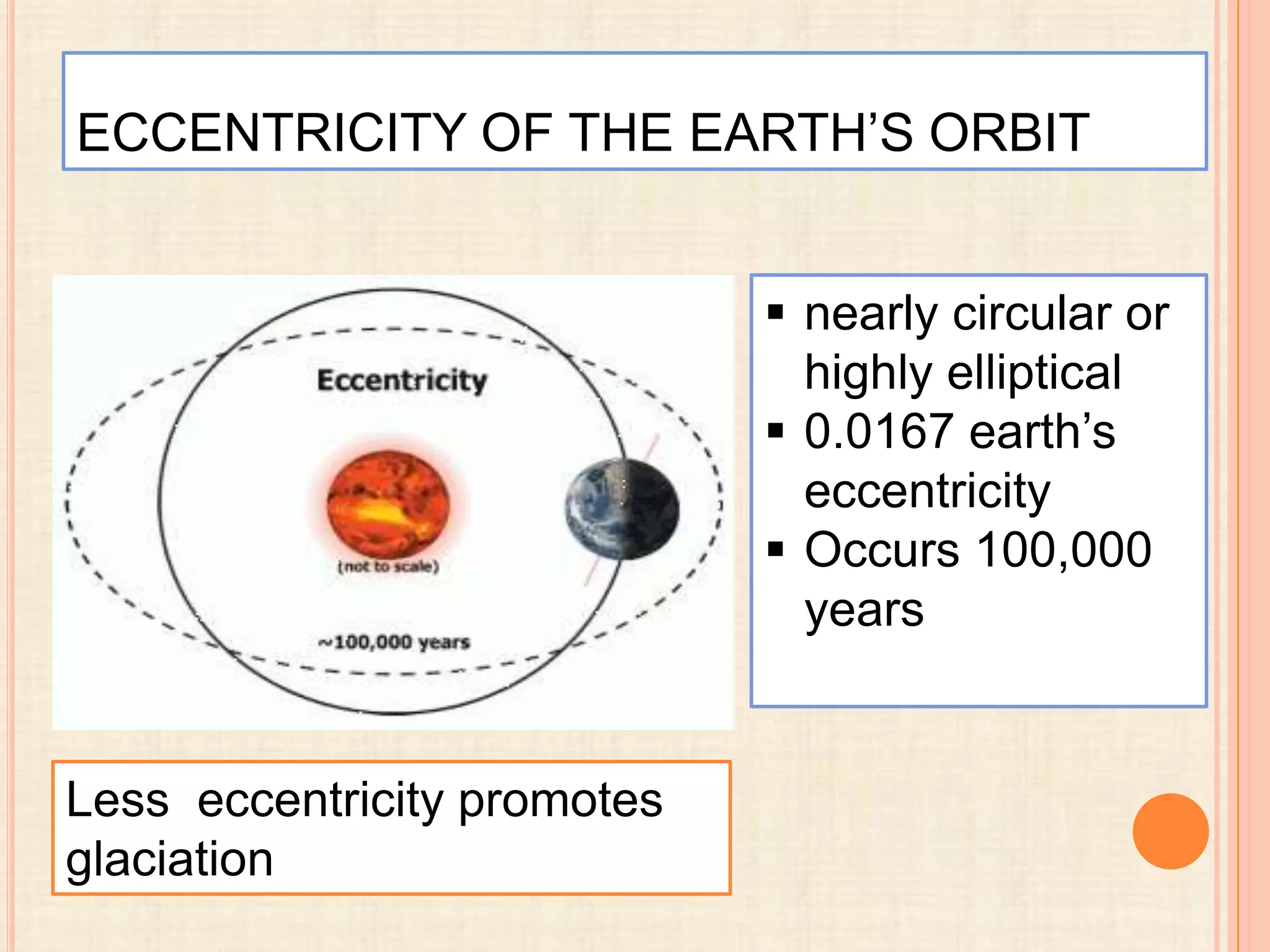
ECCENTRICITY OF THE EARTH’S ORBIT
 nearly circular or
highly elliptical
 0.0167 earth’s
eccentricity
 Occurs 100,000
years

Less eccentricity promotes
glaciation
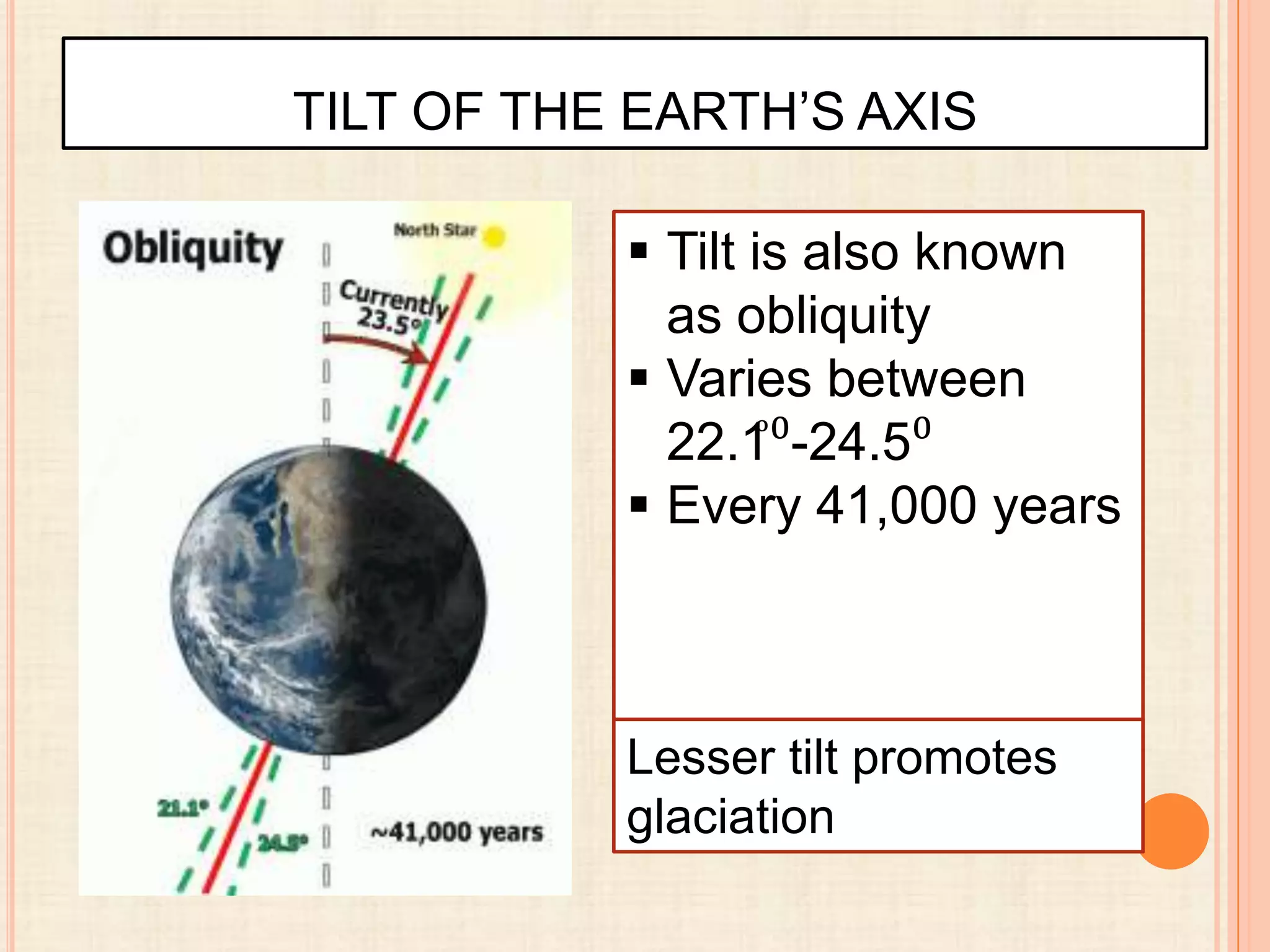
TILT OF THE EARTH’S AXIS
 Tilt is also known
as obliquity
 Varies between
22.1ͦ⁰-24.5⁰
 Every 41,000 years

Lesser tilt promotes
glaciation
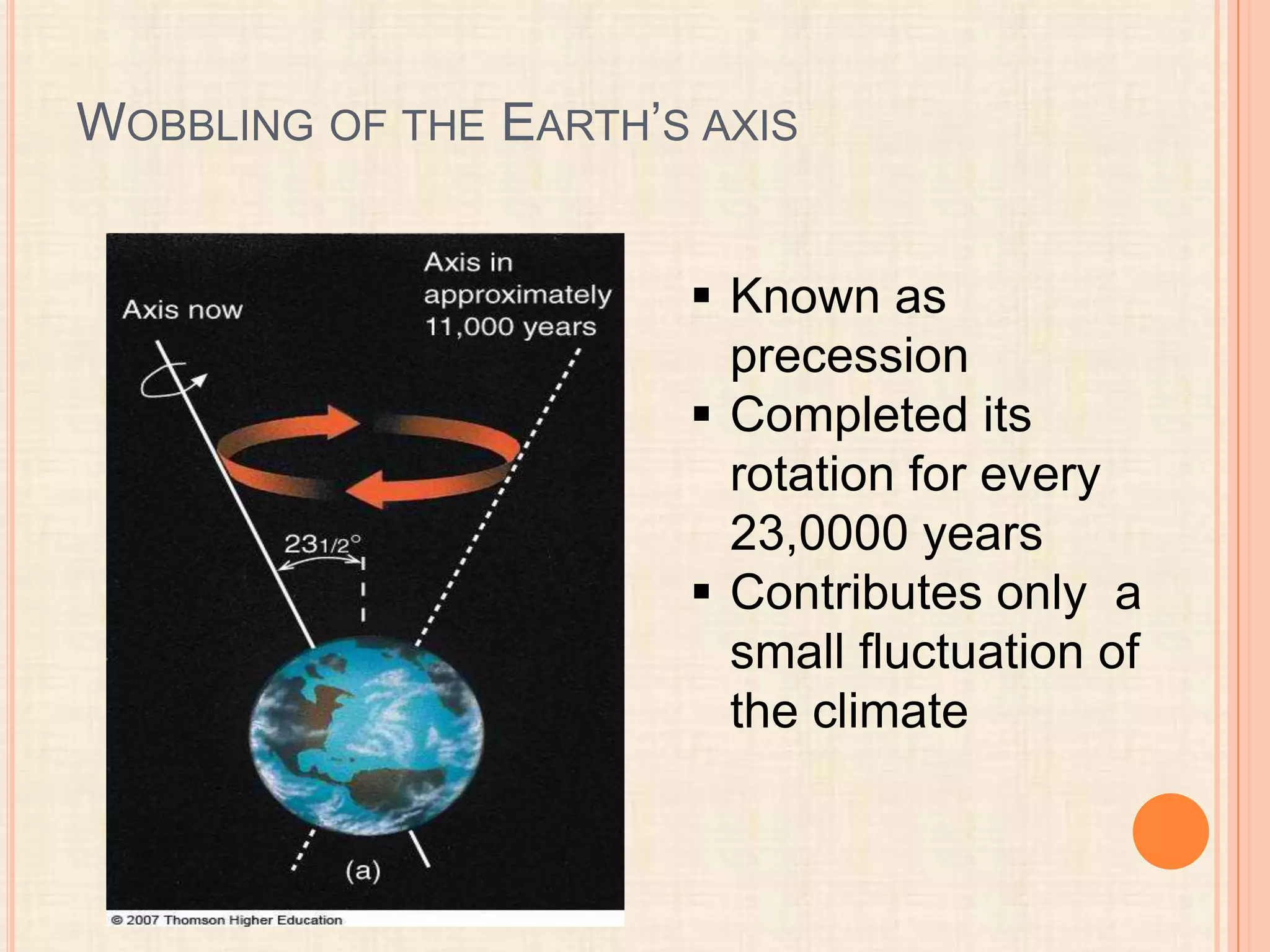
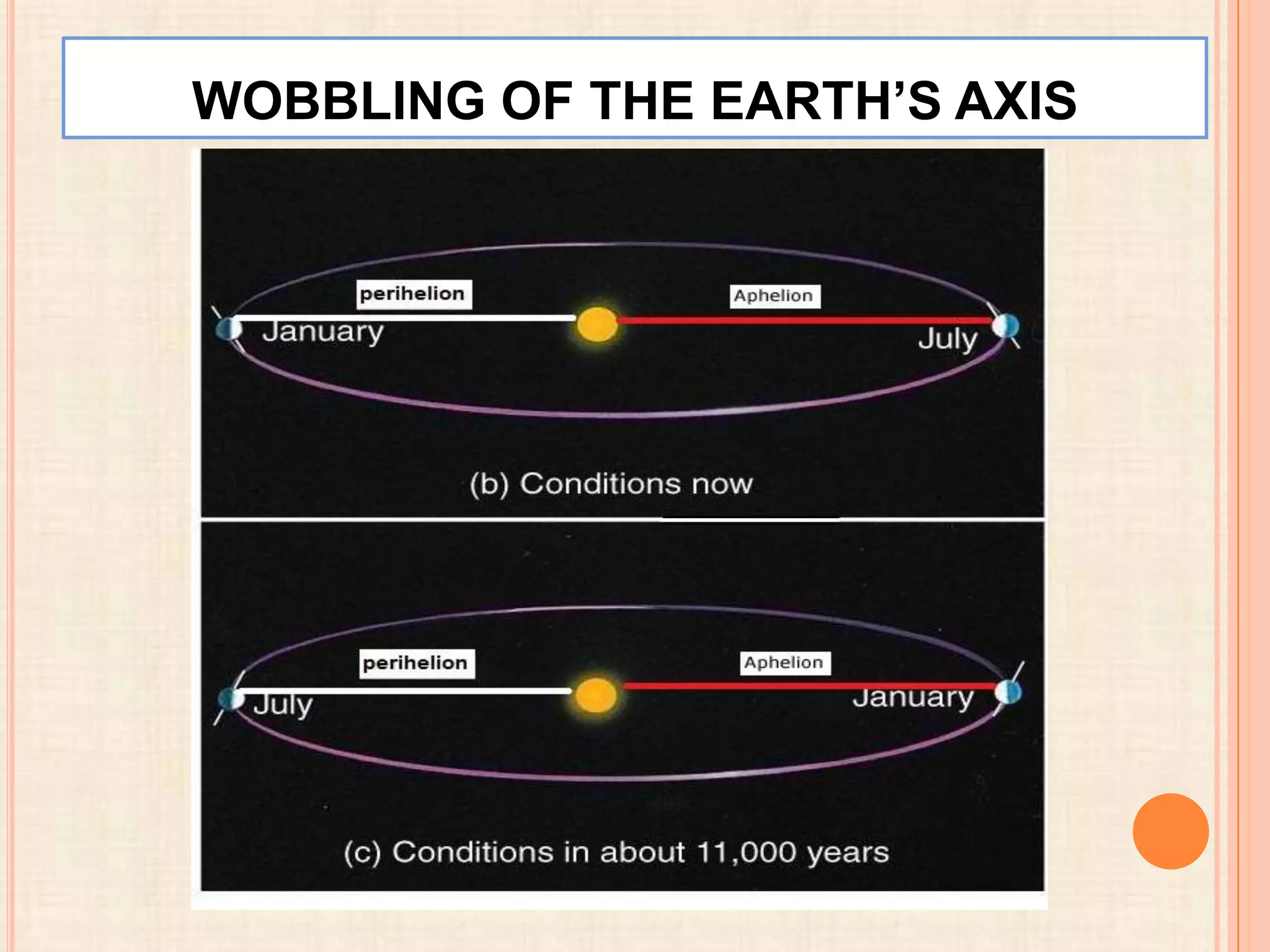
WOBBLING OF THE EARTH’S AXIS
 Known as
precession
 Completed its
rotation for every
23,0000 years
 Contributes only a
small fluctuation of
the climate
WOBBLING OF THE EARTH’S AXIS
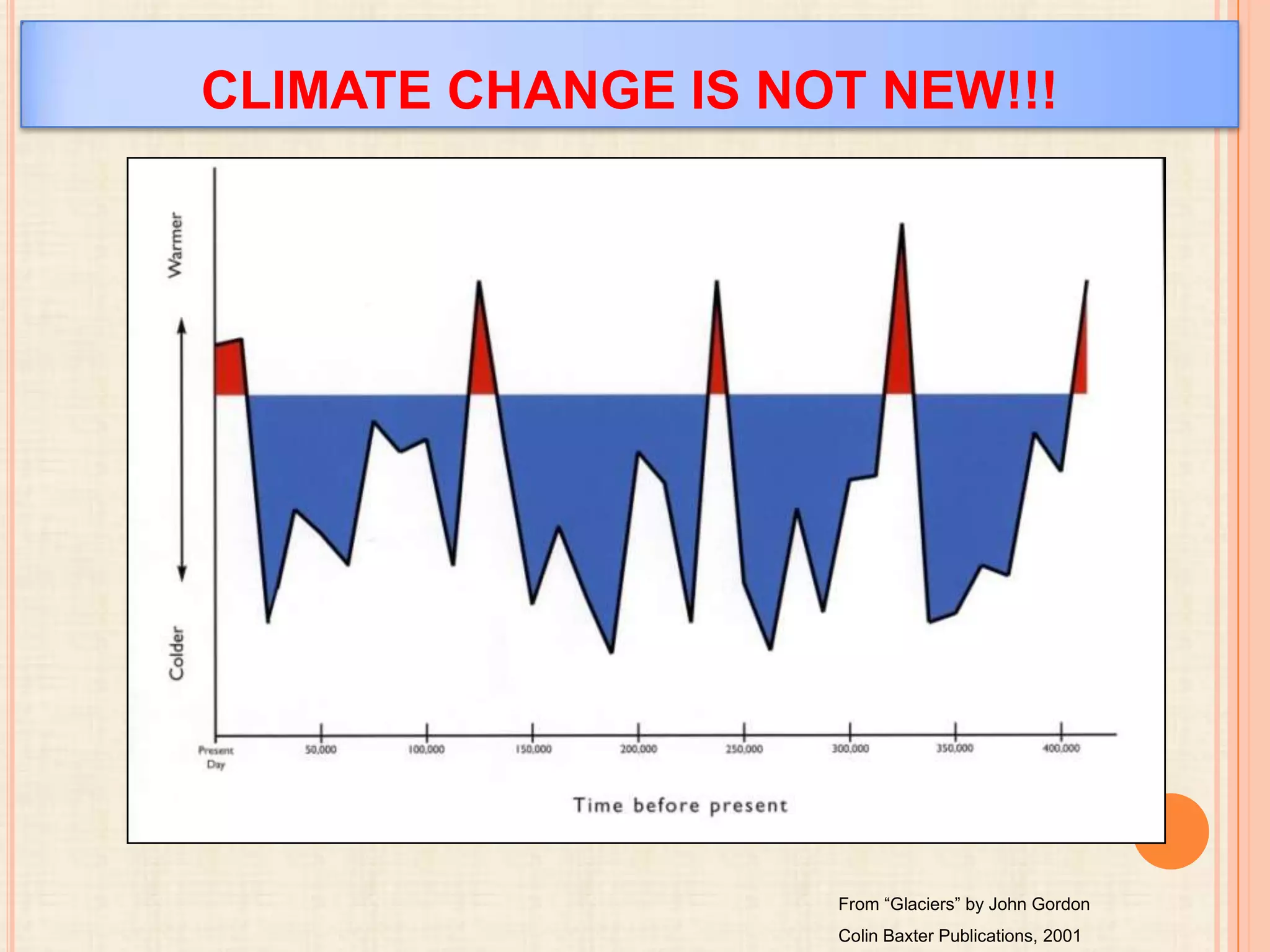
CLIMATE CHANGE IS NOT NEW!!!

From “Glaciers” by John Gordon
Colin Baxter Publications, 2001
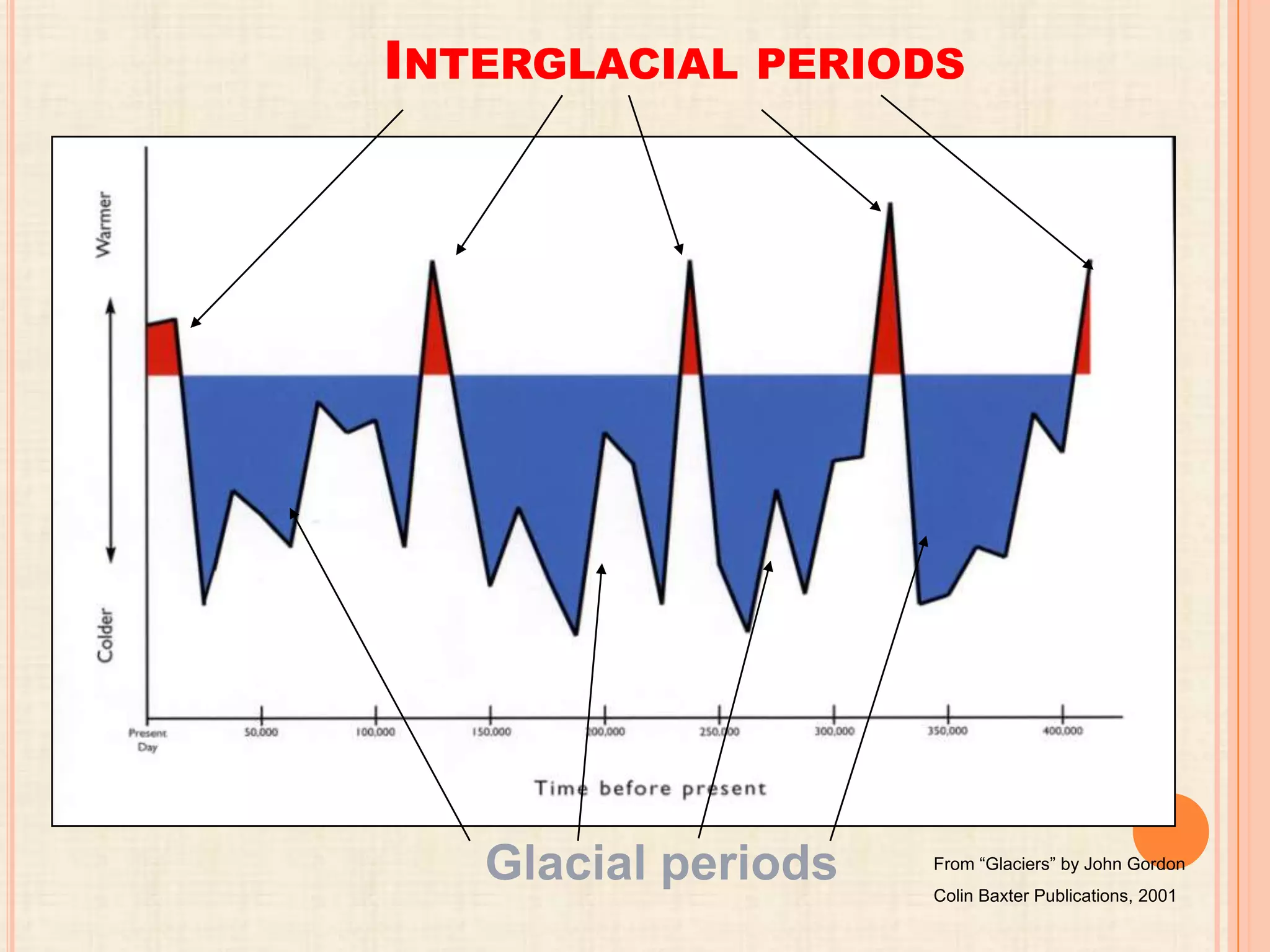
INTERGLACIAL

PERIODS

Glacial periods

From “Glaciers” by John Gordon
Colin Baxter Publications, 2001
ASSIGNMENT…
RESEARCH ON THE
DIFFERENT
LANDFORMS/FEATURES
PRODUCE BY GLACIERS
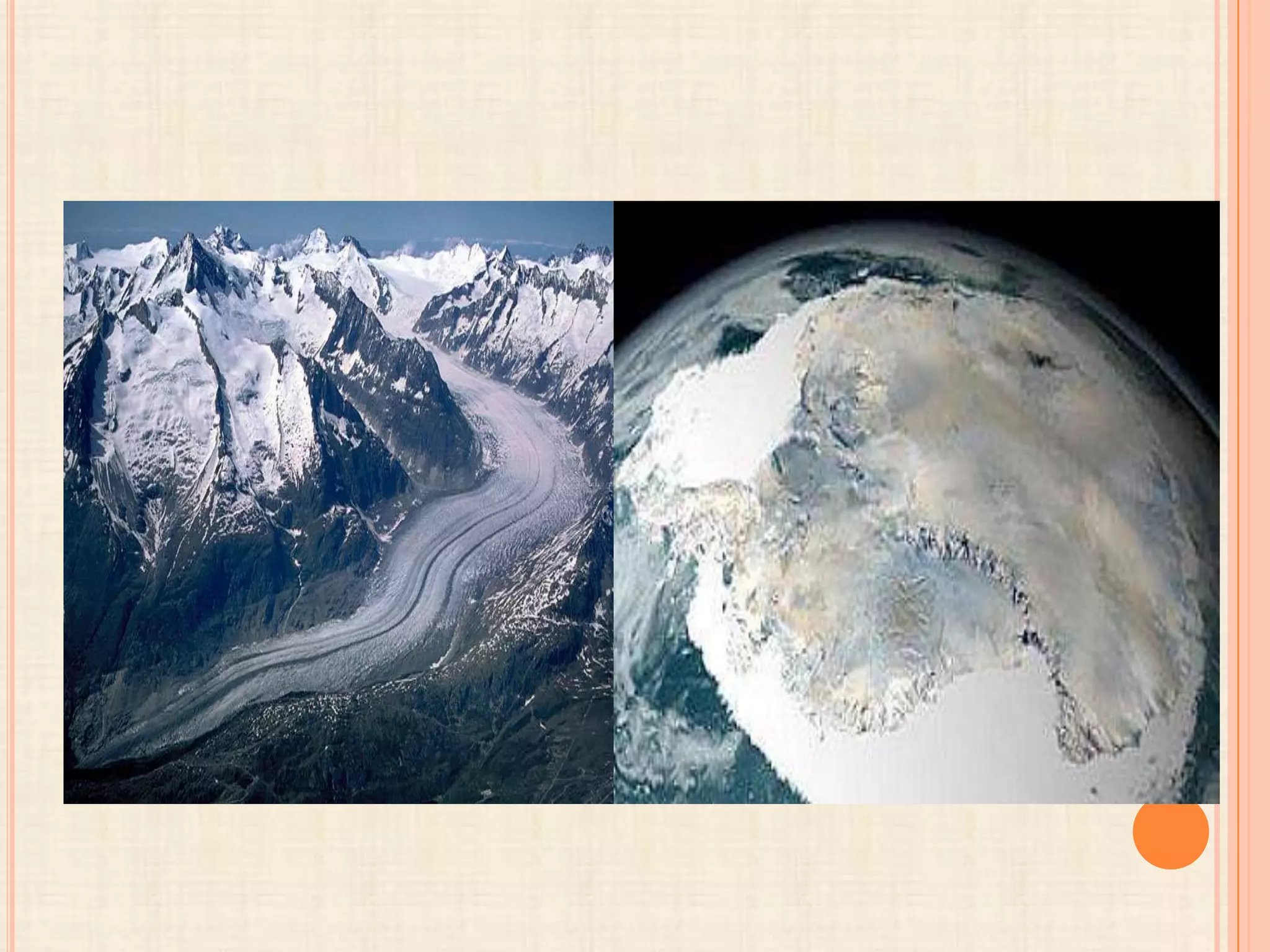
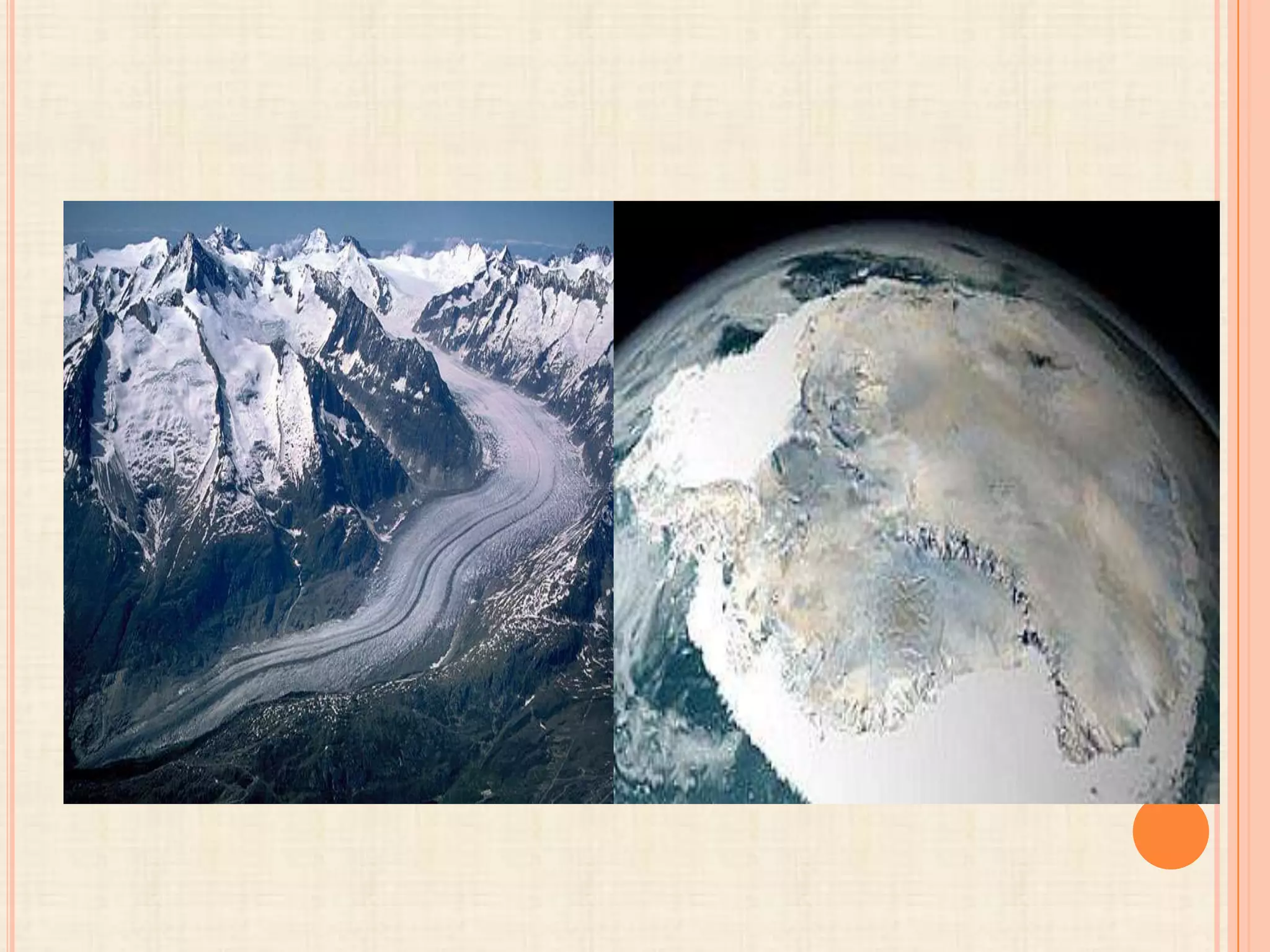
TWO PRIMARY TYPES OF GLACIER

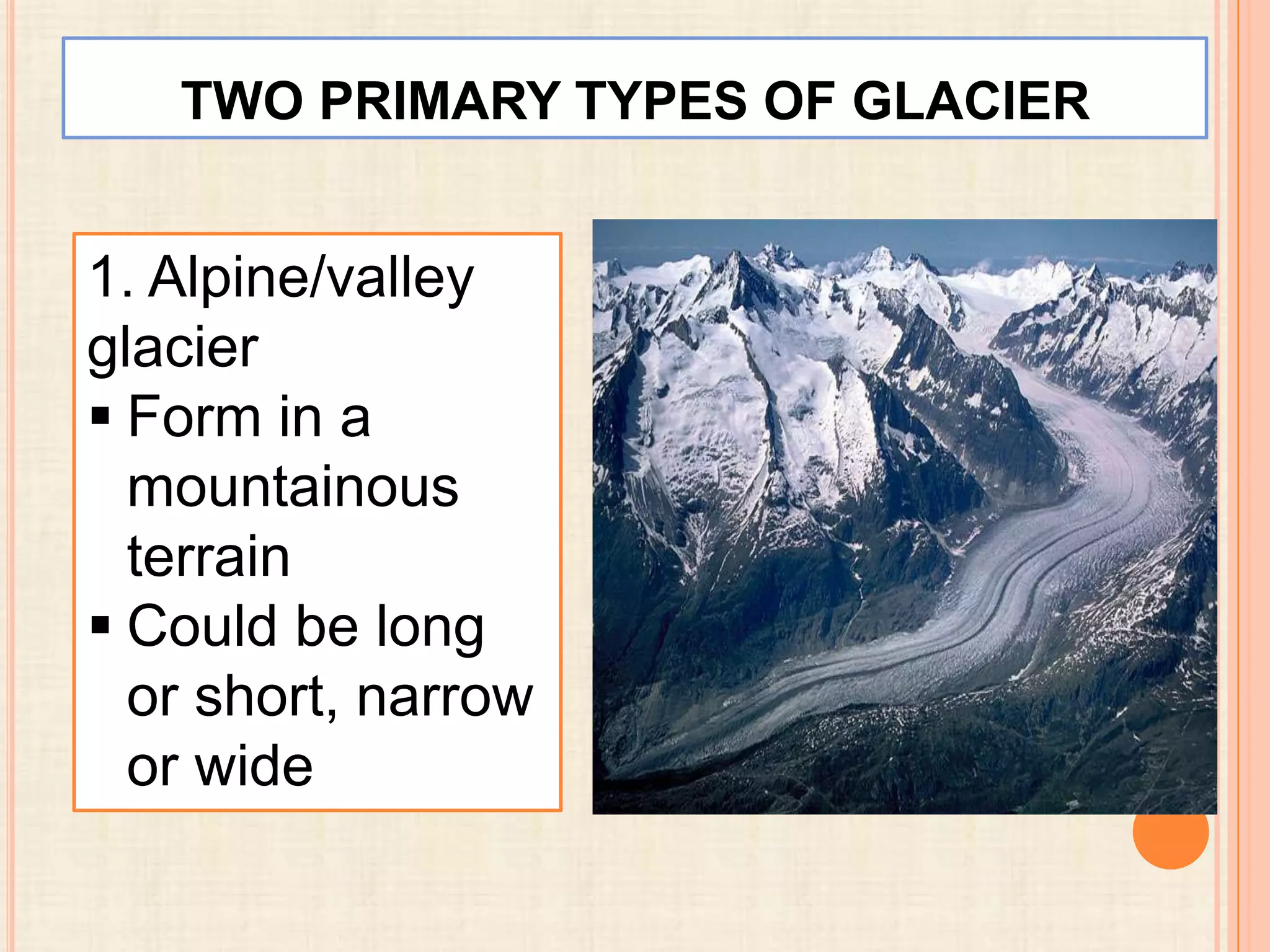
1. Alpine/valley
glacier
 Form in a
mountainous
terrain
 Could be long
or short, narrow
or wide
TWO PRIMARY TYPES OF GLACIER

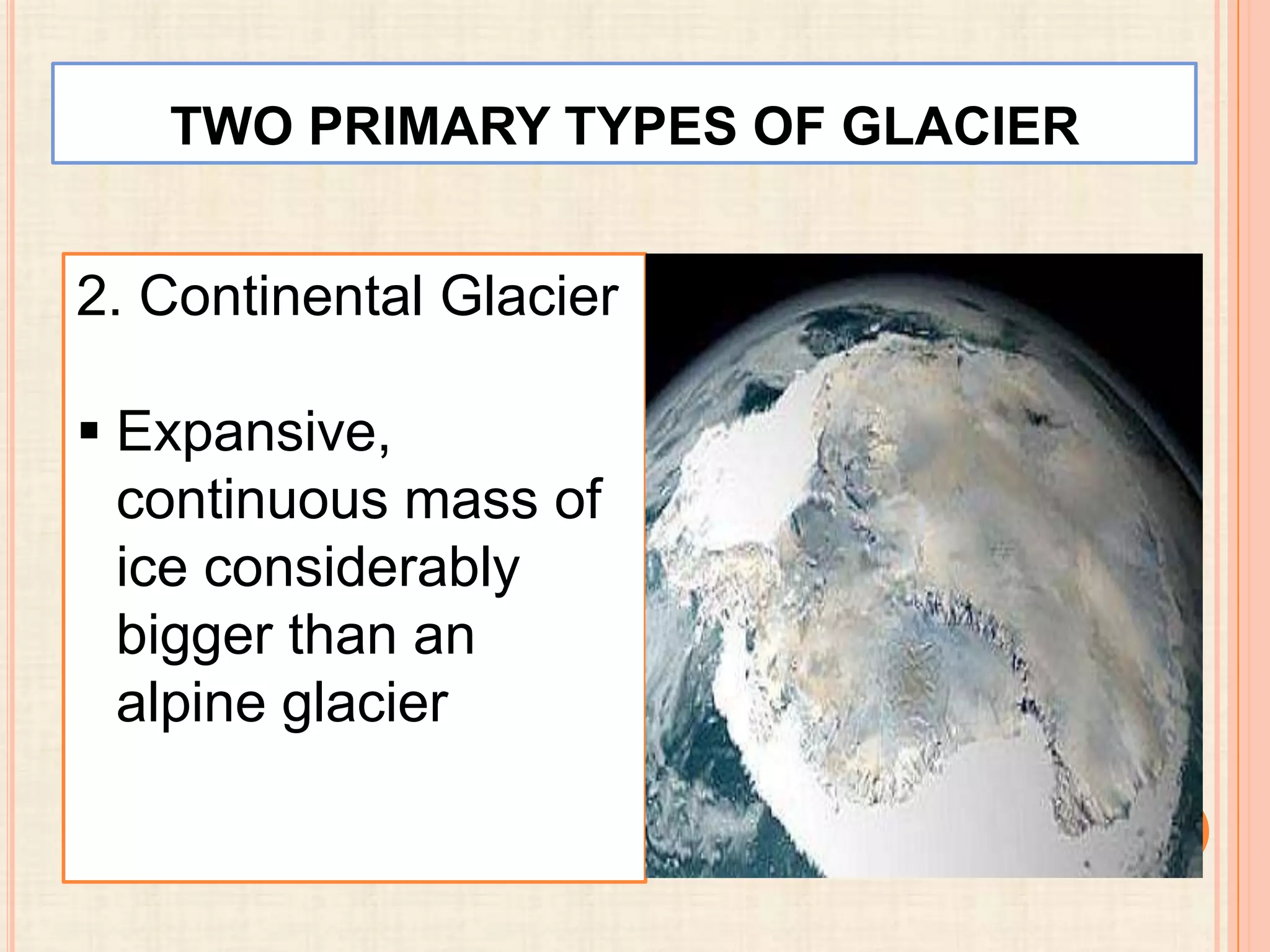
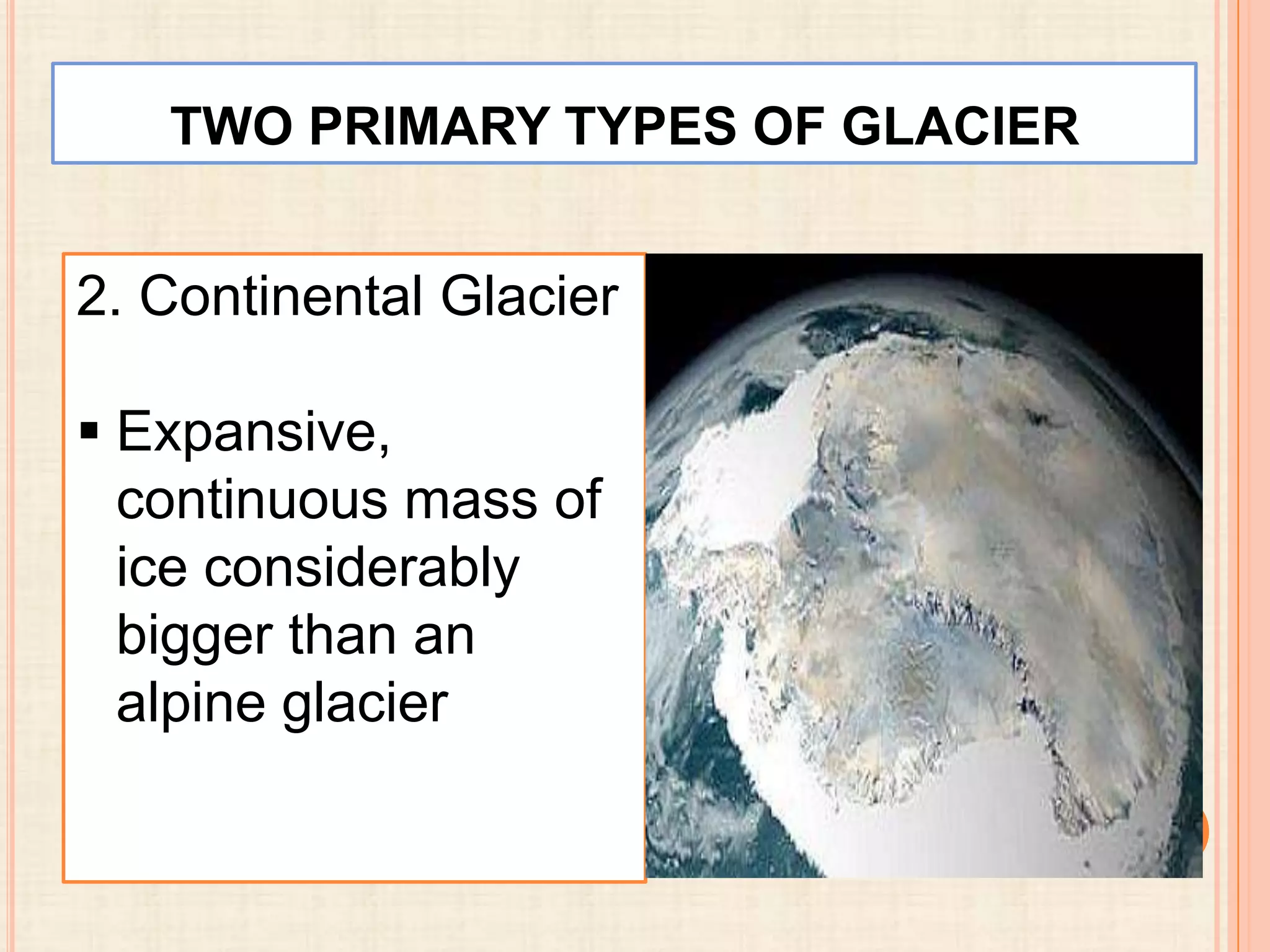
2. Continental Glacier
 Expansive,
continuous mass of
ice considerably
bigger than an
alpine glacier
SUBTYPES OF ALPINE GLACIER

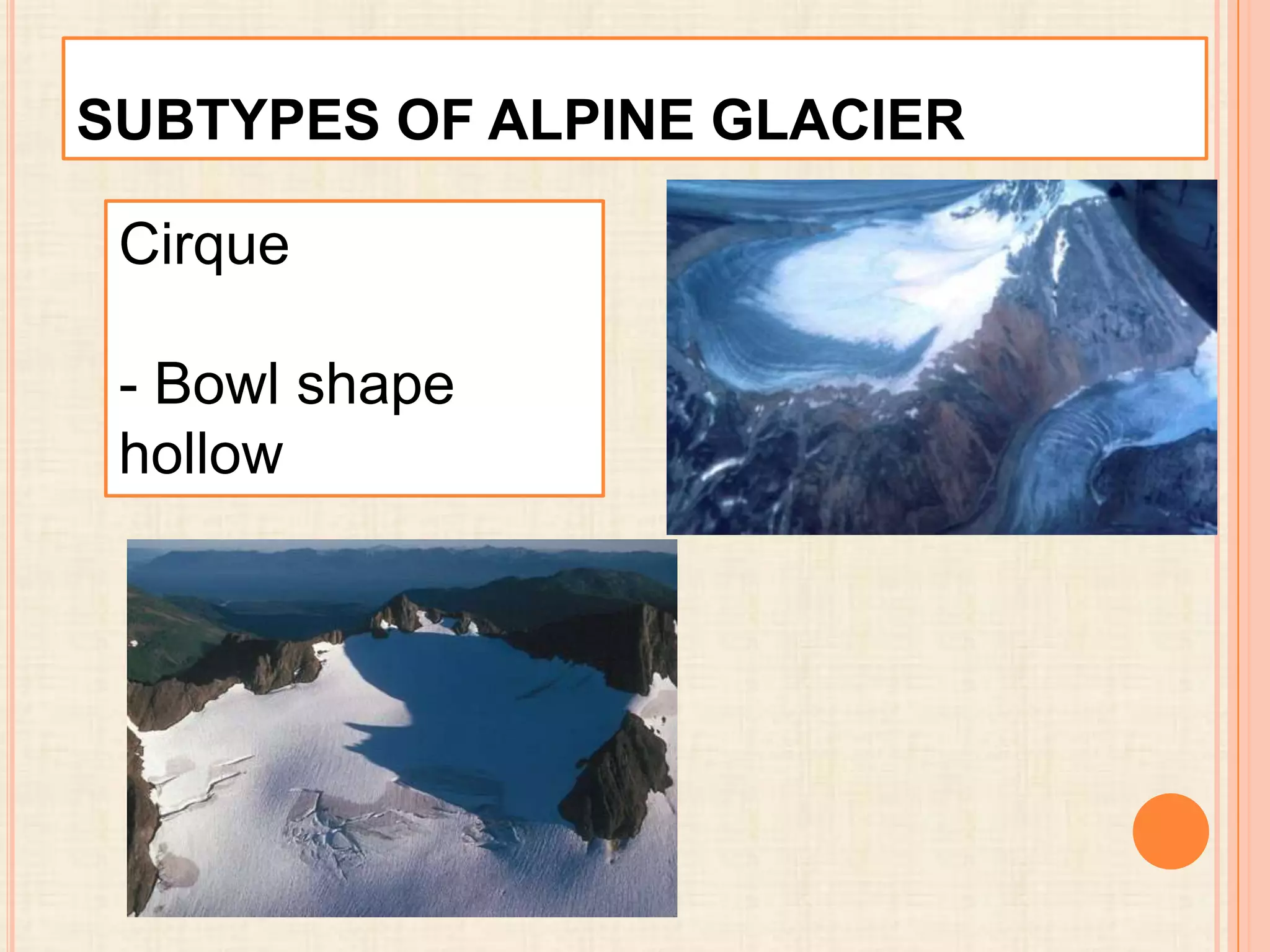
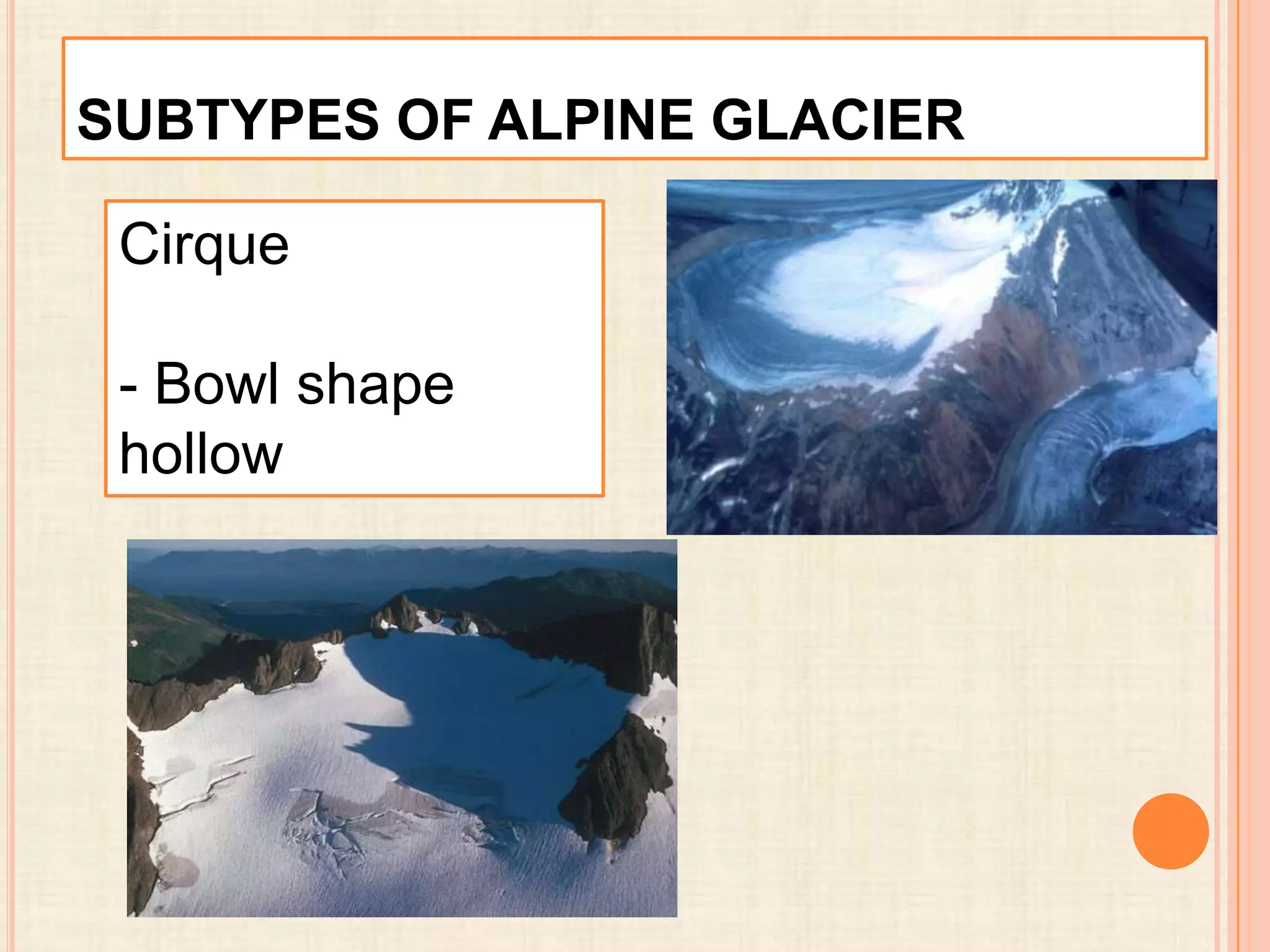
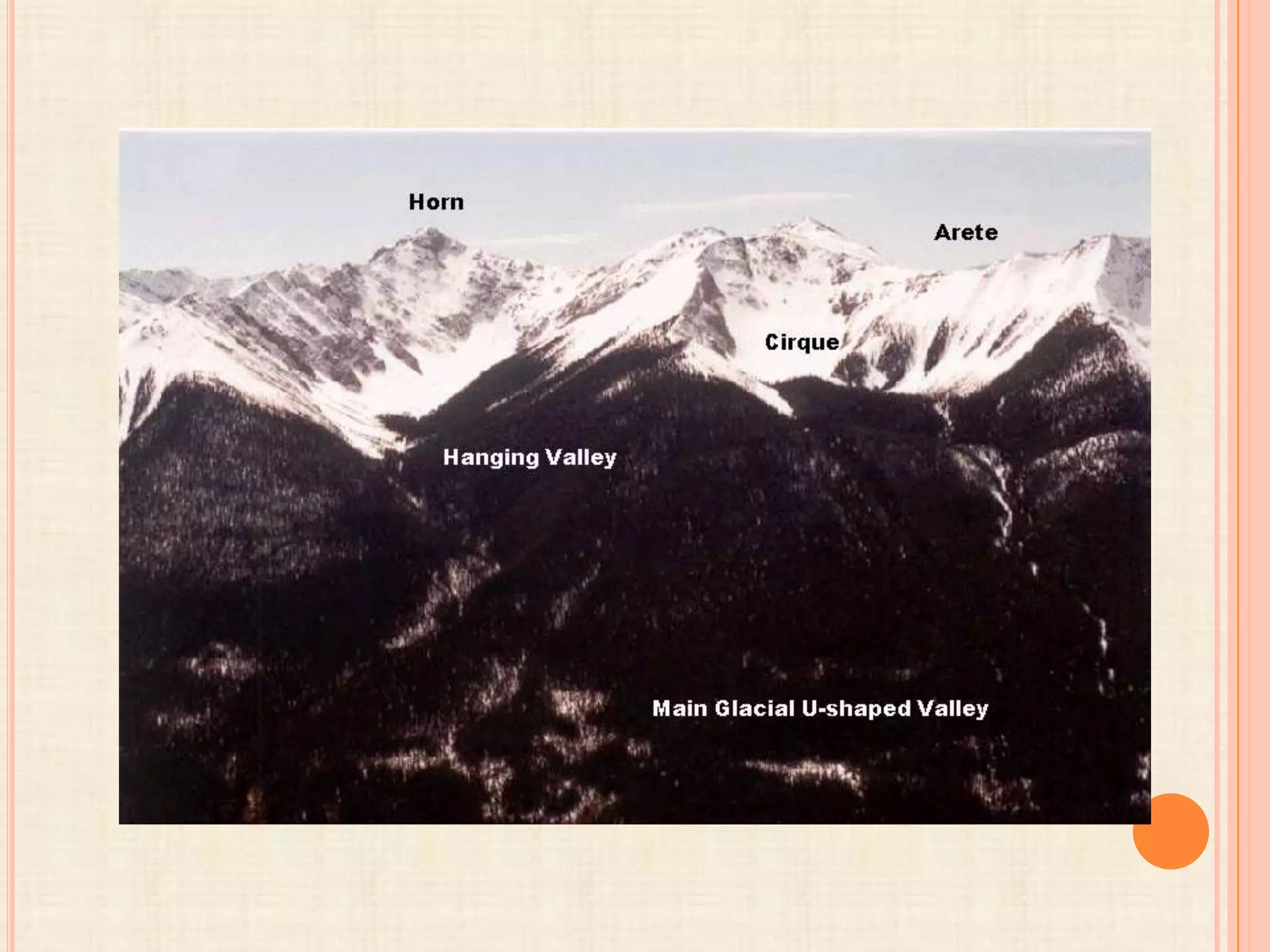
Cirque
- Bowl shape
hollow
SUBTYPES OF ALPINE GLACIER

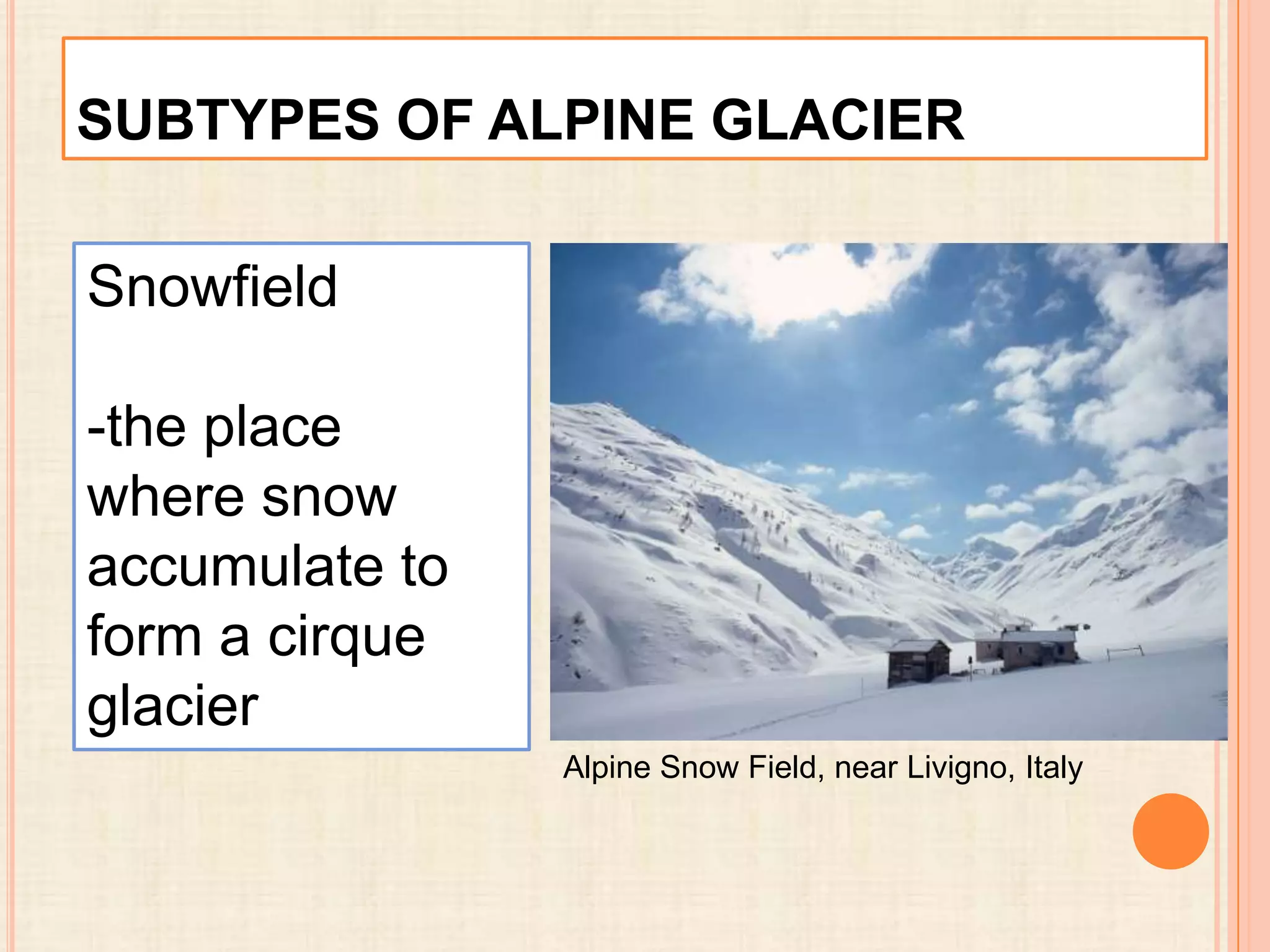
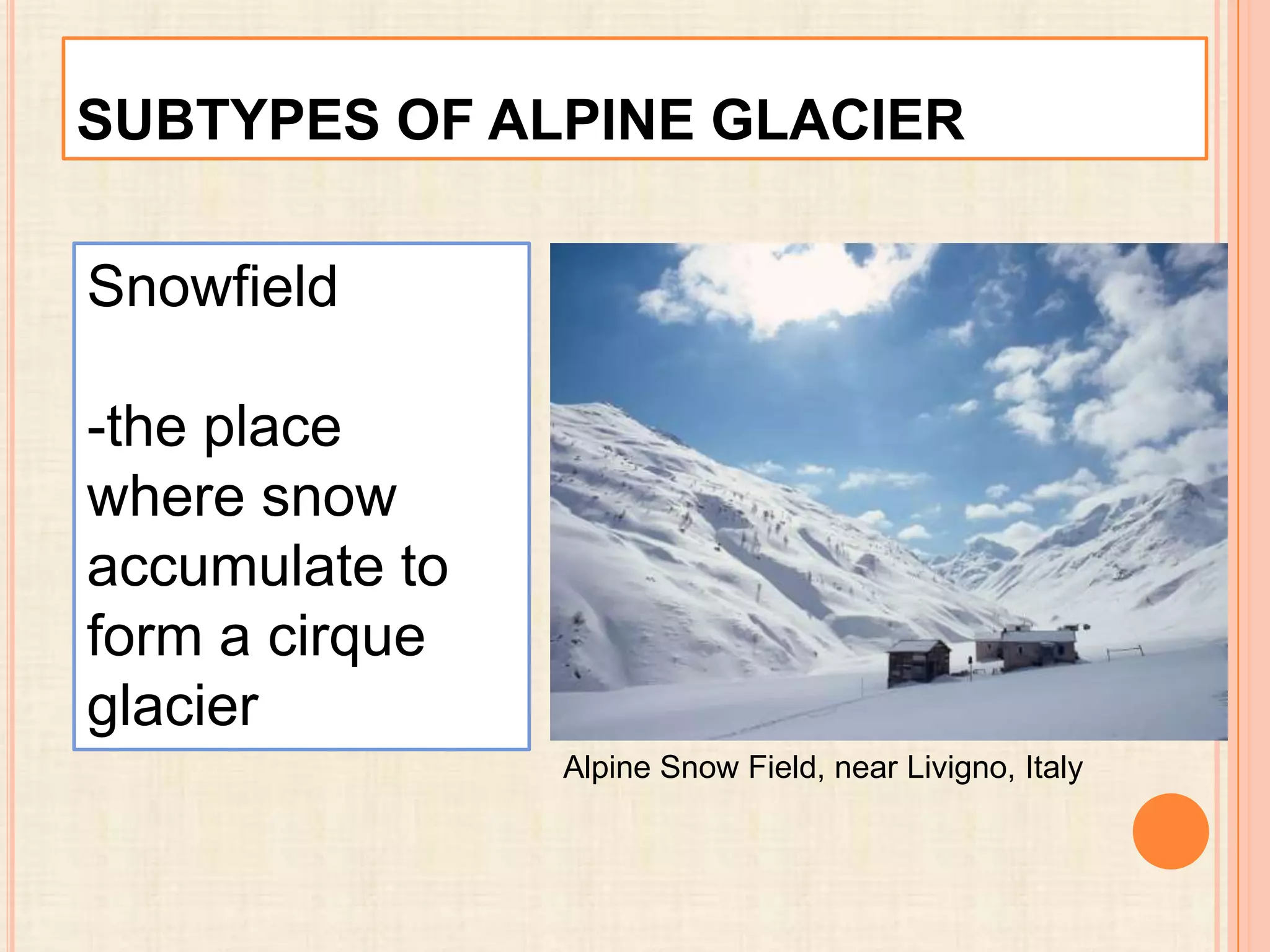
Snowfield
-the place
where snow
accumulate to
form a cirque
glacier
Alpine Snow Field, near Livigno, Italy
SUBTYPES OF ALPINE GLACIER
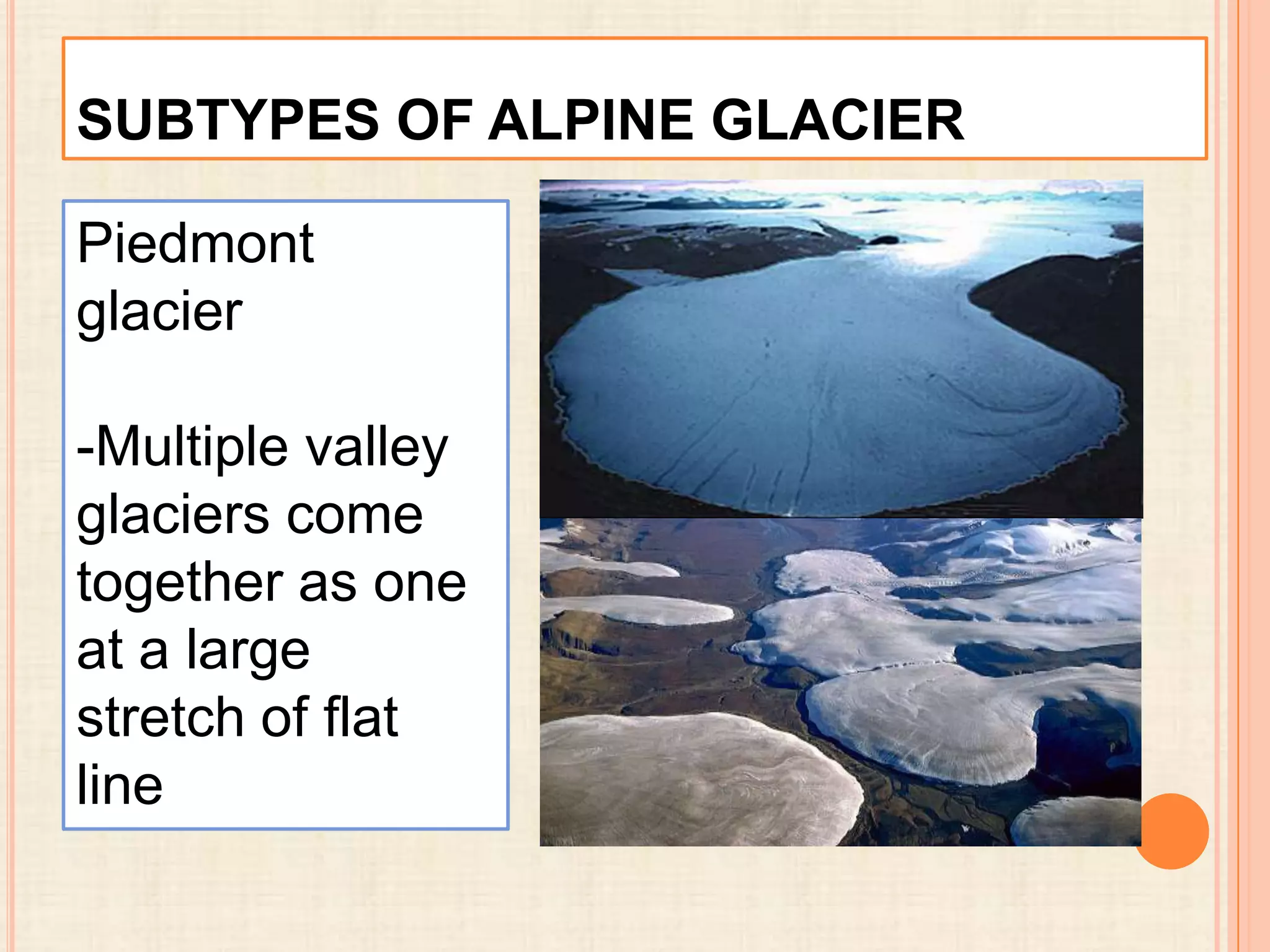
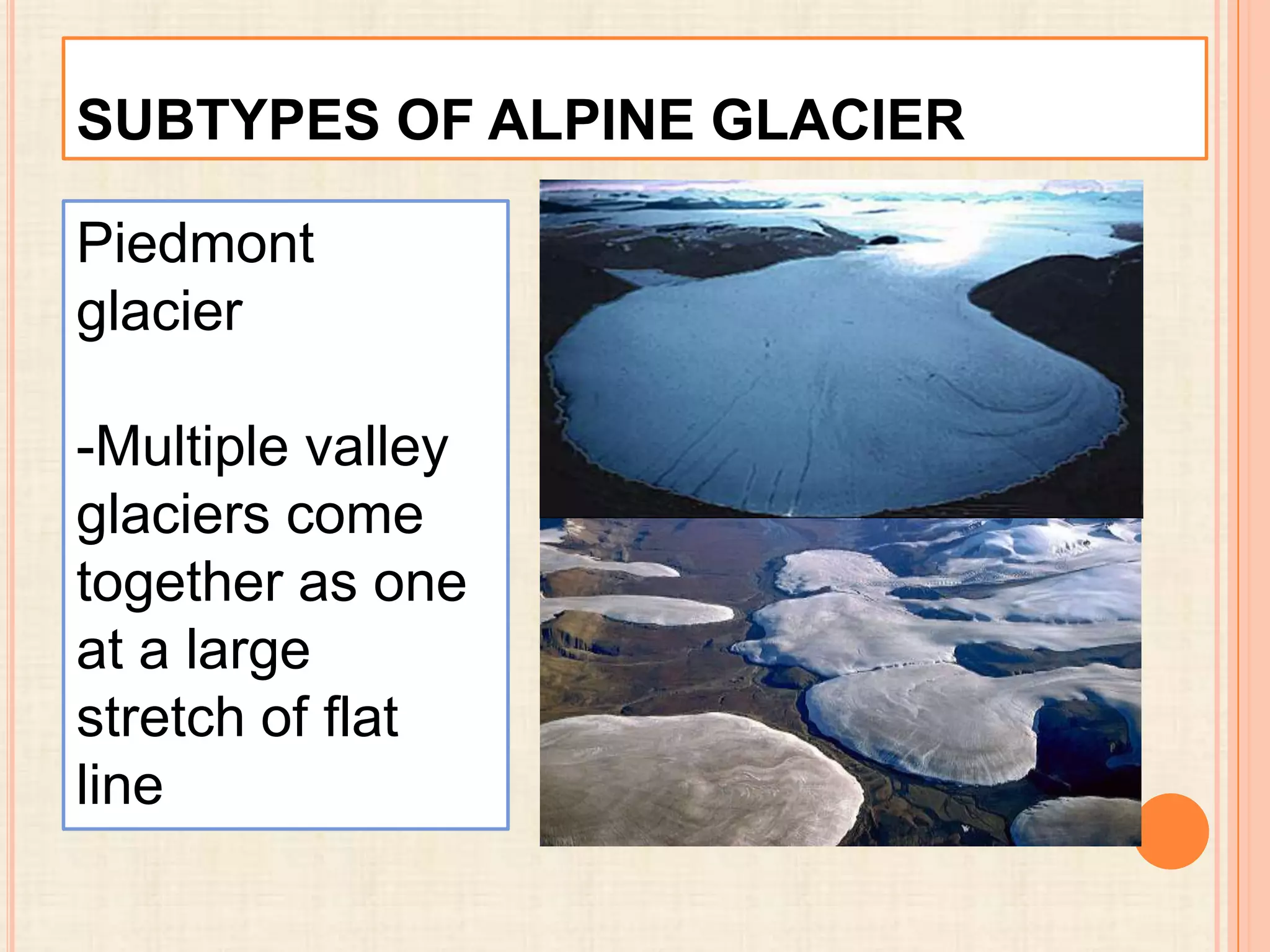
Piedmont
glacier
-Multiple valley
glaciers come
together as one
at a large
stretch of flat
line
SUBTYPES OF ALPINE GLACIER
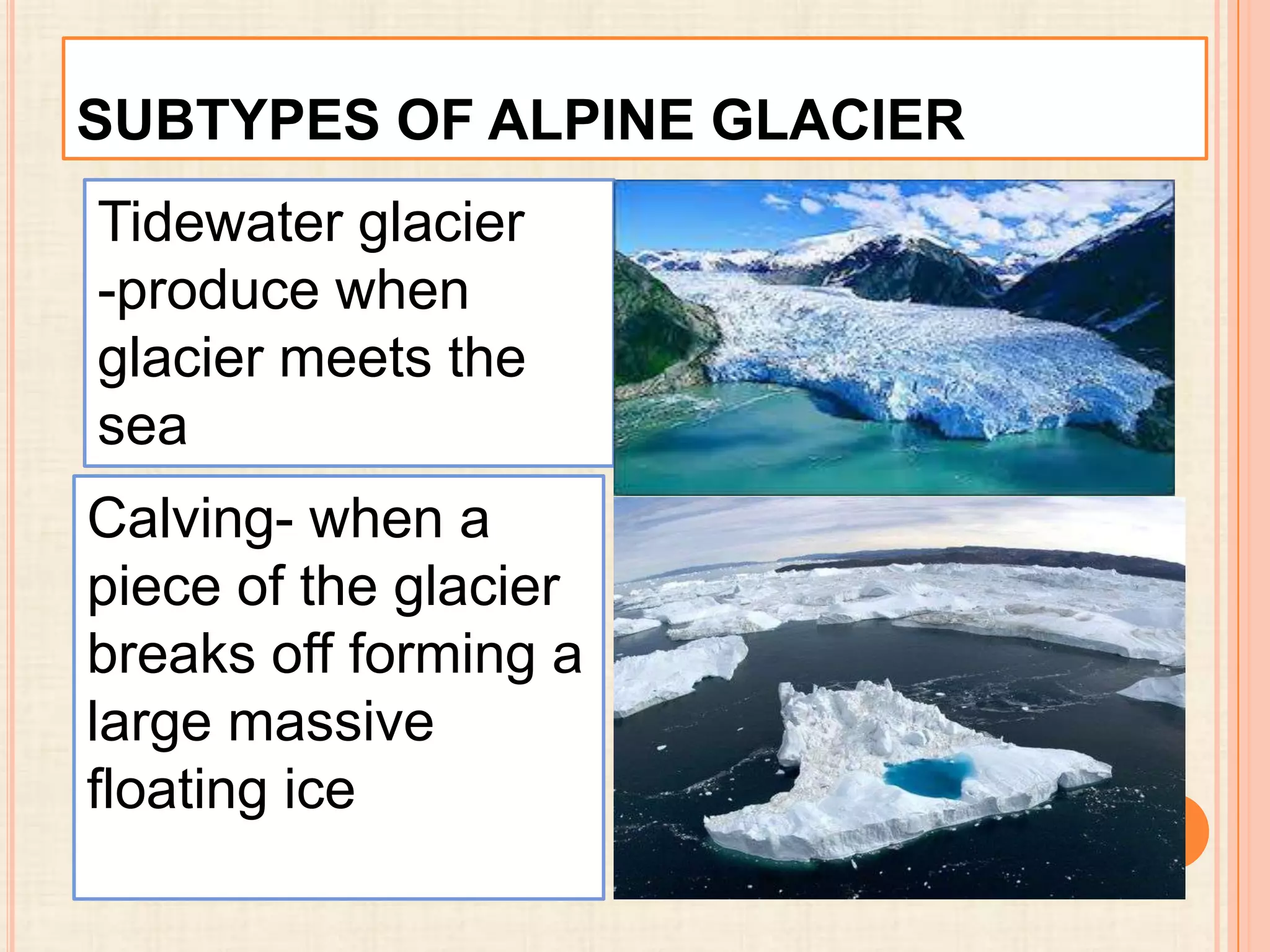
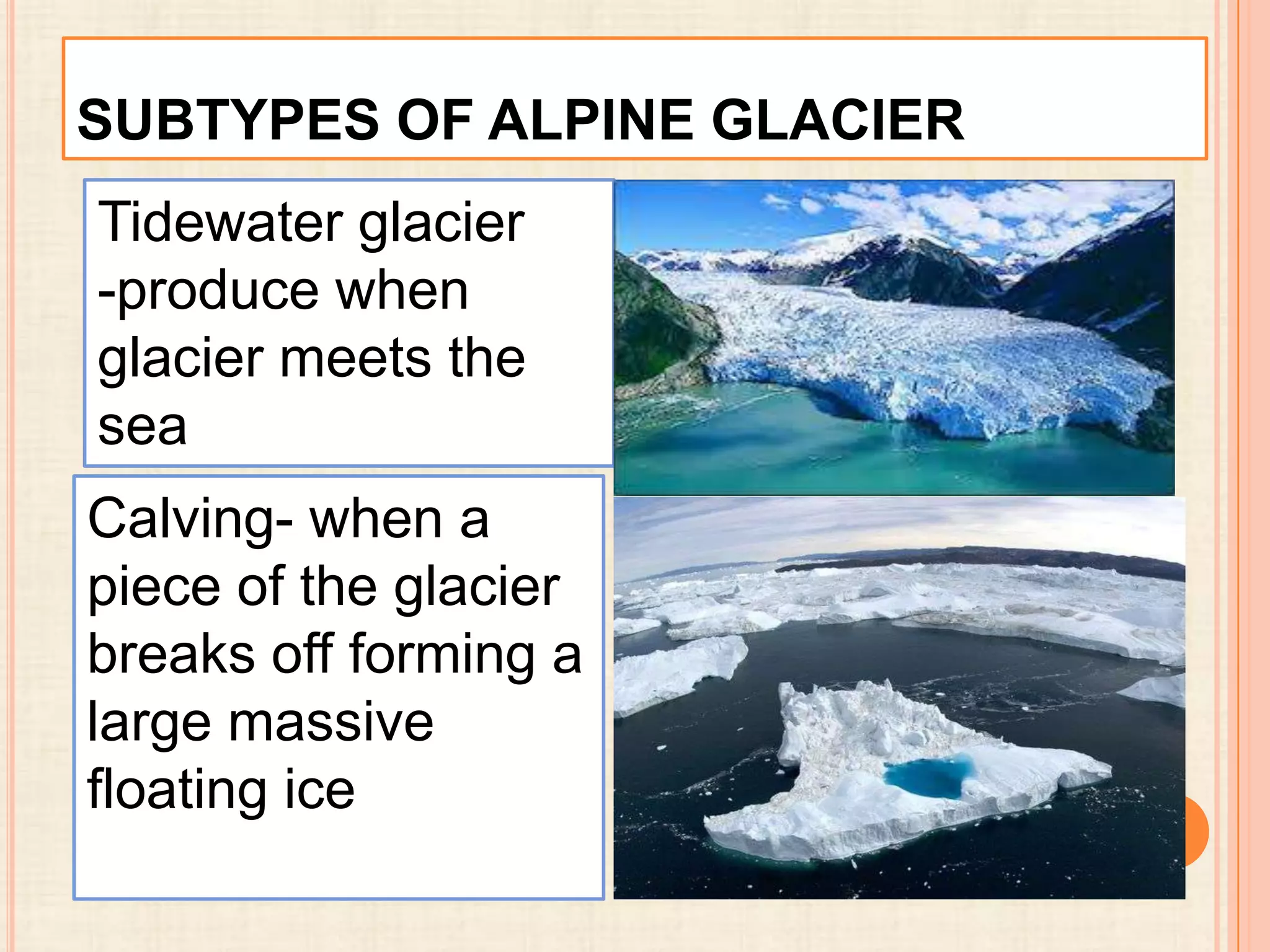
Tidewater glacier
-produce when
glacier meets the
sea

Calving- when a
piece of the glacier
breaks off forming a
large massive
floating ice
SUBTYPES OF CONTINENTAL GLACIER
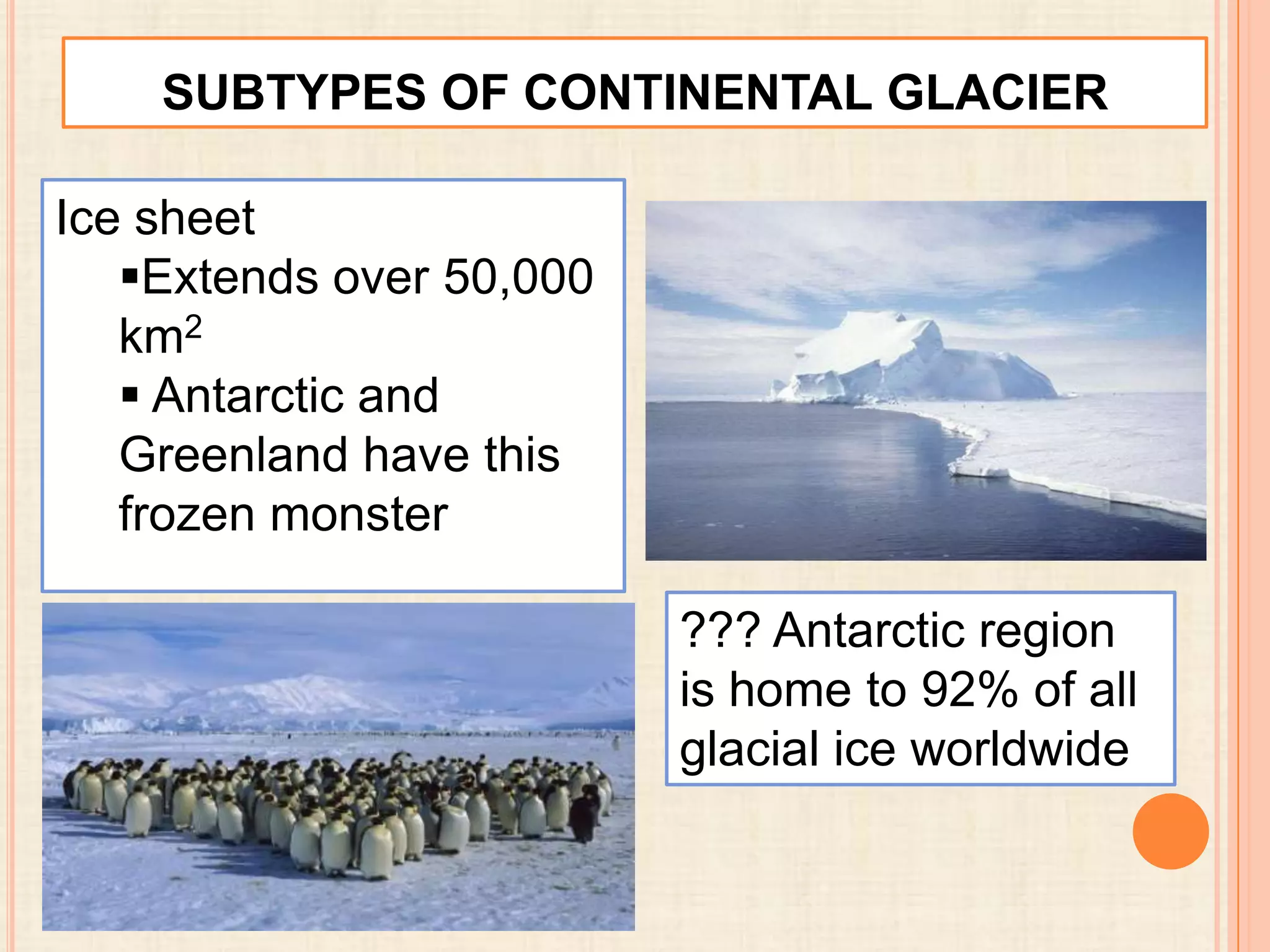
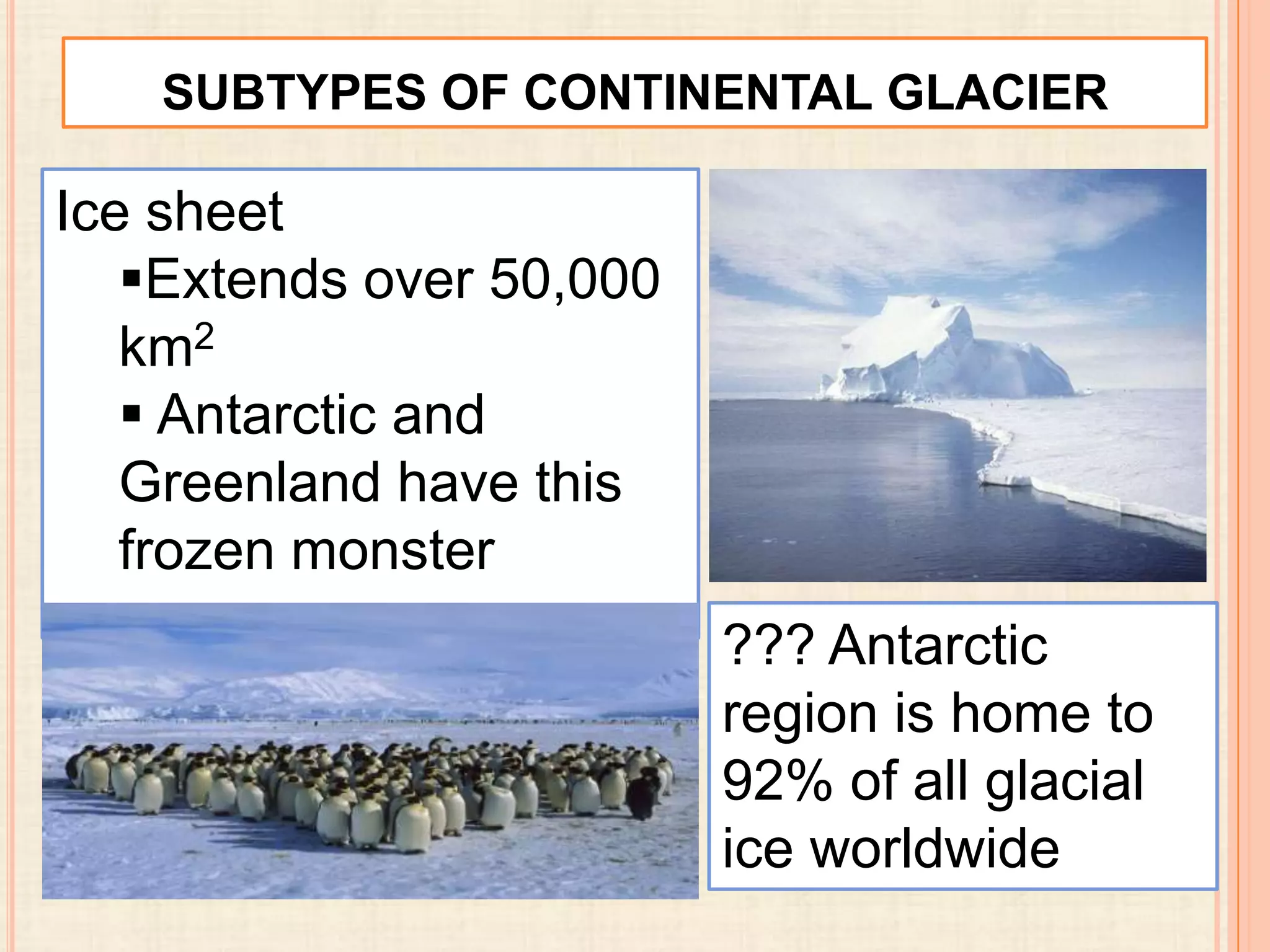
Ice sheet
Extends over 50,000
km2
 Antarctic and
Greenland have this
frozen monster
??? Antarctic region
is home to 92% of all
glacial ice worldwide
SUBTYPES OF ALPINE GLACIER
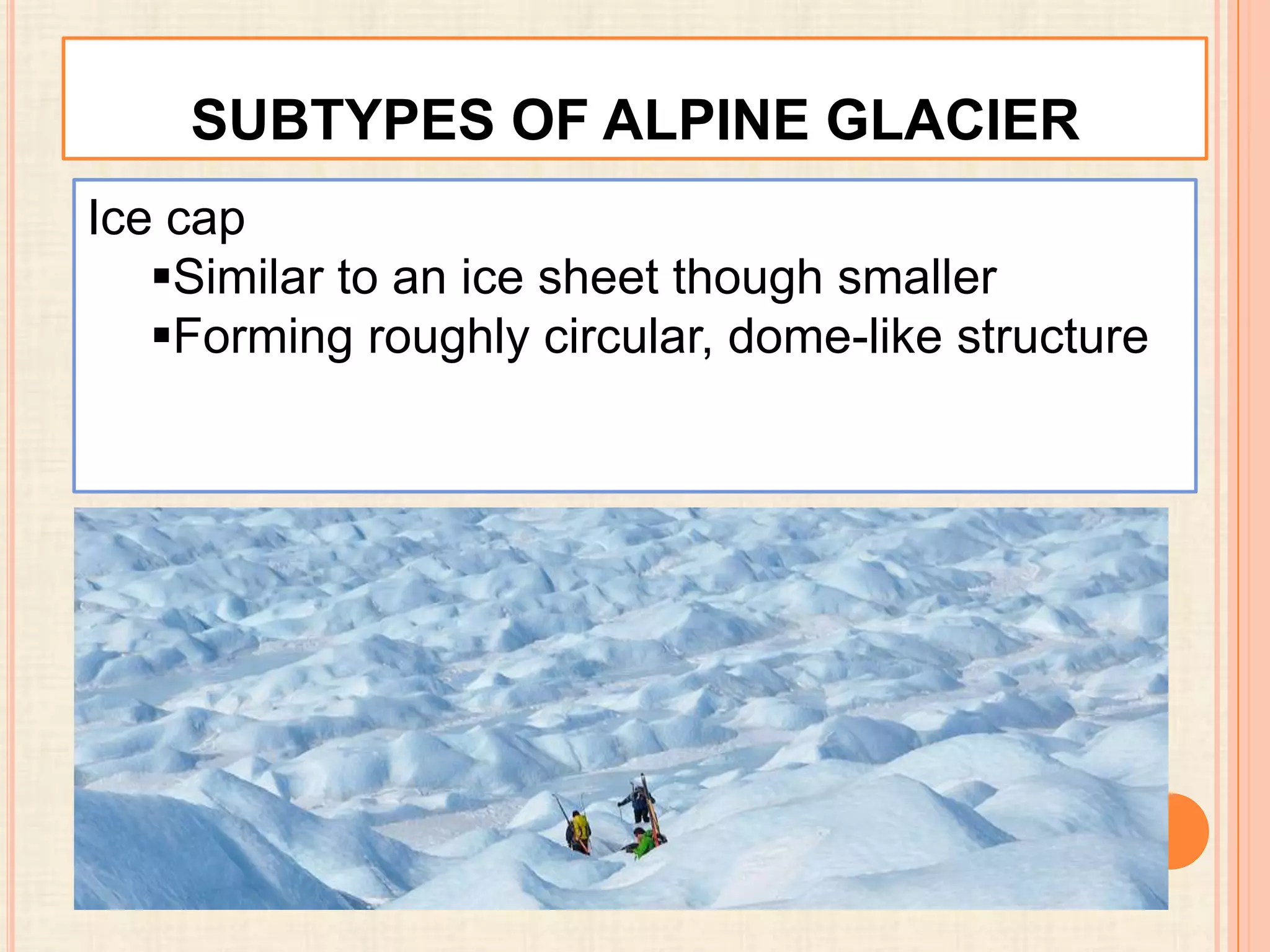
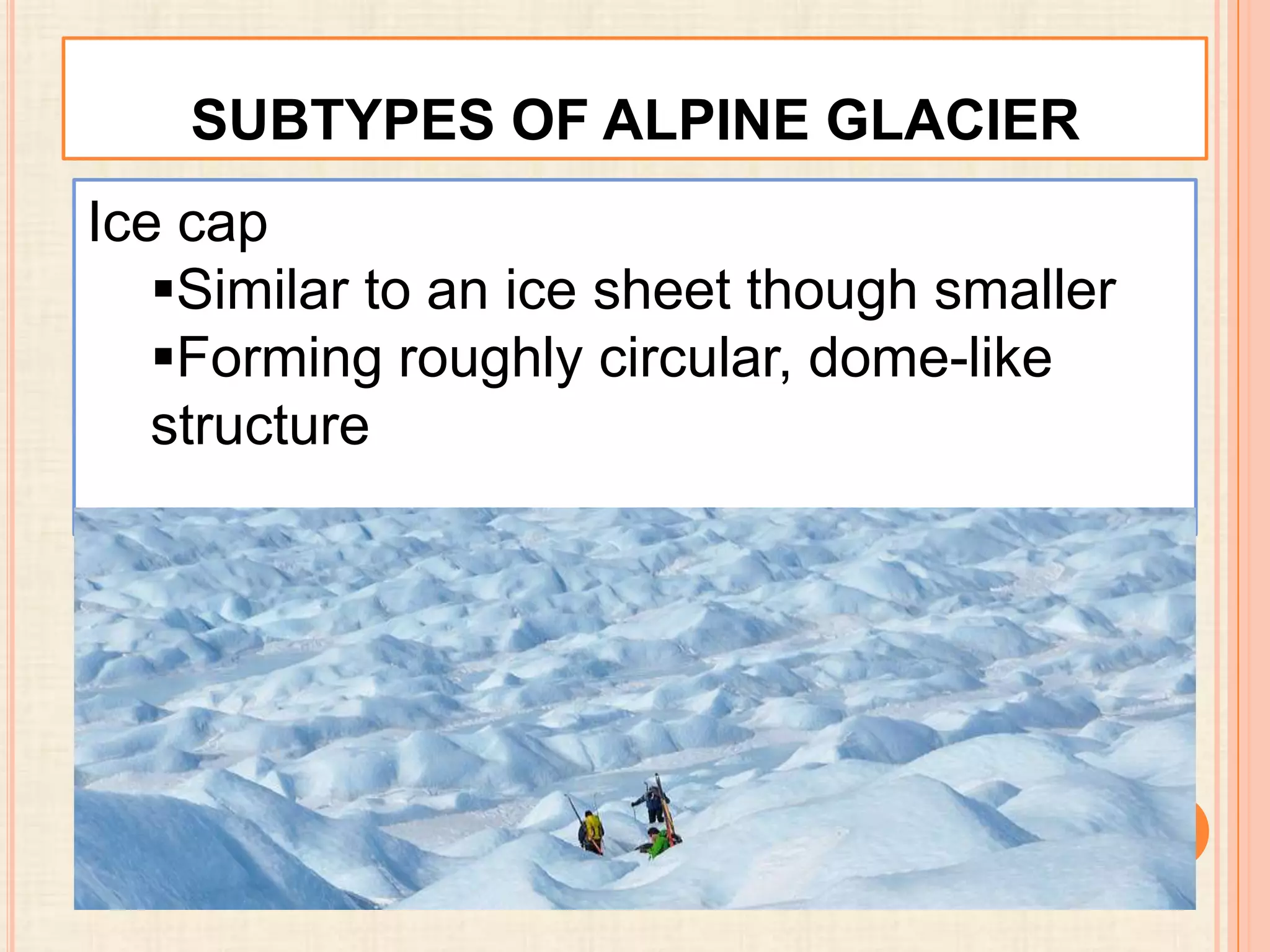
Ice cap
Similar to an ice sheet though smaller
Forming roughly circular, dome-like structure
SUBTYPES OF ALPINE GLACIER
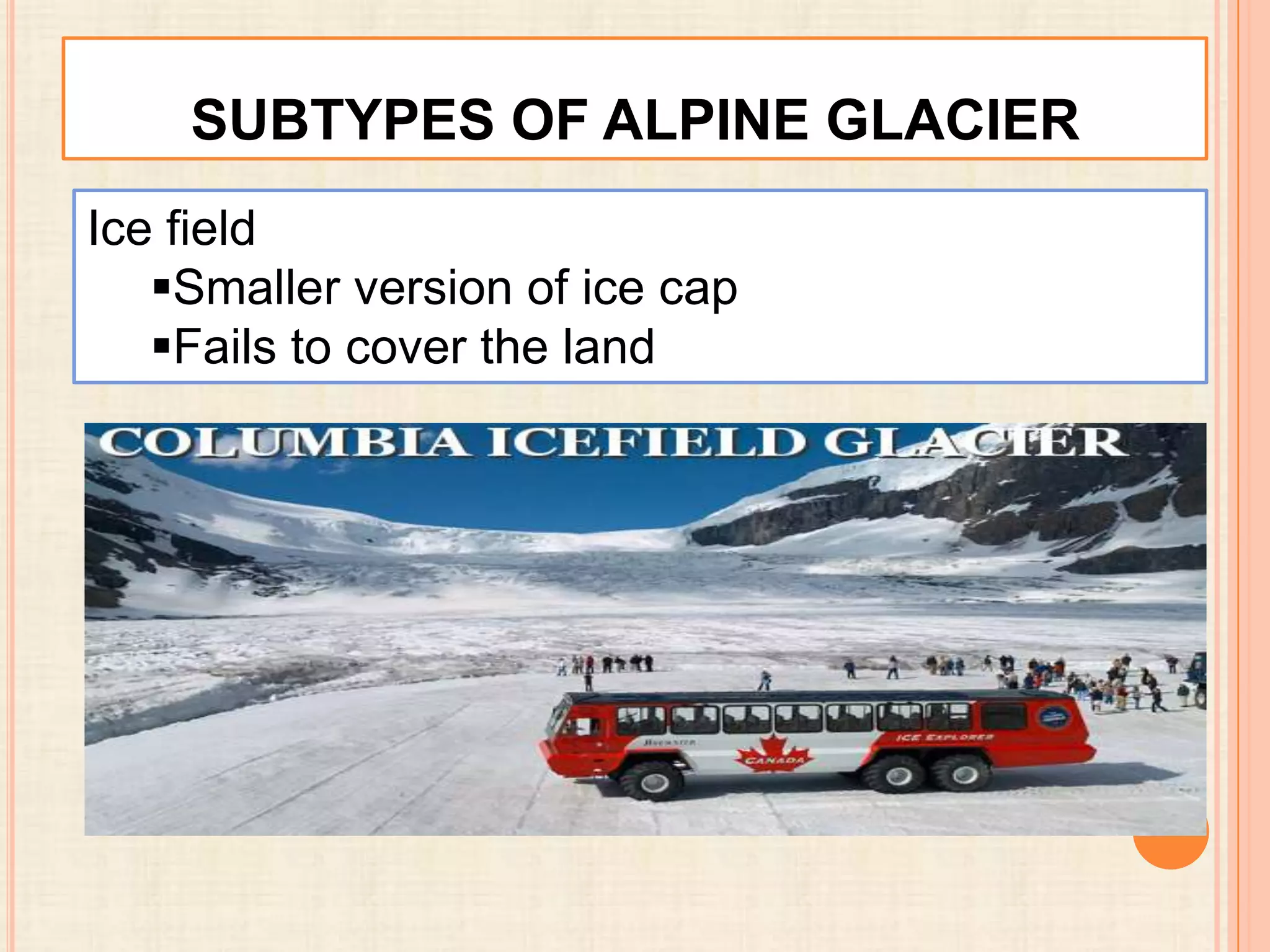
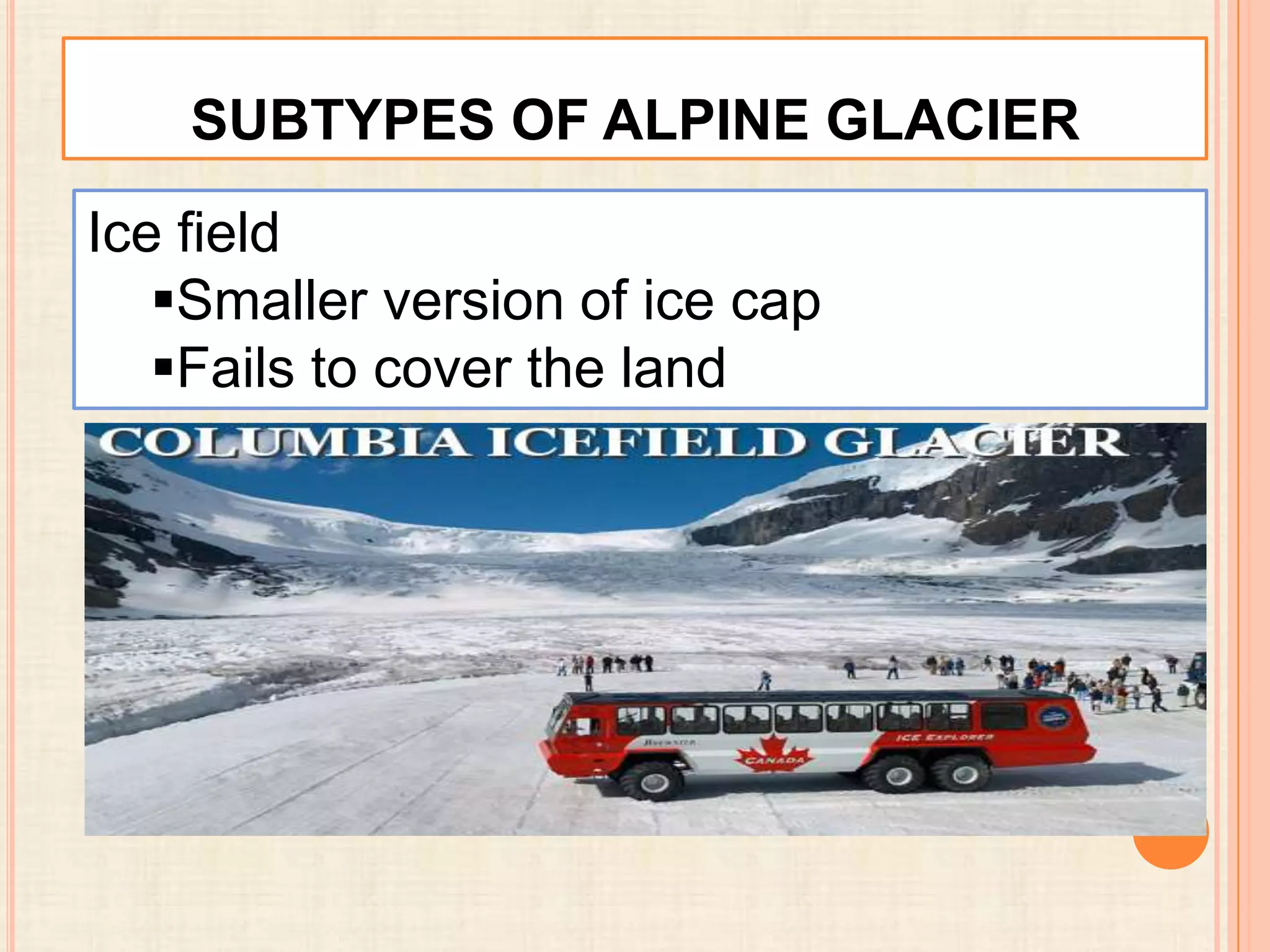
Ice field
Smaller version of ice cap
Fails to cover the land
TWO PRIMARY TYPES OF GLACIER

1. Alpine/valley
glacier
 Form in a
mountainous
terrain
 Could be long
or short, narrow
or wide
TWO PRIMARY TYPES OF GLACIER

2. Continental Glacier
 Expansive,
continuous mass of
ice considerably
bigger than an
alpine glacier
SUBTYPES OF ALPINE GLACIER

Cirque
- Bowl shape
hollow
SUBTYPES OF ALPINE GLACIER

Snowfield
-the place
where snow
accumulate to
form a cirque
glacier
Alpine Snow Field, near Livigno, Italy
SUBTYPES OF ALPINE GLACIER
Piedmont
glacier
-Multiple valley
glaciers come
together as one
at a large
stretch of flat
line
SUBTYPES OF ALPINE GLACIER
Tidewater glacier
-produce when
glacier meets the
sea

Calving- when a
piece of the glacier
breaks off forming a
large massive
floating ice
SUBTYPES OF CONTINENTAL GLACIER

Ice sheet
Extends over 50,000
km2
 Antarctic and
Greenland have this
frozen monster
??? Antarctic
region is home to
92% of all glacial
ice worldwide
SUBTYPES OF ALPINE GLACIER
Ice cap
Similar to an ice sheet though smaller
Forming roughly circular, dome-like
structure
SUBTYPES OF ALPINE GLACIER
Ice field
Smaller version of ice cap
Fails to cover the land
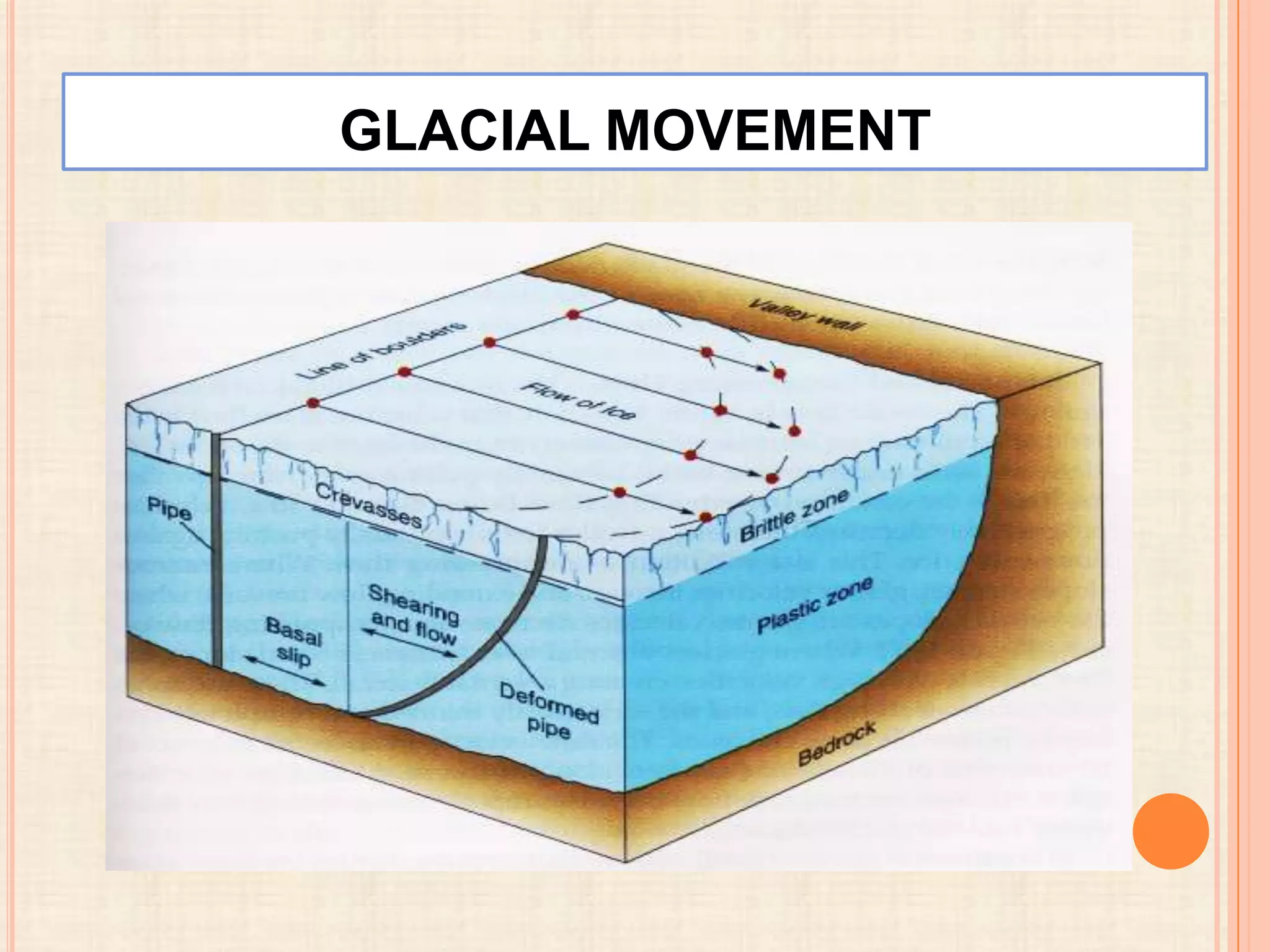
GLACIAL MOVEMENT
Gravity primary force
Entire ice sheet moves 5 to 50 m/yr
Fastest movement within the center

Friction Slows down the sides
GLACIAL MOVEMENT
Mechanisms involves
1.Basal slipping
 Entire mass of glacier slides over the
bedrock
 Occurs when glaciers rest on the slope
 Pressure causes a small amount of water
at the bottom of the glacier to melt
creating a thin layer of water
GLACIAL MOVEMENT
Mechanisms involves
2. Plastic Flow
Also known as creeping or internal
deformation
Occurs when glacier becomes so heavy
that it flattens it molecules out in order to
deal with the weight
GLACIAL MOVEMENT
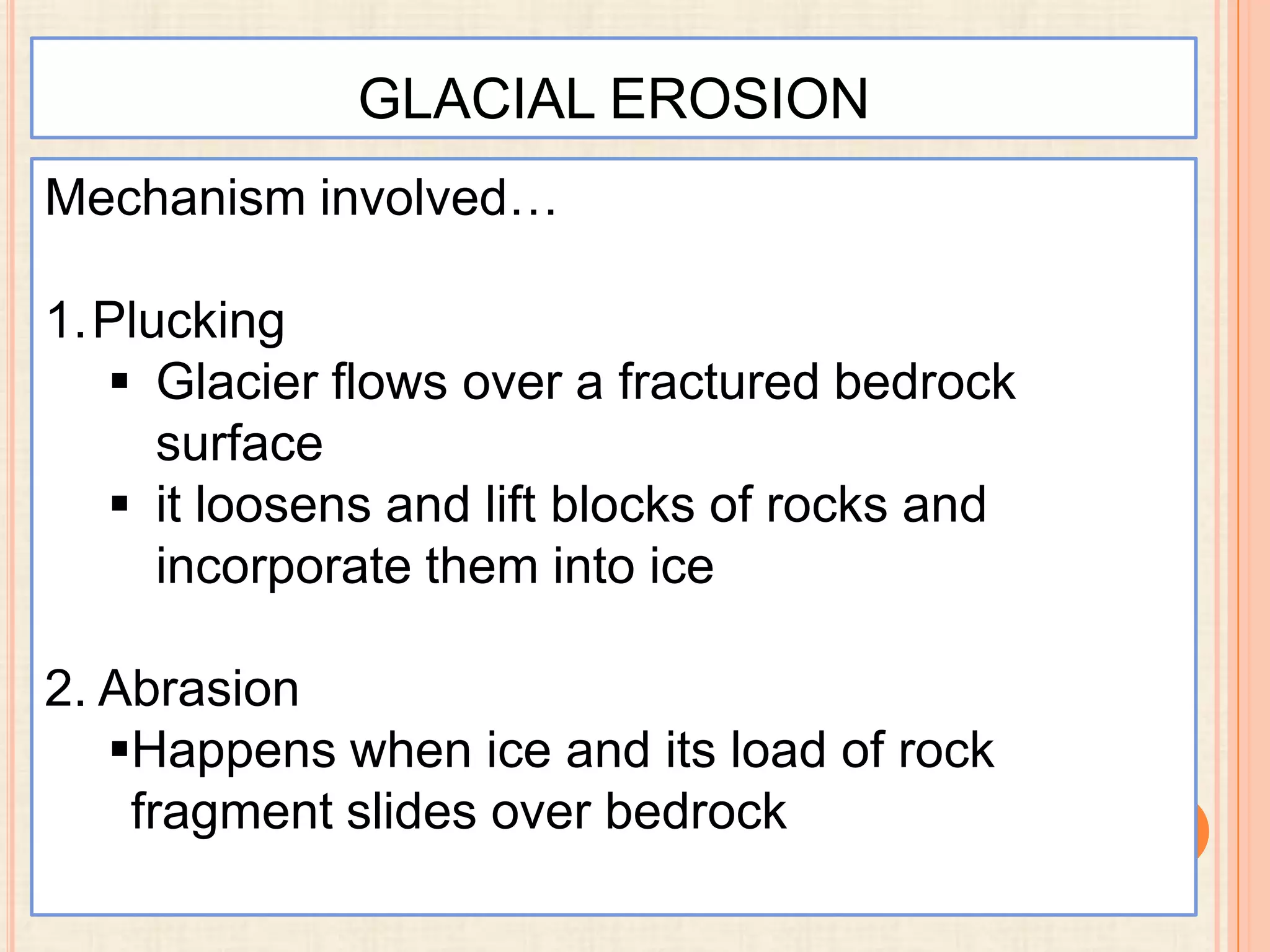
GLACIAL EROSION
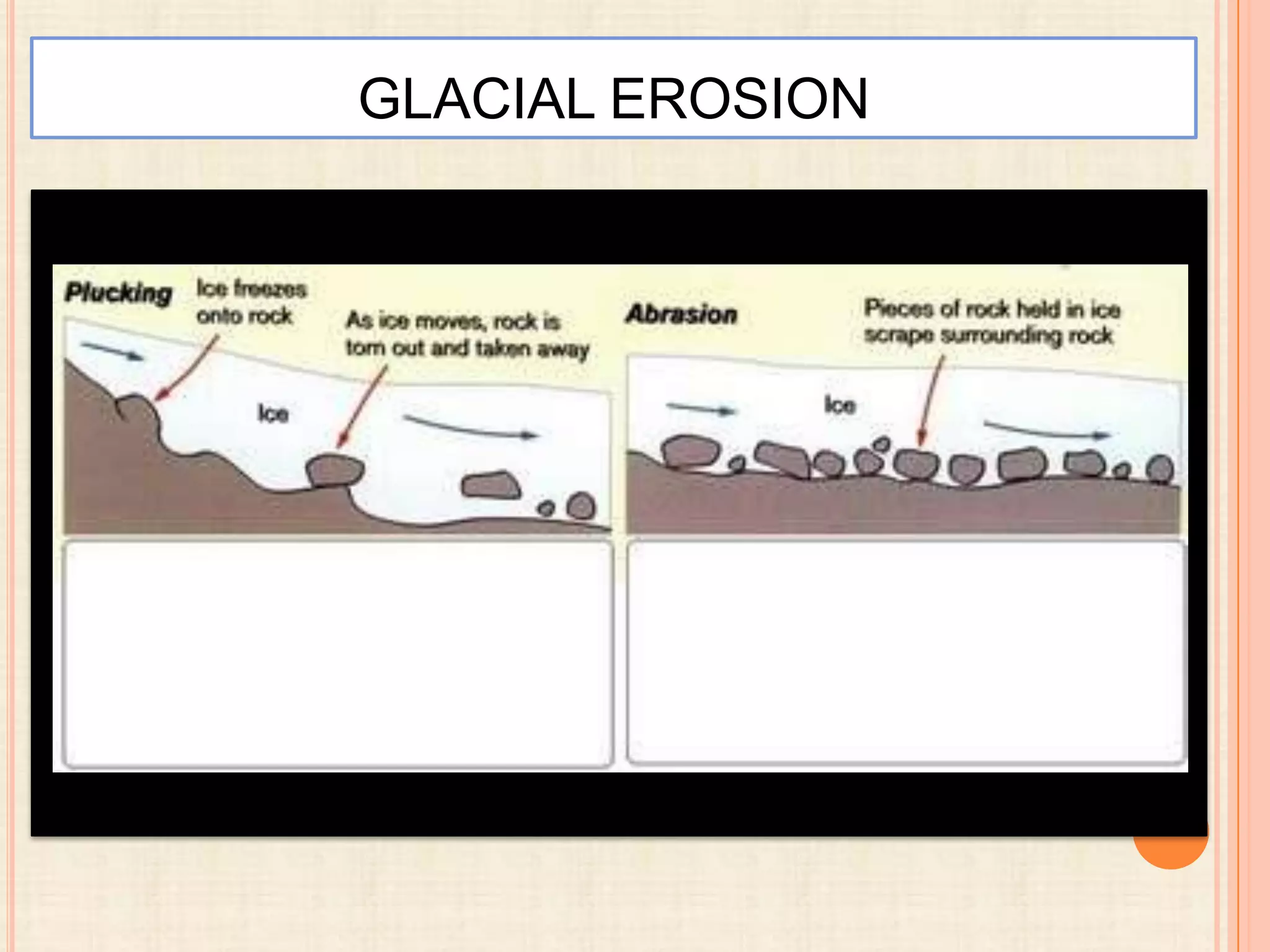
Mechanism involved…

1.Plucking
 Glacier flows over a fractured bedrock
surface
 it loosens and lift blocks of rocks and
incorporate them into ice
2. Abrasion
Happens when ice and its load of rock
fragment slides over bedrock
GLACIAL EROSION
GLACIAL TRANSPORTATION
…during transportation
glaciers carry a huge amount of
materials
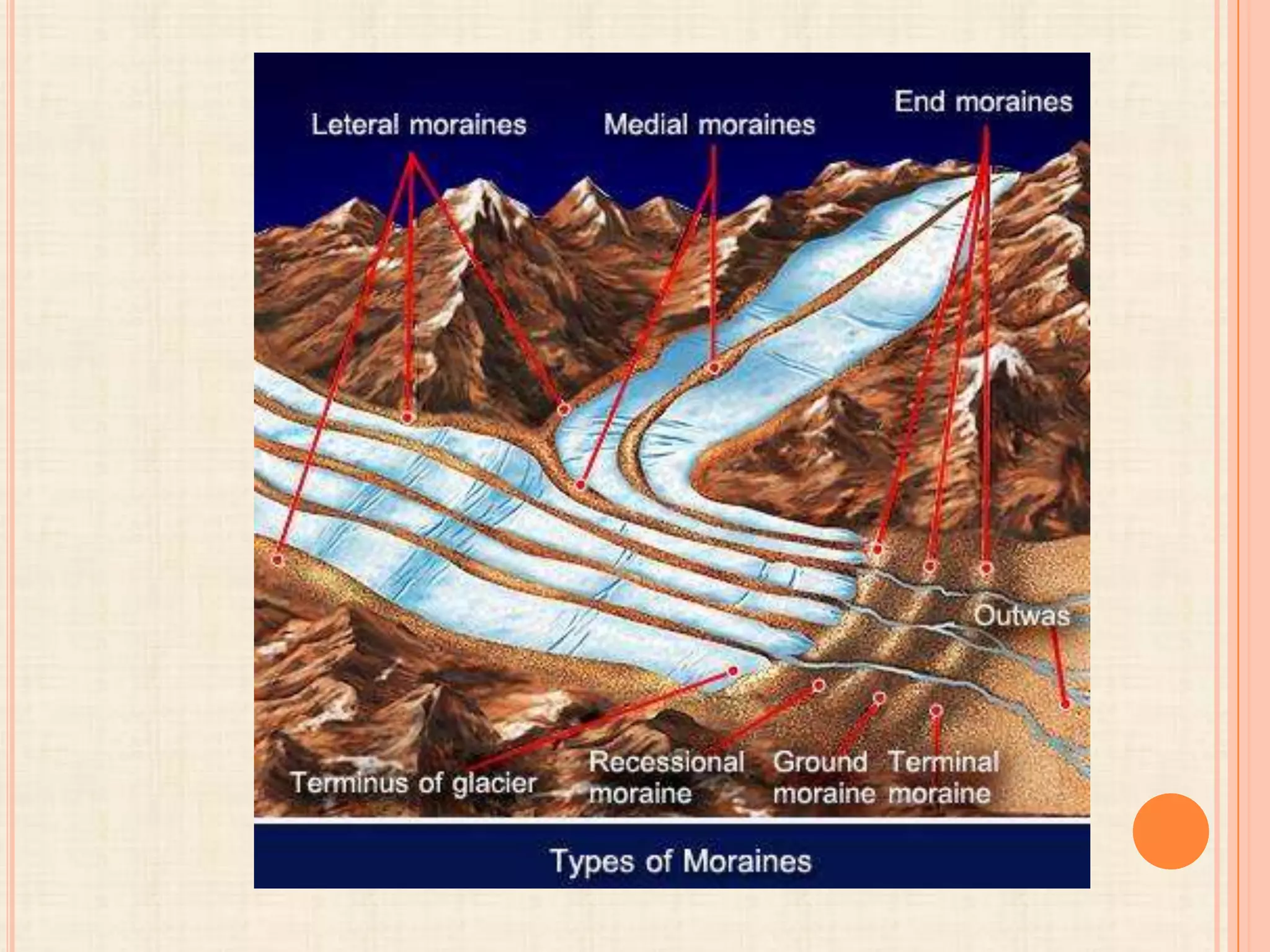
Rocks being transported are called
moraines
Moraines could be:
Lateral moraine
 medial moraine
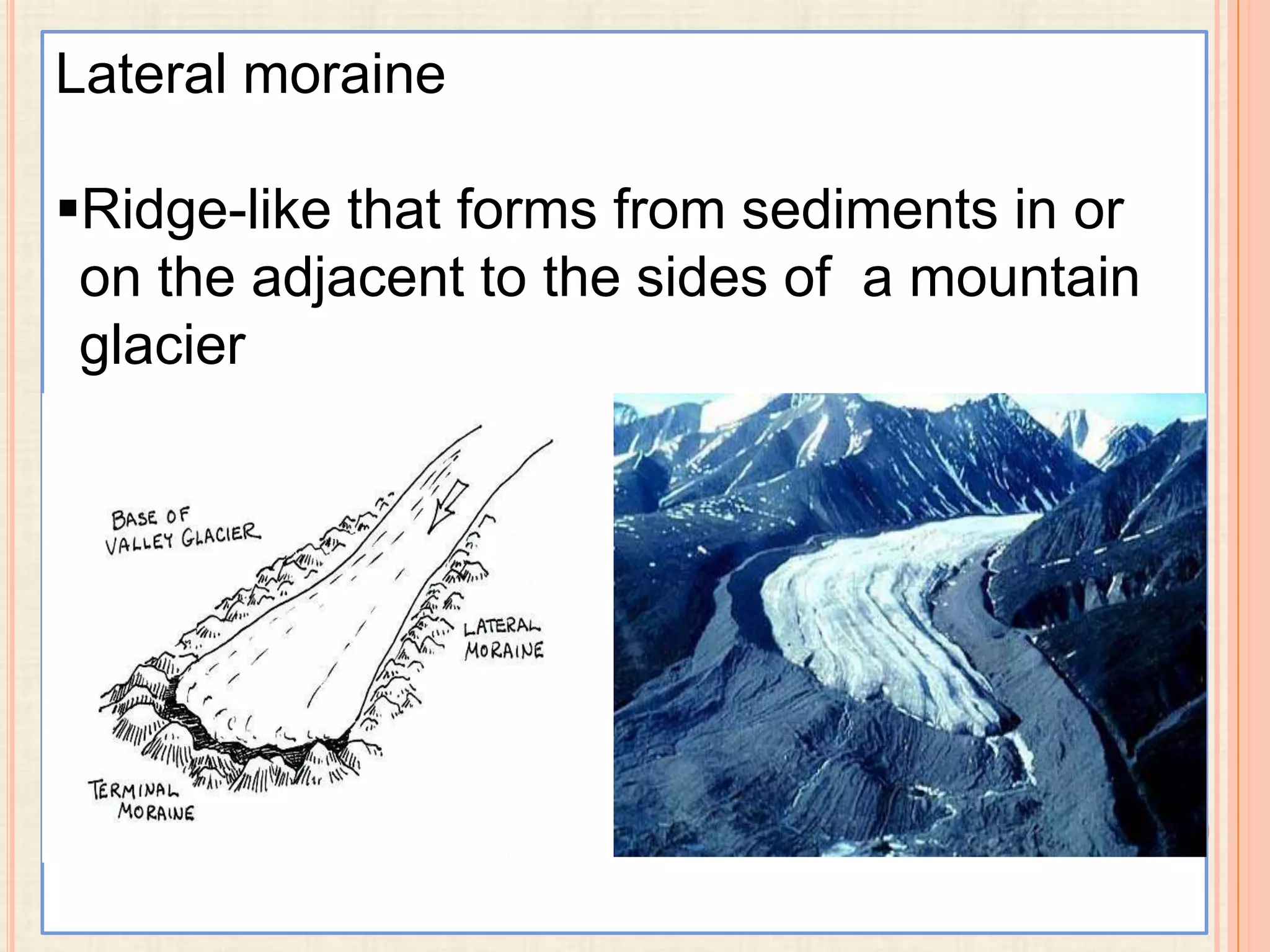
Lateral moraine
Ridge-like that forms from sediments in or
on the adjacent to the sides of a mountain
glacier
Medial Moraine
 Form in or on the middle of a glacier
GLACIAL DEPOSITION
Materials will be deposited due to:
Increase in pressure
Rise in temperature
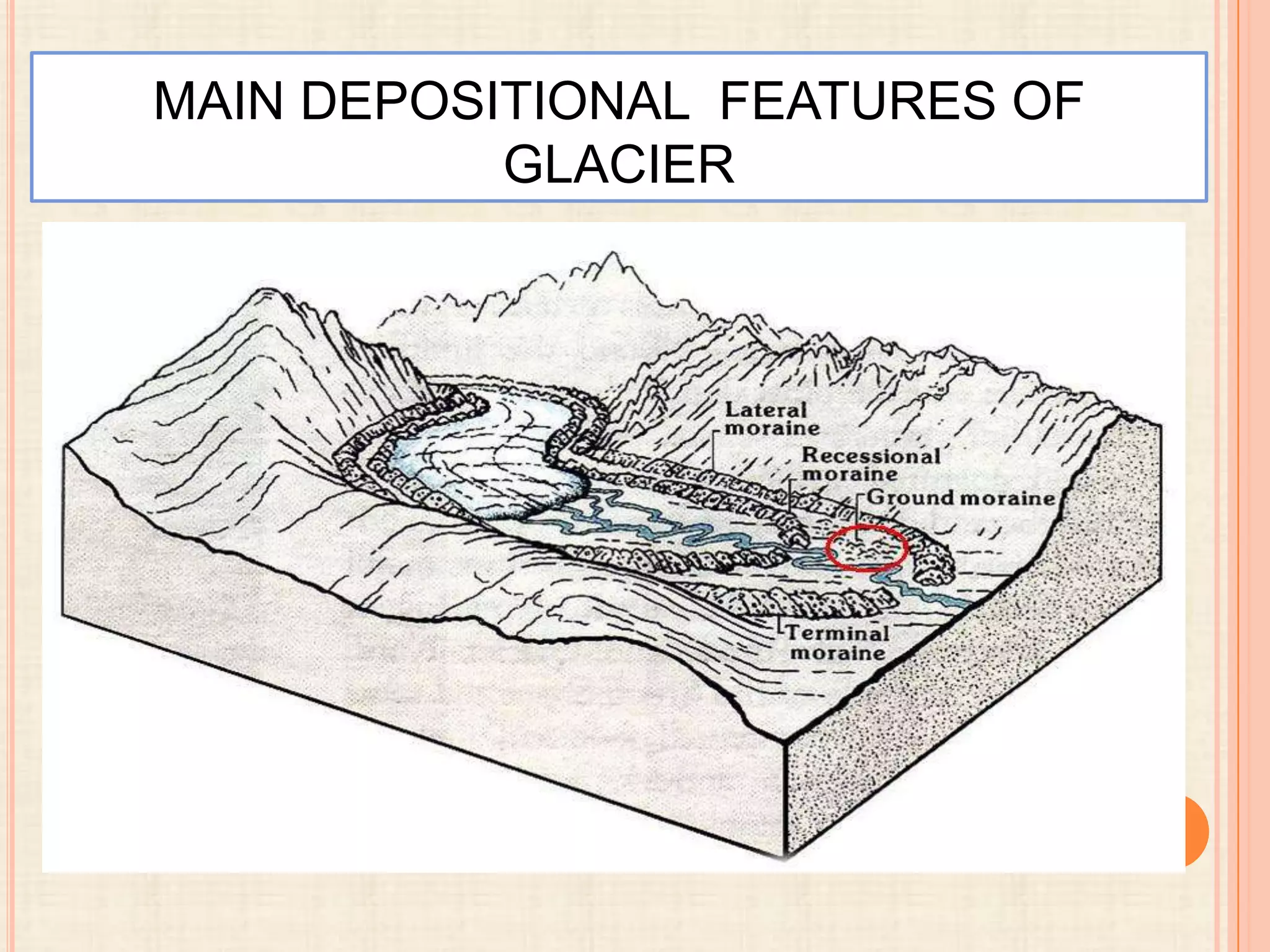
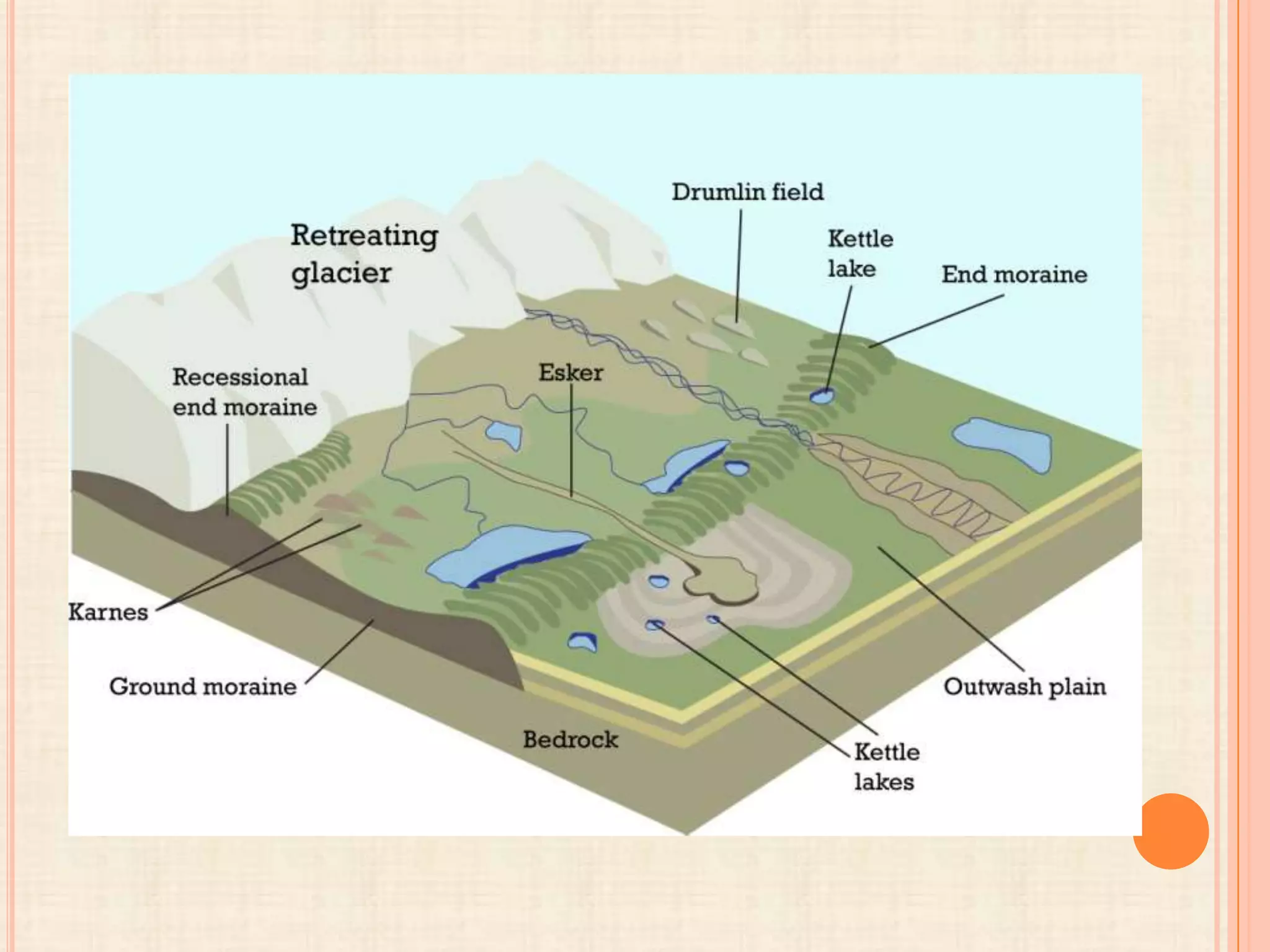
Main depositional features of glacier
1.Terminal moraine
2.Recessional moraine
3.Ground moraine
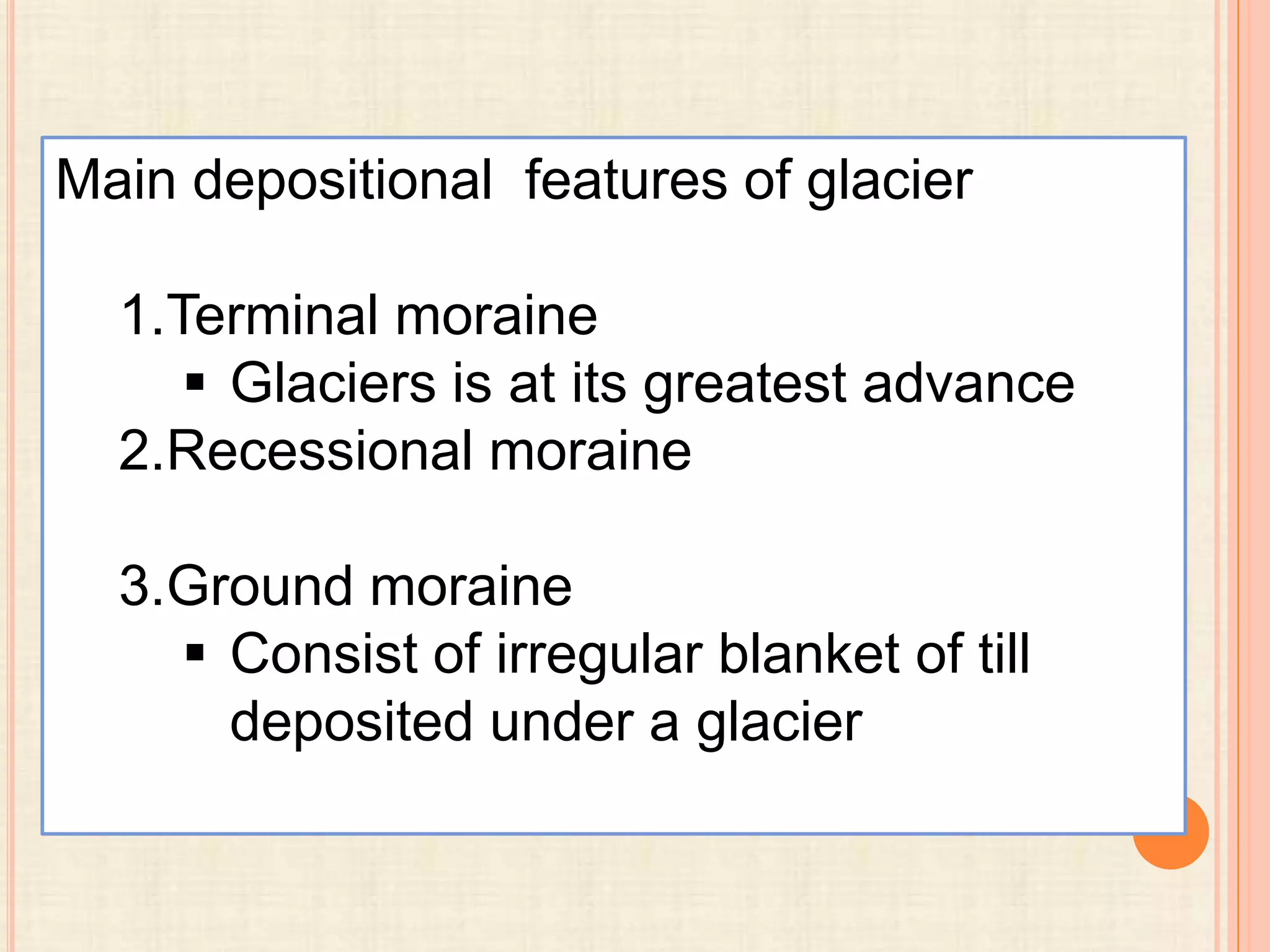
Main depositional features of glacier

1.Terminal moraine
 Glaciers is at its greatest advance
2.Recessional moraine
3.Ground moraine
 Consist of irregular blanket of till
deposited under a glacier
MAIN DEPOSITIONAL FEATURES OF
GLACIER
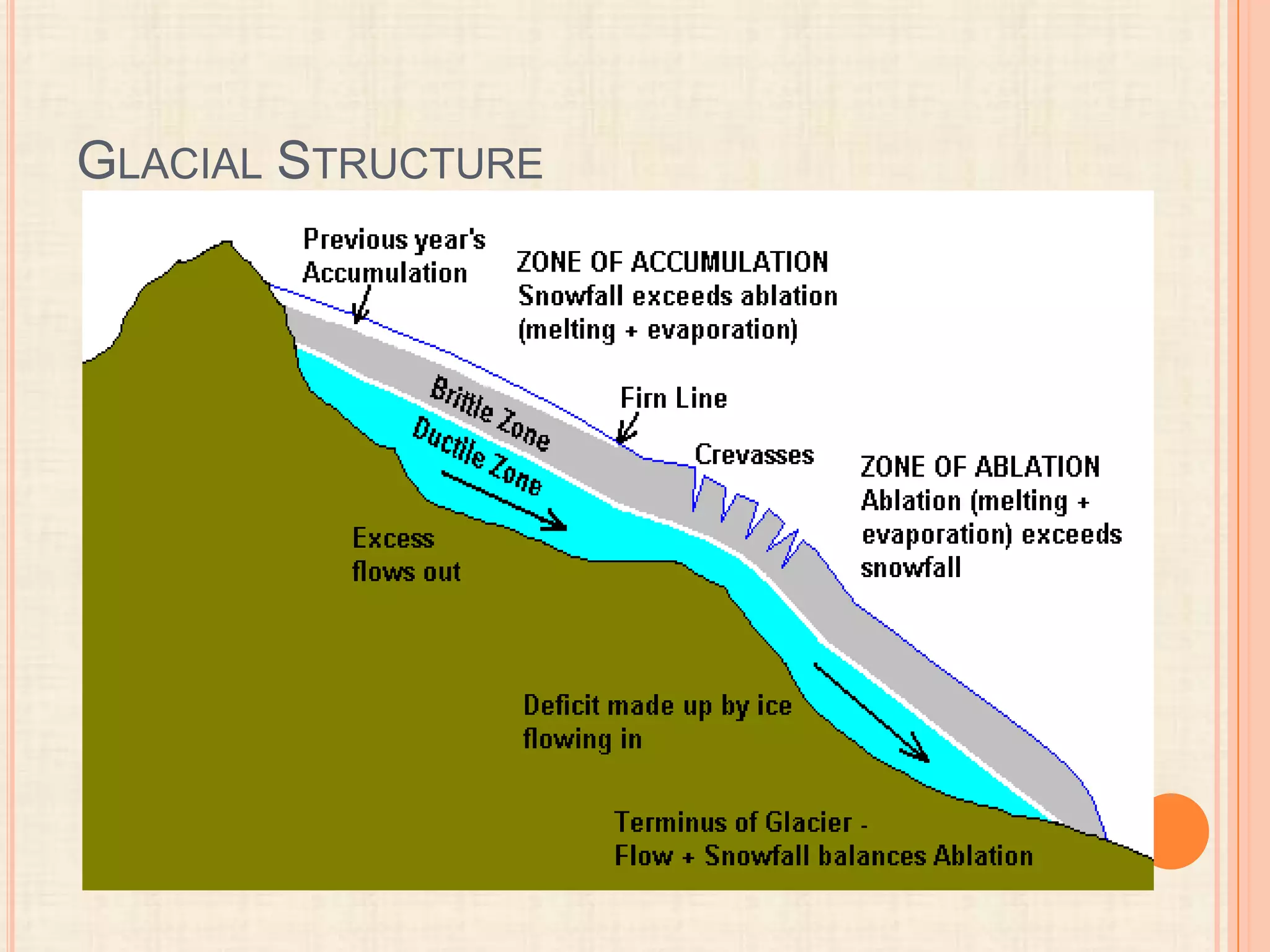
GLACIAL STRUCTURE

GLACIATION

  • 1.
  • 2.
    YOUNGEST PERSON TOREACH NORTH POLE     Jaimie Donovan Born on October 17, 2003 From Galway, Ireland 8-years old Irish GIRL
  • 3.
    GLACIERS  are massive, long lasting,moving mass of compacted snow and ice that forms on land, moves down slope or spreads outward under its own weight.
  • 4.
    ORIGIN OF GLACIERS Why glaciers are formed?  Dependent on the amount of precipitation  The larger the glacier the higher the snow accumulation over time
  • 5.
    DID YOU KNOW??? …thatthe arctic region takes millennia to accumulate the huge amount of snow and ice needed to form a glacier…
  • 6.
    DID YOU KNOW??? ….modernglacier contain snow that fell over 100,000 years ago. Kilimanjaro National Park, Kilimanjaro Region, Tanzania.
  • 7.
  • 8.
    ...if you chunka glacial ice melted in your glass of water, you would have dirt, gravel and even organic matter or living stuff in your water ...all the pressurized air bubbles would rush out that they might explode your glass
  • 9.
    CAUSES OF GLACIATIONS Whatcauses glaciations? Milutin Milankovitch • Siberian astronomer and mathematician • Theory on Climate Change • Widely accepted Theory on Climate Change
  • 10.
    CAUSES OF GLACIATIONS Cyclical changes on earth’s orbit and tilt 1. Eccentricity of earth’s orbit 2. Tilt of the earth’s axis 3. Wobbling of the earth's axis
  • 11.
    ECCENTRICITY OF THEEARTH’S ORBIT  nearly circular or highly elliptical  0.0167 earth’s eccentricity  Occurs 100,000 years Less eccentricity promotes glaciation
  • 12.
    TILT OF THEEARTH’S AXIS  Tilt is also known as obliquity  Varies between 22.1ͦ⁰-24.5⁰  Every 41,000 years Lesser tilt promotes glaciation
  • 13.
    WOBBLING OF THEEARTH’S AXIS  Known as precession  Completed its rotation for every 23,0000 years  Contributes only a small fluctuation of the climate
  • 14.
    WOBBLING OF THEEARTH’S AXIS
  • 15.
    CLIMATE CHANGE ISNOT NEW!!! From “Glaciers” by John Gordon Colin Baxter Publications, 2001
  • 16.
    INTERGLACIAL PERIODS Glacial periods From “Glaciers”by John Gordon Colin Baxter Publications, 2001
  • 17.
  • 19.
    TWO PRIMARY TYPESOF GLACIER 1. Alpine/valley glacier  Form in a mountainous terrain  Could be long or short, narrow or wide
  • 20.
    TWO PRIMARY TYPESOF GLACIER 2. Continental Glacier  Expansive, continuous mass of ice considerably bigger than an alpine glacier
  • 21.
    SUBTYPES OF ALPINEGLACIER Cirque - Bowl shape hollow
  • 22.
    SUBTYPES OF ALPINEGLACIER Snowfield -the place where snow accumulate to form a cirque glacier Alpine Snow Field, near Livigno, Italy
  • 23.
    SUBTYPES OF ALPINEGLACIER Piedmont glacier -Multiple valley glaciers come together as one at a large stretch of flat line
  • 24.
    SUBTYPES OF ALPINEGLACIER Tidewater glacier -produce when glacier meets the sea Calving- when a piece of the glacier breaks off forming a large massive floating ice
  • 25.
    SUBTYPES OF CONTINENTALGLACIER Ice sheet Extends over 50,000 km2  Antarctic and Greenland have this frozen monster ??? Antarctic region is home to 92% of all glacial ice worldwide
  • 26.
    SUBTYPES OF ALPINEGLACIER Ice cap Similar to an ice sheet though smaller Forming roughly circular, dome-like structure
  • 27.
    SUBTYPES OF ALPINEGLACIER Ice field Smaller version of ice cap Fails to cover the land
  • 29.
    TWO PRIMARY TYPESOF GLACIER 1. Alpine/valley glacier  Form in a mountainous terrain  Could be long or short, narrow or wide
  • 30.
    TWO PRIMARY TYPESOF GLACIER 2. Continental Glacier  Expansive, continuous mass of ice considerably bigger than an alpine glacier
  • 31.
    SUBTYPES OF ALPINEGLACIER Cirque - Bowl shape hollow
  • 32.
    SUBTYPES OF ALPINEGLACIER Snowfield -the place where snow accumulate to form a cirque glacier Alpine Snow Field, near Livigno, Italy
  • 33.
    SUBTYPES OF ALPINEGLACIER Piedmont glacier -Multiple valley glaciers come together as one at a large stretch of flat line
  • 34.
    SUBTYPES OF ALPINEGLACIER Tidewater glacier -produce when glacier meets the sea Calving- when a piece of the glacier breaks off forming a large massive floating ice
  • 35.
    SUBTYPES OF CONTINENTALGLACIER Ice sheet Extends over 50,000 km2  Antarctic and Greenland have this frozen monster ??? Antarctic region is home to 92% of all glacial ice worldwide
  • 36.
    SUBTYPES OF ALPINEGLACIER Ice cap Similar to an ice sheet though smaller Forming roughly circular, dome-like structure
  • 37.
    SUBTYPES OF ALPINEGLACIER Ice field Smaller version of ice cap Fails to cover the land
  • 38.
    GLACIAL MOVEMENT Gravity primaryforce Entire ice sheet moves 5 to 50 m/yr Fastest movement within the center Friction Slows down the sides
  • 39.
    GLACIAL MOVEMENT Mechanisms involves 1.Basalslipping  Entire mass of glacier slides over the bedrock  Occurs when glaciers rest on the slope  Pressure causes a small amount of water at the bottom of the glacier to melt creating a thin layer of water
  • 40.
    GLACIAL MOVEMENT Mechanisms involves 2.Plastic Flow Also known as creeping or internal deformation Occurs when glacier becomes so heavy that it flattens it molecules out in order to deal with the weight
  • 41.
  • 42.
    GLACIAL EROSION Mechanism involved… 1.Plucking Glacier flows over a fractured bedrock surface  it loosens and lift blocks of rocks and incorporate them into ice 2. Abrasion Happens when ice and its load of rock fragment slides over bedrock
  • 43.
  • 44.
    GLACIAL TRANSPORTATION …during transportation glacierscarry a huge amount of materials Rocks being transported are called moraines Moraines could be: Lateral moraine  medial moraine
  • 45.
    Lateral moraine Ridge-like thatforms from sediments in or on the adjacent to the sides of a mountain glacier
  • 46.
    Medial Moraine  Formin or on the middle of a glacier
  • 47.
    GLACIAL DEPOSITION Materials willbe deposited due to: Increase in pressure Rise in temperature Main depositional features of glacier 1.Terminal moraine 2.Recessional moraine 3.Ground moraine
  • 48.
    Main depositional featuresof glacier 1.Terminal moraine  Glaciers is at its greatest advance 2.Recessional moraine 3.Ground moraine  Consist of irregular blanket of till deposited under a glacier
  • 49.
  • 53.