


Giving Feedback
TMT Cultural Mentor Workshop, March 2014
hung@hmvtteachingspace.com
!1
Introduction
Assumptions
Cultural Mentors knows:
• their own community and community’s culture
(authenticity)
• how to interact cross-culturally (communication
skills)
• culture and cross-cultural differences (theory)
Mentoring Scenarios
1. GPR in difficulty
2. GPR being observed
3. GPR with a problem
Attitudes to Cultural
Mentoring
Attitudes to Cultural
Mentoring
Learners’ attitudes:
- They don’t acknowledge that
I know a thing or two
- They are not consistent
- I don't want to argue
- There are no practical
solutions 
- There is no cultural stuff
- They are not medical
Attitudes to Cultural
Mentoring
Learners’ attitudes:
- They don’t acknowledge that
I know a thing or two
- They are not consistent
- I don't want to argue
- There are no practical
solutions 
- There is no cultural stuff
- They are not medical
Mentors’ attitudes:
- They (learner) think they know
it all
- They’re not interested 
- They think we can't offer
anything to help
- They don't want to learn from
us and prefer learning from
their GPS
- They have poor
communication skills; they do
not know how to talk to our
mob
Effective Feedback:
Outcomes
Effective Feedback:
Outcomes
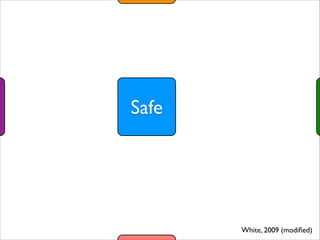
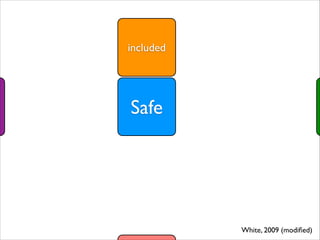
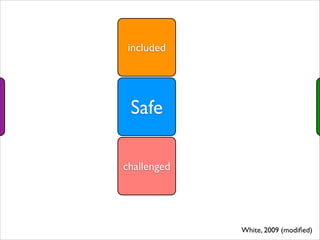
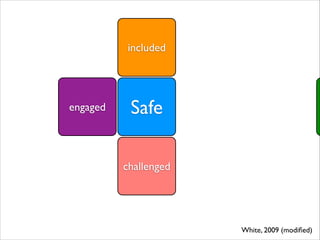
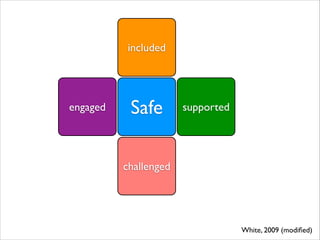
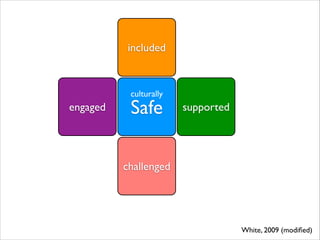
Learner feels safe and develops
Safe
White, 2009 (modified)
Safe
included
White, 2009 (modified)
Safe
challenged
included
White, 2009 (modified)
Safe
challenged
engaged
included
White, 2009 (modified)
Safe supported
challenged
engaged
included
White, 2009 (modified)
Safe supported
challenged
engaged
included
culturally
White, 2009 (modified)
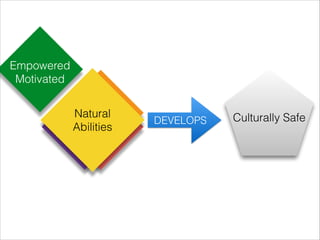
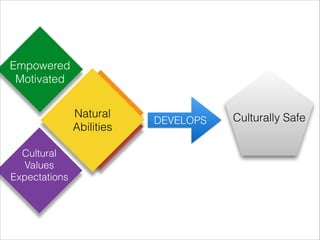
Empowered
Motivated
Cultural
Values
Expectations
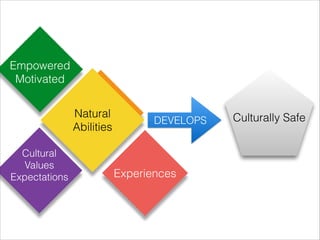
Experiences
Support
Significant
Others
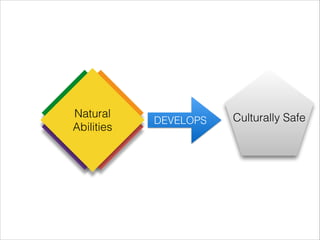
Natural
Abilities
DEVELOPS Culturally Safe
Empowered
Motivated
Cultural
Values
Expectations
Experiences
Support
Significant
Others
Natural
Abilities
DEVELOPS Culturally Safe
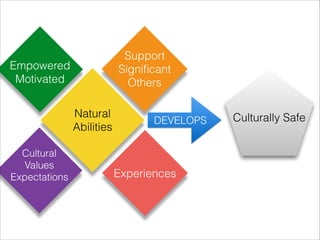
Empowered
Motivated
Cultural
Values
Expectations
Experiences
Support
Significant
Others
Natural
Abilities
DEVELOPS Culturally Safe
Empowered
Motivated
Cultural
Values
Expectations Experiences
Support
Significant
Others
Natural
Abilities
DEVELOPS Culturally Safe
Empowered
Motivated
Cultural
Values
Expectations Experiences
Support
Significant
Others
Natural
Abilities
DEVELOPS Culturally Safe
Empowered
Motivated
Cultural
Values
Expectations
Experiences
Support
Significant
Others
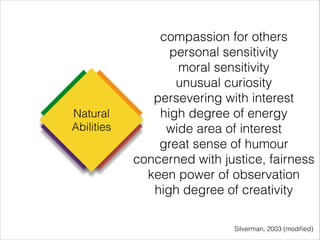
Natural
Abilities
compassion for others
personal sensitivity
moral sensitivity
unusual curiosity
persevering with interest
high degree of energy
wide area of interest
great sense of humour
concerned with justice, fairness
keen power of observation
high degree of creativity
Silverman, 2003 (modified)
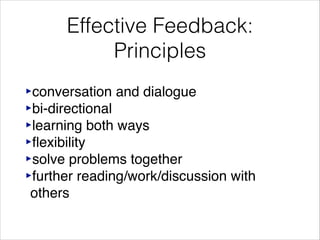
Effective Feedback:
Principles
‣conversation and dialogue"
‣bi-directional "
‣learning both ways"
‣flexibility"
‣solve problems together"
‣further reading/work/discussion with
others
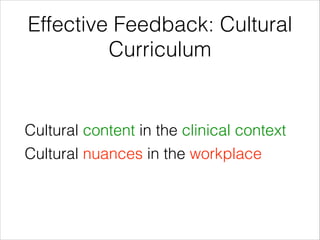
Effective Feedback: Cultural
Curriculum
Cultural content in the clinical context
Cultural nuances in the workplace
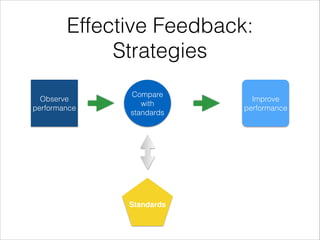
Effective Feedback:
Strategies
Observe
performance
Compare
with
standards
Standards
Improve
performance
Practical
What we have learnt…

Giving Feedback Cross-Cultural Context