Feedback Giving
Welcome to the world of feedback giving! In this presentation, we will
explore the importance of providing effective feedback, discuss best
practices, and share tools and techniques for mastering this essential
skill. Let's get started!
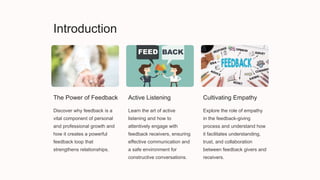
Introduction
The Power of Feedback
Discover why feedback is a
vital component of personal
and professional growth and
how it creates a powerful
feedback loop that
strengthens relationships.
Active Listening
Learn the art of active
listening and how to
attentively engage with
feedback receivers, ensuring
effective communication and
a safe environment for
constructive conversations.
Cultivating Empathy
Explore the role of empathy
in the feedback-giving
process and understand how
it facilitates understanding,
trust, and collaboration
between feedback givers and
receivers.
Characteristics of Effective Feedback
Specific & Actionable
Discover how providing specific and
actionable feedback enables individuals to
make tangible improvements and achieve
measurable results.
Timely
Learn the significance of timely feedback
and how it helps individuals address
issues promptly, maintain momentum, and
make immediate course corrections.
Constructive
Understand the importance of delivering
feedback in a constructive manner,
focusing on solutions instead of dwelling
on the problem.
Relevant
Explore why relevant feedback is key in
aligning individuals' actions with
organizational goals and driving
continuous improvement.
Best Practices for Giving Feedback
1 Prepare & Be Specific
Discover how preparation and
specificity enhance the
effectiveness of your feedback,
allowing you to address specific
behaviors or actions.
2
Focus on Behavior, Not
Personality
Learn the importance of focusing on
observable behaviors rather than
making judgments about an
individual's personality, ensuring
fairness and objectivity.
3 Balance Praise & Critique
Explore the art of providing a
balanced mix of positive
reinforcement and constructive
criticism to motivate, inspire, and
drive continuous growth.
Common Challenges in Giving
Feedback
1 Delivering Difficult Feedback
Learn strategies to confidently deliver
difficult feedback and address sensitive
topics while preserving relationships
and fostering a supportive
environment.
2 Receiving Defensive Reactions
Gain insights into understanding and
managing defensive reactions from
feedback receivers, allowing you to
navigate challenging conversations
with grace and professionalism.
3 Managing Power Dynamics
Discover techniques to navigate power
dynamics involved in feedback
processes, promoting open
communication, respect, and fairness.
4 Providing Feedback Remotely
Explore best practices for giving
feedback in virtual or remote
environments, offering valuable
guidance even when not physically
present.
Tools and Techniques for Effective
Feedback Giving
360-Degree
Feedback
Discover how this
comprehensive approach
involving feedback from
multiple sources enhances
self-awareness, promotes
teamwork, and encourages
continuous growth.
Feedback Models
Explore popular feedback
models such as the SBI
(Situation-Behavior-Impact)
model or the Pendleton
model to structure your
feedback and ensure clarity
and effectiveness.
Feedback Delivery
Platforms
Discover digital tools and
platforms that facilitate the
feedback-giving process,
making it more efficient,
organized, and trackable.
Conclusion
Congratulations! You have gained valuable insights into the world of feedback giving. Remember,
effective feedback is not just about pointing out areas for improvement but also celebrating
successes and fostering growth mindsets. Use the power of feedback to create a more productive,
connected, and empowered environment. Start giving feedback today!

Feedback.pptx

  • 1.
    Feedback Giving Welcome tothe world of feedback giving! In this presentation, we will explore the importance of providing effective feedback, discuss best practices, and share tools and techniques for mastering this essential skill. Let's get started!
  • 2.
    Introduction The Power ofFeedback Discover why feedback is a vital component of personal and professional growth and how it creates a powerful feedback loop that strengthens relationships. Active Listening Learn the art of active listening and how to attentively engage with feedback receivers, ensuring effective communication and a safe environment for constructive conversations. Cultivating Empathy Explore the role of empathy in the feedback-giving process and understand how it facilitates understanding, trust, and collaboration between feedback givers and receivers.
  • 3.
    Characteristics of EffectiveFeedback Specific & Actionable Discover how providing specific and actionable feedback enables individuals to make tangible improvements and achieve measurable results. Timely Learn the significance of timely feedback and how it helps individuals address issues promptly, maintain momentum, and make immediate course corrections. Constructive Understand the importance of delivering feedback in a constructive manner, focusing on solutions instead of dwelling on the problem. Relevant Explore why relevant feedback is key in aligning individuals' actions with organizational goals and driving continuous improvement.
  • 4.
    Best Practices forGiving Feedback 1 Prepare & Be Specific Discover how preparation and specificity enhance the effectiveness of your feedback, allowing you to address specific behaviors or actions. 2 Focus on Behavior, Not Personality Learn the importance of focusing on observable behaviors rather than making judgments about an individual's personality, ensuring fairness and objectivity. 3 Balance Praise & Critique Explore the art of providing a balanced mix of positive reinforcement and constructive criticism to motivate, inspire, and drive continuous growth.
  • 5.
    Common Challenges inGiving Feedback 1 Delivering Difficult Feedback Learn strategies to confidently deliver difficult feedback and address sensitive topics while preserving relationships and fostering a supportive environment. 2 Receiving Defensive Reactions Gain insights into understanding and managing defensive reactions from feedback receivers, allowing you to navigate challenging conversations with grace and professionalism. 3 Managing Power Dynamics Discover techniques to navigate power dynamics involved in feedback processes, promoting open communication, respect, and fairness. 4 Providing Feedback Remotely Explore best practices for giving feedback in virtual or remote environments, offering valuable guidance even when not physically present.
  • 6.
    Tools and Techniquesfor Effective Feedback Giving 360-Degree Feedback Discover how this comprehensive approach involving feedback from multiple sources enhances self-awareness, promotes teamwork, and encourages continuous growth. Feedback Models Explore popular feedback models such as the SBI (Situation-Behavior-Impact) model or the Pendleton model to structure your feedback and ensure clarity and effectiveness. Feedback Delivery Platforms Discover digital tools and platforms that facilitate the feedback-giving process, making it more efficient, organized, and trackable.
  • 7.
    Conclusion Congratulations! You havegained valuable insights into the world of feedback giving. Remember, effective feedback is not just about pointing out areas for improvement but also celebrating successes and fostering growth mindsets. Use the power of feedback to create a more productive, connected, and empowered environment. Start giving feedback today!