QUESTION 4- HOW DOES
YOUR MEDIA PRODUCT
REPRESENT PARTICULAR
SOCIAL GROUPS?
                       By Laura Simmons
TARGET AUDIENCE
• The target audience for my magazine is teenagers
  and young adults around the age range of 15-23
  who enjoy indie and alternative music with a unique
  sound.
• I decided this because my questionnaire results show
  that most people who are in the age range I
  specified prefer alternative indie music, and it is
  something I enjoy too which makes it more
  pleasurable to create meaning I will most likely make
  it look more desirable to the target audience if I can
  understand their point of view well.
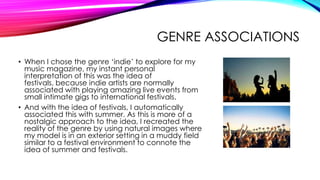
GENRE ASSOCIATIONS
• When I chose the genre ‘indie’ to explore for my
  music magazine, my instant personal
  interpretation of this was the idea of
  festivals, because indie artists are normally
  associated with playing amazing live events from
  small intimate gigs to international festivals.
• And with the idea of festivals, I automatically
  associated this with summer. As this is more of a
  nostalgic approach to the idea, I recreated the
  reality of the genre by using natural images where
  my model is in an exterior setting in a muddy field
  similar to a festival environment to connote the
  idea of summer and festivals.
WHAT SOCIAL GROUPS DOES MY
       MAGAZINE REPRESENT?
 • My magazine represents a variety of different social
   groups, such as young females as the girl on the front
   cover’s main image may influence their fashion style,
   especially any people who’re enjoy indie/ alternative
   music.
 • Males who enjoy /indie/alternative music are
   represented through the genre because most of the
   artists that are mentioned on my magazine cover have
   the stereotypical fan base of ‘indies’ and ‘rockers’ with
   longhair, who wear checked tops or big denim jackets
   or males who have facial hair or hair styles in general
   similar to the bands, as the bands are their influences.
REPRESENTATIONS…
• On the front cover and contents, my
  artists are represented as quite moody,
  and have serious looking poses and facial
  expressions. The serious facial expressions
  could represent their style of music and
  how serious/important their music is to
  them.
• They’re represented as quite fashionable
  and mature. In a fan’s point of view, this
  would be seen as positive because it is
  the style they’re interested in and these
  people could be their role models or who
  they look up to.
GENRE REPRESENTATIONS…
• On the contents page there is a picture of my main cover artist ‘in
  action’, playing instruments. This would interest social groups that
  like playing instruments themselves or fans who are a growing
  band and general fans who want to know what instruments the
  different band member’s play.
• She looks happy, relaxed and lively, giving a very positive
  representation. They look quite different to the more serious, posed
  pictures. The poses show that stereotypes can be miss-read as
  when they are posing for pictures and wearing certain styles of
  fashion, they seem quite intimidating and negatively portrayed as
  aggressive whereas, how they actually are naturally is quite
  happy, alive and not meaning to be intimidating at all.
• This challenges stereotypes of teens/young adults as they are
  usually portrayed in the media as being anti-social.

Question 4 social groups represented

  • 1.
    QUESTION 4- HOWDOES YOUR MEDIA PRODUCT REPRESENT PARTICULAR SOCIAL GROUPS? By Laura Simmons
  • 2.
    TARGET AUDIENCE • Thetarget audience for my magazine is teenagers and young adults around the age range of 15-23 who enjoy indie and alternative music with a unique sound. • I decided this because my questionnaire results show that most people who are in the age range I specified prefer alternative indie music, and it is something I enjoy too which makes it more pleasurable to create meaning I will most likely make it look more desirable to the target audience if I can understand their point of view well.
  • 3.
    GENRE ASSOCIATIONS • WhenI chose the genre ‘indie’ to explore for my music magazine, my instant personal interpretation of this was the idea of festivals, because indie artists are normally associated with playing amazing live events from small intimate gigs to international festivals. • And with the idea of festivals, I automatically associated this with summer. As this is more of a nostalgic approach to the idea, I recreated the reality of the genre by using natural images where my model is in an exterior setting in a muddy field similar to a festival environment to connote the idea of summer and festivals.
  • 4.
    WHAT SOCIAL GROUPSDOES MY MAGAZINE REPRESENT? • My magazine represents a variety of different social groups, such as young females as the girl on the front cover’s main image may influence their fashion style, especially any people who’re enjoy indie/ alternative music. • Males who enjoy /indie/alternative music are represented through the genre because most of the artists that are mentioned on my magazine cover have the stereotypical fan base of ‘indies’ and ‘rockers’ with longhair, who wear checked tops or big denim jackets or males who have facial hair or hair styles in general similar to the bands, as the bands are their influences.
  • 5.
    REPRESENTATIONS… • On thefront cover and contents, my artists are represented as quite moody, and have serious looking poses and facial expressions. The serious facial expressions could represent their style of music and how serious/important their music is to them. • They’re represented as quite fashionable and mature. In a fan’s point of view, this would be seen as positive because it is the style they’re interested in and these people could be their role models or who they look up to.
  • 6.
    GENRE REPRESENTATIONS… • Onthe contents page there is a picture of my main cover artist ‘in action’, playing instruments. This would interest social groups that like playing instruments themselves or fans who are a growing band and general fans who want to know what instruments the different band member’s play. • She looks happy, relaxed and lively, giving a very positive representation. They look quite different to the more serious, posed pictures. The poses show that stereotypes can be miss-read as when they are posing for pictures and wearing certain styles of fashion, they seem quite intimidating and negatively portrayed as aggressive whereas, how they actually are naturally is quite happy, alive and not meaning to be intimidating at all. • This challenges stereotypes of teens/young adults as they are usually portrayed in the media as being anti-social.