



















Arthur Doler
@arthurdoler
arthurdoler@gmail.com
Slides:
Handout:
LEARNING FEEDBACK WITH
LEGO®
The Building Blocks of Giving and Receiving
Feedback
None
LET’S BE LEGAL
LEGO® is a trademark of the LEGO Group
of companies which does not sponsor,
authorize or endorse this presentation.
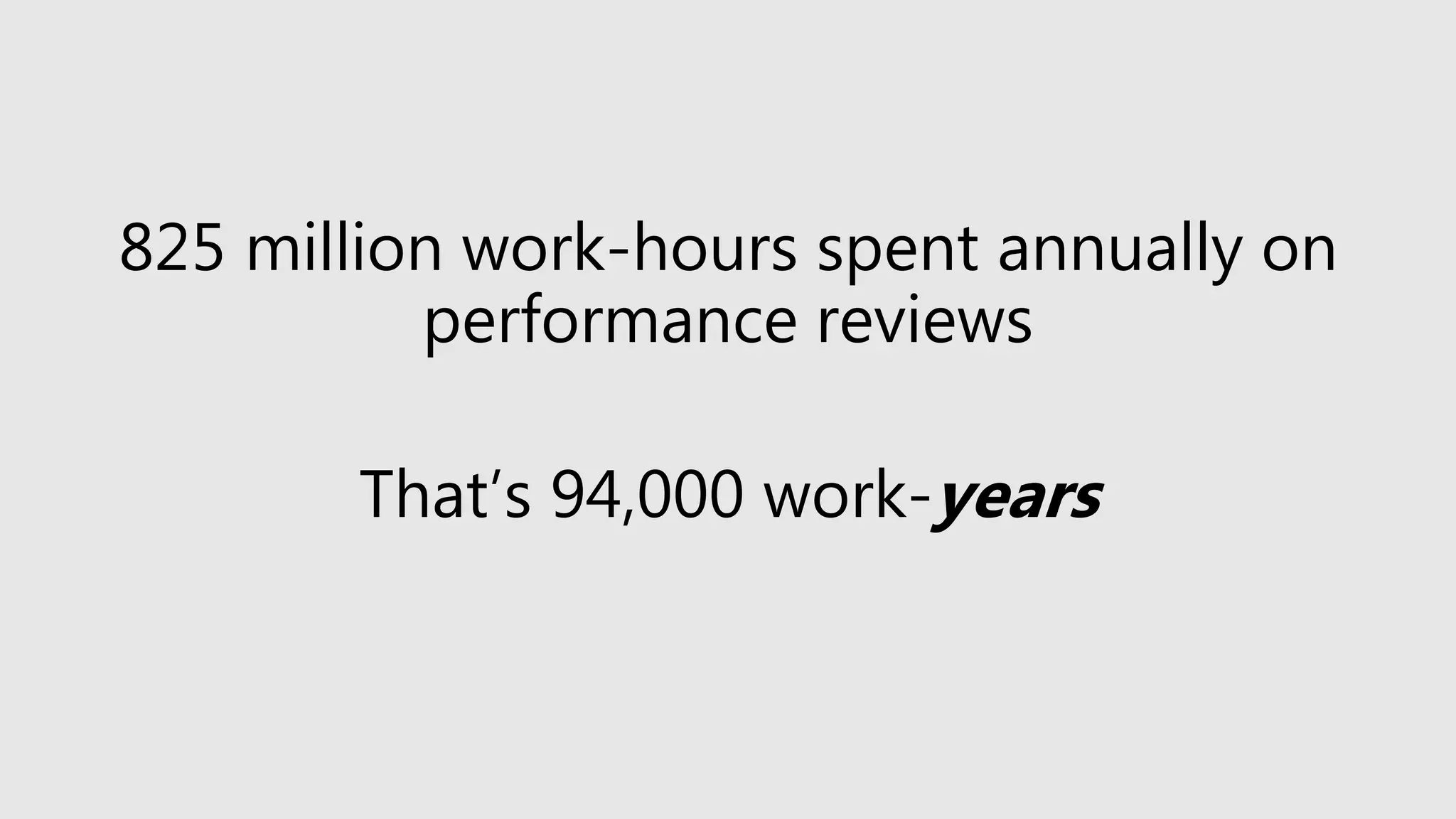
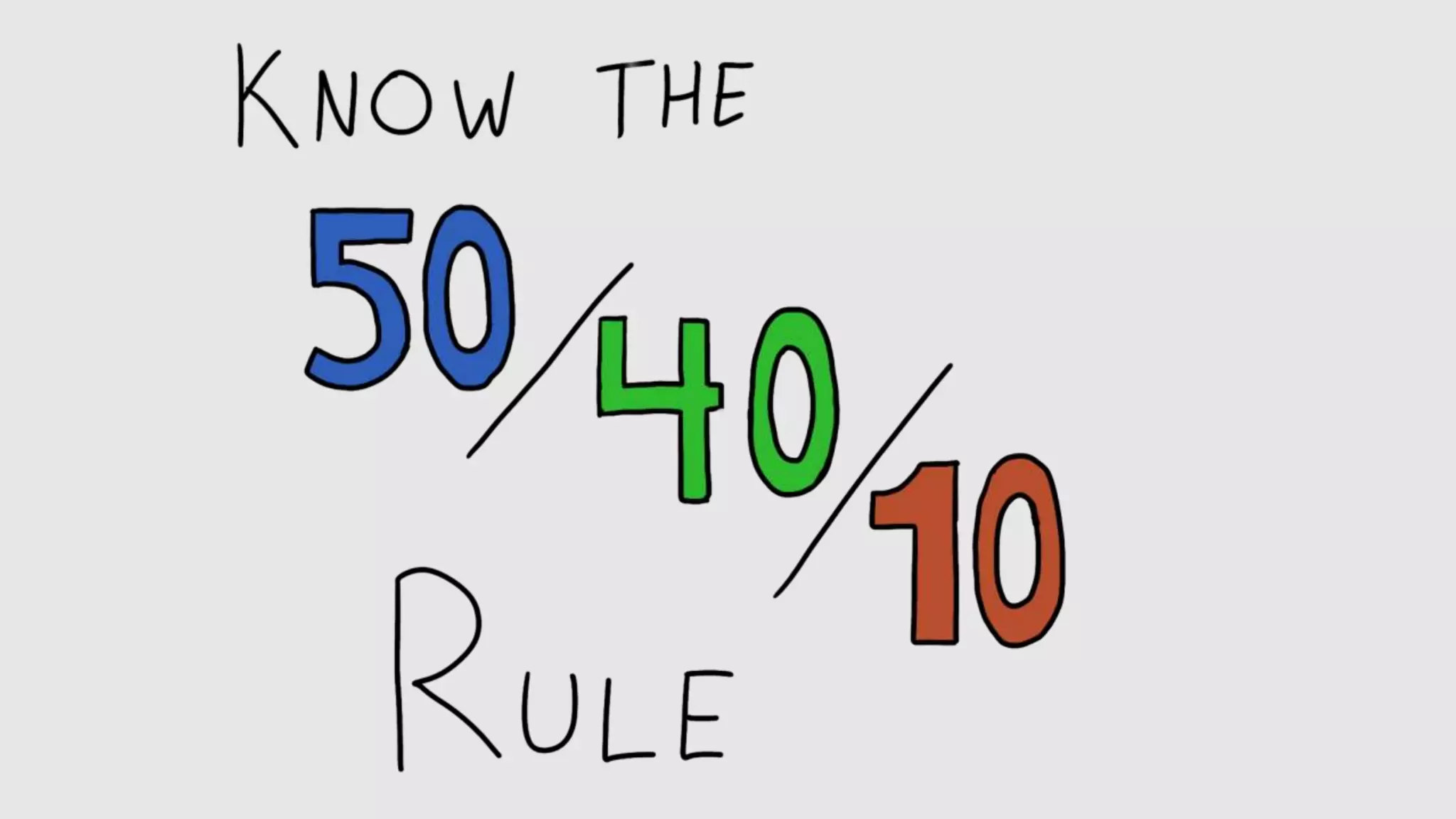
825 million work-hours spent annually on
performance reviews
That’s 94,000 work-years
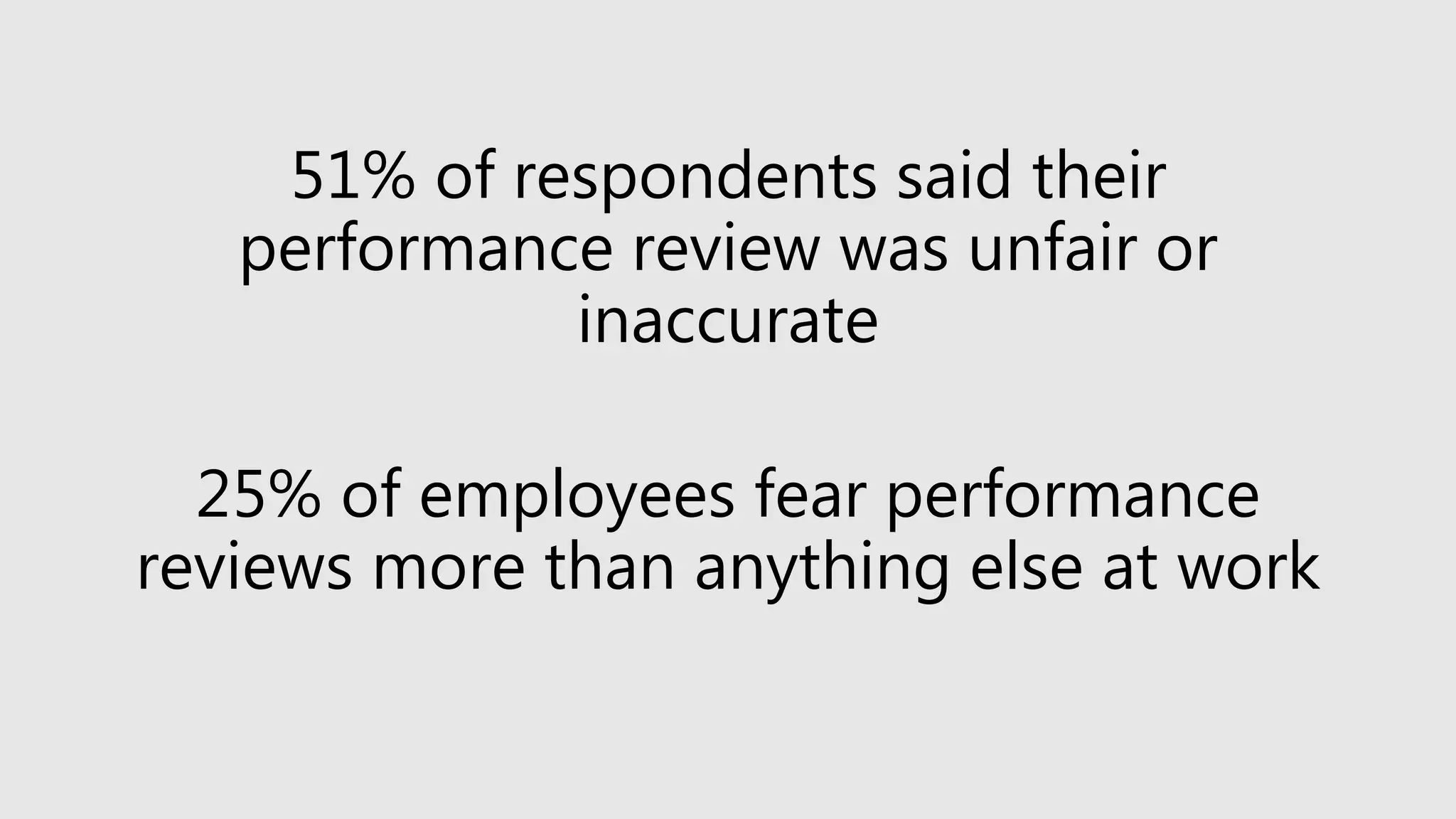
51% of respondents said their
performance review was unfair or
inaccurate
25% of employees fear performance
reviews more than anything else at work
Millions of hours of feedback training
… about giving feedback
Push, and push harder
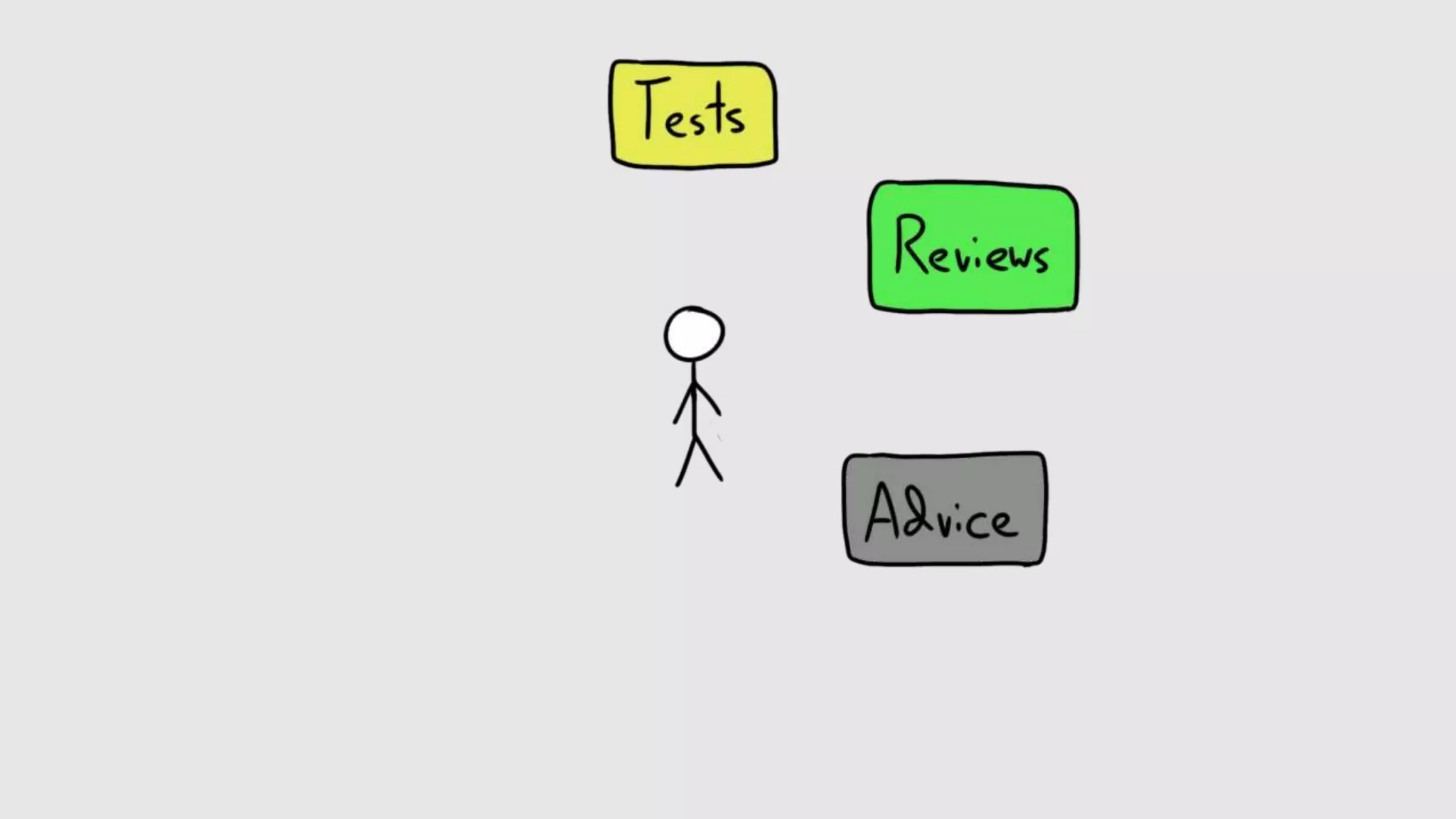
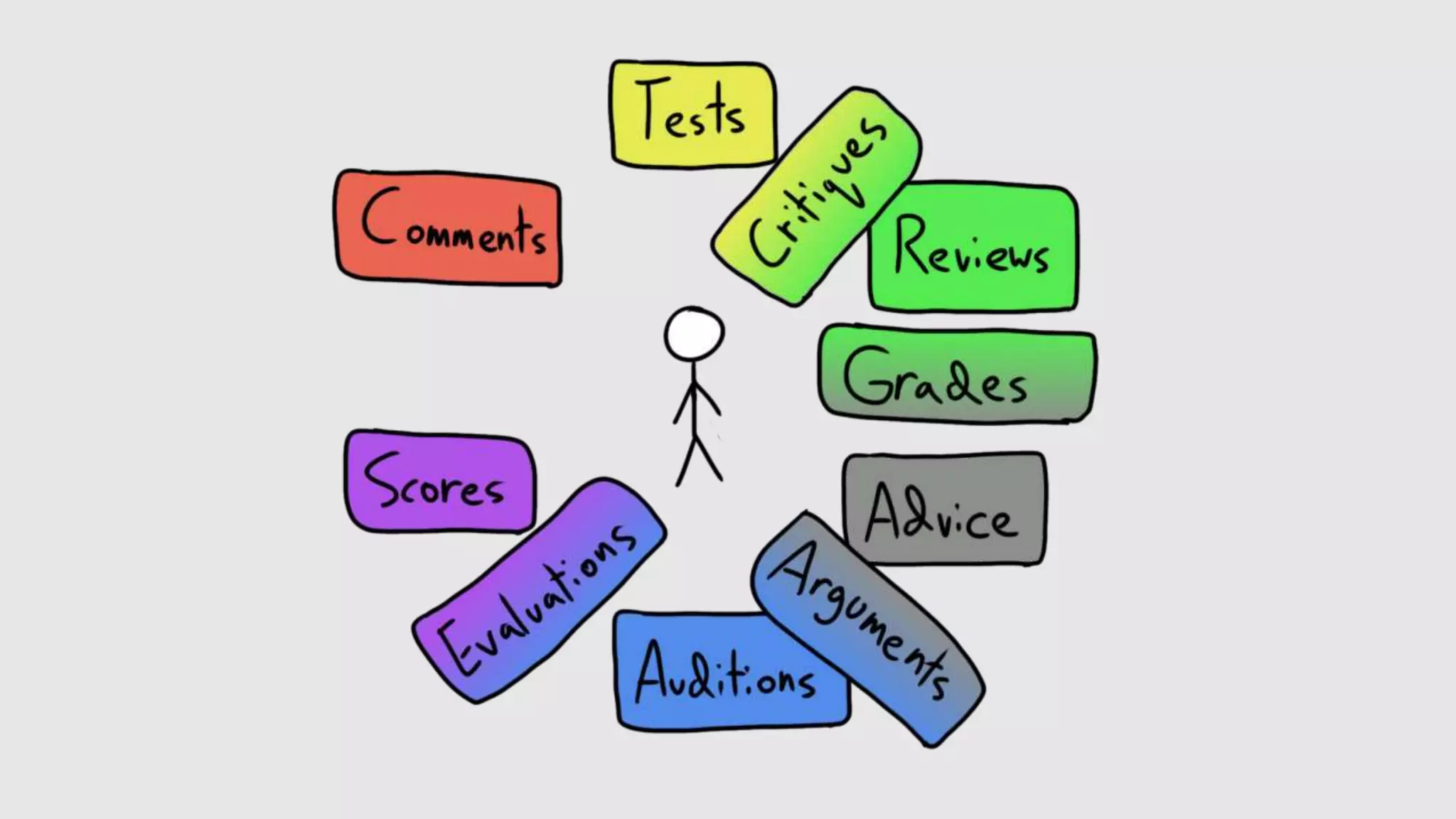
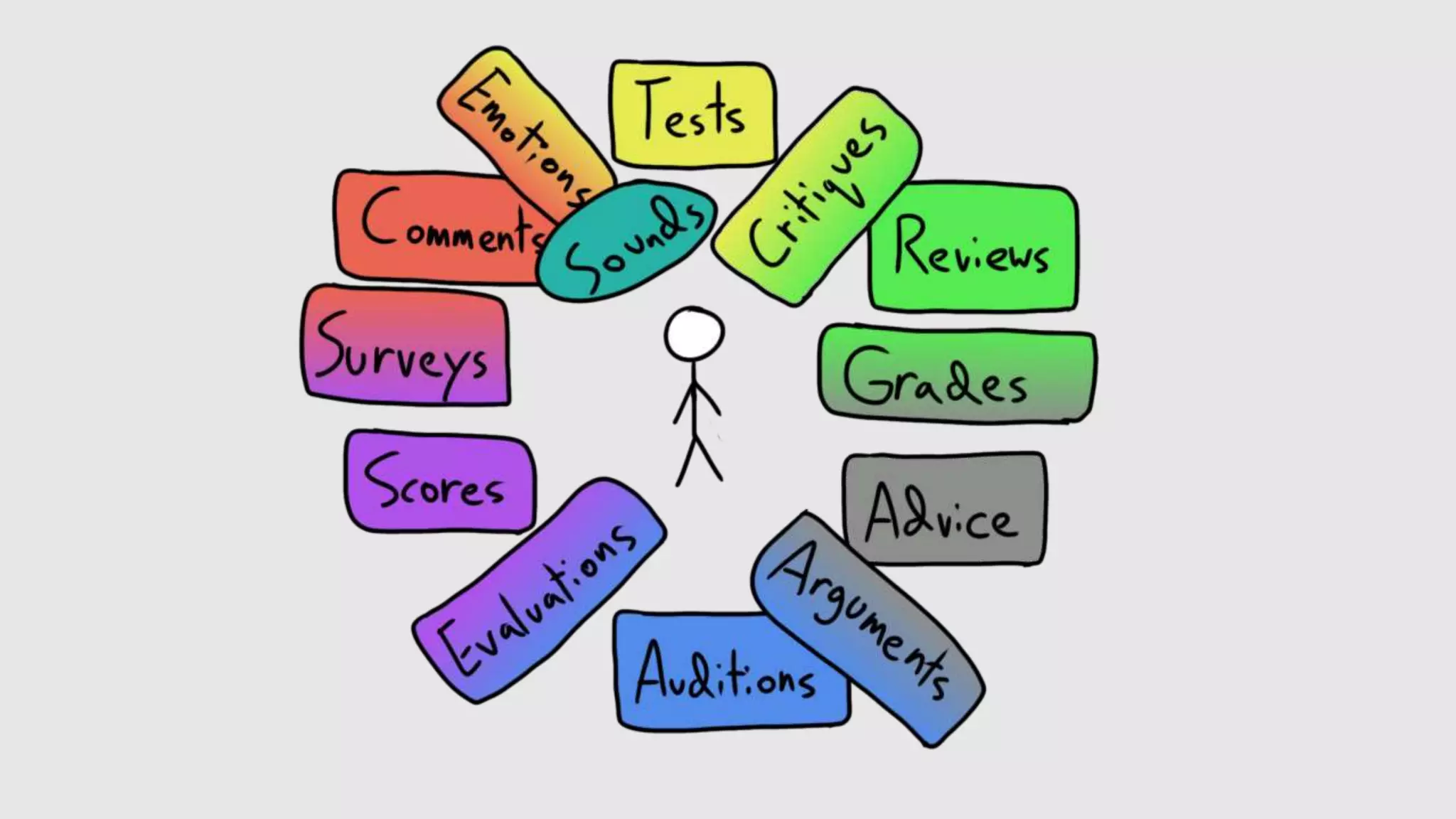
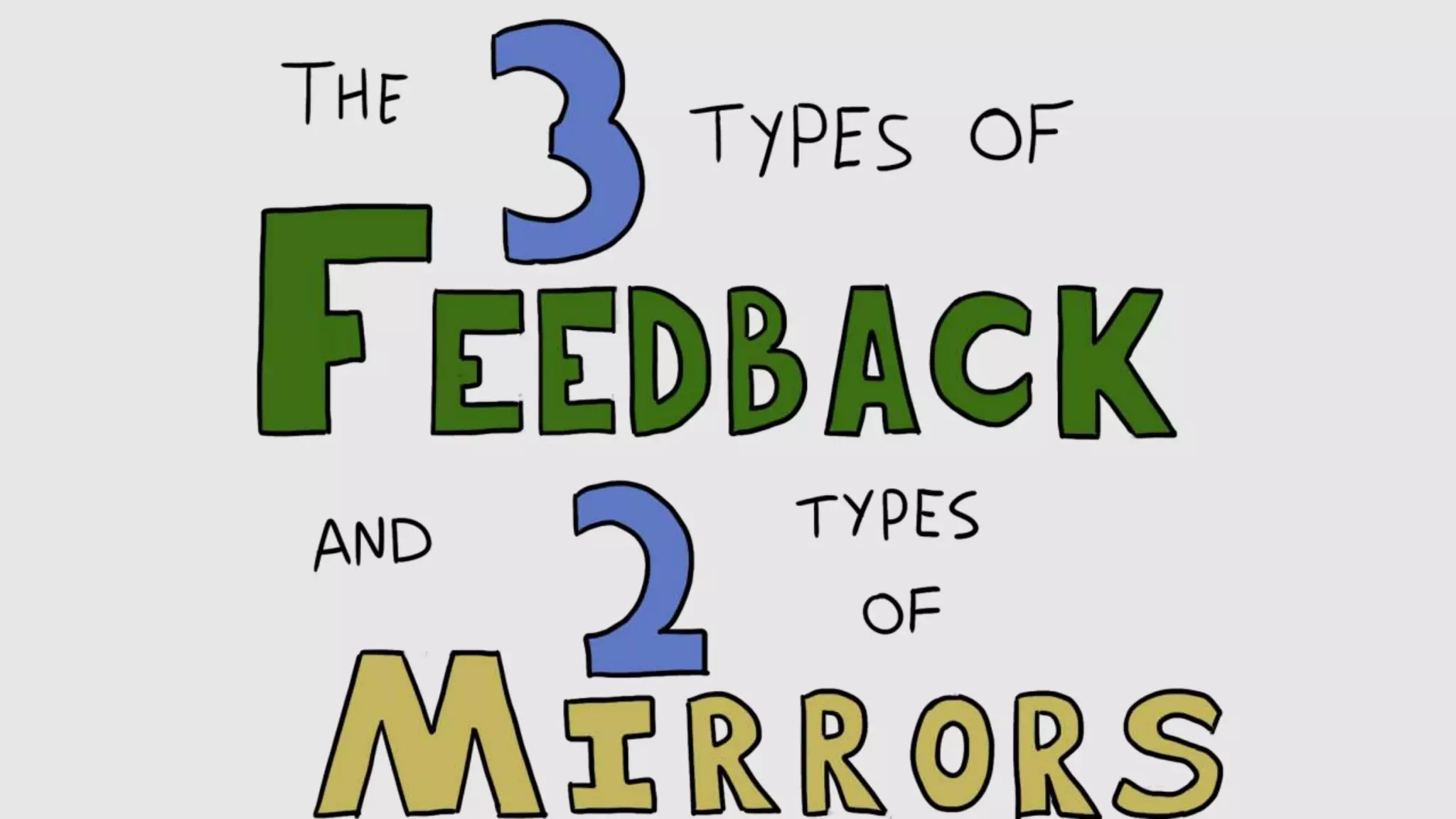
3 types of feedback and 2 types of
mirrors
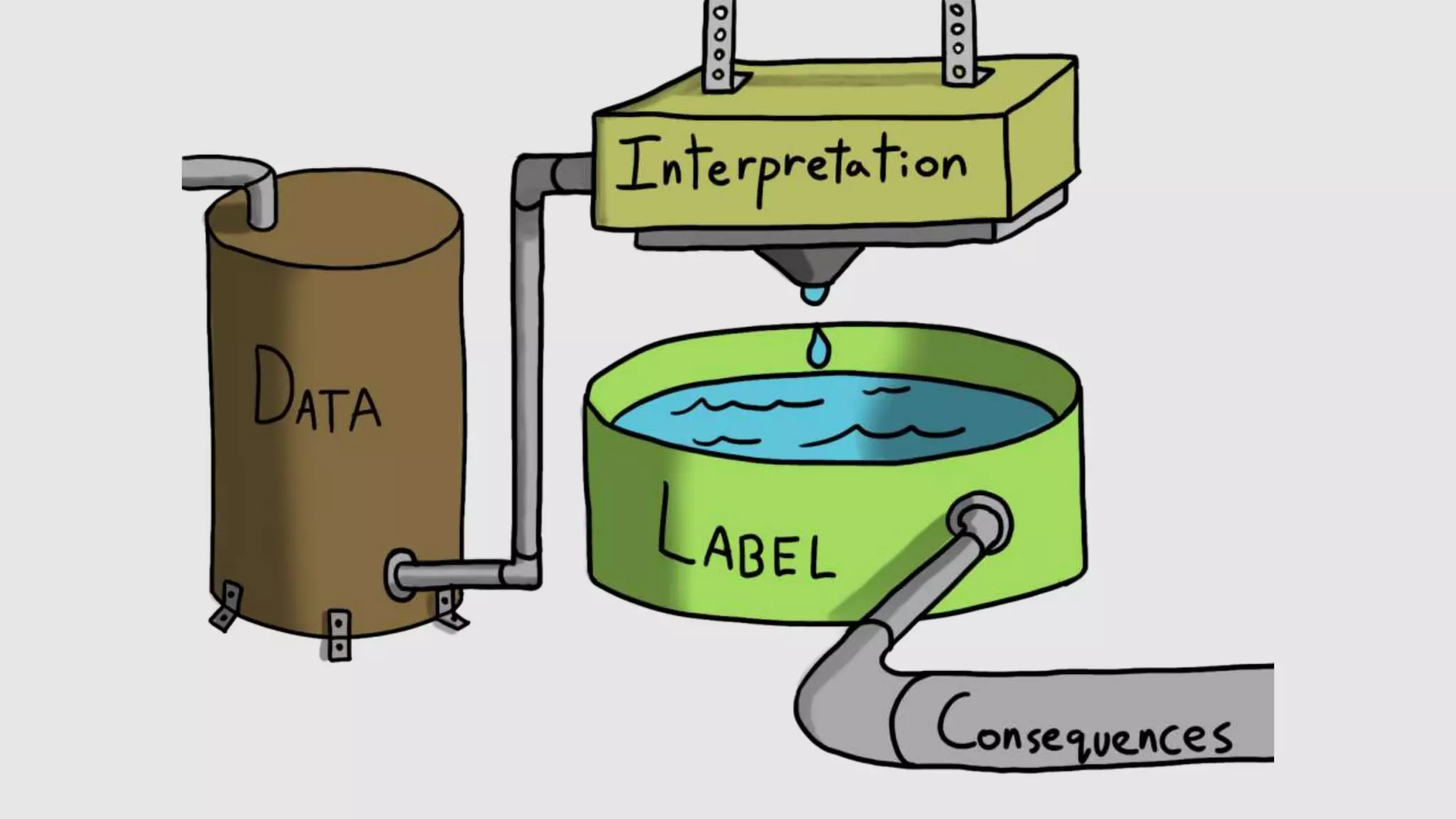
Feedback labels and unpacking them
Feedback triggers and solutions
The whole feedback conversation
EXAMPLES
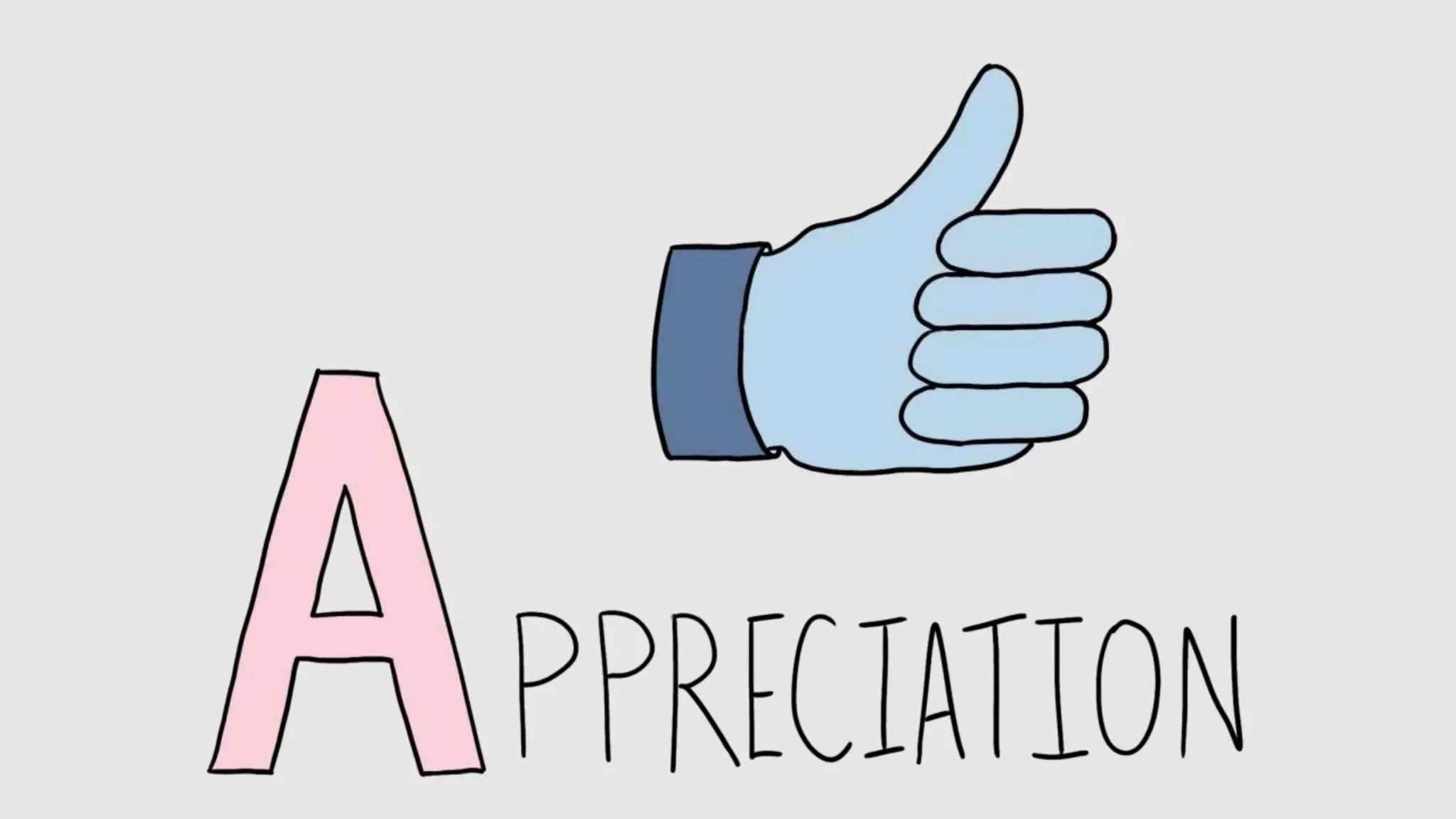
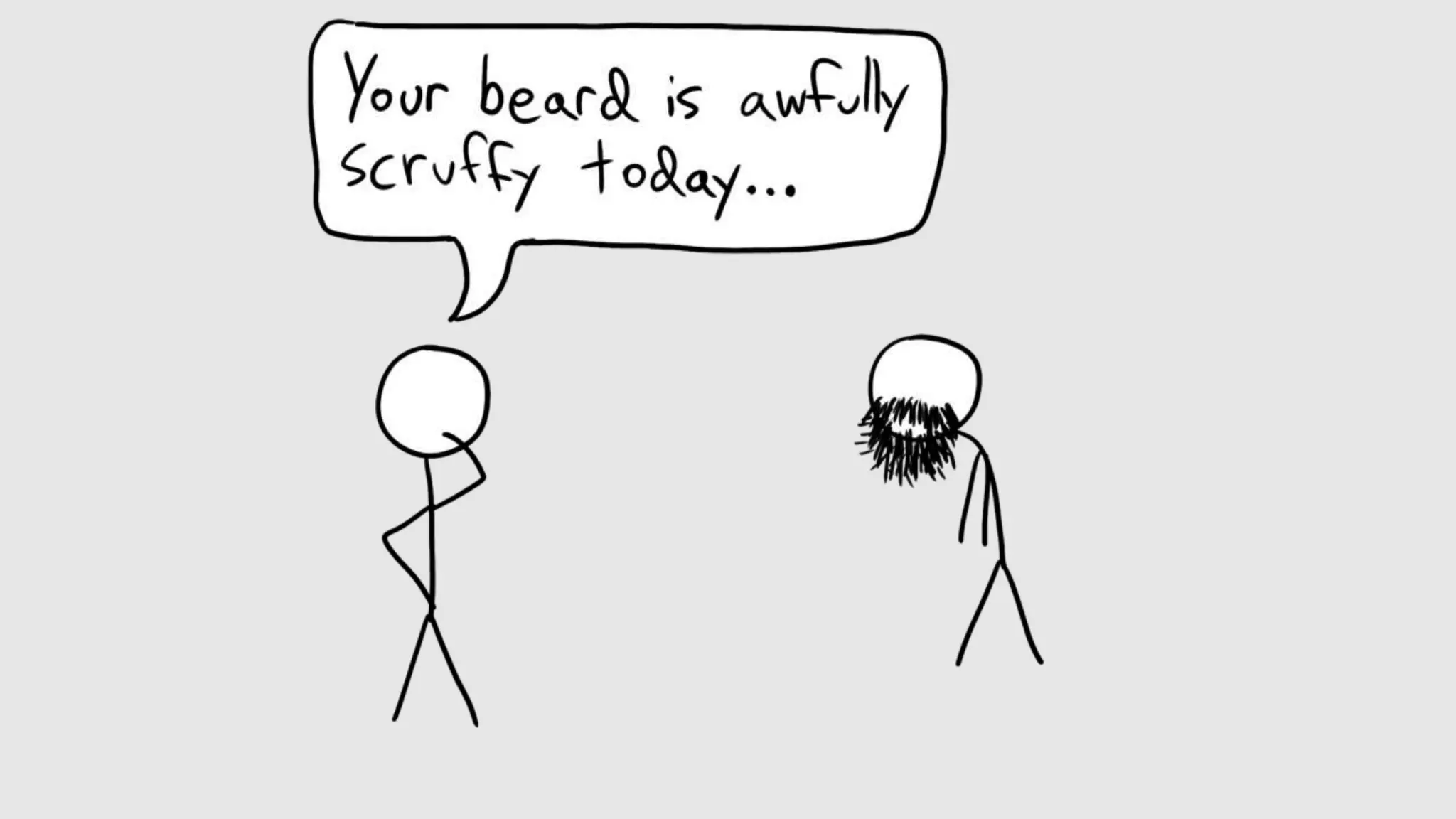
Why we want it
Acknowledgement, belonging
What it’s good for
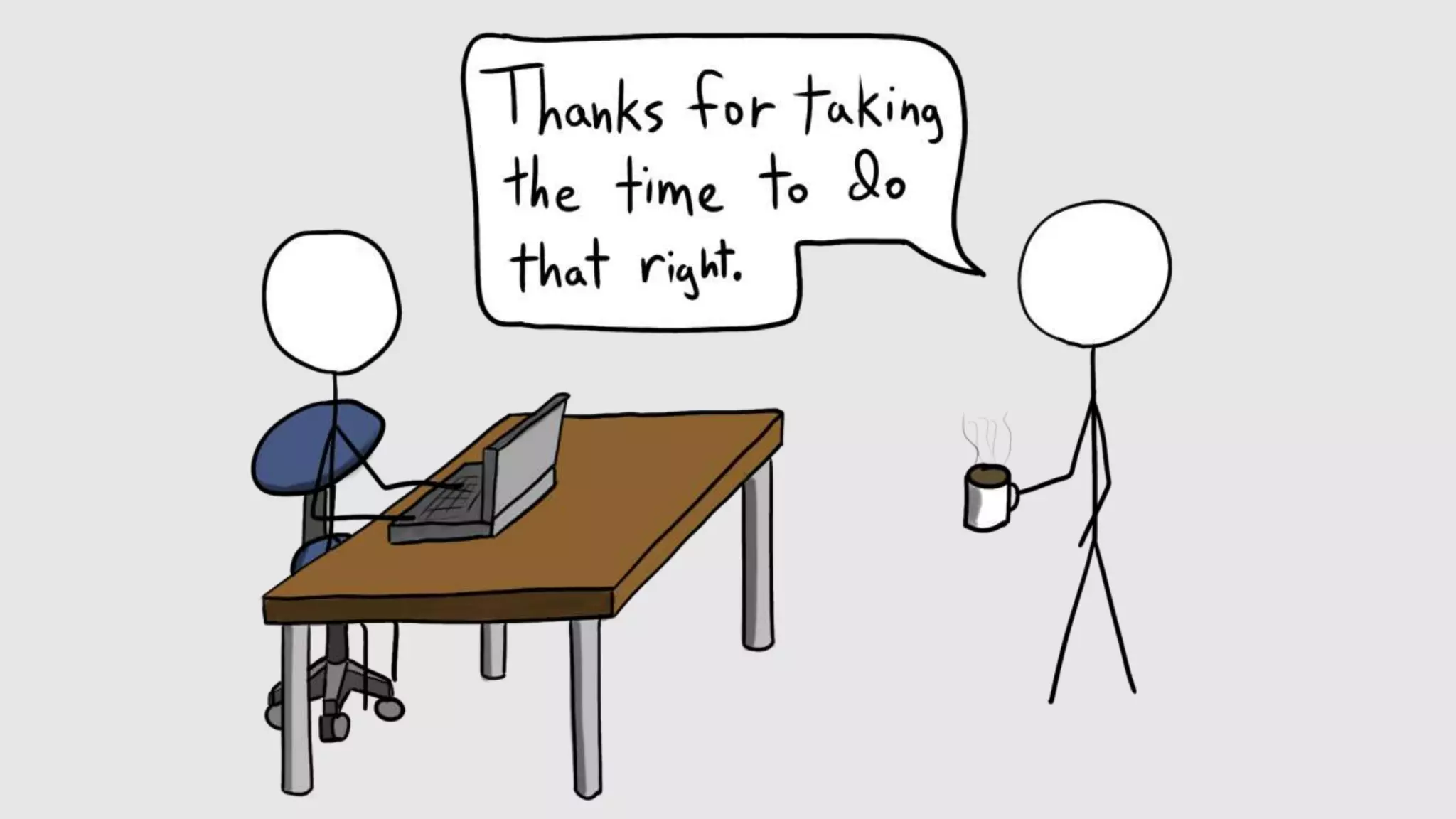
To acknowledge, connect, motivate,
thank
Pitfalls
Not meeting the three criteria
• Specific
• Authentic
• In a form the receiver values & understands
EXAMPLES
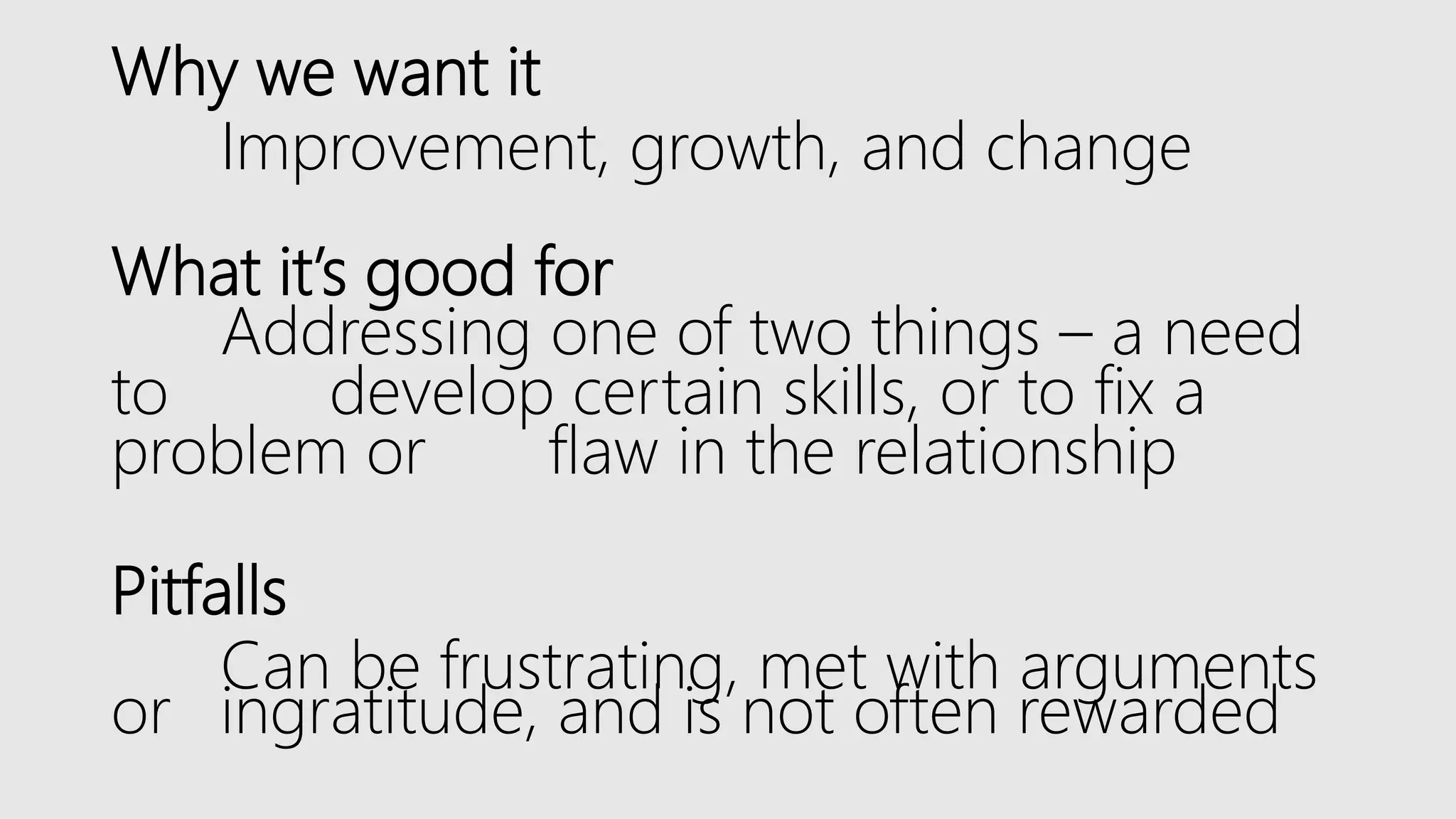
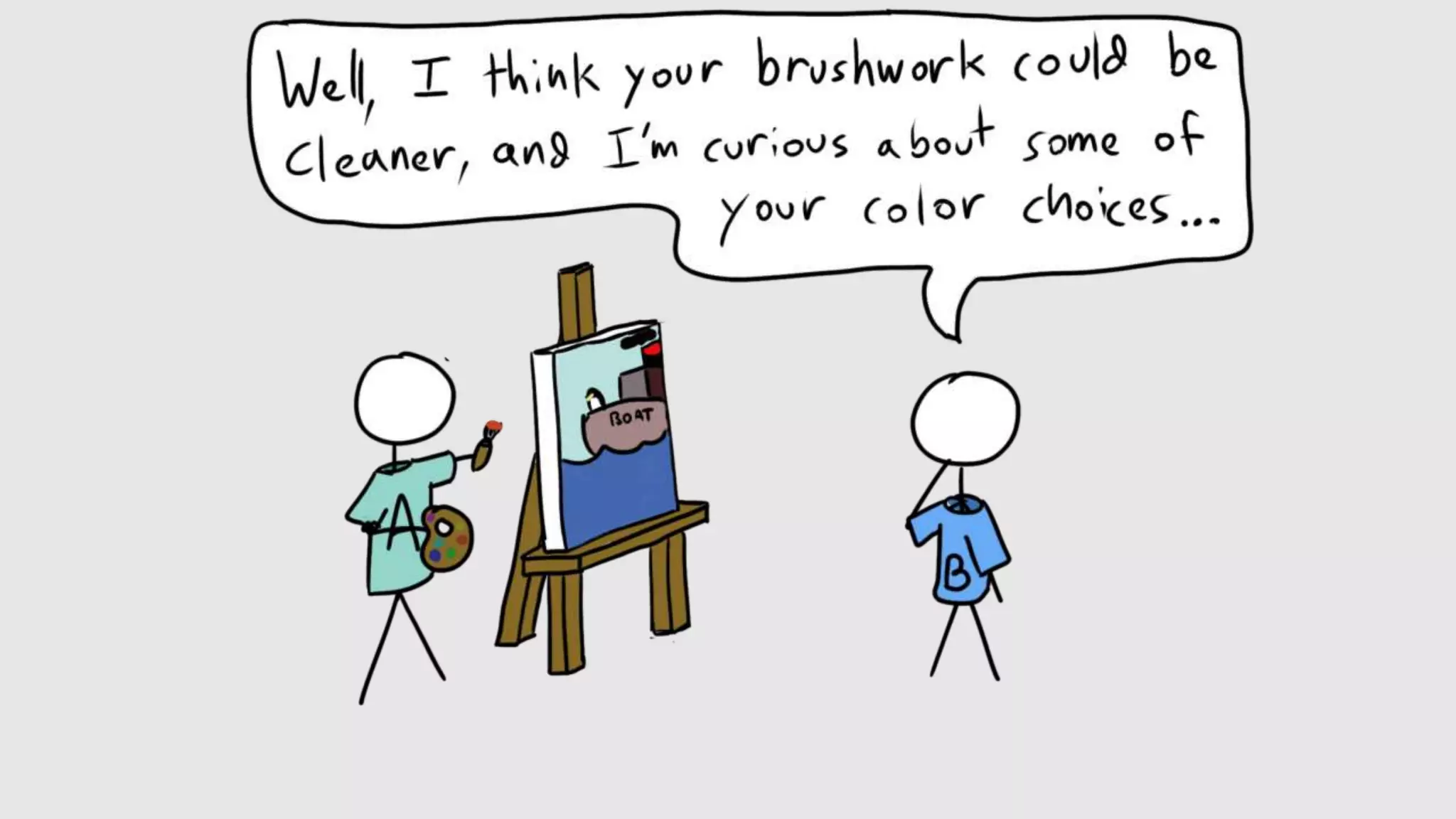
Why we want it
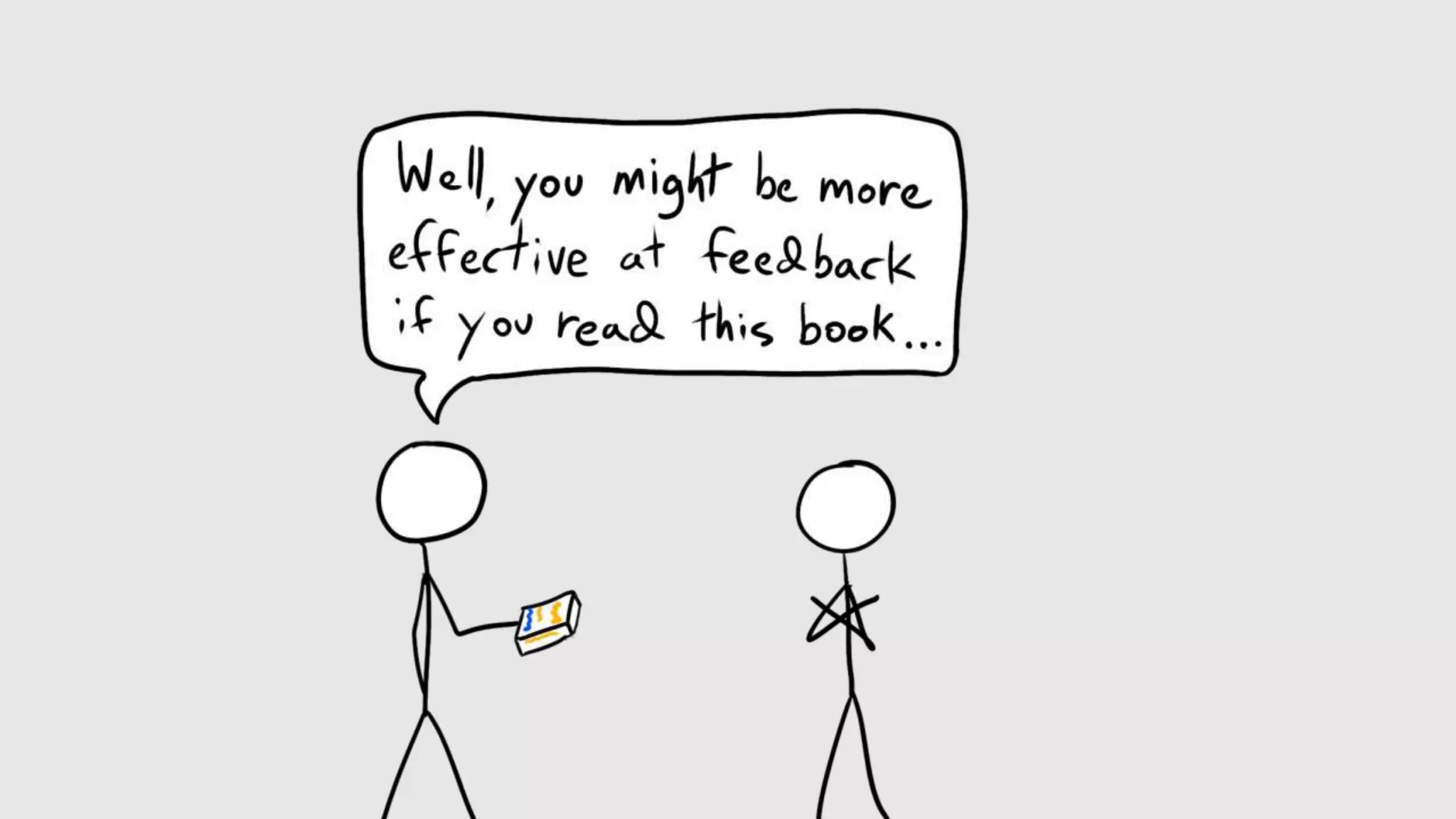
Improvement, growth, and change
What it’s good for
Addressing one of two things – a need
to develop certain skills, or to fix a
problem or flaw in the relationship
Pitfalls
Can be frustrating, met with arguments
or ingratitude, and is not often rewarded
EXAMPLES
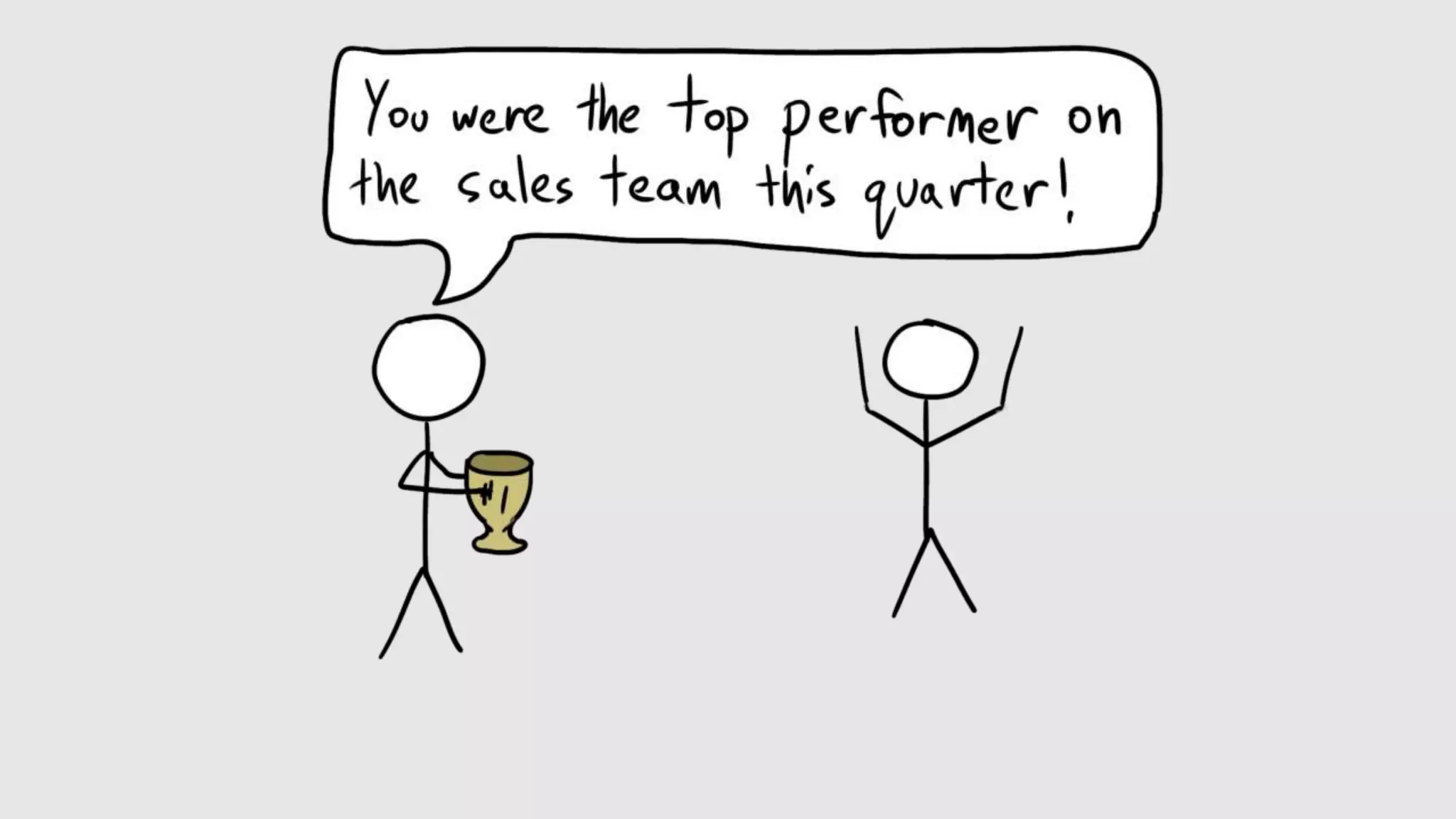
Why we want it
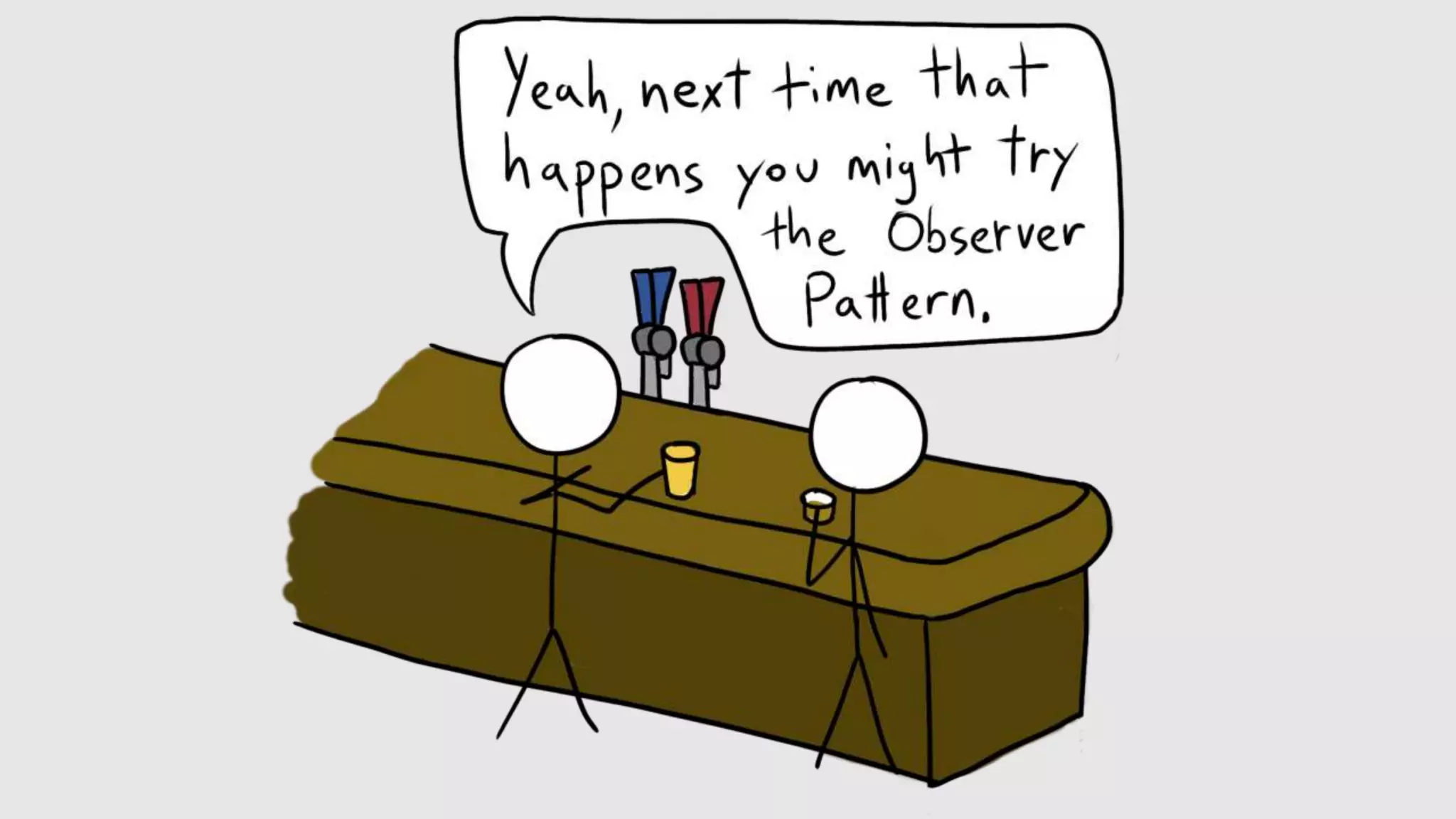
Planning, knowing where we stand
What it’s good for
To quantify, clarify, and inform
Pitfalls
Often loud, sometimes hurtful
The Good
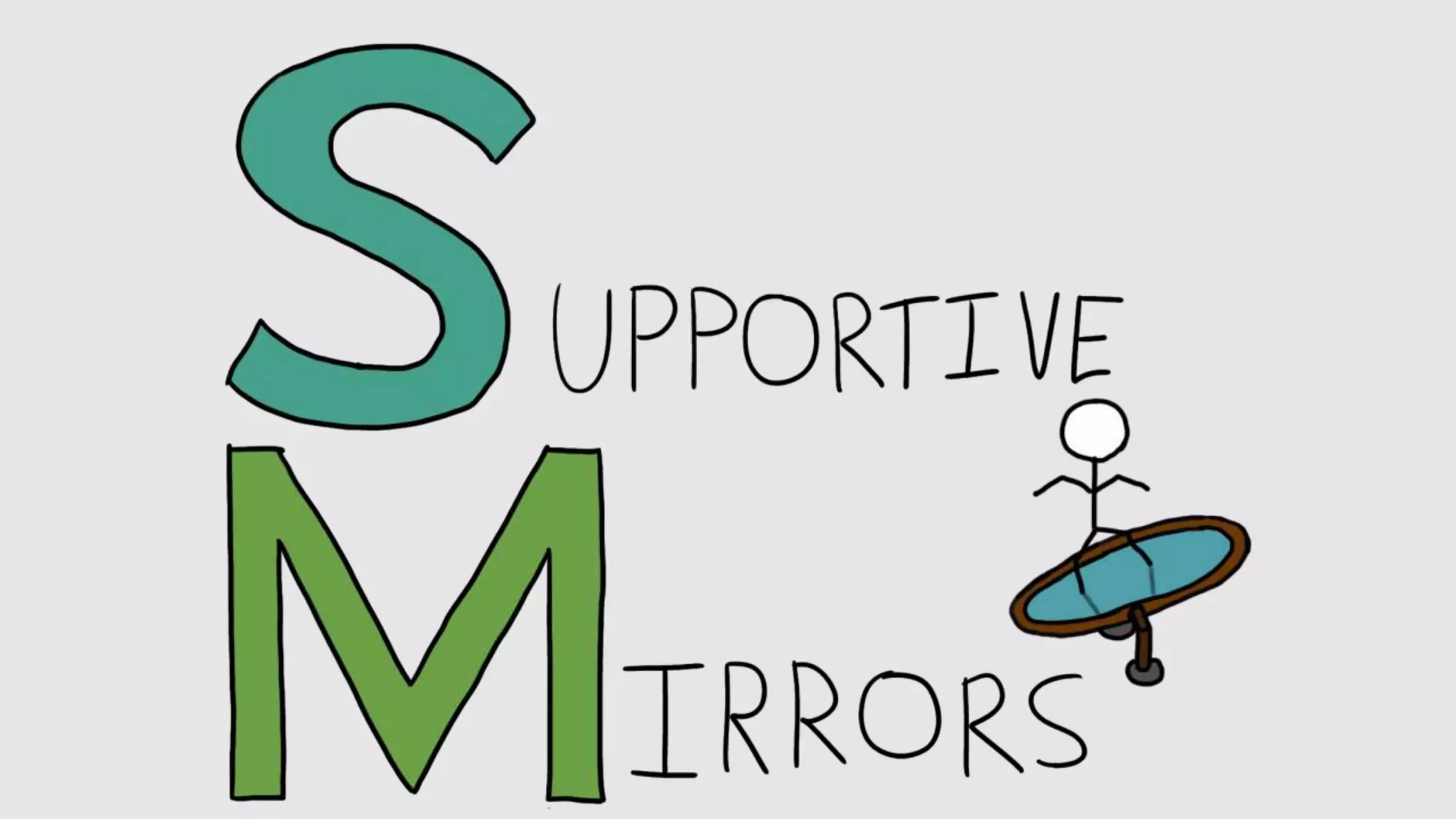
Emotionally supportive
Strengthens the relationship
Reinforces self-image
The Bad
Reinforces self-image
Ignores potential issues
Skips teaching moments
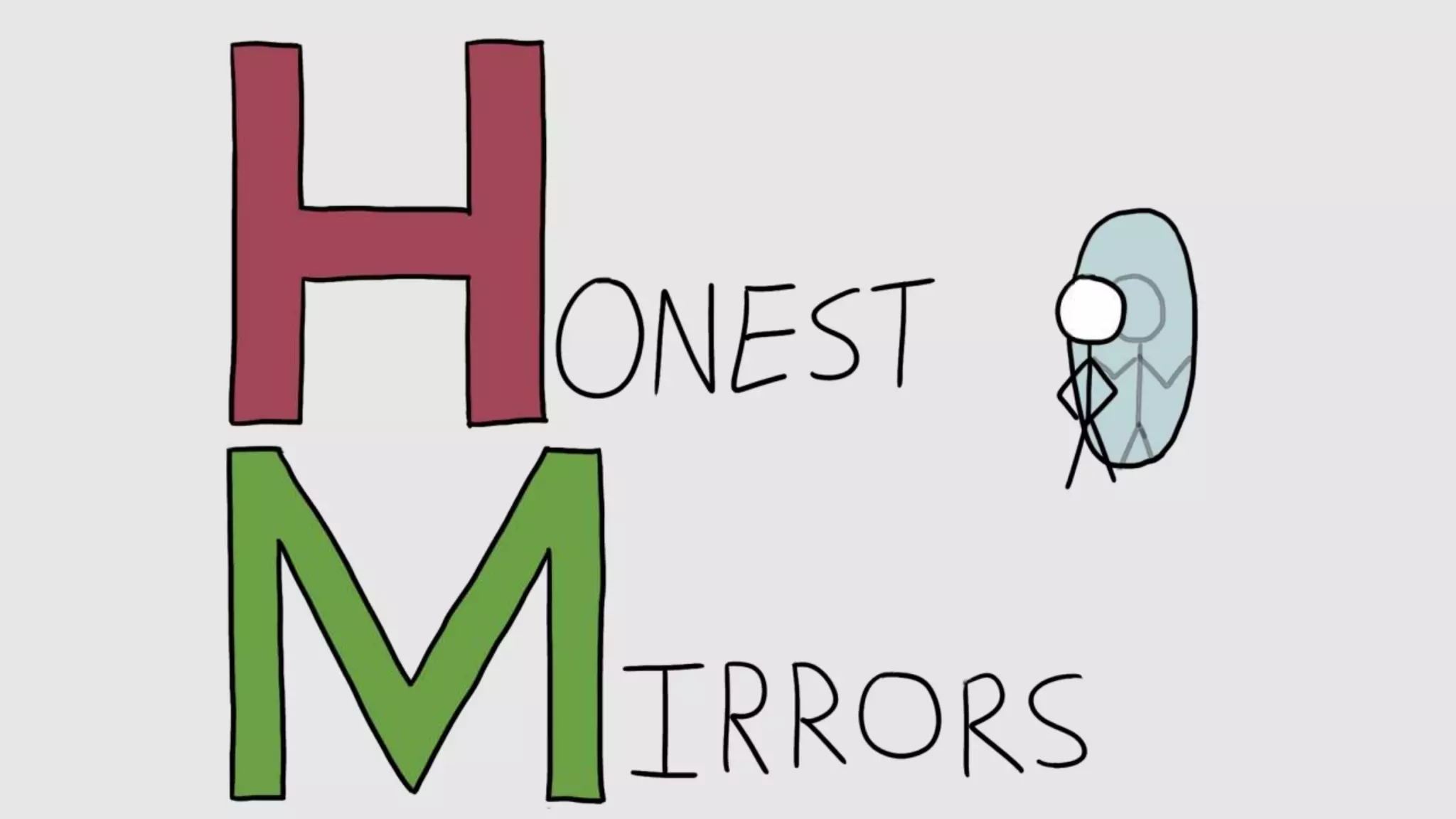
The Good
Grows the relationship
Calls out potential issues
Uses teaching moments
The Bad
Not always welcome
Difficult to determine appropriateness
Requires thoughtfulness
EXERCISE 1
Partner
Whomever you’re sitting nearest to
Goals
Try out the feedback types
Experience each side of the mirror types
Time
Build: 15 minutes
Feedback: 15 minutes
“WHAT DID YOU MEAN BY THAT?”
… REPEATEDLY
“COMING FROM” EXAMPLE
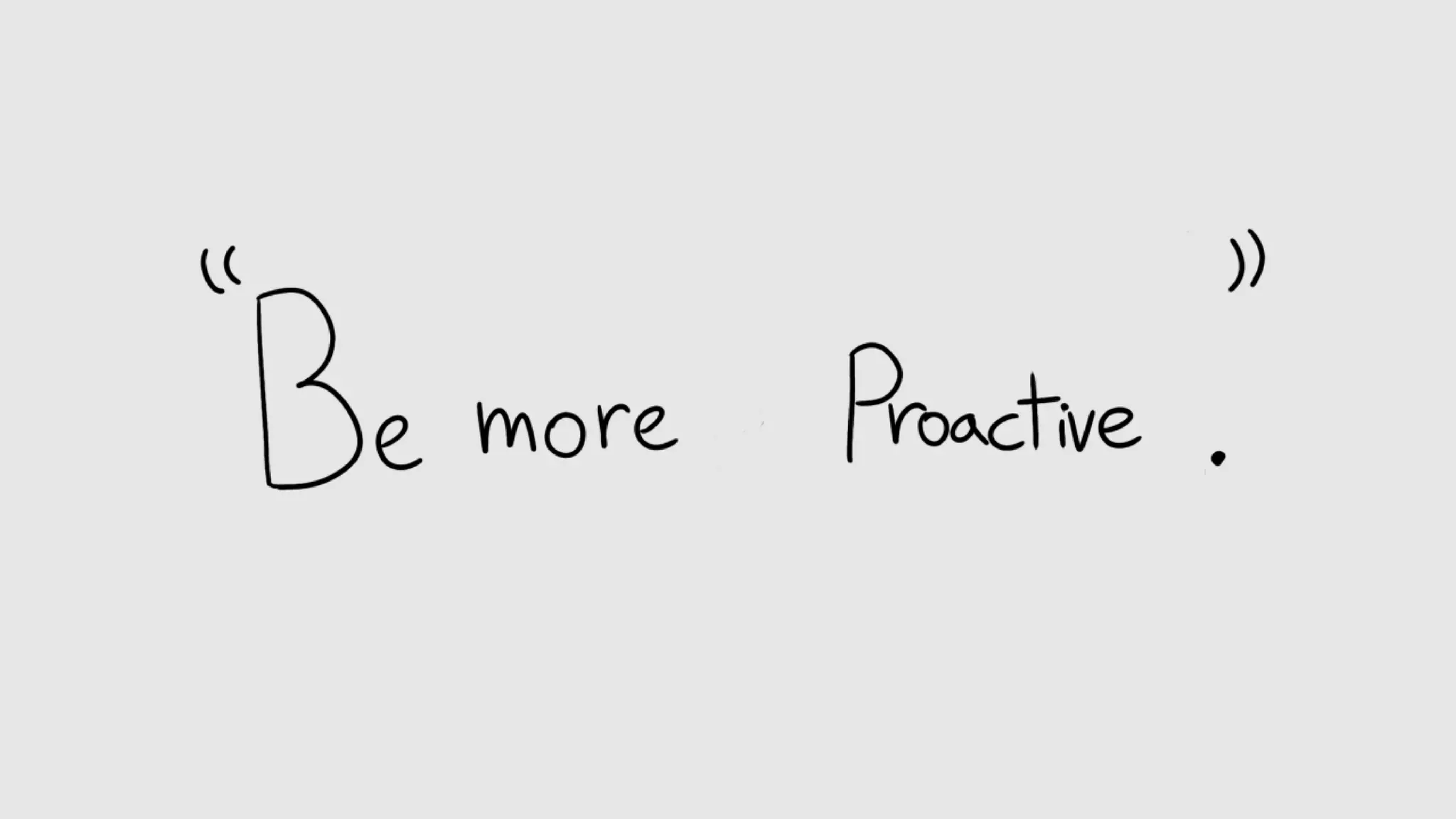
“Be more assertive.”
“You were too laid back.”
“Well, you didn’t…”
CLARIFY THE ADVICE
If you wanted to follow the advice, could
you do it?
CLARIFY THE CONSEQUENCES AND
EXPECTATIONS
What will happen immediately?
What are you expected to do?
What will happen if you don’t do that?
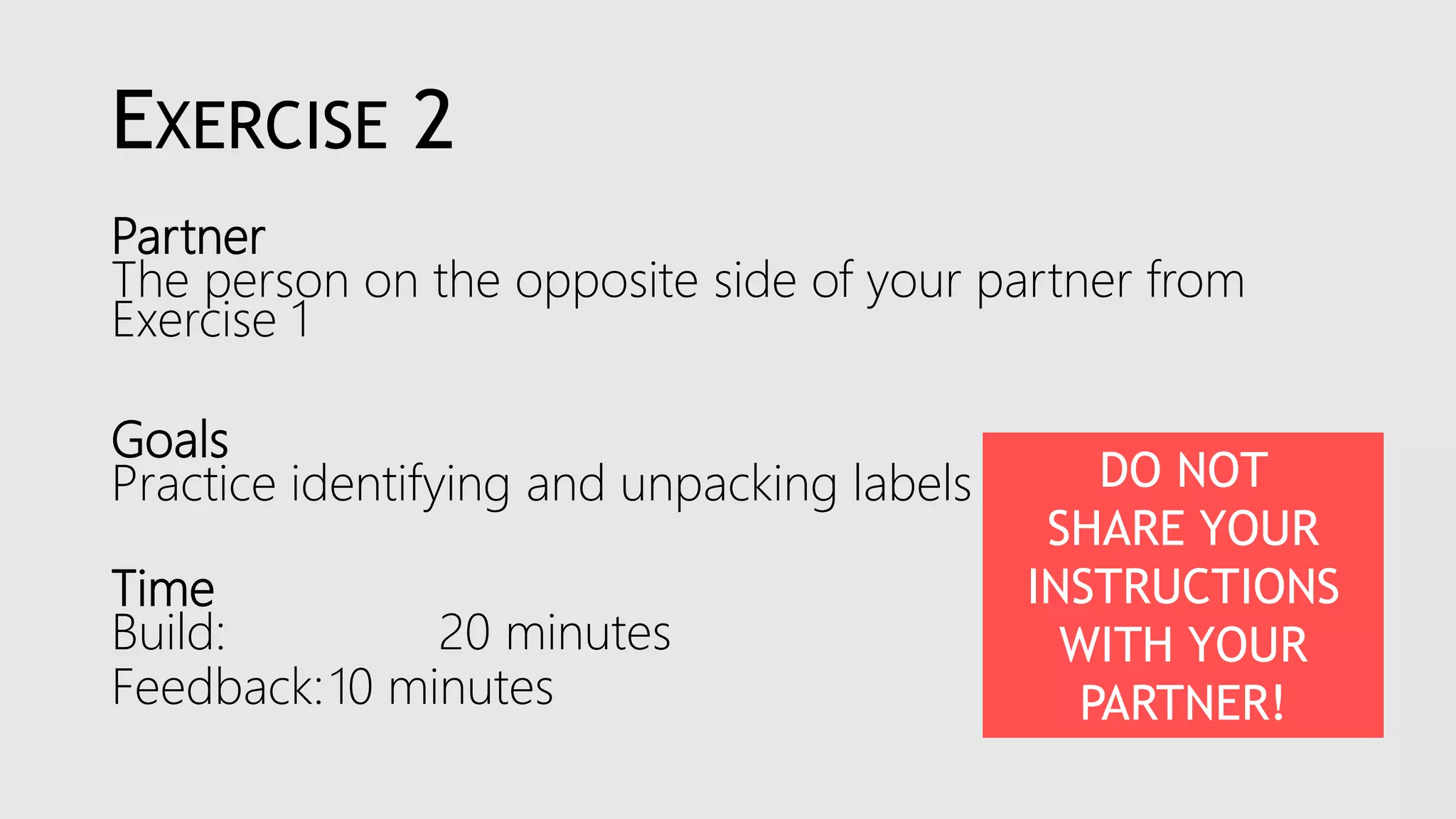
EXERCISE 2
Partner
The person on the opposite side of your partner from
Exercise 1
Goals
Practice identifying and unpacking labels
Time
Build: 20 minutes
Feedback:10 minutes
DO NOT
SHARE YOUR
INSTRUCTIONS
WITH YOUR
PARTNER!
SOME FEEDBACK IS EASY
AND THEN SOME FEEDBACK IS NOT
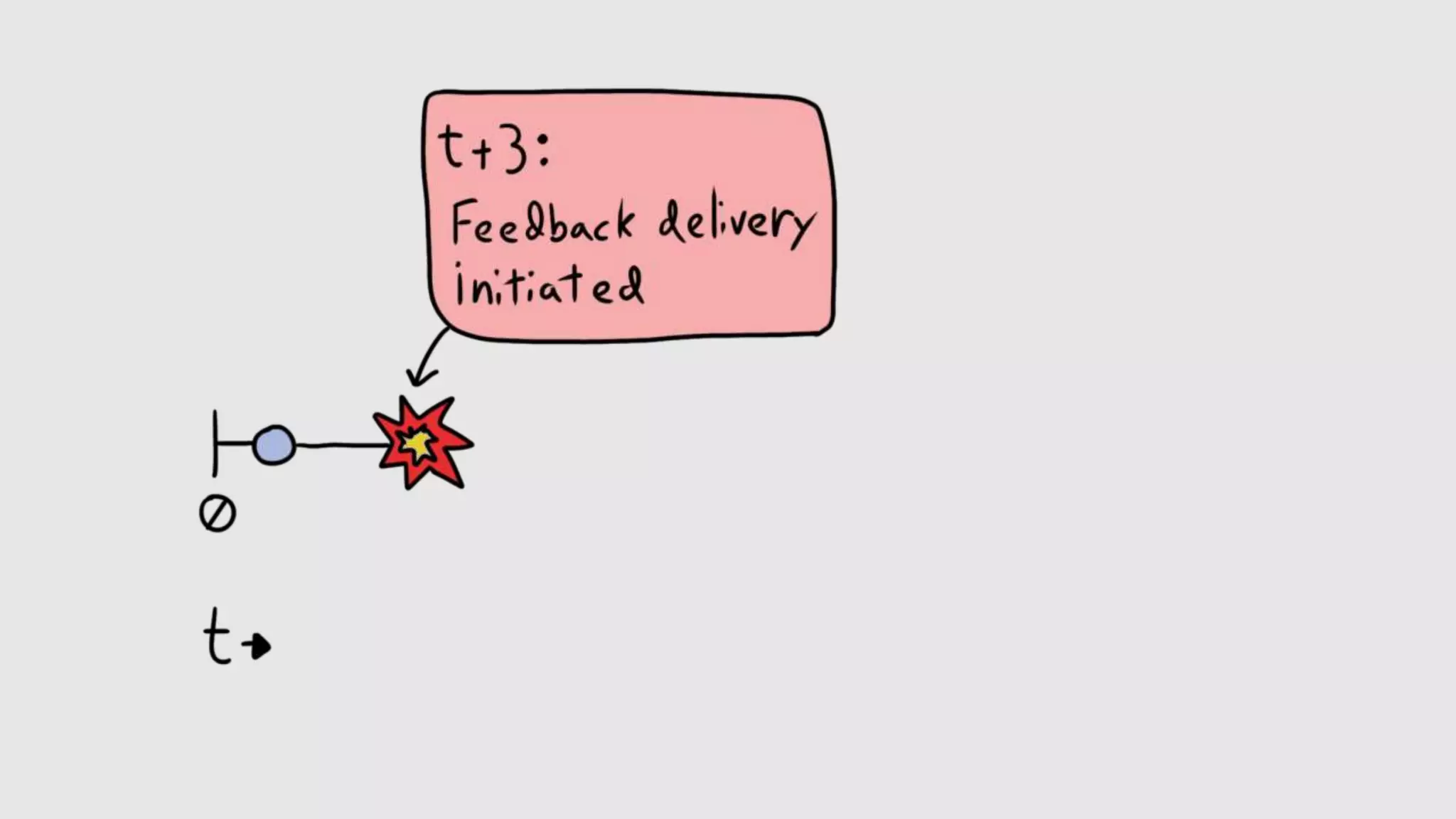
CRITICAL FEEDBACK TRIGGERS OUR MENTAL
DEFENSE SYSTEMS
Truth Triggers
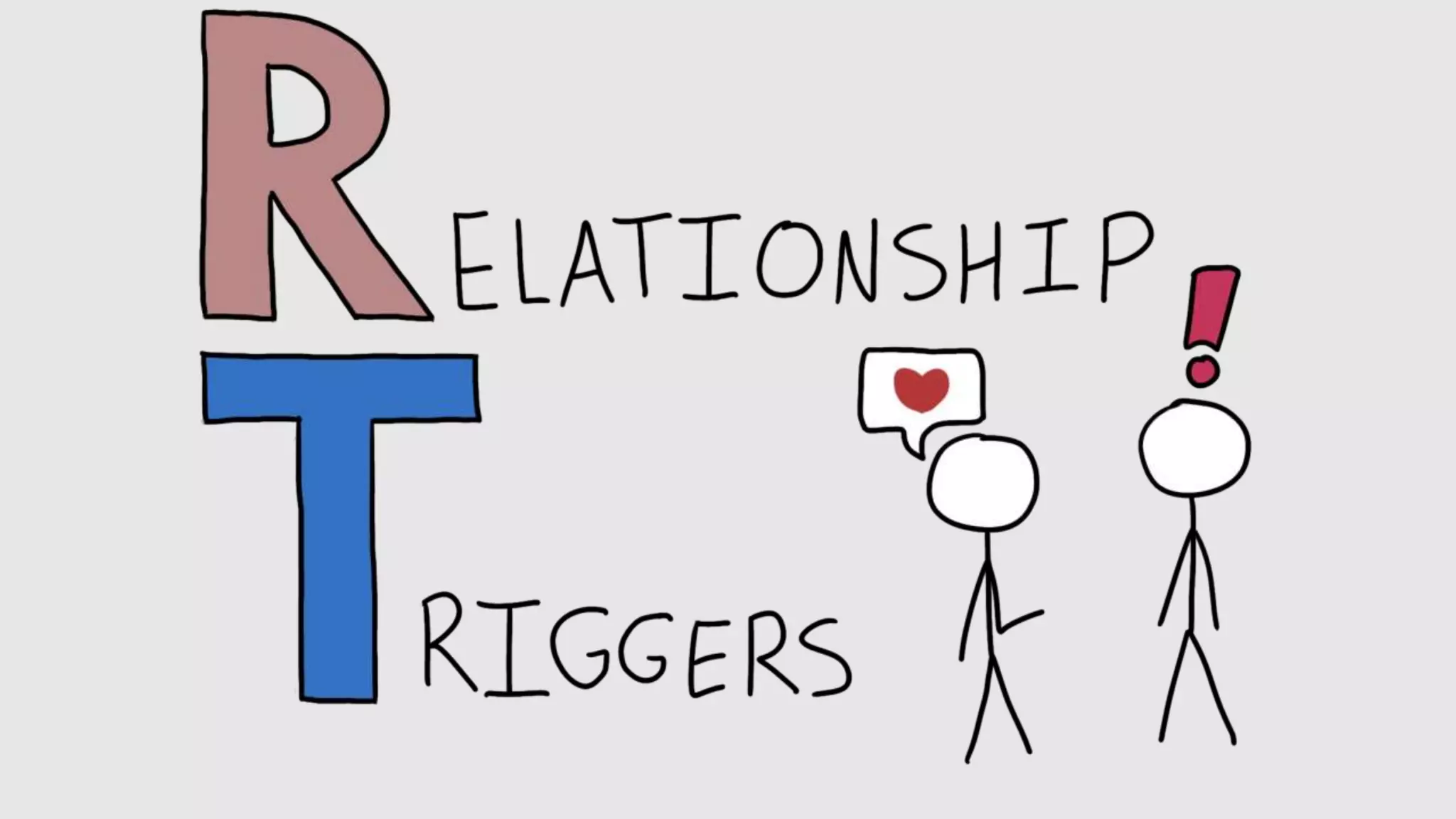
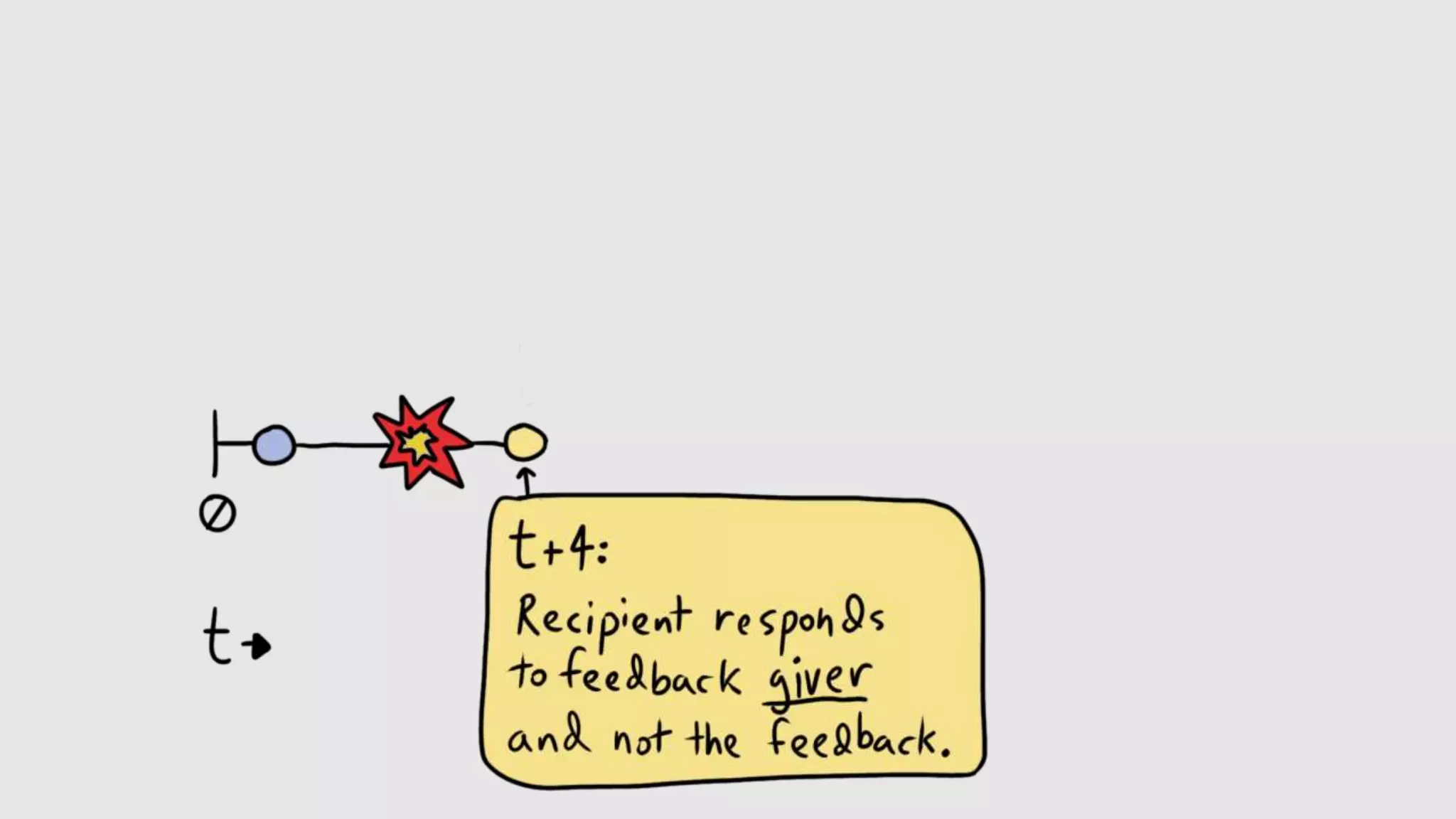
Relationship Triggers
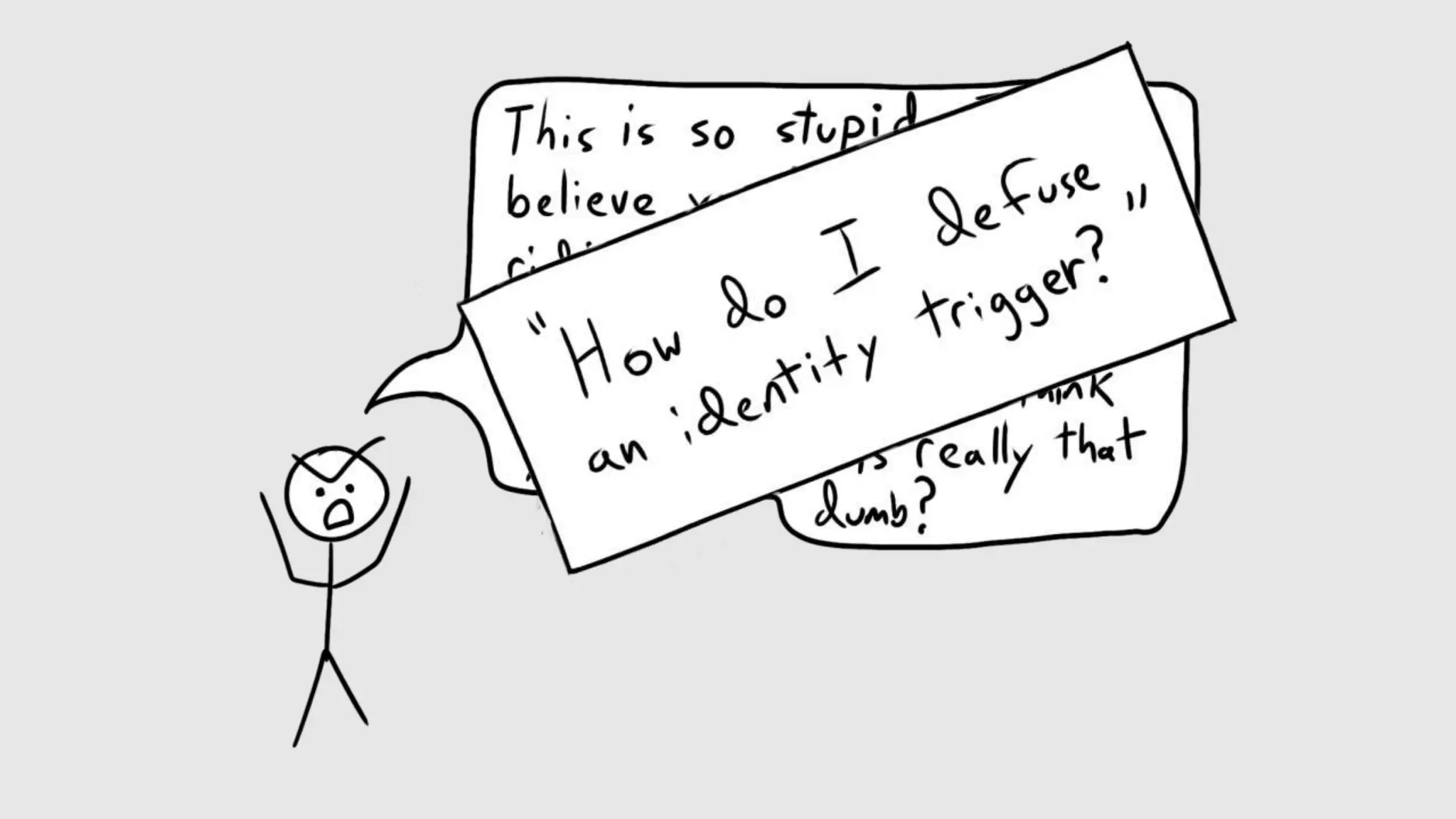
Identity Triggers
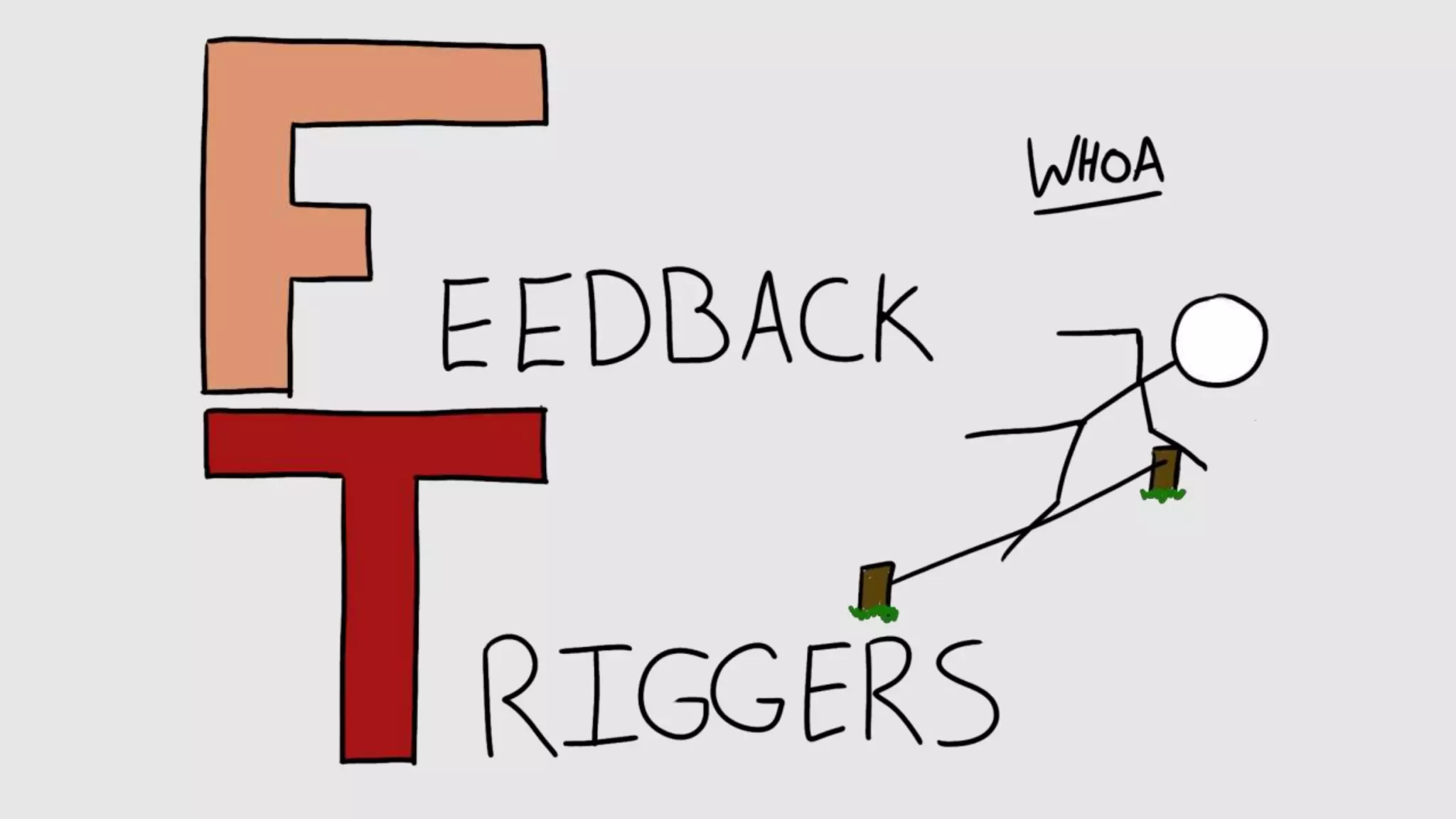
Triggers
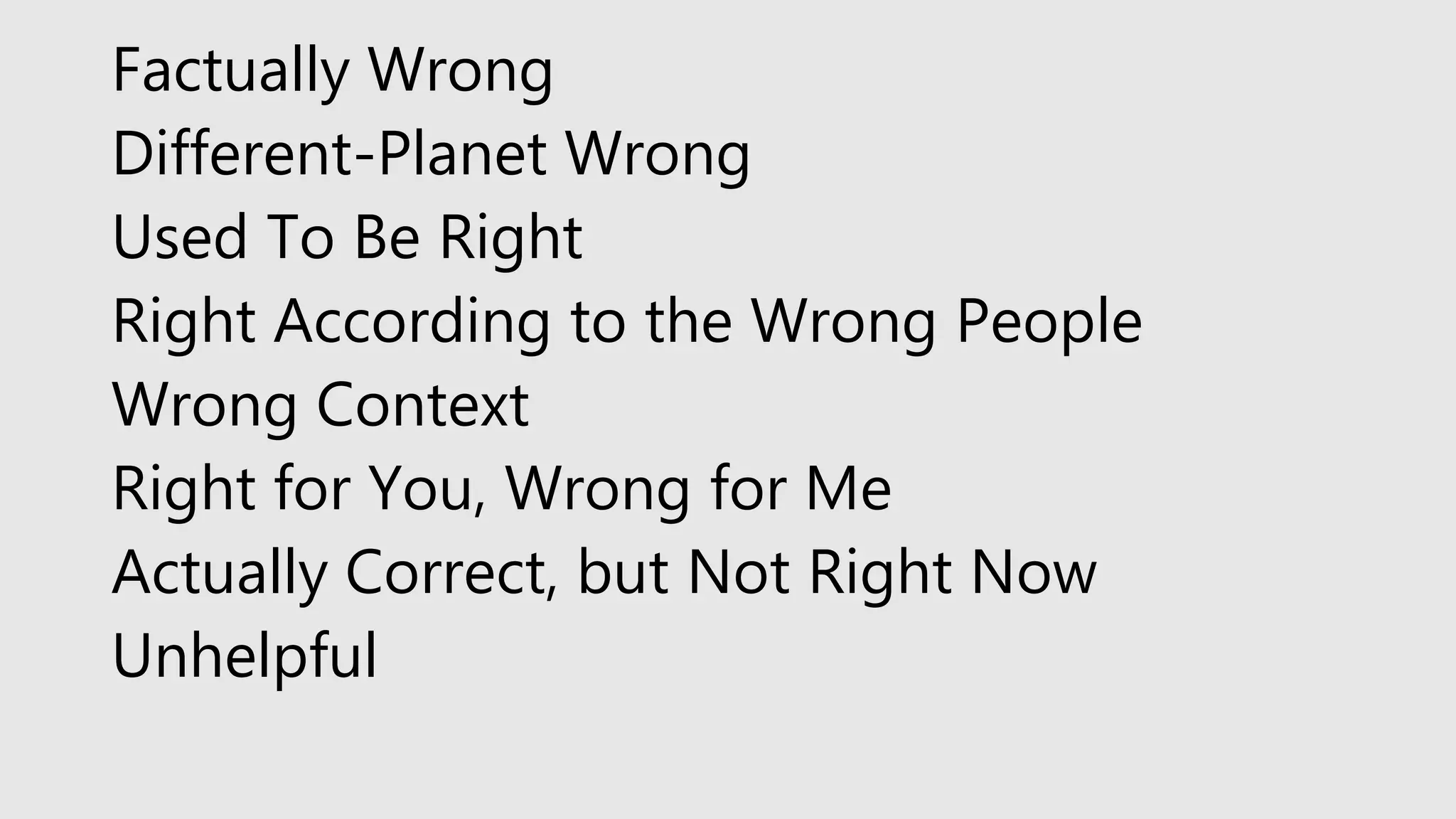
Factually Wrong
Different-Planet Wrong
Used To Be Right
Right According to the Wrong People
Wrong Context
Right for You, Wrong for Me
Actually Correct, but Not Right Now
Unhelpful
“WHAT’S DIFFERENT?”
DIFFERENT DATA?
You have biases!
Yes, you do.
No really, you do.
93% of American drivers think they are
better than average
90% of managers think they’re in the top
10%
Svenson, 1981 and Myers, 2005
DIFFERENT INTERPRETATION?
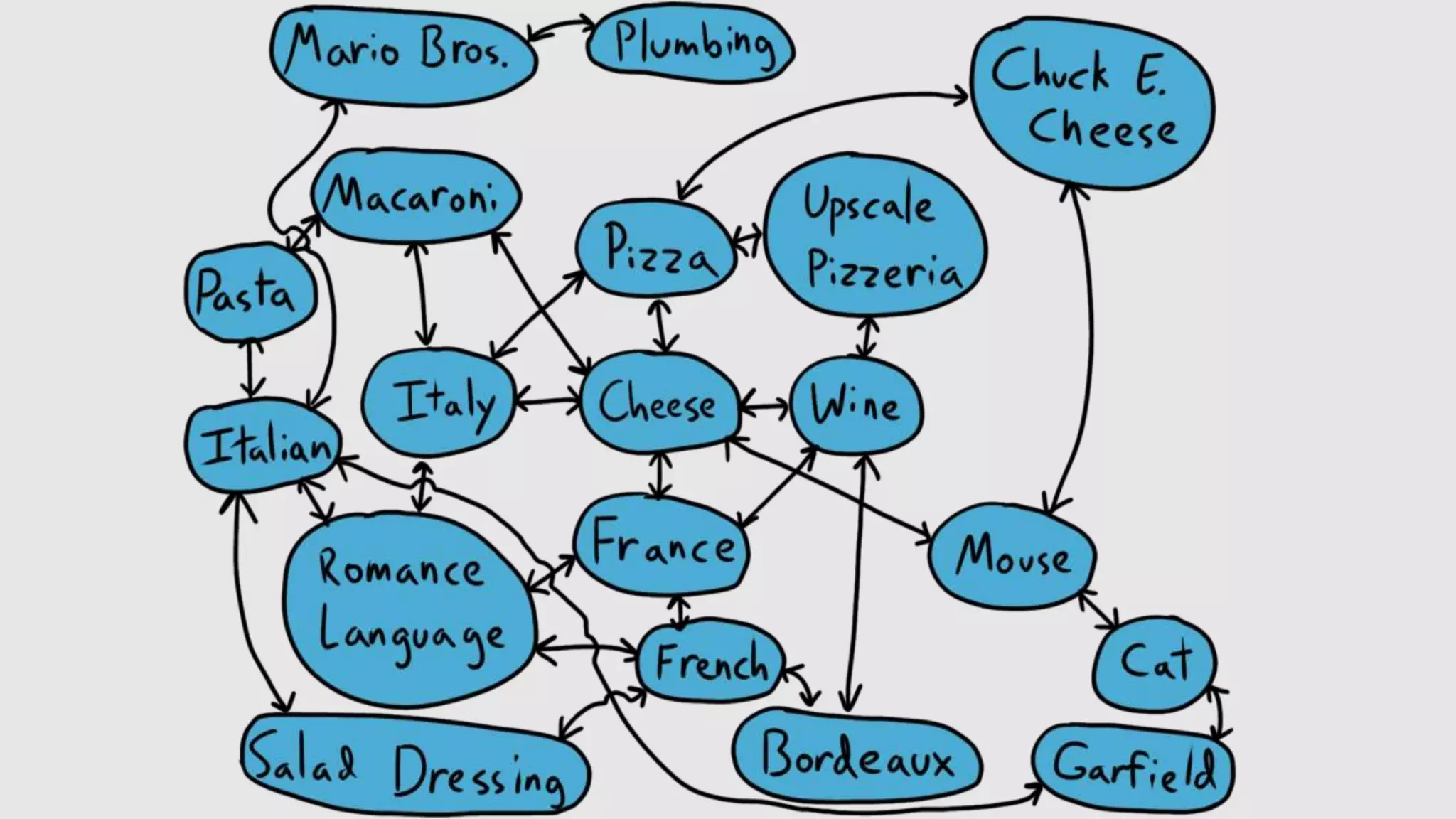
Clarify to the point of absurdity
Dig out implicit rules
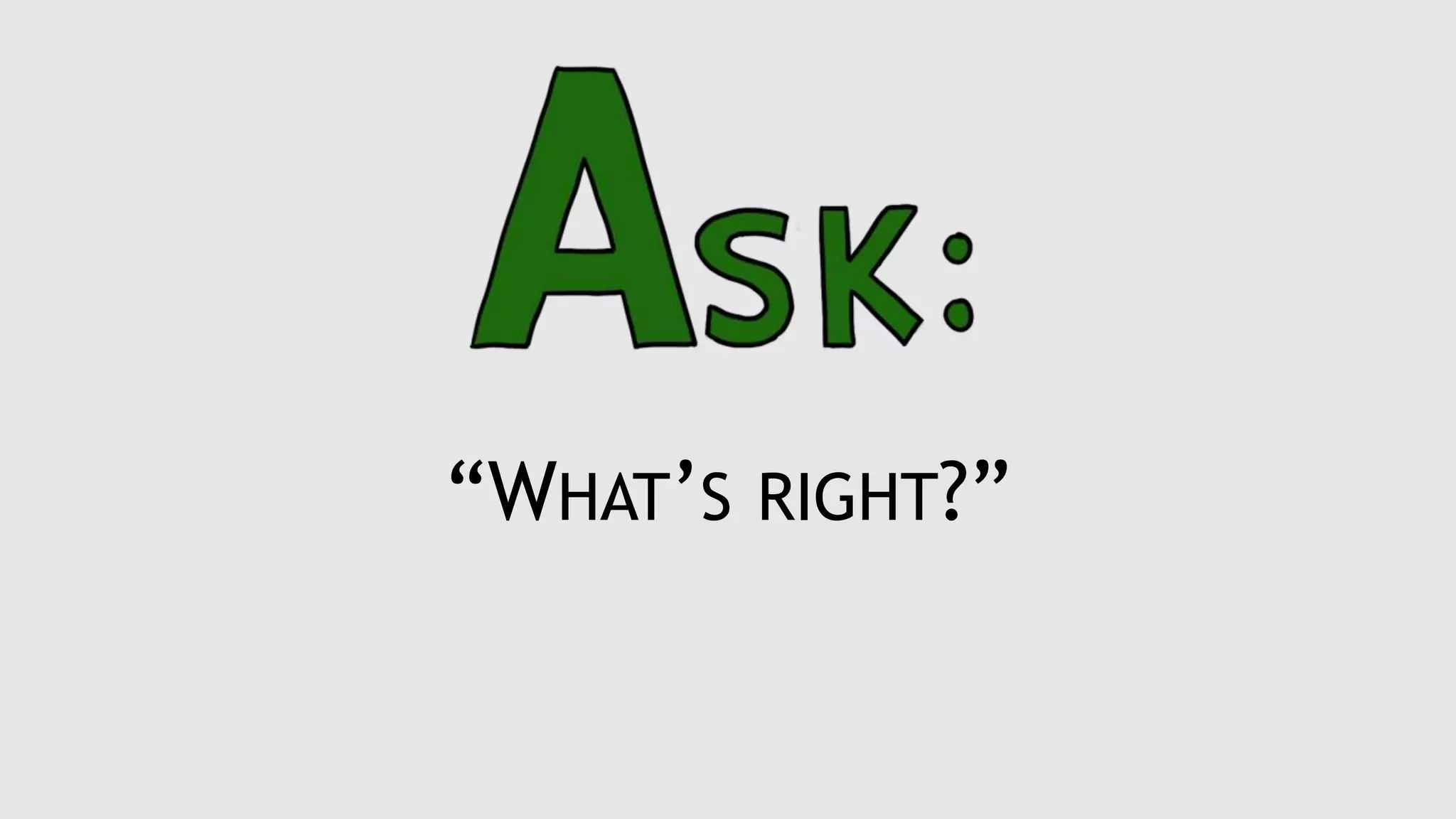
“WHAT’S RIGHT?”
What makes sense?
What’s worth trying?
How can you give them the benefit of the
doubt about their feedback?
EXERCISE 3
Partner
Someone you haven’t worked with yet
Goals
Experience truth triggers and solutions
Time
Build: 20 minutes
Feedback: 10 minutes
DO NOT
SHARE YOUR
INSTRUCTIONS
WITH YOUR
PARTNER!
FOR YOUR PLEASURE: A SHORT DRAMA
BOTH CONVERSATIONS ARE IMPORTANT
STAYING SILENT MAKES IT WORSE
2 RELATIONSHIP TRIGGER TYPES
WHAT WE THINK ABOUT THEM
What we think about their feedback skills
What we think about their credibility and
knowledge
What we think about how much we trust
them
HOW WE FEEL TREATED BY THEM
Do they give us appreciation?
Do they give us autonomy?
Do they give us acceptance?
BE AWARE OF SWITCHTRACKING
TRY TO BE OBJECTIVE
They may suck at feedback …
Is their feedback still right?
They may be inexperienced…
Is their inexperience valuable here?
We may not trust them…
Assume they mean well. Is the feedback
still valid?
USE SYSTEMS THINKING
“WHO IS THE PROBLEM?”
“WHO NEEDS TO CHANGE?”
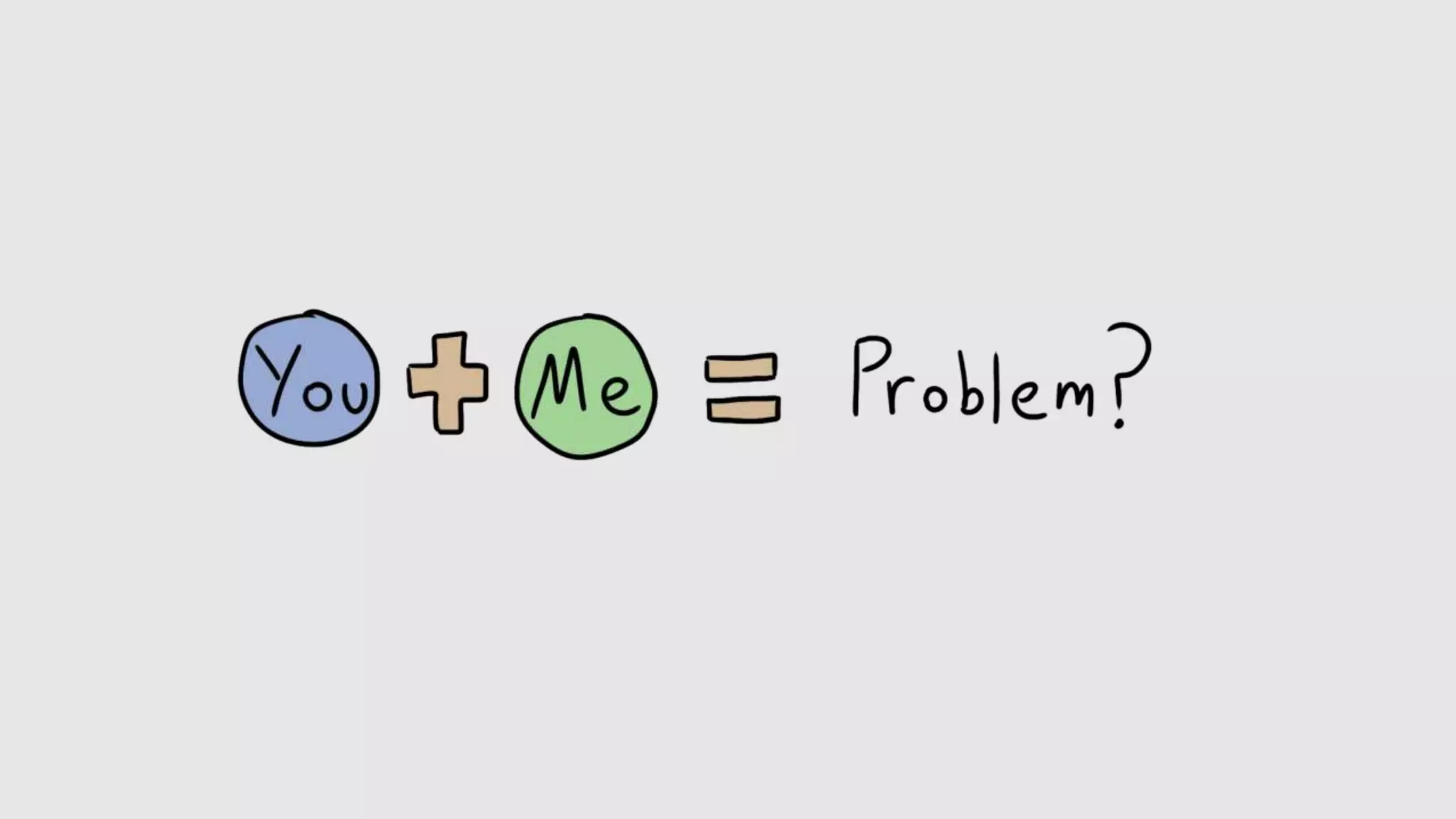
1 STEP BACK: YOU + ME INTERSECTIONS
“What is each of us contributing?”
“In what ways does the feedback reflect
differences in preferences, assumptions,
styles, or implicit rules between us?”
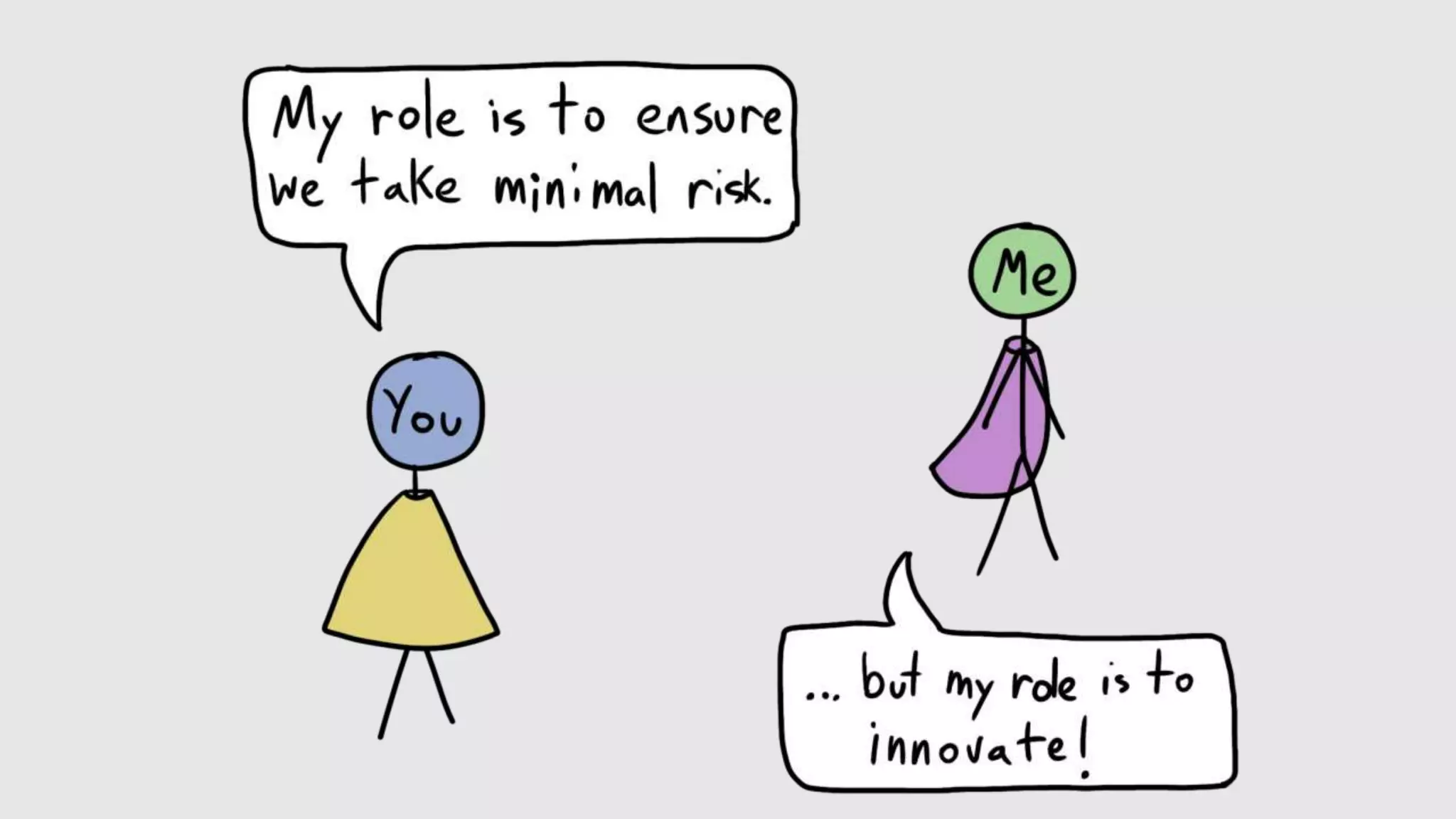
2 STEPS BACK: ROLE CLASHES
ROLE CONFUSION
ROLE CLARITY
“DO OUR ROLES MAKE IT MORE OR LESS
LIKELY THAT WE MIGHT HAVE CONFLICT WITH
EACH OTHER?”
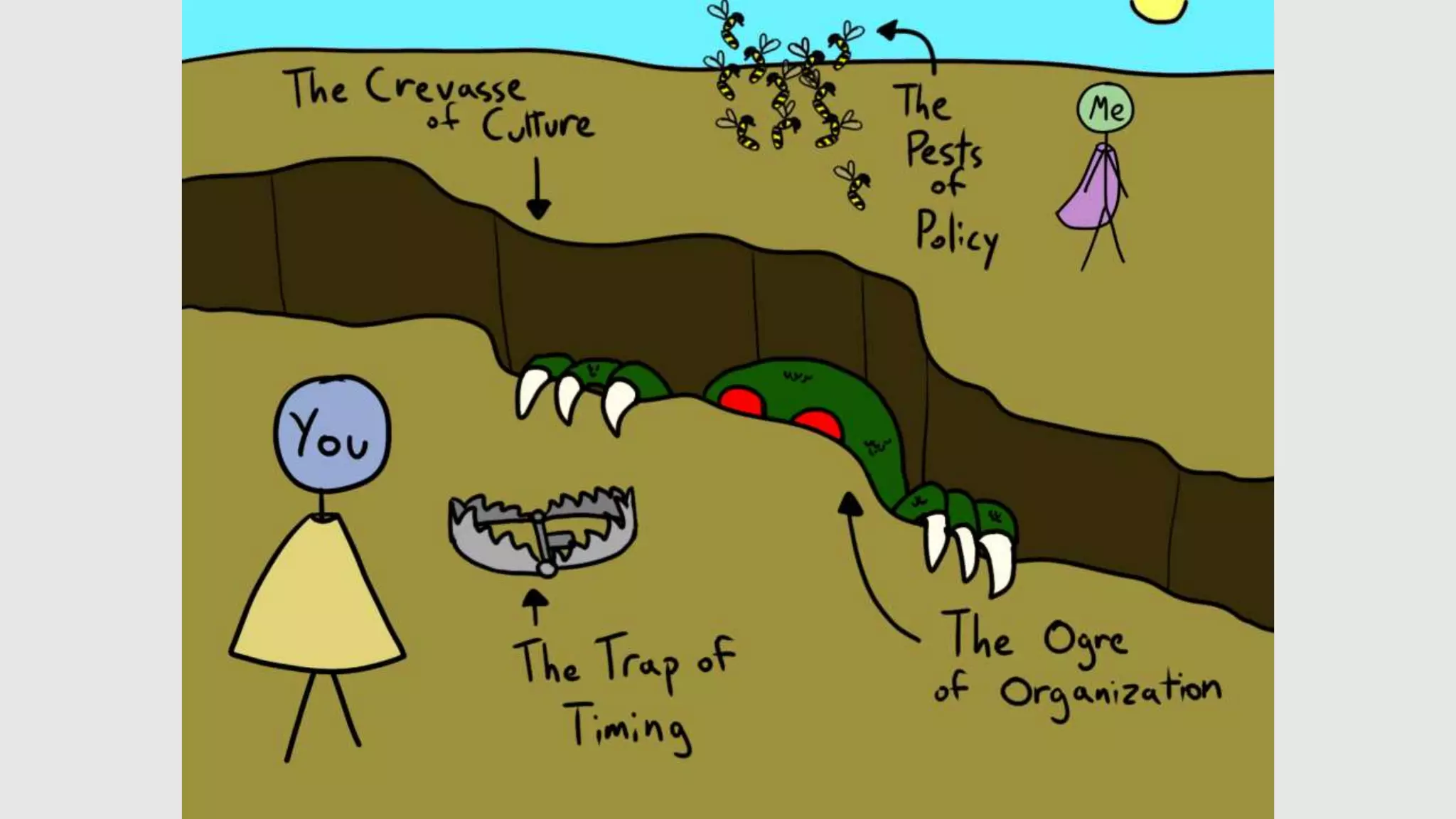
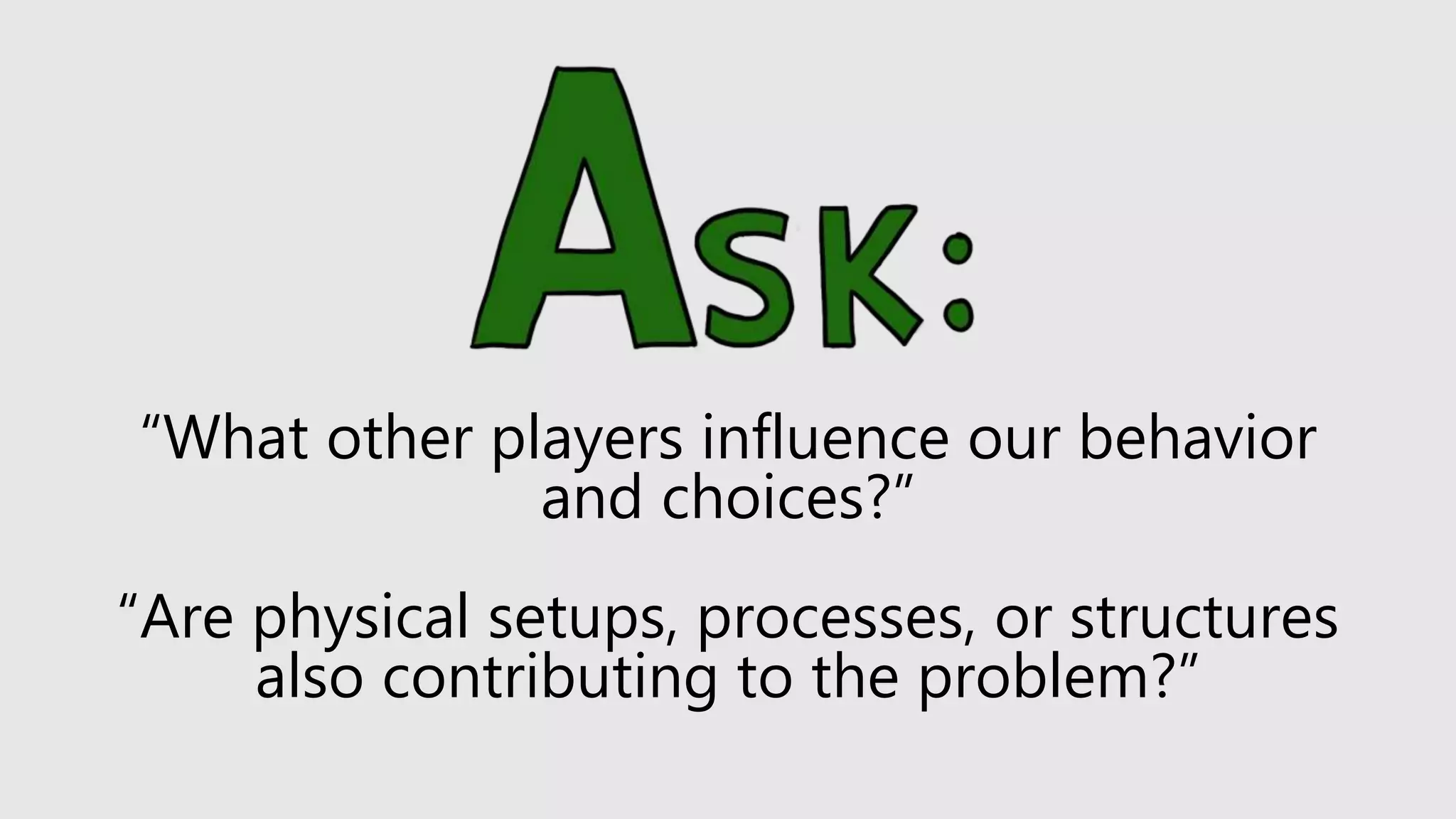
3 STEPS BACK: THE BIG PICTURE
“What other players influence our behavior
and choices?”
“Are physical setups, processes, or structures
also contributing to the problem?”
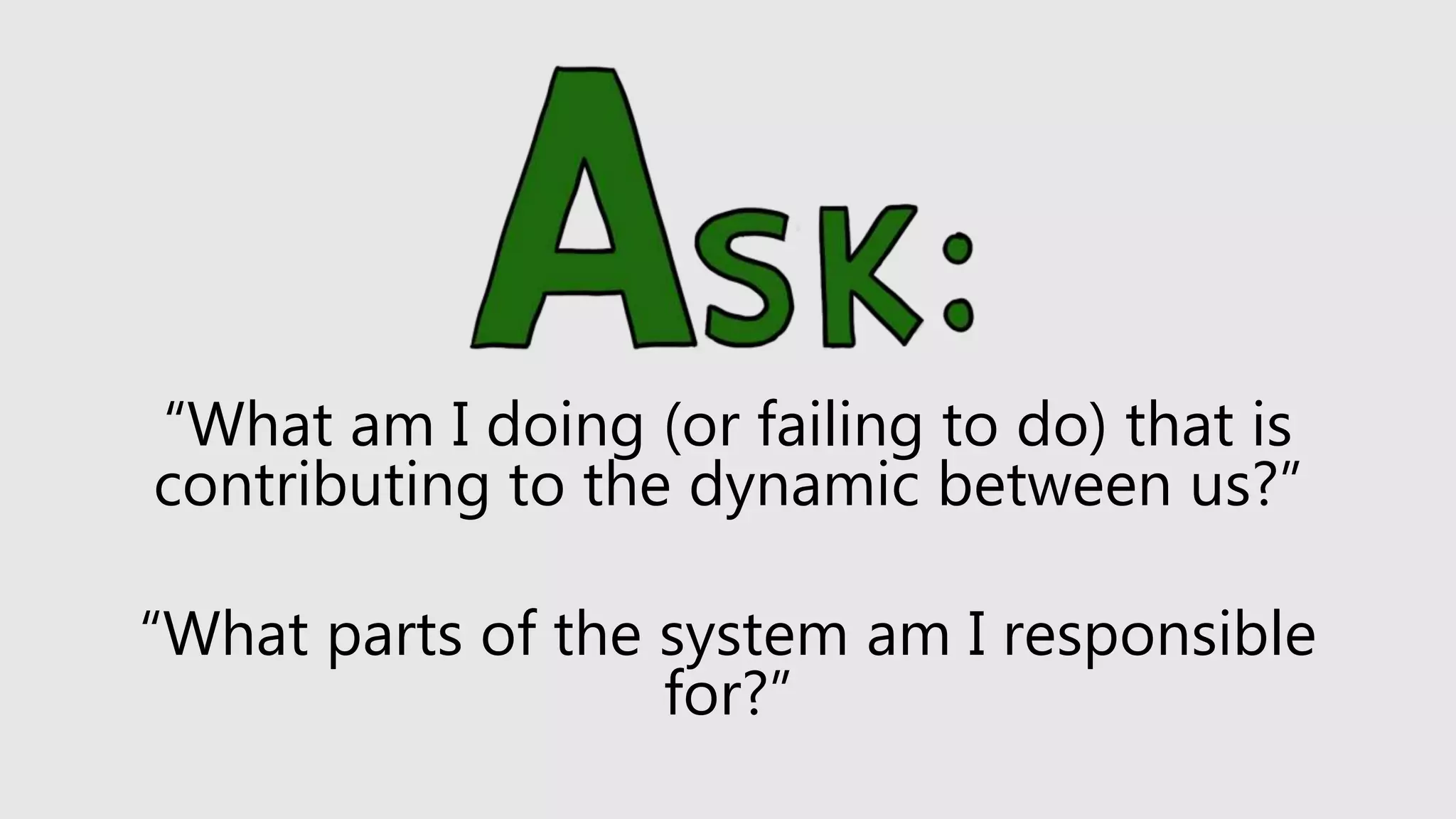
START WITH YOU
“What am I doing (or failing to do) that is
contributing to the dynamic between us?”
“What parts of the system am I responsible
for?”
DON’T SWITCHTRACK BY FOCUSING ON
WHAT ISN’T YOUR FAULT
AVOID SHIFTING AND ABSORBING
LOOK FOR “ME + EVERYBODY”
INTERSECTIONS
IF YOU’RE THE COMMON FACTOR IN A BUNCH
OF PROBLEMS…
THEN GREAT!
EXERCISE 4
Partner
Someone you know well (if possible)
Goals
Experience relationship triggers and their
solutions
Time
Build: 22 minutes
Feedback: 8 minutes
DO NOT
SHARE YOUR
INSTRUCTIONS
WITH YOUR
PARTNER!
HOW YOUR FEELINGS MESS WITH
FEEDBACK
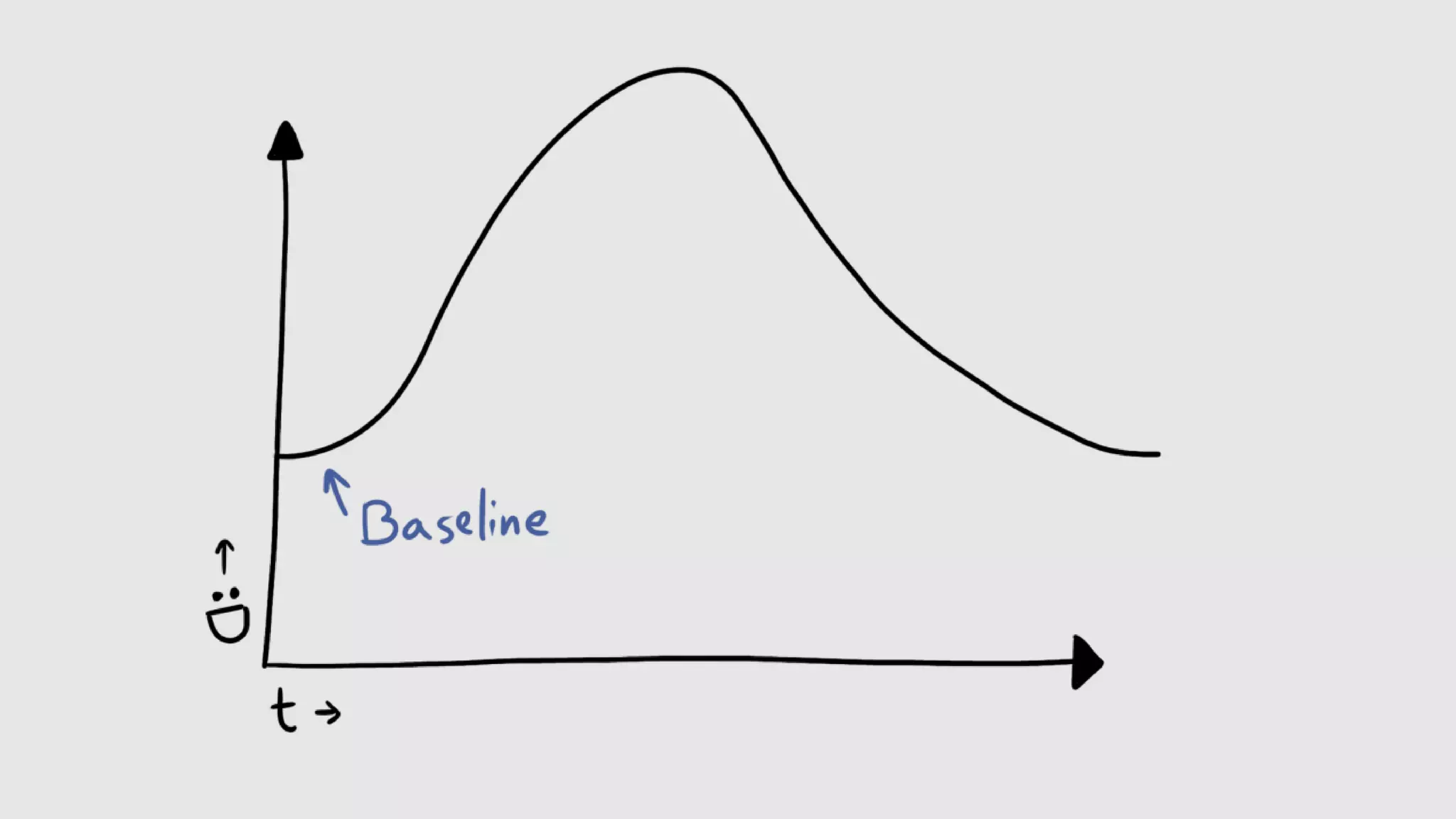
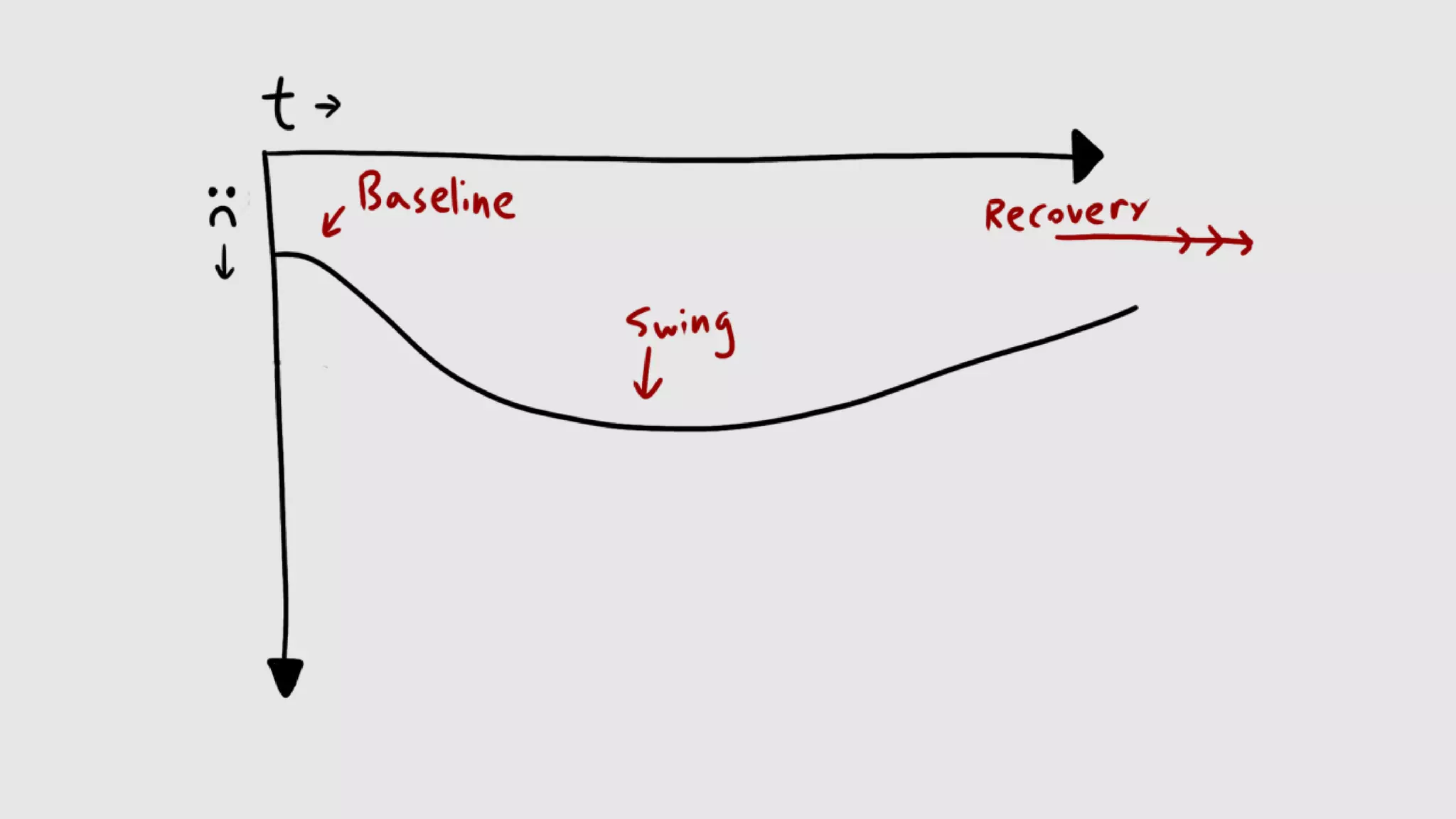
FOUR DISTORTIONS
Long Sustain of
Positive
Short Sustain of
Positive
Quick Recovery from
Negative
“I love feedback!” “No big deal either
way.”
Slow Recovery from
Negative
“I’m hopeful, but
fearful.”
“I hate feedback!”
“What do I feel?”
“What’s the story I’m telling myself?”
“What’s the actual feedback?”
FRAME THE FICTION
Restrict time, specificity, and people
Right-size the consequences
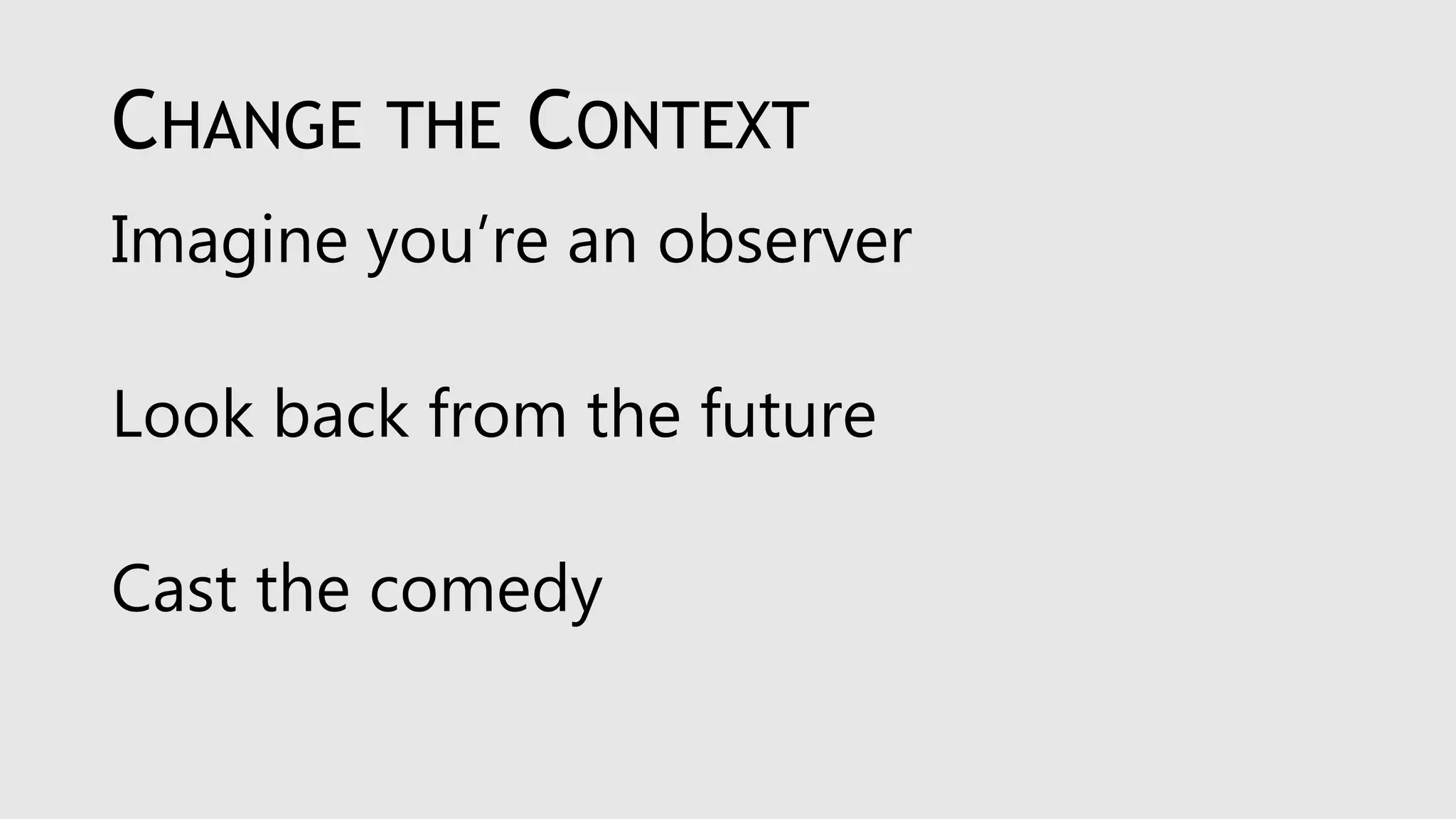
CHANGE THE CONTEXT
Imagine you’re an observer
Look back from the future
Cast the comedy
“CAN I CONTROL WHAT OTHERS THINK OF
ME?”
“IS MY SELF-STORY ROBUST OR BRITTLE?”
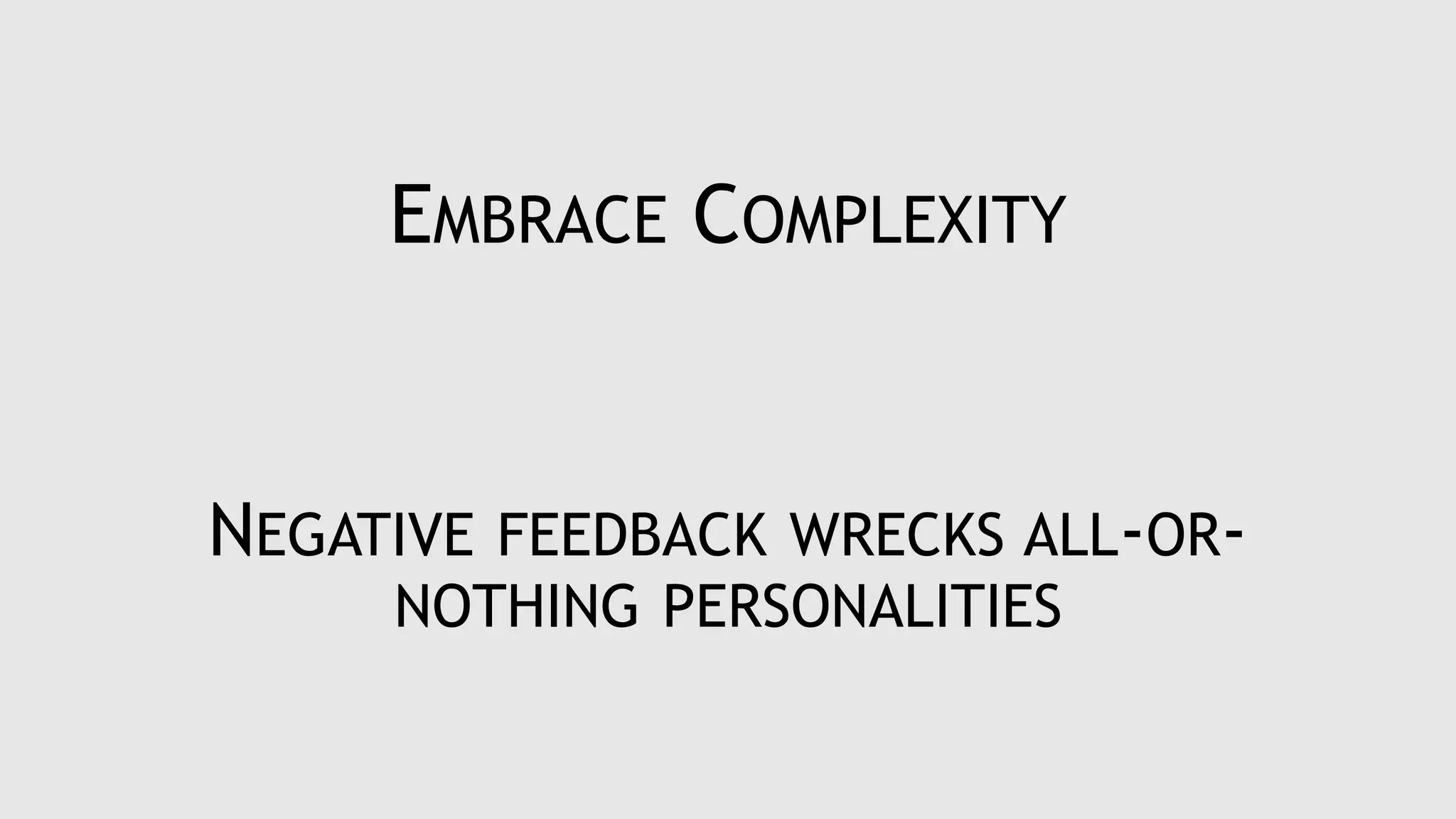
EMBRACE COMPLEXITY
NEGATIVE FEEDBACK WRECKS ALL-OR-
NOTHING PERSONALITIES
EMBRACE IDENTITY NUANCE
You will make mistakes
You have complex intentions
You have contributed to the problem
EXERCISE 5
Partner
Whoever you worked with in Exercise 1
Goals
Experience identity triggers and their
solutions
Time
Build: 20 minutes
Feedback: 10 minutes
DO NOT
SHARE YOUR
INSTRUCTIONS
WITH YOUR
PARTNER!
THE CONVERSATIONAL ARC
CONVINCING SOMEONE THEY’RE WRONG?
DIAGNOSE
DESCRIBE
PROPOSE
POSITIONS
VS
INTERESTS
FIND THEIR INTERESTS
Helping you
Helping themselves and the relationship
Helping the organization/family/someone
else
EXERCISE 6
Partner
Anyone you haven’t worked with yet
Goals
Practice the Feedback Conversation
Time
Brainstorming: 5 minutes
Build: 15 minutes
Feedback: 10 minutes
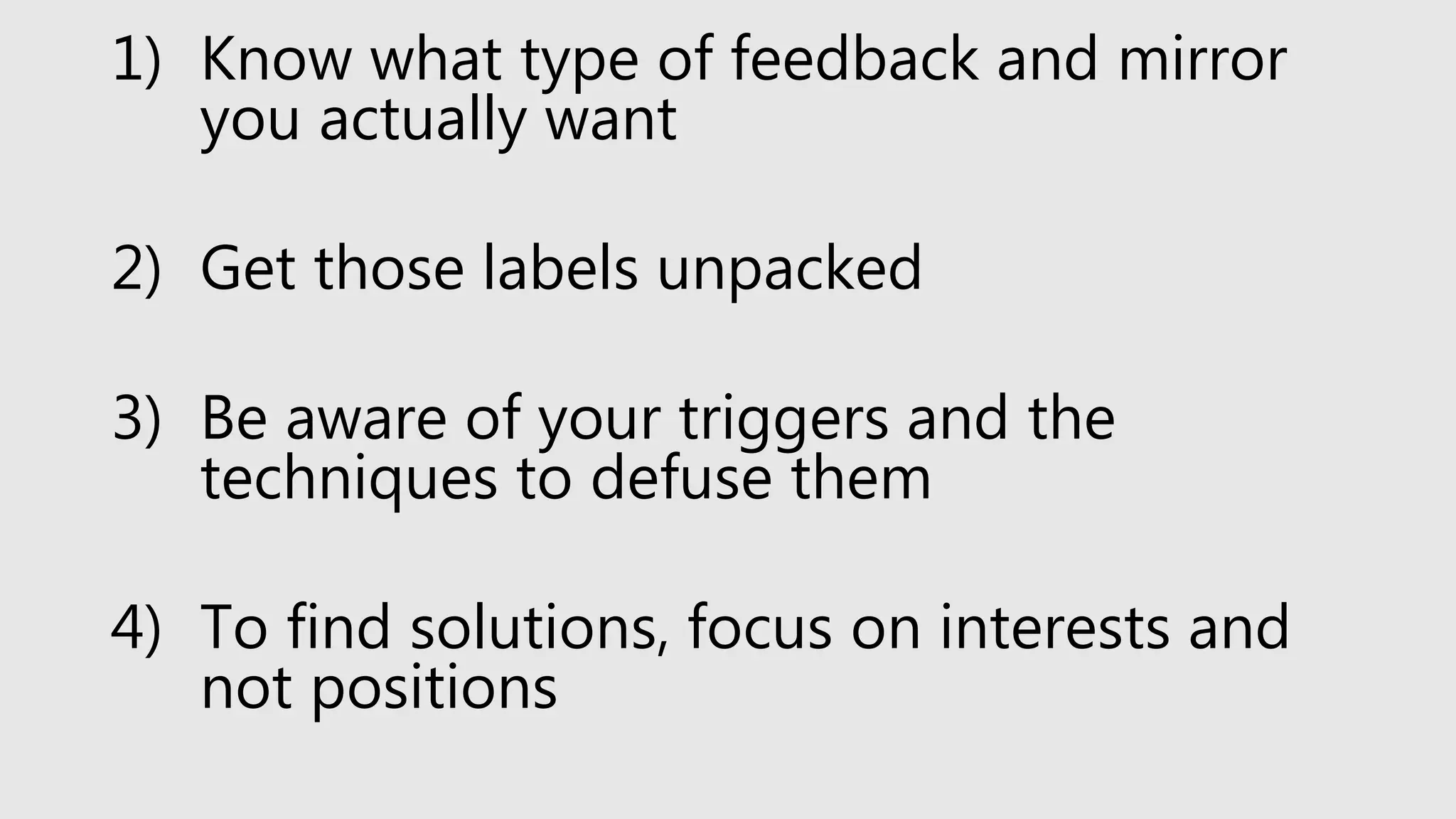
THE MAJOR TAKEAWAYS
1) Know what type of feedback and mirror
you actually want
2) Get those labels unpacked
3) Be aware of your triggers and the
techniques to defuse them
4) To find solutions, focus on interests and
not positions
1) Is your recipient willing to accept
feedback now (or from you)?
2) Consider your positions and interests
when you open the conversation
3) Unpack labels yourself to help the
recipient
4) Use process moves to deal with conflicts
5) Give people time to deal with their
THANKS
Arthur Doler
@arthurdoler
arthurdoler@gmail.com
Thanks For The Feedback – Douglas Stone &
Sheila Heen
Mindset – Carol Dweck
Crucial Conversations – Kerry Patterson, Joseph
Grenny, Ron McMillan, Al Switzler
Radical Candor – Kim Scott

Feedback Workshop KCDC2018

Editor's Notes

  • #25 “Feedback-seeking behavior” Linked to: Higher job satisfaction Greater creativity Faster adaptation to new scenarios Lower turnover
  • #162 Who’s in charge of what subject or which person in which circumstances at what time? Mobility & permeable boundaries How much of this conflict is role, and how much is personality or performance?
  • #169 Look at: Policies Processes Structures/organization Physical environment Timing and decision making Other players Keep an eye out for “lag effects”
  • #181 Reframe your suggestion
  • #216 What’s my purpose in giving/receiving this feedback? What’s my desired outcome? Is it the right purpose from my point of view? Is it the right purpose from their point of view?
  • #218 Convey that you’ve heard them Listen for what’s right Repurpose your inner monologue Beware “Hot Inquiry”
  • #227 Figure out why you’re stuck
  • #228 Describe and restate the conversation
  • #229 Offer solutions and suggestions to move forward
  • #234 Where do each of you stand? What’s the action plan? What are the consequences, if any? When do you meet again?