APPLICATION OF GIS IN
ENVIRONMENTAL STUDIES
1

PRESENTED BY
E.LAKSHMI
131867
GIS
2

 GIS is a powerful software technology that allows a virtually

unlimited amount of information to be linked to a
geographic location.
 A system for capturing, storing, checking, manipulating,

analyzing and displaying data which are spatially referenced
to earth
GIS IN ENVIRONMENT STUDIES
3

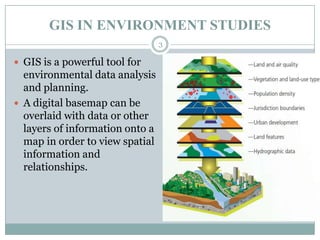
 GIS is a powerful tool for

environmental data analysis
and planning.
 A digital basemap can be
overlaid with data or other
layers of information onto a
map in order to view spatial
information and
relationships.
CONTD..
4

 GIS can provide a quick, comparative view of hazards

(highly prone areas) and risks areas of high risk which may
occur) and areas to be safeguarded.
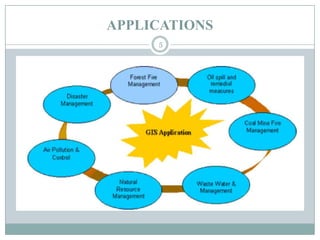
 GIS supports activities

in environmental assessment,

monitoring, and mitigation and can also be used for
generating Environmental models.
APPLICATIONS
5
GIS IN THE FIELD
6

 The GIS tool is flexible enough to work in the field to give

the

exact

location

of

devastation

and

amount

of

devastation.
 Combining GIS with mobile technologies, such as GPS and

automated

vehicle

location

systems,

provides

environmental agencies with mobile solutions that save
time, focus resources, and capture accurate data.
CASE STUDY
7

A GIS technology and method to assess
environmental
problems
from
land
use/cover changes: Conakry, Coyah and
Dubreka region case study.
INTRODUCTION
8

 It sometimes seems inevitable that human and natural

factors can cause landscape changes.
 There is an increasing need for standardized land use and

land cover information especially in critical areas of
environmental concern like urban extension and forest
clearing.
CONTD..
9

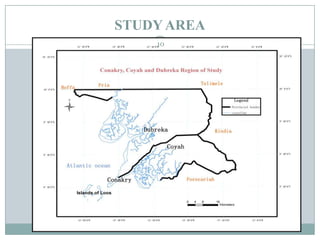
 The objective of this study is to evaluate the land use/cover

changes in the study area, and then propose some
solutions.
 The GIS data used in the study will be important reference

information.
STUDY AREA
10
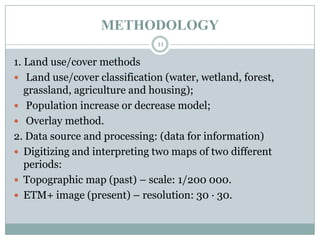
METHODOLOGY
11

1. Land use/cover methods
 Land use/cover classification (water, wetland, forest,
grassland, agriculture and housing);
 Population increase or decrease model;
 Overlay method.
2. Data source and processing: (data for information)
 Digitizing and interpreting two maps of two different
periods:
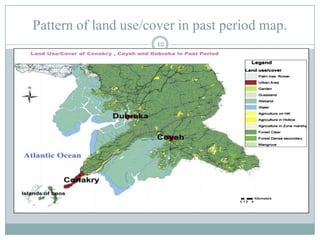
 Topographic map (past) – scale: 1/200 000.
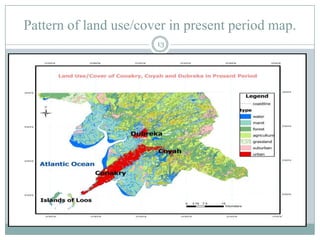
 ETM+ image (present) – resolution: 30 · 30.
Pattern of land use/cover in past period map.
12
Pattern of land use/cover in present period map.
13
CONCLUSION
14

 The results of this research show a degraded and

disturbed land use/cover pattern in this region of
study, with the change or disappearance of certain
land cover elements.
 In the final analysis, this research shows that
detection and evaluation of the causes and
consequences of land use/cover change may lead to a
possible proposal for a solution, one based on the
geographic information system (GIS).

application of gis

  • 1.
    APPLICATION OF GISIN ENVIRONMENTAL STUDIES 1 PRESENTED BY E.LAKSHMI 131867
  • 2.
    GIS 2  GIS isa powerful software technology that allows a virtually unlimited amount of information to be linked to a geographic location.  A system for capturing, storing, checking, manipulating, analyzing and displaying data which are spatially referenced to earth
  • 3.
    GIS IN ENVIRONMENTSTUDIES 3  GIS is a powerful tool for environmental data analysis and planning.  A digital basemap can be overlaid with data or other layers of information onto a map in order to view spatial information and relationships.
  • 4.
    CONTD.. 4  GIS canprovide a quick, comparative view of hazards (highly prone areas) and risks areas of high risk which may occur) and areas to be safeguarded.  GIS supports activities in environmental assessment, monitoring, and mitigation and can also be used for generating Environmental models.
  • 5.
  • 6.
    GIS IN THEFIELD 6  The GIS tool is flexible enough to work in the field to give the exact location of devastation and amount of devastation.  Combining GIS with mobile technologies, such as GPS and automated vehicle location systems, provides environmental agencies with mobile solutions that save time, focus resources, and capture accurate data.
  • 7.
    CASE STUDY 7 A GIStechnology and method to assess environmental problems from land use/cover changes: Conakry, Coyah and Dubreka region case study.
  • 8.
    INTRODUCTION 8  It sometimesseems inevitable that human and natural factors can cause landscape changes.  There is an increasing need for standardized land use and land cover information especially in critical areas of environmental concern like urban extension and forest clearing.
  • 9.
    CONTD.. 9  The objectiveof this study is to evaluate the land use/cover changes in the study area, and then propose some solutions.  The GIS data used in the study will be important reference information.
  • 10.
  • 11.
    METHODOLOGY 11 1. Land use/covermethods  Land use/cover classification (water, wetland, forest, grassland, agriculture and housing);  Population increase or decrease model;  Overlay method. 2. Data source and processing: (data for information)  Digitizing and interpreting two maps of two different periods:  Topographic map (past) – scale: 1/200 000.  ETM+ image (present) – resolution: 30 · 30.
  • 12.
    Pattern of landuse/cover in past period map. 12
  • 13.
    Pattern of landuse/cover in present period map. 13
  • 14.
    CONCLUSION 14  The resultsof this research show a degraded and disturbed land use/cover pattern in this region of study, with the change or disappearance of certain land cover elements.  In the final analysis, this research shows that detection and evaluation of the causes and consequences of land use/cover change may lead to a possible proposal for a solution, one based on the geographic information system (GIS).