COURSE: AMBE-101
COURSE TITLE: AGRICULTURAL MICROBIOLOGY
CREDITS: 2(1+1)
Variation
Adaptation
Genetic recombination
Mutations
Plasmids
Transposon
Operon concept
Genetic code
Regulation of gene expression,
.
 Genetics is the study of the inheritance (heredity) and the
variability of the characteristics of an organism.
 Inheritance concerns the exact transmission of genetic
information from parents to their progeny.
 Variability of the inherited characteristics can be accounted
for by a change either in the genetic makeup of a cell or in
environmental conditions.
 Bacteria also show variations in characters like other higher
organisms.
 Genetic variation is the key to the survival of a species,
allowing a species to adapt to changes in their environment
by natural selection.
 That's true for bacteria as well.
 Like other living organisms, bacteria also multiply and pass
on their characteristics from generation to generation.
 There are also the possibilities of variations in a small
proportion in the inherited characters of their progeny.
 Bacteria are also capable of transmitting genetic information
from generation to generation with great accuracy.
 However, in addition to the inheritance, which accounts for the
constancy exhibited by biological species, there is variability or
change expressed in the progeny.
 Variability may be due to adaptation or mutation.
 Change in an organism or population of organisms through which they
become more suited to the prevailing environment.
 It can be genetic and or physiological.
 The phenotypic changes of bacteria due to environmental effect is
known as adaptation.
 Bacteria like the cells of higher organisms, carry more genetic
information (their genotype) than is utilized or expressed at any one
time.
 The extent to which this information is expressed depends on the
environment.
 For example, facultative anaerobic bacterium will produce
different end products of metabolism, depending on the
presence or absence of oxygen during growth.
 A return to the original phenotype occurs when the original
environmental conditions are restored.
 The phenotypic changes due to environment are different
from phenotypic changes as a consequence of genetic
changes due to mutation
Phenotype: The observable characteristics
of an organism
Genotype: The precise genetic constitution
/ makeup of an organism
Genome: The complete set of genes present
in an organism
Bacteria reproduce by binary fission. As a result of binary fission,
bacteria produce clones or genetically identical copies of the parent
bacterium. Since the offspring bacteria are genetically identical to
the parent, binary fission doesn't provide an opportunity for genetic
recombination or genetic diversity (aside from the occasional
random mutation) in bacteria. In fact, the three other mechanisms
responsible for transfer of genetic materials take place in bacteria.
These are termed as transformation, conjugation and transduction.
Transfer of antibiotic resistance genes
As a tool to study advances of molecular biology
and biotechnology
Study of evolution
Genetic recombination is the formation of a new
genotype by reassortment of genes following an
exchange of genetic material between two different
chromosomes which have similar genes at
corresponding sites
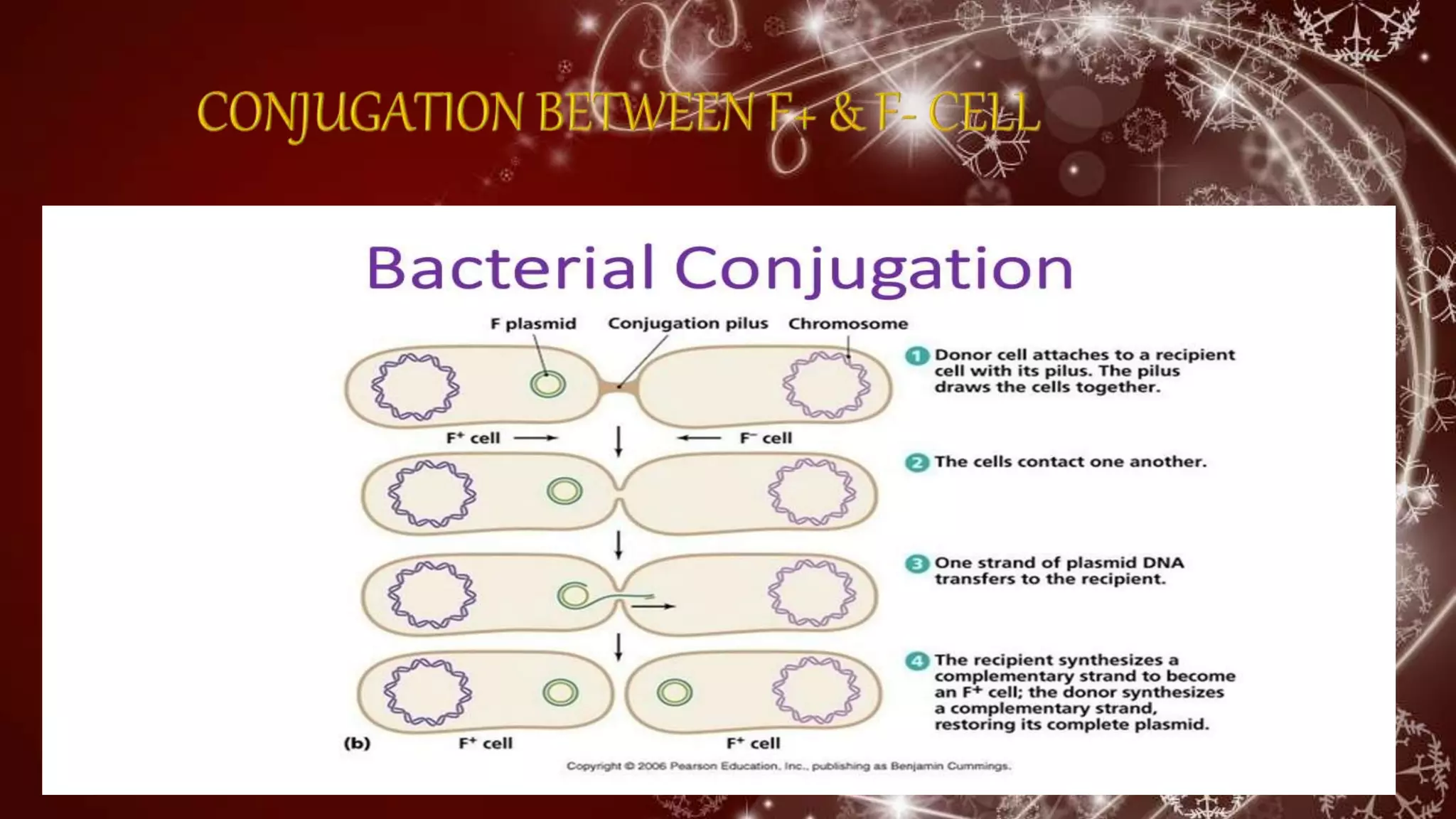
1) Conjugation : Transfer of genes between cells that are in
physical contact with one another
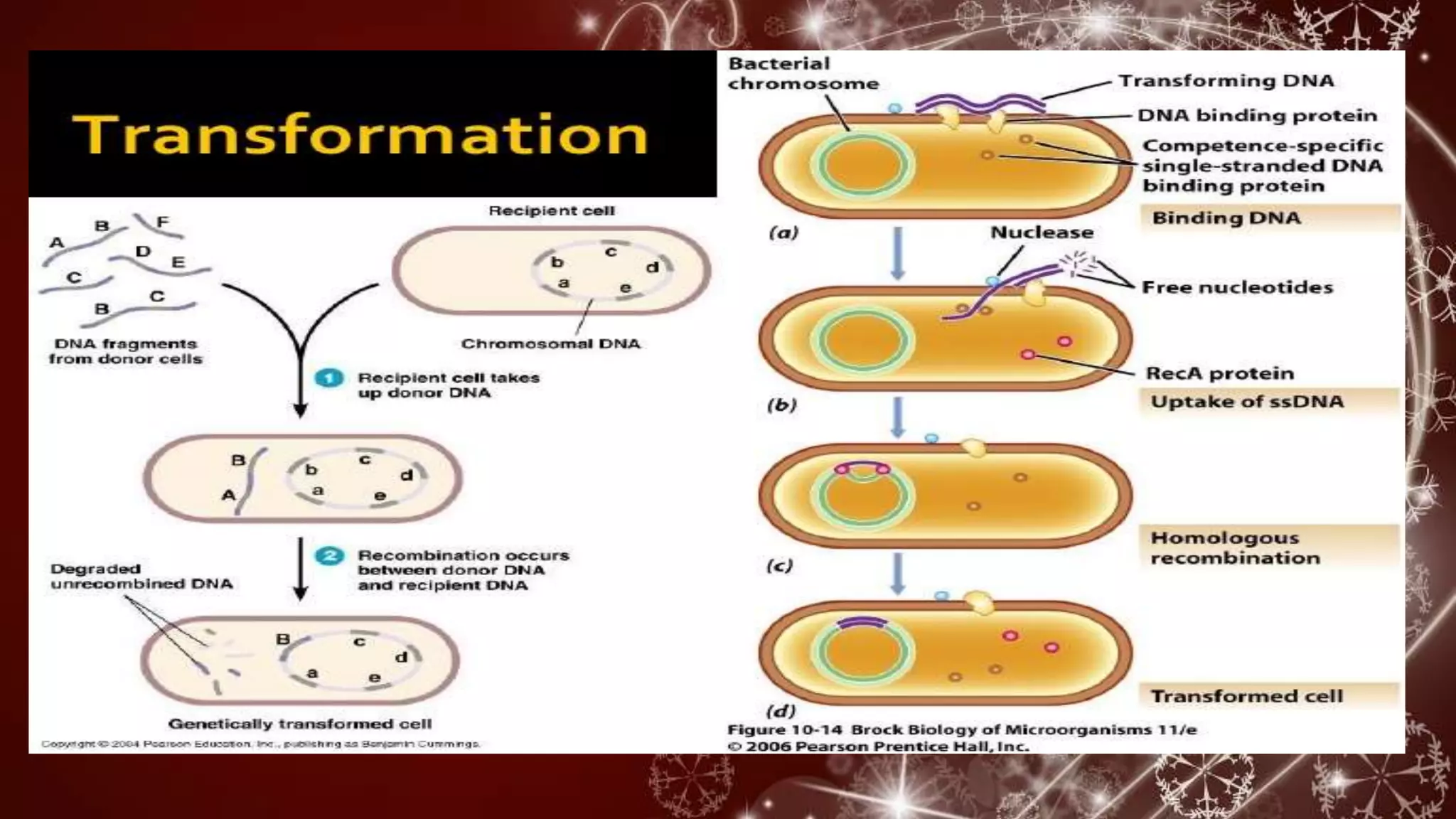
2) Transformation : Transfer of cell free or naked DNA from one
cell to another
3) Transduction : Transfer of genes from one cell to another cell
by a bacteriophage
Genetic recombination in bacteria is three types :
LEDERBERG & TATUM discovered conjugation in Escherichia coli
Detailed studies were made by WOOLMAN &JACOB
It is a process by which genetic material is transferred from one
bacterial cell to another through a specialized intercellular
connection called sex-pilus or conjugation tube
The maleness & femalness in bacterial cells are determined by
the presence or absence of F-plasmid
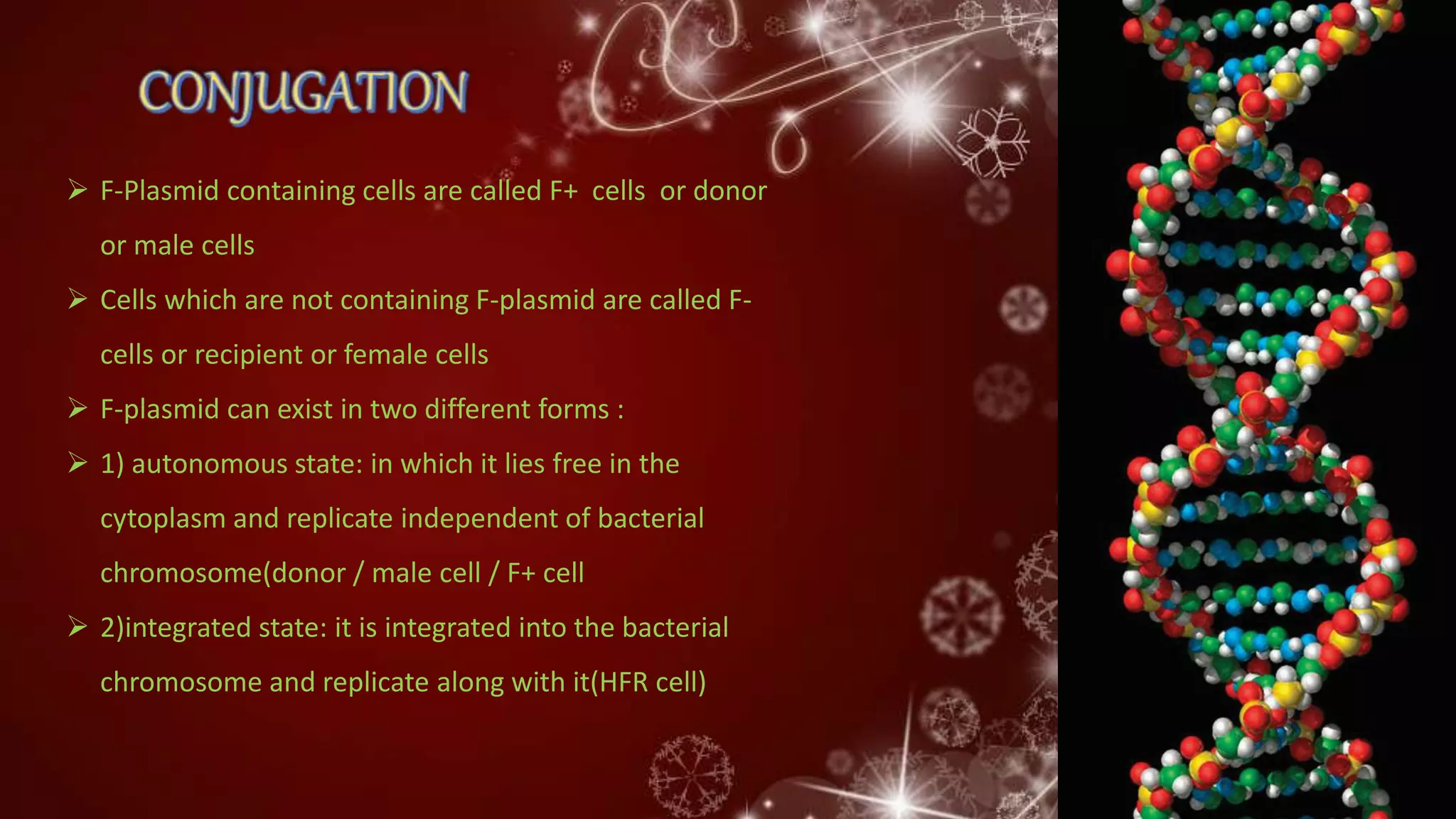
 F-Plasmid containing cells are called F+ cells or donor
or male cells
 Cells which are not containing F-plasmid are called F-
cells or recipient or female cells
 F-plasmid can exist in two different forms :
 1) autonomous state: in which it lies free in the
cytoplasm and replicate independent of bacterial
chromosome(donor / male cell / F+ cell
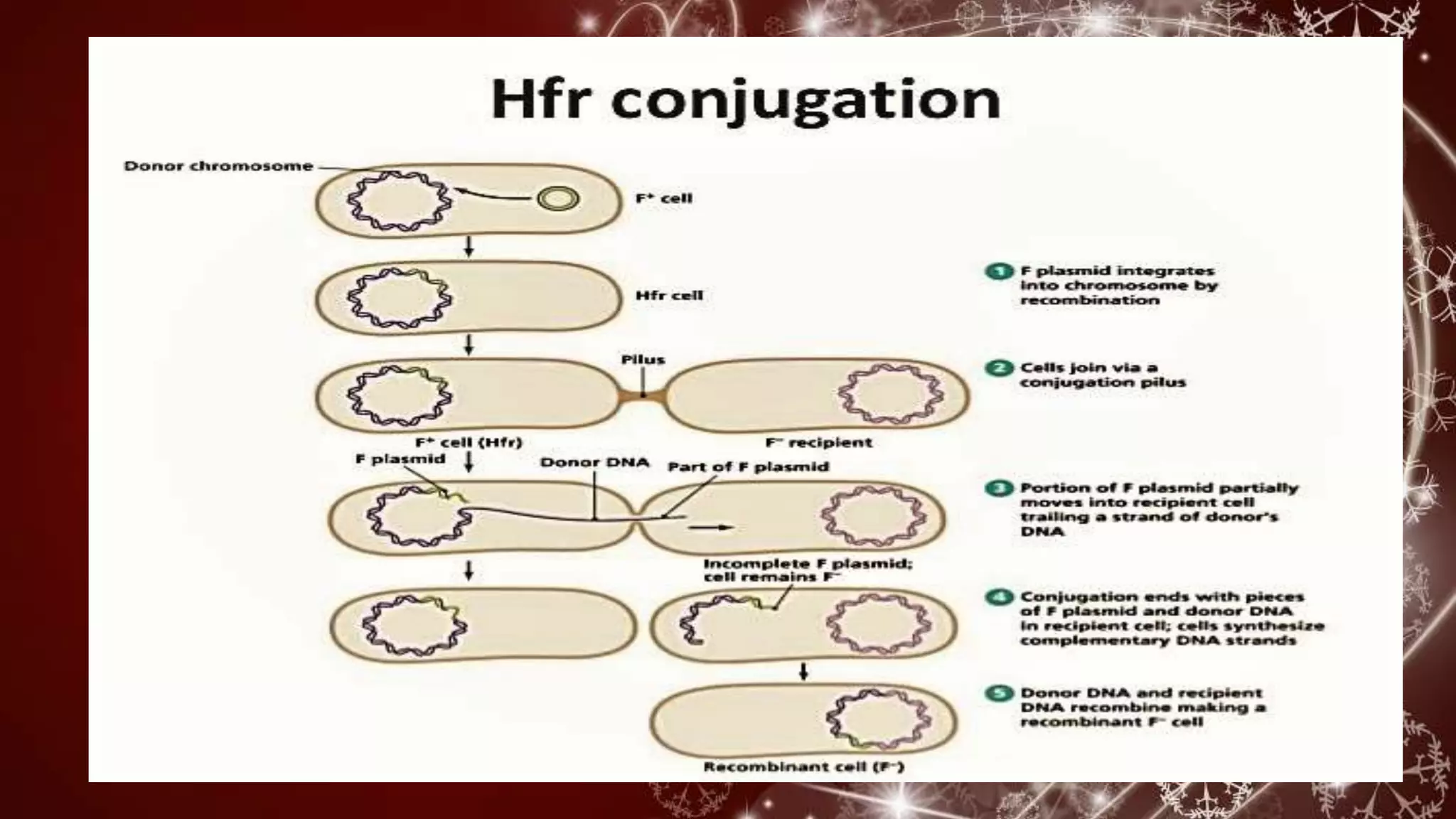
 2)integrated state: it is integrated into the bacterial
chromosome and replicate along with it(HFR cell)
The f-factor integrated into the bacterial DNA of Hfr
donor cells may dissociate and becomes free in the
cytoplasm
ADELBERG & BURNS identified such a modified F-factor
and called it F’ ( F-PRIME ) factor
The donor cell containing this factor is called F’PRIME
MALE
 Transfer of F’ factor to recipient cell occurs by the same
mechanism as F-factor transfer during in F+ & F- mating and
chromosome transfer in Hfr & F- cell mating
 Genetic recombination by this type is called SEX-DUCTION
or F-DUCTION
TRANSFORMATION
• It was discovered by ZINDER&LEDERBERG IN
Salmonella typhimurium
• It is a phage mediated process of genetic material
transfer in bacteria
• The bacteriophage acquires a portion of the
bacterial DNA of the host cell in which it
reproduces and then transfers this acquired
DNA to another bacterial cell to which it
infects
• Such phage is called TRANSDUCING PHAGE
• It is of two types:
• 1)Generalized transduction
• 2)specialized transduction
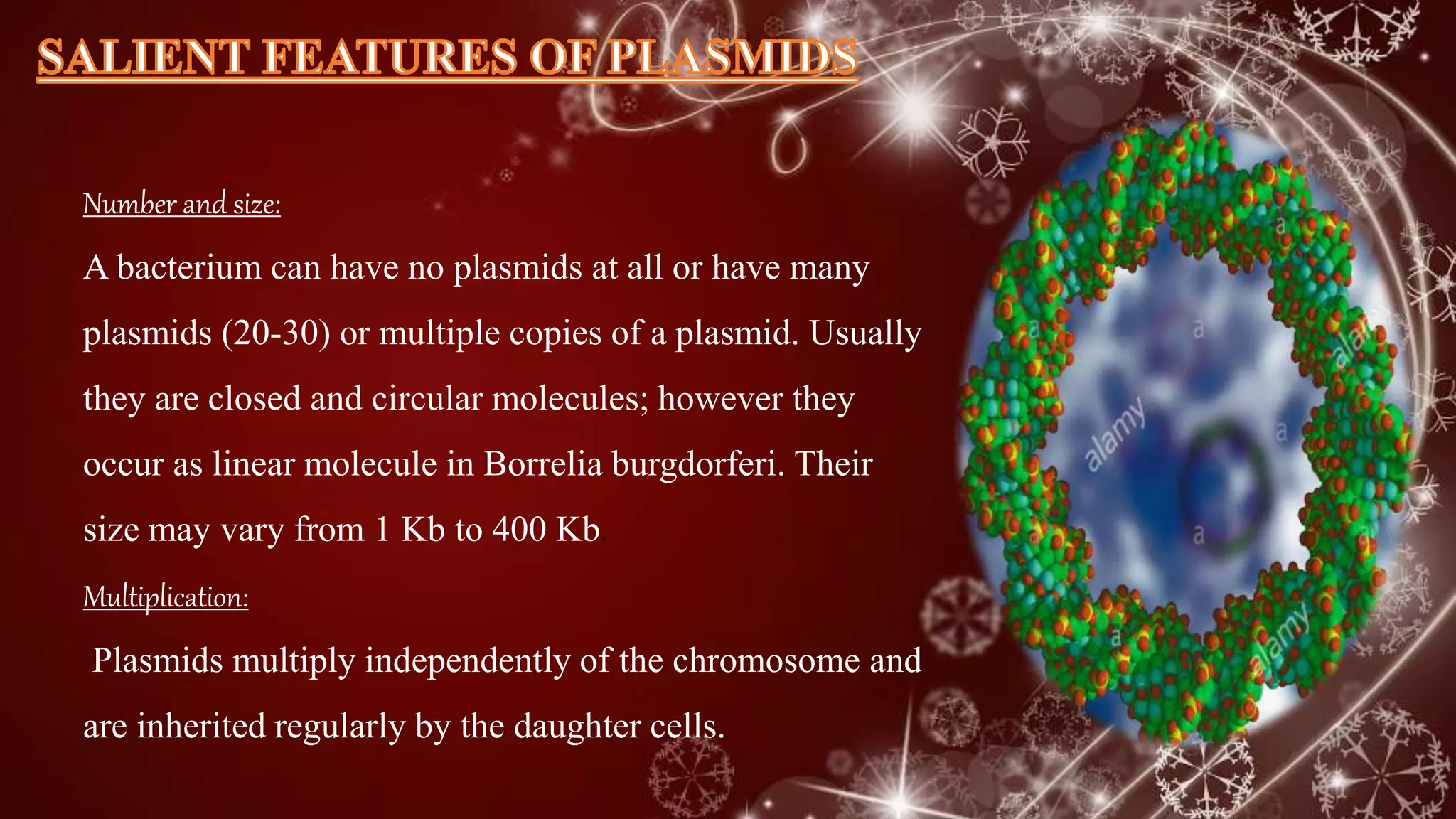
The extra-chromosomal DNA found
inside a bacterium cell is called Plasmid.
The plasmids are not considered as
essential for the survival of the bacteria;
however they give some extra
advantages to the bacteria such as
resistance to the cell against antibiotics.
Number and size:
A bacterium can have no plasmids at all or have many
plasmids (20-30) or multiple copies of a plasmid. Usually
they are closed and circular molecules; however they
occur as linear molecule in Borrelia burgdorferi. Their
size may vary from 1 Kb to 400 Kb.
Multiplication:
Plasmids multiply independently of the chromosome and
are inherited regularly by the daughter cells.
 Confer resistance to several antibiotics: Gram-negative
bacteria have plasmids that give resistance to several
antibiotics such as kanamycin, neomycin, tetracycline,
streptomycin, chloramphenicol, penicillins and
sulfonamides.
 Plasmids carry genes for resistance/sensitivity to heavy
metals such as Hg, Ag, Cd, Pb etc.
 Plasmids carry virulence genes. Eg, vir genes of
Agrobacterium tumefaciens.
 Plasmid genes code for DNA repair enzymes (DNA
damaged by UV light are repaired by these enzymes).
 Plasmid is responsible for colonization factors in
bacteria. Colonization in bacteria is necessary for their
attachment.
 Plasmid genes code for production of toxins: Some
bacteria also produce toxins through plasmid genes
(i) As vectors: plasmids are used in cloning short
segments of DNA in genetic engineering.
(ii) To replicate proteins: Plasmids can be used to have
proteins such as insulin that codes for insulin, in large
amounts.
(iii) In gene therapy: Plasmids are popularly used for
transferring genes into human cells as part of gene
therapy.
 Transposon or transposable element is a DNA sequence that can “jump” to different
locations within a genome.
 Although these DNA sequences change their position, however, they are always present as
integrated sequences within a genome.
 Transposons are considered to be very important in bacterial genetics as they lead to
mutation by way of duplication of the same genetic material.
 A mutation occurs when there is any genetic change in DNA or chromosomes.
 The transposons in bacteria can also move from chromosomal DNA to plasmid DNA and vice
versa. In this way, these transposons also lead to addition of genes (another type of
mutation).
 In bacteria, transposable elements sometimes carry genes
for antibiotic resistance and diseases.
 If one of these transposable elements that carries
antibiotic resistance genes or disease causing genes
jumps from the chromosome to a plasmid, then these
genes can be easily passed to other bacteria by way of
transformation or conjugation.
The term episome was enunciated by François Jacob and Elie
Wollman in 1958. Previously, it was considered synonymous with
plasmids. Now, episome is specifically defined as a genetic
element inside some bacterial cells, particularly the DNA sequence
of some bacteriophages, that can either replicate independently of
the host or in association with a the chromosome with which it gets
integrated. In other words, the “F factors plasmids” that can code
for self transfer to other bacteria are called episomes. The bacterial
cells with episomes are called Hfr cells i.e. high frequency of
recombination.
Sudden and heritable change in the nucleotide sequence of a
gene
Changes the genotype & phenotype of microorganisms
A microbial cell exhibiting change in its phenotype due to the
effect of a mutation is a mutant
Any physical or chemical agent that increases the mutation
rate is called mutagen
1. POINT MUTATIONS
2. FRAME SHIFT MUTATION
• They occur as a result of the substitution of one
nucleotide for another in the specific nucleotide
sequence of a gene.
1) Transitions
2) Transversion
Purine is substituted by purine and
pyrimidine is substituted by
pyrimidine
Pyrimidine is substituted by
purine & purine is substituted by
pyrimidine
This base-pair substitution may result in one of three kinds of
mutations affecting the translational process.
MIS-SENSE MUTATION
NONSENSE MUTATION
NEUTRAL MUTATION
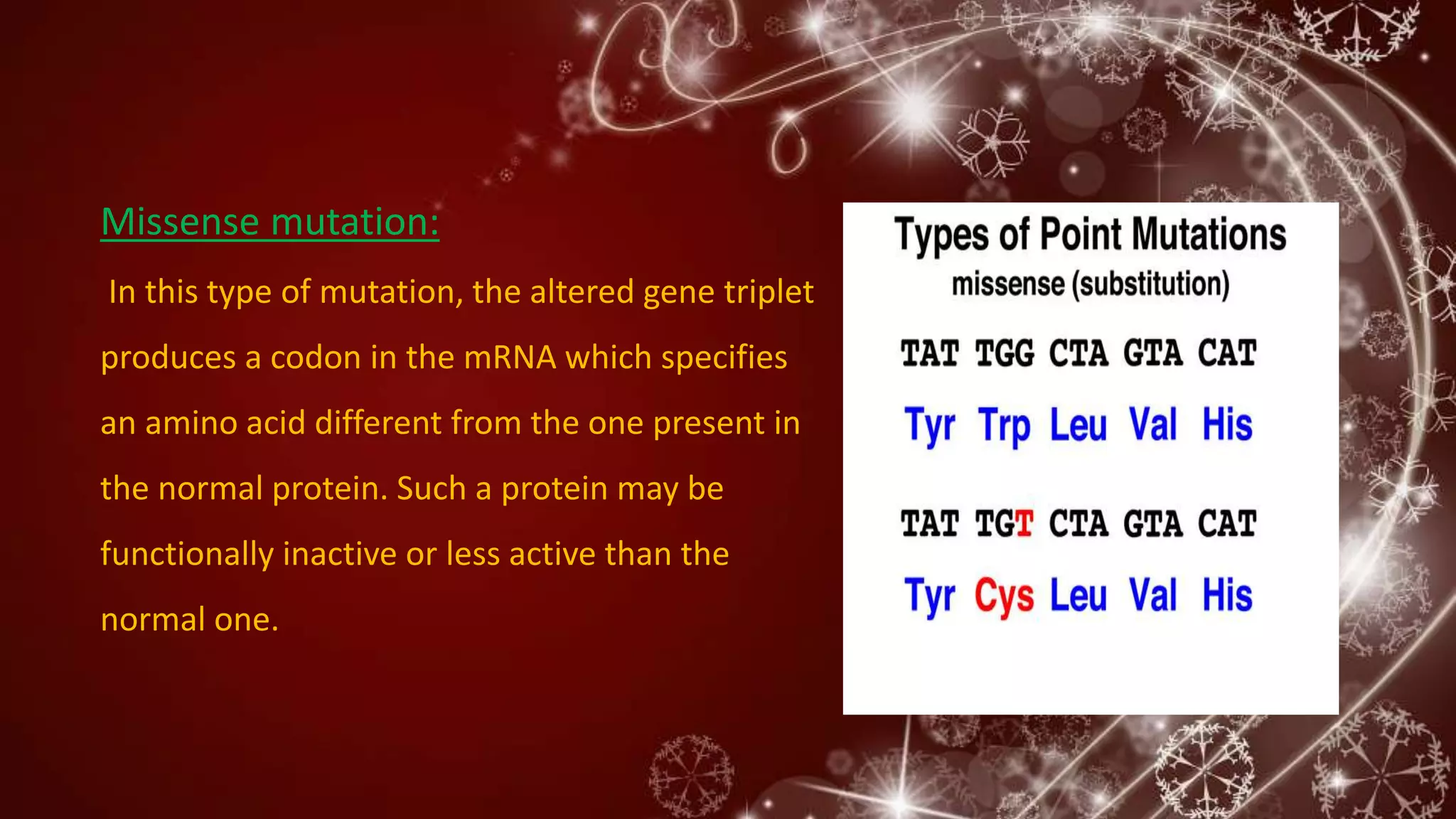
Missense mutation:
In this type of mutation, the altered gene triplet
produces a codon in the mRNA which specifies
an amino acid different from the one present in
the normal protein. Such a protein may be
functionally inactive or less active than the
normal one.
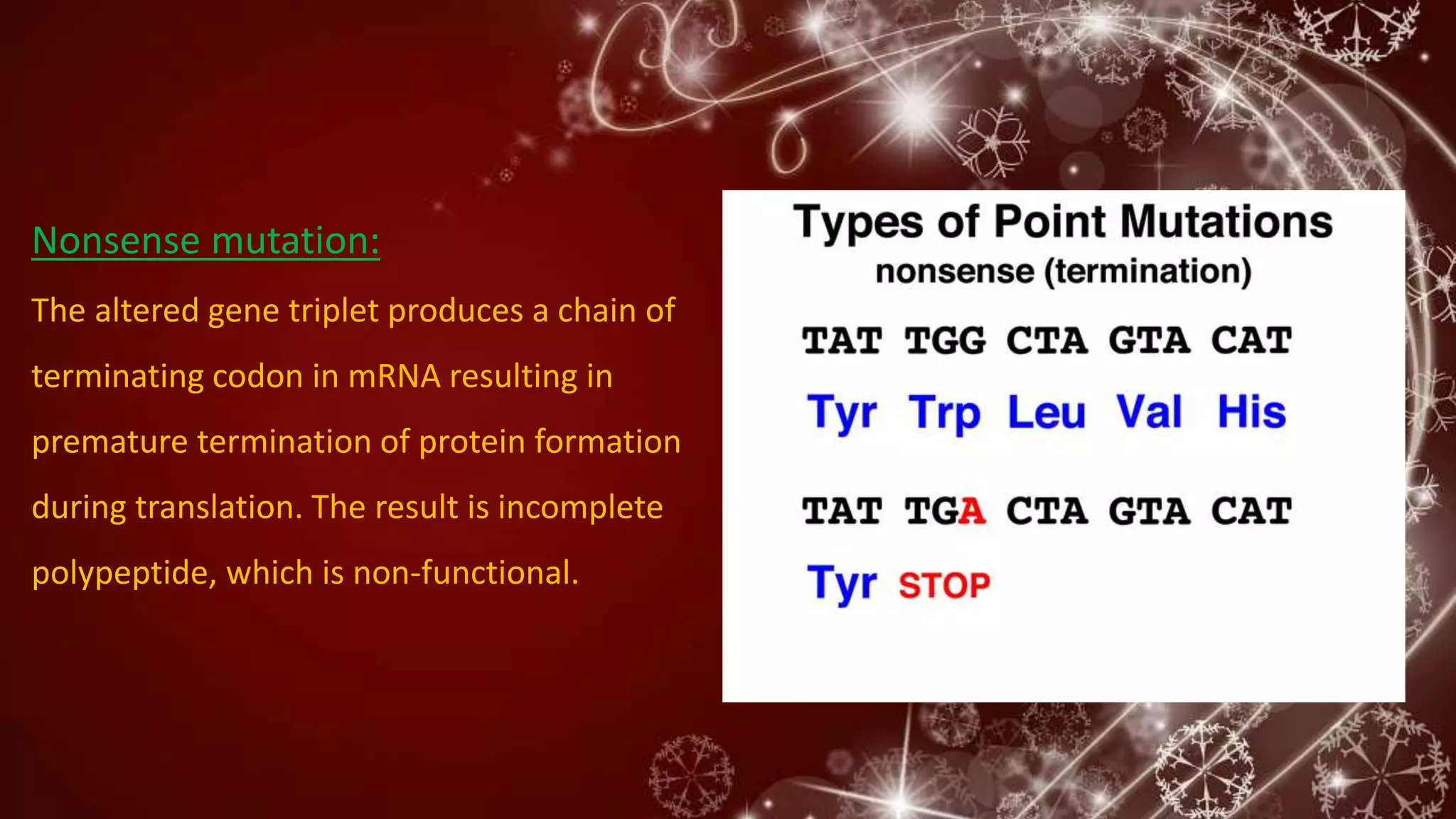
Nonsense mutation:
The altered gene triplet produces a chain of
terminating codon in mRNA resulting in
premature termination of protein formation
during translation. The result is incomplete
polypeptide, which is non-functional.
Neutral mutation:
The altered gene triplet produces a mRNA
codon which specifies the same amino acid
because the codon resembling from mutation is
a synonym for the original codon.
It is caused by the deletion
or insertion of nucleotide in
the DNA sequence resulting
in an altered codon reading
frame
SPONTANEOUS MUTATIONS
INDUCED MUTATIONS
Mutation which occur under natural conditions are called
spontaneous mutations.
Spontaneous mutation occur due to
1. Errors during DNA replication
2. Mutagenic effects of the natural environments of organisms
3. Transposons & Insertion sequences
4. Methylation, followed by spontaneous deamination of DNA
bases especially cytosine.
Mutations produced due to the treatment with either a chemical or a
physical agent are called induced mutations.
The agents capable of inducing mutations are known as mutagens.
Induced mutations are useful in two different ways
1. In genetics and biochemical studies
2. In genetic improvement of bacteria
The process of inducing mutations through
treatment with a mutagen is known as
mutagenesis.
The different mutagenic agents may be
classified into two broad groups
1. Physical mutagens
2. Chemical mutagens.
Physical mutagens:
The different types of radiations having
mutagenic properties are known as physical
mutagens.
These radiation are high energy radiations and
are grouped into two classes
1. Ionizing: Eg: X-rays, gamma rays
2. Non-ionizing radiations: Eg. UV rays.
Chemical mutagens:
The chemicals cause mutations are called chemical mutagens.
Chemical mutagens can be divided into five main classes.
1. Base analogues: Eg. 5-bromouracil.
2. Alkylating agents: Eg. –CH3(methyl), -CH2-CH3 (ethyl) groups
3. Acridine dyes: Eg. Acriflavin, Proflavin
4. Deamination agents: Eg.Nitrous acid
5. Other mutagenic chemicals: Ethidium bromide
TYPES OF MICROBIAL MUTANTS
1. AUXOTROPHIC MUTANTS
2. RESISTANT MUTANTS
3. CRYPTIC MUTANTS
4. CONDITIONALLY EXPRESSED MUTANTS
5. ANTIGENIC MUTANTS
6. METABOLIC MUTANTS
7. REGULATORY MUTANTS
8. TEMPERATURE SENSITIVE MUTANTS
 AUXOTROPIC MUTANTS : these mutants are nutrionally deficient ,
i.e., they are unable to synthesize essential metabolites or growth
factors
 RESISTANT MUTANTS : these mutants exhibit an increased
tolerance to inhibitory agents , particularly antibiotics & phages
 CRYPTIC MUTANTS : these mutants have lost a specific function but
retain the intracellular activities to catalyze the reactions of the
function , for ex : loss of permease
 CONDITIONALLY EXPRESSED MUTANTS : these mutants remain as
wild type phenotype under one set of conditions but may express
as mutant phenotype when conditions altered
ANTIGENEIC MUTANTS : these mutants show a change in the
surface structure and composition of the microbial cell
METABOLIC MUTANTS : these mutants exhibit altered metabolic
ability particularly the fermentation ability of decreased or
increased capacity to produce some end product
REGULATORY MUTANTS : these mutants effect either the
regulatory region of the promoter gene or the activity of a
regulatory protein
TEMPERATURE SENSITIVE MUTANTS : these mutants grow at one
temperature but not at another
1.DIRECT OBSERVATION
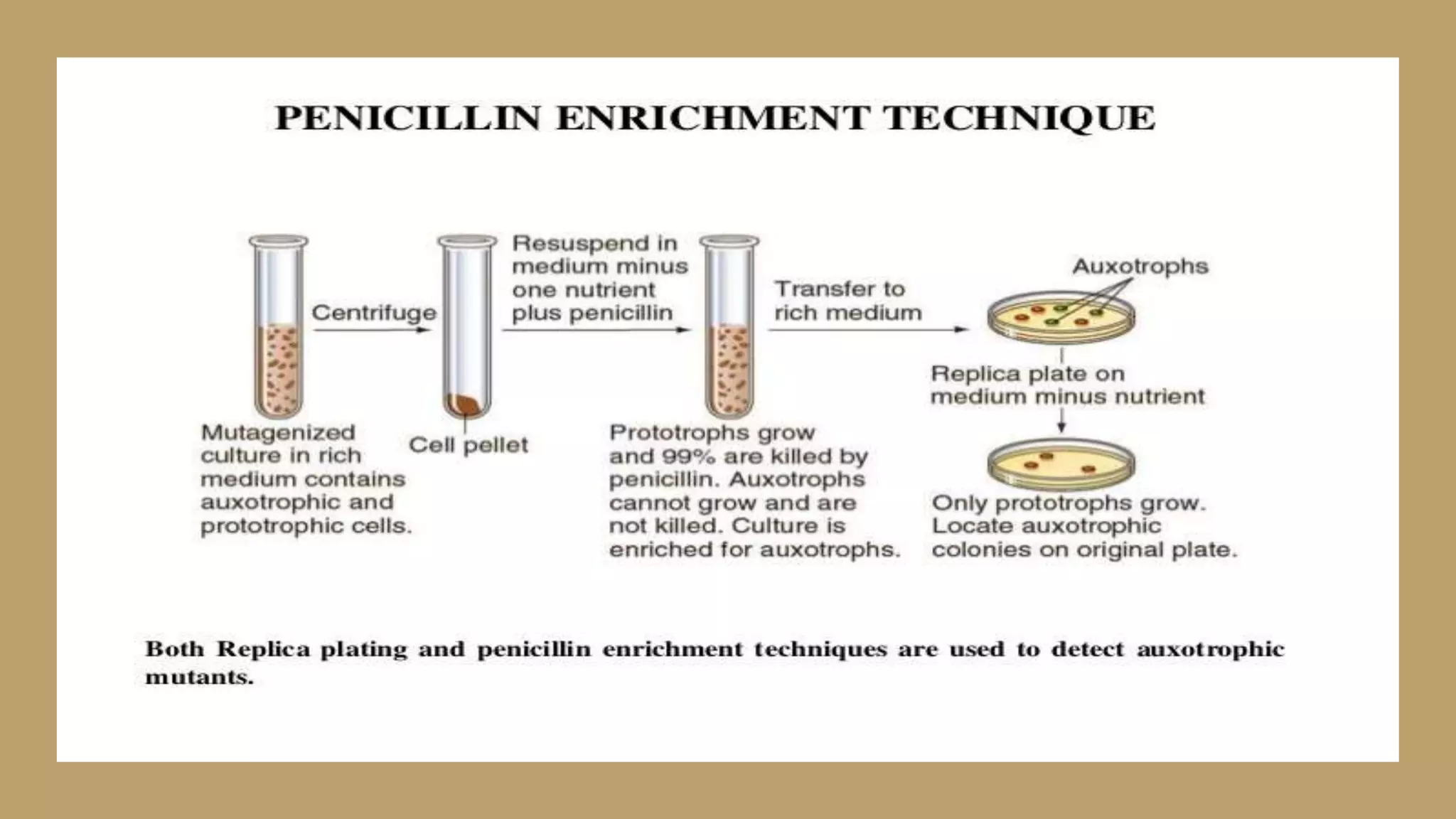
2.ENRICHMENT TECHNIQUE
3.REPLICA PLATING TECHNIQUE
4.THE AMES TEST
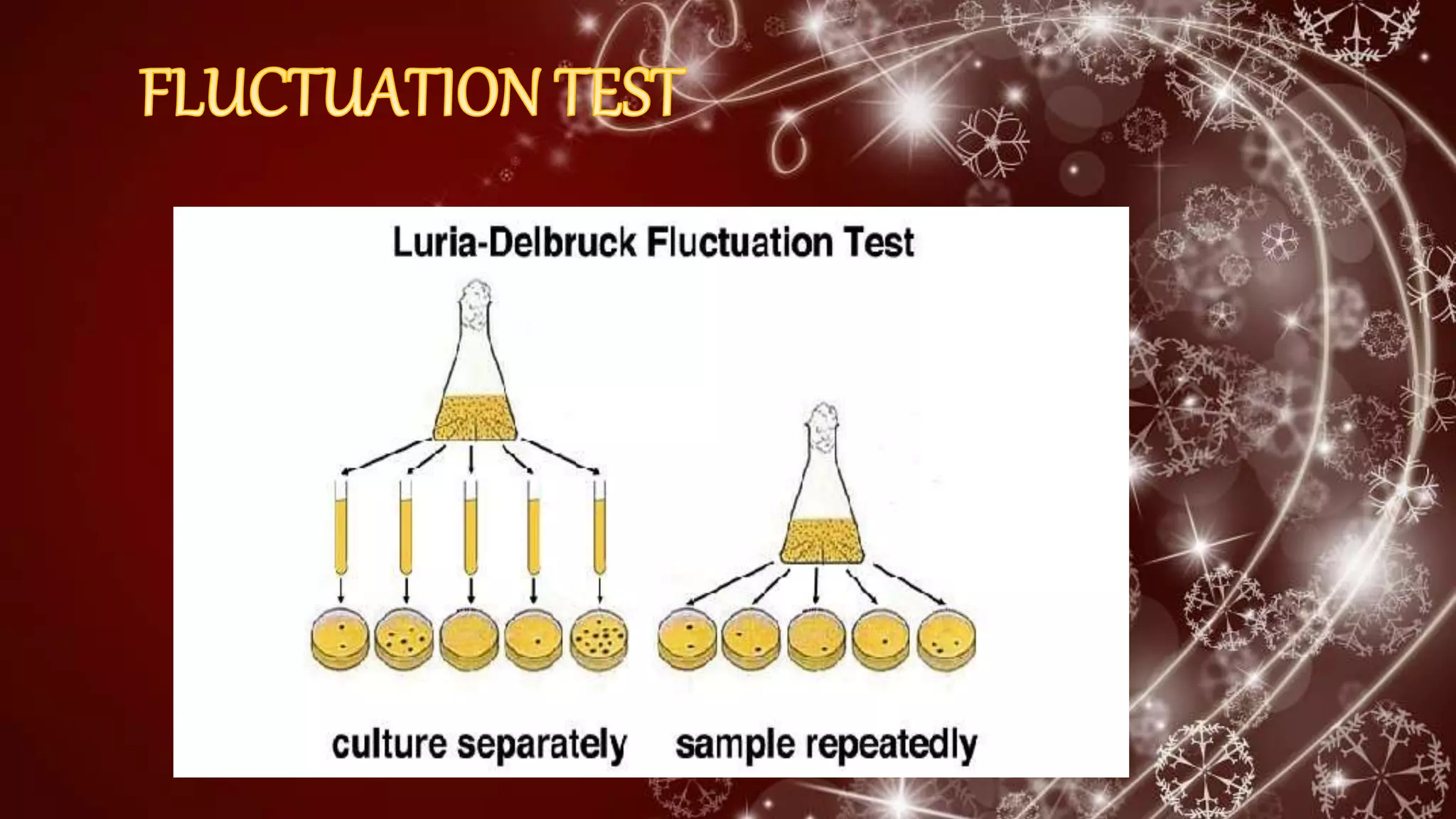
5.FLUCTUATION TEST
A colony growing on an agar plate can easily be seen to
be different from the normal parental type
Ex: If the parental strain is pigmented strain , the
observation of non-pigmented colonies may indicate
the presence of mutants
 It is used in isolating mutants resistant against phages , antibiotics ,
or toxic chemicals.
 Ex: Mutants can be isolated simply by plating the mutagenized ,
phenotypically expressed microbial populations on plate
containing phage particles
 Cells expressing the parental wild type phenotypes are killed only
phage resistant mutants grow into colonies
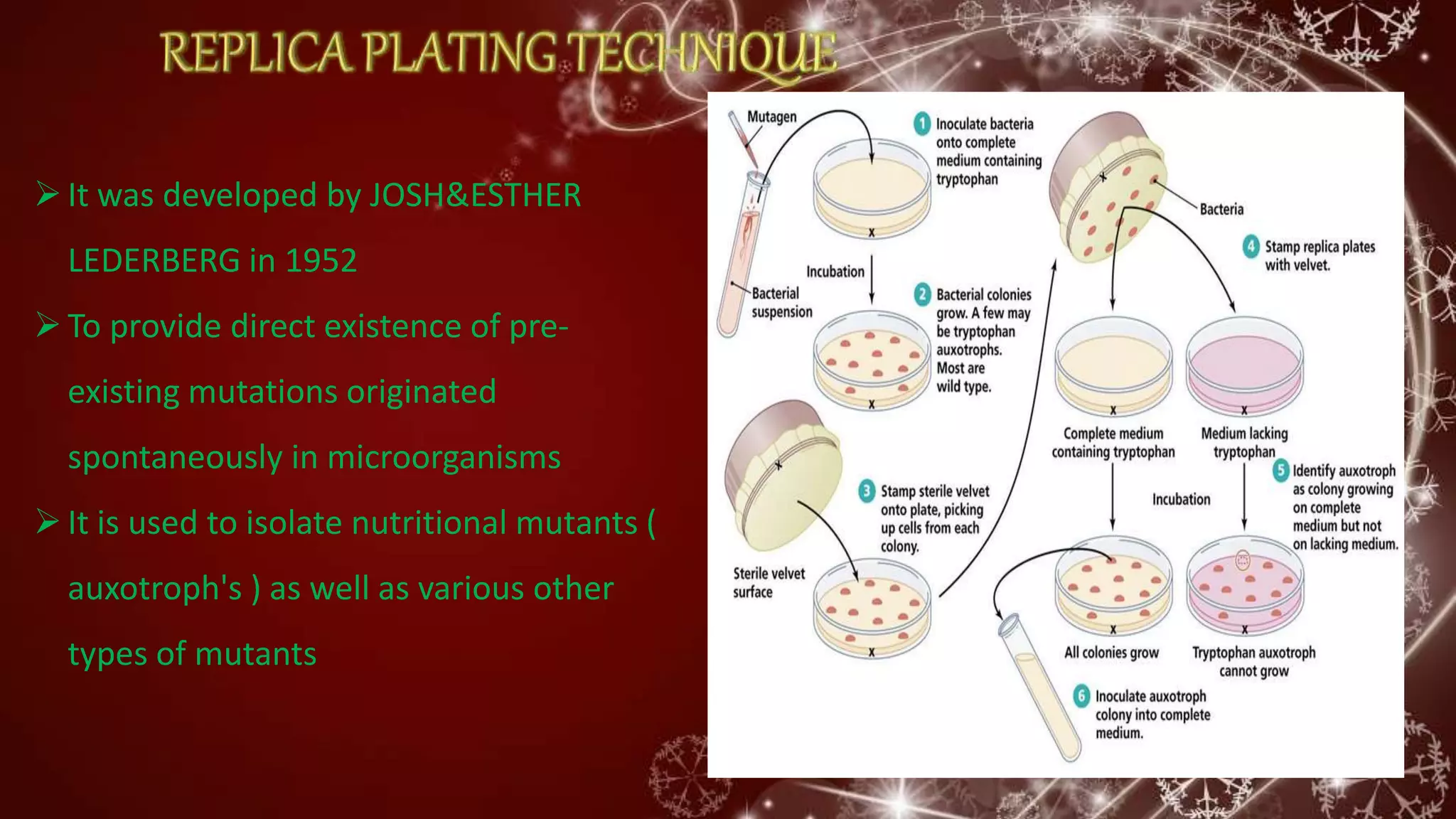
It was developed by JOSH&ESTHER
LEDERBERG in 1952
To provide direct existence of pre-
existing mutations originated
spontaneously in microorganisms
It is used to isolate nutritional mutants (
auxotroph's ) as well as various other
types of mutants
AMES TEST
It was developed by AMES &
COWORKERS
It is based on histidine requiring
auxotropic mutants of Salmonella
typhimurium
Different his mutants carry different
types of mutations i.e.., transitions ,
transversions & frameshift mutations
• The results of gene recombination can be recognized
only when there is recognizable change in structure or
function of the cell.
• In other words altered or added gene has to become
operative if the resultant gene recombination to be
functional.
• The expression of gene involves three well recognized
processes namely, replication, transcription and
translation.
1. What is genetic recombination? Explain different types of genetic
recombinations in bacteria with neat labelled diagrams?
2. What are mutations and explain about types of mutations?
3. How do you isolate microbial mutants. Explain with the help of
diagrams?
4. Write short notes on plasmids and transposons?
5. Write differences between:
A) generalized and specialized transduction
b) plasmid and transposon
c) conjugation, transformation, transduction
d) genetic material of prokaryotes and eukaryotes
Ambe 101 @ lec 7,8

Ambe 101 @ lec 7,8

  • 1.
    COURSE: AMBE-101 COURSE TITLE:AGRICULTURAL MICROBIOLOGY CREDITS: 2(1+1)
  • 2.
  • 5.
     Genetics isthe study of the inheritance (heredity) and the variability of the characteristics of an organism.  Inheritance concerns the exact transmission of genetic information from parents to their progeny.  Variability of the inherited characteristics can be accounted for by a change either in the genetic makeup of a cell or in environmental conditions.  Bacteria also show variations in characters like other higher organisms.
  • 6.
     Genetic variationis the key to the survival of a species, allowing a species to adapt to changes in their environment by natural selection.  That's true for bacteria as well.  Like other living organisms, bacteria also multiply and pass on their characteristics from generation to generation.  There are also the possibilities of variations in a small proportion in the inherited characters of their progeny.
  • 7.
     Bacteria arealso capable of transmitting genetic information from generation to generation with great accuracy.  However, in addition to the inheritance, which accounts for the constancy exhibited by biological species, there is variability or change expressed in the progeny.  Variability may be due to adaptation or mutation.
  • 8.
     Change inan organism or population of organisms through which they become more suited to the prevailing environment.  It can be genetic and or physiological.  The phenotypic changes of bacteria due to environmental effect is known as adaptation.  Bacteria like the cells of higher organisms, carry more genetic information (their genotype) than is utilized or expressed at any one time.  The extent to which this information is expressed depends on the environment.
  • 9.
     For example,facultative anaerobic bacterium will produce different end products of metabolism, depending on the presence or absence of oxygen during growth.  A return to the original phenotype occurs when the original environmental conditions are restored.  The phenotypic changes due to environment are different from phenotypic changes as a consequence of genetic changes due to mutation
  • 10.
    Phenotype: The observablecharacteristics of an organism Genotype: The precise genetic constitution / makeup of an organism Genome: The complete set of genes present in an organism
  • 12.
    Bacteria reproduce bybinary fission. As a result of binary fission, bacteria produce clones or genetically identical copies of the parent bacterium. Since the offspring bacteria are genetically identical to the parent, binary fission doesn't provide an opportunity for genetic recombination or genetic diversity (aside from the occasional random mutation) in bacteria. In fact, the three other mechanisms responsible for transfer of genetic materials take place in bacteria. These are termed as transformation, conjugation and transduction.
  • 13.
    Transfer of antibioticresistance genes As a tool to study advances of molecular biology and biotechnology Study of evolution
  • 14.
    Genetic recombination isthe formation of a new genotype by reassortment of genes following an exchange of genetic material between two different chromosomes which have similar genes at corresponding sites
  • 15.
    1) Conjugation :Transfer of genes between cells that are in physical contact with one another 2) Transformation : Transfer of cell free or naked DNA from one cell to another 3) Transduction : Transfer of genes from one cell to another cell by a bacteriophage Genetic recombination in bacteria is three types :
  • 17.
    LEDERBERG & TATUMdiscovered conjugation in Escherichia coli Detailed studies were made by WOOLMAN &JACOB It is a process by which genetic material is transferred from one bacterial cell to another through a specialized intercellular connection called sex-pilus or conjugation tube The maleness & femalness in bacterial cells are determined by the presence or absence of F-plasmid
  • 18.
     F-Plasmid containingcells are called F+ cells or donor or male cells  Cells which are not containing F-plasmid are called F- cells or recipient or female cells  F-plasmid can exist in two different forms :  1) autonomous state: in which it lies free in the cytoplasm and replicate independent of bacterial chromosome(donor / male cell / F+ cell  2)integrated state: it is integrated into the bacterial chromosome and replicate along with it(HFR cell)
  • 21.
    The f-factor integratedinto the bacterial DNA of Hfr donor cells may dissociate and becomes free in the cytoplasm ADELBERG & BURNS identified such a modified F-factor and called it F’ ( F-PRIME ) factor The donor cell containing this factor is called F’PRIME MALE
  • 22.
     Transfer ofF’ factor to recipient cell occurs by the same mechanism as F-factor transfer during in F+ & F- mating and chromosome transfer in Hfr & F- cell mating  Genetic recombination by this type is called SEX-DUCTION or F-DUCTION
  • 23.
  • 25.
    • It wasdiscovered by ZINDER&LEDERBERG IN Salmonella typhimurium • It is a phage mediated process of genetic material transfer in bacteria
  • 26.
    • The bacteriophageacquires a portion of the bacterial DNA of the host cell in which it reproduces and then transfers this acquired DNA to another bacterial cell to which it infects • Such phage is called TRANSDUCING PHAGE • It is of two types: • 1)Generalized transduction • 2)specialized transduction
  • 29.
    The extra-chromosomal DNAfound inside a bacterium cell is called Plasmid. The plasmids are not considered as essential for the survival of the bacteria; however they give some extra advantages to the bacteria such as resistance to the cell against antibiotics.
  • 30.
    Number and size: Abacterium can have no plasmids at all or have many plasmids (20-30) or multiple copies of a plasmid. Usually they are closed and circular molecules; however they occur as linear molecule in Borrelia burgdorferi. Their size may vary from 1 Kb to 400 Kb. Multiplication: Plasmids multiply independently of the chromosome and are inherited regularly by the daughter cells.
  • 31.
     Confer resistanceto several antibiotics: Gram-negative bacteria have plasmids that give resistance to several antibiotics such as kanamycin, neomycin, tetracycline, streptomycin, chloramphenicol, penicillins and sulfonamides.  Plasmids carry genes for resistance/sensitivity to heavy metals such as Hg, Ag, Cd, Pb etc.  Plasmids carry virulence genes. Eg, vir genes of Agrobacterium tumefaciens.
  • 32.
     Plasmid genescode for DNA repair enzymes (DNA damaged by UV light are repaired by these enzymes).  Plasmid is responsible for colonization factors in bacteria. Colonization in bacteria is necessary for their attachment.  Plasmid genes code for production of toxins: Some bacteria also produce toxins through plasmid genes
  • 33.
    (i) As vectors:plasmids are used in cloning short segments of DNA in genetic engineering. (ii) To replicate proteins: Plasmids can be used to have proteins such as insulin that codes for insulin, in large amounts. (iii) In gene therapy: Plasmids are popularly used for transferring genes into human cells as part of gene therapy.
  • 35.
     Transposon ortransposable element is a DNA sequence that can “jump” to different locations within a genome.  Although these DNA sequences change their position, however, they are always present as integrated sequences within a genome.  Transposons are considered to be very important in bacterial genetics as they lead to mutation by way of duplication of the same genetic material.  A mutation occurs when there is any genetic change in DNA or chromosomes.  The transposons in bacteria can also move from chromosomal DNA to plasmid DNA and vice versa. In this way, these transposons also lead to addition of genes (another type of mutation).
  • 36.
     In bacteria,transposable elements sometimes carry genes for antibiotic resistance and diseases.  If one of these transposable elements that carries antibiotic resistance genes or disease causing genes jumps from the chromosome to a plasmid, then these genes can be easily passed to other bacteria by way of transformation or conjugation.
  • 38.
    The term episomewas enunciated by François Jacob and Elie Wollman in 1958. Previously, it was considered synonymous with plasmids. Now, episome is specifically defined as a genetic element inside some bacterial cells, particularly the DNA sequence of some bacteriophages, that can either replicate independently of the host or in association with a the chromosome with which it gets integrated. In other words, the “F factors plasmids” that can code for self transfer to other bacteria are called episomes. The bacterial cells with episomes are called Hfr cells i.e. high frequency of recombination.
  • 40.
    Sudden and heritablechange in the nucleotide sequence of a gene Changes the genotype & phenotype of microorganisms A microbial cell exhibiting change in its phenotype due to the effect of a mutation is a mutant Any physical or chemical agent that increases the mutation rate is called mutagen
  • 41.
    1. POINT MUTATIONS 2.FRAME SHIFT MUTATION
  • 42.
    • They occuras a result of the substitution of one nucleotide for another in the specific nucleotide sequence of a gene. 1) Transitions 2) Transversion
  • 43.
    Purine is substitutedby purine and pyrimidine is substituted by pyrimidine Pyrimidine is substituted by purine & purine is substituted by pyrimidine
  • 44.
    This base-pair substitutionmay result in one of three kinds of mutations affecting the translational process. MIS-SENSE MUTATION NONSENSE MUTATION NEUTRAL MUTATION
  • 45.
    Missense mutation: In thistype of mutation, the altered gene triplet produces a codon in the mRNA which specifies an amino acid different from the one present in the normal protein. Such a protein may be functionally inactive or less active than the normal one.
  • 46.
    Nonsense mutation: The alteredgene triplet produces a chain of terminating codon in mRNA resulting in premature termination of protein formation during translation. The result is incomplete polypeptide, which is non-functional.
  • 47.
    Neutral mutation: The alteredgene triplet produces a mRNA codon which specifies the same amino acid because the codon resembling from mutation is a synonym for the original codon.
  • 49.
    It is causedby the deletion or insertion of nucleotide in the DNA sequence resulting in an altered codon reading frame
  • 50.
  • 51.
    Mutation which occurunder natural conditions are called spontaneous mutations. Spontaneous mutation occur due to 1. Errors during DNA replication 2. Mutagenic effects of the natural environments of organisms 3. Transposons & Insertion sequences 4. Methylation, followed by spontaneous deamination of DNA bases especially cytosine.
  • 52.
    Mutations produced dueto the treatment with either a chemical or a physical agent are called induced mutations. The agents capable of inducing mutations are known as mutagens. Induced mutations are useful in two different ways 1. In genetics and biochemical studies 2. In genetic improvement of bacteria
  • 53.
    The process ofinducing mutations through treatment with a mutagen is known as mutagenesis. The different mutagenic agents may be classified into two broad groups 1. Physical mutagens 2. Chemical mutagens.
  • 54.
    Physical mutagens: The differenttypes of radiations having mutagenic properties are known as physical mutagens. These radiation are high energy radiations and are grouped into two classes 1. Ionizing: Eg: X-rays, gamma rays 2. Non-ionizing radiations: Eg. UV rays.
  • 55.
    Chemical mutagens: The chemicalscause mutations are called chemical mutagens. Chemical mutagens can be divided into five main classes. 1. Base analogues: Eg. 5-bromouracil. 2. Alkylating agents: Eg. –CH3(methyl), -CH2-CH3 (ethyl) groups 3. Acridine dyes: Eg. Acriflavin, Proflavin 4. Deamination agents: Eg.Nitrous acid 5. Other mutagenic chemicals: Ethidium bromide
  • 56.
    TYPES OF MICROBIALMUTANTS 1. AUXOTROPHIC MUTANTS 2. RESISTANT MUTANTS 3. CRYPTIC MUTANTS 4. CONDITIONALLY EXPRESSED MUTANTS 5. ANTIGENIC MUTANTS 6. METABOLIC MUTANTS 7. REGULATORY MUTANTS 8. TEMPERATURE SENSITIVE MUTANTS
  • 57.
     AUXOTROPIC MUTANTS: these mutants are nutrionally deficient , i.e., they are unable to synthesize essential metabolites or growth factors  RESISTANT MUTANTS : these mutants exhibit an increased tolerance to inhibitory agents , particularly antibiotics & phages  CRYPTIC MUTANTS : these mutants have lost a specific function but retain the intracellular activities to catalyze the reactions of the function , for ex : loss of permease  CONDITIONALLY EXPRESSED MUTANTS : these mutants remain as wild type phenotype under one set of conditions but may express as mutant phenotype when conditions altered
  • 58.
    ANTIGENEIC MUTANTS :these mutants show a change in the surface structure and composition of the microbial cell METABOLIC MUTANTS : these mutants exhibit altered metabolic ability particularly the fermentation ability of decreased or increased capacity to produce some end product REGULATORY MUTANTS : these mutants effect either the regulatory region of the promoter gene or the activity of a regulatory protein TEMPERATURE SENSITIVE MUTANTS : these mutants grow at one temperature but not at another
  • 59.
    1.DIRECT OBSERVATION 2.ENRICHMENT TECHNIQUE 3.REPLICAPLATING TECHNIQUE 4.THE AMES TEST 5.FLUCTUATION TEST
  • 60.
    A colony growingon an agar plate can easily be seen to be different from the normal parental type Ex: If the parental strain is pigmented strain , the observation of non-pigmented colonies may indicate the presence of mutants
  • 61.
     It isused in isolating mutants resistant against phages , antibiotics , or toxic chemicals.  Ex: Mutants can be isolated simply by plating the mutagenized , phenotypically expressed microbial populations on plate containing phage particles  Cells expressing the parental wild type phenotypes are killed only phage resistant mutants grow into colonies
  • 63.
    It was developedby JOSH&ESTHER LEDERBERG in 1952 To provide direct existence of pre- existing mutations originated spontaneously in microorganisms It is used to isolate nutritional mutants ( auxotroph's ) as well as various other types of mutants
  • 64.
    AMES TEST It wasdeveloped by AMES & COWORKERS It is based on histidine requiring auxotropic mutants of Salmonella typhimurium Different his mutants carry different types of mutations i.e.., transitions , transversions & frameshift mutations
  • 68.
    • The resultsof gene recombination can be recognized only when there is recognizable change in structure or function of the cell. • In other words altered or added gene has to become operative if the resultant gene recombination to be functional. • The expression of gene involves three well recognized processes namely, replication, transcription and translation.
  • 75.
    1. What isgenetic recombination? Explain different types of genetic recombinations in bacteria with neat labelled diagrams? 2. What are mutations and explain about types of mutations? 3. How do you isolate microbial mutants. Explain with the help of diagrams? 4. Write short notes on plasmids and transposons? 5. Write differences between: A) generalized and specialized transduction b) plasmid and transposon c) conjugation, transformation, transduction d) genetic material of prokaryotes and eukaryotes