-Palash Ratner
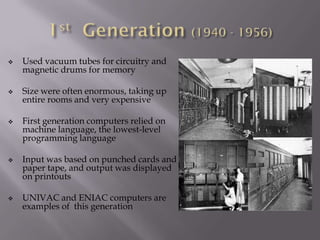
   Used vacuum tubes for circuitry and
    magnetic drums for memory

   Size were often enormous, taking up
    entire rooms and very expensive

   First generation computers relied on
    machine language, the lowest-level
    programming language

   Input was based on punched cards and
    paper tape, and output was displayed
    on printouts

   UNIVAC and ENIAC computers are
    examples of this generation
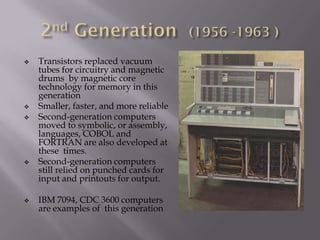
   Transistors replaced vacuum
    tubes for circuitry and magnetic
    drums by magnetic core
    technology for memory in this
    generation
   Smaller, faster, and more reliable
   Second-generation computers
    moved to symbolic, or assembly,
    languages, COBOL and
    FORTRAN are also developed at
    these times.
   Second-generation computers
    still relied on punched cards for
    input and printouts for output.

   IBM 7094, CDC 3600 computers
    are examples of this generation
   IC (Integrated Circuit) are used for
    circuitry which drastically increased
    the speed and efficiency of computers.
   The development of Third Generation
    Computers resulted end of the usage of
    first and second generation computers.
   These 3rd Generation Computer
    generate less heat then its
    predecessors.
   users interacted with third generation
    computers through keyboards and
    monitors
   Computers for the first time became
    accessible to a public.
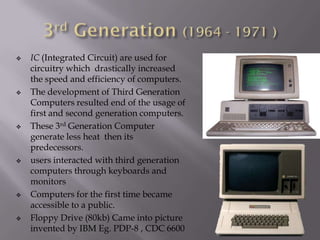
   Floppy Drive (80kb) Came into picture
    invented by IBM Eg. PDP-8 , CDC 6600
    The microprocessor brought the
     fourth generation of computers .
    What in the first generation filled
     an entire room could now fit in the
     palm of the hand and lot cheaper
   smaller, faster, more reliable, and
    lower in price
     Size of a television or much
        smaller
     Can do 500,000 to 1,000,000,000
        operations/second
     Cost one-tenth, or less, the
        amount of third generation
   very common in homes and
    business
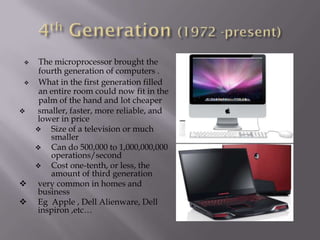
   Eg Apple , Dell Alienware, Dell
    inspiron ,etc…
   These generation will be thinking
    machines .
   Fifth generation computing
    devices, based on artificial
    intelligence, are still in
    development
   The goal of fifth-generation
    computing is to develop devices
    that respond to natural language
    input and are capable of learning
    and self-organization though
    there are some applications, such
    as voice recognition.
   Quantum computation and
    molecular and nanotechnology
    will radically change the face of
    computers in years to come.
Generations of computer

Generations of computer

  • 1.
  • 2.
    Used vacuum tubes for circuitry and magnetic drums for memory  Size were often enormous, taking up entire rooms and very expensive  First generation computers relied on machine language, the lowest-level programming language  Input was based on punched cards and paper tape, and output was displayed on printouts  UNIVAC and ENIAC computers are examples of this generation
  • 3.
    Transistors replaced vacuum tubes for circuitry and magnetic drums by magnetic core technology for memory in this generation  Smaller, faster, and more reliable  Second-generation computers moved to symbolic, or assembly, languages, COBOL and FORTRAN are also developed at these times.  Second-generation computers still relied on punched cards for input and printouts for output.  IBM 7094, CDC 3600 computers are examples of this generation
  • 4.
    IC (Integrated Circuit) are used for circuitry which drastically increased the speed and efficiency of computers.  The development of Third Generation Computers resulted end of the usage of first and second generation computers.  These 3rd Generation Computer generate less heat then its predecessors.  users interacted with third generation computers through keyboards and monitors  Computers for the first time became accessible to a public.  Floppy Drive (80kb) Came into picture invented by IBM Eg. PDP-8 , CDC 6600
  • 5.
    The microprocessor brought the fourth generation of computers .  What in the first generation filled an entire room could now fit in the palm of the hand and lot cheaper  smaller, faster, more reliable, and lower in price  Size of a television or much smaller  Can do 500,000 to 1,000,000,000 operations/second  Cost one-tenth, or less, the amount of third generation  very common in homes and business  Eg Apple , Dell Alienware, Dell inspiron ,etc…
  • 6.
    These generation will be thinking machines .  Fifth generation computing devices, based on artificial intelligence, are still in development  The goal of fifth-generation computing is to develop devices that respond to natural language input and are capable of learning and self-organization though there are some applications, such as voice recognition.  Quantum computation and molecular and nanotechnology will radically change the face of computers in years to come.