MAHENDRA COLLEGE OF 
ENGINEERING 
Paper Presentation of Generation of Computer
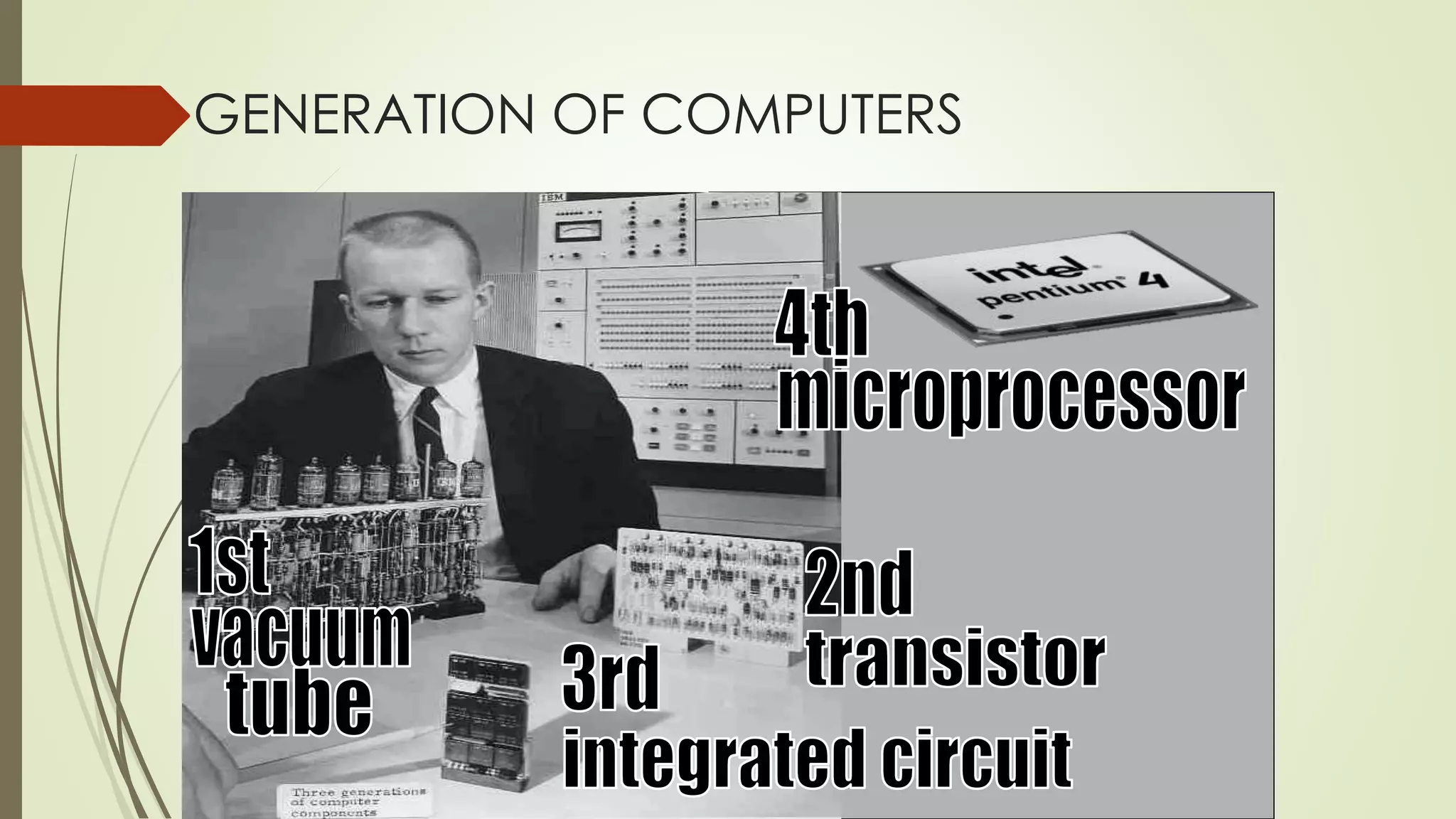
GENERATION OF COMPUTERS
GENERATION 
 The state of improvement in the development of a 
product 
 It is the stage of technological development or 
innovation 
 Every new generation has small and more advanced 
than previous one. 
 New discoveries are constantly being developed .
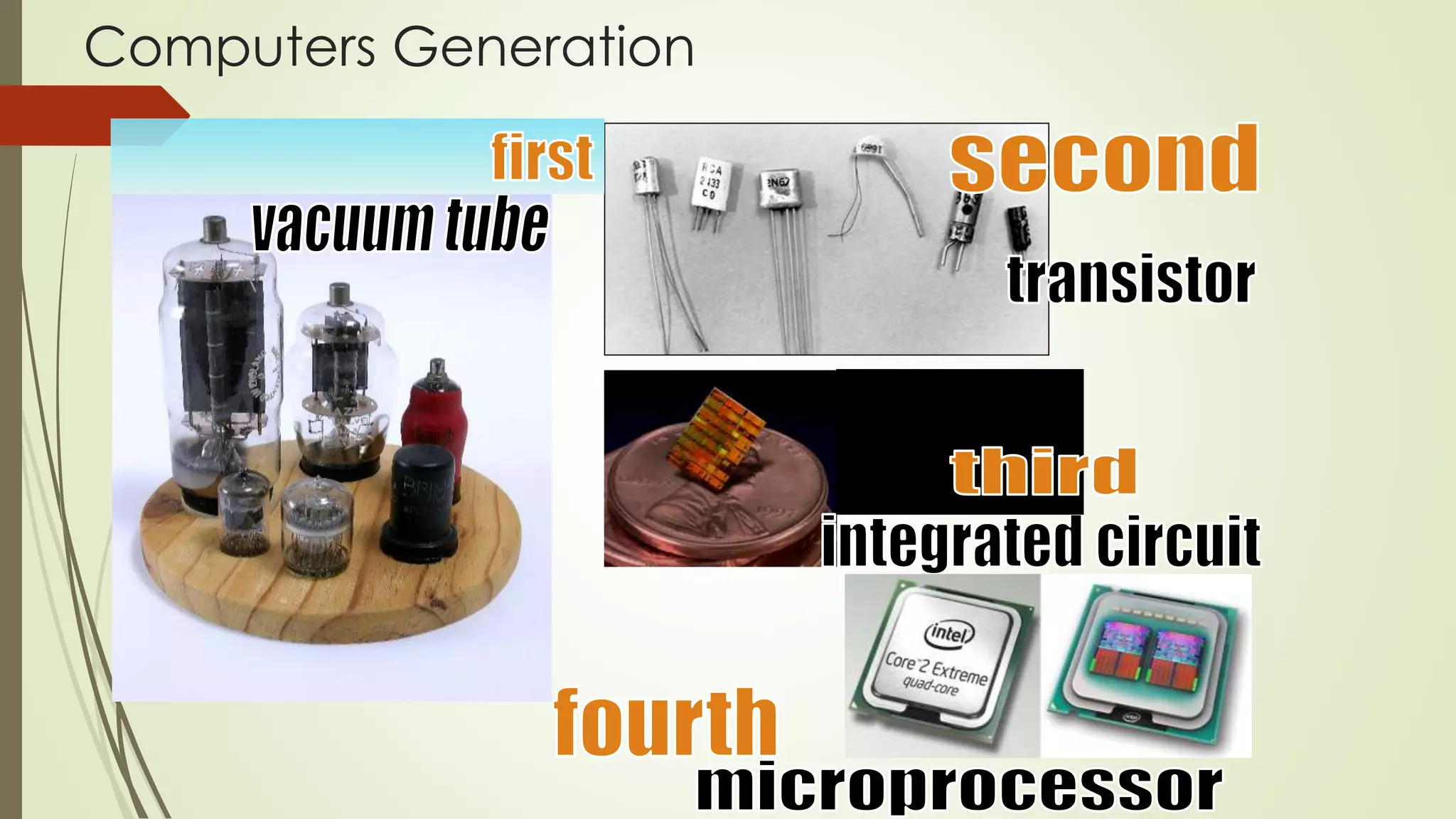
Computers Generation
Computer Generation 
First Generation - 1940-1956: Vacuum Tubes 
 Second Generation - 1956-1963: Transistors 
Third Generation - 1964-1971: Integrated 
Circuits 
Fourth Generation - 1971-Present: 
Microprocessors 
Fifth Generation - Present and Beyond: 
Artificial Intelligence
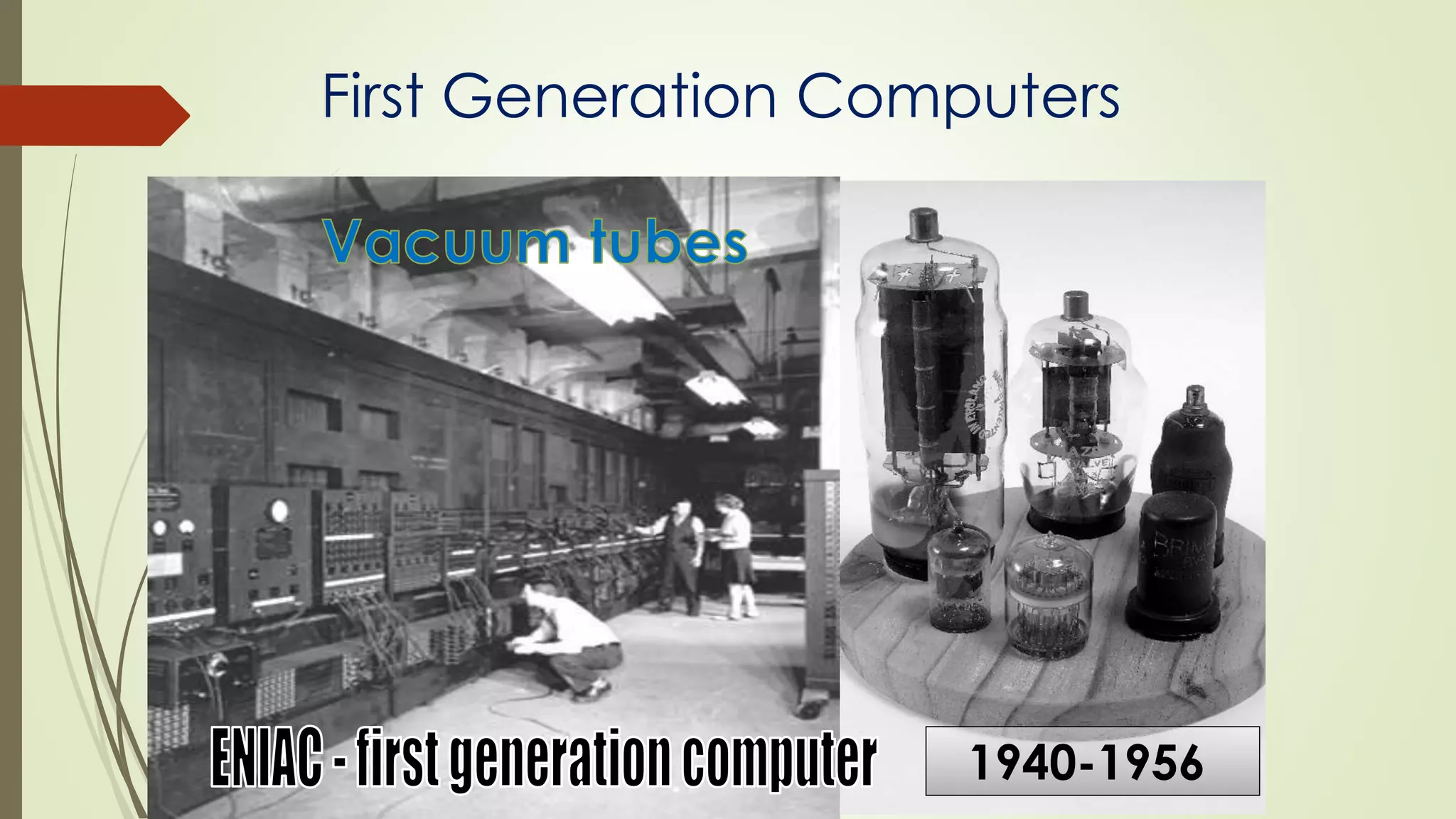
First Generation Computers 
1940-1956
First Generation Computers 
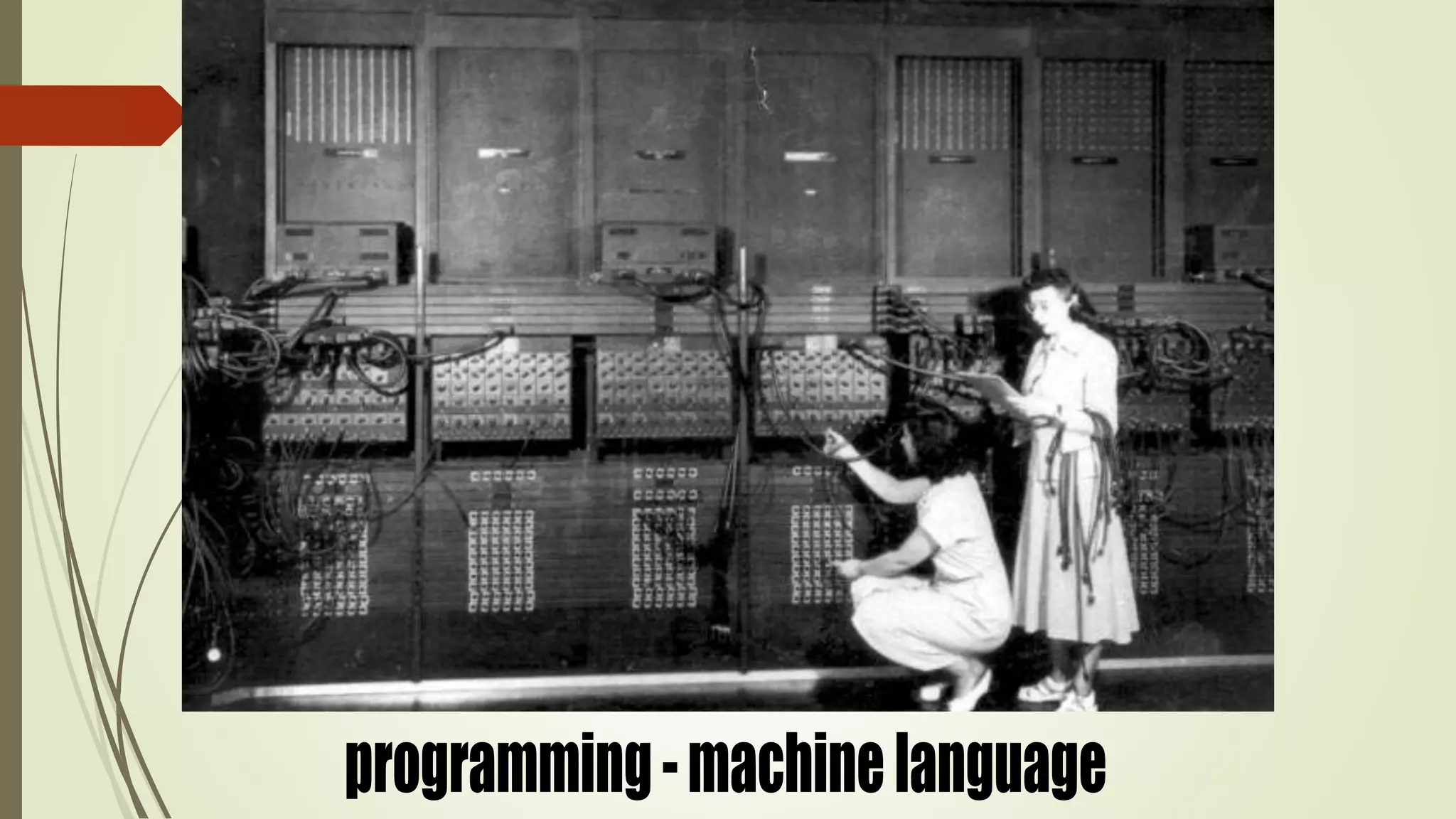
Vacuum tubes 
 Devices Used : Vacuum Tubes 
 Period : 1940-1956 
 Size : Very Huge (Size of 3 room ) 
 3.5 KW of electricity per day 
 Binary coded language used(‘0’s and ‘1’s) 
 Input: Punch cards and paper tape 
 Processing : Very Slow (microseconds ) 
 Output: Printouts 
Examples : UNIVAC ,EDVAC , EDSAC,ENIAC
Characteristics of First Generation 
Computers 
 Vacuum tube based on Technology 
 Supported Machine language only 
 Very costly 
 Generate lot of heat 
 Need of A.C 
 Slow Input/Output device 
 Huge size 
 .Non-portable 
 Consumed lot of electricity
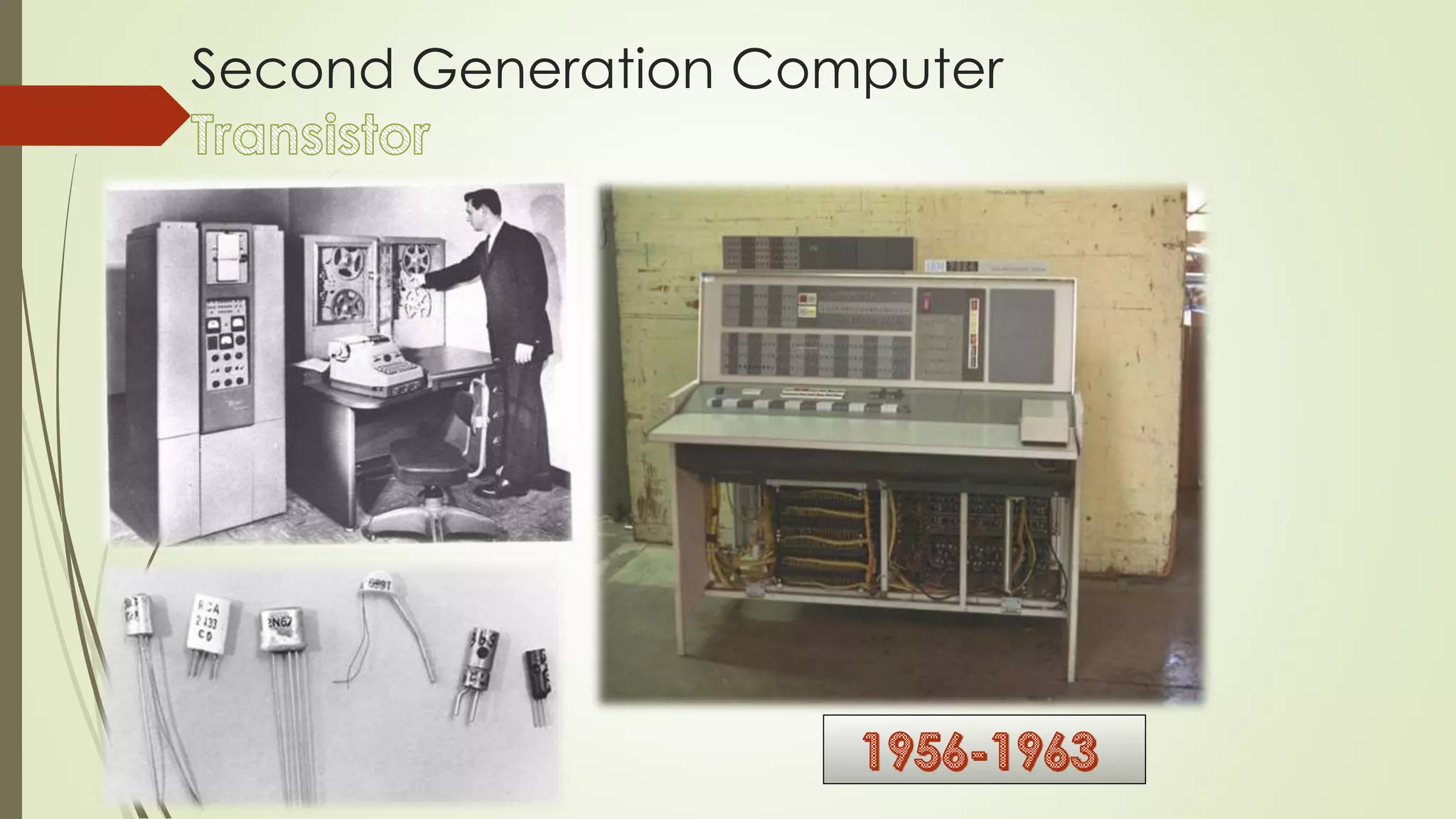
Second Generation Computer
Second Generation Computer 
Transistor 
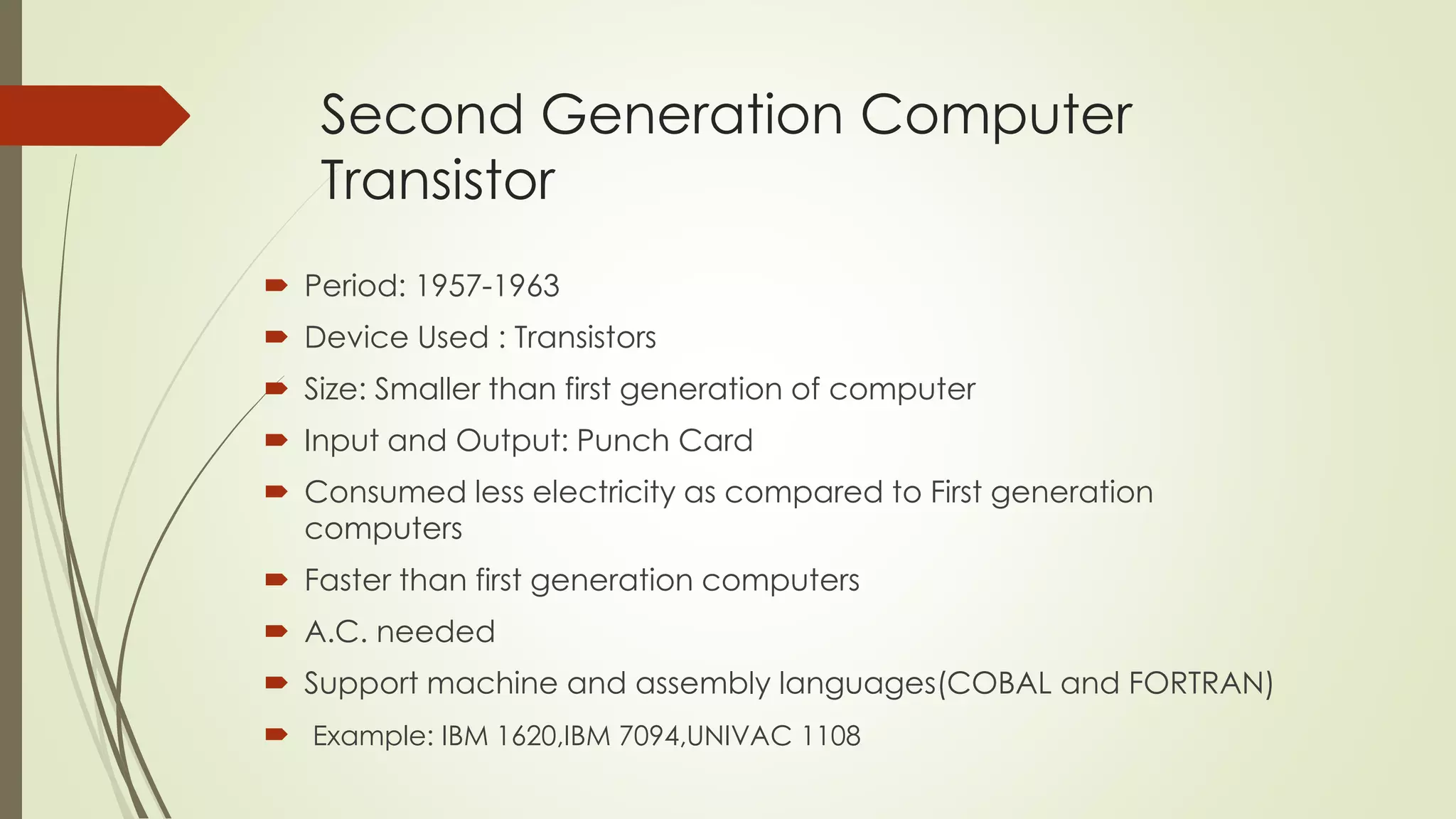
 Period: 1957-1963 
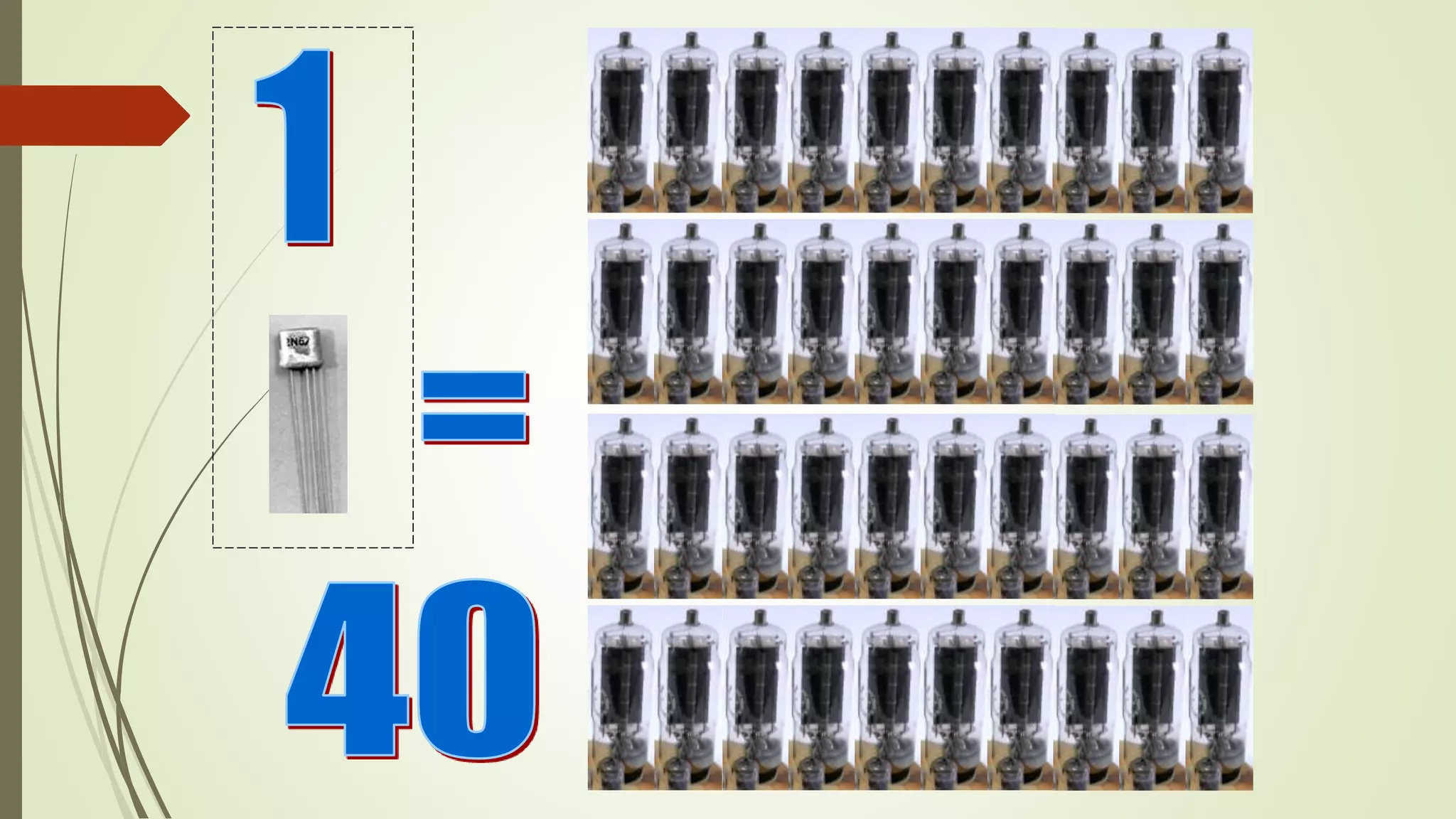
 Device Used : Transistors 
 Size: Smaller than first generation of computer 
 Input and Output: Punch Card 
 Consumed less electricity as compared to First generation 
computers 
 Faster than first generation computers 
 A.C. needed 
 Support machine and assembly languages(COBAL and FORTRAN) 
 Example: IBM 1620,IBM 7094,UNIVAC 1108
Characteristics of Second Generation 
Computer 
 Transistor based on technology 
 Processing Speed :milliseconds 
 Smaller in size 
 Reliable and prone to hardware failure 
 Portable 
 Generate less amount of heat 
 Easier to program
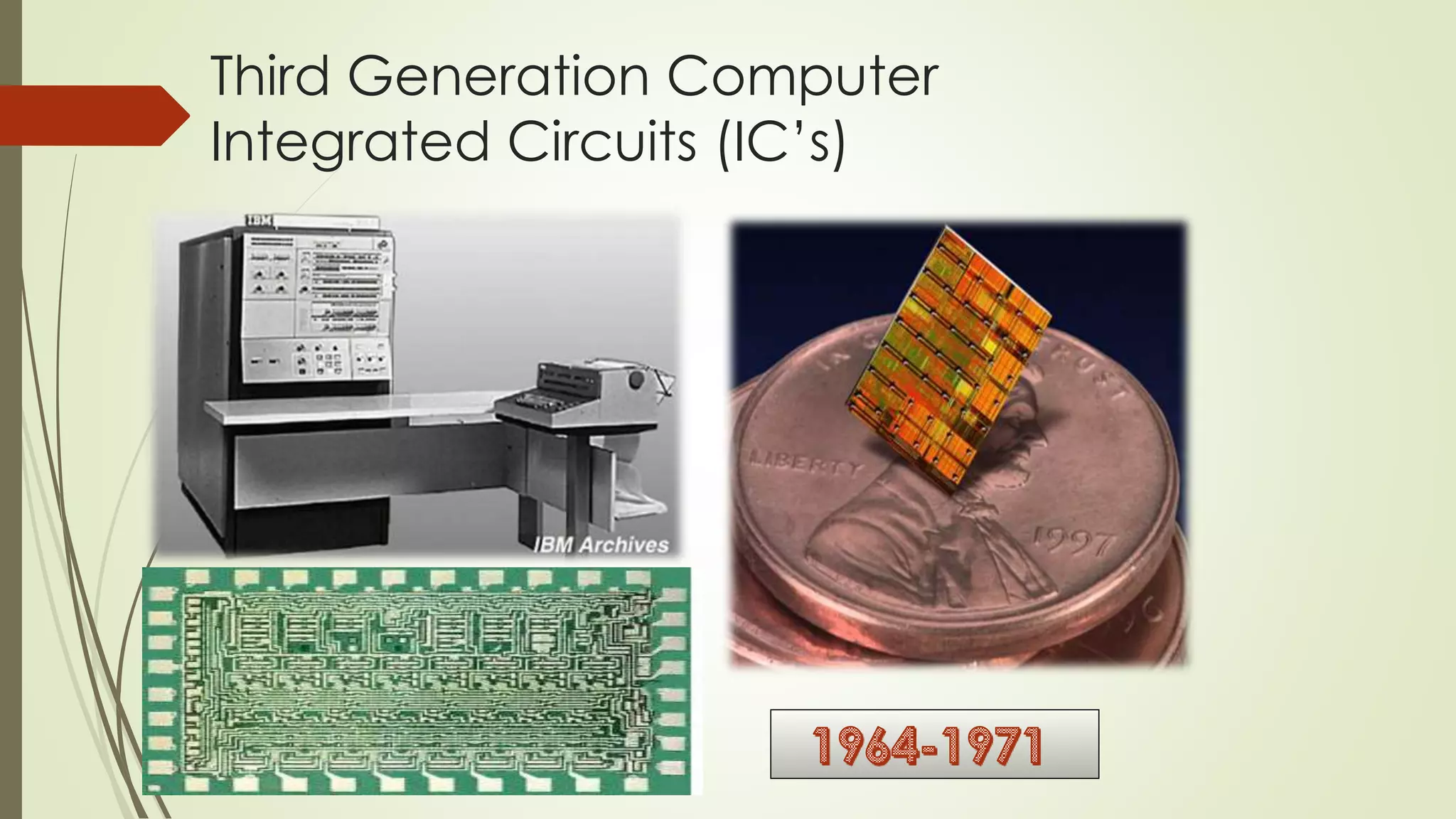
Third Generation Computer 
Integrated Circuits (IC’s)
Third Generation Computer 
IC’S 
 Period : 1963 to 1975 
 Device Use : Integrated Circuits 
 Technology : ICs Incorporated many transistors & electronic circuits 
on a single chip 
 Size : Small as compared to 2nd generation computers 
 Processing : Faster then 2nd generation computers 
 Input: Keyboard 
 Output: Monitor 
 Example: IBM-360 series,IBM-370/168TDC-316
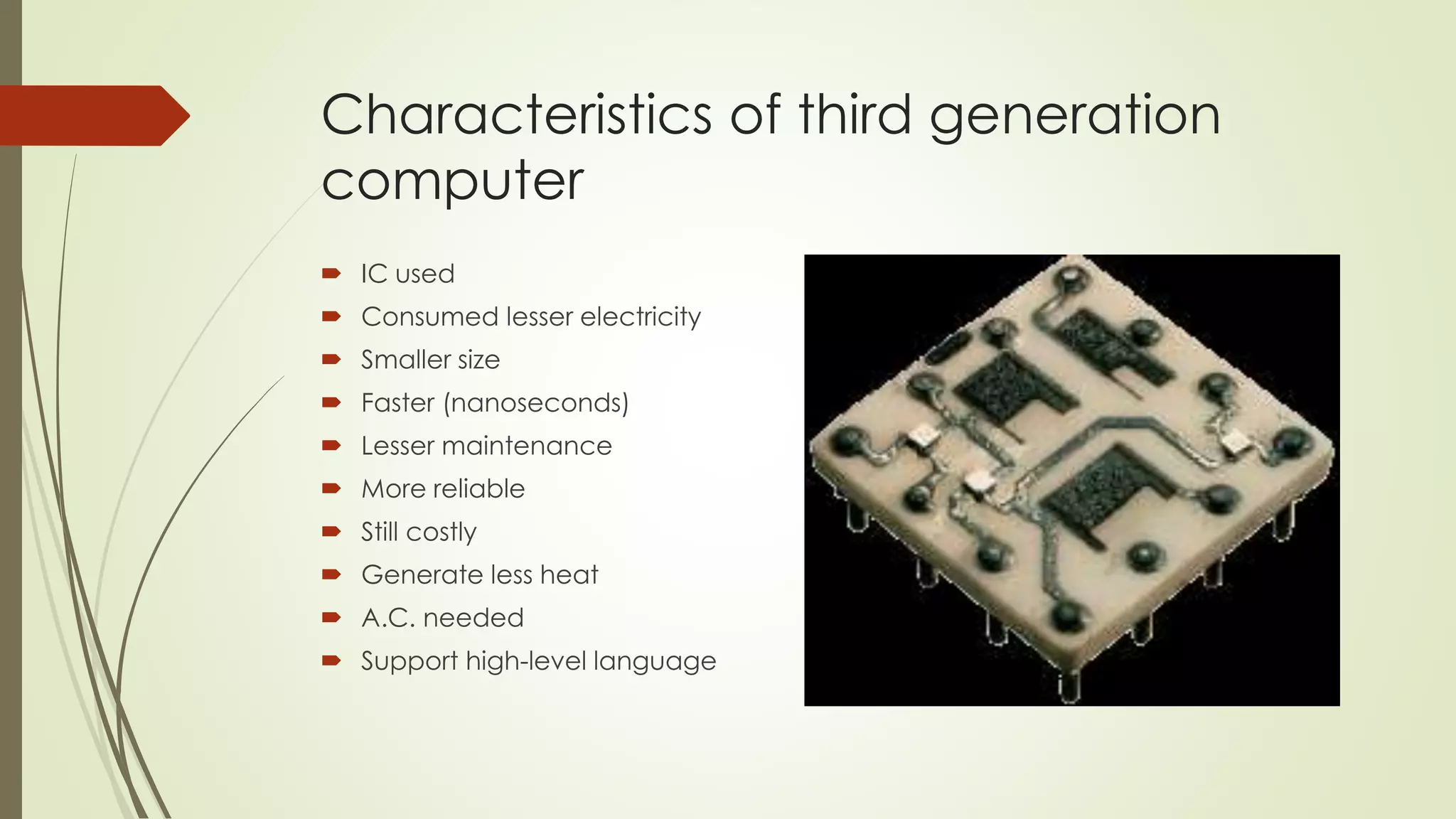
Characteristics of third generation 
computer 
 IC used 
 Consumed lesser electricity 
 Smaller size 
 Faster (nanoseconds) 
 Lesser maintenance 
 More reliable 
 Still costly 
 Generate less heat 
 A.C. needed 
 Support high-level language
Fourth Generation Computer 
Microprocessors
Fourth Generation Computer 
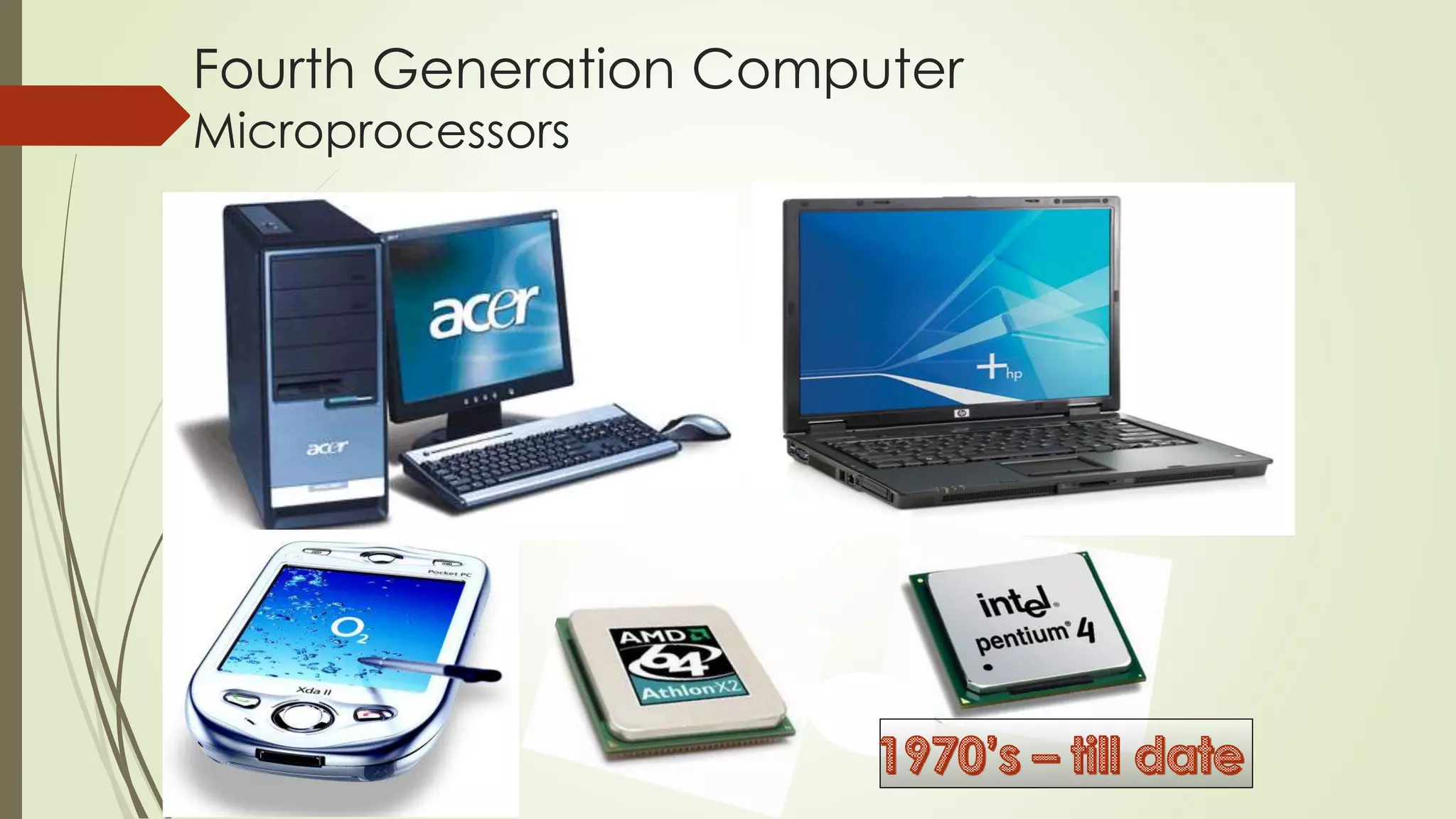
Microprocessors 
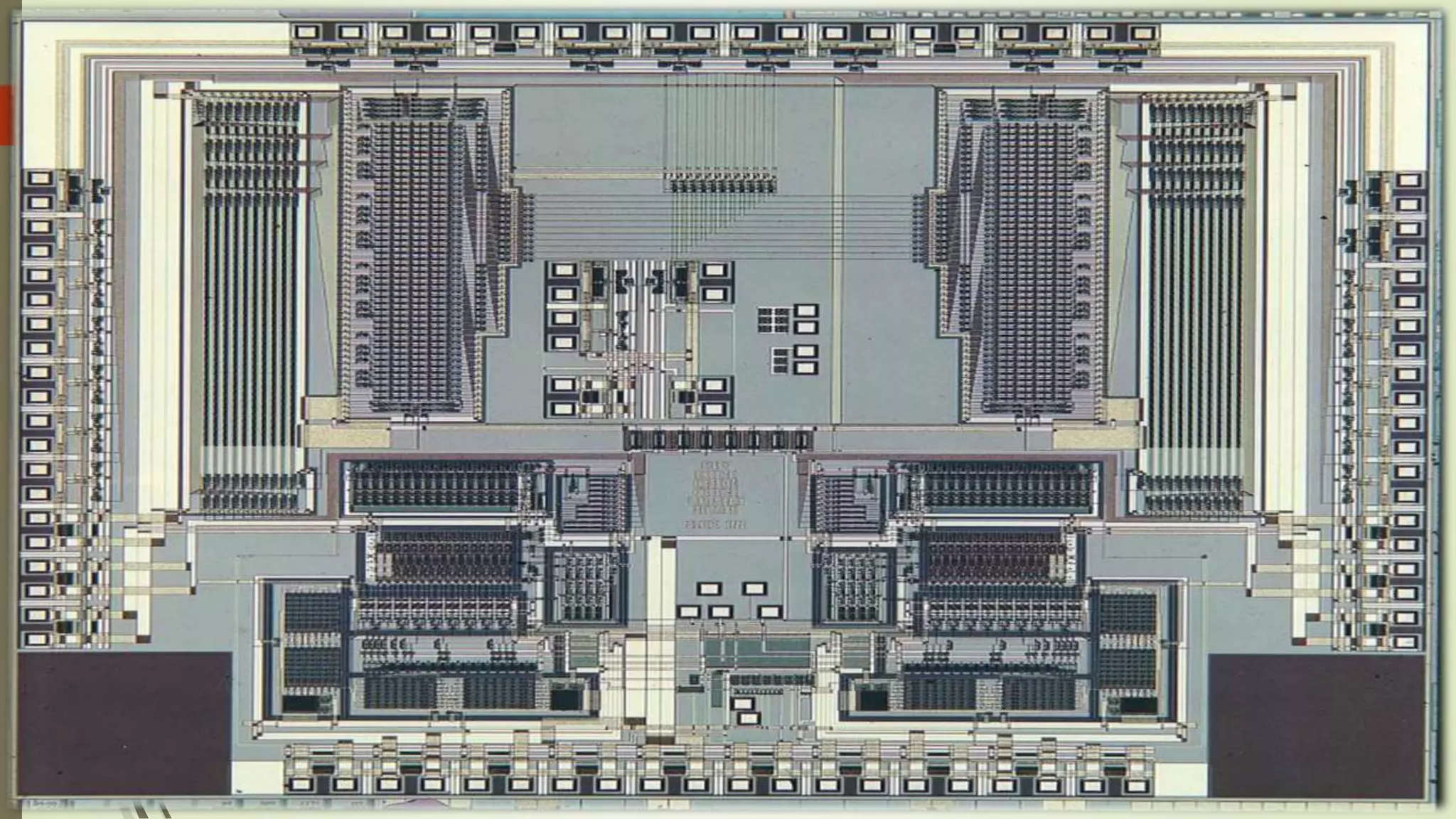
 Period : After 1972 to present 
 Size : Very small size 
 Devices Used : Silicon Chips 
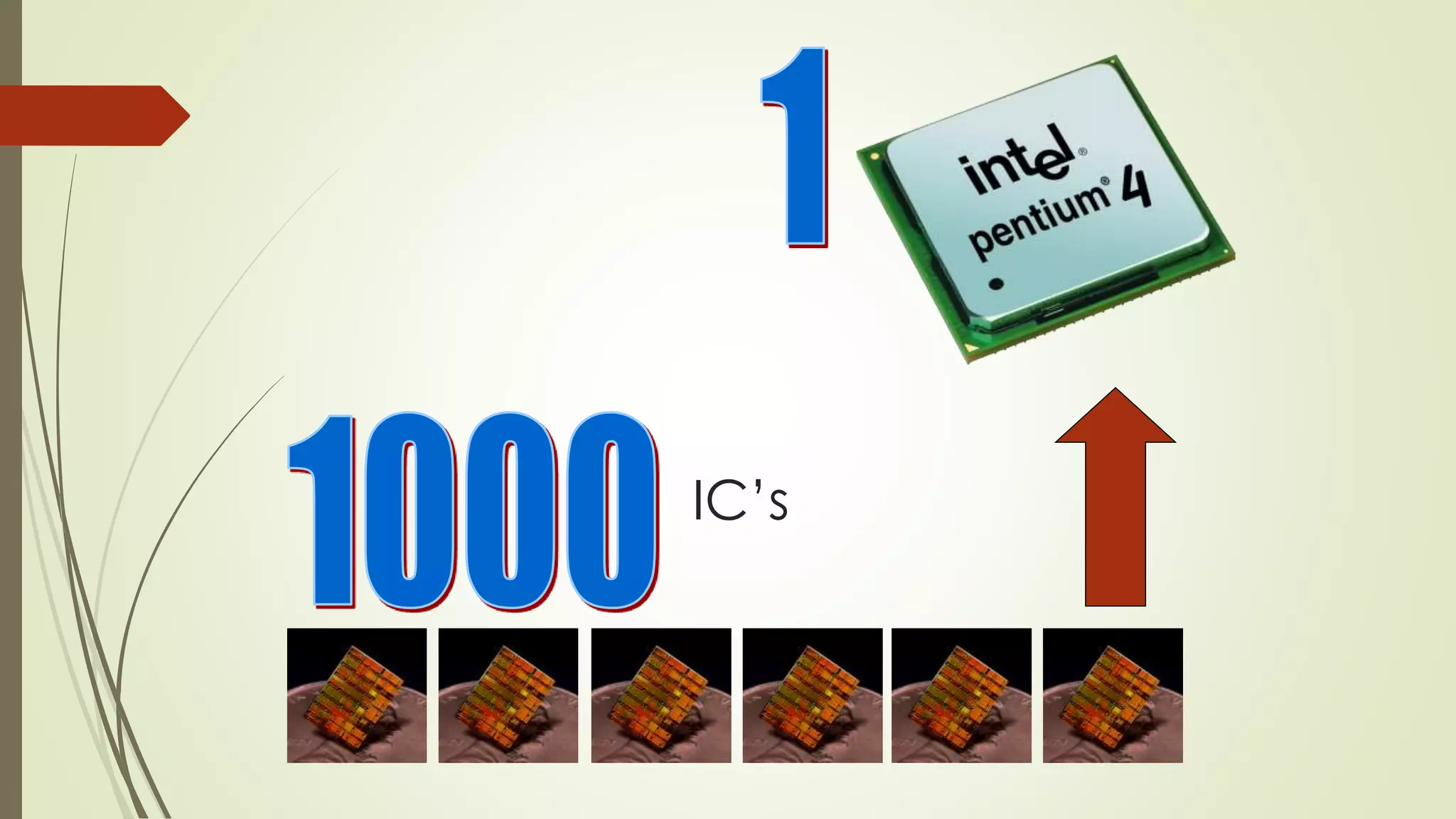
 LSI and VLSI technology used 
 Processing : Faster 
 High level language, OOP (Object Oriented Programming) used 
 Semiconductor memory devices used 
 GUI’s and OS used 
 Example: Apple II,CRAY – 1 and Altair 8800
IC’s
Characteristics of Fourth Generation 
Computer 
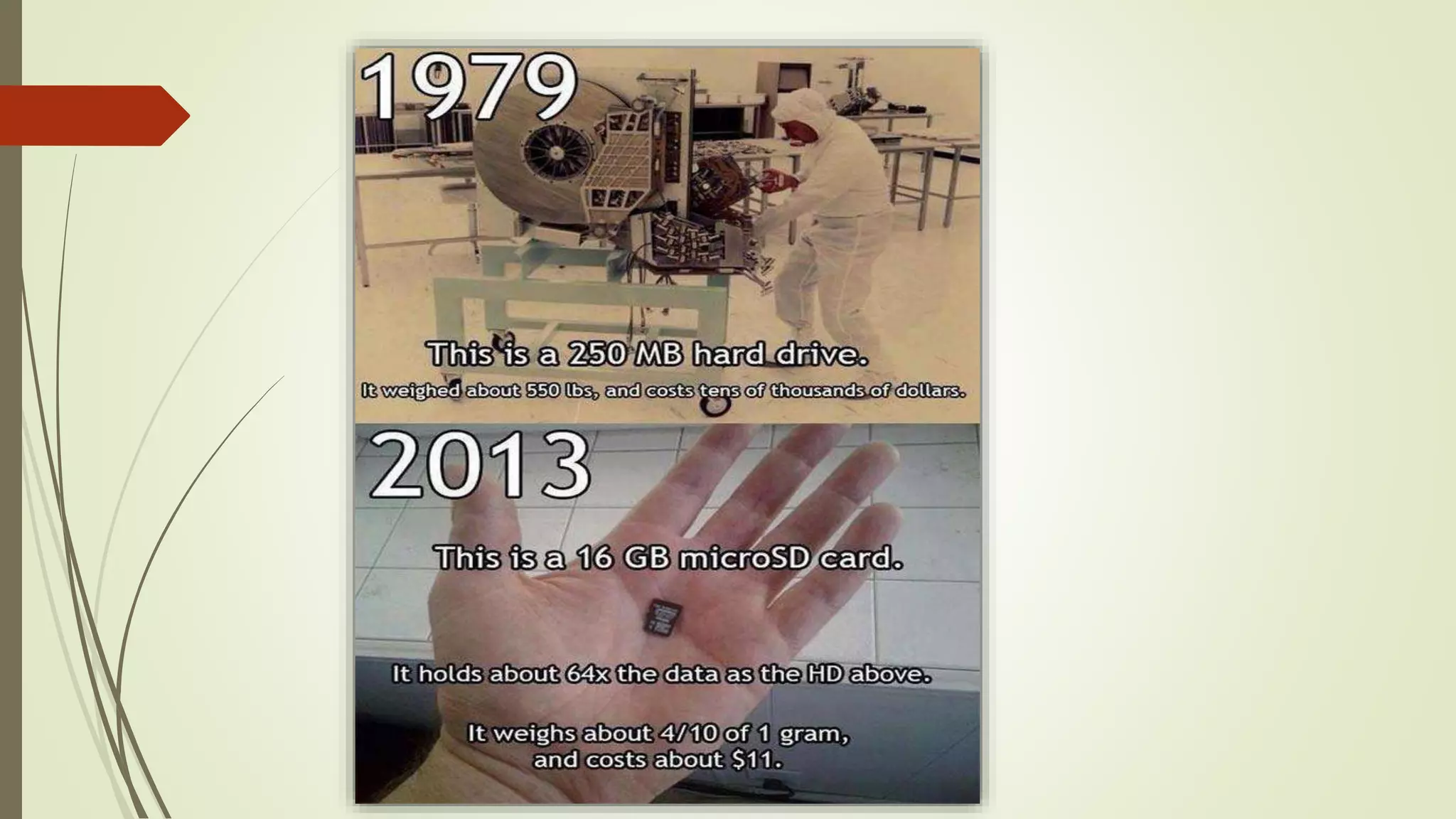
 LSI and VLSI technology used 
 Very cheap 
 Portable and reliable 
 Use of PC's 
 Very small size 
 Pipeline processing 
 No A.C. needed 
 Concept of internet was introduced 
 Great developments in the fields of networks 
 Less maintenance
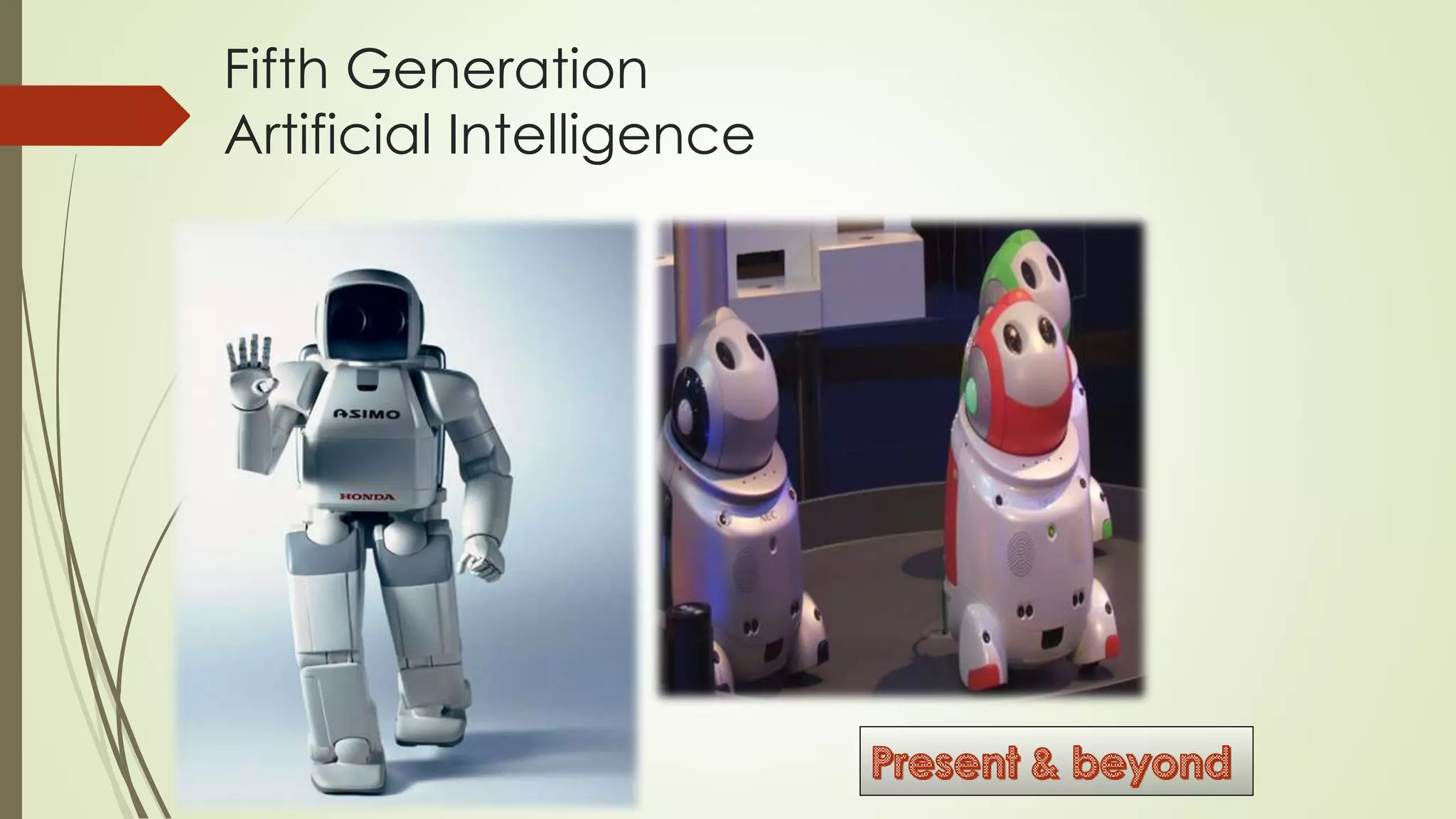
Fifth Generation 
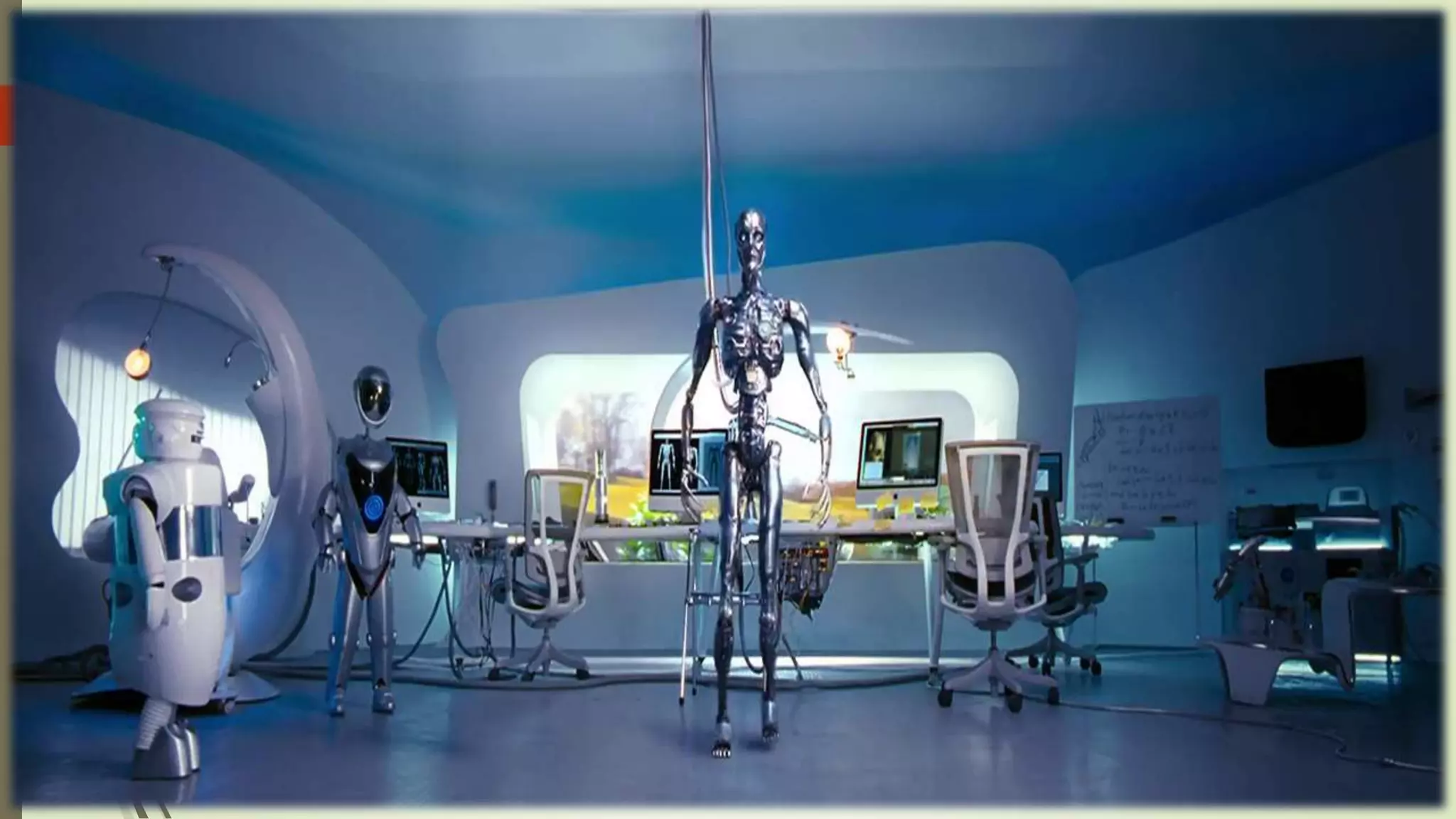
Artificial Intelligence
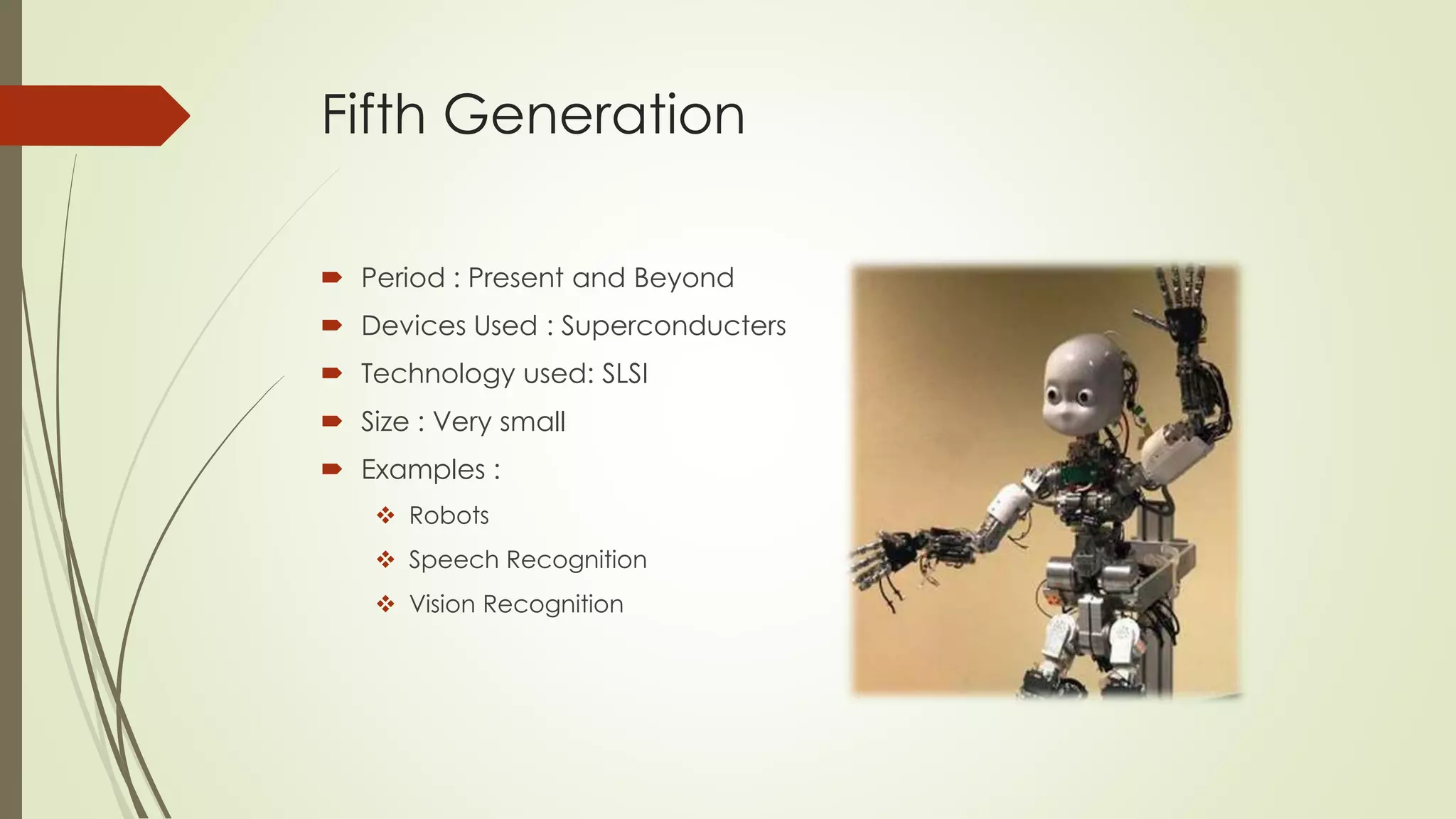
Fifth Generation 
 Period : Present and Beyond 
 Devices Used : Superconducters 
 Technology used: SLSI 
 Size : Very small 
 Examples : 
 Robots 
 Speech Recognition 
 Vision Recognition
Characteristics of Artificial Intelligence 
 Less power consumption . 
 High performance, 
 lower cost and very compact. 
 Portable note book computers introduced . 
 Memory chips up to 1 GB. 
 Hard disk drives up to 180 GB 
 Optical disks up to 27 GB are available (still the capacity is increasing) .
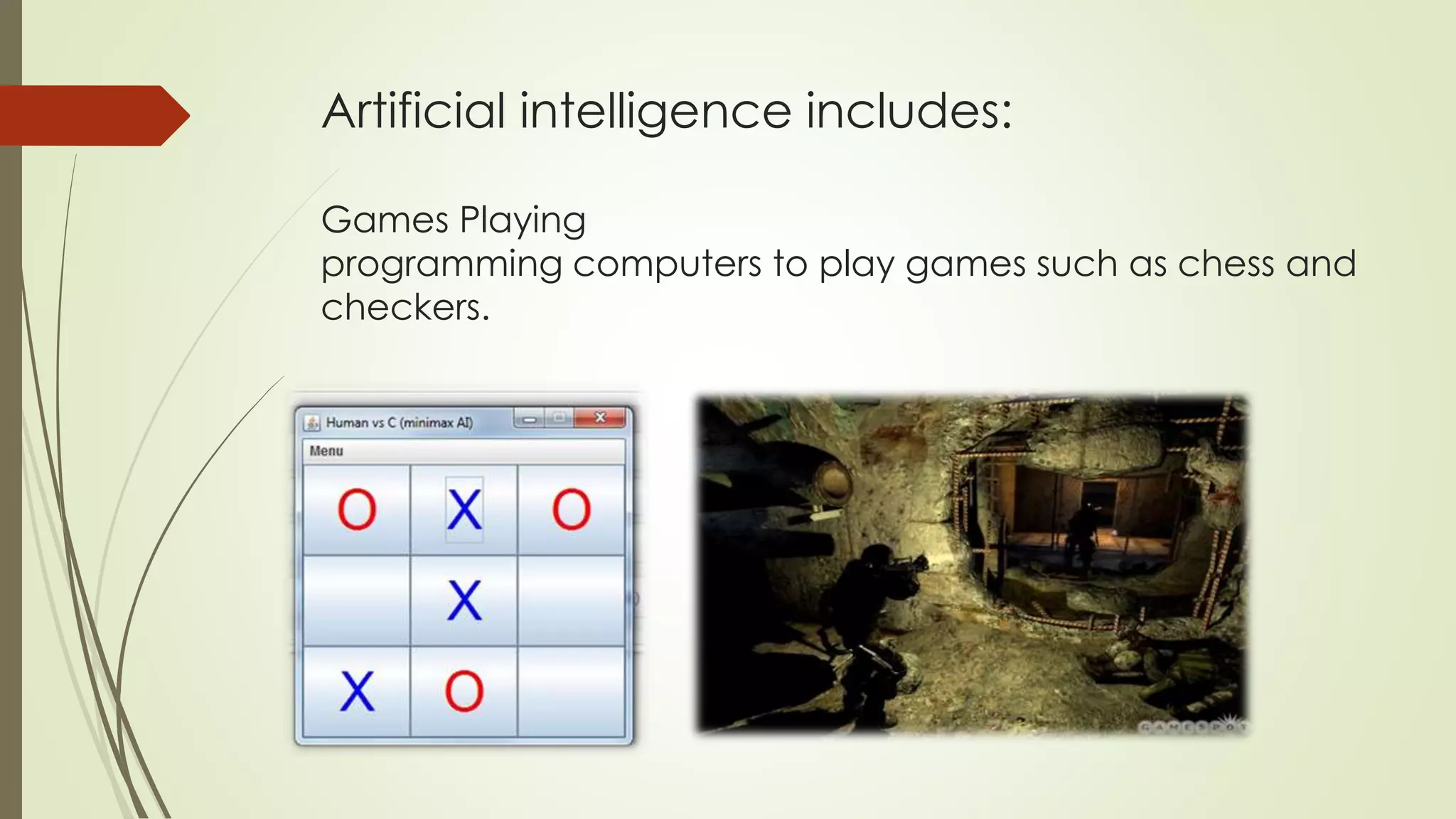
Artificial intelligence includes: 
Games Playing 
programming computers to play games such as chess and 
checkers.
Thankyou……..

Gne ration of com mputers

  • 1.
    MAHENDRA COLLEGE OF ENGINEERING Paper Presentation of Generation of Computer
  • 2.
  • 3.
    GENERATION  Thestate of improvement in the development of a product  It is the stage of technological development or innovation  Every new generation has small and more advanced than previous one.  New discoveries are constantly being developed .
  • 4.
  • 5.
    Computer Generation FirstGeneration - 1940-1956: Vacuum Tubes  Second Generation - 1956-1963: Transistors Third Generation - 1964-1971: Integrated Circuits Fourth Generation - 1971-Present: Microprocessors Fifth Generation - Present and Beyond: Artificial Intelligence
  • 6.
  • 7.
    First Generation Computers Vacuum tubes  Devices Used : Vacuum Tubes  Period : 1940-1956  Size : Very Huge (Size of 3 room )  3.5 KW of electricity per day  Binary coded language used(‘0’s and ‘1’s)  Input: Punch cards and paper tape  Processing : Very Slow (microseconds )  Output: Printouts Examples : UNIVAC ,EDVAC , EDSAC,ENIAC
  • 8.
    Characteristics of FirstGeneration Computers  Vacuum tube based on Technology  Supported Machine language only  Very costly  Generate lot of heat  Need of A.C  Slow Input/Output device  Huge size  .Non-portable  Consumed lot of electricity
  • 10.
  • 11.
    Second Generation Computer Transistor  Period: 1957-1963  Device Used : Transistors  Size: Smaller than first generation of computer  Input and Output: Punch Card  Consumed less electricity as compared to First generation computers  Faster than first generation computers  A.C. needed  Support machine and assembly languages(COBAL and FORTRAN)  Example: IBM 1620,IBM 7094,UNIVAC 1108
  • 13.
    Characteristics of SecondGeneration Computer  Transistor based on technology  Processing Speed :milliseconds  Smaller in size  Reliable and prone to hardware failure  Portable  Generate less amount of heat  Easier to program
  • 14.
    Third Generation Computer Integrated Circuits (IC’s)
  • 15.
    Third Generation Computer IC’S  Period : 1963 to 1975  Device Use : Integrated Circuits  Technology : ICs Incorporated many transistors & electronic circuits on a single chip  Size : Small as compared to 2nd generation computers  Processing : Faster then 2nd generation computers  Input: Keyboard  Output: Monitor  Example: IBM-360 series,IBM-370/168TDC-316
  • 16.
    Characteristics of thirdgeneration computer  IC used  Consumed lesser electricity  Smaller size  Faster (nanoseconds)  Lesser maintenance  More reliable  Still costly  Generate less heat  A.C. needed  Support high-level language
  • 18.
  • 19.
    Fourth Generation Computer Microprocessors  Period : After 1972 to present  Size : Very small size  Devices Used : Silicon Chips  LSI and VLSI technology used  Processing : Faster  High level language, OOP (Object Oriented Programming) used  Semiconductor memory devices used  GUI’s and OS used  Example: Apple II,CRAY – 1 and Altair 8800
  • 20.
  • 21.
    Characteristics of FourthGeneration Computer  LSI and VLSI technology used  Very cheap  Portable and reliable  Use of PC's  Very small size  Pipeline processing  No A.C. needed  Concept of internet was introduced  Great developments in the fields of networks  Less maintenance
  • 23.
  • 24.
    Fifth Generation Period : Present and Beyond  Devices Used : Superconducters  Technology used: SLSI  Size : Very small  Examples :  Robots  Speech Recognition  Vision Recognition
  • 26.
    Characteristics of ArtificialIntelligence  Less power consumption .  High performance,  lower cost and very compact.  Portable note book computers introduced .  Memory chips up to 1 GB.  Hard disk drives up to 180 GB  Optical disks up to 27 GB are available (still the capacity is increasing) .
  • 27.
    Artificial intelligence includes: Games Playing programming computers to play games such as chess and checkers.
  • 28.