Downloaded 30 times
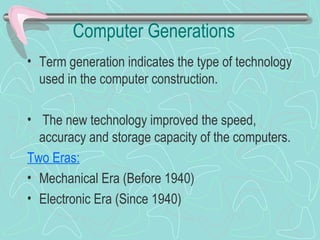
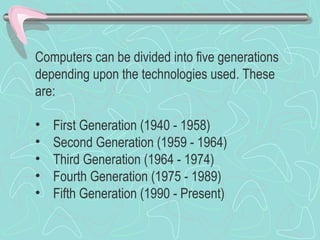
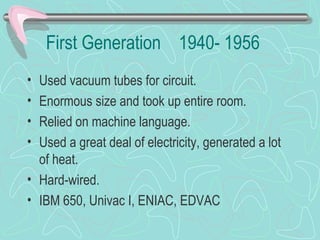
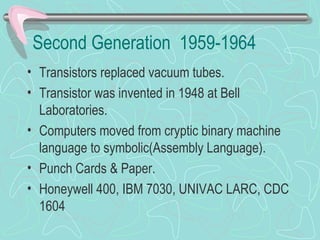
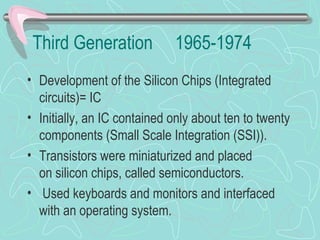
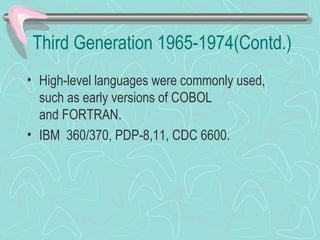


Computer generations can be divided into five periods based on the underlying technologies used: First generation computers (1940-1958) used vacuum tubes and were enormous in size, occupying entire rooms. The second generation (1959-1964) replaced vacuum tubes with transistors. The third generation (1964-1974) saw the development of integrated circuits and silicon chips, which allowed computers to be smaller and interface with keyboards, monitors, and operating systems. The fourth generation (1975-1989) introduced microchips and microprocessors. The fifth generation (1990-present), still in development, aims to develop artificial intelligence capabilities like natural language processing and self-learning.


