Generation Of Computers
Made By:
Hadi Amer
HISTORY OF COMPUTERS
• History of computers is a chain that runs from the
ancient abacus and the analytical engine of the
nineteenth century, through the modern computers of
present age.
• It is generally divided into five generations.
• Each generation of computers is characterized by major
technological developments of that time.
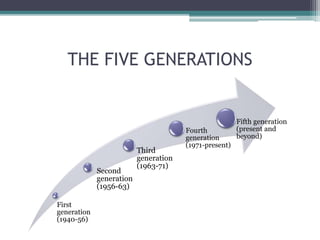
THE FIVE GENERATIONS
First
generation
(1940-56)
Second
generation
(1956-63)
Third
generation
(1963-71)
Fourth
generation
(1971-present)
Fifth generation
(present and
beyond)
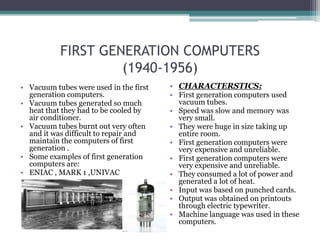
FIRST GENERATION COMPUTERS
(1940-1956)
• Vacuum tubes were used in the first
generation computers.
• Vacuum tubes generated so much
heat that they had to be cooled by
air conditioner.
• Vacuum tubes burnt out very often
and it was difficult to repair and
maintain the computers of first
generation .
• Some examples of first generation
computers are:
• ENIAC , MARK 1 ,UNIVAC
• CHARACTERSTICS:
• First generation computers used
vacuum tubes.
• Speed was slow and memory was
very small.
• They were huge in size taking up
entire room.
• First generation computers were
very expensive and unreliable.
• First generation computers were
very expensive and unreliable.
• They consumed a lot of power and
generated a lot of heat.
• Input was based on punched cards.
• Output was obtained on printouts
through electric typewriter.
• Machine language was used in these
computers.
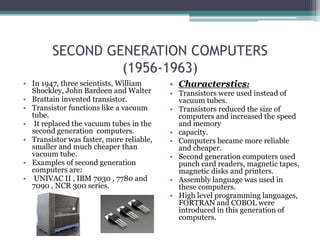
SECOND GENERATION COMPUTERS
(1956-1963)
• In 1947, three scientists, William
Shockley, John Bardeen and Walter
• Brattain invented transistor.
• Transistor functions like a vacuum
tube.
• It replaced the vacuum tubes in the
second generation computers.
• Transistor was faster, more reliable,
smaller and much cheaper than
vacuum tube.
• Examples of second generation
computers are:
• UNIVAC II , IBM 7030 , 7780 and
7090 , NCR 300 series.
• Characterstics:
• Transistors were used instead of
vacuum tubes.
• Transistors reduced the size of
computers and increased the speed
and memory
• capacity.
• Computers became more reliable
and cheaper.
• Second generation computers used
punch card readers, magnetic tapes,
magnetic disks and printers.
• Assembly language was used in
these computers.
• High level programming languages,
FORTRAN and COBOL were
introduced in this generation of
computers.
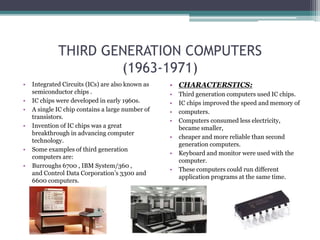
THIRD GENERATION COMPUTERS
(1963-1971)
• Integrated Circuits (ICs) are also known as
semiconductor chips .
• IC chips were developed in early 1960s.
• A single IC chip contains a large number of
transistors.
• Invention of IC chips was a great
breakthrough in advancing computer
technology.
• Some examples of third generation
computers are:
• Burroughs 6700 , IBM System/360 ,
and Control Data Corporation’s 3300 and
6600 computers.
• CHARACTERSTICS:
• Third generation computers used IC chips.
• IC chips improved the speed and memory of
• computers.
• Computers consumed less electricity,
became smaller,
• cheaper and more reliable than second
generation computers.
• Keyboard and monitor were used with the
computer.
• These computers could run different
application programs at the same time.
FOURTH GENERATION COMPUTERS
(1971-PRESENT)
• In this generation of computers LSI (Large Scale
Integration) and VLSI (Very Large Scale
Integration) chips having millions of transistors
were developed.
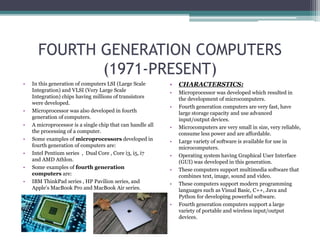
• Microprocessor was also developed in fourth
generation of computers.
• A microprocessor is a single chip that can handle all
the processing of a computer.
• Some examples of microprocessors developed in
fourth generation of computers are:
• Intel Pentium series , Dual Core , Core i3, i5, i7
and AMD Athlon.
• Some examples of fourth generation
computers are:
• IBM ThinkPad series , HP Pavilion series, and
Apple’s MacBook Pro and MacBook Air series.
• CHARACTERSTICS:
• Microprocessor was developed which resulted in
the development of microcomputers.
• Fourth generation computers are very fast, have
large storage capacity and use advanced
input/output devices.
• Microcomputers are very small in size, very reliable,
consume less power and are affordable.
• Large variety of software is available for use in
microcomputers.
• Operating system having Graphical User Interface
(GUI) was developed in this generation.
• These computers support multimedia software that
combines text, image, sound and video.
• These computers support modern programming
languages such as Visual Basic, C++, Java and
Python for developing powerful software.
• Fourth generation computers support a large
variety of portable and wireless input/output
devices.
FIFTH GENEARATION COMPUTERS
(PRESENT AND BEYOND)
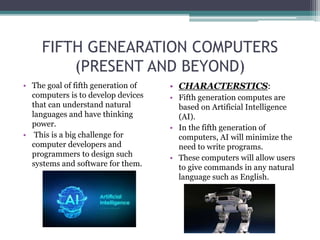
• The goal of fifth generation of
computers is to develop devices
that can understand natural
languages and have thinking
power.
• This is a big challenge for
computer developers and
programmers to design such
systems and software for them.
• CHARACTERSTICS:
• Fifth generation computes are
based on Artificial Intelligence
(AI).
• In the fifth generation of
computers, AI will minimize the
need to write programs.
• These computers will allow users
to give commands in any natural
language such as English.
Generation of computers

Generation of computers

  • 1.
  • 2.
    HISTORY OF COMPUTERS •History of computers is a chain that runs from the ancient abacus and the analytical engine of the nineteenth century, through the modern computers of present age. • It is generally divided into five generations. • Each generation of computers is characterized by major technological developments of that time.
  • 3.
  • 4.
    FIRST GENERATION COMPUTERS (1940-1956) •Vacuum tubes were used in the first generation computers. • Vacuum tubes generated so much heat that they had to be cooled by air conditioner. • Vacuum tubes burnt out very often and it was difficult to repair and maintain the computers of first generation . • Some examples of first generation computers are: • ENIAC , MARK 1 ,UNIVAC • CHARACTERSTICS: • First generation computers used vacuum tubes. • Speed was slow and memory was very small. • They were huge in size taking up entire room. • First generation computers were very expensive and unreliable. • First generation computers were very expensive and unreliable. • They consumed a lot of power and generated a lot of heat. • Input was based on punched cards. • Output was obtained on printouts through electric typewriter. • Machine language was used in these computers.
  • 5.
    SECOND GENERATION COMPUTERS (1956-1963) •In 1947, three scientists, William Shockley, John Bardeen and Walter • Brattain invented transistor. • Transistor functions like a vacuum tube. • It replaced the vacuum tubes in the second generation computers. • Transistor was faster, more reliable, smaller and much cheaper than vacuum tube. • Examples of second generation computers are: • UNIVAC II , IBM 7030 , 7780 and 7090 , NCR 300 series. • Characterstics: • Transistors were used instead of vacuum tubes. • Transistors reduced the size of computers and increased the speed and memory • capacity. • Computers became more reliable and cheaper. • Second generation computers used punch card readers, magnetic tapes, magnetic disks and printers. • Assembly language was used in these computers. • High level programming languages, FORTRAN and COBOL were introduced in this generation of computers.
  • 6.
    THIRD GENERATION COMPUTERS (1963-1971) •Integrated Circuits (ICs) are also known as semiconductor chips . • IC chips were developed in early 1960s. • A single IC chip contains a large number of transistors. • Invention of IC chips was a great breakthrough in advancing computer technology. • Some examples of third generation computers are: • Burroughs 6700 , IBM System/360 , and Control Data Corporation’s 3300 and 6600 computers. • CHARACTERSTICS: • Third generation computers used IC chips. • IC chips improved the speed and memory of • computers. • Computers consumed less electricity, became smaller, • cheaper and more reliable than second generation computers. • Keyboard and monitor were used with the computer. • These computers could run different application programs at the same time.
  • 7.
    FOURTH GENERATION COMPUTERS (1971-PRESENT) •In this generation of computers LSI (Large Scale Integration) and VLSI (Very Large Scale Integration) chips having millions of transistors were developed. • Microprocessor was also developed in fourth generation of computers. • A microprocessor is a single chip that can handle all the processing of a computer. • Some examples of microprocessors developed in fourth generation of computers are: • Intel Pentium series , Dual Core , Core i3, i5, i7 and AMD Athlon. • Some examples of fourth generation computers are: • IBM ThinkPad series , HP Pavilion series, and Apple’s MacBook Pro and MacBook Air series. • CHARACTERSTICS: • Microprocessor was developed which resulted in the development of microcomputers. • Fourth generation computers are very fast, have large storage capacity and use advanced input/output devices. • Microcomputers are very small in size, very reliable, consume less power and are affordable. • Large variety of software is available for use in microcomputers. • Operating system having Graphical User Interface (GUI) was developed in this generation. • These computers support multimedia software that combines text, image, sound and video. • These computers support modern programming languages such as Visual Basic, C++, Java and Python for developing powerful software. • Fourth generation computers support a large variety of portable and wireless input/output devices.
  • 8.
    FIFTH GENEARATION COMPUTERS (PRESENTAND BEYOND) • The goal of fifth generation of computers is to develop devices that can understand natural languages and have thinking power. • This is a big challenge for computer developers and programmers to design such systems and software for them. • CHARACTERSTICS: • Fifth generation computes are based on Artificial Intelligence (AI). • In the fifth generation of computers, AI will minimize the need to write programs. • These computers will allow users to give commands in any natural language such as English.