Generalized anxiety disorder
(GAD)
Dr. Rima Das.
B.A.M.S. (Mum); PGDEMS (Pune); DACLS, DIHM, DDM (Pune);
FPC (M.U.H.S; Nashik).
Consulting Preventive Cardiologist.
1
Generalized anxiety disorder (GAD)
definition
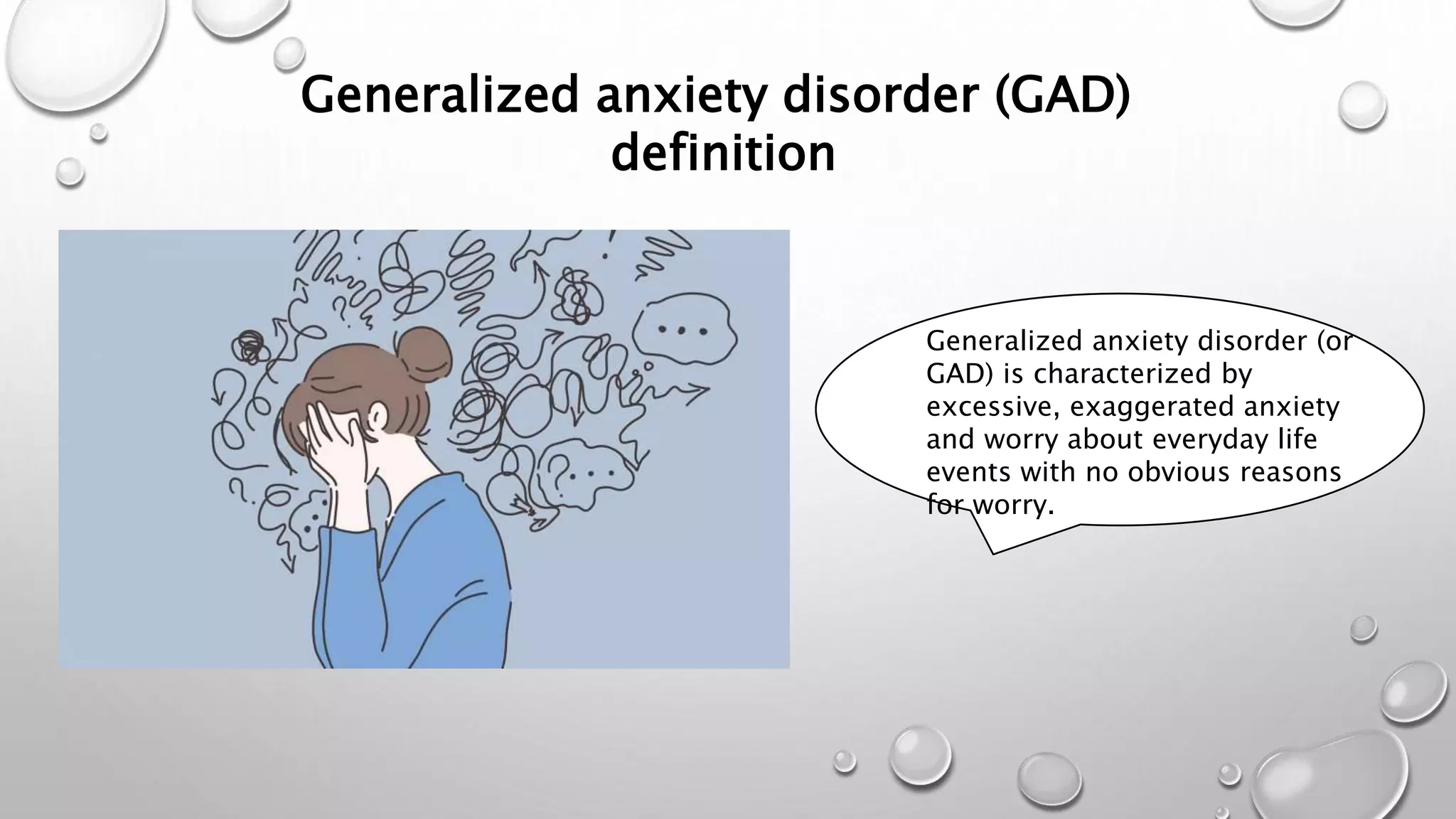
Generalized anxiety disorder (or
GAD) is characterized by
excessive, exaggerated anxiety
and worry about everyday life
events with no obvious reasons
for worry.
Classification:
 Based on behavioral pattern:
• Generalized anxiety disorder - involves six months of persistent, excessive, and unrealistic
worry.
• Panic disorder - may have a sudden onset causing apprehension, fear, or terror.
• Obsessive compulsive disorder - involves persistent, recurring thoughts/ impulses (obsessions)
and ritualistic actions (compulsions)
• Post traumatic stress disorder - occurs after a severe emotional or physical trauma and involves
the feeling that the person is re-experiencing this traumatic event.
• Acute stress disorder - includes similar symptoms to post traumatic stress disorder but occurs
immediately after a traumatic event.
• Social phobia - a person may experience anxiety when exposed to certain social events and
desires to avoid the situation
• Other phobia - anxiety when exposed to a specific object or situation and the desire to avoid it.
• Alcohol induced anxiety
• Drug induced anxiety
• Separation anxiety - occurs when a child is separated from his or her parents.
 Clinical manifestation of GAD:
• Persistent worrying or anxiety
about a number of areas that are
out of proportion.
• Overthinking plans and solutions
to all possible worst case scenario
• Perceiving any situation or event
as a threat
• Difficulty handling uncertainty
• Indecisiveness and fear of making
the wrong decision
• Inability to set aside or let go of a
worry
• Restless and feeling keyed up or
on the edge
• Difficulty concentrating
• Suicidal or homicidal ideations.
 Clinical manifestation in children
and teenagers:
• Excessive worry about
performance at school or sporting
events, family member's safety,
being on time (punctuality),
earthquakes, nuclear war or others
catastrophic events.
• Redoing tasks because they aren't
perfect the first time.
• Spending excessive time doing
homework
• Lack of confidence
• Desire for approval and
reassurance seeing behavior about
performance
• Frequent stomach aches or other
physical complaints
• Avoiding going to school or
avoiding social situations
 Physical signs and symptoms may include:
• Fatigue
• Difficulty sleeping
• Muscle tension or muscle aches
• Trembling, feeling twitchy
• Nervousness or being easily startled
• Sweating
• Nausea, diarrhea or irritable bowel syndrome
• Irritability
 Risk factors in GAD:
• Personality - A person whose
temperament is timid or negative
or who avoids anything dangerous
maybe more prone to generalized
anxiety disorder than others are.
• Genetics - Generalized anxiety
disorder may run in families.
• Experiences - People with
generalized anxiety disorder may
have a history of significant life
changes, traumatic or negative
experiences during childhood, or a
recent traumatic or negative event.
Chronic medical illnesses or other
mental health disorders may
increase risk.
 Orders/ investigation:
There are no lab tests to specially diagnose
anxiety disorders, various tests may be used to
look for physical illness as the cause of
symptoms.
Medications
Benzodiazepines
These are a class of psychoactive drugs used to treat a range of conditions, including
anxiety and insomnia. (Eg. Alprazolam, chlordiazepoxide, diazepam, lorazepam).
Antidepressants
They work by balancing chemicals in the brain called neurotransmitters that affect mood
and emotions. These depression medicines can help improve mood, help sleep better, and
increase appetite and concentration. (Eg. Paroxetine, venlafaxine, fluoxetine,
escitalopram, sertraline, duloxetine, citalopram).
Therapies
Cognitive behavioral therapy -
This involves learning to recognize and change thought patterns and behaviors that lead to
anxious feelings. This type of therapy helps limit distorted thinking by looking at worries
more realistically.
Relaxation techniques –
Deep breathing and bio feedback may help control the muscle tension that often
accompanies GAD.
Thank you!
9

Generalized anxiety disorder (GAD)

  • 1.
    Generalized anxiety disorder (GAD) Dr.Rima Das. B.A.M.S. (Mum); PGDEMS (Pune); DACLS, DIHM, DDM (Pune); FPC (M.U.H.S; Nashik). Consulting Preventive Cardiologist. 1
  • 2.
    Generalized anxiety disorder(GAD) definition Generalized anxiety disorder (or GAD) is characterized by excessive, exaggerated anxiety and worry about everyday life events with no obvious reasons for worry.
  • 3.
    Classification:  Based onbehavioral pattern: • Generalized anxiety disorder - involves six months of persistent, excessive, and unrealistic worry. • Panic disorder - may have a sudden onset causing apprehension, fear, or terror. • Obsessive compulsive disorder - involves persistent, recurring thoughts/ impulses (obsessions) and ritualistic actions (compulsions) • Post traumatic stress disorder - occurs after a severe emotional or physical trauma and involves the feeling that the person is re-experiencing this traumatic event. • Acute stress disorder - includes similar symptoms to post traumatic stress disorder but occurs immediately after a traumatic event. • Social phobia - a person may experience anxiety when exposed to certain social events and desires to avoid the situation • Other phobia - anxiety when exposed to a specific object or situation and the desire to avoid it. • Alcohol induced anxiety • Drug induced anxiety • Separation anxiety - occurs when a child is separated from his or her parents.
  • 4.
     Clinical manifestationof GAD: • Persistent worrying or anxiety about a number of areas that are out of proportion. • Overthinking plans and solutions to all possible worst case scenario • Perceiving any situation or event as a threat • Difficulty handling uncertainty • Indecisiveness and fear of making the wrong decision • Inability to set aside or let go of a worry • Restless and feeling keyed up or on the edge • Difficulty concentrating • Suicidal or homicidal ideations.
  • 5.
     Clinical manifestationin children and teenagers: • Excessive worry about performance at school or sporting events, family member's safety, being on time (punctuality), earthquakes, nuclear war or others catastrophic events. • Redoing tasks because they aren't perfect the first time. • Spending excessive time doing homework • Lack of confidence • Desire for approval and reassurance seeing behavior about performance • Frequent stomach aches or other physical complaints • Avoiding going to school or avoiding social situations  Physical signs and symptoms may include: • Fatigue • Difficulty sleeping • Muscle tension or muscle aches • Trembling, feeling twitchy • Nervousness or being easily startled • Sweating • Nausea, diarrhea or irritable bowel syndrome • Irritability
  • 6.
     Risk factorsin GAD: • Personality - A person whose temperament is timid or negative or who avoids anything dangerous maybe more prone to generalized anxiety disorder than others are. • Genetics - Generalized anxiety disorder may run in families. • Experiences - People with generalized anxiety disorder may have a history of significant life changes, traumatic or negative experiences during childhood, or a recent traumatic or negative event. Chronic medical illnesses or other mental health disorders may increase risk.  Orders/ investigation: There are no lab tests to specially diagnose anxiety disorders, various tests may be used to look for physical illness as the cause of symptoms.
  • 7.
    Medications Benzodiazepines These are aclass of psychoactive drugs used to treat a range of conditions, including anxiety and insomnia. (Eg. Alprazolam, chlordiazepoxide, diazepam, lorazepam). Antidepressants They work by balancing chemicals in the brain called neurotransmitters that affect mood and emotions. These depression medicines can help improve mood, help sleep better, and increase appetite and concentration. (Eg. Paroxetine, venlafaxine, fluoxetine, escitalopram, sertraline, duloxetine, citalopram).
  • 8.
    Therapies Cognitive behavioral therapy- This involves learning to recognize and change thought patterns and behaviors that lead to anxious feelings. This type of therapy helps limit distorted thinking by looking at worries more realistically. Relaxation techniques – Deep breathing and bio feedback may help control the muscle tension that often accompanies GAD.
  • 9.